

P0308 on 2010-2014 Jaguar XJ: Cylinder 8 Misfire Causes and Fixes
P0308 on a 2010-2014 Jaguar XJ with the 5.0L V8 engine indicates a misfire in cylinder 8. The most common causes are a failed ignition coil or a worn spark plug. A less common but notable cause for this platform is a restricted or failed fuel injector, as highlighted in manufacturer service bulletins which may require replacement of the entire fuel rail on that bank.
- P0308 signifies a misfire specifically in cylinder 8, which is the rearmost cylinder on the driver's side of the 5.0L V8 engine.
- Start your diagnosis with the simplest and most common fixes: swap the ignition coil, then the spark plug, to see if the misfire moves to another cylinder.
- If ignition parts are not the cause, suspect a clogged fuel injector, which is a known issue for this Jaguar platform according to a TSB.
- Do not drive for extended periods with a flashing check engine light, as this can quickly lead to costly damage to the catalytic converter.
What's Unique About the 2010-2014 Jaguar XJ
The 2010-2014 Jaguar XJ (X351 generation) primarily uses the robust 5.0L AJ-V8 engine (both naturally aspirated and supercharged), known as the AJ133. While ignition components are a frequent cause of misfires on any engine, Jaguar issued Technical Service Bulletins (SSM-63697 and JTB00533NAS1) specifically pointing to fuel delivery issues as a cause for P030x misfire codes. SSM-63697 cites poor fuel quality or contaminants restricting fuel injectors, while JTB00533NAS1 points to a fuel injection calibration issue that can cause misfires on a cold start. This suggests that diagnosing a fuel delivery issue at cylinder 8 is more important on this platform than on a typical vehicle, and may require a software update or injector replacement.
Diagnostic Flowchart
Tap your situation to follow the diagnostic path that matches what you're seeing on this vehicle.
Symptoms You May Notice
- Rough or vibrating idle.
- Hesitation or stumbling during acceleration.
- Noticeable loss of engine power.
- Flashing or solid Check Engine Light.
- Smell of raw fuel from the exhaust.
- Plume of white/gray smoke from exhaust on startup or during misfire.
- Drastic drop in fuel gauge reading if an injector is stuck open.
- Replacing oxygen sensors. While a faulty O2 sensor can cause fuel trim issues, it will typically affect an entire bank of cylinders and throw different codes (like P0171 or P0174), not a single-cylinder misfire like P0308.
- Assuming only one injector is bad. In some cases, particularly with a stuck-open injector, multiple injectors on the same bank may be compromised or recommended for replacement as a set.
Most Likely Causes
- Faulty Ignition Coil 🔴 High Probability Coil-on-plug systems are common failure points on many modern engines as they age. The high heat environment of the 5.0L V8 can accelerate the degradation of the coil's internal electronics.
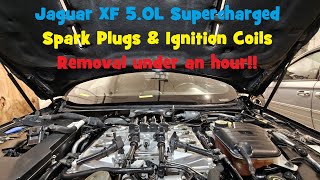
How to confirm: The easiest way to confirm a bad coil is to swap the ignition coil from cylinder 8 with another cylinder (e.g., cylinder 6). Clear the codes and run the engine. If the code changes to P0306, the coil is faulty. Cylinder 8 is the rearmost cylinder on the driver's side (left-hand drive vehicles).
Typical fix: Replace the faulty ignition coil. It is often recommended to replace all 8 coils and spark plugs at the same time for preventative maintenance, especially on higher mileage vehicles.
Est. part cost: $40-$120 per coil - Worn or Fouled Spark Plug 🔴 High Probability Spark plugs are a regular maintenance item with a finite lifespan. If they are original or have high mileage, the electrode can wear down, increasing the gap and leading to a weak or inconsistent spark.
How to confirm: After removing the ignition coil, remove the spark plug from cylinder 8. Inspect it for wear (rounded electrode), carbon fouling, or oil/fuel contamination. A fuel-fouled plug can be an indicator of a leaky injector. You can also swap it with another cylinder's plug to see if the misfire follows.
Typical fix: Replace the spark plug in cylinder 8. It is best practice to replace all 8 spark plugs at the same time to ensure even performance and avoid future misfires.
Est. part cost: $10-$25 per plug - Clogged or Faulty Fuel Injector 🟡 Medium Probability Jaguar TSB #SSM-63697 specifically identifies restricted fuel injectors due to poor fuel quality as a cause for misfires on this platform. Forum discussions describe injectors failing or sticking open, causing a whole bank of cylinders to misfire and emitting a strong fuel smell.
How to confirm: If swapping the coil and plug does not resolve the issue, the fuel injector is the next likely culprit. A professional can perform a fuel injector balance test. A DIY method involves listening to the injector with a mechanic's stethoscope to ensure it's clicking; however, this doesn't confirm flow rate or a leak. A strong smell of fuel and smoke are strong indicators.
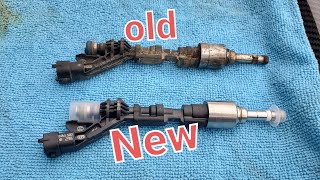
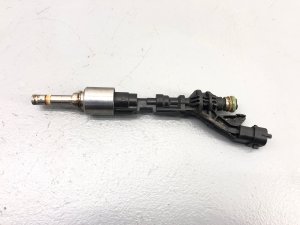
Typical fix: Replace the fuel injector for cylinder 8. Due to the direct injection system, this is a more involved job. 🎬 See this walkthrough on how to replace a 5.0L fuel injector. Some forum members report being advised by dealers to replace the entire fuel rail and all four injectors on that bank, at a significant cost.
Est. part cost: $80-$250 per injector
Rare But Worth Checking
- Vacuum Leak: A vacuum leak near the intake manifold runner for cylinder 8 can lean out the air/fuel mixture, causing a misfire. This is less common for a single-cylinder misfire but still possible, often caused by a degraded gasket.
- Low Compression: A mechanical engine issue such as a burnt valve, worn piston rings, or a damaged cylinder wall can cause a loss of compression. This is the least likely and most serious cause, requiring a compression test to diagnose.
- Fuel Injection Calibration Issue: TSB JTB00533NAS1 indicates that a PCM software update may be required to fix misfires that occur only during a cold start (coolant temperature below 75°C / 167°F). If the misfire happens only when cold, this should be investigated before replacing hardware.
Diagnosis Steps
- Read the code with an OBD-II scanner to confirm P0308 and check for any other pending or stored codes, especially P0300, P1316, P0087, or P0316. 🎬 Watch a professional diagnostic session for a 5.0L misfire.
- Check freeze frame data. Note the engine conditions (coolant temp, RPM) when the misfire occurred. If it only happens on cold start, reference TSB JTB00533NAS1.
- Identify cylinder 8. On the Jaguar 5.0L V8, the cylinders are numbered 1-3-5-7 on the right (passenger side for LHD) bank and 2-4-6-8 on the left (driver side for LHD) bank, from front to back. Cylinder 8 is the rearmost cylinder on the driver's side.
- Swap the ignition coil from cylinder 8 with the coil from cylinder 6 (the next one forward on the same bank). Clear the codes and drive the vehicle. If the code returns as P0306, the ignition coil is bad.
- If the code remains P0308, swap the spark plug from cylinder 8 with cylinder 6. If the code changes to P0306, the spark plug is the issue.
- If the misfire still remains on cylinder 8, inspect the wiring and connector for the ignition coil and fuel injector for any visible damage, corrosion, or looseness.
- If wiring is okay, the next most likely cause is the fuel injector for cylinder 8. This is a more complex diagnosis. Listen for strong fuel smells or visible smoke. Professional diagnosis is recommended to confirm flow and function.
- If the injector is confirmed to be good, a mechanical compression test should be performed on cylinder 8 to check for internal engine problems.
Parts You'll Likely Need
- Ignition Coil
(OEM #AJ811378, C2Z18619, LR010687)— This is the most common failure point for a single-cylinder misfire. The coil provides the high voltage needed to create a spark.
Trusted brands: Bosch, NGK, Delphi, Carquest
OEM price range: $70-$120
Aftermarket price range: $40-$90 - Spark Plug
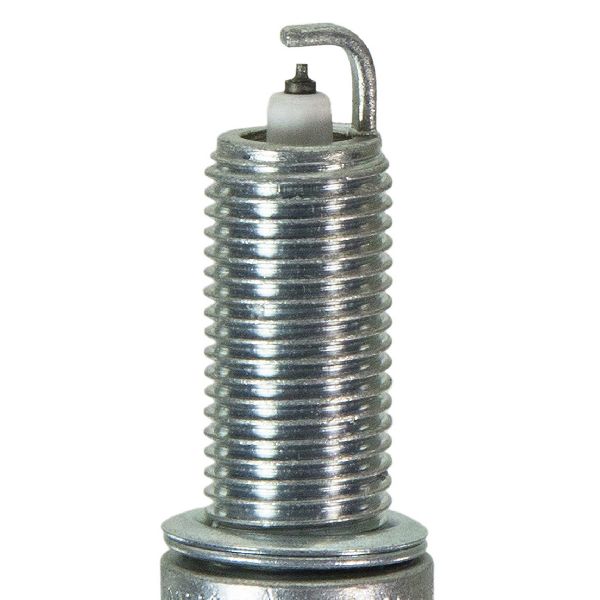
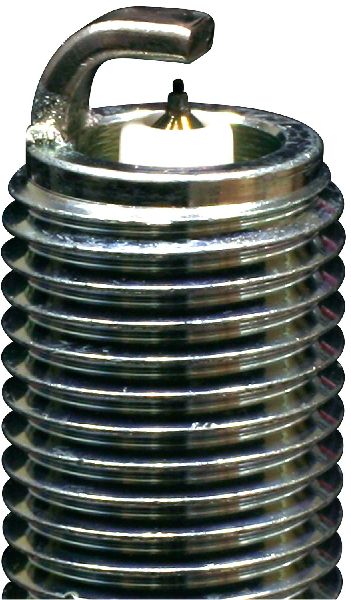
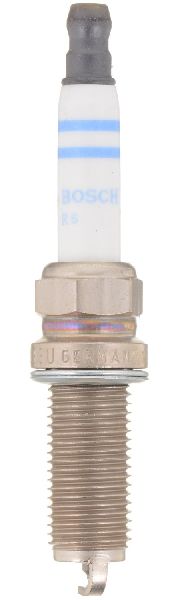
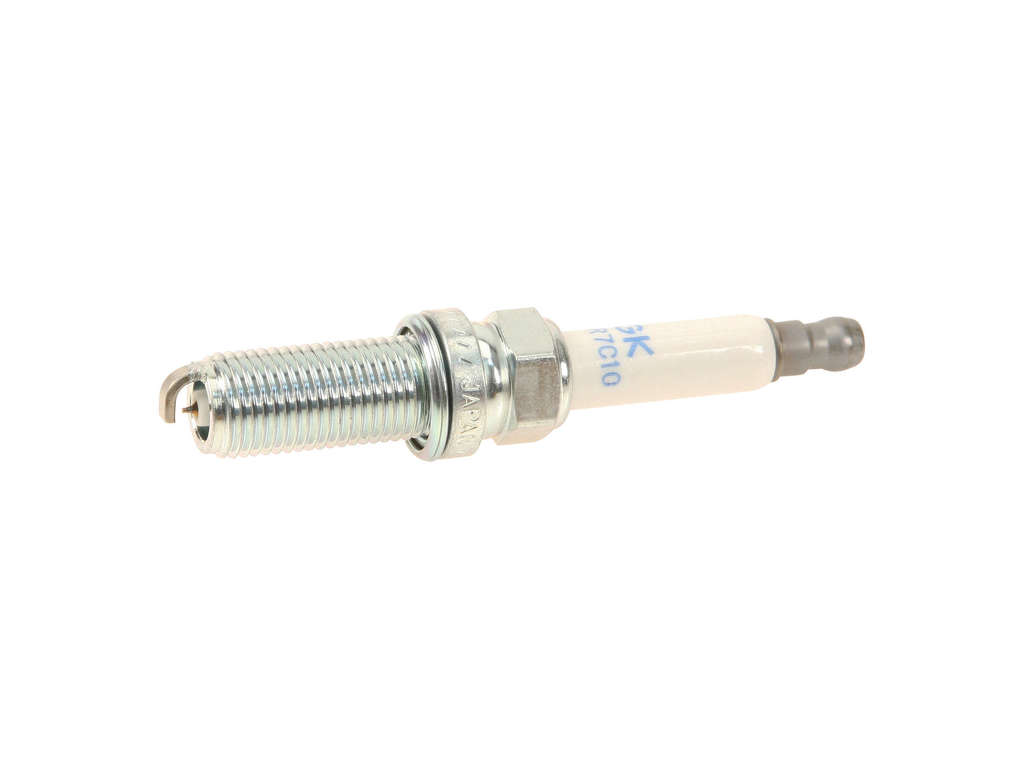
(OEM #C2P23089 (NGK ILKAR7C10))— As a routine maintenance item, a worn or fouled spark plug is a very common cause of a weak or non-existent spark.
Trusted brands: NGK, Bosch, Denso
OEM price range: $20-$30
Aftermarket price range: $10-$25 - Fuel Injector
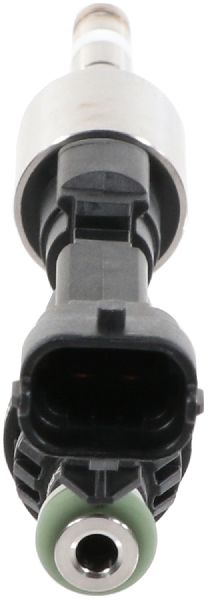
(OEM #C2D55183 (replaces C2D45736))— Specifically cited in a TSB for this platform, a clogged or failed injector can fail to deliver the proper amount of fuel for combustion.
Trusted brands: Bosch
OEM price range: $150-$250
Aftermarket price range: $80-$150
Related Codes That Often Appear With This One
- P0300 — If the misfire is intermittent or begins to affect other cylinders, a P0300 (Random/Multiple Cylinder Misfire) code may appear alongside P0308.
- P1316 — This is a Jaguar-specific code that often accompanies misfire codes (P030x). It indicates that the misfire is severe enough to potentially cause catalyst damage.
- P0087 — Code P0087 (Fuel Rail/System Pressure - Too Low) can appear with P0308 if a high-pressure fuel pump is failing or an injector is stuck wide open, causing a system-wide pressure drop.
- P0316 — Misfire Detected On Start-Up (First 1000 Revolutions). This code is often seen with other P030x codes and is specifically mentioned in TSBs JTB00533NAS1 and SSM-63697.
Technical Service Bulletins (TSBs) & Recalls
- SSM-63697: Misfire codes (P0301-P0308, P0316) may be stored due to poor fuel quality or restricted fuel injectors.
- JTB00533NAS1: Addresses engine misfire/MIL illumination after a cold start, potentially caused by a fuel injection calibration issue requiring a PCM software update. P0308 is listed as a possible code.
Platform-Specific Known Issues
- Technical Service Bulletin SSM-63697 notes that misfire codes, including P0308, may be stored due to poor fuel quality or contaminants restricting a fuel injector. It requests that dealers label and return faulty injectors to aid in engineering investigation.
- Technical Service Bulletin JTB00533NAS1 addresses misfires (including P0308) that occur specifically on a cold start. The fix is not a part replacement, but rather a software update for the Powertrain Control Module (PCM) to adjust fuel injection calibration.
Mechanic-Grade Diagnostic Values
- High-Pressure Fuel Rail Pressure (at idle) — expected: ~970 PSI (approx. 6700 kPa). Failure: Significantly lower pressure, or pressure that matches the low-side reading (55-75 PSI), indicates a fault with one or both high-pressure fuel pumps (HPFPs).
- Low-Pressure Fuel System Pressure — expected: 55-75 PSI (380-517 kPa). Primes to ~55 PSI with key-on-engine-off, then settles to 70-80 PSI during operation.. Failure: Pressure below 50 PSI, or pressure that bleeds off rapidly after priming, can indicate a weak in-tank pump or a leak.
- Long-Term Fuel Trims (LTFT) — expected: Ideally close to 0%. Values between -10% and +10% are generally acceptable.. Failure: Sustained values above +10% indicate the engine is compensating for a lean condition (adding fuel). Sustained values below -10% indicate a rich condition (removing fuel). A large discrepancy between Bank 1 and Bank 2 (e.g., +8% on one bank, -9% on the other) points to a problem isolated to one bank, such as a faulty injector or O2 sensor.
- Fuel Injector Resistance — expected: While a specific OEM value is not published, typical GDI injectors are in the 10-18 Ohm range. The most important factor is that all 8 injectors should measure within 0.5-1.0 Ohms of each other.. Failure: An injector that has a significantly different resistance reading from the others, or is open-circuit (infinite resistance), is faulty.
Hidden / Shadow Codes Worth Checking
- N/A (Absence of codes): On the AJ133 platform, it is possible to have noticeable misfires, especially under specific conditions like high RPM, without a corresponding P030x code being logged. This can happen if certain OBD monitors are not yet complete or if the failure is intermittent and doesn't meet the threshold to trigger the light. (see via The issue is not a hidden code to be read, but a condition to be aware of. Deeper diagnosis with tools like Jaguar SDD to monitor live data (fuel pressure, trims) is required when symptoms are present but codes are not.)
Scan Tool Commands That Help
- Jaguar SDD (Symptom Driven Diagnostics): Fuel System Tests / High-Pressure Fuel Pump Shut-Off — This bidirectional function allows a technician to individually disable each of the two high-pressure fuel pumps (HPFPs) while the engine is running. It is used to isolate which of the two pumps has failed when diagnosing low fuel pressure codes (P0087) or misfires under load.
- Jaguar SDD (Symptom Driven Diagnostics): Fuel Injector Calibration/Programming — After replacing one or more direct fuel injectors, this service function must be run. It calibrates the new injectors to the Powertrain Control Module (PCM) to ensure correct fuel delivery and engine performance. Failure to do so can result in continued rough running or misfires.
- Jaguar SDD / IDS: Misfire Data — It is important to note that, unlike many other manufacturer tools, the Jaguar dealer software (IDS/SDD) reportedly does not provide live individual cylinder misfire counters. Diagnosis relies on logged fault codes (like P0308) and analyzing related live data such as fuel trims and sensor readings, rather than watching a live count.
Wiring & Ground Locations
- Engine Bay Earth Point — On the right-hand (passenger side for LHD) strut tower in the engine compartment.. A loose or corroded main engine ground can cause a host of phantom electrical issues, including weak spark or erratic sensor readings, leading to misfire codes. Ensuring this connection is clean and tight is a fundamental step in any electrical diagnosis.
Real Owner Repair Stories
- MustangForums.com user (2015 Ford Mustang GT 5.0L (Coyote V8, similar GDI technology)) — P0308 and P0300, cylinder 8 and multiple misfires.
❌ Tried (didn't work) ECU re-program per a service bulletin
✅ What actually fixed it The entire upper intake manifold was replaced. The internal fuel/air ratio control flaps had failed, causing an incorrect mixture and leading to the misfires. - YouTube creator 'MGT Restoration' (2011-2014 Ford Mustang 5.0L (Coyote V8)) — Phantom misfire codes (P0300-P0308) with no actual drivability issues, occurring during spirited driving with balanced throttle.
❌ Tried (didn't work) Initial diagnosis pointed towards standard ignition/fuel issues.
✅ What actually fixed it A Ford TSB (13-6-15) identified that vibrations could cause the crankshaft position sensor to move slightly and generate false misfire signals. The official fix was to install a small O-ring (Part No. FOPZ-9229-A) onto the sensor body to act as a damper before reinstalling it.
"I Checked Everything" — The Actual Cause
- Carbon buildup on the intake valves. As a direct injection engine, the AJ133 does not have fuel washing over the back of the intake valves. Over time, oil vapors from the PCV system can bake onto the valves, restricting airflow or preventing proper sealing, causing misfires that a smoke test for vacuum leaks will not find.
- A failing high-pressure fuel pump. The two HPFPs can fail to produce adequate pressure under load, leading to lean misfires. This is a mechanical pump issue, not a vacuum leak.
- Incorrect PCM software calibration. TSB JTB00533NAS1 points to cold-start misfires being caused by software logic, not a physical leak or faulty part.
OEM Part Supersession History
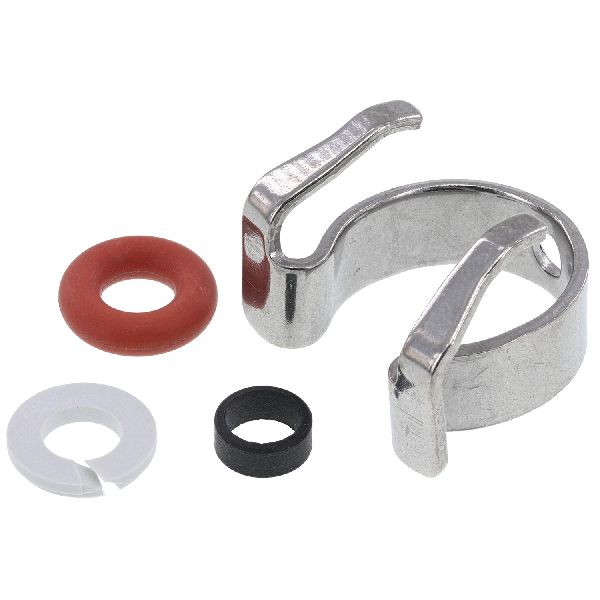
C2D45736→C2D55183— Standard part revision and update by Jaguar.8W93-9F593-BC (Engineering Number)→LR079542 (Land Rover) / C2D55183 (Jaguar)— This is the number often printed on the injector itself. It cross-references to the current service part numbers. The OEM is Bosch, and a kit for all 8 injectors may be sold under Bosch part number 0261500298KT.
Heads up: When replacing injectors, they must be calibrated to the PCM using JLR SDD software.
Model Year Variations Within This Range
- 2010-2014: Early production 5.0L V8 engines in this range are known to be more susceptible to timing chain tensioner and guide failure. The original plastic guides and steel tensioner piston design could lead to premature wear. While the issue can affect later models, the earliest versions are considered the most at-risk.
- 2013-2014: In 2013, Jaguar began phasing out the naturally aspirated 5.0L V8 as the base engine, replacing it with a 3.0L supercharged V6. The 5.0L V8 remained available in supercharged form. This does not change the diagnosis for a P0308 on a V8, but confirms that a 2013-2014 XJ could have one of two different engine families.
Helpful Videos
Used OEM Parts in Stock


New Aftermarket Parts Available

The information in this article is provided for general reference and educational purposes only. Vehicle specifications, procedures, and part compatibility can vary by production date, trim level, and region. Always consult your vehicle's factory service manual and verify part numbers before purchasing or performing repairs. Safety-critical components such as airbags, seat belts, and braking systems should be installed by a qualified professional.
- Jaguar XJ:
- 🎬 Helpful Videos
- 🛍️ Shop This Part
- What's Unique About the 2010-2014 Jaguar XJ
- Diagnostic Flowchart
- Symptoms You May Notice
- Most Likely Causes
- Rare But Worth Checking
- Diagnosis Steps
- Parts You'll Likely Need
- Related Codes That Often Appear With This One
- Technical Service Bulletins (TSBs) & Recalls
- Platform-Specific Known Issues
- Mechanic-Grade Diagnostic Values
- Hidden / Shadow Codes Worth Checking
- Scan Tool Commands That Help
- Wiring & Ground Locations
- Real Owner Repair Stories
- "I Checked Everything" — The Actual Cause
- OEM Part Supersession History
- Model Year Variations Within This Range
- 🎟️ Get 5% Off