

P0308 on 2008-2010 Hummer H3: Cylinder 8 Misfire Causes and Fixes
P0308 on a Hummer H3 indicates a misfire in cylinder 8, which is only possible on 2008-2010 'Alpha' models with the 5.3L V8 engine. While common causes like a bad spark plug or ignition coil are possible, a known issue on this platform is a worn camshaft lobe, which is a more serious mechanical problem. Start with ignition components, but be aware of potential internal engine wear.
- P0308 is a misfire in cylinder 8, only possible on 2008-2010 Hummer H3 Alpha models with the 5.3L V8.
- Start diagnosis with the most common and cheapest parts: the spark plug and ignition coil for cylinder 8.
- A simple way to test an ignition coil is to swap it with one from a different cylinder and see if the misfire code follows it.
- Be aware that a persistent P0308, especially with an engine tick, points to a known (and serious) issue with worn camshaft lobes/lifters on this engine, as documented in GM TSBs.
- Cylinder 8 is the rearmost cylinder on the passenger side and is the most difficult to access, requiring special tools.
What's Unique About the 2006-2010 Hummer H3
The Hummer H3 was standard with an inline-5 cylinder engine, where a P0308 code is impossible. This code only applies to the H3 Alpha models (2008-2010) which used the 5.3L LH8 V8. While standard misfire causes apply, GM has issued Technical Service Bulletins (TSBs) for this engine family that specifically link P0300-P0308 codes to a potentially worn camshaft lobe, a significant mechanical failure that goes beyond typical ignition or fuel issues. This makes diagnosis more critical, as a simple tune-up may not solve the problem. The LH8 engine in the H3 Alpha does not feature Active Fuel Management (AFM) or Variable Valve Timing (VVT), which are common sources of lifter and camshaft-related failures in other GM 5.3L engines.
Diagnostic Flowchart
Tap your situation to follow the diagnostic path that matches what you're seeing on this vehicle.
Symptoms You May Notice
- Rough or vibrating idle
- Hesitation or stumbling during acceleration
- Noticeable loss of engine power
- Solid or flashing Check Engine Light
- Increased fuel consumption
- Engine noise (chirp, squeak, or tick) as noted in TSB PIP4138P and its successor, 19-NA-219.
- Replacing only spark plugs when the underlying cause is a worn camshaft lobe.
- Replacing the catalytic converter due to damage from the misfire without fixing the root cause of the misfire itself.
- Assuming the cause is a failed AFM lifter, as the LH8 engine in the H3 Alpha was not equipped with Active Fuel Management.
Most Likely Causes
- Worn/Fouled Spark Plug 🔴 High Probability Spark plugs are a routine wear item. Cylinder 8 is the most difficult to access on the H3 Alpha, located at the rear of the passenger side, and may be neglected during service.
How to confirm: Inspect the spark plug for cylinder 8. Look for wear on the electrode, carbon fouling, or oil deposits. A worn or damaged plug cannot produce a strong spark. Repeated fouling of only the #8 plug may indicate a deeper issue like a bad injector or oil control problem.
Typical fix: Replace the spark plug for cylinder 8. It is best practice to replace all 8 spark plugs at the same time if they are near the end of their service life. Accessing cylinder 8 requires specific tools like a 3/8" joint socket due to tight clearance near the firewall.
Est. part cost: $10-$25 per plug - Failed Ignition Coil 🔴 High Probability
How to confirm: Swap the ignition coil from cylinder 8 with another cylinder (e.g., cylinder 6). Clear the codes and drive the vehicle. If the misfire code changes to P0306, the ignition coil is faulty.
Typical fix: Replace the faulty ignition coil. Using a quality OEM replacement like ACDelco is recommended.
Est. part cost: $40-$90 - Faulty Fuel Injector 🟡 Medium Probability
How to confirm: A mechanic can perform a fuel injector balance test using a tool like the AFIT CH-47976. A DIY method is to listen to the injector with a mechanic's stethoscope; it should have a consistent clicking sound. You can also check its resistance with a multimeter or swap it with another cylinder's injector, similar to the coil swap test.
Typical fix: Replace the fuel injector for cylinder 8. The fuel rail may need to be removed for access. Some owners recommend having all injectors professionally cleaned and tested if one fails, especially on higher mileage engines.
Est. part cost: $50-$150 - Worn Camshaft Lobe / Lifter ⚪ Low Probability This is a known issue documented in GM Technical Service Bulletin #PIP4138P (and successor 19-NA-219) for this engine family. It can occur even without the problematic AFM system found in other GM V8s.
How to confirm: This requires a more in-depth mechanical diagnosis. After ruling out spark and fuel, a technician may need to remove the passenger-side valve cover to visually inspect the camshaft lobes and lifters for wear. A consistent ticking or chirping noise that does not go away when disabling injectors is a strong indicator. In some cases, the cam lobe wear is only visible after removing the camshaft entirely.
Typical fix: This is a major repair involving replacing the camshaft and all lifters. It requires significant engine disassembly. One owner on an overland forum documented this exact failure on a high-mileage H3 Alpha, confirming a shot lifter and damaged camshaft lobe.
Est. part cost: $500-$1500+
Rare But Worth Checking
- Low Engine Compression: If spark and fuel systems are confirmed to be working, a compression test should be performed on cylinder 8 to check for internal mechanical issues like a bad valve, broken valve spring, or worn piston rings.
- Vacuum Leak: A vacuum leak near the cylinder 8 intake runner could lean out the mixture enough to cause a misfire. This could be from a leaking intake manifold gasket.
- Wiring/Connector Issue: Check the wiring harness and connector for both the ignition coil and fuel injector of cylinder 8. Look for corrosion, damage, or a loose connection, which can interrupt the signal.
Diagnosis Steps
- Verify the code with an OBD-II scanner and check for any other pending or stored codes. Note the freeze frame data.
- Perform a visual inspection of the engine bay, especially around cylinder 8 (passenger side, rearmost cylinder). Look for damaged wiring, loose connectors, or signs of a vacuum leak.
- Swap the ignition coil from cylinder 8 with another cylinder (e.g., cylinder 6). Clear codes and run the engine. If the code changes to P0306, the coil is bad.
- If the code remains P0308, remove the spark plug from cylinder 8. Inspect for wear, fouling, or damage. Compare it to a plug from a good cylinder. Replace if necessary. Accessing this plug is difficult and may require a universal joint socket.
- Inspect the spark plug wire/boot for damage or a poor connection. A user on Hummer4x4Offroad.com noted a poorly seated plug wire caused a persistent misfire.
- If spark components are good, test the fuel injector for cylinder 8. Listen for its operation with a stethoscope and check its electrical resistance. Consider swapping it with another cylinder's injector if possible.
- If spark and fuel are good, perform an engine compression test on cylinder 8 to check for mechanical issues like bad valves or rings.
- If compression is good but the misfire persists, refer to TSB #19-NA-219 (supersedes PIP4138P). Listen for a consistent engine tick or chirp. This points towards inspecting the camshaft and lifters for wear, which is a known issue and likely requires professional service.
Parts You'll Likely Need
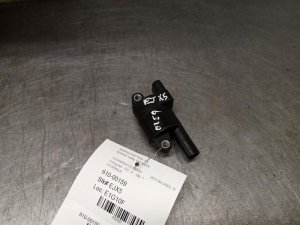
- Ignition Coil
(OEM #ACDelco D510C (12570616))— Ignition coils are a common failure item that directly causes a single-cylinder misfire.
Trusted brands: ACDelco, Delphi
OEM price range: $60-$90
Aftermarket price range: $40-$70 - Spark Plug
(OEM #ACDelco 41-162 (Iridium))— Spark plugs are a routine maintenance item and the most common cause of misfires. A worn or fouled plug cannot ignite the fuel mixture correctly.
Trusted brands: ACDelco, NGK
OEM price range: $15-$25
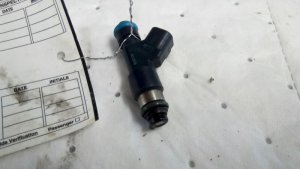
Aftermarket price range: $10-$20 - Fuel Injector — A clogged or failed fuel injector will prevent the correct amount of fuel from reaching cylinder 8, causing a lean misfire.
Trusted brands: ACDelco, Bosch
OEM price range: $100-$150
Aftermarket price range: $50-$100
Related Codes That Often Appear With This One
- P0300 — If the condition causing the misfire in cylinder 8 becomes more severe or other cylinders are also affected (e.g., due to widespread camshaft wear or low fuel pressure), a P0300 (Random/Multiple Cylinder Misfire) code may also be triggered.
Technical Service Bulletins (TSBs) & Recalls
- PIP4138P: Points to checking for a worn camshaft lobe if standard diagnostics for P0300-P0308 misfire codes do not isolate the cause.
- PIP5628G: Communicates that specific information may be needed for TAC (Technical Assistance Center) when diagnosing P0300-P0308 codes, indicating a known complex issue.
- 19-NA-219: This bulletin supersedes PIP4138P and provides detailed information on diagnosing engine noises and misfires (P0300-P0308) related to worn cam lobes, lifters, sticking valves, or broken valve springs.
Platform-Specific Known Issues
- Per TSB #PIP4138P and its successor #19-NA-219, a persistent P0308 code that is not resolved by standard ignition or fuel system diagnostics may be caused by a worn camshaft lobe and/or lifter. This is a known mechanical issue with this engine family and can also be accompanied by a distinct engine chirp, squeak, or tick.
- Access to cylinder 8 components is notoriously difficult due to tight clearance against the firewall, making diagnosis and repair more challenging than for other cylinders.
Mechanic-Grade Diagnostic Values
- Fuel Injector Resistance — expected: 11-14 Ohms (for stock injectors). Failure: A reading significantly higher or lower than the expected range, or an open circuit (infinite resistance), indicates a failed injector coil.
- Ignition Coil Primary Resistance — expected: 0.3-0.5 Ohms. Failure: A reading outside this very low range suggests a fault in the primary winding.
- Fuel Pressure (Key On, Engine Off) — expected: 55-62 PSI. Failure: Pressure below this range indicates a weak fuel pump, clogged filter, or faulty regulator, which could cause a lean misfire, though it would likely affect more than one cylinder.
Hidden / Shadow Codes Worth Checking
- Mode 6, Test ID $A2-$A9, Component ID $08: This refers to the onboard diagnostic monitor for misfire counts on cylinder 8. A high count that exceeds the calibrated threshold will trigger the P0308 code. Accessing this data can show misfires happening in real-time, even before the Check Engine Light is set. (see via A professional scan tool capable of reading Mode $06 data.)
Scan Tool Commands That Help
- Tech2 / GDS2 or equivalent professional scanner: Cylinder Power Balance Test — This active test allows the technician to disable fuel to each cylinder one by one while monitoring the RPM drop. If disabling cylinder 8 causes little or no change in engine RPM, it confirms that cylinder is not contributing power, isolating the fault.
- Tech2 / GDS2 or equivalent professional scanner: Misfire Counter Live Data — To confirm the misfire is isolated to cylinder 8. A technician can view current and historical misfire counts for all cylinders to see if other cylinders are misfiring intermittently, which might suggest a more systemic problem like a vacuum leak or fuel delivery issue.
Wiring & Ground Locations
- G102 — On the lower left side of the engine block. For 2010 5.3L models, it's specified as being on the engine block, below the left cylinder head.. This is a primary engine block ground. A poor connection here can cause a host of sensor and actuator issues, including erratic ignition or injector performance.
- G103 — On the lower left side of the engine block, forward of G102. Some service information incorrectly states it is on the right side, but diagrams confirm it is on the left (driver's) side.. A critical ground for the engine control system. TSBs for other GM trucks with similar engines specifically call out checking and tightening G103 to resolve unexplained electronic throttle and misfire issues.
- G104 — On the left side of the engine block, in front of the starter.. Another essential engine ground. A loose or corroded G104 has been linked to intermittent TAC module codes and reduced power, which can sometimes be related to misfire detection logic.
- Cylinder 8 Injector/Coil Harness — The fuel injector and ignition coil for cylinder 8 are located on the upper right (passenger) side of the engine, at the rearmost position near the firewall.. The wiring for cylinder 8 is routed in a high-heat area and is difficult to access. This makes it susceptible to heat-related damage, chafing, or corrosion at the connector, which can directly cause a P0308 code.
OEM Part Supersession History
12570616→12611424 (ACDelco D510C)— Standard part evolution, possible improvements in internal materials or winding design for durability.
Heads up: Some 2005-2007 GM vehicles had a design change. The H3 Alpha uses the square-shaped coil marked 12570616 (D510C). Ensure you are not using a different design (e.g., Melco-Mitsubishi) unless specified for your VIN.
Model Year Variations Within This Range
- 2009 vs 2010: The physical location description for ground G102 is slightly different. In 2009 it is listed as 'on lower left side of engine block, rearward of g103', while in 2010 it is 'on engine block, below left cylinder head'. This is likely a minor difference in description rather than a major relocation, but it's a notable variation in service documentation.
- 2008-2009 vs 2010: The 5.3L V8 engine was designated as LH8 for 2008-2009 model years. For 2010, some sources indicate the engine may be designated LH9, which added flex-fuel capability. This could mean slightly different fuel injectors or ECM programming, but the core mechanicals and ignition system remain the same.
Helpful Videos
Used OEM Parts in Stock


New Aftermarket Parts Available



The information in this article is provided for general reference and educational purposes only. Vehicle specifications, procedures, and part compatibility can vary by production date, trim level, and region. Always consult your vehicle's factory service manual and verify part numbers before purchasing or performing repairs. Safety-critical components such as airbags, seat belts, and braking systems should be installed by a qualified professional.
- Hummer H3:
- 🎬 Helpful Videos
- 🛍️ Shop This Part
- What's Unique About the 2006-2010 Hummer H3
- Diagnostic Flowchart
- Symptoms You May Notice
- Most Likely Causes
- Rare But Worth Checking
- Diagnosis Steps
- Parts You'll Likely Need
- Related Codes That Often Appear With This One
- Technical Service Bulletins (TSBs) & Recalls
- Platform-Specific Known Issues
- Mechanic-Grade Diagnostic Values
- Hidden / Shadow Codes Worth Checking
- Scan Tool Commands That Help
- Wiring & Ground Locations
- OEM Part Supersession History
- Model Year Variations Within This Range
- 🎟️ Get 5% Off