

P0308 on 2015-2022 GMC Canyon: Cylinder 8 Misfire Explained
P0308 indicates a misfire on cylinder 8. However, the 2015-2022 GMC Canyon was never sold with a factory V8 engine. This code almost certainly means your truck has had a V8 engine swap, and the issue is likely a bad spark plug, ignition coil, or fuel injector on the 8th cylinder of the swapped engine.
- P0308 means cylinder 8 is misfiring, but your 2015-2022 Canyon doesn't have a cylinder 8 unless a V8 engine has been swapped into it.
- If your truck has a V8 swap, the most likely causes are a bad ignition coil, spark plug, or fuel injector on cylinder 8.
- If your truck has its original 4-cylinder or V6 engine, a P0308 code points to a serious and rare software error in the engine computer that requires professional diagnosis.
- Do not ignore a flashing check engine light, as it signals a severe misfire that can quickly damage your expensive catalytic converter.
What's Unique About the 2015-2022 Gmc CANYON
The 2015-2022 GMC Canyon was only offered with 4-cylinder and V6 engines from the factory. It does not have a cylinder 8. Seeing a P0308 code is a strong indication that the vehicle has been modified with an aftermarket V8 engine swap, a popular modification for this platform. In the rare event the truck is stock, this code would point to a major and unusual PCM software error where the computer is configured for the wrong engine. The provided TSB #PIP5628G is a general GM bulletin covering misfires on V8s and is not specific to a factory V8 Canyon, but is relevant for diagnosing the swapped engine.
Diagnostic Flowchart
Tap your situation to follow the diagnostic path that matches what you're seeing on this vehicle.
Symptoms You May Notice
- Check Engine Light is on or flashing
- Rough or shaky idle
- Engine hesitation or stumbling during acceleration
- Noticeable loss of engine power
- Smell of raw fuel from the exhaust
- Engine running rich, which can burn your eyes when standing near the exhaust
- Searching for cylinder 8 on a factory V6 or 4-cylinder engine.
- Replacing parts without confirming the failure (e.g., replacing the coil when the spark plug was the issue). Always use the 'swap test' method.
Most Likely Causes
- Faulty Ignition Coil on Cylinder 8 🔴 High Probability Applies to V8-swapped engines. Coils are a common failure item on any high-mileage engine due to heat and vibration. Cylinder 8 on GM V8s is at the rear of the engine bay and can be subject to more heat, potentially leading to premature failure.
How to confirm: Swap the ignition coil from cylinder 8 with another cylinder (e.g., cylinder 6). Clear the codes and drive the vehicle. If the code returns as P0306, the coil is bad.
Typical fix: Replace the faulty ignition coil. It is often recommended to replace the spark plug at the same time.
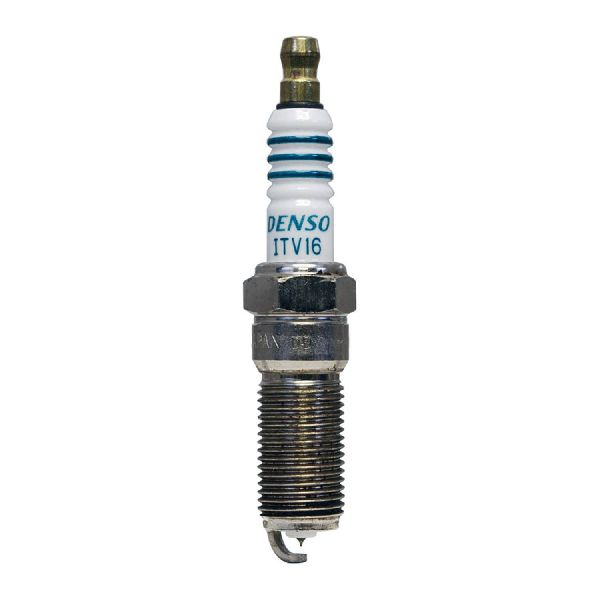
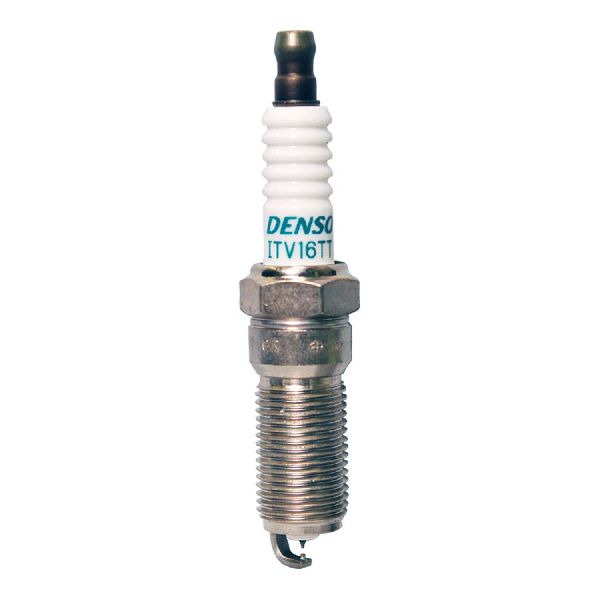
Est. part cost: $30-$75 - Worn or Fouled Spark Plug on Cylinder 8 🔴 High Probability Applies to V8-swapped engines. Spark plugs are a regular maintenance item and a primary cause of misfires. Some owners on forums recommend changing plugs more frequently than the manufacturer's interval, especially on tuned or hard-driven engines.
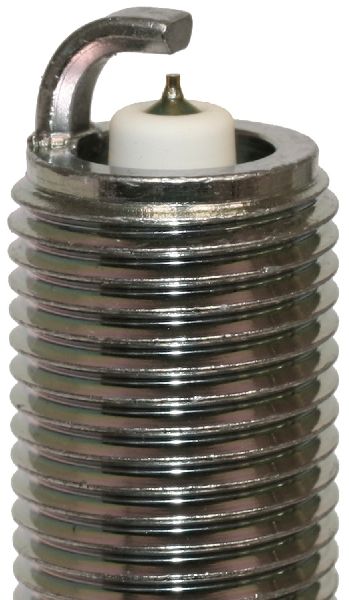
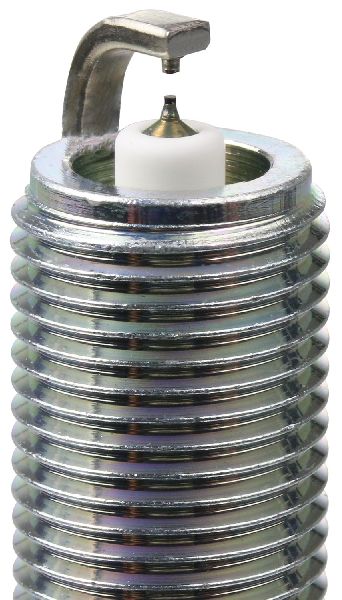
How to confirm: Remove the spark plug from cylinder 8 and inspect it. Look for heavy carbon buildup, oil fouling, a cracked insulator, or a worn/damaged electrode. Compare it to a plug from a healthy cylinder.
Typical fix: Replace the spark plug on cylinder 8. It is best practice to replace all 8 spark plugs as a set if they are near the end of their service life.
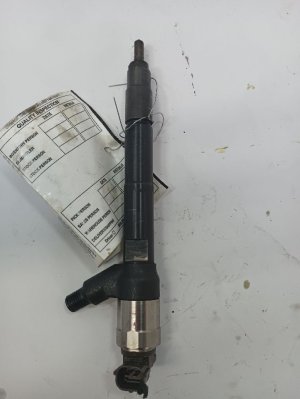
Est. part cost: $5-$25 per plug - Bad Fuel Injector on Cylinder 8 🟡 Medium Probability Applies to V8-swapped engines. Injectors can become clogged from fuel contaminants or fail electrically over time.
How to confirm: Use a 'noid' light to check for an electrical pulse at the injector connector. You can also listen for a clicking sound from the injector with a mechanic's stethoscope. Swapping injectors between cylinders is a more involved but definitive test.
Typical fix: Replace the faulty fuel injector. It's also wise to check the fuel rail for debris.
Est. part cost: $50-$150 - Incorrect or Faulty Powertrain Control Module (PCM) Programming ⚪ Low Probability This is the most likely cause if the vehicle has its original factory engine. The PCM may have been incorrectly flashed with software for a V8 vehicle. For swapped engines, an incorrect setting in the tune (like injector size or VATS delete) can cause issues.
How to confirm: A professional shop with GM diagnostic tools would need to verify the software and calibration IDs in the PCM against the vehicle's VIN and factory hardware. For swaps, a tuner would need to review the custom calibration file.
Typical fix: Reprogram the PCM with the correct factory software for the installed engine (V6 or I4), or correct the custom tune for the V8 swap.
Est. part cost: $0 (if under warranty) - $200 (for shop labor)
Rare But Worth Checking
- Internal Mechanical Engine Problem: Applies to V8-swapped engines. This could be a loss of compression due to a bad valve, worn piston rings, or a faulty lifter/camshaft lobe. A compression test and cylinder leak-down test would be needed to diagnose this. Low compression was noted in one forum user's experience with a #8 misfire.
- Wiring Harness Issue: Applies to V8-swapped engines. The wiring to the coil or injector for cylinder 8 could be damaged, shorted, or have a loose connection. This is especially common with non-factory engine harnesses, which may get damaged near hot exhaust manifolds or pinched during installation. One owner on a forum discovered their P0308 was caused by coolant from a leaking heater core connection dripping onto the #8 plug wire.
- Vacuum Leak: A vacuum leak near the cylinder 8 intake runner can lean out the air/fuel mixture and cause a misfire. This could be from a bad intake manifold gasket.
Diagnosis Steps
- First, confirm if your GMC Canyon has the original factory engine or a V8 swap. If it is a stock V6 or I4, the code indicates a major software problem. If it is a V8, proceed with the following steps.
- Use an OBD-II scanner to confirm P0308 is the only code present. Note any other codes, especially P0300.
- Locate cylinder 8 on your V8 engine. For most GM LS/Vortec engines, the cylinders are numbered 1-3-5-7 on the driver's side (front to back) and 2-4-6-8 on the passenger's side (front to back). Cylinder 8 is the rear-most cylinder on the passenger's side.
- Inspect the spark plug, ignition coil, and wiring for cylinder 8 for any obvious damage, looseness, corrosion, or fluid contamination from leaks.
- Swap the ignition coil from cylinder 8 with another cylinder (e.g., cylinder 6 on the same bank). Clear the codes and run the engine to see if the misfire code moves to the new cylinder (e.g., P0306). If it does, the coil is faulty.
- If the misfire remains on cylinder 8, swap the spark plug with another cylinder. If the code moves, the plug is the issue.
- If the coil and plug are good, check the fuel injector. Listen for a steady clicking with a stethoscope. Check for a pulse signal at the connector with a noid light.
- If spark and fuel delivery seem okay, perform a cylinder compression test and a leak-down test on cylinder 8 to rule out mechanical engine problems like bad rings, valves, or head gasket.
Parts You'll Likely Need
- Ignition Coil
(OEM #Example: ACDelco D510C (12611424) for many LS engines)— A common failure point causing a misfire on a single cylinder. Part number will depend entirely on the specific V8 engine that was swapped in (e.g., LS1, LS3, L83). There are different styles, such as the square D510C or round D514A, so visual confirmation is key.
Trusted brands: ACDelco, Delphi, NGK
OEM price range: $50-$100
Aftermarket price range: $30-$75 - Spark Plug
(OEM #Example: ACDelco 41-162 or 41-962 for common 5.3L/6.0L LS engines)— The most common maintenance part to fail and cause a misfire. Part number depends on the specific V8 engine and any modifications.
Trusted brands: ACDelco, NGK, Bosch
OEM price range: $10-$25
Aftermarket price range: $5-$15 - Fuel Injector — Can become clogged or fail electrically, preventing fuel from reaching cylinder 8. Part number depends on the specific V8 engine and fuel rail used in the swap.
Trusted brands: Bosch, ACDelco, Delphi
OEM price range: $100-$200
Aftermarket price range: $50-$150
Related Codes That Often Appear With This One
- P0300 — If multiple cylinders are misfiring randomly, a P0300 will be stored alongside the specific cylinder code. This could point to a more systemic issue like low fuel pressure, a large vacuum leak, or an incorrect engine tune.
Technical Service Bulletins (TSBs) & Recalls
- PIP5628G: A general GM technical service bulletin regarding diagnosis for misfire codes (P0300-P0308) and/or P050D. It is not specific to the Canyon but provides a diagnostic framework for GM V8s, instructing technicians on what data to collect (Freeze Frame, relative comp
Platform-Specific Known Issues
- V8 Swap Complexity: Since a V8 is not native to this chassis, the entire engine management system is custom. This introduces many potential points of failure, including the wiring harness (companies like ICT Billet and Current Performance are common sources for swap parts), fuel system plumbing, and ECU tuning. A misfire could stem from an error in any of these custom-installed systems.
- Grounding Issues: A common mistake in LS swaps is improper or missing ground wires, especially the grounds that attach to the back of the cylinder heads. A poor ground can cause weak spark or erratic sensor readings, leading to misfires.
Mechanic-Grade Diagnostic Values
- LS-type Ignition Coil Primary Resistance — expected: 0.4 - 2.0 Ohms. Failure: A reading of OL (open loop/infinite resistance) or significantly outside the expected range indicates a faulty coil.
- LS-type Ignition Coil Secondary Resistance — expected: 5,000 - 7,200 Ohms (5.0kΩ - 7.2kΩ). Failure: A reading of OL or a value far outside this range suggests the secondary coil winding has failed.
- Stock GM High-Impedance Fuel Injector Resistance — expected: ~12.0 Ohms. Failure: A significantly lower or higher reading, or an open circuit (OL), points to a failed injector coil.
- Fuel Pressure (Key On, Engine Off - KOEO) for non-Flex Fuel LS truck engines — expected: 55 - 62 psi. Failure: Pressure below this range indicates a weak fuel pump, faulty regulator, or leak in the system.
- Fuel Pressure (Key On, Engine Off - KOEO) for return-style Flex Fuel LS truck engines (e.g., L59) — expected: 48 - 54 psi. Failure: Pressure outside this range suggests an issue with the fuel pump or the specific Flex Fuel pressure regulator.
Hidden / Shadow Codes Worth Checking
- Mode $06, Test ID (TID) $A8: This is not a DTC, but a specific monitor within the OBD-II system that tracks misfire data for Cylinder 8. It provides raw misfire counts for the current and previous driving cycles, even if the misfire rate isn't high enough to set a P0308 code. (see via Use an advanced scan tool that supports Mode $06 data. The misfire counters can be found under the Engine Control Module's on-board diagnostic test results.)
Scan Tool Commands That Help
- GM Tech2 / GDS2 or equivalent professional scan tool: Power Balance Test — This function allows a technician to disable one cylinder at a time while the engine is running. When cylinder 8 is disabled, if there is no change in the engine's RPM or sound, it confirms that cylinder 8 was not contributing power, pinpointing the misfire location.
- GM Tech2 / GDS2 or equivalent professional scan tool: Misfire History / Misfire Graphic — This provides a historical count of misfires per cylinder over thousands of engine revolutions. It is extremely useful for identifying intermittent misfires that may not be immediately obvious or set a code right away.
Wiring & Ground Locations
- Engine Block Grounds — Crucial grounds for an LS swap harness must be connected to clean, bare metal on the engine block and cylinder heads. Key locations include the rear of the passenger-side cylinder head and the front of the driver-side block.. The ignition coils are grounded through the engine block. A missing or poor ground connection at the back of the cylinder head is a very common cause of weak spark and misfires, especially on the rearmost cylinders like #8.
- G102 (example factory designation) — On many GM V8 vehicles, a ground designated G102 is located at the left rear of the engine and is responsible for grounding all 8 ignition coils.. While the Canyon chassis won't have this specific ground for a V8, the principle is critical for the swap harness. The coil pack harness must have a dedicated, clean ground path to the engine block or head to prevent misfires. A faulty ground at this point can cause issues that mimic a bad coil.
- Harness Routing — The section of the wiring harness going to cylinder 8's coil and injector passes over the hottest part of the engine bay at the rear passenger side.. In a custom swap, this harness can easily come into contact with the exhaust manifold or sharp edges of the firewall/transmission tunnel. Heat can melt the insulation and cause a short, while vibration can cause chafing, leading to an intermittent connection and a P0308 code.
OEM Part Supersession History
ACDelco D585 / GM 19005218 (Round body w/ heatsink)→Varies, but often replaced with D510C or D514A styles in swaps.— The D585 'truck' coil is known for high spark energy but has a different physical shape and connector than other common LS coils.
Heads up: Different LS coils (LS1, LS2/3, Truck) have different physical shapes, mounting brackets, and sometimes connector plugs. You cannot mix and match them without changing the mounting hardware and potentially the wiring pigtails. The D585 is physically distinct from the square-body D510C.Varies by engine (e.g., LS1 vs LS3 injector)→Varies by engine— Injector technology and design changed between GM engine generations.
Heads up: LS1, LS2, LS3, and Truck injectors have different body lengths and flow rates. Using the wrong length injector for your intake manifold and fuel rail will cause fuel leaks or prevent proper seating. For example, LS1 injectors are the longest (~2.5 in) while LS3 injectors are the shortest (~1.5 in). Adapters are required if mixing types.
Helpful Videos
Used OEM Parts in Stock
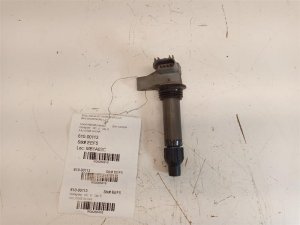
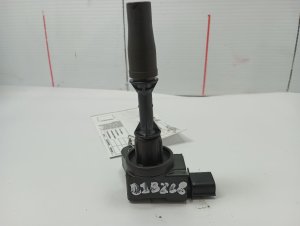
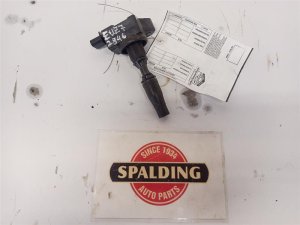
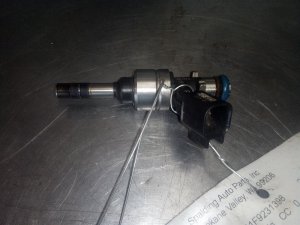

New Aftermarket Parts Available


The information in this article is provided for general reference and educational purposes only. Vehicle specifications, procedures, and part compatibility can vary by production date, trim level, and region. Always consult your vehicle's factory service manual and verify part numbers before purchasing or performing repairs. Safety-critical components such as airbags, seat belts, and braking systems should be installed by a qualified professional.
- Gmc CANYON:
- 🎬 Helpful Videos
- 🛍️ Shop This Part
- What's Unique About the 2015-2022 Gmc CANYON
- Diagnostic Flowchart
- Symptoms You May Notice
- Most Likely Causes
- Rare But Worth Checking
- Diagnosis Steps
- Parts You'll Likely Need
- Related Codes That Often Appear With This One
- Technical Service Bulletins (TSBs) & Recalls
- Platform-Specific Known Issues
- Mechanic-Grade Diagnostic Values
- Hidden / Shadow Codes Worth Checking
- Scan Tool Commands That Help
- Wiring & Ground Locations
- OEM Part Supersession History
- 🎟️ Get 5% Off