

P0308 on 2007-2014 GMC Acadia: What a Misfire on a Non-Existent Cylinder Means
P0308 on a V6 GMC Acadia is a 'ghost code' for a misfire on a non-existent 8th cylinder. It indicates a real misfire is happening on one of the actual six cylinders, but the computer is reporting it incorrectly. The most common causes are a bad ignition coil or a worn spark plug, requiring diagnosis with a scan tool's live data to find the true location of the misfire.
- P0308 on a V6 Acadia does not mean cylinder 8 is bad; it's a 'ghost code' for a misfire on one of the actual six cylinders.
- The first diagnostic step is to use a scan tool to find the real misfiring cylinder (1-6).
- The most likely culprits are a simple bad ignition coil or worn spark plug.
- Be aware of two major underlying issues on this platform: timing chain stretch (all years) and intake valve carbon buildup (2009-2014 models).
- If replacing ignition coils on the rear bank, it is highly recommended to replace all three coils and all six spark plugs at the same time due to the labor involved in removing the intake manifold.
What's Unique About the 2007-2014 Gmc ACADIA
The GMC Acadia's 3.6L V6 engine, shared with the Buick Enclave, Chevrolet Traverse, and Saturn Outlook, can erroneously log a P0308 code. This isn't a typical code that points directly to a component. General Motors issued Technical Service Bulletin (TSB) #PIP5628G, which acknowledges this diagnostic issue across several model years and engine types. The TSB guides technicians to use diagnostic tools like GDS2 to analyze freeze frame data and live misfire counters to find the true misfiring cylinder instead of searching for a physical 8th cylinder. This makes the diagnostic process unique; the first step is not to look for cylinder 8, but to use a scan tool to determine which of the actual six cylinders is failing.
Diagnostic Flowchart
Tap your situation to follow the diagnostic path that matches what you're seeing on this vehicle.
Generation note: This range covers the first-generation Acadia but includes two different versions of the 3.6L V6 engine. The 2007-2008 models use the LY7 engine with port fuel injection. From 2009-2014, the Acadia used the LLT engine with gasoline direct injection (GDI). The LLT GDI engine is particularly prone to carbon buildup on the intake valves, which is a very common cause of misfires on those model years because fuel is no longer cleaning the back of the valves.
Symptoms You May Notice
- Check Engine Light is on or flashing
- Rough or shaking idle
- Engine hesitates, sputters, or jerks during acceleration
- Reduced engine power
- Worse fuel economy
- A smell of gasoline from the exhaust
- Searching for a physical 8th cylinder. Owners and technicians unfamiliar with this 'ghost code' on GM V6 engines may waste time trying to locate a cylinder that does not exist.
Most Likely Causes
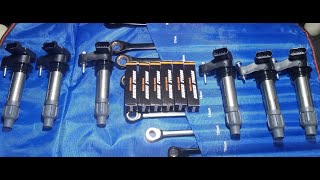
- Failed Ignition Coil 🔴 High Probability Ignition coil failure is a very frequent issue on the GM 3.6L V6 engine family. The coils, especially those on the rear bank, are subjected to high heat, leading to premature failure.
How to confirm: Use a scan tool with Mode $06 to identify the actual misfiring cylinder by looking at misfire counts (OBDMID $A2-$A7). Swap the ignition coil from the misfiring cylinder with one from a cylinder that is firing correctly. If the misfire code changes to the new cylinder (e.g., P0304 becomes P0302), the ignition coil is faulty.
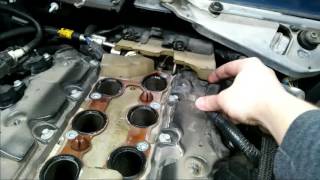
Typical fix: Replace the failed ignition coil. It is strongly recommended to replace the corresponding spark plug at the same time. For coils on the rear bank (cylinders 2, 4, 6), the intake manifold must be removed, so many owners replace all three rear coils and plugs at once to save on future labor. Torque the new coil bolt to 89 in-lbs (10 Nm).
Est. part cost: $30-$70 per coil - Worn or Fouled Spark Plugs 🔴 High Probability Spark plugs are a standard wear item with a typical service interval. Given the age of these vehicles, original or old plugs are a likely cause of weak spark and misfires, which can also overwork and damage the ignition coil.
How to confirm: After identifying the misfiring cylinder, remove and visually inspect the spark plug. Look for a worn electrode, heavy carbon deposits, oil fouling, or an incorrect gap. The correct gap should be between 0.024 to 0.071 inches.
Typical fix: Replace the spark plugs. Iridium plugs are the typical original equipment. It's best practice to replace all six at once, especially if accessing the rear bank.
Est. part cost: $10-$25 per plug - Intake Valve Carbon Buildup 🟡 Medium Probability This is especially common on the 2009-2014 models with the 3.6L LLT direct injection (GDI) engine. Because fuel is injected directly into the cylinder, it no longer washes over and cleans the intake valves. This leads to hard carbon deposits that disrupt airflow and cause misfires, particularly on cold starts, sometimes triggering a P050D code alongside the misfire codes.
How to confirm: This requires removing the upper intake manifold and visually inspecting the intake ports and valves, often with a borescope. The carbon deposits will be thick and black on the valve stems and ports.
Typical fix: The carbon deposits must be physically removed. This is typically done through media blasting (often with walnut shells) or manual scraping with brushes and solvents, which requires the intake manifold to be removed. Chemical spray cleaners are available but are often less effective than manual cleaning for heavy buildup.
Est. part cost: $20-$50 for cleaning supplies/media, or $500+ for a professional service. - Stretched Timing Chains 🟡 Medium Probability The GM 3.6L V6 from this era is notorious for premature timing chain stretching due to chain design and long oil change intervals. This can alter camshaft timing enough to cause misfires, often setting codes like P0008, P0017, or a general P0300 along with the specific misfire.
How to confirm: A professional mechanic can use a high-end scan tool to check camshaft deviation angles. A rattling or whirring noise from the engine, especially on cold startup, is also a common symptom.
Typical fix: This is a major and expensive repair that involves replacing the three timing chains, tensioners, and guides. It often requires dropping the engine from the vehicle for access.
Est. part cost: $300-$800 for a full kit - Faulty Fuel Injector ⚪ Low Probability Injectors can become clogged or fail electronically over time, especially on GDI engines. GM issued a bulletin (20-NA-098) noting that injectors are flow-matched and must be replaced with the correct part number found on the injector body itself.
How to confirm: After ruling out spark issues, the fuel injector is the next component to check on the misfiring cylinder. An injector balance test can be performed with a capable scan tool. Resistance can also be checked with a multimeter, or it can be swapped with another cylinder to see if the misfire moves.
Typical fix: Replace the faulty fuel injector, ensuring the replacement part number matches the specific flow rate required.
Est. part cost: $50-$150 per injector
Rare But Worth Checking
- Low Engine Compression: If spark and fuel systems are confirmed to be working, a mechanical issue like a burnt valve, worn piston rings, or a failed lifter could be the cause. A compression test is needed to verify this. A healthy 3.6L V6 should have 150-185 PSI per cylinder, with no cylinder reading less than 140 PSI.
- Vacuum Leak: A leak in a vacuum hose or the intake manifold gasket can lean out the air-fuel mixture and cause misfires. This usually affects multiple cylinders and might set a P0300 code or lean codes (P0171/P0174) in addition to the misfire.
Diagnosis Steps
- Connect an OBD-II scanner and confirm the P0308 code. Note any other codes, especially P0300 or a specific cylinder misfire (P0301-P0306).
- Acknowledge that P0308 is a 'ghost code' and the real problem lies within cylinders 1 through 6.
- Use a scan tool with live data or Mode $06 capabilities to view the misfire counts for each individual cylinder (e.g., OBDMID $A2 for cylinder 1, $A3 for 2, etc.). This is the most effective way to identify the true source of the misfire.
- Once the correct cylinder is identified, begin diagnosis there. Start with the ignition system as it is the most common cause.
- Swap the ignition coil from the misfiring cylinder with a coil from a known good cylinder. Clear the codes and run the engine. If the misfire code moves to the new cylinder (e.g., a P0304 becomes a P0302), the coil is bad and needs replacement.
- If the misfire stays on the original cylinder, remove and inspect the spark plug. Replace it if it is worn, fouled, or damaged. It's good practice to replace it anyway if its age is unknown.
- If the coil and plug are good, investigate the fuel injector for that cylinder. Check for power and signal, or perform an injector balance test with a scan tool.
- For 2009+ models with the LLT engine, if misfires are most noticeable on cold starts, suspect carbon buildup. This requires removing the intake manifold for visual inspection.
- If multiple random misfires are present and a rattling noise is heard from the front of the engine, investigate timing chain stretch by checking cam/crank correlation with a scan tool.
- As a final step for a persistent single-cylinder misfire, perform a compression test to rule out internal mechanical engine damage like a bad valve or piston ring. A healthy reading is 150-185 PSI, with no cylinder below 140 PSI.
Parts You'll Likely Need
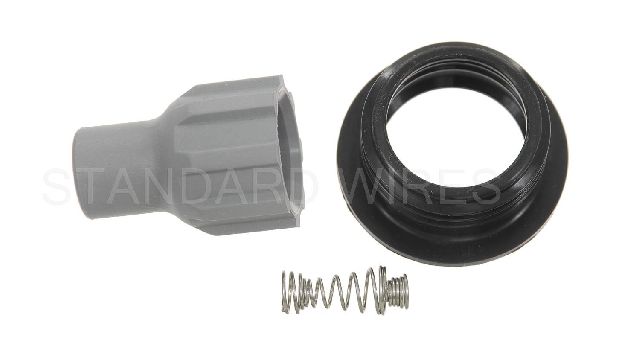
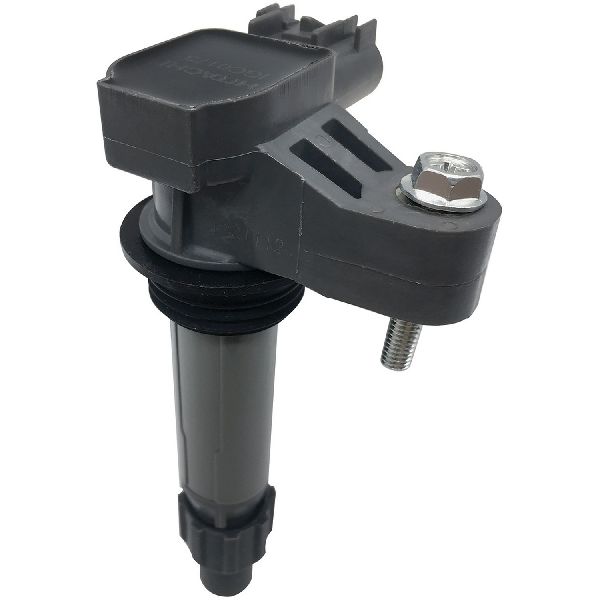
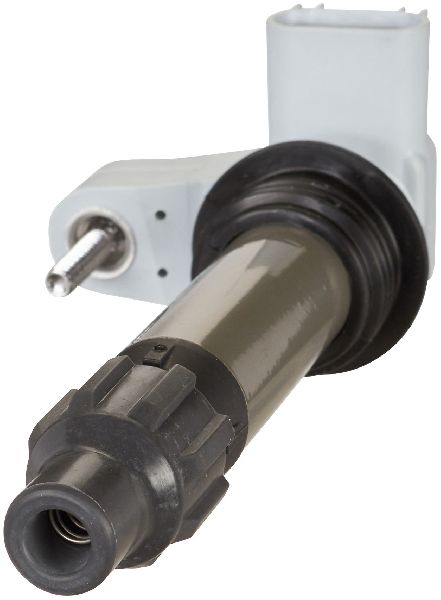
- Ignition Coil
(OEM #12632479)— This is one of the most common failure points on the 3.6L V6 leading to a misfire. This part number supersedes 12590990, 12610626, and 12618542. The ACDelco part is often listed as D515C. - Spark Plug
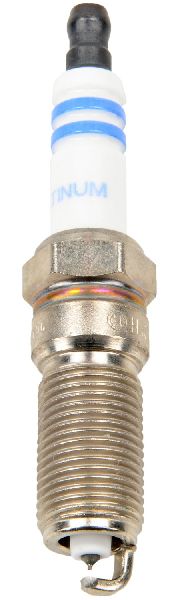
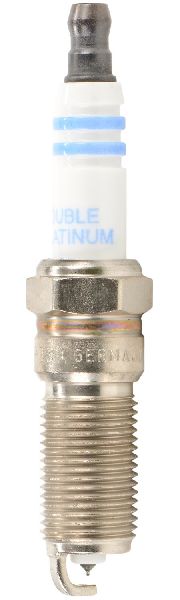
(OEM #ACDelco 41-107 or 41-990 (Iridium))— A standard maintenance item that is often the cause of a misfire and should be replaced with the coil. - Upper Intake Manifold Gasket Set
(OEM #ACDelco 12607443)— Required when replacing ignition coils or spark plugs on the rear bank (cylinders 2, 4, 6) or when cleaning intake valves, as the intake manifold must be removed.
Related Codes That Often Appear With This One
- P0300 — This code for 'Random/Multiple Cylinder Misfire' is often stored alongside P0308, as the ECM recognizes a misfire but struggles to pinpoint the exact location, or multiple cylinders are misfiring.
- P0301, P0302, P0303, P0304, P0305, P0306 — One of these codes, indicating a misfire on a specific, real cylinder, may accompany the P0308. This specific code is the one to focus on for diagnosis, as it reveals the true location of the fault.
- P050D — This code for 'Cold Start Rough Idle' is also mentioned in TSB PIP5628G and can be related to the underlying cause of the misfire, such as heavy carbon buildup on the intake valves of GDI engines.
Technical Service Bulletins (TSBs) & Recalls
- PIP5628G: Diagnostic Aids for Gas Engine Misfire/rough running with DTC P0300-P0308 and/or DTC P050D. This TSB instructs technicians to gather specific data with a scan tool (like GDS2) when diagnosing these codes, including freeze frame records, fuel trims, and individual cylinder misfire data, rather than searching for a non-existent cylinder.
- 20-NA-098: Information on Fuel Injector Replacement Guidelines. This bulletin notes that when replacing injectors on these engines, the specific part number on the injector body must be used to order the correct flow-matched replacement, as multiple types may have been used during production.
Platform-Specific Known Issues
- Rear Bank Access is Difficult: A very common owner complaint is the difficulty of accessing the rear bank of cylinders (2, 4, 6 - closest to the firewall). Replacing these ignition coils or spark plugs requires removing the upper intake manifold. Because of the labor involved, many owners and shops recommend replacing all three rear coils, all six spark plugs, and the intake manifold gaskets at the same time to prevent repeat repairs.
- Owner Story: Misfire Solved by Coil Swap: On acadiaforum.net, a user with a 2011 Acadia reported a P0308 and P0300 code. Using a scan tool, they observed high misfire counts on cylinder #4. They swapped the #4 ignition coil with the #2 coil, cleared the codes, and the misfire moved to cylinder #2 (now showing a P0302). This confirmed the #4 coil was faulty, and replacing it resolved the issue.
Mechanic-Grade Diagnostic Values
- Fuel Pressure (Low Side - Both LY7 & LLT) — expected: 55-60 psi (379-414 kPa) with key on, engine off (prime pulse).. Failure: Pressure below this range indicates a weak in-tank fuel pump or clogged filter.
- Fuel Pressure (High Side - LLT Engine Only) — expected: At idle, the actual pressure should closely match the desired pressure shown on a scan tool, typically around 4 MPa (580 psi).. Failure: Actual pressure significantly lower than desired pressure (e.g., 1-2 MPa) under load or at idle points to a failing high-pressure fuel pump (HPFP).
- Ignition Coil Primary Resistance — expected: 0.5 to 0.9 Ohms.. Failure: A reading outside this range (open or shorted) indicates a faulty coil.
- Ignition Coil Secondary Resistance — expected: 5,000 to 10,000 Ohms (5k-10k Ω).. Failure: A reading significantly outside this range suggests the coil's secondary winding has failed.
- Engine Compression (3.6L V6) — expected: Average of 150-185 PSI across all cylinders.. Failure: Any cylinder reading less than 140 PSI indicates a mechanical engine problem (valves, rings, etc.).
- Long Term and Short Term Fuel Trims — expected: Within +/- 10% at idle and steady cruise.. Failure: Consistently high positive trims (>10%) suggest a vacuum leak; consistently high negative trims (< -10%) suggest an over-fueling condition (e.g., leaking injector).
Scan Tool Commands That Help
- GDS2 (GM Dealer Scan Tool): Cylinder Power Balance — To pinpoint a weak or misfiring cylinder when a specific code (P0301-P0306) is not present. The tool deactivates one fuel injector at a time; a good cylinder will cause a significant RPM drop, while a weak cylinder will cause little to no drop.
- Professional Scan Tool (GDS2, Tech2, etc.): Crankshaft Position System Variation Learn — This procedure is required after replacing the ECM, crankshaft position sensor, crankshaft, or making any repair that disturbs the crank sensor-to-crankshaft relationship. Failure to perform this relearn can result in inaccurate misfire detection and may set a P0315 code.
Wiring & Ground Locations
- Ignition Coil Bank 2 Ground — A ground bolt located on the left rear of the engine (driver's side, near firewall).. This single ground point can be responsible for the entire rear bank of ignition coils (cylinders 2, 4, 6). If it becomes loose, it can cause intermittent misfires on all three of those cylinders, often logging a P0300.
- G113 — Located on the left side of the engine, at the engine-to-transmission stud.. This is a major engine ground point. Corrosion or a loose connection here can cause a wide range of electrical issues, including problems with the ECM and ignition system.
- G110 — Located on the right front of the engine, mounted to the cylinder head.. Provides a ground path for components on the front cylinder head (Bank 1: cylinders 1, 3, 5). A poor connection could contribute to misfires on this bank.
- ECM (Engine Control Module) — In the engine compartment, located on the front of the engine.. All ignition coil and fuel injector signals originate from the ECM. Checking for corrosion or damage at the ECM connectors (X1, X2) is a valid step in a deep diagnosis.
Real Owner Repair Stories
- YouTube user 'The ASE Mechanic' (GMC Acadia with 3.6L V6) — Intermittent P0300 code with misfires specifically on the rear bank (cylinders 2, 4, 6).
❌ Tried (didn't work) Initial checks of coils and plugs did not reveal the root cause.
✅ What actually fixed it The mechanic found a loose 8mm ground bolt on the left rear of the engine. This single bolt was the ground for the entire bank of rear ignition coils. Tightening the bolt resolved the intermittent misfire condition completely.
OEM Part Supersession History
12578224, 12629646→12638824, which was then superseded by 25206788— Updates to improve durability and performance.
Heads up: These are ignition coils (ACDelco D515C / D522C). While physically similar, using the latest part number is recommended for reliability.12660003, 12661027, 12668652, and others→12720122— Design revisions for the direct fuel injector (LLT engine).
Heads up: These are direct fuel injectors for the LLT engine. It is critical to use the correct flow-matched injector for the specific engine and model year.
Model Year Variations Within This Range
- 2007-2008: These models use the 3.6L LY7 engine with multi-port fuel injection (MPFI). Diagnosis for fuel issues focuses on the single set of injectors in the intake manifold and a low-pressure fuel system (55-60 psi).
- 2009-2014: These models use the 3.6L LLT engine with Spark Ignition Direct Injection (SIDI). Fuel system diagnosis is more complex, involving both a low-pressure in-tank pump and a high-pressure, cam-driven pump on the engine. These engines have higher compression (11.3:1 vs 10.2:1 for LY7) and are prone to intake valve carbon buildup, a common misfire cause not seen on the LY7.
Helpful Videos

Used OEM Parts in Stock
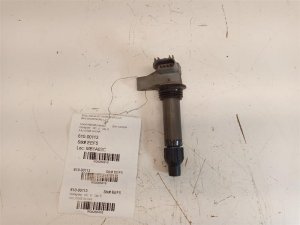
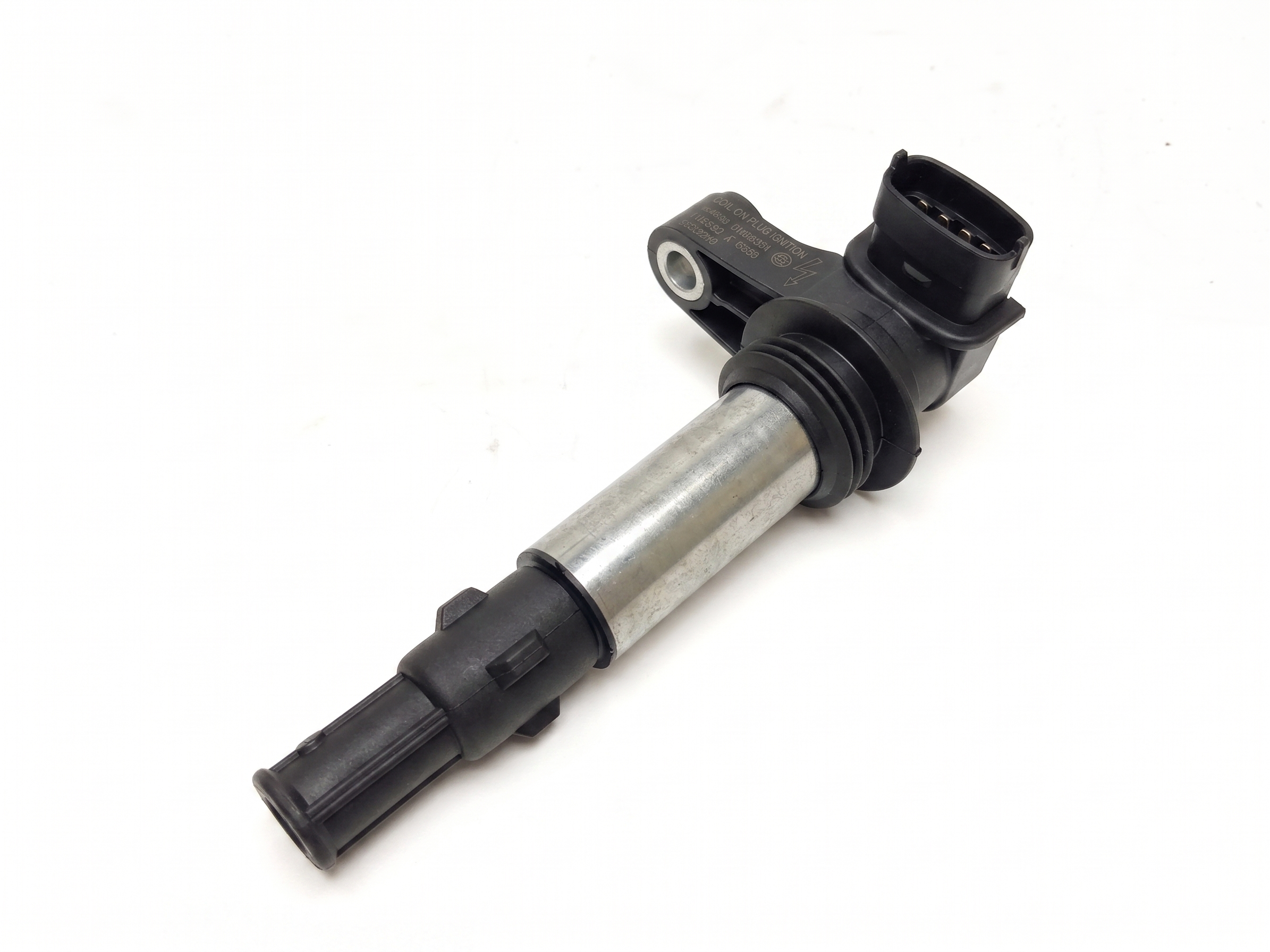



New Aftermarket Parts Available
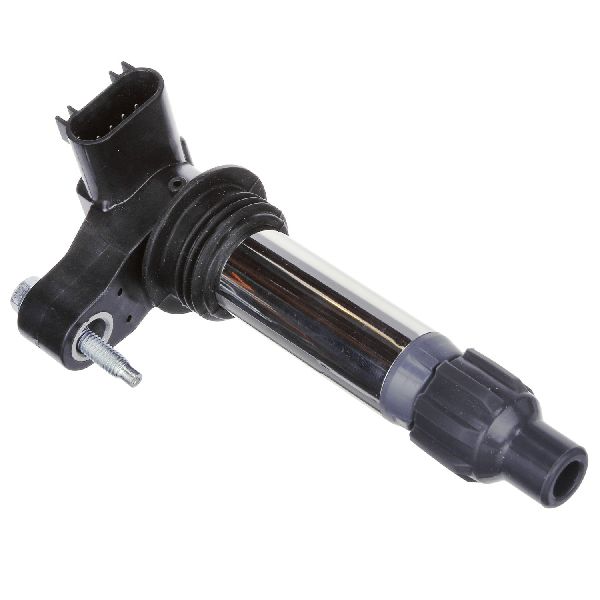

The information in this article is provided for general reference and educational purposes only. Vehicle specifications, procedures, and part compatibility can vary by production date, trim level, and region. Always consult your vehicle's factory service manual and verify part numbers before purchasing or performing repairs. Safety-critical components such as airbags, seat belts, and braking systems should be installed by a qualified professional.
- Gmc ACADIA:
- 🎬 Helpful Videos
- 🛍️ Shop This Part
- What's Unique About the 2007-2014 Gmc ACADIA
- Diagnostic Flowchart
- Symptoms You May Notice
- Most Likely Causes
- Rare But Worth Checking
- Diagnosis Steps
- Parts You'll Likely Need
- Related Codes That Often Appear With This One
- Technical Service Bulletins (TSBs) & Recalls
- Platform-Specific Known Issues
- Mechanic-Grade Diagnostic Values
- Scan Tool Commands That Help
- Wiring & Ground Locations
- Real Owner Repair Stories
- OEM Part Supersession History
- Model Year Variations Within This Range
- 🎟️ Get 5% Off