

P0308 on 1999-2020 Ford E-450 6.8L V10: Cylinder 8 Misfire Causes and Fixes
P0308 indicates a misfire on cylinder 8. On the Ford E-450 with the 6.8L Triton V10, this is most often caused by a failed ignition coil-on-plug (COP). A worn spark plug is the next most likely culprit. Water intrusion into the spark plug well is a very common trigger for coil failure. Replacing a single coil is a DIY-friendly fix costing between $25 and $75.
- P0308 on a Ford E-450 V10 is almost always an ignition issue with cylinder 8.
- The most likely cause is a bad ignition coil, followed by a worn spark plug.
- Use the 'coil swap' method to diagnose a bad coil for free before buying parts.
- If the Check Engine Light is flashing, pull over immediately to prevent expensive catalytic converter damage.
- Be aware of the Triton engine's known spark plug issues; always use a torque wrench during installation.
What's Unique About the 1999-2025 Ford E-450

The 6.8L Triton V10 engine in the E-450 chassis is a workhorse, but it's well-known for specific ignition system vulnerabilities. The primary issue is the high failure rate of the Coil-On-Plug (COP) ignition coils due to heat and vibration. A very common cause of this failure is water intrusion into the spark plug wells, often from cowl or windshield leaks, which shorts out the coil. Additionally, these engines have a documented history of spark plug-related problems. Early 2-valve versions (approx. 1999-2002) are infamous for ejecting spark plugs from the cylinder head due to limited thread engagement in the aluminum heads. Later 3-valve versions (less common in the E-Series but found in other platforms) had issues with two-piece spark plugs breaking during removal. These platform-specific issues make ignition components the prime suspects for any misfire code.
Generation note: The specified vehicle range covers the fourth generation of the Ford E-Series. The 6.8L Triton V10 was the primary gasoline engine from 1999 until it was phased out around 2019-2020 in favor of the 7.3L V8. The core causes of P0308 (coils, plugs) are consistent across this entire period for the V10. All 6.8L V10 engines in the E-Series are the 2-valve version, as the wider 3-valve engine did not fit in the van's engine compartment. Early engines (approx. 1999-2002) have cylinder heads with fewer spark plug threads and are more prone to spark plug blowout. This issue was addressed with updated cylinder head designs around 2003.
Symptoms You May Notice
- Rough idle or shaking/vibrating engine.
- Hesitation or stumbling during acceleration.
- Flashing or steady Check Engine Light.
- Noticeable loss of engine power.
- Difficulty starting the engine.
- Possible fuel smell from the exhaust.
- Replacing all 10 ignition coils and spark plugs when only one has failed. The 'swap test' is a free and effective way to isolate the single faulty component.
- Assuming a bad catalytic converter is the cause. While a misfire can damage a converter, the converter itself does not typically cause a single-cylinder misfire code like P0308.
Most Likely Causes

- Faulty Ignition Coil (Coil-On-Plug) 🔴 High Probability The Coil-On-Plug (COP) units on the Triton V10 are a common failure item due to constant exposure to high engine temperatures and vibration. Moisture intrusion from a leaking cowl or engine washing is a primary cause of failure, shorting out the coil.
How to confirm: The easiest method is to swap the ignition coil from cylinder 8 with another cylinder (e.g., cylinder 7). Clear the codes and run the engine. If the code changes to P0307, the coil is faulty. Cylinder 8 is the third one back on the driver's side. Also inspect the coil boot for carbon tracks or swelling and the connector for broken locking tabs.
Typical fix: Replace the failed ignition coil. It is held in place by a single 7mm bolt. Apply dielectric grease to the inside of the new coil boot to seal out moisture and on the spring for better contact.
Est. part cost: $25-$75 - Worn or Fouled Spark Plug 🟡 Medium Probability Triton engines are sensitive to spark plug condition. A worn plug with an excessive gap can strain the ignition coil, leading to a misfire. Early 2-valve engines (pre-2003) had few threads in the aluminum heads, making them prone to spark plug blowout if not torqued correctly (25 ft-lbs recommended by some technicians).
How to confirm: After ruling out the coil, remove the spark plug from cylinder 8. Inspect it for excessive wear, carbon fouling, oil, or a cracked insulator. A loose spark plug is a major red flag for impending thread failure.
Typical fix: Replace the spark plug. It is highly recommended to replace all 10 plugs if they are near their service interval. Use a torque wrench for installation 🎬 Watch: Step-by-step guide to replacing spark plugs on an E-450 to prevent head damage or blowout. Use a small amount of anti-seize on the threads for 2-valve engines.
Est. part cost: $5-$15 per plug - Failed Fuel Injector ⚪ Low Probability While less common than ignition issues, fuel injectors can become clogged or fail electrically over time, especially on high-mileage work vehicles like the E-450. A clogged injector may not set a specific injector circuit code, but will still cause a misfire.
How to confirm: Use a mechanic's stethoscope to listen for a consistent clicking sound from the injector on cylinder 8. If it's silent or sounds different from others, it may be faulty. A 'noid light' can also be used to confirm the injector is receiving an electrical pulse from the PCM.
Typical fix: Replace the fuel injector for cylinder 8. This involves depressurizing the fuel system and removing the fuel rail. 🎬 See how to diagnose misfires and replace injectors on E-Series
Est. part cost: $50-$150 - Vacuum Leak ⚪ Low Probability The rubber PCV elbow hose located on the throttle body is a notorious failure point. It degrades from heat and oil vapor, cracks, and creates a large vacuum leak. While this often causes a P0171/P0174 lean code, it can also contribute to misfires.
How to confirm: With the engine running, carefully spray brake cleaner or a propane torch (unlit) around the intake manifold base and all vacuum hoses, especially the PCV elbow. If the engine RPM changes, a leak is present. Visually inspect the hoses for cracks.
Typical fix: Replace the leaking gasket or vacuum hose. The PCV elbow is a common and inexpensive part to replace.
Est. part cost: $10-$100
Rare But Worth Checking
- Low Cylinder Compression: This indicates a serious internal engine problem, such as a burnt exhaust valve, worn piston rings, or a failed head gasket. A compression test is required to confirm. While rare on well-maintained engines, severe neglect can lead to internal failures.
- Damaged Wiring or Connector: The wiring harness or the plastic connector for the ignition coil or fuel injector can become brittle and break, causing an intermittent connection. The locking tabs on the coil connectors are particularly prone to breaking, leading to a loose connection. Visually inspect the harness for any signs of damage, especially on high-mileage or work-use vehicles.
Diagnosis Steps

- Read the code with an OBD-II scanner to confirm P0308 is the primary code. Check for other codes like P0171, P0174, or P0358 for more clues.
- Note if the Check Engine Light is flashing. If so, avoid driving to prevent catalytic converter damage.
- Locate cylinder 8. On the 6.8L V10, this is the third cylinder from the front on the driver's side (US). The passenger side cylinders are 1-5 (front to back) and the driver's side are 6-10 (front to back).
- Swap the ignition coil from cylinder 8 with the coil from cylinder 7 (the second cylinder on the driver's side).
- Clear the codes, start the engine, and let it run for a minute or take a short drive. Re-scan for codes.
- If the code is now P0307, the ignition coil is bad and needs replacement.
- If the code remains P0308, the coil is likely good. Proceed to inspect the spark plug.
- Remove and inspect the spark plug from cylinder 8 for wear, damage, or fouling. Check if it was loose in the cylinder head. Replace if necessary.
- If the plug and coil are good, check the wiring and connector to the coil and fuel injector for cylinder 8. Ensure the coil connector's locking tab is not broken and it clicks securely into place.
- Listen to the fuel injector on cylinder 8 with a stethoscope to ensure it is clicking like the others.
- Inspect for vacuum leaks, paying close attention to the PCV hose and elbow at the back of the throttle body.
- If all else fails, perform a compression test on cylinder 8 to check for mechanical engine issues.
Parts You'll Likely Need
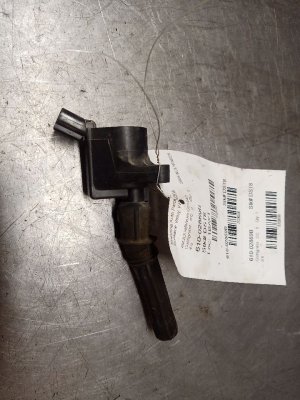
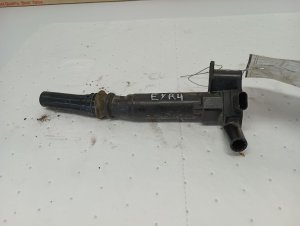
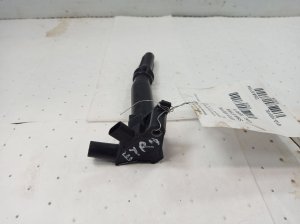
- Ignition Coil (Coil-On-Plug)
(OEM #DG508)— This is the most common failure point for a P0308 code on the 6.8L V10 engine. DG522 is for different Ford applications and is not correct for the V10.
Trusted brands: Motorcraft, Denso, NGK
OEM price range: $50-$75
Aftermarket price range: $25-$50 - Spark Plug
(OEM #Motorcraft SP-479 (for 2-valve engines))— A worn or fouled spark plug is the second most likely cause and is a routine maintenance item that is often neglected.
Related Codes That Often Appear With This One
- P0300 — If the misfire is intermittent or starting to affect other cylinders, a P0300 (Random/Multiple Misfire Detected) code may appear alongside P0308.
- P0171 / P0174 — If the misfire is caused by a vacuum leak (like a bad PCV elbow), a 'System Too Lean' code for one or both engine banks may also be present.
- P0358 — This code indicates an 'Ignition Coil H Primary/Secondary Circuit Malfunction'. If you see P0358 along with P0308, it points directly to a problem with the ignition coil on cylinder 8 or its wiring circuit, rather than a plug or injector.
Technical Service Bulletins (TSBs) & Recalls
- TSB 07-15-2: Outlines the authorized LOCK-N-STITCH procedure for repairing stripped spark plug threads on 2-valve 6.8L engines, confirming it's a known issue.
- TSB 08-7-6: Pertains to the 3-valve engines' two-piece spark plug breaking issue, advising removal when the engine is cold to reduce breakage risk.
- TSB 07-21-2014: Also addresses spark plug thread repair for 2-valve engines.
Platform-Specific Known Issues

- Early 2-valve engines (approx. 1999-2004) have cylinder heads with few spark plug threads, creating a risk of 'spark plug blowout' if plugs are not torqued correctly. A ticking noise can be a precursor to this failure. Repair often involves a thread insert kit like a Time-Sert.
- Moisture intrusion into the spark plug wells from a leaking cowl seal is a very common cause of ignition coil failure. Always apply dielectric grease inside the new coil boot to help seal the well.
- The plastic locking tabs on the ignition coil electrical connectors become brittle with age and can break, leading to a poor connection and intermittent misfires that can be hard to diagnose.
Mechanic-Grade Diagnostic Values
- Ignition Coil Primary Resistance (2-Valve DG508) — expected: Approx. 0.660 Ohms. Failure: Significant deviation from this value, or an open/infinite reading.
- Ignition Coil Secondary Resistance (2-Valve DG508) — expected: Approx. 6.1 kOhms (6100 Ohms). Failure: Significant deviation, or an open/infinite reading. Some sources give a wider acceptable range of 3.5-9.5 kOhms.
- Fuel Injector Resistance — expected: Approx. 14.3 - 14.5 Ohms. Failure: A reading far outside this range, or an open/shorted reading, indicates a failed injector coil.
- Fuel Pressure (Key On, Engine Off) — expected: Approx. 51-65 PSI. Early models with a return-style system may be lower (closer to 40 PSI), while later returnless systems are higher (55-65 PSI).. Failure: Pressure that is significantly below the specified range or that bleeds off more than 5 PSI within one minute of the pump shutting off.
- Ignition Coil Connector Voltage (Pin 1, DG/VT wire for Cyl #7) — expected: 12V+ with key on. Failure: No voltage indicates a problem with the power supply to the coil.
- PCM Misfire Counts (Mode 6, Test ID $53) — expected: Zero or very low counts on all cylinders.. Failure: A high and incrementing count for Component ID corresponding to Cylinder 8 confirms the misfire, even before the CEL is triggered.
Hidden / Shadow Codes Worth Checking
- Mode 6, Test ID $53: This is not a typical trouble code, but a diagnostic monitor in the PCM. Test ID $53 tracks the misfire count for each individual cylinder. A high count for cylinder 8 can confirm the misfire is occurring, even if it's not frequent enough to keep the check engine light on continuously. (see via A professional scan tool or an advanced consumer OBD-II scanner with Mode 6 data capability.)
Scan Tool Commands That Help
- Ford IDS / FORScan / High-End Scanners: Power Balance Test — This is the most effective scan tool test for a misfire. It graphically displays the rotational speed contribution of each cylinder in real-time. A P0308 will show a significant, consistent drop or lack of contribution from cylinder #8, instantly confirming the misfire location without getting your hands dirty.
- Ford IDS / FORScan / High-End Scanners: Injector Buzz Test — After confirming the misfire with the Power Balance test, an injector buzz test can be used to quickly verify the electrical integrity of the fuel injector solenoid. The tool commands the PCM to cycle the injector, which should produce an audible clicking sound. If cylinder 8's injector is silent, it points to an electrical failure in the injector or its circuit.
Wiring & Ground Locations
- Cylinder 8 Coil Connector Pin 2 — This is the signal wire from the PCM to the ignition coil on cylinder 8. Based on the pattern for cylinder 7, the PCM pin for cylinder 8's coil is likely Pin 52.. If the coil and plug are good, a noid light or oscilloscope on this pin can verify if the PCM is sending a trigger signal. A missing signal points to a wiring break or a failed PCM driver.
- Main Engine Grounds — Key ground points are typically located on the engine block and in the left front of the engine compartment, bolting the harness to the chassis.. A corroded or loose main ground can cause a host of intermittent electrical issues, including weak spark that can lead to misfires. While it would usually affect more than one cylinder, it's a critical check for hard-to-diagnose electrical gremlins.
- Ignition Coil Pigtail Connector — The 2-pin plastic connector that plugs into the top of the ignition coil for cylinder 8.. The plastic locking tabs on these connectors become brittle with age and frequently break. A loose-fitting connector can vibrate and cause an intermittent loss of signal or power to the coil, resulting in a misfire that seems to come and go.
Real Owner Repair Stories
- Ford Truck Enthusiasts forum user 'j.grif' (2006 Ford V10 with 34,790 miles) — P0308 code, funky starting, miss at idle and tip-in.
❌ Tried (didn't work) Replacing the spark plug in cylinder 8., Replacing the ignition coil on cylinder 8.
✅ What actually fixed it The issue was resolved after running two cans of Seafoam and a bottle of STP fuel system cleaner through the fuel tank, suggesting the root cause was a partially clogged fuel injector on cylinder 8. - Ford Truck Enthusiasts forum user 'Jbeam91' (Ford Excursion V10 (year not specified)) — Persistent single-cylinder misfire code (on cylinder 10 in this case) after swapping coils.
❌ Tried (didn't work) Replacing the spark plug., Swapping ignition coils with a known-good cylinder.
✅ What actually fixed it The problem was a faulty ignition coil connector pigtail. The owner was not getting a flash when testing with a noid light, indicating a wiring issue. Soldering in a new pigtail for the coil connector resolved the misfire.
"I Checked Everything" — The Actual Cause
- In many cases where a P0308 persists after replacing the coil and spark plug, the cause is not a vacuum leak that a smoke test would find. Instead, the issue is often electrical or fuel-related. A common culprit is a degraded ignition coil connector pigtail that has a broken locking tab or internal corrosion, causing a poor connection. Another frequent cause is a partially clogged fuel injector on cylinder 8, which won't provide enough fuel for complete combustion but won't necessarily set an injector-specific code.
When the Usual Fixes Don't Work
- While the vast majority of P0308 codes on the 6.8L V10 are caused by a bad ignition coil, numerous owner reports confirm that simply replacing the coil and plug does not always fix the issue. In a significant number of cases, the problem persists, with the ultimate solution being the replacement of a faulty fuel injector or a damaged ignition coil wiring pigtail. One owner chased a P0308 code after replacing the coil, only to find that cleaning the fuel system with additives resolved the issue, pointing to a clogged injector. Another fixed a persistent misfire by soldering in a new coil connector, as the original was no longer making a reliable connection. This demonstrates that if a coil and plug swap doesn't work, the next step should be a close inspection of the injector and coil wiring for cylinder 8, rather than assuming a more complex mechanical fault.
OEM Part Supersession History
DG508 / 3W7Z-12029-AA→DG508 remains the common part number.— This is the standard Motorcraft part number for the 2-valve V8/V10 engines.
Heads up: Crucially, do not use ignition coil DG511. The DG511 is for the 3-valve modular engines (like the 5.4L in F-150s) and has a straight boot. The 6.8L V10 in the E-450 is a 2-valve engine and requires the DG508 coil, which has a slight curve to its boot. While they may look similar, they are not interchangeable.
Model Year Variations Within This Range
- 1999-2004 vs 2005-2020: The fuel system changed from a mechanical return-style system to an electronic returnless system. Early models have a vacuum-operated fuel pressure regulator on the fuel rail. Later models have the regulator inside the fuel tank and use a Fuel Pump Driver Module (FPDM) to control fuel pressure electronically. This changes the diagnostic procedure and expected fuel pressure readings.
- 1999-2002 vs 2003-2020: Early model 2-valve heads had fewer threads for the spark plugs, making them infamous for 'blowing out' spark plugs if not torqued correctly. Ford updated the cylinder head design around 2003 to include more threads, significantly reducing this risk.
- 1999-2020 (E-Series) vs F-Series trucks: The Ford E-Series (including the E-450) used the 2-valve 6.8L V10 for its entire production run. The F-Series Super Duty trucks switched to a 3-valve version of the 6.8L V10 in 2005. Therefore, issues specific to the 3-valve engine (like two-piece spark plugs breaking) do not apply to the E-450.
Diagnostic Flowchart
Other Known Issues on This Vehicle
Issues unrelated to this code that are worth knowing about as an owner of this generation:
- Spark Plug Ejection ('Blowout') 🔴 High — Common on 2-valve engines (approx. 1999-2004) due to insufficient thread engagement in aluminum heads. Can occur at any mileage if plugs are not torqued correctly. (Ref: TSB 07-15-2, TSB 07-21-2014)
- Broken Exhaust Manifold Studs 🔴 High — Extremely common across all years. The rear-most studs are most prone to breaking due to heat cycling and corrosion, causing an exhaust leak tick. (Ref: Ford offers upgraded stainless steel studs (Part #W703902-S403) and nuts (Part #W701706-S2) for repair.)
- Cracked/Collapsed PCV Hose/Elbow 🟠 Medium — The rubber elbow connecting the PCV valve to the intake manifold becomes brittle and cracks, creating a significant vacuum leak that can cause lean codes (P0171/P0174) and rough idling.
- Water Intrusion into Spark Plug Wells 🟠 Medium — Commonly caused by leaking cowl seals or during engine washing. Water pools in the spark plug wells, shorting out the ignition coil and causing misfires.
Used vs. New Parts: Buying Guide for This Vehicle
When a used part is the smart pick: For this repair, using used parts is generally not recommended for the most common failure items (coils, plugs, injectors). However, if a wiring issue is diagnosed, a used engine wiring harness pigtail from a junkyard can be a cost-effective solution. A complete fuel rail assembly from a low-mileage donor vehicle could also be a viable option if multiple injectors are suspected to be faulty.
Donor-vehicle mileage cap: roughly under 80000 miles for the part to have meaningful remaining life.
What to inspect on the donor part:
- For wiring pigtails, inspect for any cracks in the plastic, ensure the locking tab is intact and functional, and check for corrosion on the metal pins.
- Look for a donor vehicle that appears well-maintained and is from a dry, salt-free climate to minimize corrosion.
- Avoid parts from vehicles that show signs of engine fire, flood damage, or a severe front-end collision.
OEM-only on this vehicle (don't cheap out):
- Powertrain Control Module (PCM) - Aftermarket or improperly programmed used PCMs can cause a host of issues.
Aftermarket brands forum-validated for this vehicle:
- Motorcraft (OEM)
- Denso (Often an OEM supplier)
- NGK (For spark plugs and coils)
- MSD / Edelbrock (Considered performance upgrades)
Brands owners have reported issues with on this vehicle:
- Unnamed 'eBay special' coil packs are a gamble; while many users report success, quality control is inconsistent.
- One user reported a catastrophic failure with an Accel coil that allegedly damaged the ECU, though this is a single anecdotal report.
Real Owner Stories
Aggregated from forums and TSBs cited above. Mileages and costs reflect what owners reported in those sources.
2016 Ford F-Series 6.8L V10
Symptoms: Owner discovered a dead cylinder and a horrible miss with codes P0308 and P0174.
What fixed it: The owner found the spark plug had backed out of the cylinder, which is a known precursor to a full blowout.
Source hint: https://www.ford-trucks.com/forums/1460945-dead-cylinder-horrible-miss-p0308-p0174.html
1999 Ford E-350 6.8L V10
Symptoms: Chasing multiple misfire codes including P0304 and P0308.
What fixed it: Identified that broken plastic locking tabs on the ignition coil electrical connectors were causing intermittent misfires.
Source hint: https://www.ford-trucks.com/forums/1609139-misfire-codes-p0304-p0308-p0118.html
2010 Ford Truck 6.8L V10 — ~50000 miles
Symptoms: Low-mileage truck experiencing a P0308 cylinder 8 misfire.
What fixed it: After replacing the coil and plug, the owner suspected a faulty fuel injector.
Source hint: https://www.ford-trucks.com/forums/1004183-p0308-cylinder-8-misfire.html
Ford F-53 Motorhome Chassis 6.8L V10
Symptoms: Common issues discussed in RV forums regarding misfires and exhaust leaks under heavy load.
What fixed it: Tackling broken exhaust manifold studs using ProMaxx tools.
Source hint: https://www.irv2.com/forums/f23/fixing-our-broken-ford-exhaust-manifold-studs-with-promaxx-tools-598355.html
Related OBD-II Codes
Frequently Asked Questions
Where is cylinder 8 located on my 6.8L Triton V10 engine?
I have a 2002 E-450; is there a specific TSB for spark plug thread issues on my 2-valve engine?
My E-450 has a ticking noise along with the P0308 code. Should I be worried?
Can moisture from a leaking cowl cause my P0308 misfire?
What torque should I use for the spark plugs to prevent blowout on my 1999-2004 V10?
Is there a TSB for the 3-valve V10 engines regarding spark plug removal?
Helpful Videos
We Have This Part in Stock


The information in this article is provided for general reference and educational purposes only. Vehicle specifications, procedures, and part compatibility can vary by production date, trim level, and region. Always consult your vehicle's factory service manual and verify part numbers before purchasing or performing repairs. Safety-critical components such as airbags, seat belts, and braking systems should be installed by a qualified professional.
- Ford E-450:
- 🎬 Helpful Videos
- 🛍️ Shop This Part
- What's Unique About the 1999-2025 Ford E-450
- Symptoms You May Notice
- Most Likely Causes
- Rare But Worth Checking
- Diagnosis Steps
- Parts You'll Likely Need
- Related Codes That Often Appear With This One
- Technical Service Bulletins (TSBs) & Recalls
- Platform-Specific Known Issues
- Mechanic-Grade Diagnostic Values
- Hidden / Shadow Codes Worth Checking
- Scan Tool Commands That Help
- Wiring & Ground Locations
- Real Owner Repair Stories
- "I Checked Everything" — The Actual Cause
- When the Usual Fixes Don't Work
- OEM Part Supersession History
- Model Year Variations Within This Range
- Diagnostic Flowchart
- Other Known Issues on This Vehicle
- Used vs. New Parts: Buying Guide for This Vehicle
- Real Owner Stories
- 2016 Ford F-Series 6.8L V10
- 1999 Ford E-350 6.8L V10
- 2010 Ford Truck 6.8L V10 — ~50000 miles
- Ford F-53 Motorhome Chassis 6.8L V10
- Related OBD-II Codes
- Frequently Asked Questions
- 🎟️ Get 5% Off