

P0308 on 2021-2025 Ford E-350: Cylinder 8 Misfire Causes and Fixes
A P0308 code on a Ford E-350 with the 7.3L V8 engine indicates a misfire in cylinder #8. Common causes are faulty spark plug wires, ignition coils, or spark plugs. However, a notable and serious issue for this engine, covered by Ford TSBs, is internal engine damage involving worn camshafts and/or valve tappets (lifters), which can lead to a misfire.
- P0308 signifies a misfire on cylinder #8, which is the rearmost cylinder on the driver's side.
- The most likely and easiest-to-fix causes are a bad spark plug wire or ignition coil.
- Always start diagnosis by swapping the ignition coil and then the spark plug wire from cylinder #8 to another cylinder to see if the misfire follows.
- Be aware that a serious mechanical issue involving the camshaft and lifters is a known problem for this engine (TSB 25-2572) and may be the root cause if simple ignition fixes fail.
- Driving with a persistent misfire can cause expensive damage to the catalytic converter.
What's Unique About the 2021-2025 Ford E-350
The 2021-2025 Ford E-350 is equipped with the 7.3L "Godzilla" V8 engine, a large displacement, pushrod V8 designed for heavy-duty use. While generally robust, this platform has two widely documented issues that directly cause misfires. The first is a known weakness in the factory spark plug wires, which are susceptible to heat damage from the exhaust manifold. More critically, Ford has issued Technical Service Bulletins (including TSB 25-2572) which identify excessive wear on the camshaft and/or valve tappets (lifters) as a cause for misfire codes, pointing to a potential for serious internal engine problems. [⭐]
Diagnostic Flowchart
Tap your situation to follow the diagnostic path that matches what you're seeing on this vehicle.
Symptoms You May Notice
- Rough or shaking idle
- Engine hesitation or stumbling during acceleration, especially under load.
- Flashing Check Engine Light
- Loss of engine power
- Reduced fuel economy
- Audible ticking or tapping noise from the engine, which could indicate a lifter/camshaft issue. 🎬 Listen: What a failing lifter or camshaft sounds like at idle.
- Replacing only the spark plug without inspecting the spark plug wire. On the 7.3L engine, the wire is a more common failure point than the plug itself.
- Assuming a simple tune-up will fix the issue when the underlying cause is the camshaft/lifter failure. A compression test is crucial if the misfire persists after replacing ignition components.
Most Likely Causes
- Faulty Spark Plug Wires 🔴 High Probability The OEM spark plug wires on the 7.3L V8 are a known weak point, prone to failure from high engine heat. Ford has released several updated part numbers to address this. Owners often report misfires under load, like towing, as a primary symptom.
How to confirm: Inspect the wire for cylinder #8 for any signs of arcing (white marks), melting, or physical damage. A definitive test is to swap the wire from cylinder #8 with another cylinder (e.g., #6). If the misfire code changes to P0306, the wire is faulty. Misting the wires with water in the dark can sometimes reveal arcing.
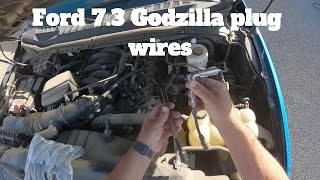
Typical fix: Replace all eight spark plug wires with a high-quality aftermarket set that offers better heat resistance or the latest Ford revision. 🎬 Watch: A quick walkthrough on replacing these spark plug wires. Many owners opt for brands like MSD or Ford's own updated parts.
Est. part cost: $60-$150 - Internal Engine Damage (Worn Camshaft/Tappets) 🟡 Medium Probability TSB 25-2572 explicitly states that misfire codes P0301-P0308 can be caused by excessive wear on the camshaft and/or valve tappets (lifters). [⭐] This is a known mechanical issue with the 7.3L "Godzilla" engine, sometimes leading to complete engine replacement under warranty. The failure may be linked to low oil pressure at idle in some applications.
How to confirm: This requires professional diagnosis. A mechanic will start with a relative compression test or a Power Balance test using a scan tool like Ford IDS. If cylinder #8 shows low contribution or compression, a manual compression test will be performed. If compression is low and ignition/fuel are ruled out, inspection of the valvetrain by removing the valve cover is the next step. Metal debris in the oil filter from a destroyed lifter is a strong indicator.
Typical fix: This is a major repair involving replacing the camshaft and all 16 valve tappets/lifters. In many cases, Ford has opted to replace the entire long block assembly under warranty.
Est. part cost: $1000-$2500+ (for parts alone); $8000+ for a long block replacement. - Faulty Ignition Coil 🟡 Medium Probability Coil-on-plug systems are common failure points on many modern engines. Heat and vibration can cause the coil to fail over time. While less common than wires on this engine, it is still a frequent cause of single-cylinder misfires.
How to confirm: Swap the ignition coil from cylinder #8 with another cylinder (e.g., #7). Clear the codes and run the engine. If the code changes to P0307, the ignition coil is the culprit.
Typical fix: Replace the faulty ignition coil. It is often recommended to replace the corresponding spark plug at the same time.
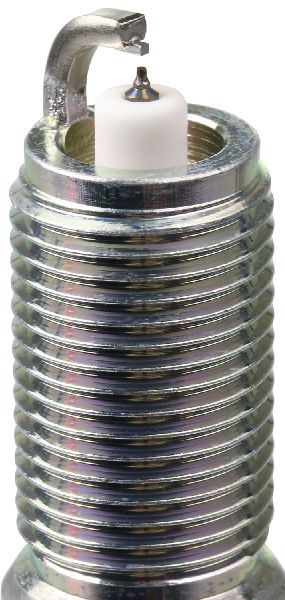
Est. part cost: $40-$90 - Worn or Fouled Spark Plug ⚪ Low Probability While spark plugs are a routine maintenance item, they are less likely to be the primary cause on this platform compared to the wires, but can still fail or become fouled by oil or fuel from another issue.
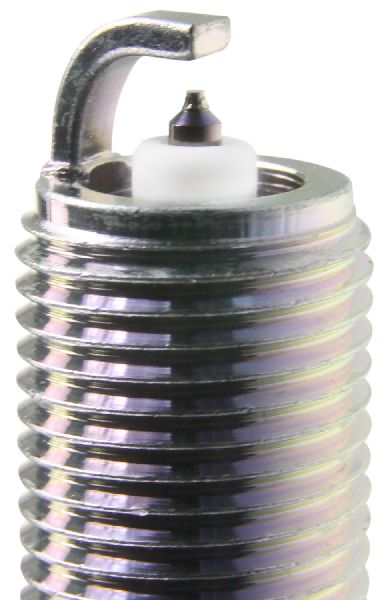
How to confirm: After ruling out the wire and coil, remove the spark plug from cylinder #8. Inspect it for wear, oil fouling, carbon tracking, or damage to the electrode. A cracked insulator can also cause a misfire. The correct spark plug gap is 1.25 mm - 1.35 mm (0.049 in - 0.053 in).
Typical fix: Replace the spark plug. It's best practice to replace all eight plugs at once to ensure consistent performance.
Est. part cost: $5-$20 per plug - Faulty Fuel Injector ⚪ Low Probability
How to confirm: If ignition components are confirmed good, a mechanic can perform a fuel injector balance test or a Power Balance test with a capable scan tool. Another method is to swap the fuel injector from cylinder #8 with another cylinder, though this is more labor-intensive than swapping ignition parts.
Typical fix: Replace the faulty fuel injector and its seals. Running a quality fuel system cleaner is sometimes suggested as a first, inexpensive step.
Est. part cost: $50-$120
Rare But Worth Checking
- Low Compression: Separate from the TSB, other issues like a bad valve, a damaged piston, or scored cylinder walls could cause low compression, leading to a misfire. A boroscope inspection can sometimes identify these issues without a full teardown.
- Vacuum Leak: A vacuum leak near the intake manifold runner for cylinder #8 could lean out the air/fuel mixture enough to cause a misfire, though this would likely be accompanied by other codes and affect adjacent cylinders.
- PCM/Wiring Issue: In rare cases, a fault in the Powertrain Control Module (PCM) or a damaged wire in the engine harness leading to the coil or injector for cylinder #8 can cause the misfire. This is usually diagnosed after all other possibilities are exhausted.
Diagnosis Steps
- Read the trouble codes with an OBD-II scanner to confirm P0308 and check for any other codes (e.g., P0300, P0316, P0358).
- Identify cylinder #8. On the Ford 7.3L V8, the passenger side cylinders are 1-4 (front to back) and the driver's side are 5-8 (front to back). Cylinder #8 is the rearmost cylinder on the driver's side.
- Visually inspect the spark plug wire for cylinder #8. Look for obvious signs of heat damage, melting, or white, powdery marks indicating electrical arcing.
- Swap the ignition coil from cylinder #8 with an adjacent cylinder (e.g., #7). Clear the codes and drive the vehicle. If the code changes to P0307, the ignition coil is bad.
- If the code remains P0308, swap the spark plug wire from cylinder #8 with an adjacent cylinder (e.g., #6). Clear the codes and drive. If the code changes to P0306, the wire is bad.
- If the code still remains P0308, remove and inspect the spark plug for wear, damage, or fouling (oil or fuel). Replace if necessary.
- If all ignition components appear to be in good working order, the issue may be fuel-related (fuel injector) or a more serious mechanical problem. At this point, a professional diagnosis is highly recommended.
- A mechanic should perform a relative compression test or a Power Balance test using a scan tool. If cylinder #8 shows a significant loss compared to others, this points towards a mechanical issue.
- If low compression is confirmed, the next step is to investigate the cause, referencing TSB 25-2572 for the known camshaft/lifter issue. This may involve checking for metal in the oil and removing the valve cover for inspection. [⭐, 44]
Parts You'll Likely Need
- Spark Plug Wires
(OEM #LC3Z-12286-C or newer LC3Z-12286-D)— The factory wires are a known weak point due to engine heat, making them a primary cause of misfires on the 7.3L V8. The 'C' and 'D' revisions are considered upgrades over the original 'A' and 'B' part numbers.
Trusted brands: Motorcraft, MSD, Firecore, Granatelli
OEM price range: $100-$180 (set of 8)
Aftermarket price range: $80-$200 (set of 8) - Ignition Coil
(OEM #LC3Z-12029-A (Motorcraft DG-587))— While less prone to failure than the wires on this engine, an ignition coil can fail from heat and vibration, causing a single-cylinder misfire.
Related Codes That Often Appear With This One
- P0300 — This code means 'Random/Multiple Cylinder Misfire Detected.' It can appear alongside P0308 if the misfire is intermittent or if other cylinders are also failing, which is common with failing spark plug wires or widespread lifter issues.
- P0316 — This code indicates 'Misfire Detected on Startup (First 1000 Revolutions).' It often accompanies specific cylinder misfire codes like P0308, especially if the cause is mechanical, like a stuck lifter.
- P0358 — This indicates an issue in the ignition coil primary or secondary circuit for cylinder 8. It points more specifically to an electrical problem with the coil or its wiring, rather than a mechanical misfire.
Technical Service Bulletins (TSBs) & Recalls
- TSB 23-2252
- TSB 20-2370
Platform-Specific Known Issues
- TSB 23-2252: Camshaft/Tappet Wear: This is the most current bulletin addressing misfire codes (P0301-P0308), rough idle, and/or engine ticking noises. It identifies excessive wear on the camshaft and/or valve tappets (lifters) as the cause. The repair involves significant engine work, often replacing the cam and all lifters.
- TSB 20-2370: Spark Plug Wire Failure: Issued for earlier 7.3L engines but still highly relevant, this bulletin addresses misfires caused by heat-damaged spark plug wires. It recommends replacing all eight wires and, in some applications, modifying an air baffle to improve cooling.
Mechanic-Grade Diagnostic Values
- Spark Plug Gap — expected: 1.25 mm - 1.35 mm (0.049 in - 0.053 in). Failure: An incorrect gap can lead to a weak spark and misfires.
- Spark Plug Wire Resistance (Aftermarket Example) — expected: Approx. 350 ohms per foot. Failure: Extremely high resistance (open circuit) or very low resistance (short) indicates a bad wire.
- Ignition Coil Resistance (Aftermarket Example) — expected: Primary: ~0.68 Ohms, Secondary: ~4.8K Ohms. Failure: Readings significantly outside the expected range suggest a faulty coil winding.
- Fuel Injector Flow Rate (Stock) — expected: 35 lbs./hr. Failure: This is a baseline spec; a clogged injector will have reduced flow, causing a lean misfire.
Hidden / Shadow Codes Worth Checking
- Mode $06, Test ID $51, Component ID $08: Mode $06 is a diagnostic function that shows test results for non-continuous monitors. For Ford, Test ID $51 tracks misfire counts for each cylinder (Component ID). CID $08 corresponds to cylinder #8. A technician can view these raw counts to see if cylinder 8 is misfiring intermittently, even if the count is not yet high enough to set a P0308 trouble code. (see via A capable OBD-II scanner or software like Forscan that can display Mode $06 data.)
Scan Tool Commands That Help
- Ford IDS (Integrated Diagnostic System): Power Balance Test — This is a key professional diagnostic test. It displays a graph showing the RPM contribution of each cylinder in real-time. A cylinder with a misfire (like #8) will show a significant drop in contribution compared to the others, quickly confirming the location of the fault without swapping parts.
- Forscan: KOEO Injector Electrical Self Test (Buzz Test) — After ruling out ignition issues, this test can help verify the electrical integrity of the fuel injectors. The PCM commands each injector to 'buzz' in sequence. A weak or absent buzz from cylinder #8 would indicate a problem with the injector's solenoid or its wiring.
Real Owner Repair Stories
- Ford Truck Enthusiasts forum user (2020 Ford F-250 with 7.3L V8, failure at 428 miles) — Check Engine Light came on, complete loss of power.
❌ Tried (didn't work) Initial dealer diagnosis was slow and information was not readily shared.
✅ What actually fixed it The root cause was determined to be 'dropped a couple of lifters.' Ford replaced the entire engine assembly under warranty. - Creative Werks Inc. technical blog (Ford 7.3L Godzilla engine in a custom build) — Repeated failure of timing components after rebuilds.
❌ Tried (didn't work) Replacing broken timing sprockets without finding the root cause.
✅ What actually fixed it A full teardown revealed the true cause: a cam bearing oil passage was blocked by fragments from a destroyed lifter. This starved the cam of oil, causing the timing sprocket to fail under increased friction. This highlights the destructive cascade effect of a single lifter failure.
OEM Part Supersession History
LC3Z-12286-A, LC3Z-12286-B→LC3Z-12286-D (also known as WR-6170)— The original spark plug wires were prone to heat damage from the exhaust manifold. The newer revisions offer improved heat resistance to mitigate misfires.
Heads up: The newer parts are direct replacements and should be used instead of the older, failure-prone versions.
Model Year Variations Within This Range
- 2023-2025: The 2023 and newer versions of the 7.3L engine feature a new intake manifold and a larger 86mm throttle body (up from 80mm), which improves airflow and torque figures compared to the 2020-2022 engines.
- 2021-2025 (specific models): Ford issued a PCM software update for certain commercial/detuned versions of the 6.8L/7.3L engines to address low oil pressure at idle. This issue is a suspected contributor to the lifter/camshaft wear problem. According to user reports, this update was not made available for standard, non-commercial trucks.
Helpful Videos
We Have This Part in Stock

The information in this article is provided for general reference and educational purposes only. Vehicle specifications, procedures, and part compatibility can vary by production date, trim level, and region. Always consult your vehicle's factory service manual and verify part numbers before purchasing or performing repairs. Safety-critical components such as airbags, seat belts, and braking systems should be installed by a qualified professional.
- Ford E-350:
- 🎬 Helpful Videos
- 🛍️ Shop This Part
- What's Unique About the 2021-2025 Ford E-350
- Diagnostic Flowchart
- Symptoms You May Notice
- Most Likely Causes
- Rare But Worth Checking
- Diagnosis Steps
- Parts You'll Likely Need
- Related Codes That Often Appear With This One
- Technical Service Bulletins (TSBs) & Recalls
- Platform-Specific Known Issues
- Mechanic-Grade Diagnostic Values
- Hidden / Shadow Codes Worth Checking
- Scan Tool Commands That Help
- Real Owner Repair Stories
- OEM Part Supersession History
- Model Year Variations Within This Range
- 🎟️ Get 5% Off