

P0308 on 2000-2004 Chevrolet Venture: An Impossible Misfire Code Explained
A P0308 code on a 2000-2004 Chevrolet Venture is impossible, as its V6 engine only has 6 cylinders. This indicates an error with the scan tool. The vehicle likely has a real misfire on a different cylinder (P0301-P0306) or a random misfire (P0300), often caused by a failed fuel pressure regulator or bad ignition components.
- P0308 is an impossible code for a V6 Chevrolet Venture; it indicates a scan tool error, not a problem with an 8th cylinder.
- The real issue is a misfire. Use a different scanner to find the correct code, which will likely be P0300 (random) or P0301-P0306 (specific cylinder).
- For random misfires (P0300) on this van, the most likely culprit is a leaking fuel pressure regulator. Check its vacuum line for fuel first.
- Other common causes for misfires on the 3.4L V6 are worn spark plugs/wires (especially the hard-to-reach rear bank) and failed lower intake manifold gaskets.
- Do not replace any parts based on the P0308 code alone. Proper diagnosis must start with identifying the correct trouble code.
What's Unique About the 2000-2004 Chevrolet VENTURE
The Chevrolet Venture from this period was only equipped with the 3.4L LA1 V6 engine, which has only six cylinders. Therefore, it is physically impossible for cylinder #8 to misfire. Seeing a P0308 code is not an indication of a problem with a specific cylinder, but rather a data error, most likely from the OBD-II scanner being used. The actual problem is a misfire, but the reported cylinder is incorrect. The GM TSB #PIP5628G groups misfire codes P0300-P0308 together for diagnostic purposes, which may contribute to why some generic scan tools can produce this confusing output.
Diagnostic Flowchart
Tap your situation to follow the diagnostic path that matches what you're seeing on this vehicle.
Symptoms You May Notice
- Check Engine Light is on or flashing
- Rough idle or engine shaking
- Hesitation or stumbling during acceleration
- Loss of engine power
- Reduced fuel economy
- A smell of raw fuel from the exhaust
- Difficulty starting the engine
- Searching for Cylinder 8
- Replacing parts based on the P0308 code without verifying the true misfiring cylinder
- Replacing ignition components when the true cause is a leaking fuel pressure regulator or LIM gasket
Most Likely Causes
- Scan Tool Error 🔴 High Probability The vehicle only has a V6 engine, making a P0308 code a logical impossibility. This points to an issue with how the scan tool is interpreting the data from the vehicle's computer. Low-quality or older scanners are more prone to this error.
How to confirm: Re-scan the vehicle with a different, preferably higher-quality, OBD-II scanner. Look for codes P0300 (Random Misfire) or P0301, P0302, P0303, P0304, P0305, or P0306, which correspond to the actual cylinders.
Typical fix: Ignore the P0308 code and diagnose the correct misfire code that appears with a reliable scanner.
Est. part cost: $0 - Leaking Fuel Pressure Regulator 🔴 High Probability The diaphragm in the fuel pressure regulator on the GM 3.4L V6 is a very common failure point. It ruptures and allows raw fuel to be drawn into the intake manifold through its vacuum line, causing random, rich misfires that are often logged as P0300.
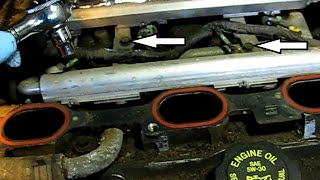
How to confirm: Locate the fuel pressure regulator on the fuel rail. Disconnect the small vacuum hose attached to it. If raw fuel is present in the hose or drips from the regulator's nipple, it has failed. The smell of gasoline in the vacuum line is a definitive sign of failure.
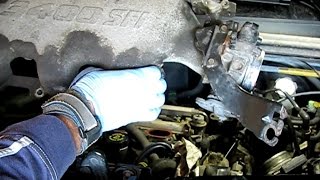
Typical fix: Replace the fuel pressure regulator. This is a common DIY repair. 🎬 Watch: Step-by-step fuel pressure regulator replacement guide.
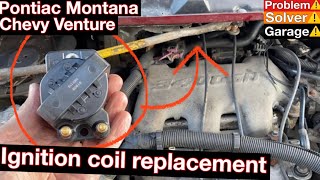
Est. part cost: $40-$80 - Failed Ignition Components (Spark Plugs, Wires, Coil Pack) 🟡 Medium Probability The rear bank of spark plugs (cylinders 1, 3, 5) is difficult to access against the firewall, leading to them being neglected 🎬 See this easy trick for reaching the rear spark plugs. during routine maintenance. Wires and coil packs are also common wear items that cause misfires.
How to confirm: Inspect spark plugs for wear, fouling, or incorrect gap (should be 0.060 inches). Inspect wires for cracks or corrosion. Test the ignition coil packs; each coil fires two cylinders in a waste-spark system (1-4, 2-5, 3-6). A faulty coil will cause misfires on a pair of cylinders.
Typical fix: Replace the spark plugs and wires. If a coil is faulty, replace the specific coil pack.
Est. part cost: $50-$150 - Failed Lower Intake Manifold (LIM) Gaskets 🟡 Medium Probability The original plastic-carrier LIM gaskets on the 3.4L V6 are notorious for failing due to degradation from Dex-Cool coolant, causing vacuum leaks or coolant to leak into the engine's intake ports or crankcase. This disrupts the air-fuel mixture and causes misfires, often setting a P0300.
How to confirm: Look for signs of external coolant leaks around the intake manifold where it meets the cylinder heads. A cooling system pressure test may reveal a leak. A chemical test can detect exhaust gases in the coolant, indicating an internal leak. Unexplained coolant loss is a major symptom.
Typical fix: Replace the lower intake manifold gaskets with the updated metal-frame design, such as Fel-Pro part number MS98014T.
Est. part cost: $60-$120 - Faulty Ignition Control Module (ICM) ⚪ Low Probability The ICM, located beneath the three ignition coils, can fail from heat and age, causing intermittent or random misfires that may not be tied to a specific coil pack. This is less common than the coils themselves failing.
How to confirm: This is often a process-of-elimination diagnosis. If the coils, plugs, and wires are all confirmed to be good but a random misfire persists, the ICM is the likely culprit. Some auto parts stores can test these modules off the vehicle. Swapping coil pack positions can help isolate the issue; if the misfire doesn't move with the coil, the ICM is a stronger suspect.
Typical fix: Replace the ignition control module.
Est. part cost: $70-$150
Rare But Worth Checking
- Clogged Fuel Injector: A single injector can become clogged, causing a misfire on one specific cylinder. This would typically set a code for that cylinder (e.g., P0304 for cylinder 4), not a random P0300 or an impossible P0308.
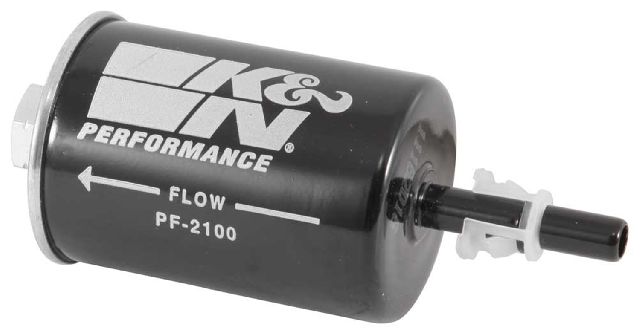
- Low Fuel Pressure: A weak fuel pump or clogged fuel filter can cause lean conditions and misfires across all cylinders, usually logging a P0300 code.
- Vacuum Leak: A cracked vacuum hose or leaking gasket (other than the LIM) can introduce unmetered air and cause a lean misfire, typically a P0300.
Diagnosis Steps
- Confirm the code with a second, reliable OBD-II scanner. Note any different codes that appear, such as P0300, P0301, P0302, P0303, P0304, P0305, or P0306.
- If a valid misfire code (P0301-P0306) is present, proceed with diagnosing that specific cylinder. If P0300 (Random Misfire) is present, proceed to the next step.
- Check for the most common cause of random misfires on this engine: the fuel pressure regulator. Disconnect the vacuum line and inspect for any signs of raw fuel. If fuel is present, replace the regulator.
- If the regulator is fine, inspect the ignition system. Check the spark plugs, spark plug wires, and ignition coils. The rear plugs (1, 3, 5) are hard to reach but are common culprits due to neglect.
- Inspect for vacuum leaks by checking all vacuum hoses for cracks and listening for hissing sounds around the intake manifold.
- Perform a cooling system pressure test and inspect for signs of leaks around the lower intake manifold gaskets, a known failure point.
- If all other components check out, consider testing the Ignition Control Module (ICM).
Parts You'll Likely Need
- Fuel Pressure Regulator
(OEM #17113622)— This is a very high-failure item on the GM 3.4L V6 that directly causes random misfires when its internal diaphragm ruptures. Its failure is one of the most common causes of a P0300 code on this platform.
Trusted brands: ACDelco, Delphi, Standard Motor Products
OEM price range: $60-$90
Aftermarket price range: $40-$70 - Spark Plugs and Wires Set — These are standard maintenance items. Due to difficult access on the rear bank, they are often old and worn, causing misfires.
Trusted brands: ACDelco, NGK
OEM price range: $80-$120
Aftermarket price range: $50-$90 - Lower Intake Manifold Gasket Set
(OEM #89017400)— The original design is prone to failure, causing vacuum and/or coolant leaks that lead to misfires. Upgrading to the metal-frame design is a permanent fix. 🎬 Watch: Complete lower intake manifold gasket replacement walkthrough.
Trusted brands: Fel-Pro, ACDelco
OEM price range: $80-$130
Aftermarket price range: $60-$100
Related Codes That Often Appear With This One
- P0300 — This indicates a 'Random Misfire'. If the underlying issue (like a bad fuel pressure regulator or vacuum leak) is affecting multiple cylinders randomly, a P0300 will be stored. Your scanner may be incorrectly interpreting this as a P0308.
- P0301 - P0306 — These are the valid misfire codes for the Venture's V6 engine. The actual problem is likely a misfire on one of these cylinders, and the P0308 is a reporting error.
Technical Service Bulletins (TSBs) & Recalls
- PIP5628G: Communicates information needed to aid in diagnosing misfire DTCs P0300 - P0308. While not specific to the Venture having a P0308, it shows that GM groups this code range in its service literature.
Platform-Specific Known Issues
- Owner Discussion on P0308 Impossibility: While direct forum threads of a Venture owner getting a P0308 are scarce (likely because it's quickly identified as an error), discussions for other GM vehicles with V8s show the diagnostic process for a real P0308. For the Venture, the conversation immediately pivots to it being a scanner error and the real code being P0300-P0306.
- The Infamous Lower Intake Manifold (LIM) Gasket Failure: Numerous owners across all platforms using the 3.4L LA1 engine (Venture, Montana, Aztek, Impala, etc.) have documented the process of replacing the failed LIM gaskets. It's a well-known, widely discussed repair necessary to fix persistent coolant loss and random misfire codes.
Mechanic-Grade Diagnostic Values
- Fuel Pressure (Key On, Engine Off) — expected: 52-59 PSI. Failure: Pressure below this range indicates a weak fuel pump, clogged filter, or faulty regulator.
- Fuel Injector Resistance — expected: 11-14 Ohms. Failure: A reading significantly outside this range suggests a failed injector coil.
- Ignition Coil Secondary Resistance — expected: 5.7 kΩ (kilo-ohms). Failure: A reading far outside this value indicates a faulty ignition coil.
- 7X Crankshaft Position (CKP) Sensor Output — expected: 0.3V to 1.0V AC while cranking. Failure: No AC voltage reading while cranking indicates a defective CKP sensor.
Scan Tool Commands That Help
- GM Tech2: Crankshaft Variation Relearn (CASE Relearn) — Mandatory after replacing the crankshaft position sensor, PCM, or flexplate. Failure to perform this procedure can cause the PCM to incorrectly report misfires (P0300) because it has not learned the minor variations in the crankshaft reluctor wheel.
- GM Tech2: Cylinder Power Balance Test / Misfire Graphic — To actively identify which cylinder is misfiring when a generic scanner only shows a P0300. The tool can disable injectors one by one to note the RPM drop or display a bar graph of misfire counts per cylinder in real-time.
- GM Tech2: Injector Balance Test — To test for a clogged or weak fuel injector. The tool commands each injector to fire and measures the corresponding drop in fuel pressure, which should be consistent across all cylinders.
Wiring & Ground Locations
- G102 — Located at the left rear of the engine.. This is the primary ground for the ignition coils. A loose or corroded G102 ground can cause weak spark, random misfires, and a P0300 code.
- G103 — Located on the cowl at the left rear of the engine compartment, above the brake booster.. This ground serves the Engine Control Module (PCM), Body Control Module (BCM), and the Data Link Connector (DLC). A fault here can cause a wide range of bizarre electrical issues, including communication errors that could lead a scan tool to display an incorrect code like P0308.
- Engine Harness Chafe Points — General Motors of this era had known issues with engine wiring harnesses rubbing against brackets (like the ECM/TCM bracket), the upper control arm, or shock towers.. Chafing can short out critical wires for sensors or the ignition system, leading to intermittent and hard-to-diagnose misfires. A visual and physical inspection of the harness routing is a key step when electrical causes are suspected.
Real Owner Repair Stories
- Chevrolet Forum user 'res08cas' (2000 Chevrolet Venture 3.4L) — Sudden stalling, sputtering and backfiring on restart, no-start condition, P0300 code stored.
❌ Tried (didn't work) Initial diagnosis pointed to multiple possibilities. The owner suspected wiring or other common causes.
✅ What actually fixed it The owner replaced the 7X Crankshaft Position Sensor. The van started immediately and ran smoothly afterward. The fix was temporarily complicated by the new sensor failing, but the root cause was confirmed to be the CKP sensor. - YouTube video by 'The Fixer' (Chevrolet Venture 3.4L (year not specified)) — P0300 random misfire code, rough running.
❌ Tried (didn't work) Replacing the EGR valve, spark plugs, and wires did not solve the problem. A fuel pressure test showed 50 PSI, ruling out a weak pump.
✅ What actually fixed it The problem was ultimately traced to a faulty Ignition Control Module (ICM). After replacing the ICM, the engine ran smoothly and the P0300 code did not return.
"I Checked Everything" — The Actual Cause
- A common scenario on the 3.4L V6 is a persistent P0300 random misfire where a smoke test reveals no vacuum leaks. In many of these cases, the root cause is the fuel pressure regulator diaphragm failing and leaking raw fuel directly into the vacuum line connected to the intake manifold. This creates a rich misfire that a smoke test, which checks for unmetered air entering the engine, cannot detect.
OEM Part Supersession History
GM 12575305 (example, original plastic design)→Fel-Pro MS98014T (metal frame design)— The original Lower Intake Manifold (LIM) gaskets used a plastic carrier frame that would degrade from exposure to Dex-Cool coolant and heat cycles, leading to cracking and leaks.
Heads up: The Fel-Pro MS98014T is the widely accepted permanent fix for the notorious LIM gasket failure on the 3.4L LA1 engine and is recommended over OEM-style plastic replacements.
Model Year Variations Within This Range
- 1999-2005: Starting in 1999, the 3.4L LA1 engine was revised to produce 185 hp, up from 180 hp. While the core engine remained the same through 2004, this change may reflect minor tuning or component differences.
- 2001-2004: The Venture received a facelift for the 2001 model year, which included a redesigned front fascia and steering wheel. These changes were primarily cosmetic and did not affect the powertrain or the common causes of misfire codes.
- 1999-2004: The 4T60-E transmission was replaced by the 4T65-E in 1999. While not directly related to a P0308 code, it's a significant powertrain change within the vehicle's overall generation.
Helpful Videos

Used OEM Parts in Stock

New Aftermarket Parts Available



The information in this article is provided for general reference and educational purposes only. Vehicle specifications, procedures, and part compatibility can vary by production date, trim level, and region. Always consult your vehicle's factory service manual and verify part numbers before purchasing or performing repairs. Safety-critical components such as airbags, seat belts, and braking systems should be installed by a qualified professional.
- Chevrolet VENTURE:
- 🎬 Helpful Videos
- 🛍️ Shop This Part
- What's Unique About the 2000-2004 Chevrolet VENTURE
- Diagnostic Flowchart
- Symptoms You May Notice
- Most Likely Causes
- Rare But Worth Checking
- Diagnosis Steps
- Parts You'll Likely Need
- Related Codes That Often Appear With This One
- Technical Service Bulletins (TSBs) & Recalls
- Platform-Specific Known Issues
- Mechanic-Grade Diagnostic Values
- Scan Tool Commands That Help
- Wiring & Ground Locations
- Real Owner Repair Stories
- "I Checked Everything" — The Actual Cause
- OEM Part Supersession History
- Model Year Variations Within This Range
- 🎟️ Get 5% Off