

P0308 on 2017-2022 Chevrolet Traverse: The Misfire Code for a Cylinder You Don't Have
P0308 on a V6 Traverse is a 'ghost code' for a non-existent 8th cylinder. It indicates a software anomaly or a real misfire on one of the six actual cylinders that the computer is misinterpreting. The most likely underlying cause is a failed ignition coil or a worn spark plug, often on the difficult-to-access rear bank of the engine.
- P0308 on a Traverse is a 'ghost code'; your V6 engine does not have a cylinder 8.
- The code points to a real misfire problem that the engine computer is misidentifying. Do not ignore it.
- Use a scan tool to check for other codes like P0300-P0306 to find the actual misfiring cylinder.
- The most likely underlying cause is a bad ignition coil or worn spark plug.
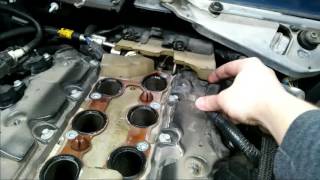
- Replacing the rear bank of coils/plugs is labor-intensive and requires removing the intake manifold and replacing its gaskets.
What's Unique About the 2017-2022 Chevrolet TRAVERSE
This vehicle platform is unique because its engine management system can generate this 'impossible' trouble code. General Motors is aware of this potential anomaly, as evidenced by Technical Service Bulletin #PIP5628G. This TSB provides a detailed diagnostic worksheet for technicians to complete when encountering codes P0300-P0308, requiring them to use advanced tools like GDS2 to capture freeze frame data and a PICO scope for relative compression tests before calling for assistance.
Diagnostic Flowchart
Tap your situation to follow the diagnostic path that matches what you're seeing on this vehicle.
Generation note: The 2017-2022 year range covers the second generation of the Chevrolet Traverse. The primary engine is the 3.6L V6 LFY. A 2.0L Turbo I4 was available from 2018-2019, but P0308 would be equally impossible on that engine. This issue is also seen on platform mates like the Buick Enclave and GMC Acadia with similar V6 engines.
Symptoms You May Notice
- Flashing or solid Check Engine Light
- Engine running rough or shaking, especially at idle
- Noticeable loss of power and hesitation during acceleration
- Reduced fuel economy
- Hard starting
- Searching for a physical 'cylinder 8' to repair.
- Replacing components randomly without first checking for other stored DTCs that would identify the actual misfiring cylinder.
- Replacing only one ignition coil or spark plug on the rear bank, leading to a repeat repair when another original part fails shortly after.
Most Likely Causes
- PCM Misfire Misinterpretation 🔴 High Probability As acknowledged in TSB PIP5628G, the vehicle's software can misreport a real misfire on cylinders 1-6, or a random misfire (P0300), as a P0308. This is the starting point of any diagnosis.
How to confirm: Scan for other pending or stored DTCs, specifically P0300, P0301, P0302, P0303, P0304, P0305, or P0306. Use a scan tool's live data or Mode $06 to view misfire counts per cylinder to find the true source.
Typical fix: Ignore the '8' in P0308 and diagnose the underlying misfire code. If no other codes are present, proceed with diagnosing common misfire causes on the physical cylinders.
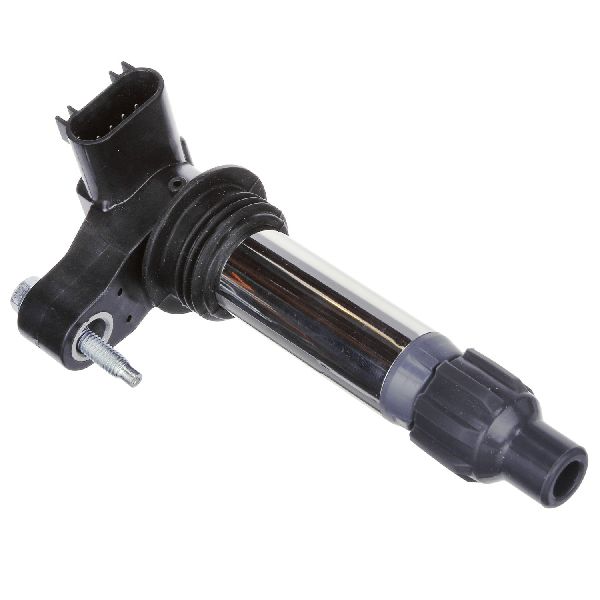
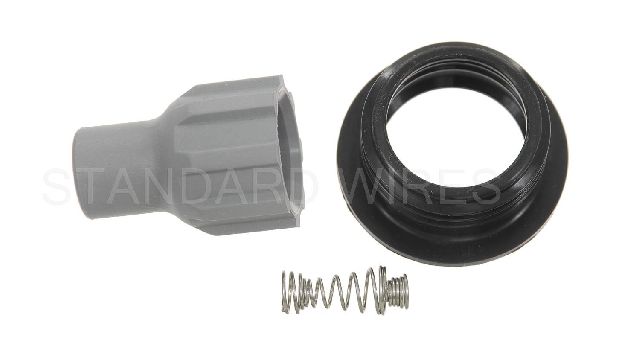
Est. part cost: $0 - Faulty Ignition Coil(s) 🔴 High Probability Ignition coil failure is a very common cause of misfires on the GM 3.6L V6 engine family. The rear bank coils (cylinders 1, 3, 5) are subjected to high heat and require removing the intake manifold for access, making them a high-consequence failure.
How to confirm: Swap the suspected ignition coil with one from a known good cylinder. For example, if you also have a P0304, swap the coil from cylinder 4 with cylinder 2 (an easily accessible front cylinder). If the code changes to P0302, the coil is bad.
Typical fix: Replace the failed ignition coil. It is highly recommended to replace all three rear bank coils, all six spark plugs, and the intake manifold gaskets at the same time due to the significant labor involved.
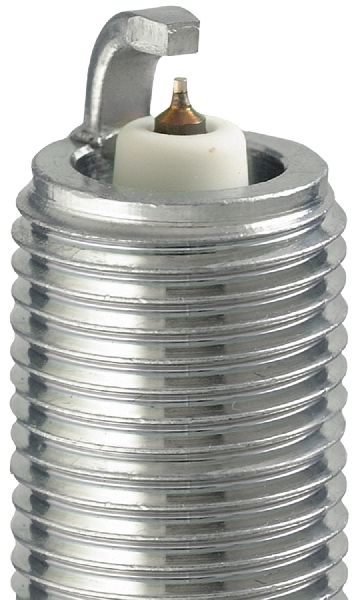
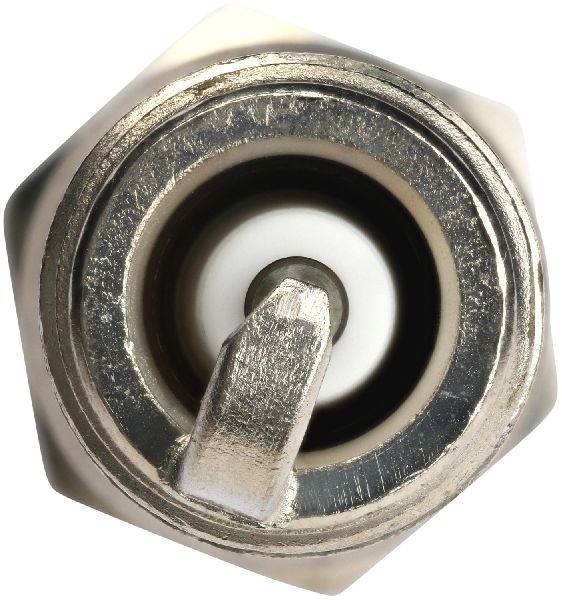
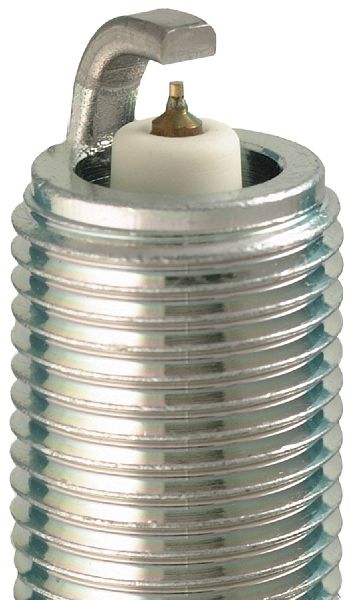
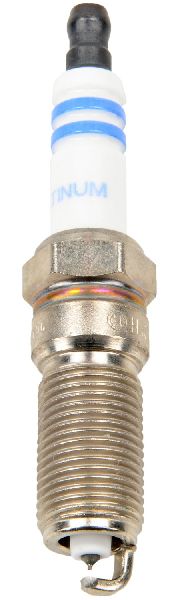
Est. part cost: $50-$100 per coil - Worn or Fouled Spark Plugs 🔴 High Probability Iridium spark plugs have a long life (approx. 100k miles) but eventually wear out or can become fouled by oil or carbon, leading to a weak or non-existent spark.
How to confirm: Remove and inspect the spark plugs from the misfiring cylinders. Look for wear on the electrode, cracks in the porcelain, or heavy carbon/oil deposits.
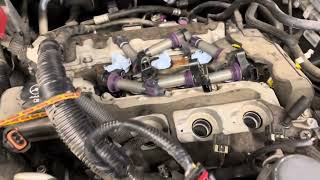
Typical fix: Replace all six spark plugs. 🎬 Watch: Step-by-step guide to replacing your Traverse spark plugs. This should always be done when replacing rear bank ignition coils due to the labor-intensive process of removing the intake manifold.
Est. part cost: $60-$120 for a set of 6 - Carbon Buildup on Intake Valves 🟡 Medium Probability As a direct injection (DI) engine, fuel is sprayed directly into the cylinder, so it never washes over the intake valves. Over time, oil vapor from the PCV system can bake onto the hot valves, restricting airflow and causing misfires, especially on cold starts. This is a well-documented issue on the LFY engine.
How to confirm: This requires visual inspection with a borescope or by removing the intake manifold. It often presents with a cold start rough idle (P050D) alongside misfire codes.
Typical fix: The intake valves need to be professionally cleaned, typically through walnut shell blasting or a chemical induction service. GM offers a specific fuel injection cleaner kit for this purpose per TSB 16-NA-383.
Est. part cost: $0 (service cost is labor, typically $500-$1000) - Faulty Fuel Injector 🟡 Medium Probability Direct fuel injectors can become clogged or fail electronically, preventing the correct amount of fuel from entering the cylinder.
How to confirm: A professional can perform a fuel injector balance test with a scan tool like the GDS2, as recommended in TSB PIP5628G. A DIY method is to listen to the injector with a mechanic's stethoscope; it should have a consistent, rhythmic clicking sound.
Typical fix: Replace the faulty fuel injector. This is a more involved repair, especially for the rear bank.
Est. part cost: $70-$150 per injector
Rare But Worth Checking
- Crankshaft Position Sensor Issue / Incorrect Variation Learn: A faulty crankshaft position sensor or a damaged reluctor wheel can send erratic signals to the PCM. More subtly, if the sensor has been replaced or other major work was done, the PCM may require a 'Crankshaft Variation Relearn' procedure using a scan tool. Failure to perform this relearn can cause the PCM to inaccurately detect misfire location, potentially resulting in a ghost code like P0308. A P1336 code often indicates this relearn procedure is needed.
- Vacuum Leak: A significant vacuum leak, such as from a failed or improperly installed intake manifold gasket after a repair, can introduce unmetered air and cause random misfires (P0300) that might confuse the PCM.
Diagnosis Steps
- Confirm the code is P0308 and acknowledge that cylinder 8 does not exist on your V6 engine.
- Using an OBD-II scanner with live data capability, perform a thorough scan for any other stored, pending, or history codes. Pay close attention to P0300 or P0301-P0306.
- Check the live misfire data counter for each of the 6 cylinders. The cylinder with a high count is the true source of the misfire. 🎬 Watch: Diagnosing common misfire codes on the GM 3.6L engine.
- If another cylinder-specific code is found (e.g., P0304), all diagnosis should be focused on that cylinder.
- If only P0308 and/or P0300 are present, begin diagnosis with the most common failures. Start with the front bank of cylinders (2, 4, 6) as they are easily accessible.
- Inspect the wiring and connectors for the front three ignition coils and fuel injectors for any visible damage.
- If an issue is suspected on a front cylinder, swap the ignition coil with another front cylinder to see if the misfire follows (a new code may be set for the new cylinder).
- If the front bank shows no issues, the problem likely lies in the rear bank (1, 3, 5). Accessing these requires removing the upper intake manifold and is a more involved job.
- If removing the intake manifold, it is best practice to replace all three rear ignition coils, all six spark plugs, and the intake manifold gaskets to prevent repeat labor costs.
- If coils and plugs do not resolve the issue, investigate fuel injectors or consider carbon buildup on the intake valves, which may require professional cleaning (walnut blasting).
- If the crankshaft position sensor was recently replaced or major engine work was performed, a 'Crankshaft Variation Relearn' may be required using a compatible scan tool.
Parts You'll Likely Need
- Ignition Coil
(OEM #12632479 (ACDelco D515C))— This is the most common underlying cause of a misfire that the PCM may misinterpret as P0308. The rear bank coils are especially prone to failure due to heat.
Trusted brands: ACDelco, Delphi, NGK
OEM price range: $60-$90
Aftermarket price range: $30-$60 - Spark Plug
(OEM #12680072 (ACDelco 41-166) or 12683541 (ACDelco 41-156))— Worn spark plugs are a primary cause of misfires and should always be replaced when accessing the ignition coils, especially the rear bank.
Trusted brands: ACDelco Iridium, NGK Laser Iridium
OEM price range: $15-$25 per plug
Aftermarket price range: $10-$18 per plug
Related Codes That Often Appear With This One
- P0300 — Indicates a random, multiple-cylinder misfire. The condition causing P0300 may be what the PCM is misinterpreting as a P0308.
- P0301-P0306 — These are the codes for the actual cylinders (1-6). If one of these is present as a pending or stored code, it is the true source of the problem.
- P050D — This code for 'Cold Start Rough Idle' is specifically mentioned in TSB PIP5628G and often relates to carbon buildup on intake valves, a known cause of misfires on this engine.
- P1336 — This code means 'Crankshaft Position System Variation Not Learned'. Its presence strongly suggests the PCM's calibration for misfire detection is off and a 'Crank Relearn' procedure is required, which could be the root cause of the ghost P0308 code.
Technical Service Bulletins (TSBs) & Recalls
- PIP5628G: This TSB is a diagnostic guide for technicians dealing with misfire codes P0300-P0308 and/or P050D. It does not provide a specific fix, but rather instructs technicians to collect detailed data (using tools like GDS2 and a PICO scope) and fill out a specific template before contacting the GM Technical Assistance Center (TAC) for help. This confirms GM is aware of complex misfire reporting issues.
Platform-Specific Known Issues
- The Powertrain Control Module (PCM) has the known potential to incorrectly report a real misfire on cylinders 1-6 as a P0308, as referenced by GM's own Technical Service Bulletin for technicians.
Mechanic-Grade Diagnostic Values
- High-Pressure Fuel System — expected: The 3.6L LFY engine has a direct injection system with a high-pressure, mechanically-driven fuel pump and a low-pressure in-tank pump. The high-pressure side can operate at over 1,000 PSI.. Failure: A professional scan tool (like GDS2) is required to monitor desired vs. actual fuel rail pressure. Significant deviations can indicate a failing high-pressure pump or sensor. Note: A distinct ticking sound from the high-pressure pump is normal for this engine.
- Cylinder Power Balance RPM Drop — expected: When a healthy cylinder is deactivated using a scan tool's power balance test, there should be a noticeable and consistent drop in engine RPM (e.g., 50-150 RPM).. Failure: If deactivating a cylinder causes little or no drop in RPM, that cylinder is not contributing significant power and is the source of the misfire.
Scan Tool Commands That Help
- GDS2 (or equivalent professional scanner): Cylinder Power Balance Test — This is a primary diagnostic step when only P0308 or P0300 is present. The tool deactivates one cylinder at a time (by cutting fuel or spark) and measures the RPM drop. A cylinder that causes little or no RPM drop is the one that is misfiring.
- GDS2 (or equivalent professional scanner): Crankshaft Position Variation Learn (CASE Relearn) — This procedure is mandatory after replacing the crankshaft position sensor, PCM, or performing major engine work like flywheel replacement. Failure to perform it can set a P1336 and cause the PCM to misidentify misfire locations, leading to ghost codes like P0308. The tool guides the tech to rev the engine to a specific RPM (e.g., ~4000 RPM) to allow the PCM to learn the crankshaft reluctor wheel's profile.
- GDS2: Review Stored Data / Freeze Frame — As mentioned in TSB PIP5628G, reviewing the freeze frame and failure records for the P0308 code is critical. This data snapshot shows the engine conditions (RPM, load, temperature, etc.) at the moment the fault was logged, providing crucial clues to the root cause.
Wiring & Ground Locations
- G103 — Located at the left rear of the engine compartment on the cowl, often positioned above the brake booster.. This is a major ground point for the Engine Control Module (ECM) and Body Control Module (BCM). A loose or corroded connection here can cause erratic ECM behavior, leading to false sensor readings and incorrect misfire detection.
- Engine Harness Grounds — The 3.6L engine family typically has several smaller ground wires from the harness directly to the cylinder heads or engine block, often at the rear of the engine.. These grounds are essential for the ignition coils and fuel injectors. A poor connection can cause a weak spark or erratic injector function, leading to a misfire that the ECM might misinterpret.
- Engine Harness Chafe Points — Common rub points include the front corner of the left cylinder head, against the drive belt idler pulley bracket, and where the harness passes the shock tower.. Vibrations can cause the harness to rub through on sharp metal edges, shorting out ignition coil or injector control wires. This can cause a persistent or intermittent misfire that is difficult to diagnose and could be misinterpreted by the PCM.
Real Owner Repair Stories
- General Diagnostic Procedure (2017-2022 Chevrolet Traverse 3.6L V6) — Check engine light with code P0308, engine running rough.
❌ Tried (didn't work) Searching for a physical 8th cylinder., Replacing parts without identifying the true misfiring cylinder.
✅ What actually fixed it The universal fix is to ignore the '8' and treat the code as a flag for a complex misfire. Successful repairs involve using a scan tool to check for other codes (P0300-P0306) or using the misfire counter/power balance test to find the actual faulty cylinder. The repair is then performed on that cylinder (e.g., replacing the ignition coil on cylinder 4 if a P0304 is also present or if the misfire counter for cylinder 4 is high).
OEM Part Supersession History
12674754→12726023— Part update/revision.
Heads up: This part number (and its predecessor D521C) is frequently listed for GM vehicles but appears to be for V8 or smaller 4-cylinder engines, NOT the 3.6L V6 LFY in the Traverse. Using this coil may result in fitment or performance issues. The correct coil for the LFY V6 is typically D515C (GM 12632479).12664124, 12684286→12708493— Part consolidation and revision for the high-pressure fuel rail sensor.
Model Year Variations Within This Range
- 2019-2020: A specific batch of 3.6L LFY engines may have a defect from the factory. TSB 20-NA-085 notes that an insert on the left primary timing chain guide may be missing, leading to rapid chain wear. While this typically sets timing correlation codes (P0018/P0019), a severely stretched chain can cause misfires that the PCM might misinterpret.
Helpful Videos

Used OEM Parts in Stock
New Aftermarket Parts Available

The information in this article is provided for general reference and educational purposes only. Vehicle specifications, procedures, and part compatibility can vary by production date, trim level, and region. Always consult your vehicle's factory service manual and verify part numbers before purchasing or performing repairs. Safety-critical components such as airbags, seat belts, and braking systems should be installed by a qualified professional.
- Chevrolet TRAVERSE:
- 🎬 Helpful Videos
- 🛍️ Shop This Part
- What's Unique About the 2017-2022 Chevrolet TRAVERSE
- Diagnostic Flowchart
- Symptoms You May Notice
- Most Likely Causes
- Rare But Worth Checking
- Diagnosis Steps
- Parts You'll Likely Need
- Related Codes That Often Appear With This One
- Technical Service Bulletins (TSBs) & Recalls
- Platform-Specific Known Issues
- Mechanic-Grade Diagnostic Values
- Scan Tool Commands That Help
- Wiring & Ground Locations
- Real Owner Repair Stories
- OEM Part Supersession History
- Model Year Variations Within This Range
- 🎟️ Get 5% Off