

P0308 on 2000-2007 Chevrolet Tahoe: Cylinder 8 Misfire Causes and Fixes
P0308 on a 2000-2007 Tahoe indicates a misfire in cylinder 8. The most common causes are a faulty ignition coil, a worn spark plug, or a bad plug wire. A quick diagnostic is to swap the cylinder 8 coil with another cylinder to see if the code follows. For 2007 models with Active Fuel Management (AFM), this code can also be an early sign of a failed lifter. Expect to spend $40-$100 for a basic ignition parts fix.
- P0308 specifically points to a misfire in cylinder 8, the rearmost cylinder on the passenger's side.
- The most likely cause is a simple and inexpensive ignition component: a spark plug, ignition coil, or plug wire.
- The easiest first diagnostic step is to swap the cylinder 8 ignition coil with another cylinder's coil to see if the misfire code moves.
- For 2007 models with the 5.3L or 6.0L engine, be aware that this code can be a symptom of a more serious collapsed AFM lifter.
- Do not ignore a flashing check engine light, as continued driving can quickly destroy the catalytic converter.
What's Unique About the 2000-2007 Chevrolet TAHOE

This year range covers two distinct generations of the Tahoe. For the GMT800 models (2000-2006), a P0308 code is almost always a straightforward ignition or fuel system issue. However, the 2007 GMT900 models introduced Active Fuel Management (AFM) on certain 5.3L and 6.0L V8s. On these specific engines, a P0308 misfire can be an early warning sign of a much more serious internal engine problem: a collapsed AFM lifter, which is a known pattern failure. Owners on forums report that a P0308 accompanied by a ticking noise on a 2007+ model often leads to a diagnosis of a bad lifter and potentially a damaged camshaft, a significantly more expensive repair.
Diagnostic Flowchart
Tap your situation to follow the diagnostic path that matches what you're seeing on this vehicle.
Generation note: This range covers the GMT800 generation (2000-2006) and the first year of the GMT900 generation (2007). The most significant difference is the introduction of Active Fuel Management (AFM) on some 2007 V8 engines. This system can cause misfires due to lifter failure, a problem not present in the 2000-2006 models. TSB PIP5628G was issued to help technicians diagnose persistent misfires (P0300-P0308) on these engines, indicating the complexity that can arise.
Symptoms You May Notice
- Flashing or solid Check Engine Light
- Rough or shaking idle
- Engine hesitation or stumbling during acceleration
- Noticeable loss of power
- A smell of raw fuel from the exhaust
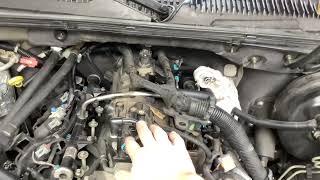
- Ticking or tapping noise from the engine, especially on 2007 models with AFM 🎬 See how to diagnose ticking noises and AFM lifter issues.
- Replacing all eight ignition coils and plugs when only one component was faulty.
- Replacing the catalytic converter due to damage, without first fixing the root cause of the misfire.
- Assuming a fuel pump is bad when the issue is a single clogged injector.
Most Likely Causes

- Faulty Ignition Coil 🔴 High Probability The coil-on-plug ignition system is generally reliable, but individual coils can fail with age and heat cycles. Cylinder 8's location at the rear of the engine bay can subject it to more heat, and owners often report this cylinder's coil failing.
How to confirm: Swap the ignition coil from cylinder 8 with another cylinder (e.g., cylinder 6, which is next to it). Clear the codes and run the engine. If the misfire code changes to P0306, the ignition coil is faulty. This is the most common first diagnostic step recommended in owner forums.
Typical fix: Replace the single faulty ignition coil. It is held on by a single 7mm or 8mm bolt.
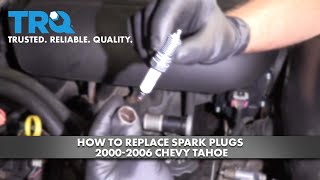
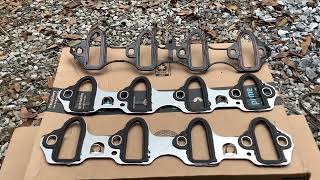
Est. part cost: $30-$70 - Worn Spark Plug 🔴 High Probability Spark plugs are a standard maintenance item. An old plug with a worn electrode, excessive carbon buildup, or oil fouling can't produce a strong enough spark. Cylinder 8 is notoriously difficult to access, so it may be neglected during tune-ups. 🎬 Watch this guide on replacing spark plugs for 2000-2006 models.
How to confirm: Remove the spark plug from cylinder 8 and inspect it. Look for a worn or fouled electrode, cracked porcelain, or an incorrect gap. A plug drenched in fuel points to a lack of spark or a stuck-open injector.
Typical fix: Replace the spark plug. If all plugs are near the end of their service life (typically 100,000 miles for iridium plugs), it's best to replace all eight.
Est. part cost: $8-$20 per plug - Bad Spark Plug Wire 🟡 Medium Probability Wires can degrade over time, causing the spark to arc to the engine block instead of reaching the plug. The heat shield can also become saturated with oil or coolant if there are other leaks, causing it to fail. Resistance should be under 30,000 ohms (30kΩ).
How to confirm: Visually inspect the wire for cracks, burns, or corrosion on the contacts. With the engine running in the dark, look for any visible arcing from the wire to the engine. An ohmmeter can be used to test resistance; readings above 30,000 ohms indicate a bad wire.
Typical fix: Replace the spark plug wire for cylinder 8. It's often sold in a set of eight.
Est. part cost: $40-$80 for a full set - Clogged or Faulty Fuel Injector 🟡 Medium Probability Fuel injectors can become clogged with deposits or fail electrically. In one forum post, an owner with a P0308 found the #8 plug drenched in fuel, and after swapping ignition components with no change, confirmed a failed, stuck-open injector was the cause.
How to confirm: Use a mechanic's stethoscope to listen for a consistent clicking sound from the injector. You can also use a 'noid light' to confirm the injector is receiving an electrical pulse from the PCM. Swapping the injector with another cylinder is also possible but more labor-intensive. A professional scan tool can perform an injector balance test.
Typical fix: Replace the faulty fuel injector. The O-rings should be replaced at the same time.
Est. part cost: $50-$120 - Intake Manifold Gasket Leak ⚪ Low Probability The intake manifold gaskets on these Vortec V8s are known to degrade over time, causing unmetered air (a vacuum leak) to enter the engine. This leans out the air/fuel mixture and can cause misfires, often on the cylinders closest to the leak.
How to confirm: With the engine running, spray short bursts of brake cleaner or a propane torch (unlit) around the intake manifold sealing area for cylinder 8. If the engine RPM changes, a leak is present. A professional smoke test is the most definitive method.
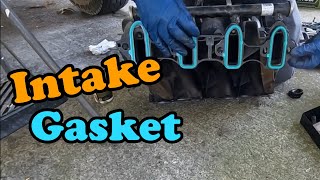
Typical fix: Replace the intake manifold gaskets. This is a more involved job that requires removing the intake manifold. 🎬 Follow this step-by-step intake manifold gasket replacement walkthrough.
Est. part cost: $40-$90 for the gasket set
Rare But Worth Checking
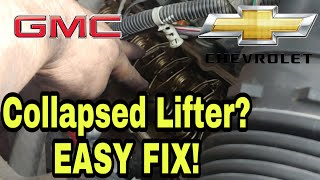
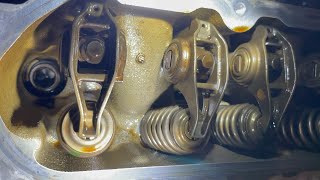
- Collapsed AFM Lifter (2007 models with 5.3L/6.0L): This is a significant mechanical failure specific to engines with Active Fuel Management (AFM). A collapsed lifter will fail to open the valves for that cylinder, causing a persistent misfire and often a ticking noise. A forum user with an '08 Tahoe Hybrid reported a P0308 and low compression (120psi) on cylinder 8, with multiple shops diagnosing a bad lifter and worn cam, quoting over $5,000 for repair. This requires removing the cylinder head for repair.
- Low Cylinder Compression: Caused by internal engine wear such as a bad valve, worn piston rings, or a damaged cylinder head. A compression test is needed to confirm this. Normal compression should be over 120 PSI and consistent across cylinders.
- Cracked Cylinder Head (Castech Heads): A known issue for some early 2000s 4.8L, 5.3L, and 6.0L engines involves cylinder heads manufactured by Castech that are prone to cracking. This can cause coolant to leak into the cylinder, leading to misfires and unexplained coolant loss. The cylinder head will have a Castech logo that looks like a battery. This is a serious mechanical failure requiring cylinder head replacement.
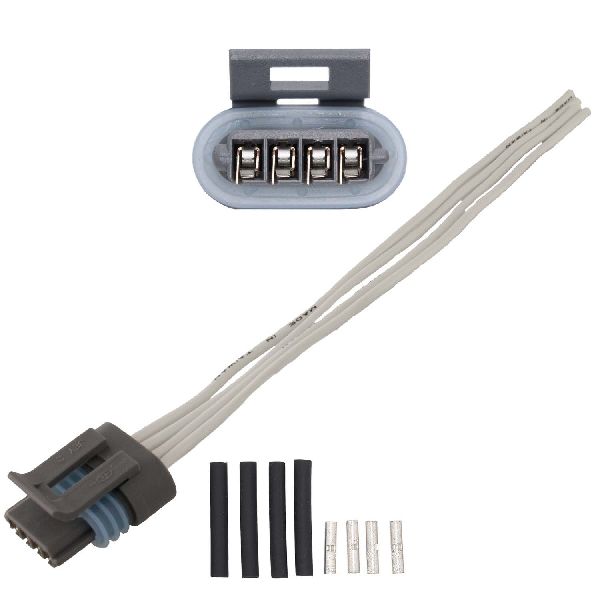
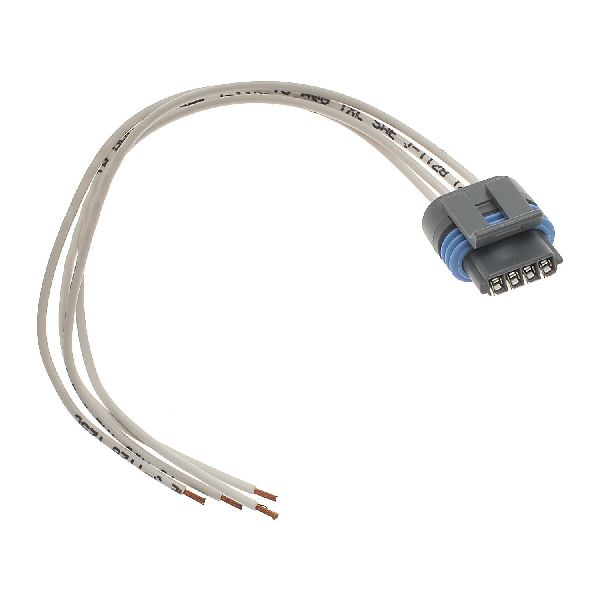
- Faulty Injector or Coil Harness Connector: The plastic connectors and wiring for the ignition coil and fuel injector can become brittle and fail, causing an intermittent connection. One owner on a forum traced their P0308 to a bad injector harness connector that wasn't making a reliable connection.
Diagnosis Steps

- Confirm the P0308 code using an OBD-II scanner. Note if the Check Engine Light is flashing, which indicates a severe misfire that could damage the catalytic converter.
- Identify cylinder 8 (rear-most on the passenger side).
- Perform a visual inspection of the cylinder 8 area. Look for obvious issues like a disconnected plug wire, damaged wiring harness, or signs of fluid leaks.
- Swap the ignition coil from cylinder 8 with the coil from cylinder 6 (the one in front of it). Clear the codes, start the engine, and let it run. Re-scan for codes.
- If the code is now P0306, the ignition coil is bad and needs to be replaced.
- If the code remains P0308, inspect the spark plug and spark plug wire for cylinder 8. Look for wear, damage, or fouling. A fuel-soaked plug suggests an ignition or injector issue. Replace as needed.
- If ignition components are good, check the fuel injector. Listen for a steady clicking sound. Wiggle the injector harness connector to check for intermittent connection issues. Use a noid light to verify it's receiving a signal.
- For 2007 models, listen carefully for a distinct ticking sound from the engine, which could indicate an AFM lifter problem.
- If the above steps don't reveal the cause, perform a compression test on cylinder 8 to check for mechanical engine problems like bad rings, valves, or a failed lifter.
- Check for vacuum leaks around the intake manifold gasket near cylinder 8 using a smoke machine or the carburetor cleaner method.
Parts You'll Likely Need

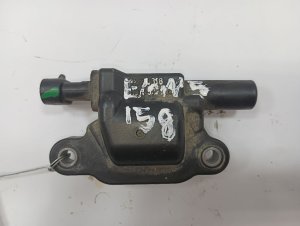
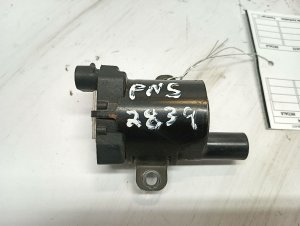
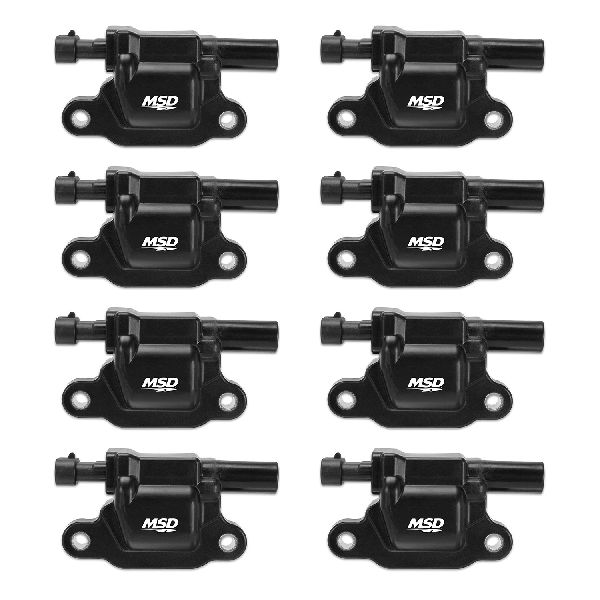
- Ignition Coil
(OEM #19418992)
Related Codes That Often Appear With This One
- P0300 — If the misfire is intermittent or begins to affect other cylinders, a P0300 (Random/Multiple Cylinder Misfire) code may also be set.
- P0171 or P0174 — If the misfire is caused by a vacuum leak from the intake manifold gasket, the engine may run lean, triggering a 'System Too Lean' code for Bank 1 (P0171) or Bank 2 (P0174).
Technical Service Bulletins (TSBs) & Recalls

- Bulletin #PIP5628G: This TSB provides a diagnostic template for technicians to use when dealing with persistent misfire codes (P0300-P0308) on various GM gas engines. It guides them to collect specific data (compression, fuel trims, etc.) before contacting technical assistance, highlighting that these misfires can sometimes be complex to diagnose.
Platform-Specific Known Issues
- On 2007 models equipped with Active Fuel Management (AFM), a P0308 code can be an indicator of a collapsed AFM lifter, a serious mechanical issue requiring cylinder head removal to fix.
- The plastic intake manifold gaskets are a known weak point and can cause vacuum leaks as the vehicle ages, leading to lean misfire codes.
Mechanic-Grade Diagnostic Values
- Ignition Coil Primary Resistance (Square Coil, e.g., ACDelco D585) — expected: ~0.820 - 0.840 ohms. Failure: A reading significantly higher or lower than the specification, or an open circuit (infinite resistance).
- Ignition Coil Secondary Resistance (Square Coil, e.g., ACDelco D585) — expected: ~7.10k ohms. Failure: A reading significantly outside the specification.
- Fuel Injector Resistance (Vortec 8.1L, similar spec for 5.3L) — expected: 11 to 14 ohms. Failure: A reading outside this range, or a variance of more than 3 ohms between injectors.
- Spark Plug Wire Resistance — expected: Under 30,000 ohms (30kΩ). Failure: A reading above 30,000 ohms.
- Fuel Pressure (Key On, Engine Off) — expected: 55-62 PSI. Failure: Pressure below 55 PSI can indicate a weak fuel pump or leak. For 2004+ models with a returnless system, the regulator is in the tank.
- Injector Balance Test Pressure Drop (Tech 2) — expected: All injectors should have a pressure drop within 1.5 - 3.0 PSI (10-20 kPa) of each other.. Failure: An injector with a pressure drop significantly different from the others is either clogged (less drop) or leaking (more drop).
Scan Tool Commands That Help
- Tech 2 / GDS2: Injector Balance Test — Use this after confirming spark is good. It precisely measures the pressure drop caused by firing each injector individually, identifying a clogged or leaking injector without having to physically remove it.
- Tech 2 / GDS2: Misfire Graphic / Misfire Counters — To monitor live and historical misfire counts per cylinder. This helps confirm the misfire is isolated to cylinder 8 and isn't randomly occurring on other cylinders, which would suggest a P0300 condition.
- Tech 2 / GDS2: Crankshaft Position (CKP) Variation Learn — After replacing a crankshaft position sensor, flexplate, or performing major engine work. An incorrect CKP learn value can cause the PCM to falsely detect misfires.
Wiring & Ground Locations
- G102 — Located at the left rear of the engine block.. This is the primary ground point for all 8 ignition coils. A loose or corroded connection here can cause weak spark and misfires on one or multiple cylinders, including cylinder 8.
- G104 / G105 — G104 is at the left rear of the engine block; G105 is at the lower left front of the engine block.. These are critical engine block grounds. G105 is part of the main negative battery cable harness. A poor connection at these points can cause a host of electrical issues, including erratic sensor readings and PCM problems that could lead to a misfire code.
- Cylinder 8 Injector Control Wire — Pin A22 at the PCM connector.. The wire is Dark Blue/White. This is the specific wire the PCM uses to fire the cylinder 8 fuel injector. Testing for a pulse signal here can confirm if the PCM is commanding the injector to open.
- Cylinder 8 Ignition Control Wire — Pin 13 at the K20 Engine Control Module (ECM) X3 connector (on later models).. The wire is Violet/White. This is the signal wire from the ECM that commands the cylinder 8 ignition coil to fire. A break or short in this wire would cause a no-spark condition on cylinder 8.
- Engine to Firewall Ground Strap — Typically runs from the rear of the passenger side cylinder head to the firewall.. This strap ensures the engine block has a solid ground reference to the vehicle's body, where many sensors and modules are grounded. A broken or corroded strap can cause intermittent and hard-to-diagnose electrical problems, including misfires.
Real Owner Repair Stories
- Tahoe Yukon Forum (2005 Tahoe Z71) — Weird electrical problems, dash lights and messages, bad fuel mileage, possessed rear wiper.
❌ Tried (didn't work) Initial troubleshooting focused on individual components.
✅ What actually fixed it The main ground from the negative battery cable to the front of the frame had rotted off. Cleaning the frame connection point with a Dremel and re-securing it with a new stainless steel bolt solved all the electrical issues. - Electric Vehicle Forums (2008 Tahoe Hybrid) — P0308, low compression (120psi) in cylinder 8, ticking noise.
❌ Tried (didn't work) Replaced coil, spark plug, and wire. Used Seafoam in the crankcase, which provided temporary improvement.
✅ What actually fixed it The final diagnosis from three independent shops was a failed AFM lifter and a worn camshaft, requiring major engine repair or replacement quoted between $5,100 and $9,100. - YouTube (2005 Chevy Tahoe Z71) — Engine would stall and cut out randomly while driving.
❌ Tried (didn't work) A shop replaced the starter relay, which did not solve the problem.
✅ What actually fixed it A known-problem ground wire at the back of the engine block near the firewall had a bad connection. The owner ran a new lead wire from the faulty wire to a solid ground point on the firewall, which permanently fixed the stalling issue.
OEM Part Supersession History
10457730→ACDelco D585— This is the common part number for the square-style ignition coil used on Gen 3 Vortec engines.
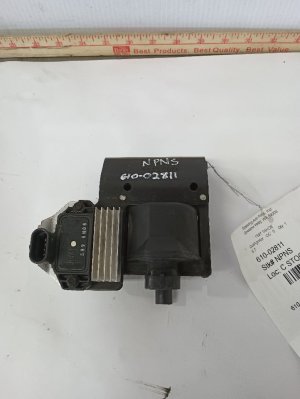
Heads up: GM trucks in this era used two different coil styles: a square body (Delphi/ACDelco D585) and a round body (Melco). They are not interchangeable. Visual inspection or checking the number on the original coil is required to ensure the correct replacement.
Model Year Variations Within This Range
- 2000-2006 (GMT800): These models use a Gen 3 V8 engine with a 24x crankshaft reluctor wheel. The fuel system on earlier models may have a fuel rail-mounted pressure regulator with a return line, while 2004+ models typically use a returnless system with the regulator inside the fuel tank.
- 2007 (GMT900): The 2007 Tahoe uses a Gen 4 V8 engine, which has significant differences. It uses a 58x crankshaft reluctor wheel and a different camshaft position sensor setup. The PCM/ECM is not compatible with earlier Gen 3 engines. Many 5.3L and 6.0L engines in this year also feature Active Fuel Management (AFM), which is a common source of lifter-related misfires not found on earlier models.
Helpful Videos
Used OEM Parts in Stock

New Aftermarket Parts Available


The information in this article is provided for general reference and educational purposes only. Vehicle specifications, procedures, and part compatibility can vary by production date, trim level, and region. Always consult your vehicle's factory service manual and verify part numbers before purchasing or performing repairs. Safety-critical components such as airbags, seat belts, and braking systems should be installed by a qualified professional.
- Chevrolet TAHOE:
- 🎬 Helpful Videos
- 🛍️ Shop This Part
- What's Unique About the 2000-2007 Chevrolet TAHOE
- Diagnostic Flowchart
- Symptoms You May Notice
- Most Likely Causes
- Rare But Worth Checking
- Diagnosis Steps
- Parts You'll Likely Need
- Related Codes That Often Appear With This One
- Technical Service Bulletins (TSBs) & Recalls
- Platform-Specific Known Issues
- Mechanic-Grade Diagnostic Values
- Scan Tool Commands That Help
- Wiring & Ground Locations
- Real Owner Repair Stories
- OEM Part Supersession History
- Model Year Variations Within This Range
- 🎟️ Get 5% Off