

P0308 on 2003-2006 Chevrolet SSR: Cylinder 8 Misfire Causes and Fixes
P0308 on a Chevrolet SSR most often means a bad spark plug, ignition coil, or spark plug wire on cylinder 8. A simple swap of the ignition coil with a neighboring cylinder is the fastest way to diagnose. If the problem is more severe, a GM Technical Service Bulletin points to worn camshafts as a possible cause.
- P0308 on your SSR is a misfire on cylinder 8, the rearmost cylinder on the passenger side.
What's Unique About the 2003-2006 Chevrolet SSR
The SSR used two different V8 engines in its short production run: the 5.3L LM4 for 2003-2004 and the more powerful 6.0L LS2 for 2005-2006. While common misfire causes are the same, it's crucial to buy the correct parts for your specific engine. Importantly, the 5.3L LM4 in the SSR is an all-aluminum Gen III engine that does NOT have the Active Fuel Management (AFM) system known for causing lifter failures in later GM V8s. However, GM has issued Technical Service Bulletins (TSBs) for both engine families that connect persistent P0300-P0308 codes to potential internal engine damage, specifically worn camshaft lobes and lifters, which is a more serious issue than a simple bad spark plug.
Diagnostic Flowchart
Tap your situation to follow the diagnostic path that matches what you're seeing on this vehicle.
Generation note: The Chevrolet SSR was a single generation vehicle, but it had a significant powertrain update. 2003-2004 models used the 5.3L LM4 V8 engine, while 2005-2006 models received the 6.0L LS2 V8. Ignition components and other engine parts are not always interchangeable between these two engines.
Symptoms You May Notice
- Rough or shaking idle
- Hesitation or stumbling during acceleration
- Noticeable loss of engine power
- Solid or flashing Check Engine Light
- Possible fuel smell from the exhaust
- Stuttering or surging while accelerating
- Replacing the catalytic converter when it has been damaged by a persistent misfire, without first fixing the root cause of the misfire.
- Replacing all fuel injectors when only one is faulty.
- Overlooking a simple vacuum leak from a cracked hose or intake manifold gasket, which can lean out the mixture and cause a misfire.
Most Likely Causes
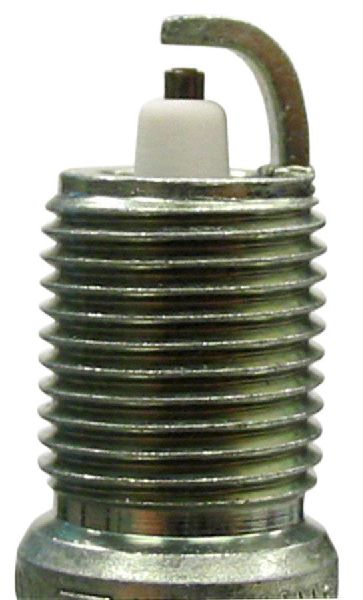
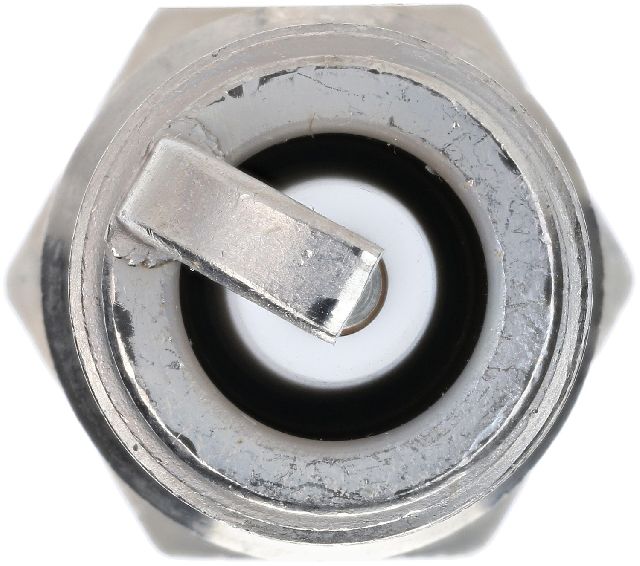
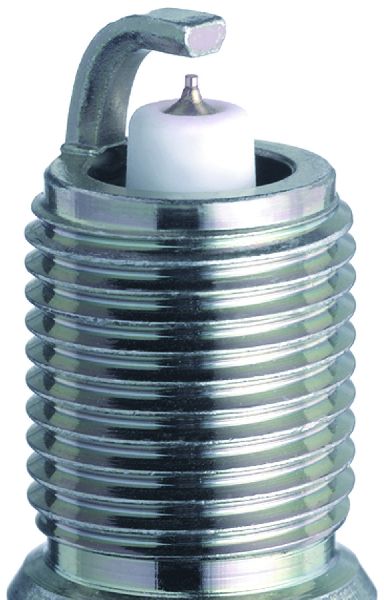
- Worn or Fouled Spark Plug 🔴 High Probability Spark plugs are regular wear items. Cylinder 8 is located at the back of the engine bay on the passenger side, which can sometimes experience higher heat. Over time, the electrode wears down or can become fouled by oil or carbon deposits.
How to confirm: Remove the spark plug from cylinder 8 and inspect it for wear, oil fouling, or damage. Compare it to a plug from a known good cylinder. A worn plug will have a rounded electrode, while fouling will show black, sooty, or oily deposits.
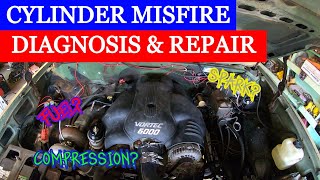
Typical fix: Replace the spark plug. 🎬 Watch this simple walkthrough for fixing a cylinder 8 misfire. It is recommended to replace all 8 plugs at the same time for consistent performance. Use anti-seize on the threads for easier future removal.
Est. part cost: $5-$15 per plug - Faulty Ignition Coil 🔴 High Probability Heat and vibration are the primary enemies of ignition coils, causing the internal windings to break down. The SSR's V8 uses an individual coil-on-plug design, and failures are common as the vehicle ages.
How to confirm: Swap the ignition coil from cylinder 8 with another cylinder (e.g., cylinder 6 on the same bank). Clear the codes and run the engine. If the code changes to P0306, the coil is faulty. This is the most effective DIY diagnostic step.
Typical fix: Replace the faulty ignition coil. It is a simple bolt-on part.
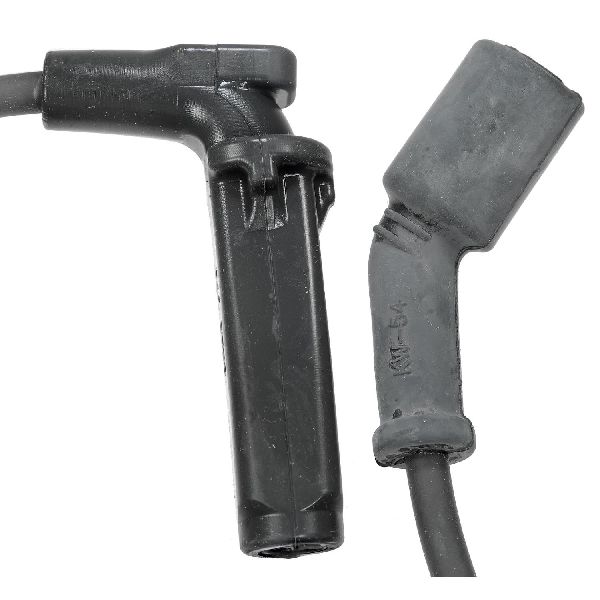
Est. part cost: $30-$70 - Bad Spark Plug Wire 🟡 Medium Probability The plug wires connect the coil to the spark plug. Wires degrade from the high heat of the exhaust manifolds, causing the insulation to crack and the spark to become weak or arc to the engine block.
How to confirm: With the engine off, inspect the wire for cylinder 8 for any visible damage, cracks, or burn marks, especially near the exhaust manifold heat shield. Test its resistance with a multimeter; a healthy wire should have a specific resistance per foot (check service manual), while a bad wire may show infinite resistance (open circuit).
Typical fix: Replace the spark plug wire. It's best practice to replace the full set of 8 wires.
Est. part cost: $50-$100 for a full set - Clogged or Faulty Fuel Injector ⚪ Low Probability Fuel injectors can become clogged with deposits over time, preventing the correct amount of fuel from entering the cylinder. This can lead to a lean misfire.
How to confirm: After ruling out ignition issues, you can swap the fuel injector from cylinder 8 with another cylinder. This is more labor-intensive as it involves depressurizing the fuel rail. A professional can also perform a flow test to measure the injector's performance.
Typical fix: Replace the faulty fuel injector.
Est. part cost: $50-$120
Rare But Worth Checking
- Worn Camshaft Lobe / Lifter Roller: This is a known issue documented in GM TSB #19-NA-219 (which supersedes PIP4138R). If basic ignition and fuel system checks do not resolve the misfire, and especially if accompanied by a consistent ticking, squeaking, or chirping noise from the engine, this should be investigated. The noise occurs at half of engine speed and will not change when disabling a fuel injector. Diagnosis involves measuring valve lift at the rocker arm. 🎬 Watch a mechanic diagnose these specific LS engine lifter problems. This is a significant mechanical repair.
- Low Cylinder Compression: Caused by issues like a worn piston ring, a leaking head gasket, or a problem with the cylinder head valves (e.g., bent valve, broken valve spring). This requires a mechanical compression test and a cylinder leak-down test to diagnose and typically indicates a need for major engine repair.
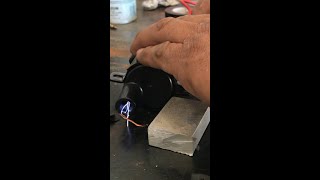
- Faulty ECM Ignition Driver: In very rare cases, the driver circuit within the Engine Control Module (ECM) that sends the trigger signal to the ignition coil for cylinder 8 can fail. This would result in no spark despite having a good coil, plug, and wire. Diagnosis involves using a noid light or oscilloscope to verify the presence of a trigger signal 🎬 See how to bench test LS ignition coils and wiring. at the ignition coil connector.
Diagnosis Steps
- Read the trouble codes with an OBD-II scanner to confirm P0308 and check for any other codes.
- Visually inspect the ignition components for cylinder 8 (rear passenger side). Look for loose connections, damaged wires, cracks in the ignition coil, or signs of arcing.
- Check for vacuum leaks. Listen for hissing sounds around the intake manifold and vacuum hoses. A smoke test is the most effective way to find a leak.
- Swap the ignition coil from cylinder 8 to an adjacent, easily accessible cylinder (like cylinder 6). Clear the codes and drive the vehicle. If the code returns as P0306, you have a bad coil.
- If the code remains P0308, perform the same swap test with the spark plug.
- If the misfire still persists on cylinder 8, inspect the spark plug wire for damage or test its resistance with a multimeter.
- If ignition components are good, the next step is to check the fuel injector. This may involve swapping it or having it professionally tested.
- If all else fails, a mechanical issue is possible. Perform a cylinder compression test and a leak-down test. Refer to TSB #19-NA-219 regarding potential camshaft/lifter wear if a ticking noise is present.
Parts You'll Likely Need
- Ignition Coil
(OEM #ACDelco D585 (for 5.3L LM4) or ACDelco D510C (for 6.0L LS2))— This is one of the most common failure points for a single-cylinder misfire. Heat and vibration cause the electronic components inside to fail.
Trusted brands: ACDelco, NGK, Delphi
OEM price range: $50-$90
Aftermarket price range: $30-$70 - Spark Plug
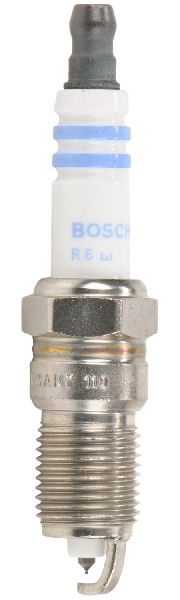
(OEM #ACDelco 41-985 (Iridium for 5.3L LM4) or ACDelco 41-993 (Iridium for 6.0L LS2))— Spark plugs are a maintenance item and the electrode can wear down or become fouled, leading to a weak or non-existent spark.
Trusted brands: ACDelco, NGK
OEM price range: $8-$15
Aftermarket price range: $5-$10 - Spark Plug Wire Set — The insulation on spark plug wires can break down over time, causing the spark energy to arc to ground instead of reaching the plug, a common issue on LS-family engines due to exhaust manifold heat.
Trusted brands: ACDelco, NGK, MSD
OEM price range: $80-$150
Aftermarket price range: $50-$100
Related Codes That Often Appear With This One
- P0300 — If the misfire is intermittent or affecting multiple cylinders, a P0300 (Random/Multiple Cylinder Misfire Detected) may be stored alongside the P0308.
Technical Service Bulletins (TSBs) & Recalls
- 19-NA-219 (Replaces PIP4138R): Notes that a P0300-P0308 DTC, with or without an engine noise (chirp, squeak, tick), can be caused by a worn camshaft lobe and/or lifter. Provides diagnostic tips like measuring valve lift.
- PIP5628G: Communicates information needed for diagnosing misfire codes P0300 - P0308.
Platform-Specific Known Issues
- GM Technical Service Bulletin #19-NA-219 (superseding PIP4138R) notes that vehicles including the 2003-2006 SSR can exhibit a P0300-P0308 code due to a worn camshaft lobe and/or lifter roller. This may be accompanied by a chirp, squeak, or tick noise.
Mechanic-Grade Diagnostic Values
- Spark Plug Wire Resistance — expected: Stock GM wires are typically around 300-400 Ohms for LS-style short wires. Aftermarket performance wires can be much lower, from 25-150 Ohms. A general rule is under 1,000 Ohms for a short wire.. Failure: Extremely high resistance (e.g., over 10,000 Ohms / 10 kΩ) or infinite resistance (open circuit) indicates a bad wire. Corrosion on the terminals can also cause high resistance.
- LS2 (6.0L) Ignition Coil Secondary Resistance — expected: 9.5 kΩ - 11.1 kΩ. Failure: A reading outside of this range indicates a faulty coil winding.
- Fuel Pressure (2003-2004 5.3L LM4) — expected: The fuel pump module for the LM4 engine is specified to operate in a range of 94-116 psi, which is then regulated down at the fuel rail. The rail-mounted regulator maintains pressure for the injectors.. Failure: Low pressure at the rail after the regulator can indicate a weak pump or a faulty regulator.
Hidden / Shadow Codes Worth Checking
- Misfire Current/History Counters (Mode 6 Data): A professional scan tool like the GM Tech 2 can display 'Misfire Current Counters' and 'Misfire History' for each cylinder. This provides more granular data than a simple P-code, showing the exact number of misfire events detected by the crankshaft position sensor. (see via Accessible via the 'Misfire Data' or 'Engine Data' menu on a GM Tech 2 or other advanced OBD-II scanner with Mode 6 capabilities.)
Scan Tool Commands That Help
- GM Tech 2: Misfire Graphic Display — This function provides a real-time bar graph showing misfire counts for each cylinder, making it easy to visually identify the problematic cylinder(s) even if a code has not yet been set.
- GM Tech 2: Crankshaft Position (CKP) System Variation Learn — This procedure should be performed after replacing a crankshaft sensor, PCM, or on high-mileage engines to re-calibrate the PCM's interpretation of the crank signal. Inaccurate CKP data can lead to false misfire detection. The procedure helps the PCM learn the minor variations in the reluctor wheel to improve misfire accuracy.
Wiring & Ground Locations
- G102 — Located at the left rear of the engine block/cylinder head area.. This is the primary ground point for all eight ignition coils. A loose or corroded G102 can cause intermittent or weak spark on multiple cylinders, including cylinder 8.
- G101 — Located at the lower left front of the engine block.. This is a main ground for the Engine Control Module (ECM) and Transmission Control Module (TCM). A poor connection here can cause a wide range of erratic engine behavior and codes, including misfires.
- ECM Connector C1, Pin 73 (LS2) / PCM Connector C2, Pin 50 (LM4) — At the main Engine Control Module (ECM/PCM), which is located in the driver's front corner of the engine compartment.. This is the specific pin that sends the low-level trigger signal from the ECM/PCM to the igniter for the cylinder 8 ignition coil. A wiring issue between this pin and the coil connector will prevent cylinder 8 from firing.
- Cylinder 8 Coil Connector (LS2) — On the ignition coil for cylinder 8.. Pin A: Ignition Output from ECU (Trigger). Pin B: Ground. Pin C: Switched 12V+. Pin D: Engine Ground. Verifying 12V+ and good grounds at the connector is a key diagnostic step.
Real Owner Repair Stories
- Reddit user comment in r/MechanicAdvice (General LS-based engine, applicable to SSR) — P0308 code.
❌ Tried (didn't work) Swapping ignition coils
✅ What actually fixed it The user identified a broken valve spring on the cylinder 8 valve train. This is a known, though less common, failure on LS engines that prevents the valve from opening and closing properly, causing a complete loss of compression and a persistent misfire on that cylinder.
OEM Part Supersession History
12570616→ACDelco D510C (GM 12611424)— Part consolidation and potential design updates.
Heads up: The ACDelco D510C is the correct square-style coil for the 2005-2006 SSR with the 6.0L LS2 engine. It is not compatible with the 2003-2004 5.3L LM4 engine, which uses the round D585 style coil.
Model Year Variations Within This Range
- 2003-2004: These models use the 5.3L LM4 (Gen III) V8. This engine has a return-style fuel system with a regulator on the fuel rail, uses a 24x crankshaft reluctor wheel, and has 'coil-near-plug' ignition with round D585 coils connected by short plug wires.
- 2005-2006: These models use the 6.0L LS2 (Gen IV) V8. This engine has a returnless fuel system (regulator in-tank), uses a 58x crankshaft reluctor wheel, and has true 'coil-on-plug' ignition with square D510C coils that mount directly to the valve cover. The PCM is also a different unit (E40) than the one used on the LM4.
Helpful Videos
Used OEM Parts in Stock
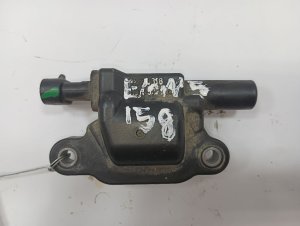
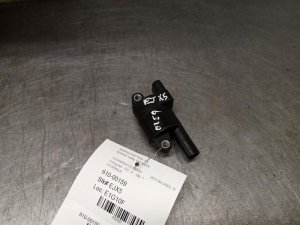
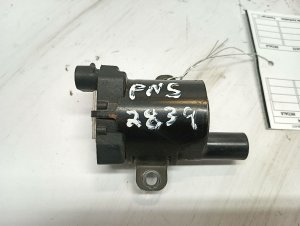
New Aftermarket Parts Available
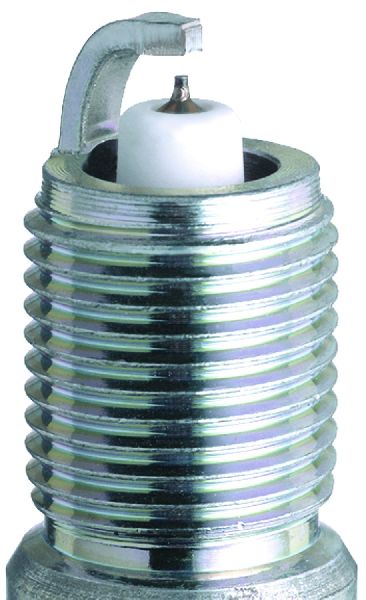

The information in this article is provided for general reference and educational purposes only. Vehicle specifications, procedures, and part compatibility can vary by production date, trim level, and region. Always consult your vehicle's factory service manual and verify part numbers before purchasing or performing repairs. Safety-critical components such as airbags, seat belts, and braking systems should be installed by a qualified professional.
- Chevrolet SSR:
- 🎬 Helpful Videos
- 🛍️ Shop This Part
- What's Unique About the 2003-2006 Chevrolet SSR
- Diagnostic Flowchart
- Symptoms You May Notice
- Most Likely Causes
- Rare But Worth Checking
- Diagnosis Steps
- Parts You'll Likely Need
- Related Codes That Often Appear With This One
- Technical Service Bulletins (TSBs) & Recalls
- Platform-Specific Known Issues
- Mechanic-Grade Diagnostic Values
- Hidden / Shadow Codes Worth Checking
- Scan Tool Commands That Help
- Wiring & Ground Locations
- Real Owner Repair Stories
- OEM Part Supersession History
- Model Year Variations Within This Range
- 🎟️ Get 5% Off