

P0308 on 2000-2007 Chevrolet Silverado 1500: Cylinder 8 Misfire Causes and Fixes
P0308 on a 2000-2007 Silverado 1500 indicates a misfire in cylinder 8. The most common causes are a bad spark plug, spark plug wire, or ignition coil. These are affordable DIY fixes, typically costing under $100. However, be aware of less common but serious issues like failed lifters or a worn camshaft, especially on higher mileage engines or the 2007 models with Active Fuel Management (AFM).
- P0308 is a misfire on cylinder 8, which is the rearmost cylinder on the passenger's side.
- Always start diagnosis by swapping inexpensive ignition parts (coil, wire, plug) between cylinder 8 and another cylinder to see if the misfire code follows.
- Do not ignore a flashing check engine light, as this can lead to expensive catalytic converter damage.
- If a full ignition tune-up and fuel injector check don't fix the problem, be aware of the possibility of a more serious mechanical issue like a failed lifter or worn camshaft, which is a known issue on these trucks.
What's Unique About the 2000-2007 Chevrolet SILVERADO 1500

The Gen III/IV V8 engines in this generation of Silverado are generally robust, but they are well-known for ignition component failures like spark plugs, wires, and coils as they age. A more serious, documented issue for these GM trucks is the potential for internal engine problems, specifically worn camshaft lobes and lifters, which can cause a persistent P0308 code that isn't fixed by a typical tune-up. This was noted in manufacturer Technical Service Bulletin (TSB) #PIP4138R. Additionally, the 2007 GMT900 models introduced Active Fuel Management (AFM) on some 5.3L engines, which is known to cause lifter failure, leading to misfires. Cylinder 8 is also the last cylinder on the passenger-side fuel rail, making it slightly more susceptible to clogging from debris in the fuel system over time.
Diagnostic Flowchart

Tap your situation to follow the diagnostic path that matches what you're seeing on this vehicle.
Generation note: This range covers two Silverado generations. The 1999-2006 models (and 2007 "Classic") are the GMT800 platform. The completely redesigned 2007 model is the GMT900 platform. While the body and interior are different, the underlying V8 engine architecture (Gen III/IV LS-based) is very similar, so the causes and diagnostic steps for a P0308 code are largely the same. A key difference is the introduction of Active Fuel Management (AFM) on some 2007 5.3L engines, which adds a specific failure point (AFM lifters) not present on earlier models.
Symptoms You May Notice
- Rough or shaking idle.
- Hesitation or stumbling during acceleration.
- Noticeable loss of engine power.
- Flashing or solid Check Engine Light.
- Smell of gasoline from the exhaust.
- Decreased fuel economy.
- Engine ticking or chirping noise, which could indicate a lifter or camshaft issue.
- Replacing the oxygen (O2) sensor. The O2 sensor reports on the air/fuel mixture; a misfire will cause bad readings, but the sensor itself is not the cause.
- Assuming any ticking noise is a simple 'exhaust leak' when it could be a sign of a failing lifter, which is a much more serious issue.
Most Likely Causes

- Worn or Fouled Spark Plug 🔴 High Probability Spark plugs are a standard maintenance item. GM recommends replacement around 100,000 miles, a milestone many of these trucks have passed. Original plugs are often found completely worn out on high-mileage trucks, causing misfires under load.
How to confirm: Remove the spark plug from cylinder 8 and inspect it. Look for a worn electrode, heavy carbon deposits, oil fouling, or coolant contamination. A wet or fuel-smelling plug points to an ignition or compression issue, while a white, ashy plug suggests a lean condition or coolant leak.
Typical fix: Replace the spark plug. It is highly recommended to replace all 8 plugs at the same time for even performance, especially if they are near the 100,000-mile service interval.
Est. part cost: $5 - $15 per plug - Failed Spark Plug Wire 🔴 High Probability The spark plug wires on these Vortec engines are exposed to extreme heat, which degrades them over time, causing the spark to weaken or arc to the engine block. They are also known to break during removal if they are old. Coolant leaks from heater core hoses can also drip onto the #8 plug wire, causing it to fail.
How to confirm: Visually inspect the wire for cracks, burns, or corrosion. At night, you can sometimes see the spark arcing from the wire to a metal surface. The most effective test is to swap the cylinder 8 wire with another cylinder's wire (e.g., cylinder 6) and see if the misfire code changes to P0306.
Typical fix: Replace the spark plug wire. It's best practice to replace the full set of 8 wires.
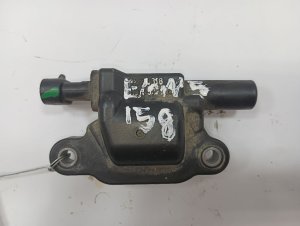
Est. part cost: $40 - $100 for a full set - Bad Ignition Coil 🟡 Medium Probability The coil-on-plug or coil-near-plug design is reliable, but individual coils can fail from heat and vibration over many years and miles. Cylinder 8 is at the back of the engine bay and can be subject to more heat soak.
How to confirm: Swap the ignition coil from cylinder 8 with another cylinder (e.g., cylinder 6). Clear the codes and drive the truck. If the code returns as P0306, the coil is faulty. This is a common and effective diagnostic step mentioned in many forums.
Typical fix: Replace the single faulty ignition coil.
Est. part cost: $30 - $75 - Clogged or Failed Fuel Injector 🟡 Medium Probability As the last injector on the fuel rail, cylinder 8's injector can sometimes accumulate more debris over time, leading to a clog. Ethanol in modern fuels can also contribute to injector deposits.
How to confirm: Listen to the injector with a mechanic's stethoscope; it should make a consistent clicking sound. You can also test its resistance with a multimeter or swap it with another cylinder's injector to see if the misfire follows. An injector balance test can also be performed with a capable scan tool.
Typical fix: Replace the faulty fuel injector. It's recommended to replace the O-rings on surrounding injectors if the fuel rail is removed.
Est. part cost: $50 - $120 - Intake Manifold Gasket Leak ⚪ Low Probability The original orange intake manifold gaskets on Gen III V8s were known to degrade and cause vacuum leaks, particularly when the engine is cold. This allows unmetered air into the engine, leaning out the mixture and causing misfires. The LS engines have a "dry" intake, so this leak will be a vacuum leak, not a coolant leak.
How to confirm: With the engine running, spray brake cleaner or a propane torch (unlit) around the intake port for cylinder 8. If the engine RPM changes, a leak is present. A smoke test is a more definitive way to find vacuum leaks.
Typical fix: Replace the intake manifold gaskets with the updated green or metal-reinforced Fel-Pro gaskets.
Est. part cost: $30 - $80
Rare But Worth Checking
- Worn Camshaft Lobe / Failed Lifter: Mentioned in GM TSB #PIP4138R. If basic ignition and fuel system checks don't solve the misfire, this is a known, serious mechanical issue on these engines. It may be accompanied by a chirping or ticking noise that occurs at half of engine speed. Later models (2007+) with Active Fuel Management (AFM) are particularly prone to lifter failure on AFM cylinders (1, 4, 6, 7), but non-AFM lifters can fail on any cylinder, including 8. Diagnosis involves measuring valve lift or physically inspecting the camshaft and lifters.
- Low Cylinder Compression: This indicates a mechanical engine problem, such as worn piston rings, a failing head gasket, or a problem with the cylinder head valves (e.g., broken valve spring). A compression test is needed to confirm this. A cylinder leakage test can further pinpoint the source of the compression loss.
- Coolant Leak onto Ignition Components: A known issue on some GMT800/900 trucks is a leak from the heater core quick-connect hoses at the firewall. The dripping coolant can land directly on the cylinder 8 ignition coil and spark plug wire, causing them to short out and fail, leading to a P0308 code.
Diagnosis Steps
- Confirm the P0308 code is present using an OBD-II scanner. Note any other codes and check freeze-frame data to see when the misfire occurred (e.g., cold start, under load).
- Identify cylinder 8. On Chevy V8s, cylinders are numbered 1-3-5-7 on the driver's side (front to back) and 2-4-6-8 on the passenger side (front to back). Cylinder 8 is the rear-most cylinder on the passenger side.
- Inspect for external issues. Check for coolant leaks from the heater hoses near the firewall that could be dripping on the cylinder 8 coil or wire.
- Swap parts to isolate the problem. Start with the easiest components. Swap the ignition coil from cylinder 8 with cylinder 6. Clear the codes and drive. If P0306 appears, the coil is bad.
- If the misfire remains on cylinder 8, swap the spark plug wire between cylinder 8 and 6. If the code moves, the wire is bad.
- If the misfire still remains on cylinder 8, remove and inspect the spark plug. Replace it, preferably with the correct ACDelco plug for your year. If the old plug is fouled, it's a strong indicator.
- If ignition components are good, check the fuel injector. Listen for a steady clicking. If you are comfortable doing so, swap the injector with another cylinder to see if the misfire follows.
- Check for vacuum leaks around the intake manifold gasket near cylinder 8 using brake cleaner or a smoke machine.
- If all of the above check out, perform a cylinder compression test to check for mechanical engine problems. A healthy cylinder should have 120-150 PSI or more, with minimal variation between cylinders.
- If compression is good but the misfire persists, the issue may be a worn camshaft or lifter, as noted in TSB #PIP4138R. This often requires more advanced diagnostics like measuring valve lift or engine teardown.
Parts You'll Likely Need
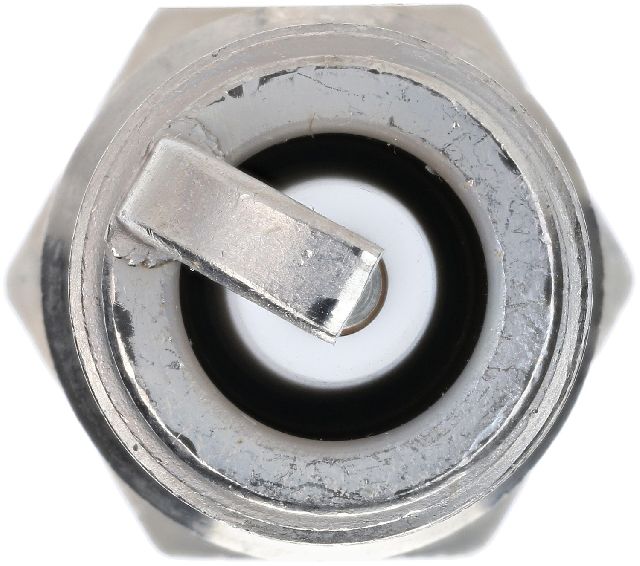
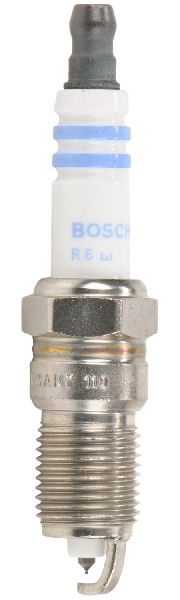
- Spark Plug
(OEM #41-962)— This is the most common failure point. Per GM guidance, the ACDelco 41-962 Platinum plug is the correct replacement for 2000-2006 models, while the 41-110 Iridium may be used for 2007+ models. Using the wrong plug can cause issues.
Trusted brands: ACDelco, NGK
OEM price range: $8-$15
Aftermarket price range: $5-$12 - Spark Plug Wire Set
(OEM #9748HH)— Wires degrade from engine heat, causing weak spark. It's best to replace them as a set. This part number fits the GMT800 trucks (1999-2006).
Trusted brands: ACDelco, Delphi, NGK
OEM price range: $60-$100
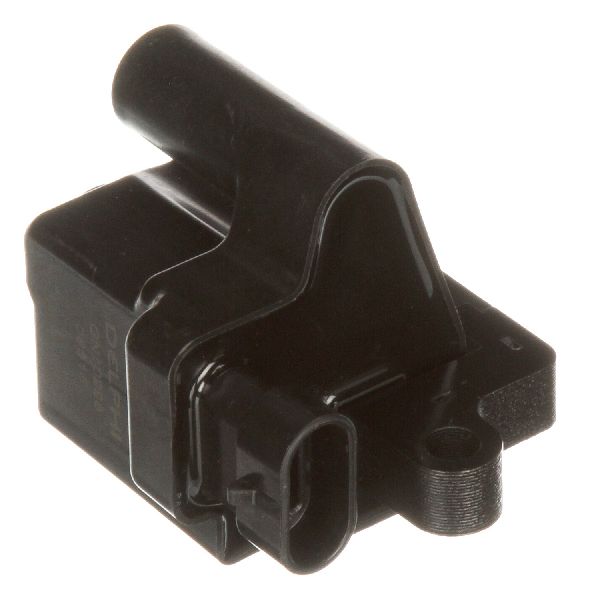
Aftermarket price range: $40-$80 - Ignition Coil
(OEM #12570616)— The coil provides the voltage for the spark. While durable, individual coils can fail over time. This part number is widely used across many GM V8 engines of this era.
Trusted brands: ACDelco, Delphi
OEM price range: $50-$75
Aftermarket price range: $30-$60
Related Codes That Often Appear With This One
- P0300 — If the cause of the misfire on cylinder 8 is intermittent or starting to affect other cylinders (like a vacuum leak or low fuel pressure), a P0300 Random/Multiple Cylinder Misfire code may appear as well.
- P050D — This code for 'Cold Start Rough Idle' is often seen with misfire codes and can be another pointer towards internal engine issues like sticking lifters, as mentioned in TSB #PIP5628G.
Technical Service Bulletins (TSBs) & Recalls
- PIP4138R
- PIP5628G
Platform-Specific Known Issues

- TSB #PIP4138R points to worn camshaft lobes and/or lifters as a potential cause for a persistent misfire not solved by ignition or fuel parts. It may be accompanied by a distinct chirp or tick noise.
- TSB #PIP5628G provides a diagnostic template for technicians to follow when dealing with misfire codes P0300-P0308, indicating it's a common enough issue to warrant a standardized procedure.
- Active Fuel Management (AFM) lifter failure is a very common problem on 2007 (GMT900) and newer 5.3L engines, though it typically affects cylinders 1, 4, 6, or 7. However, standard lifter failure can still occur on cylinder 8.
- Forum users frequently report that a coolant leak from the heater core quick-connect fittings at the firewall can drip directly onto the cylinder 8 coil pack and wire, causing a misfire.
Mechanic-Grade Diagnostic Values
- Fuel Injector Resistance — expected: 10 to 18 Ohms, with many 5.3L injectors reading around 11.7-13.5 Ohms.. Failure: A reading of 0 Ohms (shorted), O.L. (open), or a value that significantly deviates from the other injectors on the engine.
- Ignition Coil Primary Resistance (Round Coils, e.g., D585) — expected: ~0.820 Ohms. Failure: Significant deviation from the specification or from other known-good coils.
- Ignition Coil Secondary Resistance (Round Coils, e.g., D585) — expected: ~7.10k Ohms. Failure: Significant deviation from the specification or from other known-good coils.
- Cylinder Compression — expected: 120-150 PSI, with minimal variation between cylinders.. Failure: A reading below 120 PSI or a significant drop compared to other cylinders indicates worn piston rings, valves, or a head gasket issue.
Scan Tool Commands That Help
- Tech2 / GDS2 or equivalent professional scanner: Cylinder Balance Test — This test can be used early in the diagnosis to confirm that cylinder 8 is contributing less power than the other cylinders, verifying the P0308 code is accurate before proceeding with physical parts inspection.
- Tech2 / GDS2 or equivalent professional scanner: Fuel Injector Balance Test — After ruling out ignition issues, this function commands each injector to fire and measures the corresponding drop in fuel pressure. It can identify a clogged or weak cylinder 8 injector without having to physically remove it.
Wiring & Ground Locations
- G103 (Right Rear of Engine) — On the GMT800 (2005 model example), this ground is located on the right rear of the engine block. For GMT900 (2007+), it's on the front of the passenger side cylinder head.. This is a primary engine and PCM ground. A poor connection here can cause erratic sensor readings and unexplained electrical issues, including misfires. While not specific to only cylinder 8, it's a critical point to check for corrosion or looseness when diagnosing any misfire code.
- G102 (Ignition Coil Ground) — Located at the left rear of the engine, this ground serves all 8 ignition coils.. A fault at this shared ground point could potentially cause issues for any cylinder, but could manifest intermittently on cylinder 8. If multiple, random misfires (P0300) are also present, this ground is a strong suspect.
- Cylinder 8 Ignition Coil Connector — The rearmost connector on the passenger side valve cover/coil bracket.. The wiring harness connector itself can become brittle from heat and vibration. The terminals can lose tension or the wires can break internally right at the connector, causing an intermittent connection to the coil that is difficult to spot visually.
Real Owner Repair Stories
- gmtrucks.com forum user (2005 Chevrolet Silverado 5.3L) — Persistent P0308 misfire code.
❌ Tried (didn't work) Replaced spark plug, Replaced spark plug wire, Replaced ignition coil, Replaced fuel injector
✅ What actually fixed it The final cause was discovered to be a cracked cylinder head near the #8 cylinder. This was only found after all common ignition and fuel components were replaced without success. - silveradosierra.com forum user (2007 Chevrolet Silverado 5.3L with AFM) — P0308 and a ticking noise from the engine.
❌ Tried (didn't work) Swapping ignition coils, Replacing spark plug
✅ What actually fixed it The cause was a collapsed lifter on cylinder #8. Although cylinder 8 is not an AFM cylinder, the non-AFM lifters are also known to fail. The repair involved replacing the lifters and the camshaft, which had been damaged by the failed lifter.
"I Checked Everything" — The Actual Cause
- In some cases, a P0308 can be caused by a cracked cylinder head or a failing head gasket. A standard smoke test for vacuum leaks will come back clean because the leak is internal to the combustion chamber, not the intake tract. The issue is only discoverable via a compression test, cylinder leak-down test, or by checking the cooling system for combustion gases.
OEM Part Supersession History
GM Part #12558178 (Orange/Red Gasket)→Fel-Pro MS98014T (or equivalent updated GM part)— The original plastic carrier gaskets with orange silicone seals were prone to becoming brittle and cracking, causing vacuum leaks.
Heads up: The updated Fel-Pro MS98014T features a steel core carrier with fluoroelastomer rubber, which is more durable and resistant to heat and fluids. It is a direct, superior replacement for the failure-prone original design.ACDelco D585 (Round Coil with Heatsink)→Various aftermarket and OEM replacements. Note: some later models used a square-body 'Melco' style coil.— Ongoing production and design revisions.
Heads up: It is crucial to visually confirm the coil type on the truck before ordering. The round D585 and square Melco-style coils have different mounting brackets and are not interchangeable.
Model Year Variations Within This Range
- 1999-2006 (GMT800): These models use the Gen III V8 engines. The intake manifold gaskets are the most common failure-prone part leading to vacuum leaks. The fuel system on earlier models (1999-2003) used a fuel return line, while later models (2004+) used a returnless system, which can affect fuel pressure diagnosis.
- 2007 (GMT900): This model year introduced the Gen IV V8 engines. Some 5.3L and 6.0L engines were equipped with Active Fuel Management (AFM), which added failure-prone deactivation lifters as a new potential cause for misfires (though not typically on cylinder 8). The engine and chassis grounds (e.g., G103) were also relocated compared to the GMT800 platform.
Helpful Videos

Used OEM Parts in Stock


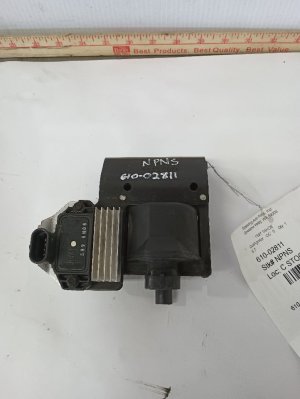
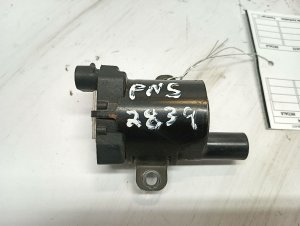
New Aftermarket Parts Available
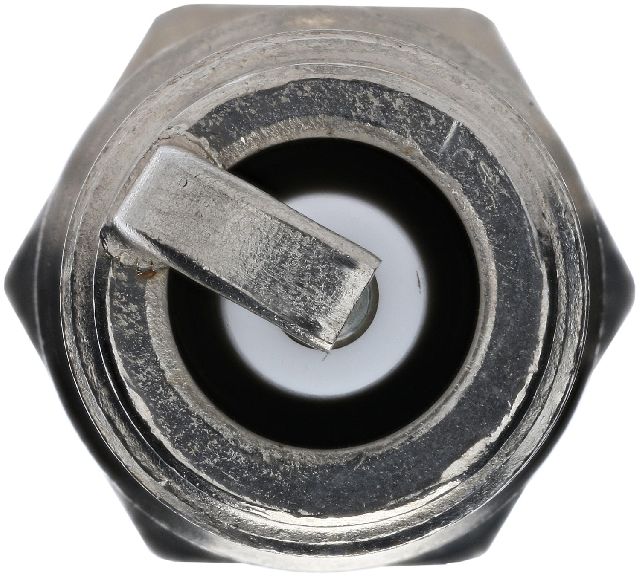


The information in this article is provided for general reference and educational purposes only. Vehicle specifications, procedures, and part compatibility can vary by production date, trim level, and region. Always consult your vehicle's factory service manual and verify part numbers before purchasing or performing repairs. Safety-critical components such as airbags, seat belts, and braking systems should be installed by a qualified professional.
- Chevrolet SILVERADO 1500:
- 🎬 Helpful Videos
- 🛍️ Shop This Part
- What's Unique About the 2000-2007 Chevrolet SILVERADO 1500
- Diagnostic Flowchart
- Symptoms You May Notice
- Most Likely Causes
- Rare But Worth Checking
- Diagnosis Steps
- Parts You'll Likely Need
- Related Codes That Often Appear With This One
- Technical Service Bulletins (TSBs) & Recalls
- Platform-Specific Known Issues
- Mechanic-Grade Diagnostic Values
- Scan Tool Commands That Help
- Wiring & Ground Locations
- Real Owner Repair Stories
- "I Checked Everything" — The Actual Cause
- OEM Part Supersession History
- Model Year Variations Within This Range
- 🎟️ Get 5% Off