

P0308 on 2006-2007 Chevrolet Monte Carlo SS: Cylinder 8 Misfire Causes and Fixes
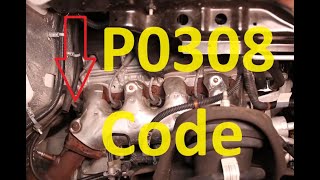
P0308 on a Monte Carlo SS indicates a misfire in cylinder 8. This is most often caused by a failed spark plug, ignition coil, or plug wire. A more serious, but known, issue for this specific engine is a failed AFM/DoD lifter, which is a more complex and expensive repair. Cylinder 8 is not an AFM cylinder, but issues within the AFM system can affect overall engine health and oiling.
- P0308 on a 2000-2007 Monte Carlo is specific to the 2006-2007 SS model with the 5.3L V8 engine.
- The most likely and easiest fixes are replacing the spark plug, ignition coil, or spark plug wire for cylinder 8.
- A common, but more serious, cause for this code on this specific engine is a failed Active Fuel Management (AFM) lifter.
- Do not ignore a flashing check engine light, as continued driving can cause expensive damage to the catalytic converter.
- Always start diagnosis with the simplest and cheapest steps, like swapping ignition coils, before moving to more complex repairs.
What's Unique About the 2000-2007 Chevrolet MONTE CARLO
The 2006-2007 Monte Carlo SS uses a unique transverse-mounted 5.3L LS4 V8 engine, which is different from the typical rear-wheel-drive layout for V8s. This engine features Active Fuel Management (AFM), also known as Displacement on Demand (DoD), which deactivates certain cylinders to save fuel during cruising. The AFM cylinders on the LS4 are 1, 4, 6, and 7. While cylinder 8 is not an AFM cylinder, the AFM system's components, particularly the lifters and the high-volume oil pump, are known failure points that can lead to widespread valvetrain issues and oil pressure problems, indirectly contributing to misfires in non-AFM cylinders.
Diagnostic Flowchart
Tap your situation to follow the diagnostic path that matches what you're seeing on this vehicle.
Generation note: The 2000-2007 year range covers the sixth (2000-2005) and seventh (2006-2007) generations of the Monte Carlo. However, the P0308 code is only relevant for the seventh-generation SS model (2006-2007), as it was the only one equipped with a V8 engine.
Symptoms You May Notice
- Flashing or solid Check Engine Light
- Rough or shaky idle
- Engine hesitation or stumbling during acceleration
- Noticeable loss of power
- Reduced fuel economy
- A fuel smell from the exhaust
- Engine ticking or tapping noise, especially if related to a lifter issue
- Replacing the catalytic converter when it has been damaged by the misfire, without fixing the root cause of the misfire first.
- Replacing fuel pumps or mass airflow sensors for a single-cylinder misfire, which is unlikely as these components typically affect all cylinders.
Most Likely Causes
- Worn or Fouled Spark Plug 🔴 High Probability Spark plugs are regular wear items. The rear bank of cylinders on the transverse LS4, including cylinder 8, can be difficult to access, leading to deferred maintenance. The OEM recommended plug is often an Iridium type.
How to confirm: Remove the spark plug from cylinder 8 and inspect it for wear, damage, or fouling from oil or carbon. A heavily worn or dirty plug is a clear sign it needs replacement.
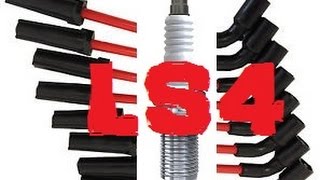
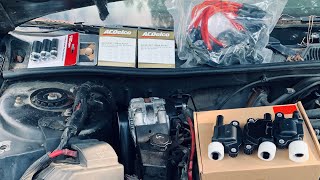
Typical fix: Replace the spark plug. It is recommended to replace all 8 plugs at the same time for consistent performance. The OEM part is typically an ACDelco Iridium plug. 🎬 Watch: Part 1 of changing LS4 spark plugs and wires.
Est. part cost: $10-$25 per plug - Failed Ignition Coil 🔴 High Probability
How to confirm: Swap the ignition coil from cylinder 8 with another cylinder (e.g., cylinder 6). Clear the codes and drive the vehicle. If the code changes to P0306, the coil is faulty.
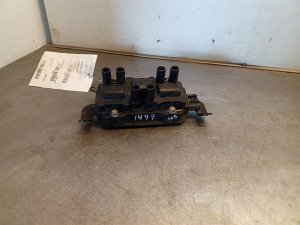
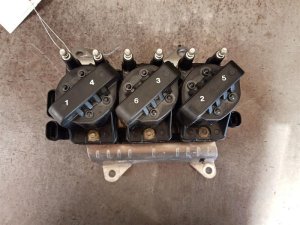
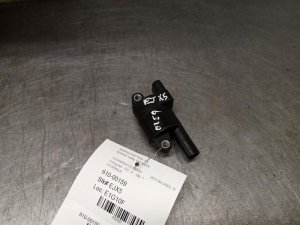
Typical fix: Replace the faulty ignition coil. Coils on the LS4 are individual 'coil-near-plug' units.
Est. part cost: $40-$80 - Bad Spark Plug Wire 🟡 Medium Probability
How to confirm: Visually inspect the wire for cracks, burns, or corrosion. Test the wire's resistance with a multimeter; high or infinite resistance indicates a bad wire.
Typical fix: Replace the spark plug wire. It's often best to replace the entire set.
Est. part cost: $50-$100 for a set - Failed Active Fuel Management (AFM/DoD) Lifter 🟡 Medium Probability The LS4 engine's AFM system deactivates cylinders 1, 4, 6, and 7. The special AFM lifters are a widely documented failure point on GM V8s. A lifter can become stuck or collapsed, preventing the valve from opening correctly and causing a misfire and ticking noise. Failures are often linked to oil pressure issues, which can be exacerbated by the specific high-volume oil pump and pressure relief valve used in AFM engines.
How to confirm: This is a more complex diagnosis. It often presents with a ticking noise from the engine. A mechanic may need to perform further diagnostics, such as a compression test or removing the valve cover to inspect the valvetrain. Low compression on an AFM cylinder is a strong indicator.
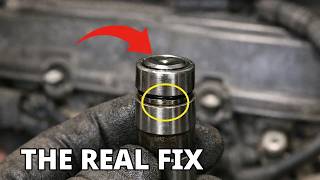
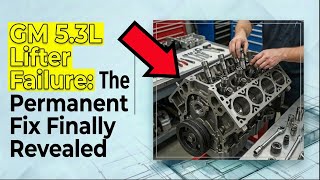
Typical fix: Requires replacing the faulty lifter(s). Many owners opt to perform an 'AFM delete,' which involves replacing the AFM lifters, camshaft, Valve Lifter Oil Manifold (VLOM), and other components to permanently disable the system. This is a significant and costly repair. 🎬 Watch: Understanding the permanent fix for AFM lifter tick.
Est. part cost: $200-$1000+ depending on repair or delete - Clogged or Faulty Fuel Injector ⚪ Low Probability
How to confirm: Listen to the injector with a mechanic's stethoscope to confirm it's clicking. You can also swap the injector with another cylinder to see if the misfire follows, though this is more labor-intensive.
Typical fix: Clean or replace the fuel injector.
Est. part cost: $50-$150
Rare But Worth Checking
- Low Compression: A mechanical engine problem like a worn piston ring, bad valve, or leaking head gasket can cause a misfire. A compression test on cylinder 8 will confirm this. This is less common than ignition or fuel issues but indicates a serious internal engine problem.
- Worn Camshaft Lobe: Related to lifter failure, a worn camshaft lobe can cause a persistent misfire and ticking noise. This is often discovered when inspecting for a failed lifter and is a known consequence of a collapsed lifter running for too long.
- Valve Lifter Oil Manifold (VLOM) Failure: The VLOM contains solenoids that direct oil flow to the AFM lifters. A failure in this manifold can cause oil pressure issues leading to lifter failure and misfires, even on non-AFM cylinders. GM released updated versions of this part to address reliability.
Diagnosis Steps
- Read the trouble codes with an OBD-II scanner to confirm P0308 and check for any other codes.
- Inspect the spark plug for cylinder 8. Look for signs of wear, fouling, or damage. Replace if necessary.
- Inspect the spark plug wire for cylinder 8. Check for any visible damage or corrosion. Test its resistance with a multimeter.
- Swap the ignition coil from cylinder 8 with another cylinder (e.g., cylinder 6). Clear the codes and run the engine. If the code changes to P0306, the ignition coil is the culprit.
- If the misfire persists, check the fuel injector. Listen for a steady clicking sound with a mechanic's stethoscope. Check the wiring and connector.
- Perform a compression test on cylinder 8 to rule out mechanical issues like bad rings or valves.
- If a ticking noise is present and other causes are ruled out, suspect a valvetrain issue, possibly related to the AFM system's impact on oiling or a standard lifter failure. This may require professional diagnosis.
Parts You'll Likely Need
- Spark Plug
(OEM #ACDelco 41-985 (now superseded by 41-110))— This is the most common failure item for a single-cylinder misfire and is part of routine maintenance.
Trusted brands: ACDelco, NGK
OEM price range: $15-$25
Aftermarket price range: $10-$20 - Ignition Coil
(OEM #ACDelco D510C (GM 12611424))— Ignition coils are another frequent cause of misfires and are relatively easy to diagnose by swapping them.
Trusted brands: ACDelco, Delphi
OEM price range: $60-$100
Aftermarket price range: $40-$80 - Active Fuel Management (AFM) Lifter
(OEM #GM 12648846 (Note: this is a standard lifter, AFM lifters have different part numbers like 12632143))— A known weak point on the 5.3L LS4 engine that directly causes misfires on AFM cylinders. While cylinder 8 is not an AFM cylinder, a full AFM delete job involves replacing all lifters.
Trusted brands: ACDelco, GM Genuine
OEM price range: $40-$60 per lifter
Aftermarket price range: $30-$50 per lifter - Valve Lifter Guide
(OEM #GM 12595365)— These plastic guides hold the lifters in place. They can become brittle and break, especially during a lifter failure. They are always replaced during a lifter job.
Trusted brands: GM Genuine Parts, Melling
OEM price range: $10-$20
Aftermarket price range: $8-$15
Related Codes That Often Appear With This One
- P0300 — If the misfire becomes more widespread or is intermittent across multiple cylinders, a P0300 (Random/Multiple Cylinder Misfire Detected) code may appear alongside P0308. This is common when an AFM lifter fails.
Technical Service Bulletins (TSBs) & Recalls
- PIP5628G: Mentions diagnostic information needed for DTC Codes P0300 - P0308.
- PIP4138F: Discusses valvetrain concerns, including worn cam lobes and lifters, as a potential cause for misfire codes P0300-P0308 on the 2006-2007 Monte Carlo SS.
- PIP4568P: Details diagnosis for engine misfires on AFM cylinders (1, 4, 6, 7) due to collapsed or stuck lifters, often caused by oil pressure or aeration issues.
- TSB #10-06-01-007E: Specifically addresses valve lifter tick noise at startup on vehicles including the 2007 Monte Carlo.
Platform-Specific Known Issues
- The Active Fuel Management (AFM) system is a significant source of problems for the 5.3L LS4 engine, with collapsed or stuck lifters being a common cause of misfires (typically P0300, P0301, P0304, P0306, P0307). This issue has been the subject of technical service bulletins and class-action lawsuits. While P0308 points to a non-AFM cylinder, the overall health of the valvetrain is often compromised by the AFM system's oiling requirements and potential for failure.
- Technical Service Bulletin PIP4138N mentions that a P0300-P0308 DTC can be caused by valvetrain concerns like a worn cam lobe or lifter on 2006-2007 Monte Carlo SS models.
- A ticking noise on cold startup that goes away after a few minutes is a common complaint among LS4 owners, often an early sign of lifter issues.
Mechanic-Grade Diagnostic Values
- Fuel Pressure (Key On, Engine Off) — expected: ~58 PSI. Failure: Significantly lower pressure indicates a weak fuel pump, faulty regulator, or leak.
- Fuel Pressure (Engine Idling, Vacuum Line Connected) — expected: ~50 PSI. Failure: Pressure that does not drop from the KOEO reading suggests a faulty regulator or vacuum leak.
- Fuel Pressure (Engine Idling, Vacuum Line Disconnected) — expected: ~58 PSI. Failure: Pressure that does not rise to this level indicates a weak pump or faulty regulator.
- Ignition Coil Primary Resistance — expected: 0.45 - 0.7 Ohms. Failure: Readings outside this range suggest a faulty coil winding.
- Ignition Coil Secondary Resistance — expected: 8.2k - 10.0k Ohms. Failure: Readings outside this range suggest a faulty coil winding.
- Long Term Fuel Trim (LTFT) — expected: -8% to +8%. Failure: Consistently high positive values (> +10%) suggest a vacuum leak or under-reporting MAF; high negative values (< -10%) suggest a leaking injector or other rich condition.
Hidden / Shadow Codes Worth Checking
- Misfire Counters (Current/History): This is not a DTC, but a live data parameter that shows the number of misfire events per cylinder over a specific number of engine revolutions. It allows a technician to see intermittent misfires that are not yet severe enough to set a P0308 code. (see via Accessible using a GM Tech2 or GDS2 scan tool, typically under Engine Data or Misfire Data menus. Some high-end aftermarket scanners may also display this data, sometimes within Mode 6.)
Scan Tool Commands That Help
- GM Tech2 / GDS2: Crankshaft Position Variation Learn (CASE Relearn) — This procedure MUST be performed after replacing the crankshaft position sensor or the PCM. It synchronizes the sensor with the actual position of the crankshaft reluctor wheel, accounting for manufacturing tolerances. Failure to perform this can cause the PCM to inaccurately detect misfires and set false P030x codes.
- GM Tech2 / GDS2: Misfire Graphic — To visually monitor misfire counts on all cylinders in real-time. This is useful for confirming if the misfire is isolated to cylinder 8 or if other cylinders are also experiencing minor, non-code-setting misfires.
- GM Tech2 / GDS2: Reset Fuel Trims — After a repair that affects the air/fuel mixture (like fixing a vacuum leak or replacing an injector), resetting the fuel trims forces the PCM to relearn the baseline values immediately, rather than slowly adapting over time.
Wiring & Ground Locations
- G102 — Located at the left rear of the engine.. This is a primary ground point that specifically grounds all 8 ignition coils. A loose or corroded connection at G102 can cause a weak or intermittent spark on one or more cylinders, leading to misfire codes.
- G111 — On a transmission-to-engine bolt, located below the starter motor on the 5.3L LS4.. This is a major powertrain ground. Poor contact here can cause a variety of issues with the Engine Control Module (ECM) and its sensors, potentially leading to incorrect readings and misfire detection.
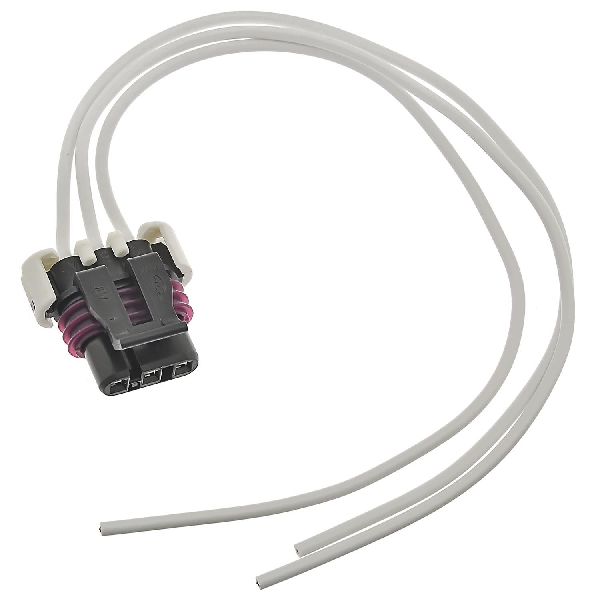
- Ignition Coil Connector — On the ignition coil for cylinder 8.. The connector and its wiring are a common failure point. Check for a solid 12V power supply, a good ground (provided via G102), and a clean signal wire from the PCM. A damaged connector or chafed wire can interrupt the signal to fire the coil.
Real Owner Repair Stories
- TriStateTuners.com forum user (LS-powered vehicle (similar to LS4)) — Blinking Check Engine Light, multiple misfire codes including on cylinder 8, horrible driveability.
❌ Tried (didn't work) Replaced spark plugs (old ones were badly worn), Replaced spark plug wires, Swapped ignition coil packs between cylinders (misfire did not move), Replaced Mass Airflow (MAF) sensor
✅ What actually fixed it The root cause was discovered to be a broken valve spring on one of the misfiring cylinders. This required removing the valve cover for inspection after all common ignition-related fixes failed.
"I Checked Everything" — The Actual Cause
- In cases where a P0308 persists after basic ignition parts are replaced and a smoke test reveals no vacuum leaks, the cause is often mechanical. A broken valve spring, for example, will not be found by a smoke test but will cause a complete loss of compression and a persistent misfire. Diagnosis requires a compression test or removing the valve cover to physically inspect the valvetrain components.
OEM Part Supersession History
GM 12570616→GM 12611424 (ACDelco D510C)— Updated design for the square-style LS ignition coil.
Heads up: A further '2nd design' coil, part number 12699382, also exists. Ensure the correct coil style is used for the vehicle.GM 12571609→GM 12698755— Updated design for the Valve Lifter Oil Manifold (VLOM) to improve reliability of the AFM system.
Heads up: This is a critical component for AFM health; using the latest revision is highly recommended if replacement is necessary.
Model Year Variations Within This Range
- 2006-2007: There are no significant mechanical or engine management differences between the 2006 and 2007 Monte Carlo SS models that would alter the diagnosis or common causes of a P0308 code. Minor changes for 2007 included making the tire-pressure monitor standard and offering an optional stripe package.
Helpful Videos
Used OEM Parts in Stock



New Aftermarket Parts Available


The information in this article is provided for general reference and educational purposes only. Vehicle specifications, procedures, and part compatibility can vary by production date, trim level, and region. Always consult your vehicle's factory service manual and verify part numbers before purchasing or performing repairs. Safety-critical components such as airbags, seat belts, and braking systems should be installed by a qualified professional.
- Chevrolet MONTE CARLO:
- 🎬 Helpful Videos
- 🛍️ Shop This Part
- What's Unique About the 2000-2007 Chevrolet MONTE CARLO
- Diagnostic Flowchart
- Symptoms You May Notice
- Most Likely Causes
- Rare But Worth Checking
- Diagnosis Steps
- Parts You'll Likely Need
- Related Codes That Often Appear With This One
- Technical Service Bulletins (TSBs) & Recalls
- Platform-Specific Known Issues
- Mechanic-Grade Diagnostic Values
- Hidden / Shadow Codes Worth Checking
- Scan Tool Commands That Help
- Wiring & Ground Locations
- Real Owner Repair Stories
- "I Checked Everything" — The Actual Cause
- OEM Part Supersession History
- Model Year Variations Within This Range
- 🎟️ Get 5% Off