

P0308 on 2016-2020 Chevrolet Impala: An Impossible Code Explained
A P0308 code signifies a misfire in cylinder 8, which is impossible on a 2016-2020 Chevrolet Impala as they were only built with 4 and 6-cylinder engines. You likely have a different code (e.g., P0306) or a different vehicle. The exception is the 2016 Impala 'Limited' model, a fleet carryover from the previous generation.
- P0308 is an impossible code for a 2016-2020 Impala as it lacks an 8-cylinder engine.
- Always double-check the code with a quality scanner; you likely have a P0300 or P030x (where x is 1-6).
- If you have confirmed a valid misfire code, the most common causes are a bad ignition coil or a worn spark plug.
- Do not drive if the check engine light is flashing, as this indicates a severe misfire that can damage the catalytic converter.
What's Unique About the 2016-2020 Chevrolet IMPALA
The main source of confusion is the overlap in model years and names. While the 2014-2020 Impala never had a V8, the previous generation Impala SS (which ended in 2009) did have a 5.3L V8. Furthermore, in 2016, Chevrolet sold the ninth-generation body style as the 'Impala Limited' for fleet sales. However, even these 2016 Limited models were exclusively equipped with a 3.6L V6 engine, making a P0308 code impossible for them as well. The included TSB (PIP5628G) mentions codes P0300-P0308, but this is a general GM engine bulletin intended for technicians working on a wide range of vehicles, including trucks and performance cars with V8s; it does not imply an Impala can have a P0308 code. The TSB is a diagnostic aid template for collecting data on any GM vehicle with a misfire.
Diagnostic Flowchart
Tap your situation to follow the diagnostic path that matches what you're seeing on this vehicle.
Generation note: Yes, this range is confusing. The primary model is the 10th generation (2014-2020) which has no V8. However, the 9th generation platform was sold concurrently in 2016 as the 'Impala Limited' for fleet customers. While the 9th gen *did* offer a V8 in the past (the SS model, pre-2010), the 2016 Limited models were equipped with a 300-horsepower 3.6L V6 engine, also making a P0308 code impossible.
Symptoms You May Notice
- Flashing or solid Check Engine Light
- Rough or shaking engine idle
- Noticeable loss of power and sluggish acceleration
- Hesitation or stumbling when accelerating
- Poor fuel economy
- A smell of raw fuel from the exhaust
- Searching for parts for 'Cylinder 8' on a 2016-2020 Impala.
- Replacing parts before confirming the correct trouble code, as the P0308 code is invalid for this vehicle.
- Assuming a major engine problem exists when the root cause is a simple scanner error.
Most Likely Causes
- Incorrect Code Reading or Scanner Error 🔴 High Probability The vehicle does not have a cylinder 8, making this the most logical explanation. This phenomenon is seen on other GM V6 vehicles like the Buick LaCrosse and Cadillac XTS where a scanner incorrectly reports a P0308.
How to confirm: Re-scan the vehicle's computer, preferably with a different or higher-quality OBD-II scanner. Verify if the code is actually P0300 (Random Misfire), P0301-P0304 (for the 2.5L I4), or P0301-P0306 (for the 3.6L V6).
Typical fix: Confirm the correct trouble code and begin diagnosis for that specific code.
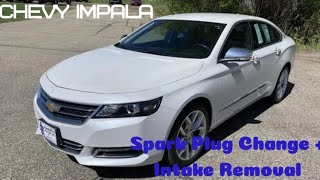
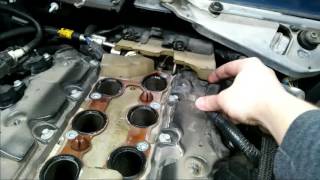
Est. part cost: $0 - Failed Ignition Coil (for a valid misfire code, e.g., P0306) 🟡 Medium Probability Coil-on-plug systems are a common failure point on most modern engines, including the GM 3.6L V6 (LFX) and 2.5L I4 (LCV). On the 3.6L V6, the rear bank of coils (cylinders 1, 3, 5) is difficult to access and requires removal of the intake manifold. 🎬 See this walkthrough for removing the intake and replacing plugs
How to confirm: Swap the ignition coil from the misfiring cylinder with a coil from a known good cylinder. Clear the codes and drive the vehicle. If the misfire code moves to the new cylinder (e.g., P0306 becomes P0302 after swapping coils from cylinder 6 to 2), the coil is bad.
Typical fix: Replace the faulty ignition coil. It is often recommended to replace the corresponding spark plug at the same time. For the 3.6L V6, it is highly recommended to replace all six coils and plugs if the intake manifold is removed.
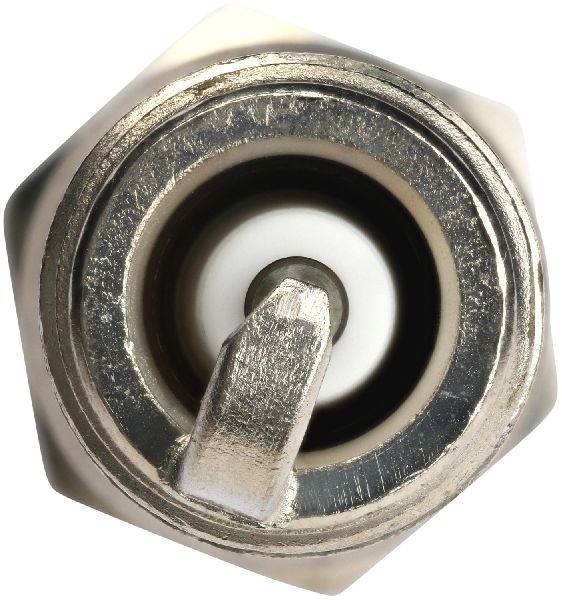
Est. part cost: $30-$70 per coil - Worn or Fouled Spark Plug (for a valid misfire code) 🟡 Medium Probability
How to confirm: Remove the spark plug from the misfiring cylinder and inspect it. Look for heavy carbon buildup, oil fouling, or a worn/damaged electrode. Compare it to a plug from a healthy cylinder.
Typical fix: Replace the spark plug. It is best practice to replace all spark plugs as a set if they are near the end of their service life, typically around 60,000-80,000 miles.
Est. part cost: $10-$25 per plug - Faulty Fuel Injector (for a valid misfire code) ⚪ Low Probability
How to confirm: This is more complex. A professional can perform a fuel injector balance test to measure flow rate. A DIY method is to use a mechanic's stethoscope or a long screwdriver to listen to the injector; it should make a consistent, rapid clicking sound. Compare the sound to an adjacent injector.
Typical fix: Replace the faulty fuel injector. The fuel rail may need to be removed for access.
Est. part cost: $50-$120 per injector
Rare But Worth Checking
- Intake Manifold Gasket Leak: A vacuum leak near a specific cylinder's intake runner can lean out the air/fuel mixture and cause a misfire on just that cylinder. On the 2.5L Ecotec engine, intake manifold bolts have been known to loosen over time, causing vacuum leaks and lean codes (P0171).
- Low Cylinder Compression: Internal engine issues like a worn piston ring, leaking valve, or bad head gasket can cause a loss of compression and a misfire. This is a mechanical failure and requires more in-depth testing like a compression test and cylinder leak-down test.
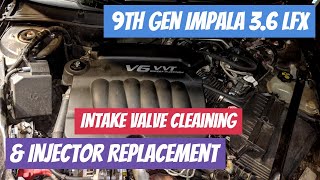
- Carbon Buildup on Intake Valves: The 3.6L LFX V6 engine uses direct injection, which can lead to carbon deposits forming on the back of the intake valves over time. 🎬 Watch: How to clean carbon buildup from GM intake valves This can restrict airflow and cause cold-start misfires that may eventually set a P0300 or cylinder-specific code.
Diagnosis Steps
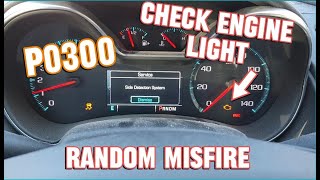
- Confirm the code: Use a reliable OBD-II scanner to re-read the trouble codes. Confirm that it is not P0300 or a different cylinder-specific code (P0301-P0306). Document all codes present. 🎬 Watch: Diagnosing random misfire codes on a 2014 Impala
- Assume a valid misfire: If you are experiencing symptoms like a rough idle, proceed with diagnosing a general misfire.
- Identify the misfiring cylinder: If you get a valid code (e.g., P0304), locate cylinder #4 on your engine.
- Test the ignition system: Swap the ignition coil from the misfiring cylinder with one from a neighboring cylinder. Clear the codes and see if the misfire follows the coil. If it does, the coil is bad.
- Inspect the spark plug: If the coil is good, remove and inspect the spark plug for wear, fouling, or damage. Replace if necessary.
- Test the fuel injector: Listen to the injector for a steady clicking sound. If it's silent or irregular, it may be faulty.
- Check for vacuum leaks: Inspect hoses for cracks. On the 2.5L engine, check the intake manifold bolts for tightness.
- Check for mechanical issues: If ignition and fuel seem okay, a compression test and/or cylinder leak-down test is needed to check the mechanical health of the engine. This is often best left to a professional.
Parts You'll Likely Need
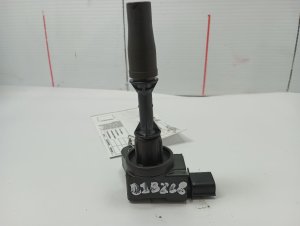
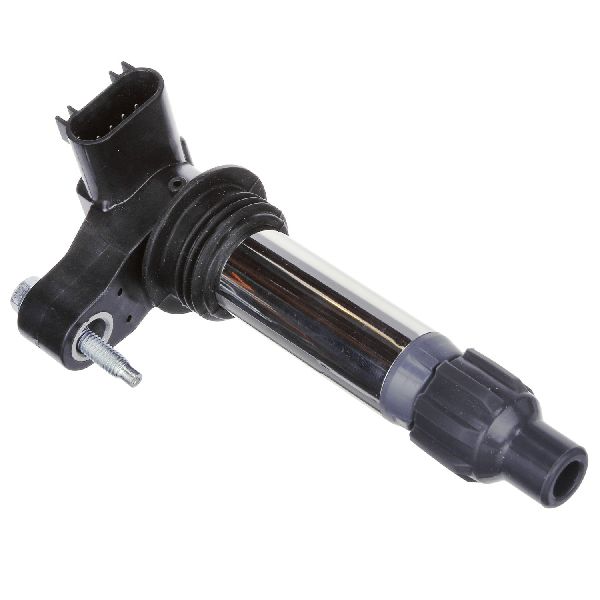
- Ignition Coil (3.6L V6)
(OEM #12632479)— A common cause of cylinder-specific misfires on GM engines. This part number is for the 3.6L V6.
Trusted brands: ACDelco, Delphi, NGK
OEM price range: $50-$80
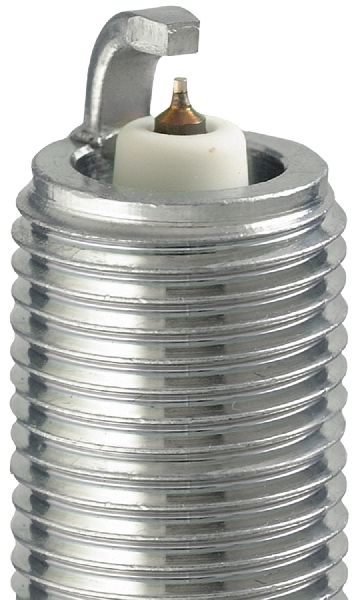
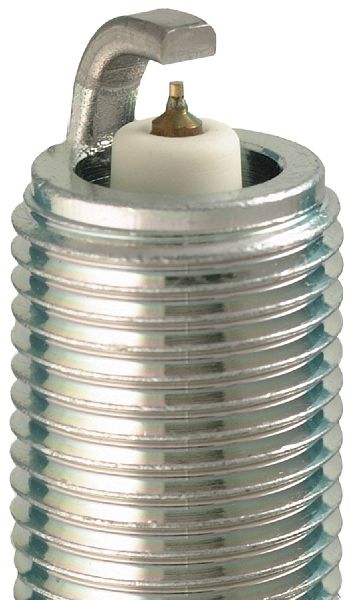
Aftermarket price range: $30-$60 - Spark Plug (3.6L V6)
(OEM #12622561 (ACDelco 41-109))— Spark plugs are a routine maintenance item and a primary cause of misfires. This is a common iridium plug for the 3.6L V6.
Trusted brands: ACDelco, NGK, Bosch
OEM price range: $15-$25
Aftermarket price range: $8-$15 - Ignition Coil (2.5L I4)
(OEM #12687140 (Supersedes 12654078, 12652405))— A common cause of cylinder-specific misfires on the 2.5L Ecotec engine.
Trusted brands: ACDelco, Carquest Premium, Spectra Premium
OEM price range: $60-$90
Aftermarket price range: $40-$70 - Spark Plug (2.5L I4)
(OEM #12657173 (ACDelco 41-125))— Spark plugs are a routine maintenance item and a primary cause of misfires for the 4-cylinder engine.
Trusted brands: ACDelco, NGK, Champion
OEM price range: $12-$20
Aftermarket price range: $7-$14
Related Codes That Often Appear With This One
- P0300 — If your scanner incorrectly interpreted a P0300 (Random/Multiple Cylinder Misfire) as a P0308, this would be the underlying code. Carbon buildup or a vacuum leak are common causes of P0300 on these engines.
- P0301, P0302, P0303, P0304, P0305, P0306 — One of these codes is the likely true cause of the misfire, corresponding to one of the actual cylinders in your 4-cylinder or V6 engine.
Technical Service Bulletins (TSBs) & Recalls
- PIP5628G: This Preliminary Information bulletin provides a template for technicians to gather data when diagnosing misfire codes (P0300-P0308) and/or rough start codes (P050D) across a wide range of GM vehicles. It is a procedural document, not a fault-specific repair guide.
Platform-Specific Known Issues
- The primary vehicle-specific issue is the impossibility of this code on this car, leading to diagnostic confusion. Owners must first verify the correct code before attempting any repairs.
- The TSB #PIP5628G, which mentions P0300-P0308, is a general diagnostic guide for technicians working on all GM gasoline engines and does not indicate that a P0308 is possible on an Impala.
- On the 3.6L V6 LFX engine, carbon buildup on the intake valves is a known issue that can cause misfires.
Mechanic-Grade Diagnostic Values
- High-Pressure Fuel System (3.6L LFX V6) — expected: Pressures can range from 2,000 to over 2,800 PSI, depending on engine load.. Failure: Low pressure readings under load can indicate a failing High-Pressure Fuel Pump (HPFP), leading to lean conditions and misfires.
- Mode $06 Misfire Count (All Engines) — expected: The misfire count for each cylinder should be zero or very close to zero during normal operation.. Failure: A high count on a specific cylinder, even without a P030x code, indicates an intermittent or developing misfire that requires investigation. This data is accessible via a professional-grade scan tool.
Hidden / Shadow Codes Worth Checking
- Mode $06, Test ID $53 (example): This is not a DTC but a diagnostic monitor for cylinder-specific misfire counts. Professional scan tools can display this data, showing raw misfire events for each cylinder before they cross the threshold to set a P0301-P0306 code. This allows a technician to see which cylinder is problematic even with intermittent symptoms. (see via A scan tool with Mode $06 capability. The specific Test ID (TID) and Component ID (CID) can vary by manufacturer and year.)
- P1336: Crankshaft Position (CKP) System Variation Not Learned. This code can appear after replacing a crankshaft position sensor, ECM, or performing major engine work without completing the CKP relearn procedure. It can cause misfire-like symptoms as the ECM has inaccurate crankshaft data. (see via Standard OBD-II scanner.)
Scan Tool Commands That Help
- GDS2 / Professional Scan Tool: Cylinder Power Balance Test — This active test allows the technician to disable one cylinder at a time (by cutting fuel or spark) and observe the corresponding drop in RPM. A cylinder that causes little or no RPM drop when disabled is not contributing power, confirming it's the source of the misfire. This is extremely useful for confirming a misfire on a specific cylinder when symptoms are present but codes are intermittent.
- GDS2 / Professional Bidirectional Scan Tool: Crankshaft Position (CKP) Variation Learn — This procedure is mandatory after replacing the crankshaft position sensor, ECM, or flywheel/flexplate. Failure to perform the relearn can result in a P1336 code, rough running, and misfire detection issues because the ECM cannot accurately track crankshaft speed variations. The procedure typically involves warming the engine and performing a brief, sharp acceleration to a specific RPM as prompted by the tool.
- GDS2 / Professional Scan Tool: Fuel Injector Balance Test — This command can activate each fuel injector individually to test its function or compare flow rates between cylinders, helping to diagnose a faulty or clogged injector without extensive disassembly.
Wiring & Ground Locations
- Engine Wire Harness Chafe Points — On some GM platforms, the engine wiring harness can chafe against the ECM/TCM bracket, the driver's side upper control arm, and/or a shock tower bolt.. A chafe in the harness can cause a short-to-ground or open circuit for an ignition coil or fuel injector wire, leading to a cylinder-specific misfire. This can be an intermittent issue that is hard to diagnose, as it may only occur with engine vibration at certain RPMs. A visual inspection of the harness in these areas is critical if electrical causes are suspected.
- Crankshaft Position Sensor Connector — The 3-way female black connector for the crankshaft position sensor.. A loose, corroded, or damaged CKP sensor connector can interrupt the signal to the ECM, causing stalling, no-start conditions, and misfire codes. The ECM relies on this signal for ignition timing, and an erratic signal can be misinterpreted as a misfire.
Real Owner Repair Stories
- Reddit user in r/ChevyTrucks (2011 Suburban (similar GM V8 platform, demonstrates a relevant failure mode)) — P0308 code (misfire on cylinder 8).
❌ Tried (didn't work) Initial thought was a bad ignition component (coil, plug, wire).
✅ What actually fixed it The user discovered that the heater core quick-connect hoses were dripping coolant directly onto the #8 spark plug wire. Cleaning the wire and fixing the coolant leak resolved the misfire code without replacing any ignition parts.
OEM Part Supersession History
12590990, 12610626, 12618542→12632479— Standard part evolution for improved durability and performance against internal shorts and dielectric breakdown.
Heads up: These part numbers are for the 3.6L V6 ignition coil and are generally interchangeable for the specified applications.
Model Year Variations Within This Range
- 2016-2020: While the 3.6L LFX engine is mechanically similar across this range, there can be minor differences in the factory ECM tune affecting horsepower ratings for marketing or emissions purposes. For example, the Impala's version was often rated at slightly lower horsepower (around 305 hp) compared to the same LFX engine in a Camaro (up to 320 hp), primarily due to intake/exhaust plumbing and software tuning. This does not fundamentally change misfire diagnosis.
- 2016: In 2016, Chevrolet added Apple CarPlay support. This involved a different HMI module but does not affect the powertrain control module or how engine diagnostic codes are processed.
Helpful Videos
Used OEM Parts in Stock

New Aftermarket Parts Available

The information in this article is provided for general reference and educational purposes only. Vehicle specifications, procedures, and part compatibility can vary by production date, trim level, and region. Always consult your vehicle's factory service manual and verify part numbers before purchasing or performing repairs. Safety-critical components such as airbags, seat belts, and braking systems should be installed by a qualified professional.
- Chevrolet IMPALA:
- 🎬 Helpful Videos
- 🛍️ Shop This Part
- What's Unique About the 2016-2020 Chevrolet IMPALA
- Diagnostic Flowchart
- Symptoms You May Notice
- Most Likely Causes
- Rare But Worth Checking
- Diagnosis Steps
- Parts You'll Likely Need
- Related Codes That Often Appear With This One
- Technical Service Bulletins (TSBs) & Recalls
- Platform-Specific Known Issues
- Mechanic-Grade Diagnostic Values
- Hidden / Shadow Codes Worth Checking
- Scan Tool Commands That Help
- Wiring & Ground Locations
- Real Owner Repair Stories
- OEM Part Supersession History
- Model Year Variations Within This Range
- 🎟️ Get 5% Off