

P0308 on 2009-2013 Chevrolet Express: Cylinder 8 Misfire Causes and Fixes
P0308 indicates a misfire in cylinder 8. On the 2009-2013 Express, this is most often caused by a bad ignition coil or spark plug. However, a known issue with worn camshafts and lifters on these V8 engines is a more serious possibility if ignition parts don't solve the problem. Cylinder 8 is the rearmost cylinder on the passenger side.
- P0308 signifies a misfire on cylinder 8.
- Start your diagnosis with the most common and easiest fixes: the ignition coil and spark plug for cylinder 8.
- A simple test is to swap the ignition coil from cylinder 8 to another cylinder and see if the misfire code follows.
- Be aware of the TSB-documented issue of worn camshafts and lifters, which is a possible, more serious cause for this code on the Express V8 engines.
- Do not ignore a flashing Check Engine Light, as continued driving can cause expensive catalytic converter damage.
What's Unique About the 2009-2013 Chevrolet EXPRESS
The V8 engines in the Chevrolet Express are generally robust, but they are not immune to specific issues. For the 2009-2013 model years, a critical concern documented in Technical Service Bulletin (TSB) #PIP4138R is the potential for worn camshaft lobes and/or lifters to cause a P0308 misfire. This is particularly prevalent on engines equipped with Active Fuel Management (AFM) or Displacement on Demand (DOD), where specialized lifters are prone to collapsing or sticking. This is a more severe mechanical issue than typical ignition or fuel system faults and should be considered if basic troubleshooting doesn't resolve the code.
Diagnostic Flowchart
Tap your situation to follow the diagnostic path that matches what you're seeing on this vehicle.
Symptoms You May Notice
- Rough or shaking idle.
- Hesitation or stumbling during acceleration.
- Noticeable loss of engine power.
- Flashing or solid Check Engine Light.
- Increased fuel consumption.
- Smell of gasoline from the exhaust.
- Ticking or knocking noise from the engine, which may increase with RPM (a strong indicator of lifter/camshaft issues).
- Replacing only spark plugs when the ignition coil is the actual point of failure.
- Replacing ignition and fuel components when the underlying cause is a mechanical issue like a worn camshaft lobe, as noted in TSB #PIP4138R.
- Assuming a ticking noise is a simple 'lifter tick' without investigating the potential for camshaft damage, which is a common consequence.
Most Likely Causes
- Faulty Ignition Coil 🔴 High Probability Coil-on-plug ignition systems are a common failure point on many modern vehicles due to constant exposure to high heat and vibration. GM V8s are known for ignition coil failures over time.
How to confirm: The easiest way to confirm a bad coil is to swap the ignition coil from cylinder 8 with another cylinder (e.g., cylinder 6, which is the third cylinder back on the passenger side). Clear the codes and drive the vehicle. If the code changes to P0306, the coil is faulty.
Typical fix: Replace the faulty ignition coil. It's often recommended to replace the spark plug at the same time.
Est. part cost: $45-$85 for a single OEM-quality coil. - Worn or Fouled Spark Plug 🔴 High Probability Spark plugs are a regular maintenance item with a service life of around 100,000 miles. If they are past their service life, the gap can become too wide or they can become fouled with carbon, oil, or fuel deposits, leading to a weak or non-existent spark.
How to confirm: Remove the spark plug from cylinder 8 and inspect it. Look for a worn electrode, cracks in the porcelain, or heavy carbon/oil fouling. Compare it to a new plug. The recommended gap should be checked against specifications.
Typical fix: Replace the spark plug for cylinder 8. It is best practice to replace all 8 spark plugs if they are near the end of their service interval.
Est. part cost: $8-$20 per iridium spark plug. - Worn Camshaft Lobe / Faulty Lifter 🟡 Medium Probability As cited in NHTSA TSB #PIP4138R, GM V8 engines of this era can suffer from valvetrain issues. This is especially common on 5.3L and 6.0L engines with Active Fuel Management (AFM), where the specialized lifters can collapse or get stuck, leading to a misfire. The collapsed lifter fails to open the valve, and continued operation can wipe out the corresponding lobe on the camshaft. This often starts as a ticking noise.
How to confirm: This requires advanced diagnosis. After ruling out ignition and fuel, a mechanic will listen for a distinct top-end ticking noise. A compression test may show low readings. The definitive diagnosis involves removing the valve cover to inspect valve movement and pushrods, and potentially using a borescope to inspect the camshaft lobes through the lifter valley.
Typical fix: This is a major repair involving replacing the camshaft, all lifters, and associated gaskets. Many owners and shops opt to perform an AFM/DOD delete at this time, replacing the complex AFM components with standard lifters and a non-AFM camshaft, which requires an ECM retune.
Est. part cost: $400-$1000 for camshaft and lifter kits. Labor costs are significant, often exceeding $3,000. - Faulty Fuel Injector ⚪ Low Probability Fuel injectors can become clogged with debris or fail electrically over time, preventing the correct amount of fuel from being delivered to the cylinder. Being the last injector on the fuel rail, cylinder 8's injector can sometimes be more susceptible to collecting debris from the fuel system.
How to confirm: Listen to the injector with a mechanic's stethoscope; it should have a consistent clicking sound. You can also swap the injector with another cylinder to see if the misfire code follows, though this is more labor-intensive than swapping a coil. A fuel injector balance test can also be performed with a capable scan tool.
Typical fix: Replace the faulty fuel injector. It's wise to replace the injector seals at the same time.
Est. part cost: $40-$90 for a single OEM-quality injector.
Rare But Worth Checking
- Low Engine Compression: If ignition and fuel systems are confirmed to be working, a compression test is necessary. This can be caused by a leaking head gasket, a burnt valve, or worn piston rings. This indicates a serious internal engine problem.
- Intake Manifold Gasket Leak: A vacuum leak near the intake runner for cylinder 8 can lean out the air/fuel mixture enough to cause a misfire. This is less common for a single-cylinder misfire but still possible.
- Broken Valve Spring: The LS-based V8 engines can occasionally suffer from broken valve springs. This will prevent the valve from closing properly, causing a loss of compression and a persistent misfire on that cylinder. This is identified during a compression test or visual inspection under the valve cover.
Diagnosis Steps
- Read the code with an OBD-II scanner to confirm P0308 is the primary code. Use the scanner's live data to view misfire counts for cylinder 8 versus other cylinders.
- Check if the Check Engine Light is flashing, which indicates a severe misfire that could damage the catalytic converter.
- Visually inspect the wiring harness and connector for the cylinder 8 ignition coil and fuel injector. Look for damage, corrosion, or signs of coolant leaks from nearby heater hoses, which is a known issue on some trucks.
- Swap the ignition coil from cylinder 8 with cylinder 6 (passenger side, one cylinder forward). Clear the codes, run the engine, and see if the misfire code moves to P0306. If it does, the ignition coil is bad.
- If the misfire remains on cylinder 8, remove and inspect the spark plug. Replace it if it is worn, damaged, or fouled with oil or carbon. Ensure it is the correct type and gapped properly.
- Listen to the fuel injector on cylinder 8 with a stethoscope. It should tick rhythmically. Compare its sound to an adjacent injector.
- If ignition and fuel delivery seem okay, perform an engine compression test on cylinder 8. A low reading points to a mechanical problem like a bad valve, head gasket, piston ring, or a collapsed lifter.
- If compression is low or a ticking noise is present, suspect a valvetrain issue. Remove the passenger side valve cover to inspect the valve springs, rocker arms, and pushrods for cylinder 8. A bent pushrod is a strong sign of a collapsed lifter.
- If all else fails, the issue may be a worn camshaft lobe, as suggested by TSB #PIP4138R. This step is best performed by a professional.
Parts You'll Likely Need
- Ignition Coil
(OEM #12699382)— This is a very common failure point for a single-cylinder misfire on these engines. It is the round style coil used on many Gen IV V8s.
Trusted brands: ACDelco, Delphi, NGK, Bosch
OEM price range: $45-$65
Aftermarket price range: $25-$50 - Spark Plug
(OEM #ACDelco 41-110 (Iridium))— A worn or fouled spark plug is a very common and simple cause of a misfire. These are the specified OEM iridium plugs for a 100,000-mile service interval.
Trusted brands: ACDelco, NGK
OEM price range: $10-$20
Aftermarket price range: $8-$15 - Camshaft and Lifter Kit (AFM/DOD Delete)
(OEM #N/A (Aftermarket solution))— For the common camshaft/lifter failure on AFM/DOD engines, replacing these components is necessary. An AFM delete kit is a popular, more durable repair.
Related Codes That Often Appear With This One
- P0300 — If the misfire is intermittent or starting to affect other cylinders, a P0300 (Random/Multiple Cylinder Misfire) code may appear alongside P0308. This is very common when the cause is a failing AFM/DOD lifter system.
- P050D — This code for 'Cold Start Rough Idle' is often seen with misfire codes and can be related to valvetrain or fuel system issues. TSB PIP5628G specifically groups P0300-P0308 codes with P050D for diagnosis.
Technical Service Bulletins (TSBs) & Recalls
- PIP4138R: Mentions that P0300-P0308 codes can be caused by a worn camshaft lobe and/or lifter if standard diagnostics do not find the cause. It applies to a wide range of GM V8s from 2002-2018, including the Express.
- PIP5628G: Communicates that specific diagnostic information (like fuel trims, compression results, and scan tool data) needs to be collected to aid in diagnosing persistent misfires including P0308.
- 19-NA-219: Supersedes PIP4138R, providing more detailed diagnostic paths for misfires caused by worn cams, sticking valves, broken valve springs, or collapsed AFM lifters.
Platform-Specific Known Issues
- TSB #PIP4138R / 19-NA-219: This series of bulletins is critical for this vehicle. It explicitly states that a P0300-P0308 code, especially if accompanied by a tick, chirp, or squeak noise, can be caused by a worn camshaft lobe or a failed lifter after basic diagnostics fail. This points to a known mechanical weak point.
- AFM/DOD Lifter Failure: On the 5.3L and 6.0L engines with Active Fuel Management, the specialized lifters for cylinders 1, 4, 6, and 7 are designed to collapse to save fuel. However, these lifters are a known major failure point. While cylinder 8 is not an AFM cylinder, problems in the oiling system or overall valvetrain instability caused by AFM can contribute to issues across the engine. A failure on a non-AFM lifter like cylinder 8 often points to a widespread problem like a worn camshaft affecting multiple lobes.
- TSB #PIP5628G: This bulletin provides a diagnostic template for technicians to use when contacting GM's Technical Assistance Center (TAC) for persistent misfire codes (P0300-P0308), indicating the issue can be complex enough to require factory support.
Mechanic-Grade Diagnostic Values
- Ignition Coil Primary Resistance — expected: 0.4 to 2 ohms. Failure: A reading outside this range suggests a faulty coil.
- Ignition Coil Secondary Resistance — expected: 6,000 to 10,000 ohms. Failure: A reading outside this range indicates a problem with the coil's secondary windings.
- Fuel Injector Resistance (High Impedance) — expected: 11 to 14 ohms (at 50-90°F). Failure: A reading significantly higher (open circuit) or lower (short circuit) than the others indicates a bad injector.
- Fuel Pressure (Key On, Engine Off) — expected: 50 to 60 PSI. Failure: Pressure below this range indicates a weak fuel pump or a leak in the system.
Scan Tool Commands That Help
- GDS2 / Tech2: Cylinder Power Balance Test — This function selectively disables each cylinder one by one to measure the RPM drop. A cylinder with a smaller RPM drop than the others is not contributing as much power, helping to confirm the misfire on cylinder 8 without disassembly.
- GDS2 / Tech2: Fuel Injector Balance Test — This test commands each injector to fire for a specific duration while measuring the corresponding drop in fuel pressure. It can identify a clogged or weak injector on cylinder 8 if the pressure drop is less than that of other cylinders.
Wiring & Ground Locations
- PCM Ground — On the top rear of the engine block, often difficult to access.. This is the main ground for the Powertrain Control Module (PCM/ECM). A poor connection here can cause erratic sensor readings and misfire codes.
- Firewall Ground Straps — On the driver's side firewall, connecting the engine block to the body.. These straps ensure the engine block has a solid ground path to the chassis and battery. Corrosion or a break in this strap can lead to various electrical issues, including weak spark.
- G302 / G304 — G302 is located behind the left kick panel, and G304 is behind the right kick panel.. These are major interior body ground points. While less likely to cause a single cylinder misfire, they are part of the overall vehicle grounding scheme that can affect module performance.
Real Owner Repair Stories
- Forum discussions (Chevrolet Express van, specific year not mentioned but within the platform range.) — Persistent P0308 misfire on cylinder 8.
❌ Tried (didn't work) Replacing spark plug, Swapping ignition coils
✅ What actually fixed it The owner discovered a small leak from a nearby heater core hose dripping coolant directly onto the cylinder 8 ignition coil connector. This caused corrosion and an intermittent electrical connection. Replacing the leaking hose and cleaning the connector with dielectric grease resolved the misfire.
OEM Part Supersession History
ACDelco 41-985→ACDelco 41-110, then ACDelco 41-162— Standard part evolution, potential changes in design or supplier.
Heads up: While GM states 41-162 replaces 41-110, some users report the 41-162 is physically shorter and have experienced better performance by sourcing the older 41-110 plugs. For this vehicle range, the 41-110 is the originally specified and trusted part.
Model Year Variations Within This Range
- 2009: The 4.8L V8 was the LY2 engine, and the 6.0L was the LY6. A 4-speed 4L80-E automatic was used on heavy-duty models.
- 2010-2013: The 4.8L V8 was updated to the L20 (Flex-fuel capable). The 6.0L V8 was updated to the L96 (Flex-fuel capable). Heavy-duty models received the 6-speed 6L90-E automatic transmission.
- 2011-2013: The 6.6L Duramax diesel option was the LGH V8.
Helpful Videos
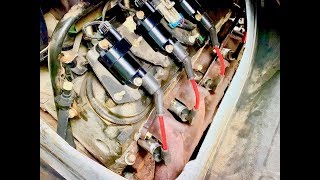
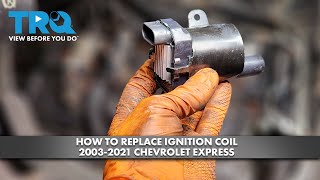
Used OEM Parts in Stock

New Aftermarket Parts Available



The information in this article is provided for general reference and educational purposes only. Vehicle specifications, procedures, and part compatibility can vary by production date, trim level, and region. Always consult your vehicle's factory service manual and verify part numbers before purchasing or performing repairs. Safety-critical components such as airbags, seat belts, and braking systems should be installed by a qualified professional.
- Chevrolet EXPRESS:
- 🎬 Helpful Videos
- 🛍️ Shop This Part
- What's Unique About the 2009-2013 Chevrolet EXPRESS
- Diagnostic Flowchart
- Symptoms You May Notice
- Most Likely Causes
- Rare But Worth Checking
- Diagnosis Steps
- Parts You'll Likely Need
- Related Codes That Often Appear With This One
- Technical Service Bulletins (TSBs) & Recalls
- Platform-Specific Known Issues
- Mechanic-Grade Diagnostic Values
- Scan Tool Commands That Help
- Wiring & Ground Locations
- Real Owner Repair Stories
- OEM Part Supersession History
- Model Year Variations Within This Range
- 🎟️ Get 5% Off