

P0308 on 2013-2020 Chevrolet Equinox: An Impossible Misfire Code Explained
The trouble code P0308 signifies a misfire in cylinder #8. However, this code is impossible for a 2013-2020 Chevrolet Equinox, as this vehicle was only produced with 4-cylinder and 6-cylinder engines. If you see this code, it is likely a scanner error or a misinterpretation of a different code, such as P0300 (random misfire) or P0306 (cylinder 6 misfire).
- A P0308 code is impossible on a 2013-2020 Chevrolet Equinox because it never came with a V8 engine.
- If your scanner shows P0308, it is almost certainly a scanner error. Re-scan the vehicle with a high-quality tool and verify the code. You likely have a different code, such as P0300 (random) or P030x (where 'x' is a cylinder that exists in your engine).
- Never ignore a flashing check engine light or symptoms of a misfire (like a rough, shaking engine), regardless of the code displayed.
- If you confirm a valid misfire code (e.g., P0306 on a V6), the most common causes are a bad spark plug, ignition coil, or fuel injector for that specific cylinder.
What's Unique About the 2013-2020 Chevrolet EQUINOX
The core issue is that a P0308 code cannot occur on any 2013-2020 Chevrolet Equinox. The second generation (2013-2017) offered a 2.4L 4-cylinder or a 3.6L V6 engine, while the third generation (2018-2020) offered only 4-cylinder options (1.5L Turbo, 2.0L Turbo, 1.6L Turbo-Diesel). Since the highest cylinder count is six, the vehicle's computer cannot detect or report a misfire for a non-existent eighth cylinder. The provided TSB (PIP5628G) mentioning codes P0300-P0308 is a general GM bulletin intended for a wide range of vehicles, including trucks and performance cars with V8 engines, and does not confirm P0308 is possible on an Equinox. It is a procedural guide for technicians on what data to collect before contacting GM's Technical Assistance Center (TAC).
Diagnostic Flowchart
Tap your situation to follow the diagnostic path that matches what you're seeing on this vehicle.
Generation note: This guide covers the second (2013-2017) and third (2018-2020) generations of the Chevrolet Equinox. The second generation offered a V6 engine option, which could produce misfire codes up to P0306. The third generation was exclusively equipped with 4-cylinder engines, which can only produce misfire codes up to P0304. Neither generation can produce a P0308 code.
Symptoms You May Notice
- A P0308 code is not applicable. However, if you have a different misfire code (e.g., P0301-P0306), you would experience:
- Rough or shaking idle
- Hesitation or stumbling during acceleration
- Noticeable loss of engine power
- Flashing or solid Check Engine Light
- Poor fuel economy
- A smell of raw fuel from the exhaust
- Reading the code incorrectly (e.g., mistaking a P0300, P0303, or P0306 for a P0308).
- Using a faulty or incompatible OBD-II scanner that is reporting an erroneous or 'phantom' code. This is the most likely reason to see a P0308 on an Equinox.
Most Likely Causes
Rare But Worth Checking
- Vacuum Leaks from intake manifold gaskets or hoses.
- Low engine compression due to internal wear (e.g., piston rings, valves).
- Stretched timing chain (a known issue on the 3.6L V6), which can cause various misfire codes.
Diagnosis Steps
- Confirm the Code: Double-check the code with a reliable, high-quality OBD-II scanner (e.g., a professional-grade tool from Snap-on, Autel, or a GM-specific Tech 2/MDI) to ensure it is not an error from a cheaper, less compatible device.
- Verify Your Engine: Confirm whether your Equinox has a 4-cylinder or 6-cylinder engine. This will immediately invalidate a P0308 code.
- Scan for Other Codes: Check for other, valid trouble codes that could be the real source of the issue, such as P0300-P0306.
- Address the Actual Code: If you find a valid misfire code (e.g., P0306), begin diagnosis for that specific cylinder. This typically involves inspecting and testing the spark plug, ignition coil, and fuel injector for the corresponding cylinder.
- If No Other Codes Exist: If the P0308 code is the only one present and your vehicle is running poorly, there is a high probability of a scanner communication error. If the vehicle runs fine, clear the code and see if it returns. If it does, or if the engine is running poorly with no other codes, a professional diagnosis of the PCM and data bus is recommended.
Parts You'll Likely Need
- No parts needed for P0308
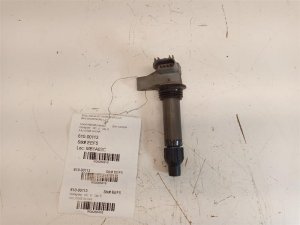
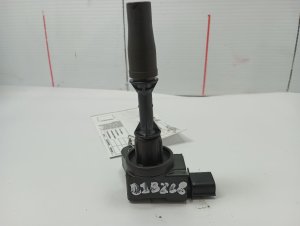
- Ignition Coil (for 3.6L V6)
- Ignition Coil (for 2.4L I4)
Related Codes That Often Appear With This One
- P0300 — This indicates a random or multiple cylinder misfire and is a more likely code to see if the engine is running poorly but no single cylinder is consistently at fault. It's often associated with issues like vacuum leaks or fuel delivery problems.
- P0301 - P0306 — These codes indicate a misfire on a specific cylinder that actually exists in your engine (1 through 6 for the V6, or 1 through 4 for the 4-cylinder). You may have one of these codes instead of P0308.
Technical Service Bulletins (TSBs) & Recalls
- Bulletin #PIP5628G: This is a general manufacturer TSB regarding engine misfires (P0300-P0308) and does not indicate that a P0308 is possible on an Equinox. It is a procedural document for technicians, instructing them on what information to gather before contacting GM's Technical Assistance Center (TAC) for a variety of vehicles, including V8 models.
Platform-Specific Known Issues
- The primary vehicle-specific issue is the incompatibility of the P0308 code with any engine ever offered in the 2013-2020 Chevrolet Equinox.
- For vehicles with the 3.6L V6 engine, a common cause for *actual* misfire codes (P030x) is significant carbon buildup on the intake valves, which can cause a rough idle and random misfires (P0300).
- For vehicles with the 2.4L 4-cylinder engine, a known issue is excessive oil consumption, which can foul spark plugs and lead to specific cylinder misfire codes (P0301-P0304).
Mechanic-Grade Diagnostic Values
- Ignition Coil Primary Resistance (3.6L V6) — expected: 0.63 - 0.77 ohms. Failure: A reading outside this range indicates a faulty coil winding.
- Ignition Coil Secondary Resistance (3.6L V6) — expected: 7,700 - 9,500 ohms (7.7k - 9.5k Ω). Failure: A reading outside this range suggests the secondary winding is compromised.
- Ignition Coil Primary Resistance (General GM) — expected: 0.4 - 2.0 ohms. Failure: A reading outside the specified range for the vehicle indicates a faulty coil.
- Ignition Coil Secondary Resistance (General GM) — expected: 6,000 - 10,000 ohms (6k - 10k Ω). Failure: Resistance outside this range points to a bad coil.
- Low-Side Fuel Pressure (2.4L I4, Key On, Engine Off) — expected: 276-448 kPa (40-65 psi). Failure: Pressure below this range could indicate a weak fuel pump.
- Low-Side Fuel Pressure (2.4L I4, Idling) — expected: 276-324 kPa (40-47 psi). Failure: Pressure outside this range at idle suggests a fuel delivery problem.
- High-Side Fuel Rail Pressure (2.4L GDI) — expected: Up to 2000 PSI under load. Failure: Significantly lower pressure under load indicates a failing high-pressure fuel pump.
Scan Tool Commands That Help
- GDS2 (GM Dealer Software): Misfire Graphic Display — This function provides a real-time count of misfire events per cylinder. If a P0308 is displayed but the misfire graphic shows events only on cylinders 1-6 (or 1-4), it confirms the P0308 is a data error and the true misfire is on an existing cylinder.
- High-End OBD-II Scanner: Module Status Check / Network Test — If a P0308 appears, running a network test can reveal communication faults with other modules (BCM, TCM, ABS). A phantom misfire code can be a symptom of a module pulling down the CAN bus or a wiring issue.
Wiring & Ground Locations
- PCM Ground (2.4L Engine) — A critical ground is located under the alternator, mounted on a stud just above the A/C compressor.. This ground wire is known to corrode or break. A poor PCM ground can cause countless unpredictable electrical faults, including phantom trouble codes like P0308, as the module's reference voltage becomes unstable.
- G101 — Located on the left front of the engine compartment.. This is a major engine compartment ground point. Corrosion or looseness here can affect the Engine Control Module and other systems, potentially causing communication errors that could be misinterpreted as a fault code.
- ECM Fuse (2010-2017) — In the underhood fuse block, position #42, rated at 20 amps.. If an OBD-II scanner cannot communicate with the vehicle at all, or shows erratic codes, checking the main power supply fuse for the ECM is a primary step. A blown fuse means the module is offline.
- High-Speed GMLAN Serial Data Bus — A two-wire (often Dark Green and Yellow, or Light Blue and Dark Blue) network connecting all major control modules (ECM, BCM, TCM, etc.) to the Data Link Connector (DLC).. A short or open in the CAN bus wiring can corrupt data packets. This could theoretically cause the ECM to misreport a code, such as displaying P0308 when the actual fault is a P0306 or a different communication error entirely.
Model Year Variations Within This Range
- 2013-2017: This generation offered a 3.6L V6 engine, making misfire codes up to P0306 possible. Diagnostic procedures for a real misfire would follow the V6 firing order.
- 2018-2020: This generation only offered 4-cylinder engines. The maximum possible misfire code is P0304. Any code higher than this is definitively an error.
Helpful Videos

![How to Fix P0306 Engine Code in 3 Minutes [2 DIY Methods / Only $4.76]](https://img.youtube.com/vi/5HTrtkSEHH4/mqdefault.jpg)
We Have This Part in Stock



The information in this article is provided for general reference and educational purposes only. Vehicle specifications, procedures, and part compatibility can vary by production date, trim level, and region. Always consult your vehicle's factory service manual and verify part numbers before purchasing or performing repairs. Safety-critical components such as airbags, seat belts, and braking systems should be installed by a qualified professional.
- Chevrolet EQUINOX:
- 🎬 Helpful Videos
- 🛍️ Shop This Part
- What's Unique About the 2013-2020 Chevrolet EQUINOX
- Diagnostic Flowchart
- Symptoms You May Notice
- Most Likely Causes
- Rare But Worth Checking
- Diagnosis Steps
- Parts You'll Likely Need
- Related Codes That Often Appear With This One
- Technical Service Bulletins (TSBs) & Recalls
- Platform-Specific Known Issues
- Mechanic-Grade Diagnostic Values
- Scan Tool Commands That Help
- Wiring & Ground Locations
- Model Year Variations Within This Range
- 🎟️ Get 5% Off