

P0308 on 2006-2010 Chevrolet Cobalt: Why This Code Is Impossible and What It Really Means
A P0308 code is impossible on a 2006-2010 Chevrolet Cobalt. P0308 means 'Cylinder 8 Misfire', but all Cobalts from this era have 4-cylinder engines. If you see this code, it's an error from the scan tool. You likely have a misfire on cylinders 1-4 (P0301-P0304), which is commonly caused by a bad spark plug or ignition coil.
- P0308 is an impossible code for a 2006-2010 Chevy Cobalt. The vehicle only has 4 cylinders.
- If you see P0308, your scan tool is likely incorrect. You should re-scan to find the true code, which will be P0301, P0302, P0303, or P0304.
- The most common causes for a misfire on a Cobalt are bad spark plugs or a failed ignition coil.
- A simple diagnostic test is to swap the ignition coil from the misfiring cylinder to a working one to see if the code follows the coil.
- Do not drive if the Check Engine Light is flashing, as this can cause expensive damage to the catalytic converter.
What's Unique About the 2006-2010 Chevrolet COBALT

The central issue with a P0308 code on a Chevrolet Cobalt is a fundamental mismatch between the code's meaning and the vehicle's hardware. The Cobalt platform from 2006-2010 exclusively used inline 4-cylinder Ecotec engines. Therefore, it does not have a cylinder 8. The provided TSB (PIP5628G) mentions a range of codes from P0300 to P0308, but this is a general GM bulletin intended to cover a wide array of vehicles, including V8-equipped trucks and cars where P0308 would be a valid code. For a Cobalt, any misfire code will be between P0301 and P0304.
Diagnostic Flowchart
Tap your situation to follow the diagnostic path that matches what you're seeing on this vehicle.
Symptoms You May Notice
- A flashing or steady Check Engine Light
- Rough or shaking idle.
- Noticeable loss of power and hesitation during acceleration.
- Engine stumbling or running rough
- Increased fuel consumption.
- A smell of gasoline from the exhaust.
- Vibration that feels like driving a diesel truck.
- Replacing the oxygen (O2) sensors. While a bad O2 sensor can affect the air-fuel mixture, it will typically set its own specific code and is not a common cause for a single-cylinder misfire.
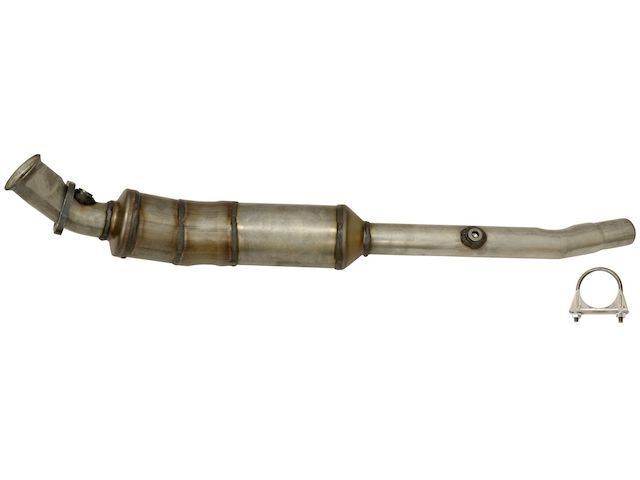
- Replacing the catalytic converter. A misfire can damage a catalytic converter, but a bad converter does not cause a misfire.
Most Likely Causes

- Faulty Spark Plugs 🔴 High Probability Spark plugs are a regular maintenance item. Worn, fouled, or improperly gapped plugs are a primary cause of misfires on any engine, including the Ecotec family.
How to confirm: Remove the spark plug from the misfiring cylinder (e.g., cylinder 2 for a P0302 code). Inspect it for wear, carbon buildup, oil fouling, or damage to the electrode or ceramic insulator. Compare its color to plugs from other cylinders; a misfiring plug may look different.
Typical fix: Replace all four spark plugs as a set. 🎬 Watch: Step-by-step guide to replacing your Cobalt's spark plugs. It is recommended to use OEM-spec ACDelco or high-quality NGK plugs. Ensure they are gapped correctly for your specific engine; for example, the NGK G-Power plug for the 2.0L engine specifies a 0.040" gap.
Est. part cost: $20-$60 - Faulty Ignition Coil or Coil Pack 🔴 High Probability The Cobalt uses a coil-on-plug ignition system. These coils can fail with age and heat cycles, leading to a lack of spark for a specific cylinder. On the 2.2L and 2.4L engines, a faulty Ignition Control Module (ICM) located under the coil pack assembly is also a very common point of failure due to heat.
How to confirm: Swap the ignition coil from the misfiring cylinder with a coil from a working cylinder (e.g., swap coil #2 with coil #1). Clear the codes and run the engine. If the code changes to the new cylinder (e.g., P0301), the coil is bad. This test is definitive and avoids replacing unnecessary parts.
Typical fix: Replace the faulty ignition coil. While you can replace just one, if the coils are original and high-mileage, consider replacing them as a set. For 2.2L/2.4L engines, if a coil swap doesn't isolate the issue, the ICM is the next likely culprit and is often replaced with the coil pack assembly. 🎬 Watch: How to test and replace the ICM and coils.
Est. part cost: $30-$80 per coil - Clogged or Faulty Fuel Injector 🟡 Medium Probability Fuel injectors can become clogged with deposits over time, preventing the correct amount of fuel from reaching the cylinder. This is a known issue on the high-pressure GDI system of the 2.0L LNF engine 🎬 See this Cobalt SS spark plug and coil pack walkthrough. found in the Cobalt SS.
How to confirm: After ruling out spark issues, you can perform a similar swap test with the fuel injectors, though this is more labor-intensive. A professional can perform a fuel injector balance test, or you can test the injector's resistance with a multimeter; all four should have similar readings.
Typical fix: Replace the faulty fuel injector. On GDI engines like the LNF, it is highly recommended to replace all four injectors as a matched set to ensure balanced fuel delivery. It's also good practice to replace the injector seals at the same time.
Est. part cost: $40-$100 per injector - Vacuum Leak ⚪ Low Probability Aging rubber hoses and plastic intake components can crack, causing unmetered air to enter the engine. A failed intake manifold gasket is a known issue on 2.2L and 2.4L Ecotec engines that can cause lean conditions and misfires.
How to confirm: Visually inspect all vacuum lines connected to the intake manifold for cracks or disconnections. A smoke test is the most effective way to find hard-to-see leaks. Alternatively, you can carefully spray carburetor cleaner around the intake manifold gasket with the engine running; a change in idle RPM indicates a leak.
Typical fix: Replace the cracked or broken vacuum hose or gasket.
Est. part cost: $5-$50
Rare But Worth Checking
- Low Engine Compression: This indicates a more serious internal engine problem, such as a bad valve, worn piston rings, or a damaged head gasket. A compression test is needed to confirm this. One owner on a Chevy Cobalt forum reported a P0303 code that persisted after ignition repairs, with a compression test revealing cylinder 3 was 40 PSI lower than the others, pointing to a mechanical fault.
- Faulty Crankshaft Position Sensor: A failing crankshaft position sensor can sometimes cause the ECM to incorrectly report misfires. This usually presents with other symptoms like stalling or difficulty starting.
- Chafed Wiring Harness: A GM document (PI #PIP3536) notes that on the Cobalt SS and Saturn Ion Redline, the fuel injector harness can chafe against an A/C line bracket at the rear of the cylinder head, causing a short to ground and intermittent misfires on any cylinder (P0300-P0304).
- Loose Ground Wire: Forum users on CobaltSS.net have reported that a loose G103 ground, located on the frame rail behind the driver's side headlight, can cause various electrical issues including intermittent random misfires (P0300).
Diagnosis Steps

- Confirm the actual code. Since P0308 is impossible, re-scan the vehicle with a reliable OBD-II scanner to get the correct P030x code (e.g., P0301, P0302, P0303, or P0304).
- Identify the misfiring cylinder. The last digit of the code tells you the cylinder number (e.g., P0302 is cylinder 2).
- Check the ignition system. Swap the ignition coil from the misfiring cylinder with one from an adjacent cylinder.
- Clear the codes and start the engine. Wait for the Check Engine Light to return.
- Re-scan for codes. If the code has moved to the cylinder you swapped the coil to (e.g., P0302 became P0301), the ignition coil is faulty and needs replacement.
- If the code stays on the original cylinder, inspect the spark plug. Remove it and check for wear, damage, or fouling. Replace if necessary.
- If the ignition system is good, the next step is to check the fuel injector for that cylinder. This may require a more advanced diagnosis, like a resistance check or swapping injectors.
- If ignition and fuel are confirmed to be good, check for vacuum leaks using a smoke machine or by spraying carb cleaner around the intake manifold.
- As a final step for persistent issues, perform an engine compression test and a leak-down test to rule out mechanical problems like bad valves or piston rings.
Parts You'll Likely Need
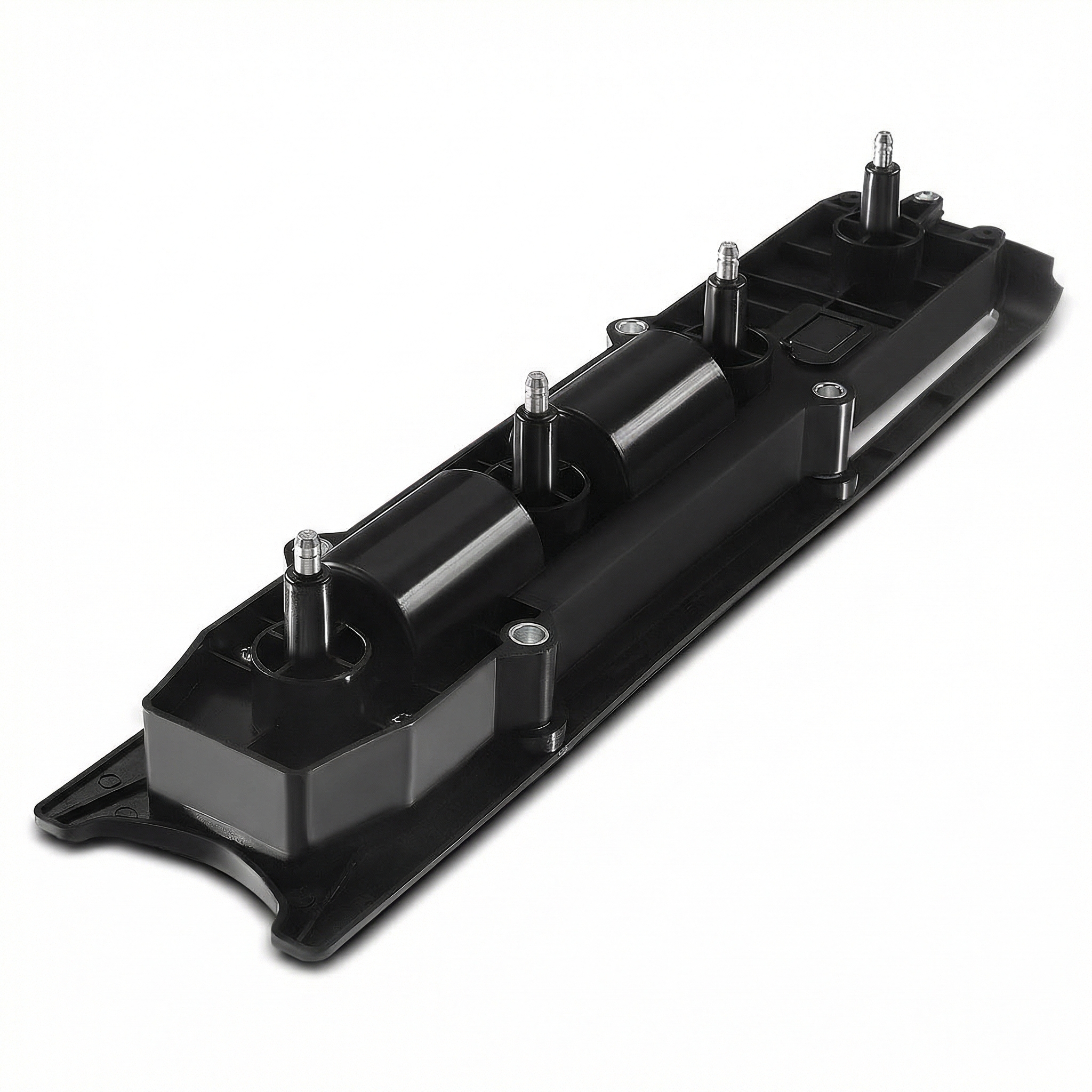
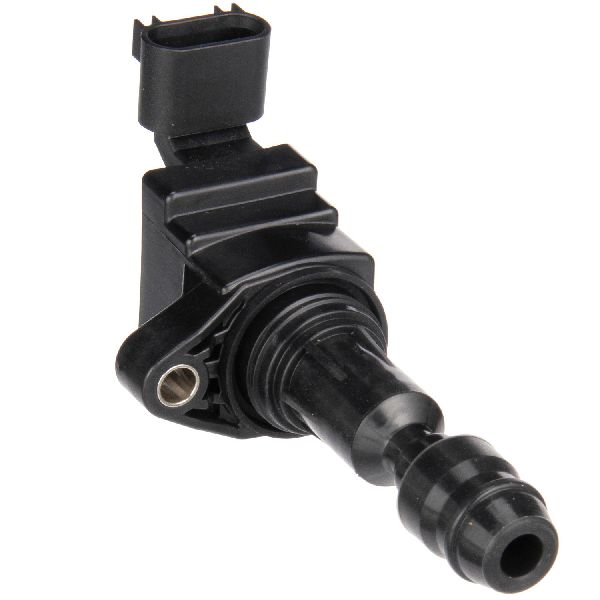
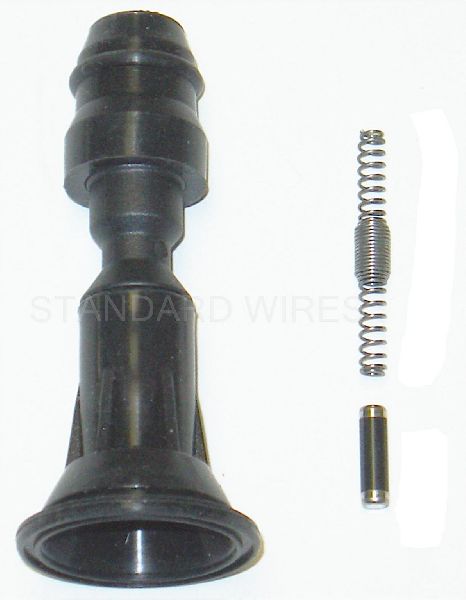
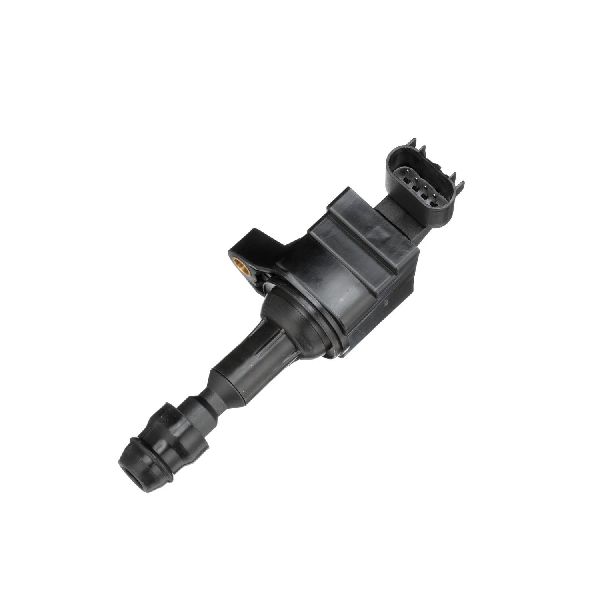
- Ignition Coil
(OEM #ACDelco D522C (fits many 2.0L/2.2L/2.4L models))— This is one of the most common failure points for a single-cylinder misfire on a Cobalt. The swap test is a definitive and easy way to confirm failure.
Trusted brands: ACDelco, Delphi, NGK
OEM price range: $45-$90
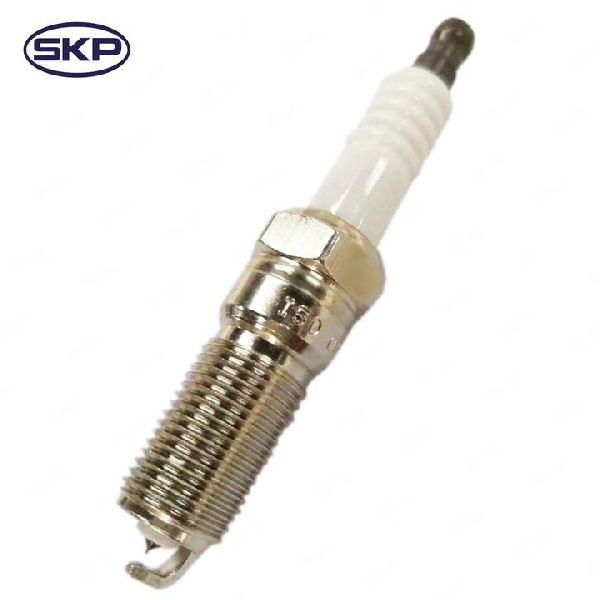
Aftermarket price range: $25-$60 - Spark Plug
(OEM #ACDelco 41-103 (Iridium, common for 2.2L/2.4L) or NGK BKR6EGP (G-Power, common for 2.0L))— As a standard wear item, a fouled or worn spark plug is a very common and inexpensive fix for a misfire.
Trusted brands: ACDelco, NGK
OEM price range: $10-$20
Related Codes That Often Appear With This One
- P0300 — If multiple, random cylinders are misfiring due to a systemic issue like a vacuum leak, low fuel pressure, or a faulty Ignition Control Module, you will see P0300 alongside or instead of specific cylinder codes.
- P0301, P0302, P0303, P0304 — These are the valid misfire codes for a 4-cylinder Cobalt. You will see one of these, not P0308.
- P0201, P0202, P0203, P0204 — These codes indicate a fault in the fuel injector circuit for a specific cylinder. They often appear with a corresponding misfire code (e.g., P0201 with P0301) if the injector is the root cause.
Technical Service Bulletins (TSBs) & Recalls
- PIP5628G: This TSB relates to diagnosing misfire codes (P0300-P0308) but is a general GM document. The reference to P0308 does not apply to the 4-cylinder Cobalt.
- PI #PIP3536: A GM document describing how a chafed fuel injector harness can cause intermittent misfires on the Cobalt SS and Saturn Ion Redline.
Platform-Specific Known Issues

- Ignition Control Module Failure (2.2L/2.4L): On non-turbo/supercharged models, the ICM is mounted directly under the ignition coils, where it is exposed to constant high heat. This leads to a high failure rate, often causing random misfires (P0300) that can be difficult to diagnose with a simple coil swap. Many owners and mechanics recommend replacing the ICM and coil pack as a single assembly.
- Fuel Injector Failure (2.0L LNF Turbo): The direct-injection fuel injectors on the turbocharged Cobalt SS are a known failure point. They can get clogged or fail electronically, causing misfires that are often more noticeable under acceleration. It is best practice to replace all four as a matched set.
- Chafed Injector Wiring Harness (2.0L LSJ/LNF): A GM service document points to a specific issue where the fuel injector wiring harness can rub against an A/C line bracket, causing a short and leading to intermittent misfire codes (P0300-P0304).
Mechanic-Grade Diagnostic Values
- Fuel Pressure (Low-Pressure System - 2.2L/2.4L NA Engines) — expected: 345-414 kPa (50-60 psi). Failure: Pressure below 345 kPa (50 psi) may indicate a weak fuel pump or restricted line; pressure above 414 kPa (60 psi) can point to a faulty fuel pump module/regulator.
- Fuel Rail Pressure (High-Pressure System - 2.0L LNF Turbo Engine) — expected: Must be monitored with a scan tool; the 'FRP' PID should match the 'FRP desired' PID under load.. Failure: If the actual fuel rail pressure drops and does not match the desired pressure during acceleration, it indicates the high-pressure fuel pump (HPFP) or injectors cannot keep up with demand.
- Fuel Injector Resistance (2.2L/2.4L NA Engines) — expected: Approximately 15.9-16.5 Ohms. All injectors should have readings within 0.5 Ohms of each other.. Failure: An injector with a resistance reading significantly higher or lower than the others, or an open circuit (OL), is faulty and needs replacement.
- Mode $06 Misfire Counts — expected: The count for each cylinder should be at or very close to zero.. Failure: A cylinder showing a significantly higher count than others, even without a P030x code, points to an intermittent misfire. This data can identify a problem cylinder before the issue is bad enough to trigger the check engine light.
Hidden / Shadow Codes Worth Checking
- Mode $06, Test ID $A2-$A5: Represents misfire counts for cylinders 1-4. Specifically, Test ID $A2 corresponds to Cylinder 1, $A3 to Cylinder 2, and so on. This is not a 'code' but raw data from the ECM's self-tests. (see via A scan tool that can display Mode $06 data. The tool will show a value for each test ID; a non-zero value that is higher than other cylinders indicates recorded misfire events.)
Scan Tool Commands That Help
- GM Tech2 (or equivalent professional GM scanner): Cylinder Balance Test — This function allows the technician to sequentially disable one fuel injector at a time to see the effect on engine RPM. A cylinder that shows little or no RPM drop when its injector is disabled is the one not contributing power, confirming the misfire location.
- GM Tech2 (or equivalent professional GM scanner): Misfire Graphic — This provides a real-time bar graph showing misfire events per cylinder. It is extremely useful for visualizing intermittent misfires that may not immediately set a code.
- GM Tech2 (or equivalent professional GM scanner): Crankshaft Position (CKP) System Variation Learn Procedure — This procedure must be performed after replacing a crankshaft position sensor, ECM, or flywheel. If not performed, the ECM may inaccurately detect misfires and set false P0300 codes because it hasn't learned the minor variations in the crankshaft reluctor wheel.
Wiring & Ground Locations
- G103 — On the top of the frame rail, located behind the driver's side front headlight assembly.. This is a critical ground for the Body Control Module (BCM), Instrument Panel Cluster (IPC), and Data Link Connector (DLC). A loose or corroded G103 can cause a wide range of intermittent electrical issues, including phantom misfire codes.
- G102 — On the left rear of the engine (for V8s) or on the engine block itself for Ecotec engines. A wiring diagram shows it provides the ground path for the Ignition Control Module (ICM) and all four ignition coils on 2.2L/2.4L engines.. A poor connection at G102 can directly cause a weak or no spark condition, leading to single or multiple cylinder misfires (P0300-P0304).
- Fuel Injector Harness Chafing Point — On 2.0L Supercharged (LSJ) models, the fuel injector harness can rub against the air conditioning line bracket located at the rear of the cylinder head, above the transmission.. This chafing can wear through the wire insulation and cause an intermittent short to ground for one or more injector control circuits, resulting in misfire codes (P0201-P0204 and P0301-P0304).
Real Owner Repair Stories
- Cobalt SS Network forum user (2006 Chevrolet Cobalt LTZ, 2.2L engine, with 35,000 miles (after sitting for 5 years).) — Check engine light with code P0304 (Cylinder 4 Misfire) and a slightly rough idle. The car otherwise drove normally.
❌ Tried (didn't work) The owner initially used a fuel additive (Sea Foam) which temporarily made the light go out. A mechanic performed a compression test and found cylinder 4 was low at 140 PSI, while others were at 180 PSI. A leak-down test was also performed.
✅ What actually fixed it The issue was not resolved in the thread, but the diagnosis pointed conclusively to a mechanical engine problem (likely a bad valve or piston ring issue in cylinder 4) causing low compression, not an ignition or fuel fault. The owner was advised the only fix was a new engine or a cylinder head rebuild. - Cobalt SS Network forum user (2006 Supercharged Cobalt SS, 136,000 miles.) — Started with a P0303 (Cylinder 3 Misfire), flashing check engine light, idle surging, and stalling. After initial repairs, it changed to a P0300 (Random Misfire).
❌ Tried (didn't work) Replaced spark plugs and the cylinder 3 ignition coil. The code changed from P0303 to P0300 but the misfire and running issues persisted.
✅ What actually fixed it The thread did not have a final confirmed fix from the original poster, but other users suggested the next steps were to check for a vacuum leak, clean the MAF sensor, or run injector cleaner, as the initial ignition parts replacement did not solve the problem. This highlights that after basic ignition parts, the diagnosis must broaden.
OEM Part Supersession History
12629434→ACDelco D522C (also GM part #12638824)— Standard part evolution for improved durability and performance. The D522C uses pure copper windings and a corrosion-resistant coating on the laminations.
Heads up: The D522C is the widely accepted replacement for most 2006-2010 Cobalt engines (2.0L, 2.2L, 2.4L) and is backward compatible.
Model Year Variations Within This Range
- 2006-2008 (2.2L L61) vs 2009-2010 (2.2L LAP): The 2009+ 2.2L LAP engine gained variable valve timing (VVT), similar to the 2.4L LE5. While many ignition and fuel parts are similar, diagnosis of misfires on a 2009+ 2.2L could potentially involve VVT system faults (phasers, solenoids) that do not exist on the earlier 2.2L L61 engine.
- 2008-2010 (2.0L LNF Turbo SS): The LNF engine uses a gasoline direct injection (GDI) fuel system with a high-pressure fuel pump (HPFP) and different injectors. Misfire diagnosis is more complex, involving checks of both low-side and high-side fuel pressure. These engines are also prone to carbon buildup on intake valves, a rare cause of misfires on the port-injected 2.2L/2.4L/2.0L SC engines.
- 2006-2010 (2.2L/2.4L NA Engines): These engines (L61 and LE5) use a separate Ignition Control Module (ICM) mounted under the coil pack cassette. This module is a very common failure point that can cause misfires on pairs of cylinders (1/4 or 2/3). The supercharged (LSJ) and turbocharged (LNF) engines do not use this separate ICM.
Helpful Videos
Used OEM Parts in Stock

New Aftermarket Parts Available


The information in this article is provided for general reference and educational purposes only. Vehicle specifications, procedures, and part compatibility can vary by production date, trim level, and region. Always consult your vehicle's factory service manual and verify part numbers before purchasing or performing repairs. Safety-critical components such as airbags, seat belts, and braking systems should be installed by a qualified professional.
- Chevrolet COBALT:
- 🎬 Helpful Videos
- 🛍️ Shop This Part
- What's Unique About the 2006-2010 Chevrolet COBALT
- Diagnostic Flowchart
- Symptoms You May Notice
- Most Likely Causes
- Rare But Worth Checking
- Diagnosis Steps
- Parts You'll Likely Need
- Related Codes That Often Appear With This One
- Technical Service Bulletins (TSBs) & Recalls
- Platform-Specific Known Issues
- Mechanic-Grade Diagnostic Values
- Hidden / Shadow Codes Worth Checking
- Scan Tool Commands That Help
- Wiring & Ground Locations
- Real Owner Repair Stories
- OEM Part Supersession History
- Model Year Variations Within This Range
- 🎟️ Get 5% Off