

P0308 on 2011-2018 Chevrolet Camaro: Cylinder 8 Misfire Causes and Fixes
P0308 on a V8 Camaro means cylinder 8 is misfiring. The most common causes are a bad ignition coil, spark plug, or plug wire. However, on models with Active Fuel Management (L99, LT1), a failed AFM lifter is a significant and more expensive possibility that is a well-documented issue on these engines.
- P0308 is a misfire on cylinder 8, which is the rear cylinder on the driver's side.
- Start diagnosis with the easiest and most common fixes: swap the ignition coil, then inspect the spark plug and wire.
- If you have an automatic 5th Gen SS (L99 engine) or any 6th Gen SS (LT1 engine), be aware that a failed Active Fuel Management (AFM) lifter is a distinct possibility if simple ignition fixes don't work.
- A flashing check engine light is a critical warning. Driving under this condition can cause rapid and expensive damage to your catalytic converter.
- Due to the known AFM issues, using high-quality oil and adhering to strict oil change intervals is crucial for engine longevity.
What's Unique About the 2011-2018 Chevrolet CAMARO

The 2011-2018 Camaro spans two generations and uses several V8 engines. While standard ignition failures are common, a critical issue specific to these GM platforms is the Active Fuel Management (AFM) system on the L99 (5th Gen automatic) and LT1 (6th Gen) engines. This system deactivates four cylinders under light load to save fuel, but the complex lifters used for this process are a known failure point. A lifter can collapse or become stuck internally, preventing the valve from opening and causing a persistent P0308 misfire that can't be fixed with a simple tune-up. This issue is widely discussed by owners in forums.
Diagnostic Flowchart
Tap your situation to follow the diagnostic path that matches what you're seeing on this vehicle.
Generation note: This range covers the 5th Generation (2011-2015) and the 6th Generation (2016-2018). The 5th Gen SS with a manual transmission has the LS3 V8, which does not have AFM. The 5th Gen SS with an automatic has the L99 V8 with Active Fuel Management (AFM). The 6th Gen SS has the LT1 V8, which also features AFM. The AFM lifter failure is a primary concern for the L99 and LT1 engines but not the LS3.
Symptoms You May Notice
- Rough or shaking idle
- Hesitation or stumbling during acceleration
- Noticeable loss of engine power
- Flashing or solid Check Engine Light
- Fuel smell from the exhaust
- Service StabiliTrak message may appear on the dash
- Engine ticking or chirping noise, especially if a lifter is failing
- Replacing only the spark plug when the ignition coil is the actual problem.
- Replacing catalytic converters when they have been damaged by a persistent misfire, without fixing the root cause of the misfire first.
- Replacing O2 sensors, which may report an issue due to the unburned fuel but are not the cause of the misfire. An ignition misfire causes unburned oxygen to enter the exhaust, which an O2 sensor correctly reads as a lean condition.
Most Likely Causes

- Failed Ignition Coil 🔴 High Probability Heat and vibration in the engine bay can cause the coil's internal electronics to fail over time.
How to confirm: Swap the ignition coil from cylinder 8 with another cylinder (e.g., cylinder 6, the next one forward on the driver's side). Clear the codes and drive. If the code changes to P0306, the coil is bad. This is the most common and effective initial diagnostic step.
Typical fix: Replace the faulty ignition coil. It's recommended to use a quality OEM brand like ACDelco.
Est. part cost: $40-$90 - Worn or Fouled Spark Plug 🔴 High Probability Spark plugs are a regular maintenance item. An issue like a leaky valve cover gasket or excessive oil consumption can foul the plug, causing a misfire.
How to confirm: After ruling out the coil, inspect the spark plug from cylinder 8. Look for a worn electrode, heavy carbon deposits, oil fouling, or a cracked porcelain insulator. A cracked insulator is a common issue as cylinder 8 can be difficult to access.
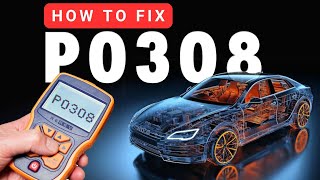
Typical fix: Replace the spark plug. It's best practice to replace all 8 spark plugs with OEM-spec Iridium plugs (e.g., ACDelco 41-110) if they are near 🎬 Watch: This easy walkthrough shows how to replace coils and plugs. the end of their service life.
Est. part cost: $8-$25 per plug - Bad Spark Plug Wire 🟡 Medium Probability High under-hood temperatures can degrade the wire's insulation, leading to arcing. The boot can also become loose or damaged.
How to confirm: Inspect the wire for any visible damage, burns, or corrosion on the contacts. You can test its resistance with a multimeter; an out-of-spec or open-circuit reading indicates a bad wire. A user on Camaro6 measured resistance on their wires to diagnose a P0308.
Typical fix: Replace the faulty spark plug wire. It is often sold in a set for all 8 cylinders. One owner on Camaro6 fixed their P0300/P0308 by replacing plugs and wires.
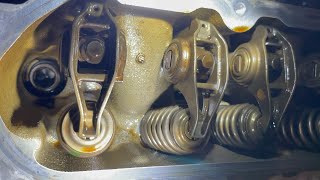
Est. part cost: $50-$150 for a set - Failed Active Fuel Management (AFM) Lifter 🟡 Medium Probability A widely documented issue on GM engines with AFM/DOD, including the L99 and LT1. The complex hydraulic lifters can get stuck or collapse, often due to oiling issues or internal component wear, preventing the valve from opening.
How to confirm: This is an internal engine issue. Diagnosis begins after ignition and fuel systems are confirmed good. A consistent ticking or chirping noise from the top of the engine is a strong indicator. A compression test will show low or zero compression on cylinder 8. Professional diagnosis is recommended.
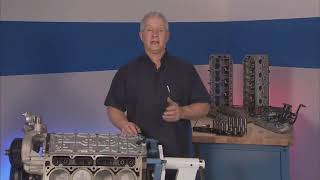
Typical fix: Requires significant engine work. All AFM lifters, the camshaft (which is often damaged by the failed lifter), and related gaskets are typically replaced. Many owners opt for an 'AFM delete kit' to replace the failure-prone components with standard, more robust LS7-style parts. 🎬 See a GM specialist explain AFM lifter failure and repair.
Est. part cost: $500-$1500 for parts (lifters, camshaft, gaskets, etc.) - Clogged or Failed Fuel Injector ⚪ Low Probability
How to confirm: After ruling out ignition issues, listen to the injector with a mechanic's stethoscope for a consistent clicking sound. A noid light can confirm the injector is receiving an electrical pulse. Swapping the injector with another cylinder is a definitive test but is more labor-intensive than swapping a coil.
Typical fix: Replace the faulty fuel injector. A forum user suggested this as a possible cause after a coil swap didn't move the misfire.
Est. part cost: $70-$150
Rare But Worth Checking
- Low Compression (Other): If ignition and fuel systems are good, a compression test is the next step. Besides a failed AFM lifter, low compression can be caused by a bent pushrod, broken valve spring, or worn piston rings.
- Intake Manifold Gasket Leak: A vacuum leak near the intake runner for cylinder 8 can lean out the air-fuel mixture and cause a misfire. This can be diagnosed by checking fuel trims or carefully spraying brake cleaner around the intake manifold with the engine running and listening for a change in idle speed.
- Broken Valve Spring: The valvetrain on LS engines can be stressed, especially if driven hard. A broken valve spring will prevent the valve from closing properly, causing a loss of compression and a misfire. This was suspected by an owner on LS1Tech after ignition and fuel swaps didn't solve the P0308.
- Cracked Flexplate: A cracked flexplate (on automatic transmission models) can cause a knocking or ticking noise often misdiagnosed as a rod knock or lifter tick. The crack can also disrupt the crankshaft position sensor reading, leading to erratic misfire codes. Diagnosis involves listening for a noise change when shifting from Park to Drive.
Diagnosis Steps

- Read the code with an OBD-II scanner to confirm P0308 and check for any other codes like P0300 or P219B.
- Note if the Check Engine Light is solid or flashing. A flashing light indicates a severe misfire that can damage the catalytic converter. 🎬 Watch: What to do immediately if your engine light is blinking.
- Identify cylinder 8. On GM V8s, it's the rear-most cylinder on the driver's side (Bank 2).
- Swap the ignition coil from cylinder 8 to a different cylinder on the same bank (e.g., cylinder 6). Clear the codes and test drive. If the code changes to P0306, the coil is faulty.
- If the misfire remains on cylinder 8, inspect the spark plug wire for damage, ensuring it's securely connected at both ends.
- If the wire is good, remove and inspect the spark plug for wear, damage, or fouling (carbon/oil). Replace if in doubt, especially if near its service interval.
- If ignition components are confirmed good, listen to the fuel injector on cylinder 8 with a mechanic's stethoscope or long screwdriver. It should have a regular, audible clicking sound. Compare it to an adjacent injector.
- If the injector is silent or sounds different, test the electrical connector with a noid light to confirm it's receiving a signal from the PCM.
- If ignition and fuel delivery seem okay, a mechanical engine problem is likely. Perform a compression test on cylinder 8 and compare it to a known good cylinder (e.g., cylinder 6). A significant loss of compression points to an internal issue.
- If compression is low, especially on an L99 or LT1 engine, a failed AFM lifter is a primary suspect. This may also be accompanied by a valvetrain tick or chirp. Further disassembly is required for confirmation.
Parts You'll Likely Need

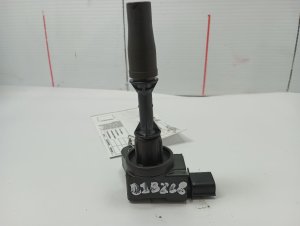
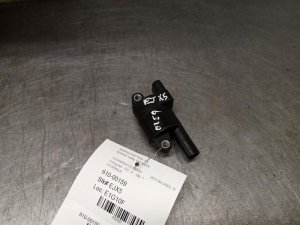
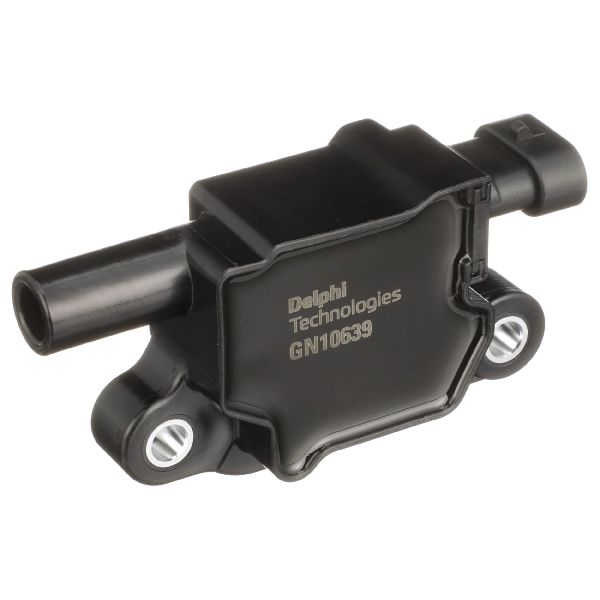
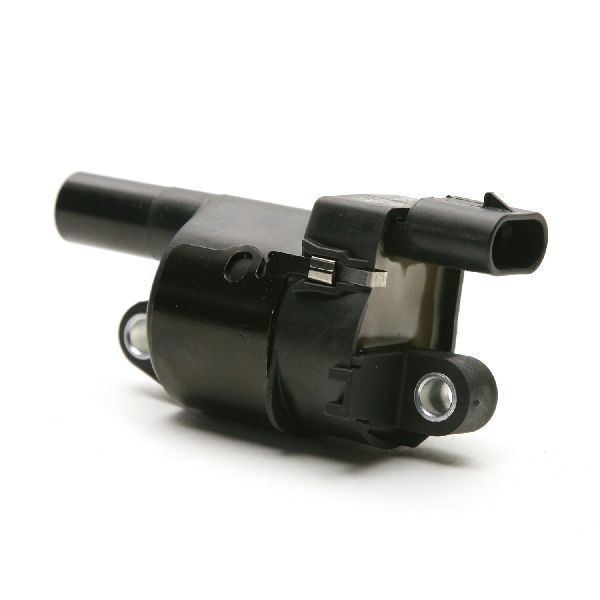
- Ignition Coil
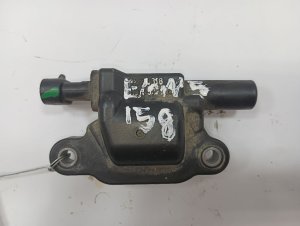
(OEM #12611424)— A very common failure point for misfires. Heat and vibration cause the internal windings to fail over time.
Trusted brands: ACDelco, Delphi
OEM price range: $60-$90
Aftermarket price range: $40-$70 - Spark Plug
(OEM #41-110)— Spark plugs are wear items and are the primary component for ignition. A worn, fouled, or cracked plug cannot create a strong enough spark.
Trusted brands: ACDelco Iridium, NGK Iridium
OEM price range: $15-$25
Aftermarket price range: $8-$18 - Spark Plug Wire Set
(OEM #9748RR (ACDelco))— The wire connecting the coil to the plug can degrade from heat, causing the spark to become weak or arc to ground before reaching the plug.
Trusted brands: ACDelco, MSD, NGK
OEM price range: $80-$120
Aftermarket price range: $50-$90 - Active Fuel Management (AFM) Lifter Kit — A known major failure point on L99 and LT1 engines. A collapsed lifter will cause a persistent misfire on one cylinder and can cause further damage to the camshaft if not addressed.
Trusted brands: General Motors (OEM replacement), Brian Tooley Racing (for delete kits), Texas Speed & Performance (for delete kits)
OEM price range: $400-$800
Aftermarket price range: $300-$600
Related Codes That Often Appear With This One
- P0300 — If the misfire becomes frequent or other cylinders also begin to misfire, a P0300 (Random/Multiple Cylinder Misfire) code may be set alongside P0308. This is common when the issue is starting to develop.
- P050D — As noted in TSB #PIP5628G, this code for 'Cold Start Rough Idle' can appear with misfire codes, pointing towards a complex diagnostic situation that may involve internal engine components like lifters. The TSB is a guide for technicians to gather data before contacting GM's Technical Assistance Center (TAC).
- P219B — This code indicates an air-fuel ratio imbalance on Bank 2 (driver's side). A misfire on cylinder 8 will cause this, as unburned air and fuel are dumped into the exhaust, throwing off the O2 sensor readings for that bank. Fixing the P0308 misfire will typically resolve this code as well.
Technical Service Bulletins (TSBs) & Recalls
- TSB #PIP5628G: This GM technical service bulletin provides diagnostic aids for technicians dealing with persistent misfire codes (P0300-P0308) and/or a P050D rough idle code. It instructs dealers to perform specific advanced diagnostics (like a relative compression test with a PicoScope) and collect a list of data points before contacting the GM Technical Assistance Center (TAC). This indicates that these misfire codes can sometimes stem from complex mechanical issues that are not immediately obvious.
Platform-Specific Known Issues
- AFM Lifter Failure (L99 & LT1 Engines): On automatic-equipped 5th Gen (L99) and all 6th Gen (LT1) V8 Camaros, the Active Fuel Management lifters are a common point of failure. They can become stuck or collapse, leading to a constant misfire, ticking noises, and potentially damaging the camshaft. This is a complex and expensive repair often discussed on forums like Camaro5 and Camaro6. Many owners who experience this failure choose to install an 'AFM Delete Kit', which replaces the complex AFM lifters, camshaft, and valley cover with more reliable standard components.
- Service StabiliTrak Warning: A P0308 misfire code is frequently accompanied by a 'Service StabiliTrak' message on the driver information center. This does not usually indicate a problem with the stability control system itself. The StabiliTrak system relies on predictable engine output to function correctly; when the Engine Control Module (ECM) detects a misfire, it disables StabiliTrak as a precaution and displays the warning. Resolving the engine misfire will make the StabiliTrak message go away.
Mechanic-Grade Diagnostic Values
- Ignition Coil Primary Resistance — expected: 0.3 Ω - 2.0 Ω. Failure: A reading outside of this range, or an open circuit (infinite resistance), indicates a faulty coil.
- Ignition Coil Secondary Resistance — expected: 8.0 kΩ - 19.0 kΩ. Failure: A reading outside of this range points to a failure in the secondary windings of the coil.
- Low-Side Fuel Pressure (LS3/L99) — expected: ~58 psi. Failure: Significantly lower pressure indicates a weak in-tank fuel pump or a clogged filter. The pressure may taper down to ~48-50 psi at high RPM by design.
- Low-Side Fuel Pressure (LT1) — expected: 35-60 psi (regulated by FPCM). Failure: Pressure falling below the commanded value on a scan tool can indicate a failing in-tank pump.
- High-Side Fuel Pressure (LT1, at rail) — expected: 500 - 2500+ psi. Failure: This is for the direct injection system; a failure here is less likely to cause a single-cylinder misfire and would likely set other codes. Pressure is commanded by the ECM based on demand.
- Mode 6 Misfire Counts — expected: 0 or very low counts on cylinder 8.. Failure: A high value in the 'EWMA (Exponential Weighted Moving Average) misfire counts' for cylinder 8 (Test ID $A7 on some GM systems) confirms a history of misfires on that cylinder, even if not currently active.
Hidden / Shadow Codes Worth Checking
- Mode 6, Test ID $A7 (Cylinder 8): This is not a DTC, but a specific monitor within OBD-II Mode 6 diagnostics. It tracks the 'Exponentially Weighted Moving Average' of misfire events for cylinder 8 over the last 10 driving cycles. A high count here can confirm a persistent but intermittent issue on cylinder 8, even without an active P0308 code. (see via A professional scan tool or an advanced OBD-II app/scanner that can display Mode 6 data. The tool must be able to decode the manufacturer-specific Test IDs (TIDs) and Component IDs (CIDs).)
Scan Tool Commands That Help
- GDS2 / Tech2 or equivalent professional scanner: Cylinder Power Balance Test — This function allows the user to sequentially disable the fuel injector for each cylinder while monitoring the RPM drop. If disabling cylinder 8 causes little or no change in RPM compared to other cylinders, it confirms that cylinder 8 is not contributing power.
- GDS2 / Tech2 or equivalent professional scanner: Fuel Injector Balance Test — This automated test fires each injector for a specific duration and measures the corresponding drop in fuel rail pressure. A smaller pressure drop for cylinder 8 compared to others indicates a clogged or faulty injector.
- GDS2 / Tech2 or equivalent professional scanner: AFM Cylinder Deactivation Command — On L99 or LT1 engines, a technician can command the AFM system on and off to check the response of the solenoids and lifters. This can help diagnose if an AFM component is stuck or slow to respond, though it may not pinpoint a mechanically collapsed lifter without other tests.
Wiring & Ground Locations
- G102 (or equivalent) — Located at the rear of the engine, often on the back of the cylinder heads. There are typically grounds on both the driver and passenger side heads.. The ignition coils are grounded via these points. A loose or corroded ground on the driver's side (Bank 2) head can cause a weak or intermittent spark for cylinders 2, 4, 6, and 8, leading to misfires. Forum and video sources confirm small ground wires bolting to the back of each head.
- Engine Block to Chassis Ground — A large ground strap connecting the engine block (often near the starter on the passenger side) to the vehicle's frame.. While a failure here would likely cause multiple electrical issues beyond a single cylinder misfire, a poor connection can introduce electrical noise and voltage drops that affect the entire ignition and engine management system. A loose ground bolt in this area has been noted by owners as a factory issue.
- Cylinder 8 Ignition Coil Connector — The electrical connector on the ignition coil for the rearmost cylinder on the driver's side.. The pins and wires at this connector can become damaged from heat and vibration. The ECM sends the trigger signal to the coil through this connector. Testing for voltage and signal with a multimeter or scope at this connector's pins is a key diagnostic step.
Real Owner Repair Stories
- Camaro6 Forum user 'NorCalLT1' (Modified 2017 2SS (MSD intake, Rotofab, 95mm TB, E85 tune)) — Sputtering/missing, CEL and StabiliTrak error, codes P0300 and P0308.
❌ Tried (didn't work) Swapped ignition coil from cylinder 8 to 2, but the code did not move., Visually inspected spark plug on cylinder 8, which looked fine., Measured resistance of the #8 plug wire, which was similar to others.
✅ What actually fixed it The user did not post a final confirmed fix, but another user in the same thread with identical codes (P0300, P0308) after a hard run stated, "Changed plugs and wires and all is good." This suggests that even if the plug and wire pass a basic inspection, they can still be the cause.
OEM Part Supersession History
12571595, 12619820, 12639516 (AFM Lifters)→12645725, 12680871 (and others)— GM has had multiple revisions of the Active Fuel Management (AFM) lifters to address high failure rates. Newer designs aim to improve durability and oiling.
Heads up: The newest generation of lifters for Dynamic Fuel Management (DFM) engines, like GM part #12698945, are generally backward compatible with older AFM systems. However, older AFM-only lifters cannot be used in newer DFM engines. When replacing, it is critical to replace all AFM lifters on the affected bank, and it's highly recommended to replace the corresponding lifter guides at the same time.
Model Year Variations Within This Range
- 2011-2015 (5th Gen) vs 2016-2018 (6th Gen): The primary V8 engine changed from the LS3 (manual) / L99 (automatic) to the LT1. While both the L99 and LT1 have AFM, the LT1 also incorporates direct injection. This adds a high-pressure fuel pump and a different fuel system architecture. A P0308 on an LT1 could involve the direct injector, whereas on an L99/LS3 it would be a port injector.
- 2014+: Starting with the Gen V engines (LT1), the AFM system became more integrated. Service bulletins like 15-06-01-002H specifically address lifter failures on these engines and provide detailed repair instructions that may differ slightly from earlier L99 procedures.
Helpful Videos

Used OEM Parts in Stock


New Aftermarket Parts Available


The information in this article is provided for general reference and educational purposes only. Vehicle specifications, procedures, and part compatibility can vary by production date, trim level, and region. Always consult your vehicle's factory service manual and verify part numbers before purchasing or performing repairs. Safety-critical components such as airbags, seat belts, and braking systems should be installed by a qualified professional.
- Chevrolet CAMARO:
- 🎬 Helpful Videos
- 🛍️ Shop This Part
- What's Unique About the 2011-2018 Chevrolet CAMARO
- Diagnostic Flowchart
- Symptoms You May Notice
- Most Likely Causes
- Rare But Worth Checking
- Diagnosis Steps
- Parts You'll Likely Need
- Related Codes That Often Appear With This One
- Technical Service Bulletins (TSBs) & Recalls
- Platform-Specific Known Issues
- Mechanic-Grade Diagnostic Values
- Hidden / Shadow Codes Worth Checking
- Scan Tool Commands That Help
- Wiring & Ground Locations
- Real Owner Repair Stories
- OEM Part Supersession History
- Model Year Variations Within This Range
- 🎟️ Get 5% Off