

P0308 on 2002-2006 Chevrolet Avalanche 1500: Cylinder 8 Misfire Causes and Fixes
P0308 on a 2002-2006 Avalanche 1500 indicates a misfire in cylinder 8. The most common causes are a worn spark plug, a bad spark plug wire, or a faulty ignition coil. These are affordable and accessible DIY repairs, typically costing between $50 and $150. Cylinder 8's location at the rear passenger side makes it prone to heat-related failures and coolant leaks from nearby heater hoses.
- P0308 indicates a misfire on cylinder 8, the rearmost cylinder on the passenger side.
- The most likely causes are a bad spark plug, spark plug wire, or ignition coil. These are inexpensive and DIY-friendly.
- A quick and effective diagnostic step is to swap the cylinder 8 ignition coil with another cylinder's coil to see if the misfire code follows.
- Do not drive for an extended period with a flashing check engine light, as this can cause expensive damage to the catalytic converter.
- If basic ignition and fuel parts don't fix the issue, investigate a possible intake gasket leak or more serious mechanical problems like a worn camshaft, as noted in GM Technical Service Bulletins.
What's Unique About the 2002-2006 Chevrolet AVALANCHE 1500
The 2002-2006 Avalanche uses the GMT800 truck platform with the highly common 5.3L Vortec V8 engine. Unlike later models (2007+), this generation does not have the Active Fuel Management (AFM) system, so the notorious AFM lifter failure is not a cause for P0308 on these specific years. However, the engine bay's heat, particularly at the back where cylinder 8 is located, can accelerate the degradation of ignition components like spark plug wires and coils. A widely-reported issue on this platform is the potential for coolant from the plastic heater core quick-connect hoses to drip onto the cylinder 8 ignition coil and spark plug wire, causing it to short out and trigger a P0308 code.
Diagnostic Flowchart
Tap your situation to follow the diagnostic path that matches what you're seeing on this vehicle.
Symptoms You May Notice
- Rough or shaking idle
- Hesitation or stumbling during acceleration
- Noticeable loss of engine power
- Flashing or solid Check Engine Light
- Fuel smell from the exhaust
- Jerking or bucking under heavy load/acceleration
- Replacing the oxygen sensor. O2 sensor codes can sometimes accompany misfire codes, but the O2 sensor is usually reporting a problem with the air/fuel mixture caused by the misfire, not causing the misfire itself.
Most Likely Causes
- Worn or Fouled Spark Plug 🔴 High Probability Spark plugs are a regular maintenance item. The original platinum plugs had a 100,000-mile service interval, which many of these aging vehicles have surpassed. Cylinder 8 is also difficult to access, so it may be neglected during tune-ups.
How to confirm: Remove the spark plug from cylinder 8. Inspect it for wear on the electrode, carbon buildup, oil fouling, cracks in the ceramic, or coolant contamination (a whitish or green deposit). A plug from a misfiring cylinder will often be wet with fuel or blackened.
Typical fix: Replace the spark plug. It is highly recommended to replace all 8 spark plugs at the same time for balanced performance. Use modern Iridium plugs (ACDelco 41-985 or equivalent) gapped to 0.040 inches per TSB #03-06-04-060A. Do not adjust the gap on pre-gapped Iridium plugs.
Est. part cost: $8-$20 per plug - Faulty Spark Plug Wire 🔴 High Probability The spark plug wires on Vortec engines are subjected to high heat, which causes them to degrade over time. The wire for cylinder 8 is in a particularly hot location. It is also susceptible to damage from leaking coolant from the heater core fittings above it.
How to confirm: Visually inspect the wire for cylinder 8 for any signs of cracking, melting, chafing, or corrosion on the contacts. Check for a whitish-green residue indicating a coolant leak from above. With the engine running in the dark, you can sometimes see the spark arcing from a bad wire to the engine block. You can also test the wire's resistance with a multimeter; it should be less than 12,000 ohms per foot.
Typical fix: Replace the spark plug wire for cylinder 8. It is best practice to replace the entire set of 8 wires at the same time as the spark plugs.
Est. part cost: $40-$80 for a set - Failed Ignition Coil 🔴 High Probability Heat exposure, especially for the rear cylinders, is a primary cause of ignition coil failure on these GM V8 engines. Coolant leaks from heater hoses near the firewall can also drip directly onto the cylinder 8 coil, causing it to fail.
How to confirm: Swap the ignition coil from cylinder 8 with an adjacent cylinder (e.g., cylinder 6). Clear the codes and drive the vehicle. If the code changes to P0306, the ignition coil is faulty. This is a definitive and free diagnostic step widely recommended on owner forums.
Typical fix: Replace the faulty ignition coil. It is only necessary to replace the one that has failed, though if they are original, others may fail soon.
Est. part cost: $30-$60 - Clogged or Faulty Fuel Injector 🟡 Medium Probability Over time, fuel injectors can become clogged with deposits from fuel, especially with the use of ethanol blends, or fail electronically. As the last injector on the fuel rail, cylinder 8 can sometimes be more susceptible to accumulating debris.
How to confirm: Listen to the injector with a mechanic's stethoscope; you should hear a consistent, rapid clicking sound. You can also test the injector's resistance with a multimeter or use a 'noid light' to confirm it's receiving a pulse from the PCM. Another diagnostic step is to swap the cylinder 8 injector with another cylinder and see if the misfire code follows.
Typical fix: First, try running a high-quality fuel system cleaner like Seafoam through the tank, as this has resolved issues for some owners. If that fails, replace the fuel injector. It is often recommended to replace all 8 injectors as a set if they are original to ensure a balanced fuel supply.
Est. part cost: $40-$90 per injector
Rare But Worth Checking
- Worn Camshaft Lobe / Lifter Roller: Per GM TSB #PIP4138R, a worn camshaft lobe or lifter can cause a persistent single-cylinder misfire that may be accompanied by a consistent ticking, squeaking, or chirping noise at half of engine speed. This is a significant mechanical issue that should be investigated if basic ignition and fuel system checks do not resolve the problem. Diagnosis involves inspecting the valvetrain components.
- Intake Manifold Gasket Leak: The plastic intake manifold gaskets on Vortec engines can degrade and leak, causing unmetered air to enter a cylinder. This leans out the air/fuel mixture and can cause a misfire. You can check for a leak by spraying short bursts of brake cleaner near the cylinder 8 intake runner with the engine running; a change in engine RPM indicates a leak. Another symptom can be unexplained vacuum in the crankcase.
- Low Cylinder Compression: A mechanical engine problem like worn piston rings, a leaking head gasket, or a damaged valve/valve spring can cause a loss of compression, leading to a misfire. A compression test (healthy cylinders should be 120-150 PSI) and a cylinder leak-down test are required to diagnose this.
Diagnosis Steps
- Confirm the P0308 code is present using an OBD-II scanner. Note if the Check Engine Light is solid or flashing. A flashing light indicates a severe misfire that can damage the catalytic converter; avoid driving.
- Perform a visual inspection of the cylinder 8 area (rear passenger side). Look for obvious issues like a disconnected spark plug wire, damaged wiring, or signs of a coolant leak from the heater hoses above the coil and wire.
- Swap the ignition coil from cylinder 8 with cylinder 6 (the next one forward). Clear the codes and run the engine. If the code changes to P0306, the coil is bad. This is the most common and effective first step.
- If the code remains P0308, inspect the spark plug wire for cylinder 8 for damage, cracks, or corrosion. Test its resistance with a multimeter if possible.
- Remove and inspect the spark plug from cylinder 8. Look for heavy carbon/oil fouling, electrode wear, or a fuel-soaked appearance. Replace if in doubt, preferably as a full set.
- If ignition components are good, check the fuel injector. Listen for a steady clicking sound. Check the wiring connector for a secure fit. Consider swapping the injector with another cylinder to see if the code follows.
- If the cause is still not found, check for vacuum leaks around the intake manifold gasket for cylinder 8 using the brake cleaner method.
- If no external issues are found, perform a cylinder compression test to check the mechanical health of cylinder 8. Low compression (below 120 PSI) points to internal engine problems.
- If compression is good but a misfire persists, especially if accompanied by a ticking or chirping noise, consider the possibility of a worn camshaft lobe or lifter as described in TSB #PIP4138R.
Parts You'll Likely Need
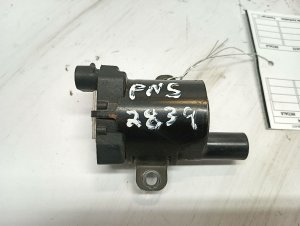
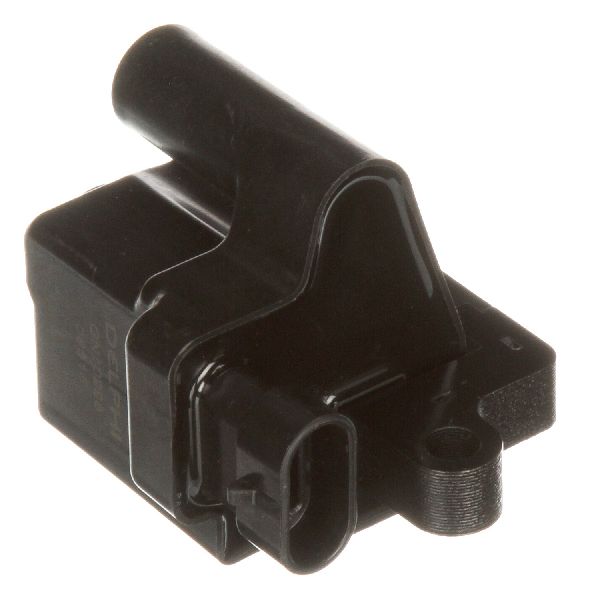
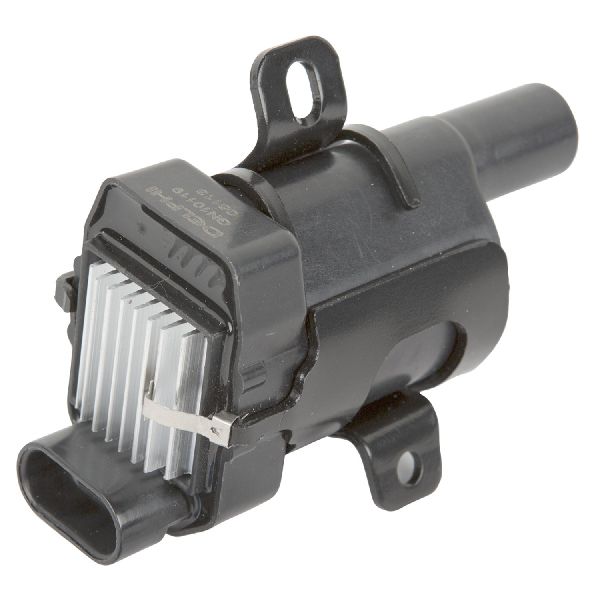
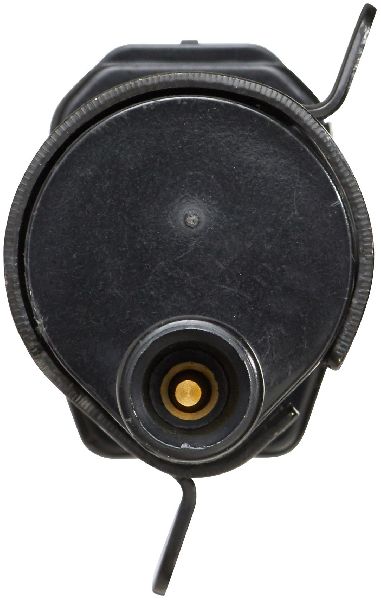
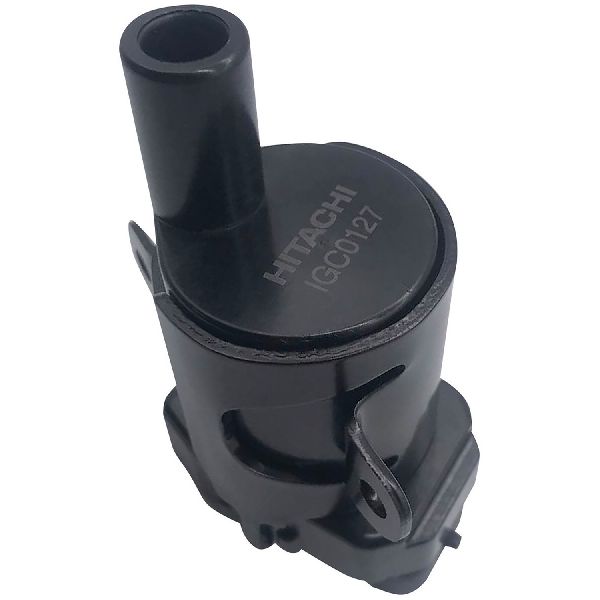
- Ignition Coil
(OEM #12558693)— Ignition coils are a very common failure point due to heat exposure and potential coolant leaks. Swapping coils is the easiest way to confirm a failure. The original part number 12558693 has been superseded by GM part number 19418993.
Trusted brands: ACDelco (D581), Delphi (GN10298), NGK (49081), Standard Motor Products (UF-271)
OEM price range: $45-$70
Aftermarket price range: $25-$50 - Spark Plug
(OEM #41-962)— Spark plugs are a routine wear item and are the foundation of the ignition system. A fouled or worn plug is a primary cause of a single-cylinder misfire.
Related Codes That Often Appear With This One
- P0300 — If the misfire is intermittent or starting to affect other cylinders, a P0300 (Random/Multiple Cylinder Misfire) code may be stored alongside P0308.
- P0171 or P0174 — If the misfire is caused by a vacuum leak, such as a bad intake manifold gasket, a lean condition code for one or both engine banks may also be present.
Technical Service Bulletins (TSBs) & Recalls
- PIP5628G: Communicates information needed by the Technical Assistance Center (TAC) for diagnosing misfire codes P0300-P0308.
- PIP4138R: Advises technicians to check for a worn camshaft lobe or lifter if standard diagnostics do not isolate the cause of a P0300-P0308 misfire.
- 19-NA-219: Supersedes PIP4138R, providing diagnostic tips for misfires and engine noises related to worn cam/lifters, sticking valves, or broken valve springs.
Platform-Specific Known Issues
- A known and frequently cited issue involves coolant from the heater core quick-connect hoses near the firewall dripping onto the cylinder 8 ignition coil and spark plug wire. This causes the components to short out, leading directly to a P0308 code. A real-world example was shared on Reddit where a user fixed their P0308 simply by fixing the coolant leak and cleaning the wire, with no parts replacement needed.
Mechanic-Grade Diagnostic Values
- Fuel Pressure (Key On, Engine Off) — expected: 55-62 PSI for gasoline engines (VIN T); 48-54 PSI for Flex Fuel engines (VIN Z).. Failure: Pressure below the specified range indicates a weak fuel pump, clogged filter, or faulty regulator.
- Fuel Injector Resistance — expected: ~12.5 ohms.. Failure: A significantly higher or lower reading, or an open circuit, indicates a failed injector coil.
- Ignition Coil Secondary Resistance — expected: ~6.1k to 7.1k ohms.. Failure: A reading far outside this range suggests the coil's internal windings are failing.
- Live Misfire Data (Per Cylinder) — expected: Near zero counts at idle and under load on all cylinders.. Failure: A rapidly increasing number on cylinder 8 confirms an active misfire, even if it's not yet bad enough to flash the CEL.
Hidden / Shadow Codes Worth Checking
- Mode $06 Misfire Counters: This is not a specific code but a data monitoring function. The PCM tracks misfires on each cylinder continuously. These counters can show a small number of misfires on cylinder 8 before they reach the threshold to set the P0308 DTC, confirming an intermittent or developing issue. (see via Requires an advanced scan tool (like a GM Tech2/GDS2 or equivalent professional scanner) that can access Mode $06 test data.)
Scan Tool Commands That Help
- GM Tech2 / GDS2 or equivalent: Cylinder Power Balance Test — This active test allows the technician to disable each cylinder one by one. If disabling cylinder 8 causes no change in engine RPM, while disabling other cylinders causes a distinct drop, it confirms cylinder 8 is not contributing power.
- GM Tech2 / GDS2 or equivalent: Fuel Injector Balance Test — This test fires each injector for a set duration and measures the corresponding drop in fuel pressure. A smaller pressure drop for cylinder 8 compared to others indicates a clogged or failing injector.
Wiring & Ground Locations
- PCM/Coil Pack Ground — A ground wire for the ignition coil bank is located on the rear of the driver's side cylinder head. A critical PCM ground is also located on the engine block.. A corroded or loose ground at this location can cause erratic behavior for the entire bank of ignition coils or the PCM itself, leading to weak spark and misfires that can be hard to diagnose.
- Fuel Pump Ground — Located on the driver's side frame rail, typically below the driver's door area.. Corrosion at this ground point is very common and can cause low fuel pressure from the in-tank pump. This can lead to lean conditions and misfires, which might initially be mistaken for an ignition or injector problem.
- Firewall Ground Straps — Braided ground straps connecting the engine to the vehicle's firewall.. These ensure the entire engine assembly is properly grounded to the chassis. A broken or corroded strap can create floating grounds and cause a wide range of difficult-to-trace electrical issues, including misfires.
Real Owner Repair Stories
- Reddit user in r/ChevyTrucks (2011 Suburban (GMT900 platform with similar 5.3L engine and firewall layout)) — P0308 code.
❌ Tried (didn't work) Initial diagnosis pointed towards replacing common ignition parts (plugs, wires, coil).
✅ What actually fixed it The heater core quick-connect fittings at the firewall were found to be leaking coolant, which dripped directly onto the cylinder 8 spark plug wire, causing an electrical short. Fixing the coolant leak and cleaning the components resolved the P0308 code. - gmtrucks.com forum user (2005 Chevrolet Silverado 5.3L) — Persistent P0308 misfire code.
❌ Tried (didn't work) Replaced spark plug, Replaced spark plug wire, Replaced ignition coil, Replaced fuel injector
✅ What actually fixed it After all common ignition and fuel system components for cylinder 8 were replaced without success, the root cause was discovered to be a cracked cylinder head near the #8 cylinder.
"I Checked Everything" — The Actual Cause
- In a documented case on a 2005 Silverado 5.3L, a persistent P0308 was not resolved by replacing the plug, wire, coil, or injector. A smoke test for vacuum leaks would have come back clean. The actual cause was a cracked cylinder head, an internal mechanical failure that requires more in-depth diagnostics like a compression or leak-down test to identify.
- A common failure pattern reported by owners is a P0308 caused by a coolant leak from the heater core hoses dripping onto the cylinder 8 ignition components. A technician focused only on finding a vacuum leak with a smoke machine would miss this entirely, as the issue is an external fluid causing an electrical short, not unmetered air entering the intake.
When the Usual Fixes Don't Work
- While the vast majority of P0308 codes are fixed by replacing a spark plug, wire, or coil, there are well-documented cases where these fixes do not work. One owner of a 2005 Silverado 5.3L replaced the plug, wire, coil, and even the fuel injector for cylinder 8, but the misfire persisted. The ultimate cause was a cracked cylinder head, a much more serious mechanical failure. Another common scenario that defies the simple parts-swap is a coolant leak from the plastic heater core quick-connects on the firewall dripping onto the cylinder 8 coil and wire, causing the spark to short to ground. In this case, the ignition parts themselves are not faulty, but the external contamination is the root cause.
OEM Part Supersession History
88894361→12580426— Standard part update/revision for the Flex Fuel (L59, VIN Z) fuel injector.
Heads up: Part 12580426 is specifically for Flex Fuel models. Using it in a standard gasoline engine (or vice-versa) can cause fuel trim issues.
Model Year Variations Within This Range
- 2002-2003: These model years typically used a 'return-style' fuel system, where a fuel pressure regulator on the fuel rail maintains pressure and sends excess fuel back to the tank via a second line. Fuel pressure is diagnosed at the rail-mounted regulator.
- 2004-2006: These model years switched to a 'returnless' fuel system. The fuel pressure regulator is located inside the fuel tank as part of the pump assembly, and only a single supply line runs to the engine. This design change affects fuel pressure diagnosis and pump/regulator replacement procedures.
Helpful Videos
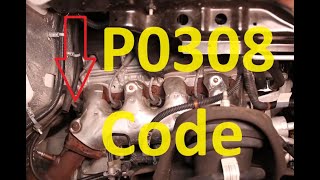
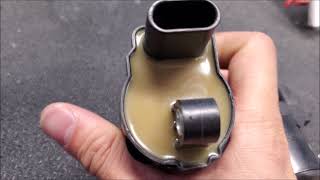
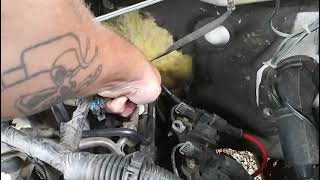
![How to Fix P0308 Engine Code in 3 Minutes [2 DIY Methods / Only $4.53]](https://img.youtube.com/vi/v9SbNjbCIW0/mqdefault.jpg)
Used OEM Parts in Stock

New Aftermarket Parts Available


The information in this article is provided for general reference and educational purposes only. Vehicle specifications, procedures, and part compatibility can vary by production date, trim level, and region. Always consult your vehicle's factory service manual and verify part numbers before purchasing or performing repairs. Safety-critical components such as airbags, seat belts, and braking systems should be installed by a qualified professional.
- Chevrolet AVALANCHE 1500:
- 🎬 Helpful Videos
- 🛍️ Shop This Part
- What's Unique About the 2002-2006 Chevrolet AVALANCHE 1500
- Diagnostic Flowchart
- Symptoms You May Notice
- Most Likely Causes
- Rare But Worth Checking
- Diagnosis Steps
- Parts You'll Likely Need
- Related Codes That Often Appear With This One
- Technical Service Bulletins (TSBs) & Recalls
- Platform-Specific Known Issues
- Mechanic-Grade Diagnostic Values
- Hidden / Shadow Codes Worth Checking
- Scan Tool Commands That Help
- Wiring & Ground Locations
- Real Owner Repair Stories
- "I Checked Everything" — The Actual Cause
- When the Usual Fixes Don't Work
- OEM Part Supersession History
- Model Year Variations Within This Range
- 🎟️ Get 5% Off