

P0308 on 2001-2005 Chevrolet Astro: An Impossible Code and What It Really Means
A 2001-2005 Chevy Astro has a 4.3L V6 engine and cannot generate a P0308 code, which is for an 8th cylinder. If your scan tool shows P0308, it's an error. The actual problem is a misfire on one of the six cylinders (P0301-P0306), most often caused by a worn distributor cap and rotor.
- P0308 is an impossible code for a 2001-2005 Chevy Astro, which has a V6 engine.
- The code indicates a scan tool error; the real problem is a misfire on one of the six cylinders (P0301-P0306) or a random misfire (P0300).
- The most common cause of misfires on this van is a worn distributor cap and rotor.
- The second most common cause is a failing 'spider' fuel injector assembly; upgrading to the MPFI version is the standard fix.
- Always use high-quality ignition and fuel components (e.g., ACDelco, Delphi) as this platform is sensitive to part quality.
What's Unique About the 2001-2005 Chevrolet ASTRO
The key issue for the Astro is its V6 engine configuration. Since it only has six cylinders, a code for cylinder 8 cannot be legitimate. This situation typically arises from a generic scan tool misinterpreting the PCM's data. Some general GM Technical Service Bulletins (TSBs), like #PIP5628G, cover a wide range of engines and list misfire codes from P0300 to P0308, which might contribute to this diagnostic confusion by being part of the software logic in the scan tool itself. The actual fault is a misfire, but it will be on cylinders 1 through 6, or a random misfire (P0300).
Diagnostic Flowchart
Tap your situation to follow the diagnostic path that matches what you're seeing on this vehicle.
Symptoms You May Notice
- Check Engine Light is on or flashing
- Rough idle or engine shaking
- Hesitation or stumbling during acceleration
- Noticeable loss of engine power
- Poor fuel economy
- Smell of raw fuel from the exhaust
- Searching for a non-existent 8th cylinder.
- Replacing the PCM without confirming the scan tool is not at fault.
- Replacing individual ignition or fuel parts randomly without first confirming the true misfire code (e.g., P0304 vs P0300).
Most Likely Causes
- Worn Distributor Cap and Rotor 🔴 High Probability The distributor on the 4.3L V6 is located at the back of the engine, making it hard to access and often neglected. It is highly susceptible to moisture and corrosion, and the terminals inside the cap wear down over time. Cross-firing between terminals due to carbon tracking is a very common cause of random misfires (P0300) on this engine.
How to confirm: Remove the interior engine cover ('doghouse') inside the van. Visually inspect the distributor cap for cracks, moisture, or white/green corrosion on the terminals. Check the rotor for wear, burning, and carbon tracking on its tip.
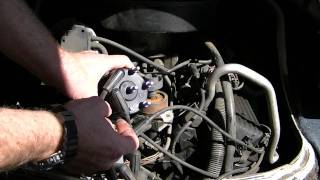
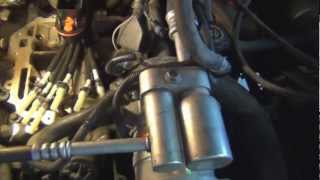
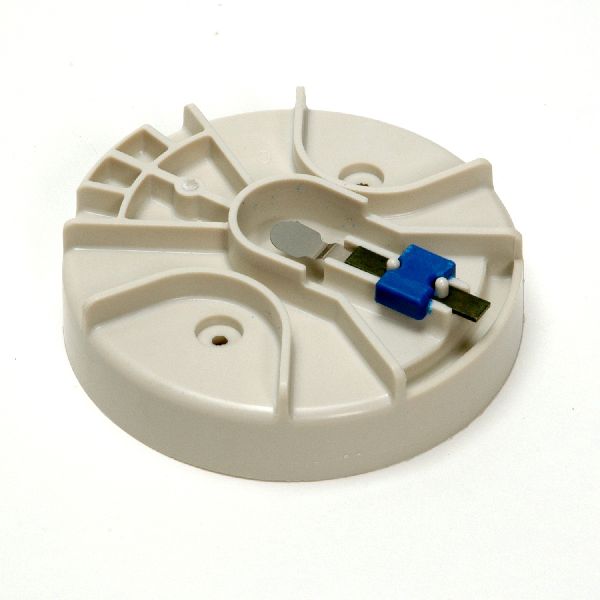
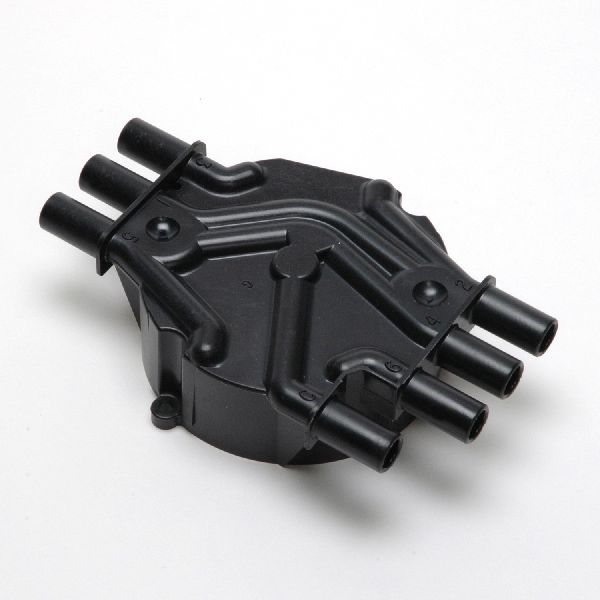
Typical fix: Replace the distributor cap and rotor as a set. 🎬 See this step-by-step guide for replacing the cap and rotor. It is highly recommended to use high-quality OEM (ACDelco) or equivalent (Delphi) parts, as this engine is sensitive to part quality. A common ACDelco kit includes part numbers D328A (Cap) and D465 (Rotor).
Est. part cost: $40-$100 - Worn Spark Plugs or Spark Plug Wires 🟡 Medium Probability These are standard maintenance items. Wires can degrade over time, and spark plugs can become fouled or worn, leading to a weak or inconsistent spark. Accessing the spark plugs, especially on the passenger side, can be difficult, leading to deferred maintenance.
How to confirm: Inspect the spark plug for the misfiring cylinder (once the correct cylinder is identified). Look for heavy carbon buildup, oil fouling, or a worn electrode. Inspect the corresponding wire for cracks, burns, or loose connections at both the plug and distributor cap.
Typical fix: Replace the spark plugs and/or spark plug wires. It's best practice to replace all plugs and wires at the same time. Using ACDelco Iridium or Platinum plugs is a common upgrade for longevity.
Est. part cost: $50-$150 - Faulty Fuel Injector Assembly ('Spider') 🟡 Medium Probability The 2001-2005 models use a Central Sequential Fuel Injection (CSFI) 'spider' assembly. The poppet valves at the end of the injector lines are notorious for sticking or leaking. This is a very common cause of misfires, hard starting, and rough running. The internal fuel pressure regulator can also leak, causing a rich condition.
How to confirm: A mechanic can perform a fuel injector balance test. A key symptom is a long crank time after the engine has been sitting warm for a while, caused by leaking fuel pressure. A strong smell of fuel under the hood is another indicator.
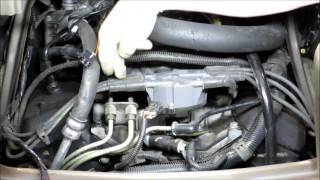
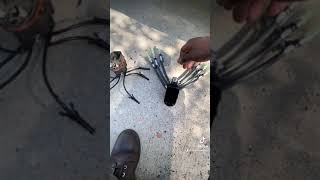
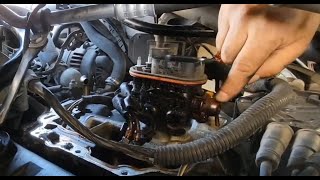
Typical fix: The standard, and highly recommended, repair is to replace the entire CSFI unit with the updated Multi-Port Fuel Injection (MPFI) spider assembly. 🎬 Watch: How to perform the MPFI spider injector upgrade. This is a permanent fix that replaces the unreliable poppet valves with true electronic injectors. The ACDelco MPFI upgrade kit is part number 217-3028 (or GM #89060439).
Est. part cost: $250-$450 - Low Engine Compression ⚪ Low Probability While the 4.3L V6 is generally robust, high mileage can lead to internal engine wear causing low compression from worn piston rings, a leaking head gasket, or valvetrain issues.
How to confirm: Perform a compression test on all cylinders. The readings should be relatively consistent across the engine, typically in the 120-150 PSI range.
Typical fix: This is a major engine repair that could involve replacing a head gasket, piston rings, or addressing valve issues. This typically requires professional service.
Est. part cost: $500-$2000+
Rare But Worth Checking
- Cracked distributor housing
- Worn distributor gear
- Faulty Camshaft Position Sensor (located inside the distributor)
- Leaking intake manifold gaskets
Diagnosis Steps
- Acknowledge that P0308 is an impossible code for a stock Chevy Astro. The issue is a misfire, but the cylinder number is wrong.
- Use a different, high-quality scan tool to re-scan the vehicle for the correct code (P0300, P0301, P0302, P0303, P0304, P0305, or P0306). Check for pending codes as well.
- If a specific cylinder is identified (e.g., P0304), focus diagnosis there. If P0300 is present, suspect a component common to all cylinders.
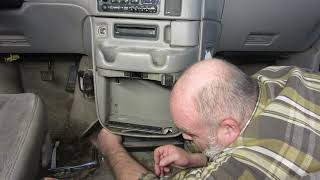
- Remove the interior engine cover ('doghouse') to access the engine. This is necessary for most of the following steps.
- Thoroughly inspect the distributor cap for cracks, carbon tracking, and corrosion on the terminals. Inspect the rotor for wear. This is the most common failure point and the first place to look.
- Inspect the spark plug wires for any signs of damage, arcing (check for white marks on manifolds/block), or loose connections at the plug and distributor cap.
- If ignition components are suspect, replace the distributor cap, rotor, and consider replacing plugs and wires if they are old. Use quality parts.
- If ignition parts are good, investigate the fuel system. Connect a fuel pressure gauge. With the key on, engine off, pressure should jump to over 60 PSI. It should hold and not drop more than a few PSI over several minutes. A rapid drop indicates a leak, likely from the internal fuel pressure regulator or spider injector lines.
- If the problem persists, a compression test may be needed to rule out internal engine mechanical issues.
Parts You'll Likely Need
- Distributor Cap and Rotor Kit
(OEM #ACDelco D328A (Cap), ACDelco D465 (Rotor))— This is the most frequent cause of misfires on the 4.3L V6 engine in the Astro van.
Trusted brands: ACDelco, Delphi
OEM price range: $60-$100
Aftermarket price range: $40-$70 - MPFI Fuel Injector Spider Assembly Upgrade
(OEM #ACDelco 217-3028 / GM 89060439)— The original CSFI spider assembly is a common failure point. The MPFI upgrade is the definitive solution for injector-related misfires.
Trusted brands: ACDelco, Standard Motor Products (SMP), Delphi
OEM price range: $300-$400
Aftermarket price range: $220-$320 - Spark Plugs
(OEM #ACDelco 41-993 (Iridium))— A standard tune-up part that is essential for proper ignition and a common cause of single-cylinder misfires.
Trusted brands: ACDelco, NGK
OEM price range: $7-$12 per plug
Aftermarket price range: $4-$8 per plug - Spark Plug Wire Set — Wires degrade over time and can cause a weak or lost spark, leading to a misfire.
Trusted brands: ACDelco, NGK
OEM price range: $60-$90
Aftermarket price range: $40-$70
Related Codes That Often Appear With This One
- P0300 — If the scan tool is confused, it may default to P0308 when the real code is P0300 (Random/Multiple Cylinder Misfire). This is very common if the distributor cap is failing or the spider injector assembly has multiple leaking poppets.
- P0301 - P0306 — These are the actual, valid misfire codes for the Astro's V6 engine. The P0308 is an error; one of these codes is the true problem.
- P0171, P0174 — Lean codes for Bank 1 and Bank 2 can appear alongside a misfire if a vacuum leak (like a leaking intake manifold gasket) is the root cause.
Technical Service Bulletins (TSBs) & Recalls
- PIP5628G: A general GM bulletin about diagnosing misfires (P0300-P0308)
Platform-Specific Known Issues
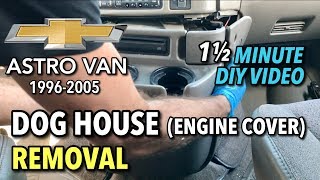
- Engine Access via 'Doghouse': To perform most of these repairs, including inspecting the distributor or replacing the spider injector, the interior engine cover (known as the 'doghouse') between the front seats must be removed. This can be cumbersome for those unfamiliar with the process.
- CSFI to MPFI Fuel Injection Upgrade: The original Central Sequential Fuel Injection (CSFI) system is a known weak point. The recommended fix for any injector issue is a full conversion to the Multi-Port Fuel Injection (MPFI) system, which provides significantly better reliability and performance.
Mechanic-Grade Diagnostic Values
- Fuel Pressure (Key On, Engine Off) — expected: 60-66 PSI. Failure: Pressure below 60 PSI can indicate a weak fuel pump. Pressure that drops more than 5 PSI in 10 minutes indicates a leak, likely from the fuel pressure regulator or spider injector assembly inside the intake manifold.
- Short Term & Long Term Fuel Trims (STFT/LTFT) at Idle — expected: Within +/- 10%. Failure: Consistently high positive numbers (e.g., +15% or higher) suggest the engine is compensating for a vacuum leak or low fuel delivery. Consistently high negative numbers suggest an over-fueling condition, like a leaking injector.
- Camshaft Position Sensor (CMP) Signal — expected: Digital square wave, toggling between 0V and 5V as the engine is cranked.. Failure: No signal, or a signal that is erratic or stuck high/low, indicates a faulty sensor or wiring issue.
Hidden / Shadow Codes Worth Checking
- Mode 6 Misfire Counters: Professional scan tools can access Mode 6 data, which includes non-continuous monitor test results. For misfires, this includes raw misfire counts for each individual cylinder, even before a P030x code is set. This is the most effective way to see which cylinder is actually at fault when a generic scanner shows P0308. (see via A professional-grade scan tool (like a GM Tech 2 or equivalent) with Mode 6 data capability.)
Scan Tool Commands That Help
- GM Tech 2 / GDS2 or equivalent: Misfire Graphic — This function displays live and historical misfire counts for each cylinder. It is the primary tool to ignore the erroneous P0308 and immediately identify the actual misfiring cylinder(s) (1-6) or a random misfire condition (P0300).
- GM Tech 2 / GDS2 or equivalent: Fuel Injector Balance Test — This test is used to diagnose a faulty fuel injector spider assembly. The tool commands each injector to fire and measures the corresponding fuel pressure drop. An inconsistent drop across cylinders points to a leaking or clogged poppet valve/injector. This is a definitive test when the CSFI/MPFI unit is suspected.
- GM Tech 2 / GDS2 or equivalent: Crankshaft Position System Variation Learn (CASE Relearn) — This procedure must be performed after replacing the PCM, crankshaft position sensor, or engine block. Failure to perform the relearn can cause the PCM to incorrectly detect misfires and set a P0300 code. The procedure involves revving the engine to fuel cut-off under specific conditions guided by the scan tool.
Wiring & Ground Locations
- G105 — On a stud for the thermostat housing at the front of the engine.. This is a primary engine sensor ground. A poor connection here can cause erratic readings from the ECT and other sensors, leading to incorrect fuel mixture and potential misfires.
- G106 / G107 — On the left rear of the engine, sharing the same bolt, accessible after removing the doghouse.. G107 is a critical ground for the Ignition Control Module (ICM). A loose or corroded connection here can directly cause weak or no spark, leading to single or multiple cylinder misfires.
- Distributor Harness Connector — At the base of the distributor at the rear of the engine.. The wiring harness leading to the distributor contains the circuits for the Camshaft Position (CMP) sensor and the Ignition Control Module (ICM). This harness is in a high-heat area and is prone to chafing, which can cause intermittent shorts or opens, resulting in erratic timing and misfires.
Real Owner Repair Stories
- AstroSafari.com forum user (1999 Chevy Astro 4.3L V6) — Rough running, hesitation, and a P0300 random misfire code.
❌ Tried (didn't work) Replaced distributor cap and rotor, Replaced spark plugs and wires
✅ What actually fixed it The user performed a fuel pressure leakdown test and found the pressure dropped rapidly. The final fix was replacing the original CSFI 'spider' injector assembly with the updated MPFI upgrade kit. This resolved the leaking poppet valves that were causing the random misfire. - YouTube video by user ADDvancedGarage (1999 Chevy Astro 4.3L V6) — Crank-no-start, stumbling, feeling like no fuel, especially in humid weather. Previously had slight stumbling at steady speeds. P0300 code was likely present.
❌ Tried (didn't work) Multiple replacements of the distributor cap and rotor, which only provided a temporary fix.
✅ What actually fixed it The root cause was a worn distributor gear. The gear teeth had worn down, creating excessive play in the distributor shaft. This caused retarded spark timing and corrosion buildup on the cap terminals. Replacing the entire distributor assembly with a new one (and using a quality brass-terminal cap/rotor) permanently solved the problem.
OEM Part Supersession History
Various CSFI 'Spider' Injector Part Numbers→ACDelco 217-3028 / GM 89060439— The original Central Sequential Fuel Injection (CSFI) units with poppet valves were unreliable. The superseding part is a complete redesign that upgrades the system to a more reliable Multi-Port Fuel Injection (MPFI) setup with individual electronic injectors.
Heads up: It is critical to order the MPFI UPGRADE kit (217-3028), not a direct replacement CSFI unit. Many aftermarket companies still sell the failure-prone original design.
Model Year Variations Within This Range
- 2003-2005: In 2003, GM introduced a new Powertrain Control Module (PCM) and updated wiring harnesses. While the engine mechanics and common causes of misfires are the same, the physical location of the PCM changed (moved to the engine bay near the battery) and connector pinouts are different from 2001-2002 models. This is critical for any advanced electrical diagnostics involving the PCM.
Helpful Videos
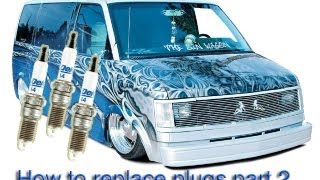
Used OEM Parts in Stock


New Aftermarket Parts Available


The information in this article is provided for general reference and educational purposes only. Vehicle specifications, procedures, and part compatibility can vary by production date, trim level, and region. Always consult your vehicle's factory service manual and verify part numbers before purchasing or performing repairs. Safety-critical components such as airbags, seat belts, and braking systems should be installed by a qualified professional.
- Chevrolet ASTRO:
- 🎬 Helpful Videos
- 🛍️ Shop This Part
- What's Unique About the 2001-2005 Chevrolet ASTRO
- Diagnostic Flowchart
- Symptoms You May Notice
- Most Likely Causes
- Rare But Worth Checking
- Diagnosis Steps
- Parts You'll Likely Need
- Related Codes That Often Appear With This One
- Technical Service Bulletins (TSBs) & Recalls
- Platform-Specific Known Issues
- Mechanic-Grade Diagnostic Values
- Hidden / Shadow Codes Worth Checking
- Scan Tool Commands That Help
- Wiring & Ground Locations
- Real Owner Repair Stories
- OEM Part Supersession History
- Model Year Variations Within This Range
- 🎟️ Get 5% Off