

P0308 on 2010-2016 Cadillac SRX: An Impossible Code? Misfire Guide
A P0308 code is impossible on a 2010-2016 Cadillac SRX, as it only has a V6 engine with six cylinders. You likely have a different misfire code (P0300-P0306). The most common causes for a real misfire are a failed ignition coil or a worn spark plug, which can cost between $50 and $150 to fix yourself. Carbon buildup is also a major issue on these engines.
- P0308 is an impossible code for a 2010-2016 SRX. Double-check the code; your problem is likely a P0300 or P0301-P0306.
- The most probable cause of a misfire is a bad ignition coil or spark plug. Swapping the coil to another cylinder is the easiest way to diagnose a bad coil.
- Accessing the rear three cylinders (1, 3, 5) requires removing the upper intake manifold, making the job more complex. If you are doing this, it's wise to replace all three rear coils, plugs, and the intake gasket at once.
- If new plugs and coils don't fix the misfire, especially on a 3.6L engine, the next most likely cause is carbon buildup on the intake valves, which requires professional cleaning.
What's Unique About the 2010-2016 Cadillac SRX

The key issue for this platform is the logical impossibility of the code itself. The second-generation SRX (2010-2016) never offered a V8 engine, making a cylinder 8 misfire a factual anomaly. The real misfire story for these vehicles, particularly the 2012-2016 models with the 3.6L LFX direct-injection V6, often involves heavy carbon buildup on the intake valves. This issue can cause persistent misfires that owners may struggle to diagnose after replacing the more common culprits like spark plugs and ignition coils. Another significant known issue is premature timing chain stretching.
Diagnostic Flowchart
Tap your situation to follow the diagnostic path that matches what you're seeing on this vehicle.
Symptoms You May Notice
- Flashing or solid Check Engine Light
- Rough or shaking idle
- Engine hesitation or stumbling during acceleration
- Noticeable loss of engine power
- Reduced fuel economy
- A tapping or misfire sound from the engine
- Assuming the code P0308 is valid and searching for a non-existent 8th cylinder.
- Replacing spark plugs and ignition coils repeatedly when the root cause is heavy carbon buildup on the intake valves, a common issue on GDI engines.
- Replacing a catalytic converter for a P0420 or P0430 code that appears alongside a misfire code, without first fixing the misfire that is causing the converter to fail.
Most Likely Causes


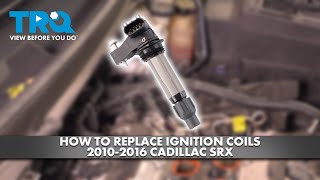
- Failed Ignition Coil 🔴 High Probability Ignition coils are a common failure item on most modern engines, including the GM 3.0L and 3.6L V6s, leading to misfires.
How to confirm: Swap the ignition coil from the misfiring cylinder (e.g., P0304 from cylinder 4) with a coil from a known good cylinder (e.g., cylinder 2). Clear the codes and drive. If the code changes to P0302, the coil is faulty.
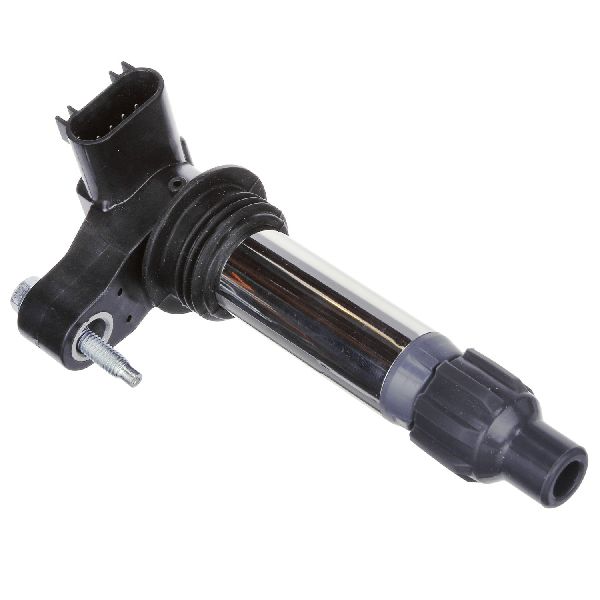
Typical fix: Replace the failed ignition coil. It is often recommended to replace all six coils and spark plugs at the same time, especially on the V6 where the rear three (against the firewall) are difficult to access.
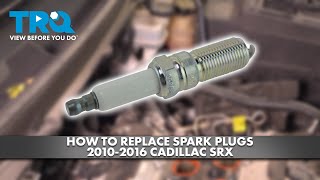
Est. part cost: $30-$80 per coil - Worn or Fouled Spark Plugs 🔴 High Probability Spark plugs are a routine maintenance item. Original equipment iridium plugs have a long life (around 100,000 miles), but can fail sooner, causing a weak or nonexistent spark.
How to confirm: After confirming the ignition coil is good, remove the spark plug from the misfiring cylinder. Inspect it for wear, oil fouling, or damage to the electrode. A plug in a misfiring cylinder will often be dirty or smell of fuel.
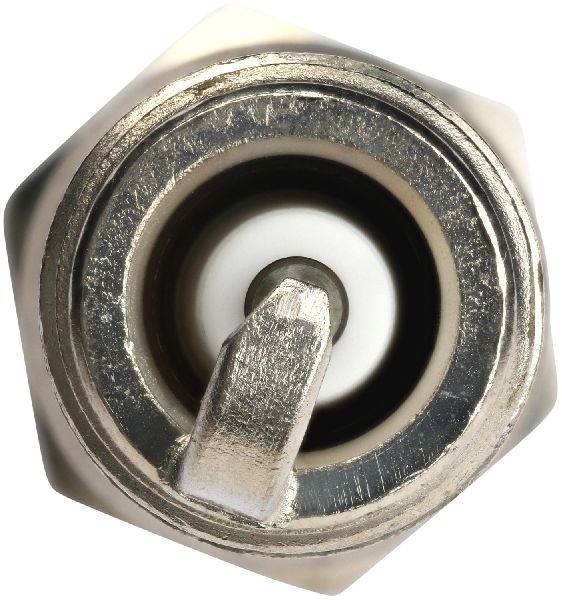
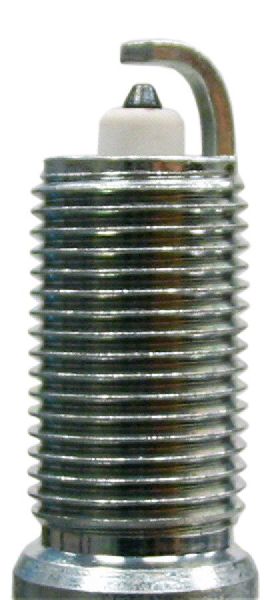
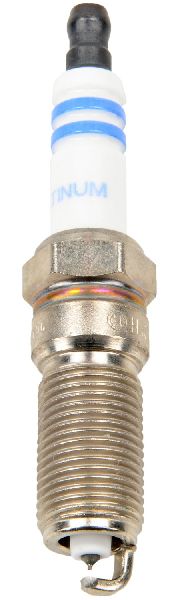
Typical fix: Replace the spark plug. It is best practice to replace all six spark plugs as a set to ensure even performance. The OEM recommended plug for the LFX engine is often the ACDelco 41-109 Iridium plug.
Est. part cost: $10-$25 per plug - Carbon Buildup on Intake Valves 🟡 Medium Probability The 3.0L LF1 and especially the 3.6L LFX are direct-injection (GDI) engines. Fuel is injected directly into the cylinder, so it never washes over the intake valves. Oil vapor from the PCV system can bake onto the valves, restricting airflow and causing misfires, particularly on cold starts.
How to confirm: This is difficult to confirm without special tools. After ruling out ignition and fuel injector issues, a technician can use a borescope to visually inspect the intake valves for heavy carbon deposits. A cold-start misfire that disappears as the engine warms is a classic symptom.
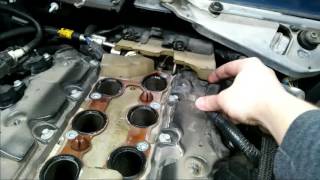
Typical fix: The intake manifold must be removed and the valves cleaned manually, often through a process called walnut blasting. Chemical cleaners (like CRC GDI Valve Cleaner or Seafoam) sprayed into the intake can be used as a preventative measure or for light deposits, but are often less effective for heavy buildup. 🎬 See this quick 10-minute intake valve cleaning demonstration.
Est. part cost: $20-$50 for cleaners, or $400-$800+ for a professional walnut blasting service. - Faulty Fuel Injector ⚪ Low Probability A clogged or failed fuel injector can prevent the correct amount of fuel from reaching the cylinder, leading to a lean misfire.
How to confirm: After ruling out spark-related issues, a technician can test the fuel injector's resistance and spray pattern. Swapping injectors between cylinders is also a valid diagnostic step, though more labor-intensive than swapping coils.
Typical fix: Replace the faulty fuel injector.
Est. part cost: $50-$150
Rare But Worth Checking
- Stretched Timing Chain: The GM 3.6L V6 (both LLT and LFX versions) has a well-documented history of premature timing chain stretching. A stretched chain causes camshaft/crankshaft correlation codes (like P0016, P0017) and can lead to misfires across multiple cylinders. This is a significant and expensive repair, often costing between $2,300 and $3,000.
- Intake Manifold Gasket Leak: A vacuum leak from a failed intake manifold gasket can lean out the air/fuel mixture and cause misfires. This may be accompanied by a hissing sound from the engine bay and is sometimes resolved by installing an aftermarket intake manifold spacer.
- Low Engine Compression: A mechanical engine problem, such as a bad valve, worn piston rings, or even a damaged camshaft lobe can cause a loss of compression in a cylinder, resulting in a persistent misfire. A compression test is needed to diagnose this.
Diagnosis Steps
- First, re-scan the vehicle's computer, preferably with a different, high-quality OBD-II scanner, to verify the trouble code. Confirm that the code is not actually P0300, P0301, P0302, P0303, P0304, P0305, or P0306.
- Assuming a valid misfire code is found (e.g., P0305 for cylinder 5), identify the misfiring cylinder. For the transverse-mounted V6 in the SRX, the rear bank (against the firewall) contains cylinders 1-3-5 and the front bank (near the radiator) contains cylinders 2-4-6, arranged from passenger side to driver side.
- Swap the ignition coil from the misfiring cylinder with one from an easily accessible, non-misfiring cylinder.
- Clear the codes and start the engine. Let it run and see if the misfire code returns and has moved to the new cylinder. If it has, the ignition coil is faulty and needs replacement.
- If the misfire code stays on the original cylinder, repeat the swapping process with the spark plug.
- If the coil and plug are confirmed to be good, the next step is to investigate the fuel injector. This may require professional assistance.
- If ignition and fuel delivery components are ruled out, investigate the possibility of carbon buildup on the intake valves, especially on the 3.6L LFX engine. This requires a borescope inspection.
- If no cause is found, check for vacuum leaks around the intake manifold. If misfires are accompanied by timing-related codes (P0008, P0016, P0017), investigate the timing chains for stretch.
- As a final step for a persistent single-cylinder misfire, a mechanical compression test should be performed to check for internal engine problems.
Parts You'll Likely Need

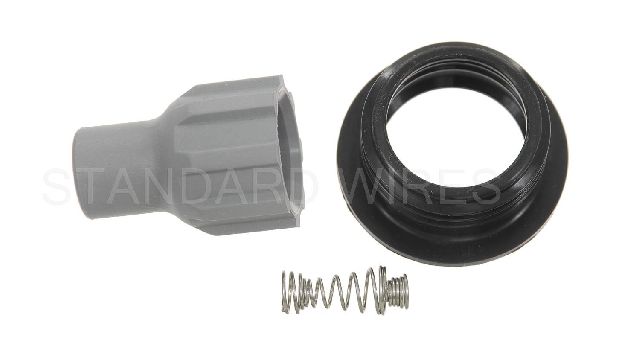
- Ignition Coil
(OEM #12632479)— This is the most frequent cause of a single-cylinder misfire on the SRX V6 engines. This part number supersedes older versions like 12618542.
Trusted brands: ACDelco, Delphi, NGK, Denso - Iridium Spark Plug
(OEM #ACDelco 41-109 (GM #12622561))— Worn spark plugs are a primary cause of misfires. Using the correct OEM-spec iridium plug is crucial for performance and longevity in GDI engines.
Trusted brands: ACDelco, NGK, Denso - Intake Valve Cleaning Service — For persistent misfires on the GDI engines (LF1, LFX) not solved by ignition parts, carbon buildup is a likely culprit requiring professional cleaning.
Related Codes That Often Appear With This One
- P0300 — If multiple cylinders are misfiring randomly due to a common cause like a vacuum leak, fuel pressure issue, or stretched timing chain, P0300 will often be stored alongside specific cylinder codes.
- P0301-P0306 — These are the actual, valid misfire codes for the SRX's V6 engine. The user's P0308 is likely a misreading or scanner error for one of these codes.
- P0016, P0017, P0008 — These codes indicate a crankshaft/camshaft position correlation error, often pointing to a stretched timing chain, which is a known issue that can also cause misfires on this engine.
Technical Service Bulletins (TSBs) & Recalls
- PIP5628G: Mentions diagnosing misfire codes P0300-P0308, indicating this is a general GM bulletin not specific to the V6-only SRX.
- PIP5029 (A, B, C): Addresses engine misfires (P0300-P0306) caused by major carbon deposits on the intake and exhaust valves of direct-injected engines, including the 3.0L and 3.6L in the SRX.
Platform-Specific Known Issues
- The 2010-2016 Cadillac SRX was only equipped with V6 engines, making a P0308 (Cylinder 8 Misfire) code impossible. The code is an error.
- Direct injection engines in this vehicle (3.0L LF1 and 3.6L LFX) are susceptible to heavy carbon deposits on intake valves, which is a common cause of misfires not fixed by new plugs or coils. GM has issued a technical service bulletin (PIP5029) regarding this issue.
- Some 3.6L V6 engines have experienced premature timing chain stretching, which can cause misfires and catastrophic engine damage if not addressed.
Mechanic-Grade Diagnostic Values
- Ignition Coil Primary Winding Resistance — expected: 0.4 to 2.0 ohms. Failure: A reading outside this range indicates a faulty coil.
- Ignition Coil Secondary Winding Resistance — expected: 6,000 to 10,000 ohms (6k-10k Ω). Failure: A reading outside this range suggests the coil needs replacement.
- Mode $06 Misfire Counts — expected: Near zero for all cylinders during the current and last 10 driving cycles.. Failure: A high count for a specific cylinder (e.g., TID $A2 for Cylinder 1) pinpoints the misfiring cylinder even without a specific P030x code.
Hidden / Shadow Codes Worth Checking
- Mode $06, TID $A2-$A7: These are not traditional DTCs but Test IDs within Mode $06 data that store misfire counts for each cylinder (A2 for Cyl 1, A3 for Cyl 2, etc.). A technician can view these raw counts to identify intermittent or low-frequency misfires before they are severe enough to trigger a P030x code. (see via A professional scan tool with Mode $06 capability is required. The data is often presented as 'Misfire Cylinder X Data'.)
Scan Tool Commands That Help
- GDS2 (GM Techline Connect): Cylinder Power Balance Test — This is a crucial diagnostic step when a misfire is felt but the specific cylinder is unknown. The tool sequentially disables each fuel injector and measures the RPM drop. A cylinder with little to no RPM drop is the one not contributing power, thus identifying the source of the misfire. This is safer than disabling ignition coils, which can send raw fuel to the catalytic converter.
- GDS2 (GM Techline Connect): Crankshaft Position Variation Learn — This procedure is mandatory after replacing the crankshaft position sensor, the ECM, or performing major engine mechanical repairs. The ECM learns the minor variations of the crankshaft reluctor wheel to accurately detect misfires. Failure to perform this relearn can cause the ECM to falsely detect misfires and set P0300-P0306 codes.
- GDS2 (GM Techline Connect): Injector Test — This function allows a technician to check fuel pressure drop and balance rates when activating a specific injector, helping to diagnose a clogged or failing fuel injector after ignition issues have been ruled out.
Wiring & Ground Locations
- G102 — Located at the left rear of the engine.. This is the primary ground point for the ignition coils. A loose or corroded G102 can cause weak spark or intermittent misfires across multiple cylinders, often leading to a P0300 code.
- G103 — Located on the cowl in the left rear of the engine compartment, above the brake booster.. This ground serves the Engine Control Module (ECM/BCM), Instrument Panel Cluster (IPC), and Data Link Connector (DLC). A poor connection here can cause a wide range of bizarre electronic issues, including false sensor readings and incorrect trouble codes.
- ECM Connector Pins — At the Engine Control Module (ECM).. When diagnosing a persistent misfire on one cylinder after swapping components, a technician would test for correct voltage and signal at the ECM pins for the specific ignition coil and fuel injector circuits to rule out a wiring break or a faulty ECM driver.
Real Owner Repair Stories
- TOPDON Community User (2012 Cadillac SRX, 145,325 km) — Check Engine Light on, intermittent engine shaking.
❌ Tried (didn't work) A road test did not initially replicate the shaking.
✅ What actually fixed it The vehicle had a P0304 (Cylinder 4 Misfire) and an air quality sensor fault. The misfire was resolved by replacing the aged spark plug. The air quality sensor fault was traced to loose pins in its electrical connector; handling the plug resolved the issue.
OEM Part Supersession History
12590990, 12610626, 12618542→12632479— Standard design evolution for improved durability and protection against internal shorts and dielectric breakdown.Early GM 3.6L Timing Chain Kits (Pre-2012)→Updated kits (e.g., Cloyes 9-0753S or newer OEM versions)— Original timing chains on LY7 and early LLT engines were prone to premature stretching. Newer kits feature improved chain link design and materials for longer life.
Heads up: When replacing chains on an early engine, it is critical to use the complete, updated kit including chains, guides, and tensioners, not just individual parts.
Model Year Variations Within This Range
- 2010-2011: Primarily used the 3.0L LF1 V6. Some early 3.6L LLT engines may also be present, which were known for timing chain stretch issues.
- 2012-2016: Switched to the improved 3.6L LFX V6 as the standard and only engine. The LFX featured a composite intake manifold, integrated exhaust manifold heads, and lighter internal components, shaving 20 lbs off the engine weight. While timing chain issues were reduced compared to the LLT, they can still occur, and carbon buildup on intake valves remains a primary concern for this GDI engine.
Helpful Videos

Used OEM Parts in Stock

New Aftermarket Parts Available

The information in this article is provided for general reference and educational purposes only. Vehicle specifications, procedures, and part compatibility can vary by production date, trim level, and region. Always consult your vehicle's factory service manual and verify part numbers before purchasing or performing repairs. Safety-critical components such as airbags, seat belts, and braking systems should be installed by a qualified professional.
- Cadillac SRX:
- 🎬 Helpful Videos
- 🛍️ Shop This Part
- What's Unique About the 2010-2016 Cadillac SRX
- Diagnostic Flowchart
- Symptoms You May Notice
- Most Likely Causes
- Rare But Worth Checking
- Diagnosis Steps
- Parts You'll Likely Need
- Related Codes That Often Appear With This One
- Technical Service Bulletins (TSBs) & Recalls
- Platform-Specific Known Issues
- Mechanic-Grade Diagnostic Values
- Hidden / Shadow Codes Worth Checking
- Scan Tool Commands That Help
- Wiring & Ground Locations
- Real Owner Repair Stories
- OEM Part Supersession History
- Model Year Variations Within This Range
- 🎟️ Get 5% Off