

P0308 on 2003-2010 Cadillac CTS: Cylinder 8 Misfire Causes and Fixes
P0308 on a 2003-2010 Cadillac CTS indicates a misfire in cylinder 8, which is only possible on V8-equipped CTS-V models. The most common causes are a failed ignition coil or a worn spark plug. Due to cylinder 8's location at the rear passenger side, heat can contribute to premature failure of the coil or spark plug wire boot. Replacing a single coil and plug is affordable, typically costing under $100 for parts.
- P0308 is specific to V8-powered Cadillac CTS-V models from 2003-2010.
- The most likely culprits are a bad ignition coil or a worn-out spark plug for cylinder 8.
- A simple diagnostic step is to swap the ignition coil from cylinder 8 to another cylinder and see if the misfire code follows.
- Driving with a flashing check engine light is risky, as it can lead to costly damage to the catalytic converter.
- Cylinder 8 is the rearmost cylinder on the passenger side of the engine.
What's Unique About the 2003-2010 Cadillac CTS
The P0308 code is only applicable to the high-performance CTS-V models within this year range, as they were the only ones equipped with a V8 engine. Standard CTS models used V6 engines and cannot generate this specific code. The first generation CTS-V (2004-2007) used 5.7L LS6 and 6.0L LS2 V8s, while the second generation (2009-2010) used a 6.2L LSA supercharged V8. 🎬 Watch: A deep dive into the Cadillac CTS-V history and engines. On these GM V8 engines, cylinder 8 is located at the rear of the engine on the passenger's side, a location that can sometimes be prone to higher heat and tighter access, potentially leading to melted spark plug wire boots or heat-stressed ignition coils.
Diagnostic Flowchart
Tap your situation to follow the diagnostic path that matches what you're seeing on this vehicle.
Generation note: This range covers two Cadillac CTS generations. The first generation (2003-2007) and the second generation (2008-2010). The P0308 code only applies to the V8-powered CTS-V models in both generations. First-gen CTS-V had a 5.7L LS6 (2004-2005) or 6.0L LS2 V8 (2006-2007). Second-gen CTS-V (starting in 2009) had a 6.2L LSA supercharged V8. While the causes are similar, part numbers for ignition components will differ between these engines. For example, swapping from an LS6 to an LS2 requires harness adapters for the cam and crank sensors.
Symptoms You May Notice
- Check Engine Light is on or flashing
- Rough or shaky engine idle
- Noticeable loss of power and sluggish acceleration
- Engine hesitation or stumbling
- Increased fuel consumption
- Smell of raw fuel from the exhaust
- Popping or backfiring sounds from the exhaust
- Replacing the oxygen sensor, as a misfire can sometimes affect O2 sensor readings.
- Replacing the catalytic converter when it has only been damaged as a result of the misfire, not the cause of it.
Most Likely Causes
- Failed Ignition Coil 🔴 High Probability Heat and vibration are primary enemies of ignition coils. Cylinder 8's position at the rear of the engine bay, with less airflow, can contribute to heat-related failures over the life of the vehicle. These are coil-on-plug designs, but the principle remains the same.
How to confirm: Swap the ignition coil from cylinder 8 with another cylinder (e.g., cylinder 6 on the same bank). Clear the codes and drive the vehicle. If the misfire code changes to the cylinder you moved the coil to (e.g., P0306), the coil is faulty. This is the most common and effective DIY diagnostic step.
Typical fix: Replace the failed ignition coil. It is often recommended to replace the corresponding spark plug at the same time. Using a small amount of dielectric grease in the boot is good practice.
Est. part cost: $40-$90 - Worn or Fouled Spark Plug 🔴 High Probability
How to confirm: Remove the spark plug from cylinder 8 and inspect it. Look for a worn electrode, heavy carbon deposits, oil fouling, or cracks in the porcelain insulator. Compare it to a plug from a known good cylinder. A worn plug is a very common cause.
Typical fix: Replace the spark plug. It's best practice to replace all 8 spark plugs if they are near the end of their 100,000-mile service life. Always use a torque wrench for installation.
Est. part cost: $8-$25 per plug - Damaged Spark Plug Wire/Boot 🟡 Medium Probability The spark plug wire boot connecting the coil to the plug on cylinder 8 is close to the exhaust manifold. Over time, the boot can become brittle, cracked, or even melt from the heat, causing the spark to arc to the cylinder head instead of the plug. A GM Technical Service Bulletin (PIP5159B) also notes that the wire can become loose at the coil if a retaining C-clip is missing.
How to confirm: Visually inspect the spark plug wire and boot for any cracks, burn marks, or physical contact with the exhaust manifold. With the engine running in a dark environment, you may be able to see the spark arcing from the boot to the cylinder head.
Typical fix: Replace the spark plug wire/boot. If replacing, consider using wires with high-temperature silicone boots and ensure it is routed correctly to maximize clearance from the exhaust.
Est. part cost: $15-$40 - Faulty Fuel Injector 🟡 Medium Probability
How to confirm: A mechanic can perform a fuel injector balance test. A DIY method is to listen to the injector with a mechanic's stethoscope; it should have a consistent clicking sound. You can also check the injector's resistance with a multimeter or swap it with another cylinder (a more involved job) to see if the misfire follows.
Typical fix: Replace the faulty fuel injector. It's recommended to replace the injector O-rings as well.
Est. part cost: $70-$150
Rare But Worth Checking
- Low Cylinder Compression: This indicates a more serious internal engine problem, such as a worn piston ring, a bad valve, or a leaking head gasket. A compression test is needed to confirm this.
- Vacuum Leak: A vacuum leak near the intake manifold runner for cylinder 8 can lean out the air/fuel mixture and cause a misfire. This would typically be accompanied by other lean codes or a rough idle affecting more than one cylinder.
- Broken Valve Spring: LS-family engines can be susceptible to valve spring failure, which will cause a persistent misfire on one cylinder. This may be accompanied by a ticking noise. If the spring breaks, the valve may not close properly, leading to a loss of compression. In a best-case scenario, the valve does not drop into the cylinder.
Diagnosis Steps
- Verify the code with an OBD-II scanner. Note if the Check Engine Light is steady or flashing. A flashing light indicates a severe misfire requiring immediate attention.
- Identify cylinder 8. On GM V8 engines like those in the CTS-V, it is the rearmost cylinder on the passenger's side (Bank 2).
- Perform a visual inspection. Look at the ignition coil, spark plug wire, and their connectors for cylinder 8. Check for obvious damage, corrosion, or a melted/damaged plug boot near the exhaust manifold.
- Swap the ignition coil from cylinder 8 with an adjacent one (like cylinder 6). Clear the codes, run the engine, and see if the misfire code moves to the new cylinder (P0306). If it does, the coil is bad.
- If the misfire remains on cylinder 8, swap the spark plug next. Inspect the old plug for wear, fouling, or damage. If the misfire stops or moves, the plug was the issue.
- If the coil and plug are good, inspect the spark plug wire. Check for looseness at the coil, as noted in TSB PIP5159B, and for heat damage at the plug end.
- If ignition components check out, investigate the fuel injector. Listen for a steady clicking sound with a stethoscope. Consider swapping the injector with another cylinder if you are comfortable with the procedure.
- If the misfire persists, a mechanical issue is possible. Perform a cylinder compression test to check for issues like a broken valve spring, bad valve, or worn piston rings.
Parts You'll Likely Need
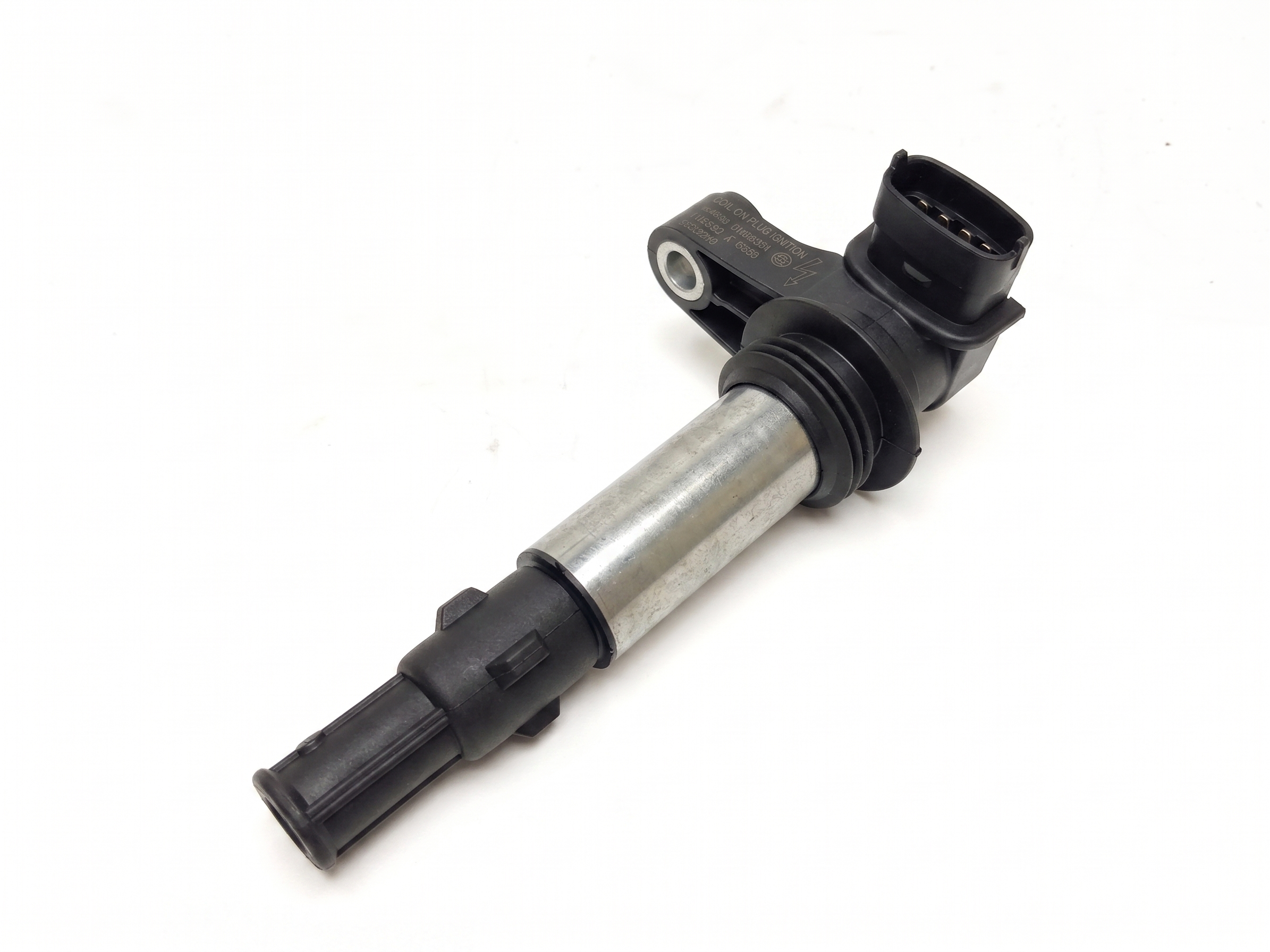
- Ignition Coil
(OEM #ACDelco D510C (also cross-references to 12611424, fits many Gen IV V8s including LS2 and LSA))— This is one of the most frequent failure points for a single-cylinder misfire due to constant heat and electrical stress.
Trusted brands: ACDelco, Delphi, NGK
OEM price range: $60-$110
Aftermarket price range: $40-$90 - Spark Plug
(OEM #ACDelco 41-110 (Iridium, common for LS2/LSA, check specific application))— Spark plugs are a routine maintenance item and a common cause of misfires as their electrodes wear down over time. GM vehicles are known to be sensitive to the brand of spark plug.
Trusted brands: ACDelco, NGK
OEM price range: $12-$25
Aftermarket price range: $8-$20 - Fuel Injector — Injectors can become clogged or fail electrically, preventing the correct amount of fuel from reaching the cylinder.
Trusted brands: ACDelco, Bosch
OEM price range: $120-$200
Aftermarket price range: $70-$150
Related Codes That Often Appear With This One
- P0300 — If the misfire is intermittent or starting to affect other cylinders, a P0300 (Random/Multiple Cylinder Misfire) code may appear alongside P0308.
- P0358 — This code indicates a malfunction in the ignition coil primary or secondary circuit for cylinder 8. It often appears with P0308 and strongly points to a bad coil or a wiring issue to the coil.
Technical Service Bulletins (TSBs) & Recalls
- PIP5628G: Communicates information needed for diagnosing misfire codes P0300-P0308 on 2010 models, indicating this is a recognized issue. It provides a diagnostic template for technicians to follow when contacting GM's Technical Assistance Center (TAC), emphasizing checks of fuel trim, injector balance, and spark plug inspection.
- 19-NA-219: Discusses various engine noises and misfires (P0300-P0308) and points to potential causes like worn cam lobes, sticking valves, or broken valve springs if standard diagnostics fail.
- PIP5159B: Addresses engine misfires (P0300-P0308) that may be caused by a loose spark plug wire at the ignition coil, specifically due to a missing 'C' clip on the wire end.
Platform-Specific Known Issues
- Heat damage to the cylinder 8 spark plug wire boot is a known issue due to its proximity to the exhaust manifold. Owners often install thermal protection sleeves on the new wire as a preventative measure.
- Access to cylinder 8 can be tight against the firewall, making it slightly more difficult to work on than the front cylinders.
- A known issue, documented in TSB PIP5159B, involves the spark plug wire becoming disconnected from the ignition coil due to a missing retaining clip.
Mechanic-Grade Diagnostic Values
- Fuel Pressure (Key On, Engine Off) — expected: 380-410 kPa (55-60 psi) for both LS2 and LSA engines.. Failure: Pressure below this range indicates a weak fuel pump or leak. Pressure above indicates a faulty regulator.
- Fuel Injector Resistance — expected: Approx. 11.0 - 14.0 Ohms (High Impedance).. Failure: A reading of 'OL' (Open Loop) or infinite resistance means the injector's coil is broken. A reading significantly lower than others indicates a short. All injectors should be within 0.5 Ohms of each other.
- Ignition Coil Primary Resistance (D510C) — expected: Approx. 0.4 - 2.0 Ohms.. Failure: A reading outside this range suggests a faulty primary winding.
- Ignition Coil Secondary Resistance (D510C) — expected: Approx. 6,000 - 13,000 Ohms (6kΩ - 13kΩ).. Failure: A reading outside this range, or 'OL', suggests a faulty secondary winding.
- Cylinder Compression — expected: Approx. 120-185 PSI, with all cylinders being relatively consistent.. Failure: A reading significantly lower than other cylinders (e.g., below 120 PSI) points to a mechanical issue like worn rings, a bad valve, or a failed head gasket.
Hidden / Shadow Codes Worth Checking
- Mode 6, Test ID $A2-$A9: Mode 6 data provides access to non-continuous monitor test results. For misfires, a technician can view the raw misfire count for each individual cylinder (Test ID $A8 is for Cylinder 8) over the current and last 10 driving cycles. This allows for the identification of an intermittent or low-frequency misfire that hasn't yet met the threshold to trigger a P0308 trouble code. (see via A professional-grade OBD-II scan tool with Mode 6 capability is required.)
Scan Tool Commands That Help
- GDS2 / Tech2 / Professional Scan Tool: Cylinder Power Balance Test — This is a highly effective test to confirm a weak cylinder when the cause is unclear. The tool deactivates each cylinder one by one (by cutting fuel) and graphs the RPM drop. A healthy cylinder will cause a significant, consistent RPM drop. If disabling cylinder 8 causes little or no RPM drop, it confirms it was not contributing power, pointing to a fuel, spark, or compression issue on that cylinder.
- GDS2 / Professional Scan Tool: Fuel Injector Balance Test — This test is used to isolate a faulty fuel injector. The scan tool commands each injector to flow a specific amount of fuel and measures the corresponding drop in fuel rail pressure. If the pressure drop for cylinder 8 is significantly different from the others, the injector is likely clogged or failing.
- GDS2 / Tech2 / Professional Scan Tool: Fuel Pump Relay Command — When diagnosing a potential fuel delivery issue, this command allows the technician to turn the fuel pump on without the engine running. This is used to safely check for the correct fuel pressure (55-60 psi) at the rail and to perform leak-down tests.
Wiring & Ground Locations
- G130 — Located on the rear of the right (passenger side) cylinder head.. This is a critical ground point for engine components on the passenger side bank. A loose or corroded G130 could cause erratic behavior for the ignition coil or fuel injector on cylinder 8, which is on that same bank. Checking this ground is a crucial step if electrical issues are suspected.
- G102 — Located on the right front of the engine compartment in the 2009 CTS. Some other GM platforms use G102 as the coil ground at the rear of the engine.. Grounds are a common source of difficult-to-diagnose electrical faults. While G130 is more specific to the cylinder bank, verifying all major engine and chassis grounds (like G102, G106, G131) is good practice when chasing an intermittent misfire.
- Ignition Coil Connector — On the cylinder 8 ignition coil.. The 4-pin connector provides 12V power, a control signal from the ECM, and two ground paths (ECU signal ground and chassis ground). Verifying battery voltage on the power pin (Key On) and checking for a pulsed ground signal on the control wire with a noid light or multimeter during cranking can confirm the ECM is commanding the coil to fire.
Real Owner Repair Stories
- GM Gen IV LS Engine owner video (2011 vehicle with a 6.2L L94 V8 (similar architecture to LS2/LSA)) — Dead miss, puffing sound from engine.
❌ Tried (didn't work) Swapping ignition coil from the misfiring cylinder (#2 in this case) to another cylinder (#5).
✅ What actually fixed it A compression test showed 0 PSI on the affected cylinder. Upon disassembly, a broken valve spring was found. The owner replaced all valve springs as a preventative measure, which resolved the misfire. - Fiesta ST Forum user (Ford Fiesta ST (Note: Different vehicle, but illustrates the failure mode)) — Intermittent misfires at idle and on cold starts, no Check Engine Light.
❌ Tried (didn't work) Checking spark plug gaps., Swapping to known-good OEM ignition coils., Using a fuel system cleaner (Techron).
✅ What actually fixed it The owner removed the intake manifold and found a 'mountain of carbon' on one of the intake valves. After manually cleaning the carbon off the valves with a pick and brake cleaner, the engine ran smoother and the misfires were completely gone. - CaddyInfo Cadillac Forum user (2011 CTS-V (LSA 6.2L V8)) — P0308 misfire immediately after washing the car.
✅ What actually fixed it The immediate suspicion from other forum members was water intrusion into the ignition coil connector for cylinder 8. The suggested fix was to disconnect the coil connector and thoroughly dry it out with compressed air.
"I Checked Everything" — The Actual Cause
- A common scenario where standard diagnostics fail is with internal mechanical issues. A smoke test for vacuum leaks will come back clean, and swapping ignition/fuel components will not resolve the misfire. The actual cause may be a broken valve spring or severe carbon buildup on the intake valves, which can only be found with a compression test, leak-down test, or a borescope inspection of the valves.
OEM Part Supersession History
12570616→12611424 (ACDelco D510C)— Design update/consolidation for various GM V8 applications.
Heads up: The coil design changed from a '1st Design' (often marked 12570616) to a '2nd Design'. While D510C replaces the first design, a different part number (12699382) may be needed for later applications that used the second design from the factory. Always verify by visual comparison or VIN.
Model Year Variations Within This Range
- 2004-2007 (Gen 1 CTS-V): These models used the 5.7L LS6 or 6.0L LS2 V8. Diagnosis is slightly simpler as there is no supercharger system. Fuel pressure is regulated to a static 58-60 PSI.
- 2009-2010 (Gen 2 CTS-V): These models use the 6.2L LSA supercharged V8. While the low-side fuel pressure is similar (55-60 psi), the system is more complex and boost-referenced. Issues with the supercharger, intercooler, or boost control could potentially introduce unique misfire scenarios, though they would typically affect more than one cylinder.
Helpful Videos
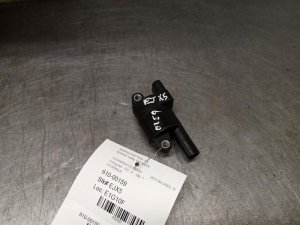
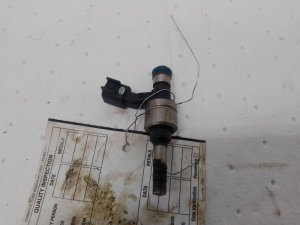
Used OEM Parts in Stock


New Aftermarket Parts Available


The information in this article is provided for general reference and educational purposes only. Vehicle specifications, procedures, and part compatibility can vary by production date, trim level, and region. Always consult your vehicle's factory service manual and verify part numbers before purchasing or performing repairs. Safety-critical components such as airbags, seat belts, and braking systems should be installed by a qualified professional.
- Cadillac CTS:
- 🎬 Helpful Videos
- 🛍️ Shop This Part
- What's Unique About the 2003-2010 Cadillac CTS
- Diagnostic Flowchart
- Symptoms You May Notice
- Most Likely Causes
- Rare But Worth Checking
- Diagnosis Steps
- Parts You'll Likely Need
- Related Codes That Often Appear With This One
- Technical Service Bulletins (TSBs) & Recalls
- Platform-Specific Known Issues
- Mechanic-Grade Diagnostic Values
- Hidden / Shadow Codes Worth Checking
- Scan Tool Commands That Help
- Wiring & Ground Locations
- Real Owner Repair Stories
- "I Checked Everything" — The Actual Cause
- OEM Part Supersession History
- Model Year Variations Within This Range
- 🎟️ Get 5% Off