

P0308 on 2020-2022 Cadillac CT5: Cylinder 8 Misfire Causes and Fixes for the V-Blackwing
P0308 on a Cadillac CT5 indicates a cylinder 8 misfire, which is only possible on the CT5-V Blackwing model with the 6.2L Supercharged V8. The most common cause is a faulty ignition coil or a worn spark plug. A DIY fix for these parts costs between $50 and $200. Ignoring the code can lead to catalytic converter damage or, in rare, documented cases on this platform, severe engine damage.
- P0308 on a CT5 is specific to the V8-powered CT5-V Blackwing model.
- The most probable causes are a bad ignition coil or spark plug on cylinder 8 (passenger side, rearmost cylinder).
- Always use the 'component swap' method to diagnose a bad coil before buying parts.
- If the check engine light is flashing, stop driving immediately to prevent catastrophic damage to the catalytic converter.
- While rare, severe engine damage has been documented on this platform originating from a misfire, so address this code promptly.
What's Unique About the 2020-2022 Cadillac CT5
This code is exclusive to the high-performance CT5-V Blackwing, as it's the only model in the 2020-2022 CT5 lineup with a V8 engine. The 6.2L LT4 is a supercharged, high-output engine, placing greater stress on ignition and fuel components. While most misfires are due to simple wear items, there are multiple documented cases of severe engine failures on this platform that began as a misfire, highlighting the importance of prompt diagnosis. Furthermore, a GM Technical Service Bulletin (TSB PIP5628G) details a specific, complex diagnostic procedure for technicians to follow when dealing with misfires, which may require consultation with GM's Technical Assistance Center (TAC).
Diagnostic Flowchart
Tap your situation to follow the diagnostic path that matches what you're seeing on this vehicle.
Symptoms You May Notice
- Solid or flashing Check Engine Light
- Rough or shaking idle
- Engine hesitation or stumbling during acceleration
- Noticeable loss of engine power
- Reduced fuel economy
- Smell of raw fuel from the exhaust
- Replacing only the spark plug when the ignition coil is the actual cause. The 'coil swap' diagnostic step is crucial to avoid this.
- Assuming a major mechanical failure before ruling out the simple and common ignition and fuel system components.
- Replacing a fuel injector without performing a proper flow test (AFIT) as recommended by GM TSBs for complex cases.
Most Likely Causes
- Failed Ignition Coil 🔴 High Probability The high-performance nature of the supercharged LT4 engine generates significant heat in the engine bay, which can shorten the life of electronic components like ignition coils. This is a common failure point for single-cylinder misfires.
How to confirm: Swap the ignition coil from cylinder 8 with another cylinder (e.g., cylinder 6). Clear the codes and run the engine. If the code changes to P0306, the coil is faulty. Cylinder 8 is the rearmost cylinder on the passenger side. A faulty coil may also trigger a P0358 code.
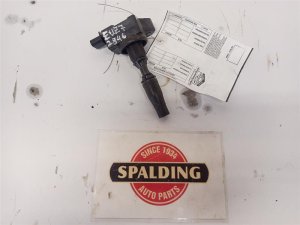
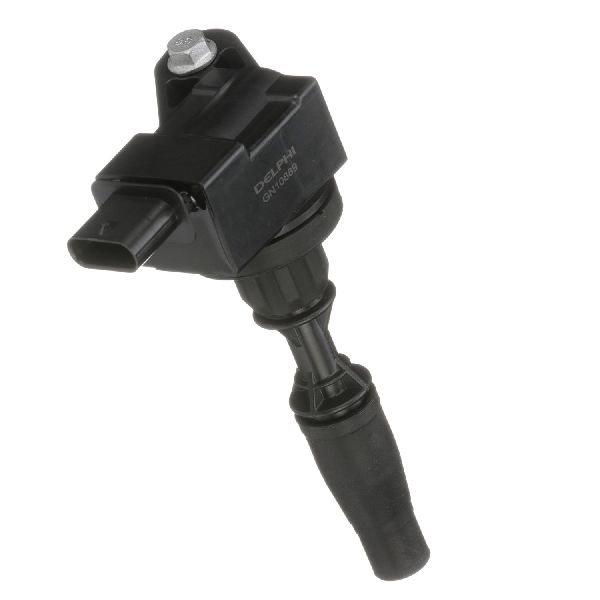
Typical fix: Replace the faulty ignition coil. It is often recommended to replace the corresponding spark plug at the same time. The OEM part is ACDelco 12726023.
Est. part cost: $95-$165 - Worn or Fouled Spark Plug 🔴 High Probability Supercharged engines run higher cylinder pressures and temperatures, which can reduce the lifespan of spark plugs compared to naturally aspirated engines. A failed spark plug has been cited in forum discussions as a precursor to more significant engine damage on this platform.
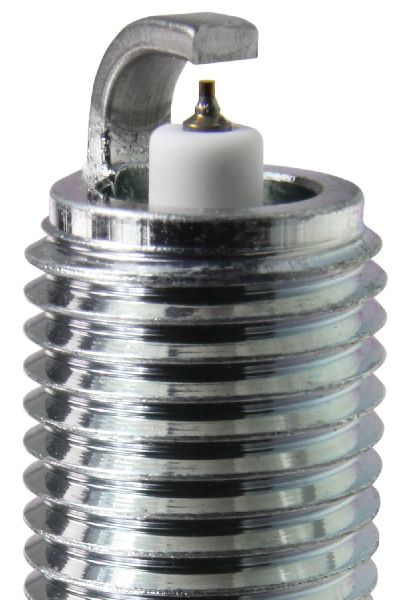
How to confirm: Remove the spark plug from cylinder 8 and inspect it. Look for a worn electrode, heavy carbon deposits, oil fouling, or cracks in the ceramic insulator. Compare it to a plug from a healthy cylinder.
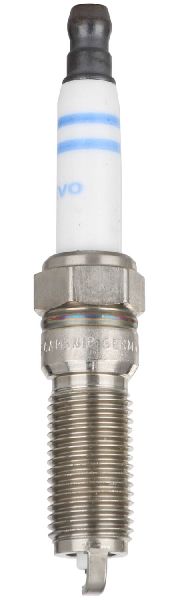
Typical fix: Replace the spark plug. It is best practice to replace all 8 spark plugs at the same time to ensure consistent performance. The OEM part is ACDelco Iridium 41-162, 🎬 See how to upgrade your LT4 with performance spark plugs which is designed for the LT4 engine.
Est. part cost: $15-$30 per plug - Faulty Fuel Injector 🟡 Medium Probability The LT4 engine uses a high-pressure direct injection system. While precise, these injectors can be susceptible to clogging from fuel deposits or electronic failure. On forums, owners have reported injector failure being diagnosed after initial misfire symptoms.
How to confirm: This is more difficult to diagnose for a DIYer. A professional can perform a fuel injector balance test using a GM GDS2 scan tool. A DIY method involves listening to the injector with a mechanic's stethoscope for a consistent clicking sound and comparing its volume and rhythm to a known good cylinder.
Typical fix: Replace the faulty fuel injector. This is a more involved job than a spark plug or coil. The OEM part is ACDelco 19420334.
Est. part cost: $75-$150
Rare But Worth Checking
- Internal Engine Failure: In a widely documented case from Car and Driver magazine, a persistent misfire on their long-term 2022 CT5-V Blackwing led to a catastrophic engine failure. The issue began after about 15 launches during performance testing, resulting in a severe misfire. A teardown by GM revealed damage to cylinder #6 (same bank as #8), including a scored cylinder wall and melted piston edge, though the root cause was never definitively identified. Other owners on forums have reported similar engine failures requiring replacement under warranty, some starting with misfires or ticking noises.
- Valvetrain Issues (Lifter/Camshaft): GM V8 engines with Active Fuel Management (AFM), like the LT4, are known to be susceptible to lifter failure. A collapsed or stuck AFM lifter can prevent a valve from opening correctly, causing a persistent misfire, often accompanied by a distinct ticking or chirping noise. 🎬 Watch: Understanding GM V8 lifter failure and how to fix it Multiple TSBs exist for other GM vehicles with related engines (e.g., 19-NA-219) that describe misfires (P0300-P0308) resulting from worn cam lobes or lifters. Forum members have also reported lifter issues being the ultimate diagnosis for their misfires.
- Broken Valve Spring: While less common than lifter issues, broken valve springs are a known failure mode on GM's 6.2L engine family (LT1, LT4). TSBs like #PIP5752A were issued for other models like the Camaro, noting that a batch of engines built between June and September 2020 had faulty valve springs that could lead to misfires. A broken spring would cause a persistent misfire and potentially a ticking noise.
Diagnosis Steps
- Read the code with an OBD-II scanner to confirm P0308 and check for any other codes, such as P0300 or P0358.
- Identify cylinder 8. On the 6.2L V8, 🎬 Watch: A quick guide to diagnosing a cylinder 8 misfire it is the rearmost cylinder on the passenger (right) side of the engine.
- Swap the ignition coil from cylinder 8 with another cylinder (e.g., cylinder 6, the third cylinder back on the passenger side). Clear the codes, drive the vehicle, and re-scan. If the code is now P0306, the ignition coil is bad.
- If the misfire remains on cylinder 8, swap the spark plug from cylinder 8 with another cylinder. Inspect the plug for wear, fouling, or damage. If the code follows the plug, the spark plug is bad.
- If the misfire still remains on cylinder 8, inspect the wiring and connector for the ignition coil and fuel injector on that cylinder for any damage, corrosion, or loose connections.
- Listen to the fuel injector on cylinder 8 with a mechanic's stethoscope. It should have a regular, audible clicking sound. Compare it to an adjacent injector.
- If the simple steps above do not identify the issue, more advanced diagnostics are needed, as outlined in GM TSB PIP5628G. This includes checking fuel trims, performing a fuel injector balance test with a scan tool, and potentially a compression/leak-down test to check for mechanical issues like a bad lifter or valve spring. At this point, professional diagnosis is strongly recommended.
Parts You'll Likely Need
- Ignition Coil
(OEM #12726023)— This is one of the most common failure points for a single-cylinder misfire, especially in high-heat, high-performance engine bays.
Trusted brands: ACDelco (GM Genuine), Delphi
OEM price range: $95-$165
Aftermarket price range: $50-$110 - Spark Plug
(OEM #ACDelco 41-162)— Spark plugs are a regular maintenance item and wear out over time, leading to a weak or inconsistent spark. They are the most likely cause alongside the ignition coil. Using the correct heat range plug is critical on a supercharged engine.
Trusted brands: ACDelco Iridium, NGK
OEM price range: $15-$30
Aftermarket price range: $10-$22 - Fuel Injector
(OEM #19420334)— A clogged or electronically failed fuel injector will prevent the correct amount of fuel from entering the cylinder, causing a misfire. This is less common than ignition issues but is the next logical component to fail.
Trusted brands: ACDelco (GM Genuine)
OEM price range: $100-$150
Aftermarket price range: $60-$100
Related Codes That Often Appear With This One
- P0300 — If the misfire is intermittent or affects multiple cylinders, a P0300 (Random Misfire) code may be stored alongside the specific P0308 code. This is common with fuel delivery or valvetrain issues.
- P0358 — This code indicates a fault in the ignition coil primary/secondary circuit for cylinder 8. If seen with P0308, it points very strongly to a problem with the ignition coil itself or its wiring/connector.
- P050D — This code for 'Cold Start Rough Idle' is often investigated alongside P0300-P0308 codes per GM TSB PIP5628G, suggesting they can be related issues, especially during cold starts.
Technical Service Bulletins (TSBs) & Recalls
- Bulletin #PIP5628G: Provides a diagnostic template for technicians to use when diagnosing P0300-P0308 and P050D, requiring specific data like fuel trims, injector balance results, and compression tests before contacting GM Technical Assistance.
- Bulletin #19-NA-219: While not specific to the CT5, this TSB for other GM V8s details how a worn cam lobe or lifter can cause a P0300-P0308 misfire with a corresponding tick or squeak noise.
Platform-Specific Known Issues
- A GM Technical Service Bulletin (PIP5628G) exists for engine misfires (P0300-P0308) on these models. It provides a detailed checklist for technicians when contacting GM's Technical Assistance Center, including saving freeze-frame data, performing fuel injector balance tests, and checking fuel trims, indicating that some misfire causes are complex and not immediately obvious.
Mechanic-Grade Diagnostic Values
- High-Pressure Fuel System (Direct Injection) — expected: Over 2,100 psi. Failure: Significantly lower pressure readings under load, which could cause a lean misfire.
- LT4 Fuel Injector Static Flow Rate — expected: 17.7 g/sec (or ~143 lbs/hr). Failure: A clogged or failing injector will have a lower flow rate, causing a lean condition in that cylinder. This requires specialized testing equipment.
- LT4 Fuel Injector Pulse Width (Specialist Data) — expected: Idle: ~0.8 ms @ 20 bar; WOT: ~6.0 ms @ 200 bar. Failure: Deviations from these values, viewable on an advanced scan tool, can indicate a fueling problem or a command issue from the ECM.
Hidden / Shadow Codes Worth Checking
- Cylinder-Specific Misfire Counters: This is not a DTC, but a live data parameter showing the number of misfire events per cylinder. A high count on cylinder 8 confirms the P0308 code and helps gauge severity in real-time. (see via GM's GDS2 (Global Diagnostic System 2) or other high-end professional scan tools. Standard OBD-II readers typically do not show this level of detail.)
Scan Tool Commands That Help
- GDS2 (GM Dealer Tool): Active Fuel Injector Test (AFIT) — To test the electrical integrity and flow of the cylinder 8 fuel injector without removing it from the engine. This is a key step in professional diagnosis when a plug or coil swap doesn't solve the issue.
- GDS2 (GM Dealer Tool): Injector Balance Test — To compare the fuel delivery of cylinder 8's injector against the other cylinders. A significant drop in pressure or flow indicates a faulty injector.
Wiring & Ground Locations
- G102 (or equivalent) — Typically located at the rear of the engine block or cylinder head. One document for a similar GM architecture specifies the left rear of the engine for all 8 ignition coils.. A loose or corroded main ground for the ignition coil bank can cause a weak or intermittent spark on one or more cylinders, including cylinder 8, leading to a misfire that is difficult to diagnose.
- Cylinder 8 Ignition Coil Connector — On top of the valve cover, connected to the rearmost ignition coil on the passenger side of the engine.. The connector or its wiring can become brittle from engine heat, leading to a poor connection. The pins can be tested for power, ground, and the control signal from the ECM.
Real Owner Repair Stories
- Forum user report on ChevyTrucks.org (for related GM V8) (GM Truck with V8 engine) — Persistent P0308 misfire code.
❌ Tried (didn't work) Initial diagnostics focusing on ignition and fuel systems.
✅ What actually fixed it A coolant leak from a heater core quick-connect fitting on the firewall was dripping directly onto the cylinder 8 spark plug wire/boot, causing it to short out. Replacing the leaking fitting and the affected ignition wire resolved the misfire. - Professional diagnostic case (for related GM 6.2L engine) (2016 Cadillac Escalade with 6.2L V8) — P0308 misfire.
❌ Tried (didn't work) Spark plug and coil swap.
✅ What actually fixed it A cylinder leak-down test was performed, which revealed an internal coolant leak into the cylinder (wet, coolant-fouled spark plug). The root cause was a failed head gasket, which required major engine repair.
"I Checked Everything" — The Actual Cause
- In one documented case on a similar GM V8, a persistent P0308 was not caused by a vacuum leak (which a smoke test would find), but by an external coolant leak from a heater hose fitting that dripped onto the cylinder 8 ignition components, causing an electrical short.
OEM Part Supersession History
12621750, 12658183, 12674754, 12699383, 12708496→12726023— Part has been updated by GM over multiple revisions.
Heads up: When replacing a failed ignition coil, it is best to use the latest part number (12726023) for the most current design.12668396, 12683518, and others→19420334 (and others)— GM has used several part numbers for injectors with the same physical fitment but potentially different flow characteristics.
Heads up: It is critical to replace fuel injectors in a complete, flow-matched set of 8. Mixing and matching different part numbers, even if they physically fit, can cause fuel trim imbalances and persistent running issues.
Helpful Videos
Used OEM Parts in Stock


New Aftermarket Parts Available


The information in this article is provided for general reference and educational purposes only. Vehicle specifications, procedures, and part compatibility can vary by production date, trim level, and region. Always consult your vehicle's factory service manual and verify part numbers before purchasing or performing repairs. Safety-critical components such as airbags, seat belts, and braking systems should be installed by a qualified professional.
- Cadillac CT5:
- 🎬 Helpful Videos
- 🛍️ Shop This Part
- What's Unique About the 2020-2022 Cadillac CT5
- Diagnostic Flowchart
- Symptoms You May Notice
- Most Likely Causes
- Rare But Worth Checking
- Diagnosis Steps
- Parts You'll Likely Need
- Related Codes That Often Appear With This One
- Technical Service Bulletins (TSBs) & Recalls
- Platform-Specific Known Issues
- Mechanic-Grade Diagnostic Values
- Hidden / Shadow Codes Worth Checking
- Scan Tool Commands That Help
- Wiring & Ground Locations
- Real Owner Repair Stories
- "I Checked Everything" — The Actual Cause
- OEM Part Supersession History
- 🎟️ Get 5% Off