

P0308 on 2013-2019 Buick LaCrosse: Why This Code Is Impossible and What to Check Instead
The 2013-2019 Buick LaCrosse does not have 8 cylinders, so a P0308 code is not possible. If you have a misfire, you likely have a different code (P0300-P0306). The most common causes are a bad ignition coil, worn spark plug, or carbon buildup on the intake valves of the 3.6L V6 engine. This is often a scanner error or a manual typo.
- Code P0308 is impossible on a 2013-2019 Buick LaCrosse; you must have a different code (P0301-P0306). Re-scan your vehicle.
- The most likely cause of a misfire on this car is a bad ignition coil or a worn-out spark plug.
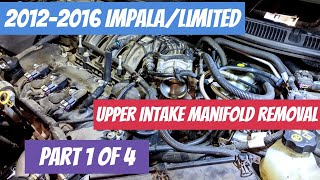
- On the 3.6L V6, accessing the rear three ignition coils requires removing the upper intake manifold, increasing labor time and cost.
- Direct-injection engines in this car can suffer from carbon buildup on intake valves, leading to misfires that are hard to diagnose without special tools.
What's Unique About the 2013-2019 Buick LACROSSE
This platform is unique regarding code P0308 because it never came with a V8 engine. The code signifies a misfire in the 8th cylinder, which doesn't exist on the LaCrosse's 2.4L four-cylinder or 3.6L V6 engines. The included TSB #PIP5628G mentions the P0300-P0308 range because it is a general GM bulletin that applies to many vehicles, including trucks and performance cars with V8s, not specifically the LaCrosse.
Diagnostic Flowchart
Tap your situation to follow the diagnostic path that matches what you're seeing on this vehicle.
Symptoms You May Notice
- Flashing or solid Check Engine Light
- Rough or shaky idle
- Hesitation or stumbling during acceleration
- Noticeable loss of engine power
- Reduced fuel economy
- A smell of raw fuel from the exhaust
- Searching for a non-existent 8th cylinder.
- Replacing the catalytic converter when it has been damaged by a persistent misfire, without fixing the root cause of the misfire first.
- Replacing fuel injectors or cleaning valves when the issue is a simple spark plug or ignition coil.
- Assuming a random misfire (P0300) is from multiple bad coils, when it could be a systemic issue like a vacuum leak or heavy carbon buildup across all cylinders.
Most Likely Causes
- Faulty Ignition Coil 🔴 High Probability Ignition coils are a common failure item on many modern engines, including the GM 3.6L V6, as they are subjected to high heat and voltage over many cycles. The rear bank (cylinders 1, 3, 5) is particularly susceptible due to higher temperatures near the firewall and the labor-intensive process to access them.
How to confirm: Swap the ignition coil from the misfiring cylinder (e.g., cylinder 4 if you have a P0304) with a coil from a known good cylinder (e.g., cylinder 2). Clear the codes and run the engine. If the misfire code changes to P0302, the coil is bad.
Typical fix: Replace the faulty ignition coil. It is often recommended to replace all coils and spark plugs on the same bank (or all six on the V6) if they are original, especially if accessing them requires removing the intake manifold.
Est. part cost: $40-$100 per coil - Worn or Fouled Spark Plugs 🔴 High Probability
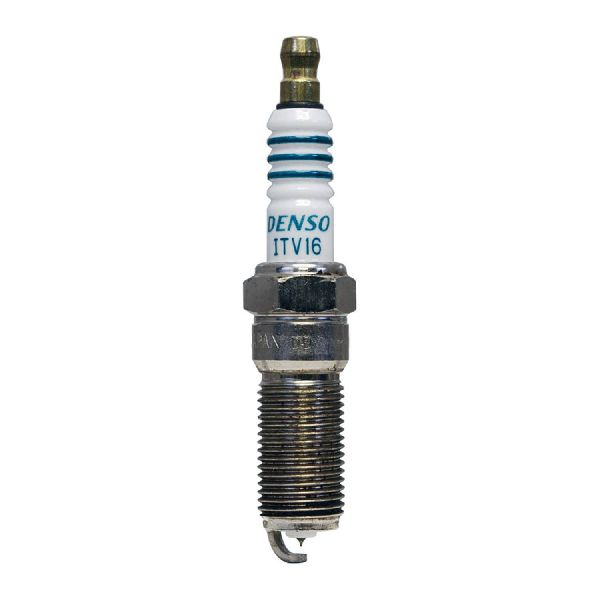
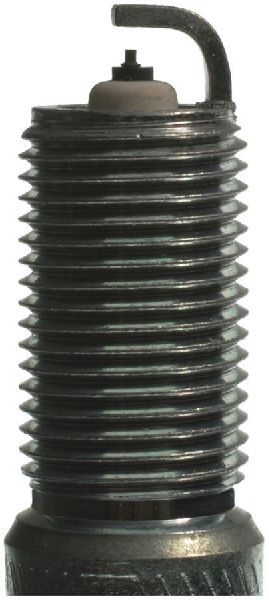
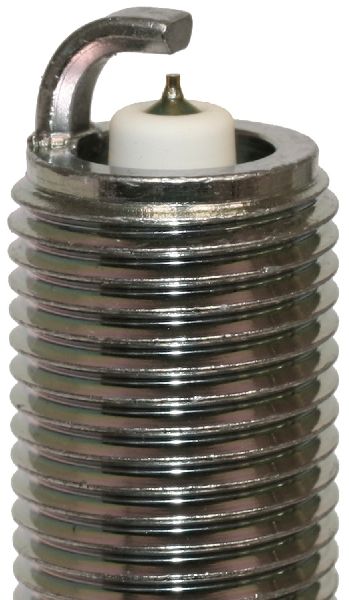
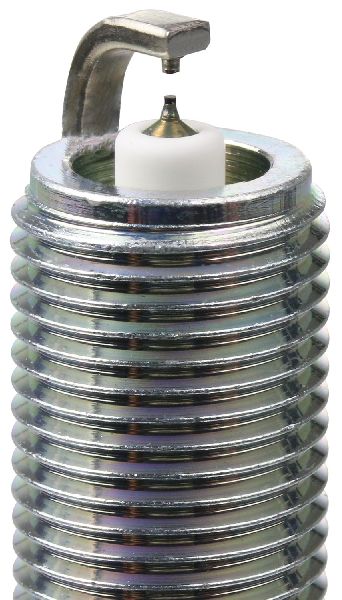
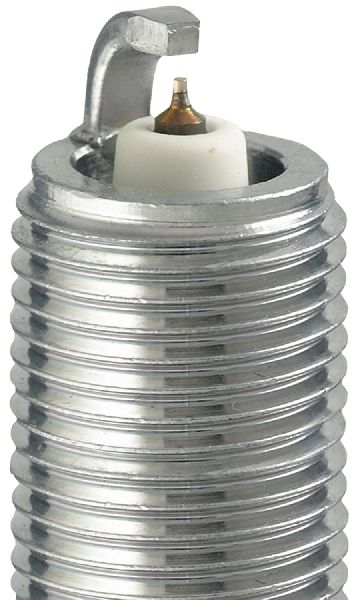
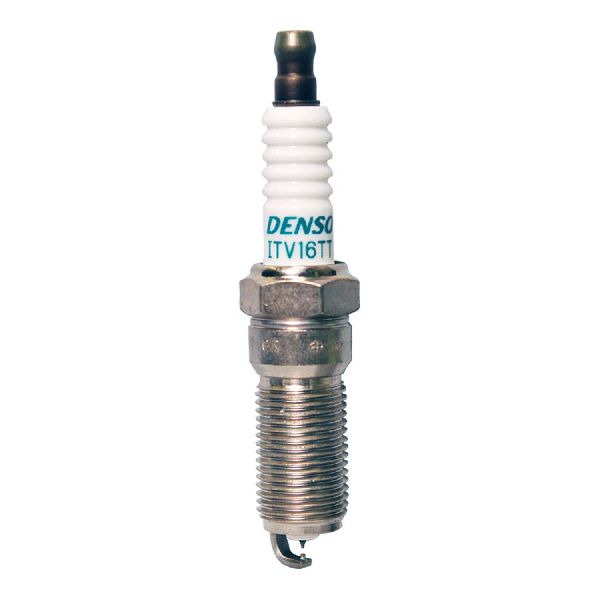
How to confirm: Remove the spark plug from the misfiring cylinder. Inspect it for wear (worn electrode), carbon fouling (black and sooty), oil fouling, or damage. A worn plug will have a large gap and a rounded center electrode. GM recommends Iridium plugs like the ACDelco 41-109 and advises against gapping them to avoid breaking the fragile tip.
Typical fix: Replace the spark plugs. They are a routine maintenance item and should be replaced as a full set according to the manufacturer's service interval, typically around 100,000 miles. Due to the labor involved in removing the intake manifold for the rear bank, it's wise to do this job preventatively.
Est. part cost: $60-$150 for a full set of iridium plugs - Intake Valve Carbon Buildup 🟡 Medium Probability The 3.6L (LFX/LLT) and 2.4L (LAF/LEA/LUK) are Direct Injection (DI) engines. Fuel is injected directly into the cylinder, so it never washes over the intake valves. Oil vapor from the PCV system can bake onto the valves, restricting airflow and causing misfires, especially on a cold start. This is a well-documented issue across many GM DI engines.
How to confirm: This is difficult to confirm without a borescope to visually inspect the intake valves. A compression test may show slightly lower readings on the affected cylinder. This is often diagnosed after ruling out ignition and fuel injector issues, and symptoms are often worse on cold starts.
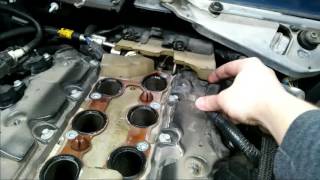
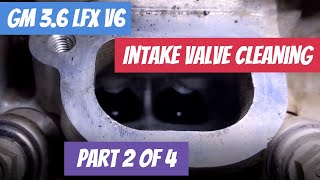
Typical fix: The intake manifold must be removed and the valves must be cleaned manually, typically through walnut shell blasting. 🎬 See how to perform a professional intake valve cleaning. Chemical induction cleaning services are also available but may be less effective for heavy deposits. GM recommends using Top Tier gasoline to minimize future deposits.
Est. part cost: $20-$40 for intake gaskets - Faulty Fuel Injector ⚪ Low Probability
How to confirm: Listen for a consistent clicking sound from the injector using a mechanic's stethoscope. You can also measure the injector's resistance with a multimeter or perform a fuel injector balance test with an advanced scan tool like the GM GDS2.
Typical fix: Replace the faulty fuel injector. It's also wise to replace the injector seal. On some occasions, a P030x misfire code can be accompanied by an injector circuit code (e.g., P0204), pointing more directly to the injector.
Est. part cost: $70-$200 per injector
Rare But Worth Checking
- Stretched Timing Chain:
- Porous Cylinder Head / Coolant Leak:
Diagnosis Steps
- Verify the Code: Use a reliable OBD-II scanner to re-read the trouble codes. Confirm that the code is not P0308, but rather a code between P0301-P0306, which will identify the correct misfiring cylinder. A P0308 is a 'ghost code' for this car, likely from a scanner error.
- Identify the Misfiring Cylinder: The last digit of the code indicates the cylinder (e.g., P0304 is cylinder 4). For the 3.6L V6, the cylinders against the firewall (rear bank) are 1-3-5 (passenger to driver side) and the front cylinders are 2-4-6 (passenger to driver side).
- Inspect Ignition System: Start with the identified cylinder. Check the ignition coil's wiring connector for damage. Remove the coil and inspect it and the spark plug for any visible issues like cracks, oil contamination, or carbon tracking.
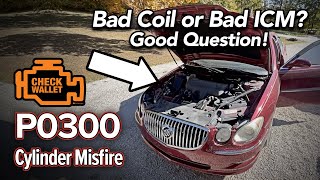
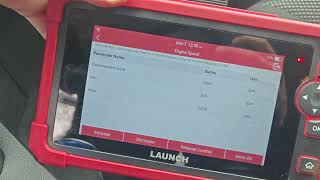
- Swap Components: Swap the ignition coil of the misfiring cylinder with one from a cylinder that is firing correctly. Clear the codes and run the engine. If the misfire code moves to the new cylinder, the ignition coil is faulty. This is the most definitive DIY test 🎬 Watch: Troubleshooting a Buick misfire to find the bad coil. for a bad coil.
- Check Spark Plugs: If the misfire does not move with the coil, inspect the spark plug from the affected cylinder for wear, fouling, or an incorrect gap. Replace as a full set if they are old or show signs of significant wear.
Parts You'll Likely Need
- Ignition Coil
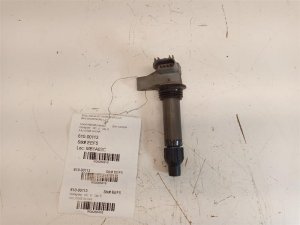
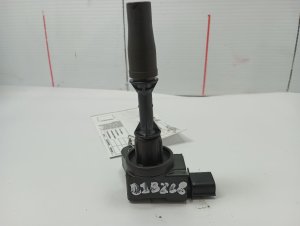
(OEM #12632479 (supersedes 12618542, 12610626))— This is the most frequent cause of a single-cylinder misfire on the 3.6L V6 engine.
Trusted brands: ACDelco, Delphi, NGK, Denso
OEM price range: $65-$115
Aftermarket price range: $40-$80 - Iridium Spark Plug
(OEM #12681660 (ACDelco 41-162))— Spark plugs are a maintenance item and wear out over time, leading to a weak spark and misfires.
Trusted brands: ACDelco, NGK, Bosch
OEM price range: $10-$20 per plug
Aftermarket price range: $8-$15 per plug - Upper Intake Manifold Gasket Set
(OEM #12647263)— On the 3.6L V6, the upper intake manifold must be removed to access the rear bank of ignition coils (cylinders 1, 3, 5). The gaskets are single-use and must be replaced to prevent vacuum leaks.
Trusted brands: ACDelco, Fel-Pro, Mahle
OEM price range: $30-$50
Aftermarket price range: $15-$30
Related Codes That Often Appear With This One
- P0300 — If multiple cylinders are misfiring randomly due to a systemic issue like a vacuum leak, fuel quality problems, or carbon buildup, P0300 will be stored alongside specific cylinder codes.
- P0301-P0306 — These are the actual, possible misfire codes for this vehicle. The user likely has one of these codes instead of P0308.
- P0201-P0206 — These codes indicate a fault in the fuel injector circuit for a specific cylinder. If you see a P0302 and a P0202 together, it strongly points to an issue with the fuel injector for cylinder 2 or its wiring.
Technical Service Bulletins (TSBs) & Recalls
- PIP5628G: A general GM bulletin regarding diagnostic information needed for misfire codes P0300-P0308 and/or P050D. Its inclusion of P0308 is to cover all GM engines, not because the LaCrosse has a V8. It provides a template for technicians to gather data before calling for assistance.
- PIP5029G (and predecessors): Details the issue of engine misfires caused by major carbon deposits on the intake valves of direct-injected engines, including the 3.6L LFX. It recommends cleaning procedures and the use of Top Tier fuel.
- N182167800: A customer satisfaction program for some 2018 3.6L engines (LFX/LFY) concerning damaged piston oil control rings from the factory, which could lead to oil consumption and misfires. Dealers were instructed to inspect cylinders 2, 4, and 6 with a borescope.
Platform-Specific Known Issues
- Carbon Buildup on Intake Valves: As noted in GM Preliminary Information bulletin PIP5029G, direct-injected engines like the 2.4L and 3.6L in the LaCrosse are prone to carbon deposits on the intake valves, which can cause misfires (DTCs P0300-P0306), especially when the engine is cold. This issue can start causing noticeable problems at mileages as low as 50,000 miles.
- Difficult Rear Bank Access: On the 3.6L V6, any service to the rear cylinders (1, 3, 5), including spark plug or ignition coil replacement, requires removing the upper intake manifold. This adds significant labor time and cost to what would otherwise be a simple repair.
Mechanic-Grade Diagnostic Values
- High-Pressure Fuel Pump (HPFP) Operating Pressure — expected: Up to and exceeding 2,000 PSI. Failure: A P0087 code (Low Fuel Rail Pressure) often accompanies a failing HPFP. A professional scan tool is needed to monitor desired vs. actual pressure.
- Fuel Injector Resistance (3.6L LFX) — expected: Approximately 1.5 - 1.6 Ohms. Failure: A significant deviation from this range or an open circuit indicates a faulty injector coil.
- Variable Valve Timing (VVT) Solenoid Resistance (3.6L LFX/LGX) — expected: 8 - 12 Ohms. Failure: Readings outside this range (e.g., 7 Ohms or 15 Ohms) can indicate a faulty solenoid, leading to cam timing issues and misfires.
Hidden / Shadow Codes Worth Checking
- Misfire Counters (History & Current): The Engine Control Module (ECM) tracks misfires per cylinder even if they aren't frequent enough to set a trouble code and illuminate the check engine light. These counters can reveal which cylinder is intermittently misfiring. (see via A professional-grade scan tool like the GM GDS2 (Global Diagnostic System 2) or a high-end aftermarket scanner is required to view live misfire data.)
- Mode 6, Test ID $A2-$AC: Mode 6 is a diagnostic mode that provides test results for non-continuously monitored systems. Test IDs $A2 through $AC typically correspond to misfire counts for each cylinder (e.g., $A2 for cylinder 1, $A3 for cylinder 2, etc.). This allows a technician to see raw misfire data before a P030x code is officially set. (see via Requires a scan tool with Mode 6 data viewing capabilities.)
Scan Tool Commands That Help
- GDS2 (or equivalent high-end scanner): Cylinder Power Balance Test — This is a critical function for diagnosing a misfire. The tool deactivates one cylinder at a time (by cutting fuel or spark) and measures the resulting drop in engine RPM. A cylinder that causes little or no RPM drop when deactivated is not contributing power and is the source of the misfire. This is extremely useful for confirming a weak cylinder before tearing into the engine.
- GDS2 (or equivalent high-end scanner): Fuel Injector Balance Test — This function commands each fuel injector to fire for a specific duration while measuring the corresponding drop in fuel rail pressure. It can identify a clogged or weak injector that isn't flowing the correct amount of fuel, which might not be caught by a simple resistance test.
- GDS2 (or equivalent high-end scanner): Cam/Crank Correlation — While a lab scope provides the most definitive waveform, some advanced scan tools can display cam and crank sensor data graphically. This can be used to spot gross timing misalignments that could indicate a stretched timing chain, a potential cause for bank-specific misfires (e.g., P0301, P0303, P0305).
Real Owner Repair Stories
- GoTech Diagnostic Story (2014 Chevy Impala 3.6L LFX (engine shared with LaCrosse)) — A subtle, non-check engine light-setting misfire or stumble felt at light load and deceleration. The PCM was detecting misfires on cylinders 1, 3, and 5 but not enough to set a code.
❌ Tried (didn't work) New spark plugs, 6 new high-pressure fuel injectors, Multiple valve cleaning jobs, Intake manifold gaskets, Swapping ignition coils, New throttle body
✅ What actually fixed it Diagnosis using a lab scope for a cam/crank correlation test revealed that the Bank 1 timing was slightly retarded. The conclusion was a stretched timing chain on Bank 1, a known issue on the 3.6L engine. - Reddit r/AskMechanics user report (Vehicle with P0301 code) — Misfire on cylinder 1 (P0301) after replacing spark plugs.
❌ Tried (didn't work) Replacing spark plugs, Swapping ignition coil packs between cylinders
✅ What actually fixed it The user discovered that when they unplugged the fuel injector for cylinder 1, the engine's running condition did not change, indicating the injector was the problem. The issue was traced back to water getting into the fuse box and potentially damaging the injector driver circuit or the injector itself.
OEM Part Supersession History
ACDelco 41-109 / GM 12622561→ACDelco 41-109 / GM 12681660— Standard part number evolution and manufacturing updates. Functionality remains the same.
Heads up: These are Iridium spark plugs that are pre-gapped from the factory. Do not attempt to re-gap them, as this can damage the fine iridium tip. If the gap is incorrect, the plug should be replaced.
Model Year Variations Within This Range
- 2013-2016: These model years primarily use the 3.6L LFX V6 engine. This engine is known for timing chain stretch issues at higher mileage and carbon buildup on intake valves.
- 2017-2019: The third-generation LaCrosse, introduced in 2017, uses the updated 3.6L LGX V6 engine. This engine was a significant redesign to address issues like timing chain durability. However, it introduced Active Fuel Management (AFM), which can have its own unique failure modes, such as issues with the AFM oil control solenoids causing misfires on specific cylinders (2 and 5).
Helpful Videos
Used OEM Parts in Stock


New Aftermarket Parts Available

The information in this article is provided for general reference and educational purposes only. Vehicle specifications, procedures, and part compatibility can vary by production date, trim level, and region. Always consult your vehicle's factory service manual and verify part numbers before purchasing or performing repairs. Safety-critical components such as airbags, seat belts, and braking systems should be installed by a qualified professional.
- Buick LACROSSE:
- 🎬 Helpful Videos
- 🛍️ Shop This Part
- What's Unique About the 2013-2019 Buick LACROSSE
- Diagnostic Flowchart
- Symptoms You May Notice
- Most Likely Causes
- Rare But Worth Checking
- Diagnosis Steps
- Parts You'll Likely Need
- Related Codes That Often Appear With This One
- Technical Service Bulletins (TSBs) & Recalls
- Platform-Specific Known Issues
- Mechanic-Grade Diagnostic Values
- Hidden / Shadow Codes Worth Checking
- Scan Tool Commands That Help
- Real Owner Repair Stories
- OEM Part Supersession History
- Model Year Variations Within This Range
- 🎟️ Get 5% Off