

P0308 on 2016-2019 Buick Cascada: Why This Code is Impossible and How to Fix the Real Misfire
A P0308 code is impossible on a 2016-2019 Buick Cascada, as it means 'Cylinder 8 Misfire' but the Cascada only has a 4-cylinder engine. The actual issue is likely a misfire on cylinders 1-4 (P0301-P0304), most often caused by a bad spark plug or ignition coil. A new set of spark plugs costs $40-$80, and a single ignition coil is about $50-$100.
- P0308 is an impossible code for a Buick Cascada; your car has a 4-cylinder engine, not an 8-cylinder.
- Your first step is to get an accurate code reading, which will likely be P0301, P0302, P0303, or P0304.
- The most probable cause for the actual misfire is a worn spark plug or a failed ignition coil.
- Do not drive the car if the Check Engine Light is flashing, as this can cause expensive catalytic converter damage.
- When replacing spark plugs, always replace them as a complete set of four.
What's Unique About the 2016-2019 Buick CASCADA
The confusion around P0308 on a Cascada stems from generic code definitions clashing with vehicle-specific hardware. The Cascada uses a 1.6L SIDI (Spark Ignition Direct Injection) turbocharged 4-cylinder engine (RPO code LWC), an Opel-derived powerplant used in North America exclusively in this model. General Motors TSBs, like #PIP5628G, often group misfire codes (P0300-P0308) for diagnostic efficiency across their entire lineup, which includes V8 engines. This TSB does not imply the Cascada has 8 cylinders; rather, the P0305-P0308 range is simply not applicable to it.
Diagnostic Flowchart
Tap your situation to follow the diagnostic path that matches what you're seeing on this vehicle.
Symptoms You May Notice
- Rough or vibrating idle
- Hesitation or stumbling during acceleration
- Noticeable loss of engine power
- Flashing Check Engine Light (if the misfire is severe)
- Solid (non-flashing) Check Engine Light
- Reduced fuel economy
- Popping or backfiring sounds from the exhaust
- Engine may be harder to start
- Assuming the P0308 code is correct and searching for a non-existent cylinder 8.
- Replacing oxygen sensors, which are unlikely to cause a single-cylinder misfire but may be flagged due to the misfire's effect on exhaust gases.
- Replacing the Mass Airflow (MAF) sensor when a vacuum leak or ignition issue is the root cause.
Most Likely Causes
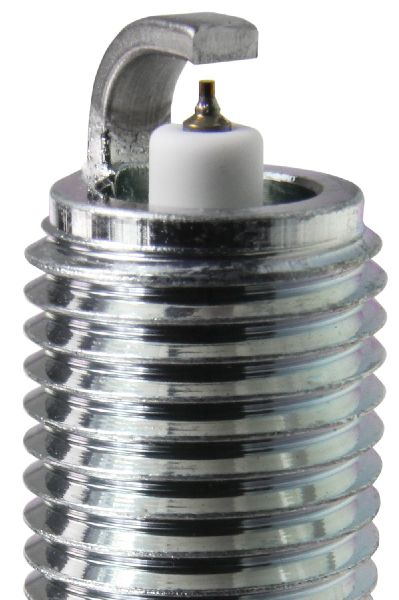
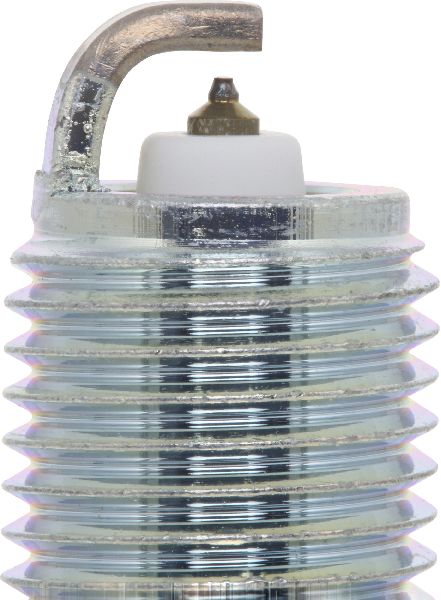
- Worn or Fouled Spark Plugs 🔴 High Probability Direct injection engines can be harder on spark plugs, and a 100,000-mile service interval can be optimistic. They are a common failure point for any misfire and a frequent topic of discussion in forums for misfire issues.
How to confirm: Remove the spark plug from the misfiring cylinder (once the correct P030x code is identified). Inspect for wear, carbon fouling, or oil contamination. The recommended service interval is a good indicator.
Typical fix: Replace all four spark plugs as a set. Do not just replace one. Using the correct Iridium plugs is recommended.
Est. part cost: $40-$80 - Failed Ignition Coil 🔴 High Probability Coil-on-plug systems are reliable but individual coils can fail from heat and vibration over time, leading to a misfire on a specific cylinder. This is a very common repair for misfire conditions.
How to confirm: Once the correct cylinder is identified (e.g., P0302 for cylinder 2), swap the ignition coil from the misfiring cylinder with one from a known good cylinder (e.g., cylinder 1). Clear the codes and run the engine. If the code changes to P0301, the coil is bad.
Typical fix: Replace the faulty ignition coil. It is wise to use a reputable brand like ACDelco or NGK.
Est. part cost: $50-$100 - Faulty Fuel Injector 🟡 Medium Probability The 1.6L uses a direct injection (SIDI) system. These high-pressure injectors can become clogged or fail electronically, which is a known issue on modern DI engines. GM issued TSB #20-NA-098 to provide guidance on ordering correct replacement injectors.
How to confirm: This is more difficult for a DIYer. A professional can perform a fuel injector balance test using a GDS2 scan tool. Sometimes, swapping injectors between cylinders (similar to an ignition coil swap) can confirm the fault, but this is more labor-intensive and requires special care with the high-pressure fuel system.
Typical fix: Replace the faulty fuel injector. This often requires removing the fuel rail.
Est. part cost: $70-$150 - Intake Vacuum Leak ⚪ Low Probability A failed PCV (Positive Crankcase Ventilation) valve, often integrated into the valve cover on these Ecotec engines, can create a significant vacuum leak, causing lean running conditions and misfires. GM issued a special coverage adjustment (N192291620 for 2016 models and N232395320 for 2019 models) for this exact issue, which can cause rough idle and a P0171 code alongside misfires.
How to confirm: Listen for a hissing or whistling sound at idle. 🎬 See these 7 DIY methods to find and fix vacuum leaks. A smoke test is the most effective way to find the source of a vacuum leak. A cracked PCV diaphragm in the valve cover is a common failure point. A simple test is to place a piece of tissue paper over the PCV vent; if it's sucked against the vent, a vacuum leak is present.
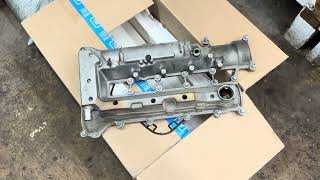
Typical fix: Replace the entire valve cover 🎬 Watch: Step-by-step guide to replacing the Cascada 1.6T valve cover. if the internal PCV diaphragm has ruptured.
Est. part cost: $10-$250
Rare But Worth Checking
- Low Engine Compression: If ignition and fuel components are good, a mechanical issue could be the cause. This can include a burnt valve, worn piston rings, or even a failing head gasket. A compression test is needed to verify.
- Stretched Timing Chain: While not extremely common, stretched timing chains can occur on Ecotec engines, causing camshaft/crankshaft correlation errors (like P0016/P0017) that can lead to misfires.
- Carbon Buildup on Intake Valves: Because the 1.6L is a direct injection (SIDI) engine, fuel is not sprayed over the back of the intake valves. This allows oil vapor from the PCV system to bake onto the valves, forming hard carbon deposits. Over time, this can restrict airflow into the cylinders, causing rough running, hesitation, and misfires, especially at idle. GM has a TSB (#16NA383) regarding a decarbonizing kit for this issue.
Diagnosis Steps
- Confirm the Code: Re-scan the vehicle with a quality OBD-II scanner to verify the trouble code. Confirm that you are not seeing P0301, P0302, P0303, or P0304 instead of P0308.
- Identify the Misfiring Cylinder: Assuming you find a valid code (e.g., P0302), identify the corresponding cylinder. On the Cascada's transverse 1.6L engine, cylinder 1 is on the passenger side (belt side), with cylinders 2, 3, and 4 following in order towards the driver's side.
- Inspect Ignition System: Visually inspect the ignition coil and wiring for the misfiring cylinder. Look for any signs of damage or loose connections.
- Swap the Ignition Coil: Swap the ignition coil from the misfiring cylinder with one from a neighboring cylinder. Clear the codes and start the engine. If the misfire code moves to the new cylinder (e.g., P0301), the ignition coil is faulty and needs replacement. This is a widely accepted diagnostic step.
- Inspect the Spark Plug: If the misfire did not move with the coil, remove the spark plug from the original misfiring cylinder. Check for wear, fouling, or damage. If it looks worn or has heavy deposits, replace all four spark plugs.
- Check the Fuel Injector: If coils and plugs are good, the issue may be the fuel injector. This step may require a professional who can test fuel pressure and injector function using a GDS2 scan tool.
- Check for Vacuum Leaks: Listen for hissing noises around the intake manifold and valve cover. A professional smoke test is the best way to confirm a leak. Pay close attention to the valve cover, as the integrated PCV valve is a known failure point. 🎬 Learn why you must replace the whole cover, not just gaskets.
- Perform a Compression Test: If all else fails, a mechanical problem is possible. A compression test will check the health of the engine's cylinders, valves, and piston rings.
- Inspect for Carbon Buildup: For persistent, difficult-to-diagnose misfires, especially with high mileage, consider inspecting the intake valves for carbon buildup using a borescope.
Parts You'll Likely Need
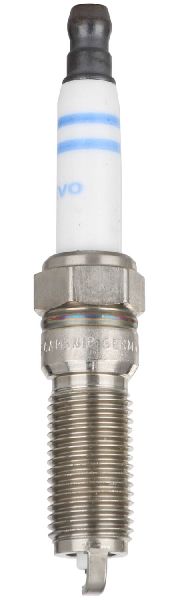
- Iridium Spark Plugs (Set of 4)
(OEM #12683541)— Spark plugs are a routine maintenance item and the most common cause of a single-cylinder misfire. They should always be replaced as a set.
Trusted brands: ACDelco, NGK
OEM price range: $50-$70
Aftermarket price range: $40-$60 - Ignition Coil
(OEM #12678228)— The second most likely cause of a specific cylinder misfire. The 'coil-on-plug' design means one coil can fail without affecting the others.
Trusted brands: ACDelco, Delphi, NGK, TRQ
OEM price range: $80-$120
Aftermarket price range: $50-$90 - Valve Cover / Camshaft Cover
(OEM #25203562)— The integrated PCV valve diaphragm can fail, causing a major vacuum leak and lean/misfire codes. The entire cover must be replaced. This is a known issue covered by a GM Special Coverage program for 2016 and 2019 models.
Trusted brands: ACDelco
OEM price range: $200-$280
Aftermarket price range: $150-$220
Related Codes That Often Appear With This One
- P0300 — If the misfire is intermittent or affects multiple cylinders, a P0300 (Random/Multiple Cylinder Misfire) may be present alongside a specific cylinder code.
- P0301, P0302, P0303, P0304 — These are the actual, valid misfire codes for the Buick Cascada's 4-cylinder engine. Your true problem is one of these codes.
- P0171 — This code for 'System Too Lean' often accompanies misfires caused by a significant vacuum leak, such as a failed PCV valve diaphragm in the valve cover.
Technical Service Bulletins (TSBs) & Recalls
- PIP5628G: A general GM Technical Service Bulletin about providing information to the Technical Assistance Center (TAC) for diagnosing misfires on various engines, which lists the full range of P0300-P0308 codes.
- N192291620: Special Coverage for 2016 models. Covers failure of the PCV valve diaphragm within the camshaft cover, which causes rough idle, lean codes (P0171), and potential misfires. Extends coverage to 10 years/120,000 miles.
- 16NA383: Informs technicians about a fuel injection cleaner kit for decarbonizing intake valves to correct rough idle, no start, extended crank, or misfire conditions.
- 20NA098: Explains how to order a new fuel injector by matching the part number on the existing part, highlighting potential variations.
Platform-Specific Known Issues
- The PCV system on the 1.6L Ecotec engine is integrated into the valve cover. A diaphragm failure inside can cause a large vacuum leak, leading to misfires and a P0171 (System Too Lean) code. GM acknowledged this with Special Coverage N192291620 for the 2016 model year, extending the warranty for this specific part to 10 years/120,000 miles.
- As a Spark Ignition Direct Injection (SIDI) engine, the Cascada is susceptible to carbon buildup on the intake valves over time, which can lead to misfires and poor performance. TSB #16NA383 discusses a cleaning procedure for this.
Mechanic-Grade Diagnostic Values
- Ignition Coil Primary Winding Resistance — expected: 0.3 Ω - 1.0 Ω. Failure: A reading outside this range indicates a faulty coil winding.
- Ignition Coil Secondary Winding Resistance — expected: 8.0 kΩ - 15.0 kΩ. Failure: A reading outside this range indicates a faulty coil winding.
- Ignition Coil Voltage Supply (at connector, key on) — expected: > 10.5 V. Failure: Low or no voltage indicates a problem in the wiring or fuse supplying power to the coils.
- Short-Term and Long-Term Fuel Trims (Live Data) — expected: Within +/- 10%. Failure: Consistently high positive values (e.g., > +20%) strongly suggest a vacuum leak, such as from the PCV system in the valve cover.
Scan Tool Commands That Help
- GDS2 (GM Dealer Scan Tool): Fuel Injector Balance Test — To diagnose a suspected faulty fuel injector after ignition issues have been ruled out. This test measures the pressure drop for each injector to identify one that is clogged or flowing poorly.
- GDS2 (GM Dealer Scan Tool): Crankshaft Variation Learn — After major engine work, or if misfire detection is erratic. This procedure resets the learned profile of the crankshaft position sensor to ensure accurate misfire detection.
- GDS2 (GM Dealer Scan Tool): Cylinder Power Balance — To identify a misfiring cylinder in real-time by sequentially disabling fuel to each cylinder and measuring the corresponding drop in engine RPM.
Wiring & Ground Locations
- Engine Control Module (ECM) — Located in the engine compartment. Fuse F1 in the underhood fuse block provides power to the ECM.. The ECM controls the ignition coils and fuel injectors. A poor connection or fault within the ECM could cause misfires, though this is rare.
- Ignition Coil Ground — The primary engine-to-chassis grounds are critical. On similar GM platforms, a key ground point is a stud on a bellhousing bolt, and another is on the engine block itself, often near the starter or front of the block.. A loose or corroded main engine ground can cause weak spark and intermittent, hard-to-diagnose misfires across multiple cylinders.
- ECM Connector X1 — This is one of the main connectors on the Engine Control Module.. This connector contains the control circuits for the ignition coils and fuel injectors. For example, on similar GM engines, pins might be assigned as: Pin 30 (Ignition Coil 1 Control), Pin 28 (Ignition Coil 2 Control), Pin 59 (Ignition Coil 3 Control), Pin 57 (Ignition Coil 4 Control). A corroded pin or damaged wire at this connector can cause a misfire on a specific cylinder.
Real Owner Repair Stories
- YouTube video by '2016 Buick Cascada 1.6T Replace Valve Cover' (2016 Buick Cascada 1.6T) — Check Engine Light with a P0171 lean code and an audible vacuum sucking noise from the engine.
❌ Tried (didn't work) The video directly proceeds to the fix, implying the diagnosis was straightforward based on the noise.
✅ What actually fixed it The problem was a bad PCV valve integrated into the valve cover. Replacing the entire valve cover assembly (GM Part 25203562) resolved the vacuum leak and the associated lean code.
OEM Part Supersession History
55596087→25203562— This is the part number for the Camshaft/Valve Cover assembly. The part was likely updated to address the failing PCV diaphragm issue.
Model Year Variations Within This Range
- 2016: GM Special Coverage N192291620 covers the replacement of the valve cover due to a failed PCV diaphragm for 10 years or 120,000 miles.
- 2019: GM Special Coverage N232395320 covers the same failed PCV diaphragm condition but extends the coverage period to 15 years or 150,000 miles.
- 2017-2018: As of early 2026, no specific special coverage program has been announced for the 2017 and 2018 model years for the PCV valve failure, even though they use the same engine and are prone to the same issue.
Helpful Videos
![How to Fix P0171 Engine Code in 5 Minutes [7 DIY Methods]](https://img.youtube.com/vi/g_qItasY91I/mqdefault.jpg)
We Have This Part in Stock


The information in this article is provided for general reference and educational purposes only. Vehicle specifications, procedures, and part compatibility can vary by production date, trim level, and region. Always consult your vehicle's factory service manual and verify part numbers before purchasing or performing repairs. Safety-critical components such as airbags, seat belts, and braking systems should be installed by a qualified professional.
- Buick CASCADA:
- 🎬 Helpful Videos
- 🛍️ Shop This Part
- What's Unique About the 2016-2019 Buick CASCADA
- Diagnostic Flowchart
- Symptoms You May Notice
- Most Likely Causes
- Rare But Worth Checking
- Diagnosis Steps
- Parts You'll Likely Need
- Related Codes That Often Appear With This One
- Technical Service Bulletins (TSBs) & Recalls
- Platform-Specific Known Issues
- Mechanic-Grade Diagnostic Values
- Scan Tool Commands That Help
- Wiring & Ground Locations
- Real Owner Repair Stories
- OEM Part Supersession History
- Model Year Variations Within This Range
- 🎟️ Get 5% Off