

P0308 on 2007-2009 Audi S8 5.2L V10: Cylinder 8 Misfire Causes and Fixes
On the 2007-2009 Audi S8 5.2L V10, a P0308 code is most often caused by a failed ignition coil or spark plug in cylinder 8. However, carbon buildup on the intake valves is a very common issue on this specific engine and a frequent cause of misfires, often requiring professional cleaning. Another known, though less common, issue is the failure of plastic components within the intake manifold. Expect to pay $50-$100 for a coil or plug, but several thousand for a professional carbon cleaning servic
- P0308 on a 2007-2009 Audi S8 means cylinder 8 (driver's side, rear) is misfiring.
- Always perform the 'swap test' with the ignition coil first, as it's a simple and common fix.
- Be aware that carbon buildup is a very common problem on this engine and is a likely cause if new plugs and coils don't solve the misfire.
- A flashing check engine light is a serious warning that requires you to stop driving to prevent catalytic converter damage.
- If you are not comfortable removing engine components, diagnosis and repair beyond a simple coil or plug swap should be left to a professional, especially for a carbon cleaning service.
What's Unique About the 2007-2009 Audi S8
The 5.2L V10 in the D3 generation S8 uses Fuel Stratified Injection (FSI), a type of direct injection. A well-documented side effect of this technology on this engine is significant carbon buildup on the intake valves. This buildup restricts airflow, causing turbulence that leads to lean misfires, especially at idle or during cold starts. While ignition components are always a possibility, many owners discover that P0308 and other misfire codes are ultimately traced back to the need for a valve cleaning service, typically recommended every 30,000-40,000 miles. Additionally, the complex intake manifold contains plastic runner flaps that are known to break apart, which can cause a massive vacuum leak or, in worst-case scenarios, drop plastic fragments into the cylinder, leading to catastrophic engine damage.
Symptoms You May Notice
- Flashing or solid Check Engine Light
- Rough or unstable idle, especially when cold
- Engine vibration or shaking
- Noticeable loss of power and hesitation during acceleration
- Increased fuel consumption
- Popping sound from the intake as compression is blown past a valve stuck open by carbon.
- Rattling noise from the engine bay, indicating broken intake manifold flaps.
- Replacing fuel injectors when the actual cause is heavy carbon buildup on the intake valves.
- Replacing throttle bodies for an EPC light and rough running when the cause is a massive vacuum leak from a broken intake manifold flap actuator.
Most Likely Causes
- Failed Ignition Coil 🔴 High Probability Coil-on-plug systems are common failure points due to high heat and vibration in the tightly packed V10 engine bay. Many owners report finding coils that were not fully seated, leading to a poor connection and misfires.
How to confirm: The easiest test is to swap the ignition coil from cylinder 8 with another cylinder (e.g., cylinder 7). Clear the codes and drive the vehicle. If the code changes to P0307, the coil is faulty.
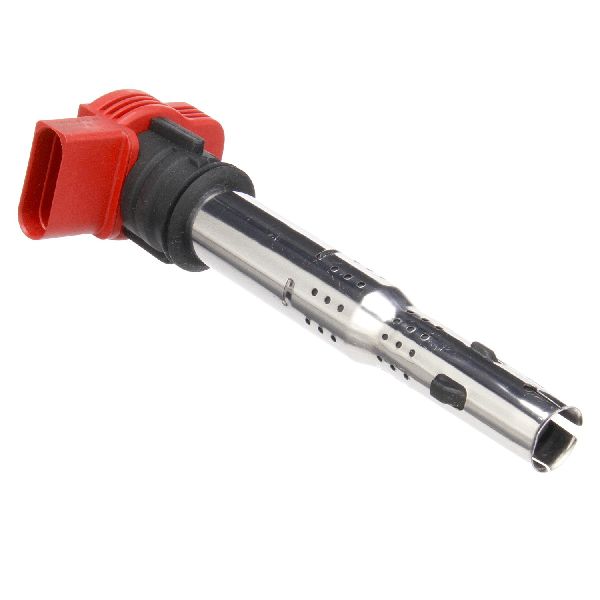
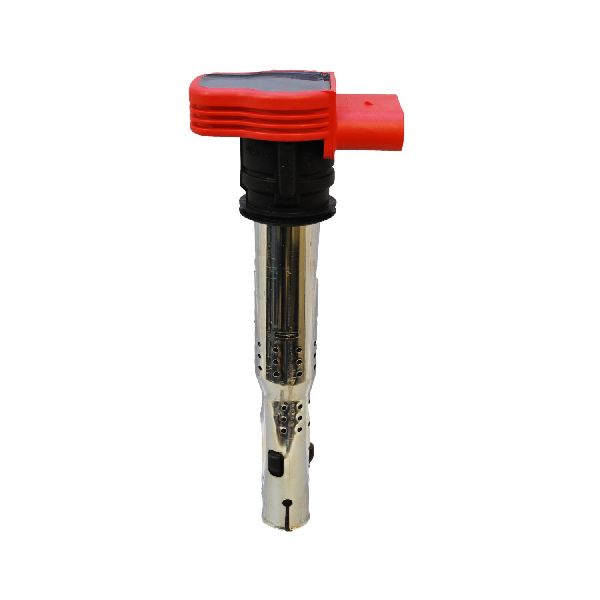
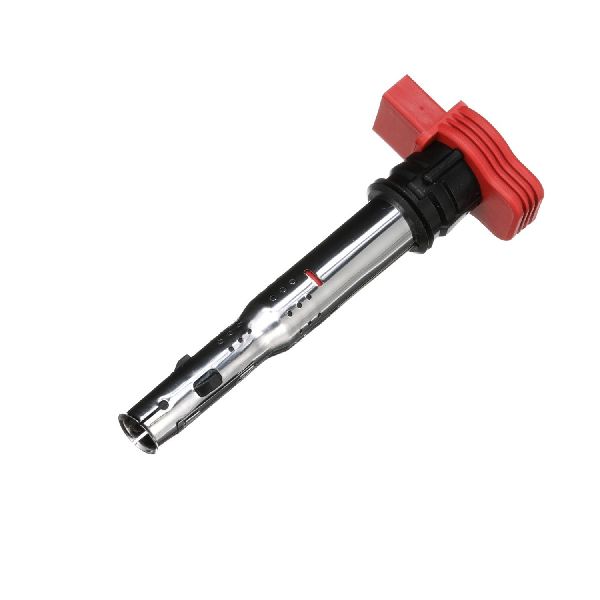
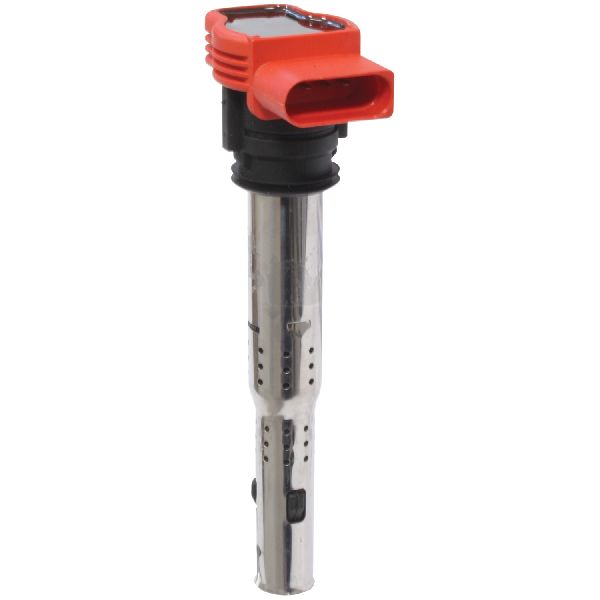
Typical fix: Replace the faulty ignition coil. It is often recommended to replace all 10 coils at once, especially if they are original, to prevent future failures. Upgraded 'red top' coils are a popular choice.
Est. part cost: $40-$80 per coil - Worn Spark Plug 🔴 High Probability
How to confirm: After ruling out the coil, remove the spark plug from cylinder 8. Inspect it for wear, fouling, or damage. A worn center electrode, cracked porcelain, or heavy carbon deposits indicate it needs replacement.
Typical fix: Replace the spark plug in cylinder 8. It is best practice to replace all 10 spark plugs at the same time to ensure even performance. The correct torque spec is critical.
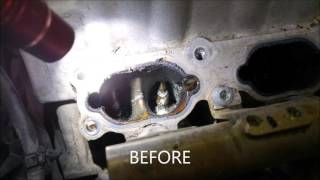
Est. part cost: $15-$30 per plug - Intake Valve Carbon Buildup 🔴 High Probability The 5.2L FSI V10 is a direct-injection engine. Fuel is sprayed directly into the cylinder, so it never flows over the intake valves to clean them. Oil vapor from the PCV system and exhaust gases from valve overlap bake onto the hot valves, forming hard carbon deposits that restrict airflow and can even cause valves to stick open.
How to confirm: This is difficult to confirm without intrusive methods. A borescope inspection through the intake port is the definitive way to visualize the buildup on the valves. This is often diagnosed after ignition and fuel system components have been ruled out. Misfires that occur primarily on a cold start and smooth out as the engine warms are a classic symptom.
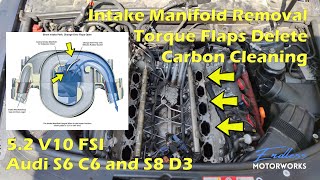
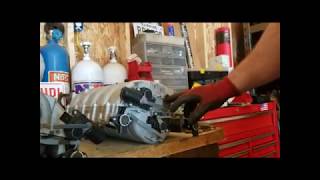
Typical fix: Manual cleaning of the intake valves is required. This involves removing the intake manifold and using tools and solvents or media blasting (typically with walnut shells) to physically scrape the carbon off each valve. 🎬 Watch: Full walkthrough of intake removal and carbon cleaning. This is a labor-intensive job often costing $1,500-$2,500.
Est. part cost: $50-$150 for gaskets and seals - Faulty Fuel Injector 🟡 Medium Probability While durable, the FSI injectors can become clogged with carbon deposits on the nozzle tip, disrupting the spray pattern and causing misfires. This is often misdiagnosed when the real issue is carbon on the valves.
How to confirm: Listen for a consistent clicking sound from the injector with a mechanic's stethoscope. You can also check the injector's resistance with a multimeter or have a professional perform a flow test. Swapping injectors is possible but much more labor-intensive than swapping coils as it requires removing the intake manifold.
Typical fix: Replace the faulty fuel injector. It's recommended to replace the injector's one-time-use Teflon seals anytime it is removed. Due to the labor involved, many recommend replacing all injectors on that bank at the same time.
Est. part cost: $100-$250 per injector
Rare But Worth Checking
- Failed Intake Manifold Runner Flaps: The plastic runner flaps inside the intake manifold are a known failure point. They can break, causing a rattling noise and significant vacuum leaks that lead to misfires. In a worst-case scenario, pieces can break off and enter the cylinder, causing catastrophic engine damage. This may also trigger codes like P2006 or P2007. 🎬 See how the intake manifold flaps work and why they break.
- Low Engine Compression: If ignition, fuel, and airflow (carbon) issues are ruled out, a mechanical problem could be the cause. This could be due to a worn piston ring, a leaking valve (potentially held open by a piece of carbon), or a damaged cylinder head. A compression test on cylinder 8 will confirm or deny this.
- Vacuum Leak: A vacuum leak from a cracked hose or a failed intake manifold gasket near cylinder 8 could lean out the mixture enough to cause a misfire. A failing PCV oil separator is a common source of unmetered air on this engine. A smoke test is the most effective way to find a vacuum leak.
Diagnosis Steps
- Read the code with an OBD-II scanner and confirm P0308 is the primary code. Note any other codes like P0300 or lean/intake flap codes.
- If the Check Engine Light is flashing, avoid driving the vehicle to prevent catalytic converter damage.
- Locate cylinder 8 (driver's side, third cylinder from the front).
- Swap the ignition coil from cylinder 8 with cylinder 7. Clear the codes and see if the misfire moves to cylinder 7 (now showing a P0307 code). If it does, the ignition coil is bad. Ensure the coil is fully seated upon reinstallation.
- If the misfire remains on cylinder 8, inspect and then swap the spark plug from cylinder 8 with cylinder 7. If the code moves, the spark plug was the issue.
- If the misfire still remains on cylinder 8, the problem is likely with the fuel injector, carbon buildup, or a mechanical issue.
- Visually inspect the wiring and connector for the cylinder 8 fuel injector and ignition coil for any damage or corrosion.
- Listen for a distinct rattling from the intake manifold, which could indicate broken runner flaps.
- Listen for a high-pitched whistling or whining sound from the engine, and check for excessive vacuum at the oil filler cap while the engine is running; both are strong indicators of a failed PCV / oil separator.
- At this point, professional diagnosis is recommended. The next steps involve a borescope inspection for carbon buildup and/or testing the fuel injector.
- If all else fails, a compression test should be performed on cylinder 8 to check for mechanical engine problems like a stuck valve or piston ring failure.
Parts You'll Likely Need
- Ignition Coil
(OEM #07K905715F (Superseded by 06E905115G))— This is the most common and easiest-to-fix cause of a single-cylinder misfire. The red-top Bosch coils are a common OEM+ upgrade.
Trusted brands: Bosch, NGK, Eldor
OEM price range: $60-$90
Aftermarket price range: $40-$70 - Spark Plug
(OEM #101905621B (NGK PFR6W-TG))— Spark plugs are a regular maintenance item and can cause misfires when worn. Using the correct OEM plug is critical for this engine.
Trusted brands: NGK, Bosch
Related Codes That Often Appear With This One
- P0300 — If the misfire is intermittent or affects multiple cylinders, a P0300 (Random/Multiple Cylinder Misfire) code may be stored alongside P0308.
- P0301-P0310 (excluding P0308) — If other specific cylinder misfire codes are present, it may point towards a common cause like a vacuum leak, low fuel pressure, or severe carbon buildup affecting all cylinders.
- P2177 / P2179 — A forum user reported P2177 (Bank 1 System Too Lean off Idle) and P2179 (Bank 2 System Too Lean off Idle) along with misfire codes, suggesting a significant unmetered air leak affecting the entire engine.
- P2006 / P2007 — These codes for 'Intake Manifold Runner Control Stuck Closed' can appear if the internal plastic flaps or their control mechanism fail, which is a known issue on the 5.2L V10 and can cause misfires and other performance issues.
Technical Service Bulletins (TSBs) & Recalls
- TSB 2014753/7 (Informational): While not a warranty repair, this bulletin acknowledges that FSI engines can suffer from rough running, misfires (P030x), and lean codes due to deposits. It suggests using a fuel additive (G001770A2) to clean injectors and combustion chambers, but explicitly states that for intake valve carbon, a separate TSB (2019948, related to mechanical cleaning) should be referenced.
- TSB 01 13 15 2034384/1: Issued for 2014 R8 models (with a similar engine), this TSB addresses cold start misfires caused by an ECM software issue, not a mechanical fault. While not directly for the S8, it shows that software can be a factor in misfire detection on this engine family.
- Manufacturer Service Bulletin #A01166020322224: While issued for a different Audi model, this bulletin explains how to update the ECM software to correct an issue that causes DTCs P0300 through P0308, highlighting that software updates can be a critical step in resolving persistent misfire codes across the manufacturer's lineup.
Platform-Specific Known Issues
- The 5.2L FSI V10 engine is widely known for causing misfire codes due to carbon accumulation on the back of the intake valves. This is not a defect but a consequence of the direct injection engine design. Owners on forums frequently discuss carbon cleaning as a solution for persistent misfires on these engines, with many considering it a routine maintenance item every 30-40k miles.
- Failure of the plastic intake manifold runner flaps is another significant issue. A user on AudiWorld forums described a catastrophic failure where a piece of the flap broke off and lodged in an intake valve, causing a no-start condition. A YouTube video by Endless Motor Works provides a detailed guide on removing the manifold and deleting the problematic flaps.
Mechanic-Grade Diagnostic Values
- Low-Pressure Fuel System — expected: Approximately 87 psi (6.0 bar) from the in-tank pump to the high-pressure pumps.. Failure: Significantly lower pressure can indicate a failing in-tank pump or clogged filter.
- High-Pressure Fuel System (at fuel rail) — expected: Approximately 1450 psi (100 bar) under normal operation.. Failure: Pressure that is too low (P0087) or too high (P0088) can indicate a failing high-pressure fuel pump (HPFP), a bad pressure regulator, or a faulty G247 sensor.
- Fuel Injector Resistance — expected: 12-20 Ohms (Note: This is a generic value for older Audi engines and may not be accurate for the 5.2L FSI injectors).. Failure: A reading far outside this range could indicate a faulty injector coil.
- P0308 Freeze Frame Data (Example) — expected: RPM: 897 /min, Load: 48.6 %, Speed: 15.0 km/h, Temperature: 30.0°C, Absolute Pres.: 1000.0 mbar, Voltage: 12.446 V.. Failure: This data provides a snapshot of engine conditions when the misfire was first detected, which can help diagnose if it happens under specific conditions (e.g., cold start, high load).
Scan Tool Commands That Help
- VCDS (VAG-COM): Output Test: Intake Manifold Tuning Valve Control Circuit — Use this to test the function of the variable intake runner motor (V183). A successful test will show the motor actuating.
- VCDS (VAG-COM): Output Test: Intake Manifold Flap, Bank 1/2 — This test is intended to actuate the swirl flap motor (V157). If no clicking or movement is observed, it may indicate a faulty motor, wiring, or a limitation of the test on a specific controller.
- VCDS (VAG-COM): Basic Settings - Group 200 (Intake Manifold Runner) — This procedure runs an adaptation for the intake manifold runners. It requires the engine to be at idle with no faults, and the technician must press and hold both the brake and full throttle pedals while the test runs.
Wiring & Ground Locations
- Engine Component Power Supply Relay — Located on the relay and fuse panel in the right (passenger side) kick panel area.. A failure of this main relay could cause power supply issues to multiple engine components, potentially leading to misfires.
- Engine Control Module (ECM) — Located in the passenger's side plenum chamber E-box (under the cowl).. This is the location of the master and slave ECUs that control ignition and fuel. Water ingress into this area is a known issue on many Audis and can cause severe electrical problems.
Real Owner Repair Stories
- AudiWorld Forums User (2007 Audi S8 5.2L V10) — Engine would start but stall after 20-30 seconds, especially after a warm soak. A high-pitched whining sound was heard from the PCV area. Removing the oil cap while the engine was running revealed a very strong vacuum suction, and the whining sound stopped.
❌ Tried (didn't work) The user initially suspected fuel pumps or a crank sensor.
✅ What actually fixed it The user identified the PCV valve as the culprit due to the classic symptoms of whining and excessive crankcase vacuum. Replacing the PCV valve is the correct repair for a failed internal diaphragm. - YouTube Creator 'eat pasta' (Audi S6 5.2L V10) — Poor engine performance, lack of power and responsiveness.
❌ Tried (didn't work) N/A - went straight for the known issue.
✅ What actually fixed it A thorough manual carbon cleaning of the intake valves. The creator stated the process 'completely transformed the vehicle' and it 'was super strong it was super responsive' afterward, confirming the massive impact of carbon buildup on this engine's performance.
"I Checked Everything" — The Actual Cause
- A common scenario for a misfire or lean code (P2177/P2179) that persists after a 'clean' smoke test is the failure of the PCV oil separator valve. The internal diaphragm can tear, creating a significant vacuum leak by pulling unmetered air directly from the crankcase into the intake manifold. This type of leak will not be detected by a smoke test that pressurizes only the intake tract from the throttle body, as the leak path is internal to the engine's ventilation system. The key diagnostic clues are often auditory (a high-pitched whistle or whine at idle) or physical (very strong suction when trying to remove the oil filler cap with the engine running).
OEM Part Supersession History
07K905715F→06E905115G (also 06E905115E, 06H905115B)— Standard part evolution and consolidation across multiple VAG platforms.
Heads up: These part numbers are generally interchangeable for this application. The 'red top' coils, often associated with Bosch and newer part numbers, are considered a slight upgrade by the community.
Diagnostic Flowchart
Real Owner Stories
Aggregated from forums and TSBs cited above. Mileages and costs reflect what owners reported in those sources.
2007 Audi S8 V10
Symptoms: Heard a 'huge bang' followed by a complete engine failure and a no-start condition.
What fixed it: Discovered that a piece of the plastic intake manifold flap had broken off and lodged in an intake valve, blocking it. Highlighted the destructive potential of the factory intake manifold flaps.
Source hint: AudiWorld Forums - 'AUDI S8 v10 2007 MODEL ENGINE FAILURE' (Jan 2017)
2007 Audi S8
Symptoms: Experienced a P0308 misfire code specifically during cold starts.
What fixed it: Advised by a Ross-Tech employee to inspect and clean carbon buildup on the intake valves, which is the primary diagnostic path for cold start misfires on this engine.
Source hint: Ross-Tech Forums - '2007 Audi S8 misfire' (Sept 2020)
Audi 5.2L V10
Symptoms: Engine misfires accompanied by a distinct popping sound coming from the intake.
What fixed it: Performed a manual carbon cleaning job. Carbon buildup on the valve stem had caused the intake valve to hang open, allowing compression to blow past it.
Source hint: Beyond.ca Forums - 'Audi V10 repairs' (April 2024)
Audi S8 5.2L V10
Symptoms: Persistent misfires caused by intake leaks.
What fixed it: Installed aftermarket intake manifold spacers to provide a better seal to the cylinder heads, preventing the dreaded V10 misfire from intake leaks.
Source hint: AudiRevolution.net - 'Project Audi V10 5.2 performance. S6 / S8' (Dec 2019)
Related OBD-II Codes
Frequently Asked Questions
Is carbon buildup considered a defect on my 2007-2009 Audi S8 5.2L V10?
Does TSB 2014753/7 cover the cost of carbon cleaning for my S8?
I have a P0308 code and hear a rattling noise from the intake manifold. What does this mean?
Why does my S8 only misfire on cylinder 8 during a cold start?
I hear a high-pitched whistling and have excessive vacuum at the oil filler cap. Is this related to P0308?
What are the upgraded ignition coils people recommend for the S8 V10?
Helpful Videos
Used OEM Parts in Stock

New Aftermarket Parts Available


The information in this article is provided for general reference and educational purposes only. Vehicle specifications, procedures, and part compatibility can vary by production date, trim level, and region. Always consult your vehicle's factory service manual and verify part numbers before purchasing or performing repairs. Safety-critical components such as airbags, seat belts, and braking systems should be installed by a qualified professional.
- Audi S8:
- 🎬 Helpful Videos
- 🛍️ Shop This Part
- What's Unique About the 2007-2009 Audi S8
- Symptoms You May Notice
- Most Likely Causes
- Rare But Worth Checking
- Diagnosis Steps
- Parts You'll Likely Need
- Related Codes That Often Appear With This One
- Technical Service Bulletins (TSBs) & Recalls
- Platform-Specific Known Issues
- Mechanic-Grade Diagnostic Values
- Scan Tool Commands That Help
- Wiring & Ground Locations
- Real Owner Repair Stories
- "I Checked Everything" — The Actual Cause
- OEM Part Supersession History
- Diagnostic Flowchart
- Real Owner Stories
- 2007 Audi S8 V10
- 2007 Audi S8
- Audi 5.2L V10
- Audi S8 5.2L V10
- Related OBD-II Codes
- Frequently Asked Questions
- 🎟️ Get 5% Off