

P0308 on 2007-2015 Audi Q7 4.2L V8: Cylinder 8 Misfire Causes and Fixes
P0308 on a 4.2L V8 Audi Q7 indicates a misfire in cylinder 8. The most common causes are a failed ignition coil or spark plug, which are simple DIY fixes. However, carbon buildup on the intake valves is a very frequent and more complex issue on this FSI engine requiring professional cleaning. Less common but notable causes include a faulty fuel injector or vacuum leaks from a failed PCV system.
- P0308 is a misfire on cylinder 8, the rearmost cylinder on the driver's side.
- Always start diagnosis by swapping the ignition coil, then the spark plug, with an adjacent cylinder. This is a fast, no-cost way to identify the most common culprits.
- Due to the FSI engine design, carbon buildup on the intake valves is a very common cause for this code on the Q7 4.2L V8 and should be your next major suspect if ignition parts are good.
- Driving with a flashing check engine light can cause expensive damage to your catalytic converters. Limit driving until the misfire is resolved.
What's Unique About the 2007-2015 Audi Q7
The 4.2L V8 (engine code: BAR) in the 2007-2015 Q7 uses Fuel Stratified Injection (FSI), a direct injection technology. While efficient, FSI engines are notoriously prone to heavy carbon buildup on the intake valves because fuel is injected directly into the cylinder, bypassing the valves and preventing them from being cleaned by fuel detergents. This carbon accumulation restricts airflow, often leading to misfire codes like P0308, especially on higher-mileage vehicles. This issue is more prevalent and severe than on port-injected engines and is a primary cause of misfires on this platform.
Symptoms You May Notice
- Rough or shaking idle
- Engine hesitation or stumbling during acceleration
- Noticeable loss of power
- Flashing Check Engine Light
- Reduced fuel economy
- A smell of fuel from the exhaust
- Fluctuating idle RPMs
- Replacing only the spark plug when the ignition coil is the actual cause.
- Replacing fuel pumps when the issue is a single injector or carbon buildup.
- Assuming a major mechanical failure before performing basic diagnostic swaps of the coil and plug.
- Replacing oxygen sensors when they are correctly reporting a lean/rich condition caused by a vacuum leak or misfire.
Most Likely Causes
- Ignition Coil Failure 🔴 High Probability Coil-on-plug systems are common failure points on many modern engines, including Audi's V8. Heat and vibration lead to eventual failure. Aftermarket brands like Beru have been noted as replacements in owner forums.
How to confirm: Swap the ignition coil from cylinder 8 with another cylinder (e.g., cylinder 7). Clear the codes and drive the vehicle. If the code changes to P0307, the ignition coil is faulty. Cylinder 8 is the rearmost cylinder on the driver's side (left side, closest to the firewall).
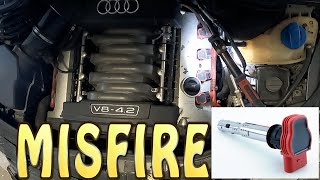
Typical fix: Replace the faulty ignition coil. 🎬 Watch: How to replace an ignition coil on the 4.2L engine. It's often recommended to replace all 8 coils and spark plugs at the same time for preventative maintenance, especially if they are original or old.
Est. part cost: $30-$60 per coil - Worn Spark Plug 🔴 High Probability
How to confirm: After confirming the ignition coil is good, inspect the spark plug for cylinder 8. Look for wear, fouling, or damage. If the coil swap didn't move the misfire, swap the spark plug from cylinder 8 with another cylinder. If the misfire code follows the plug, it's bad.
Typical fix: Replace the spark plug. It is best practice to replace all 8 spark plugs as a set to ensure even performance and prevent future misfires.
Est. part cost: $15-$25 per plug - Carbon Buildup on Intake Valves 🟡 Medium Probability This is a well-documented issue with Audi's FSI (direct injection) engines. Oil vapor from the PCV system bakes onto the intake valves since there is no fuel washing over them. This restricts airflow, causing turbulence and misfires. Symptoms often appear between 60,000 and 100,000 miles.
How to confirm: This requires visual inspection using a borescope inserted into the intake port with the intake manifold removed. A significant loss of power and misfires on multiple cylinders that are not resolved by ignition or fuel system parts are strong indicators.
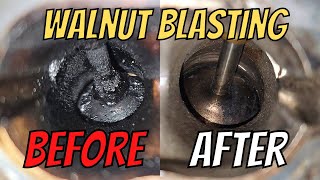
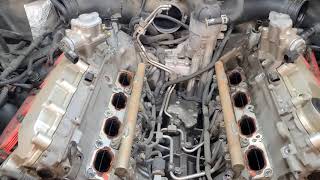
Typical fix: The intake manifold must be removed and the valves cleaned. The most effective method is walnut shell blasting, which uses crushed walnut shells to safely blast the carbon off the valves. Chemical cleaning sprays are generally considered ineffective for heavy buildup.
Est. part cost: $50-$100 for gaskets and seals - Faulty Fuel Injector ⚪ Low Probability
How to confirm: If ignition components and carbon buildup are ruled out, the fuel injector is the next suspect. A faulty injector can get clogged or stuck open. Diagnosis can involve checking its resistance or swapping it with another cylinder, though this is a labor-intensive job requiring intake manifold removal. An owner on AudiWorld forums with multiple misfire codes, including P0308, proceeded to replace injectors after coils and plugs did not solve the issue.
Typical fix: Replace the faulty fuel injector. It's often recommended to replace all 8 as a set if they are high-mileage. New injector seals are required for reinstallation.
Est. part cost: $70-$150 per injector
Rare But Worth Checking
- Vacuum Leak (PCV System): A leak in a vacuum line, intake manifold gasket, or the PCV (Positive Crankcase Ventilation) system can introduce unmetered air and cause a lean condition, leading to misfires. The PCV valve diaphragm is a known failure point on this platform, often tearing and creating a significant vacuum leak.
- Intake Manifold Runner Flap/Motor Issue: The 4.2L FSI engine has intake manifold runner flaps that adjust airflow. The motors or position sensors for these flaps can fail, causing a variety of fault codes (such as P2004, P2006) and potentially contributing to misfires. Audi has issued TSBs for related issues on similar engines.
- Low Engine Compression: Mechanical engine issues like a burnt valve, worn piston rings, or a problem with the timing chain system can cause a loss of compression in cylinder 8, resulting in a persistent misfire. A compression test is needed to diagnose this. Timing chain guide wear is a known issue on the 4.2L V8, which can lead to timing-related misfires.
- ECM Software Update Needed: A Technical Service Bulletin (TSB #A01166020322224) for a similar Audi model indicates that an ECM software update can correct random misfire codes, including P0308. This should be considered if common hardware fixes don't resolve the issue.
Diagnosis Steps
- Read the code with an OBD-II scanner (VCDS/VAG-COM is preferred for Audi) to confirm P0308 and check for any other codes.
- Locate Cylinder 8. On the Audi 4.2L V8, the cylinders are numbered 1-4 on the passenger side (right side, front to back) and 5-8 on the driver's side (left side, front to back). Cylinder 8 is the one closest to the firewall on the driver's side.
- Swap the ignition coil from cylinder 8 with the coil from cylinder 7 (the one in front of it). Clear the codes and run the engine. If the code changes to P0307, you have a bad ignition coil.
- If the misfire remains on cylinder 8, swap the spark plug from cylinder 8 with cylinder 7. Clear codes and re-test. If the code moves to P0307, the spark plug is faulty.
- If the misfire still stays on cylinder 8, inspect the wiring harness and connector for the ignition coil and fuel injector on cylinder 8 for any visible damage or corrosion.
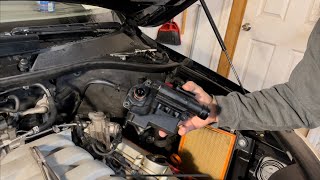
- Check for vacuum leaks. A common source is the PCV valve. With the engine running, try to remove the oil cap. If there is extreme suction and it's difficult to remove, the PCV diaphragm is likely torn.
- If no external issues are found, the next steps involve more advanced diagnostics. Consider the high probability of carbon buildup. This requires removing the intake manifold for inspection with a borescope.
- If carbon buildup is not the cause, test the fuel injector. This may involve checking its electrical resistance or having it professionally flow-tested, which requires removing the intake manifold.
- As a final step, perform a compression test on cylinder 8 to rule out mechanical engine problems like worn piston rings, bad valves, or timing issues.
Parts You'll Likely Need
- Ignition Coil
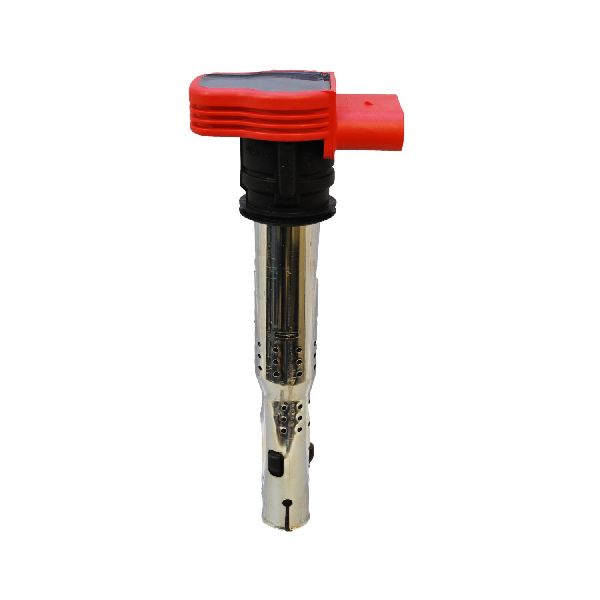
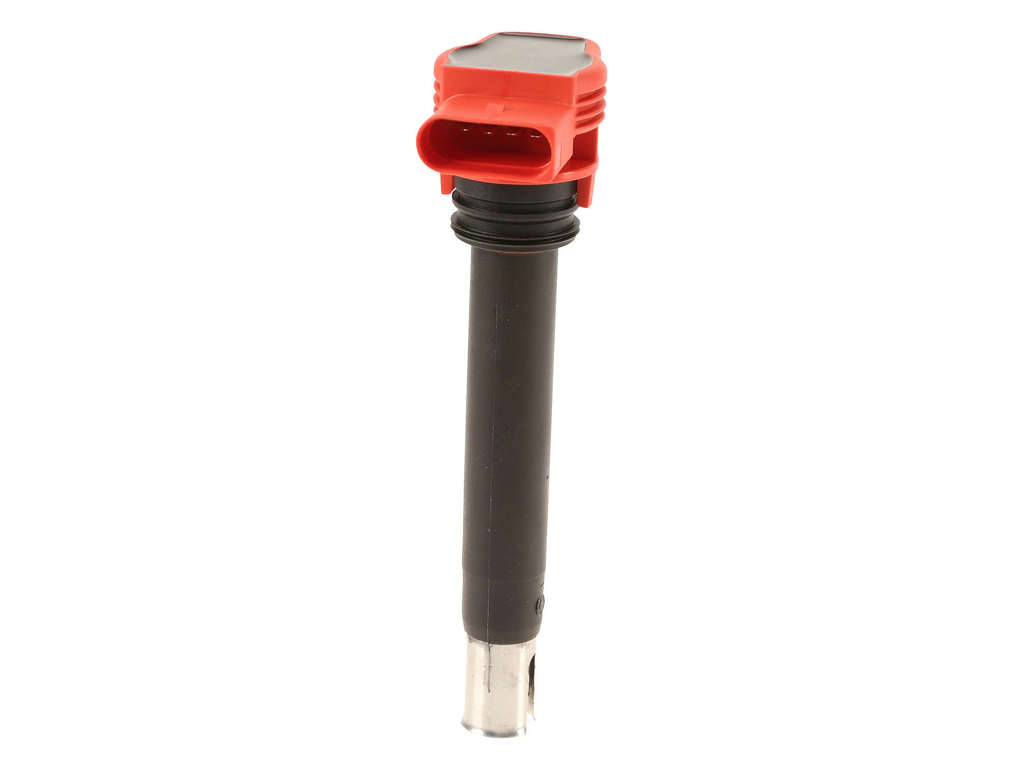
(OEM #06E905115E)— This is one of the most frequent failure points for a single-cylinder misfire. Heat and age cause the internal windings to fail. The part number has been superseded multiple times; 06E905115E or 06E905115F are common replacements.
Trusted brands: Bosch, NGK, Eldor, Beru
OEM price range: $50-$70
Aftermarket price range: $30-$50 - Spark Plug
(OEM #101905622)— Spark plugs are a regular maintenance item and a worn electrode or cracked insulator will cause a misfire.
Trusted brands: NGK, Bosch
OEM price range: $20-$30
Aftermarket price range: $15-$25 - Fuel Injector
(OEM #079906036C)— Becomes a likely cause if ignition parts and carbon buildup are ruled out. Can become clogged or fail electronically. FCP Euro offers a kit with Hitachi injectors.
Related Codes That Often Appear With This One
- P0300 — This code means 'Random/Multiple Cylinder Misfire Detected'. It often appears with P0308 if the underlying issue, like severe carbon buildup, a vacuum leak, or a fuel delivery problem, is affecting more than just cylinder 8.
- P0301-P0307 — If other cylinder-specific misfire codes are present, it strongly points towards a systemic problem like severe carbon buildup, a major vacuum leak, or a fuel delivery issue affecting the entire engine.
- P0171 / P0174 — These 'System Too Lean' codes indicate too much air or not enough fuel. They can be triggered alongside a misfire code if the root cause is a large vacuum leak, such as from a failed PCV valve.
Technical Service Bulletins (TSBs) & Recalls
- A01166020322224: An ECM software update may be available to correct false misfire detection for codes P0300 through P0308.
Platform-Specific Known Issues
- Carbon Buildup: As a direct-injection (FSI) engine, the 4.2L V8 is highly susceptible to carbon deposits on the intake valves, which do not get washed by fuel. This is a primary cause of misfires on this platform, especially over 60,000 miles. Dealerships and independent shops quote between $800 and $1500 for a walnut shell blasting service to clean the valves. Some owners perform the cleaning as a DIY project.
- Timing Chain Guide Wear: The plastic timing chain guides on the rear-mounted timing system are a known weak point. They can become brittle and break, causing chain slack, rattling noises on startup, and eventually incorrect cam timing that can lead to misfires or catastrophic engine failure. This is an engine-out service and a very expensive repair.
- PCV Valve Failure: The diaphragm in the PCV/oil separator valve is prone to tearing, causing a large unmetered air leak into the intake. This often results in a rough idle, lean codes (P0171/P0174), and can contribute to misfires.
Mechanic-Grade Diagnostic Values
- High-Pressure Fuel Rail (Actual vs. Specified) — expected: At idle, specified and actual should both be around 30-40 bar. Under load, pressure should rise and track closely to the specified value, up to 136 bar (1973 psi).. Failure: If the actual pressure is significantly lower than specified, especially under load, it can indicate a failing High-Pressure Fuel Pump (HPFP), a leak, or a faulty sensor. A reading stuck at low pressure (e.g., 6-7 bar) points to a major HPFP issue.
- Low-Pressure Fuel System — expected: The low-pressure side feeding the HPFPs should maintain around 6 bar (approx. 87 psi).. Failure: A drop in low-side pressure will starve the HPFPs and cause misfires under load.
- Fuel Injector Resistance — expected: For this high-impedance injector, the resistance should be between 12.0 and 20.0 ohms at room temperature.. Failure: A reading significantly outside this range, or an open circuit (infinite resistance), indicates a failed injector coil. All injectors should have very similar resistance values.
Hidden / Shadow Codes Worth Checking
- P1923 - Please Check DTC Memory of ECU Number 2: On some Audi V8 models with a dual-ECU (master/slave) setup, a significant fault like a misfire in one ECU (Engine II) will store this pointer code in the primary ECU (Engine I). This indicates that the root cause fault is stored in the other module. (see via VCDS (VAG-COM) or other advanced Audi-specific scan tools are required to read both Engine (01) and Engine II (11) control modules.)
Scan Tool Commands That Help
- VCDS (VAG-COM): Measuring Value Blocks (MVB) or Advanced Measuring Values — Use this to monitor the live misfire counter for each cylinder (e.g., Blocks 015, 016 on some ECUs). This can confirm if the misfire is actively occurring. Also, use it to log specified vs. actual fuel rail pressure (e.g., Block 140/141) during a drive to diagnose fuel delivery issues.
- VCDS (VAG-COM): Output Tests — Can be used to individually cycle components like the N80 EVAP purge valve or fuel pump relays to check for function, helping to rule out related system faults that could contribute to fuel trim or air mixture problems.
Wiring & Ground Locations
- Main Engine Ground Strap — Typically located on the left (driver's side) front longitudinal member in the engine compartment.. A corroded or loose main engine ground can cause unstable voltage to the ECM and ignition coils, leading to erratic behavior and misfires that are difficult to diagnose. Multiple, seemingly unrelated electrical faults can also be a symptom.
- ECM Ground Connections — The Engine Control Module (J623) has multiple ground points. A key one is often found in the engine pre-wiring harness itself. The ECM is located in the plenum chamber (under the windshield cowl).. A specific bad ground for an injector or coil driver circuit within the ECM harness can cause a single-cylinder misfire. Water intrusion into the plenum chamber is a known issue that can corrode these connections.
- Ignition Coil Connector (N328 for Cyl. 8) — On the cylinder 8 ignition coil. Pin 1 is power (12V+), Pin 2 is signal ground, Pin 3 is the trigger signal from the ECM, and Pin 4 is the power ground.. When diagnosing a persistent P0308 after swapping parts, testing for 12V at Pin 1, good ground at Pin 4, and a signal from the ECM at Pin 3 with a noid light or oscilloscope can confirm if the coil is receiving the correct inputs.
Real Owner Repair Stories
- AudiWorld Forums user 'RockyDave' (2009 Audi Q7 4.2L Prestige, 110,000 miles) — Persistent, intermittent misfires that were difficult to solve over a long period.
❌ Tried (didn't work) Replacing ignition coils, Replacing spark plugs, Replacing fuel injectors
✅ What actually fixed it Performing a walnut shell carbon cleaning of the intake valves. The user noted that while they knew it was a known issue, they didn't realize how severely it was impacting performance until it was finally done, which completely resolved the misfires. - Ross-Tech Forums user (2008 4.2L FSI Q7) — Rough running, barely able to idle, multiple random misfire codes. Vehicle had no prior repair history.
❌ Tried (didn't work) Replacing spark plugs, ignition coils, and all fuel injectors., Cleaning intake runners., Replacing battery.
✅ What actually fixed it The initial cause was a failed High-Pressure Fuel Pump (HPFP) which had shorted and destroyed the original Engine Control Unit (ECU). Replacing both HPFPs and the ECU resolved the short-to-ground faults but the misfires remained. The ultimate resolution is not posted in the thread, but the story highlights how a catastrophic HPFP failure can damage the ECU, leading to complex misfire symptoms even after the pump is replaced.
"I Checked Everything" — The Actual Cause
- A torn PCV valve diaphragm is a very common cause of unmetered air on this engine. While it is a vacuum leak, it may not be easily found with a low-pressure smoke test. A key symptom is excessive vacuum in the crankcase, making the oil cap very difficult to remove while the engine is running.
OEM Part Supersession History
06E905115A/B/C/D→06E905115E, 06E905115F— Progressive internal design updates by the manufacturer (Bosch, Eldor) to improve reliability and prevent premature failure from heat and vibration.
Heads up: It is highly recommended to replace coils in full sets of 8, or at least a full bank of 4, with the same revision/brand to ensure consistent performance. Mixing old and new revisions can sometimes cause subtle idle stability issues.
Model Year Variations Within This Range
- 2007-2010: These model years were equipped with the 4.2L FSI V8 engine.
- 2011-2015: For the 2011 model year, Audi replaced the naturally aspirated 3.6L V6 and 4.2L V8 engines with two versions of a supercharged 3.0L TFSI V6. Therefore, P0308 on a 2011+ Q7 would apply to a different engine platform.
- 2010 (Facelift): The 2010 model year received a facelift with updated exterior styling and a new MMI 3G infotainment system, but the 4.2L FSI engine remained until it was phased out for 2011.
Diagnostic Flowchart
Other Known Issues on This Vehicle
Issues unrelated to this code that are worth knowing about as an owner of this generation:
- Timing Chain Guide Failure 🔴 High — Becomes a concern between 80,000 and 150,000 miles. A cold start rattle is the primary warning sign. Repair is extremely expensive as it requires engine removal.
- Adaptive Air Suspension Leaks/Failure 🟠 Medium — Air struts can develop leaks with age and mileage, causing the vehicle to sag at one corner and wearing out the compressor. Common after 8-10 years or 100,000+ miles.
- MMI Infotainment System Failures 🟠 Medium — Often caused by water ingress into the interior, particularly from clogged sunroof drains, which damages electronic modules located in the cabin and trunk. Can also suffer from software glitches or component failure.
- Intake Manifold Runner Flap Failure 🟠 Medium — The plastic arms and linkages for the intake runner flaps can break, or the control motors/sensors can fail, leading to performance issues and fault codes (P2004, P2006, etc.). Audi has released TSBs and repair kits for related issues. (Ref: TSB 24 08 10 2016868/2)
- High-Pressure Fuel Pump (HPFP) Failure 🟠 Medium — The cam follower for the HPFP can wear out, leading to damage to the pump and camshaft. In some cases, a failing pump can cause electrical issues and multiple fault codes.
Used vs. New Parts: Buying Guide for This Vehicle
When a used part is the smart pick: Used parts are generally not recommended for the key components in a P0308 repair. However, major mechanical components like a complete used intake manifold assembly could be a cost-effective choice if diagnosed with a non-repairable internal flap issue, provided it comes from a lower-mileage donor vehicle.
Donor-vehicle mileage cap: roughly under 80000 miles for the part to have meaningful remaining life.
What to inspect on the donor part:
- For an intake manifold, inspect all vacuum nipples for cracks.
- Check the plastic arms for the runner flap actuators; they should be intact, not brittle or broken.
- If possible, look inside the ports with a flashlight to check for excessive oil pooling or obvious damage.
OEM-only on this vehicle (don't cheap out):
- PCV Valve / Oil Separator: Aftermarket PCV diaphragms are notoriously unreliable and often fail quickly. It is strongly recommended to use an OEM or OE-supplier part.
- Fuel Injectors: While quality aftermarket options exist (e.g., Hitachi), cheap, unbranded injectors are a significant risk and can cause poor performance or fail entirely. Stick to OEM or known OE brands.
Aftermarket brands forum-validated for this vehicle:
- Ignition Coils: Bosch, NGK, Eldor (often the OEM supplier).
- Spark Plugs: NGK, Bosch.
- Gaskets (Intake, etc.): Victor Reinz, Elring.
Brands owners have reported issues with on this vehicle:
- Unbranded, 'no-name' ignition coils and fuel injectors from online marketplaces. These often have high failure rates and do not perform to OEM specifications, leading to persistent issues.
Real Owner Stories
Aggregated from forums and TSBs cited above. Mileages and costs reflect what owners reported in those sources.
2008 Audi Q7 4.2L FSI V8
Symptoms: Multiple cylinder misfires, rough running, and barely idles.
What fixed it: The diagnostic process involved replacing high-pressure fuel pumps (HPFPs), the ECU, fuel injectors, and cleaning intake runners.
Source hint: AudiWorld forum thread '08 4.2fsi q7 multiple cyl misfire rough running barely idles wits end'
2007-2015 Audi Q7 4.2L FSI V8 — ~80000 miles
Symptoms: Significant loss of power and misfires on multiple cylinders not resolved by ignition or fuel system parts.
What fixed it: Walnut shell blasting to remove carbon buildup from the intake valves.
Cost: $800-$1500
Source hint: vehicle_specific_issues section citing dealership and independent shop quotes
2007-2015 Audi Q7 4.2L FSI V8
Symptoms: Persistent multi-cylinder misfire issue after coils and plugs failed to fix it.
What fixed it: Replacing all 8 fuel injectors.
Source hint: AudiWorld forum thread '4.2l v8 injector replacement diy'
2007-2010 Audi A8 (D3) 4.2L FSI V8
Symptoms: Misfires caused by carbon deposits on the intake valves.
What fixed it: Carbon cleaning service.
Cost: $1500-$1500
Source hint: AudiWorld forum thread '4.2 fsi carbon cleaning'
Related OBD-II Codes
Frequently Asked Questions
Is there a software update for my Audi Q7 to address false misfire codes?
Where is cylinder 8 located on the 4.2L V8 engine?
How much does it cost to fix the carbon buildup issue on the Q7 4.2L FSI?
Can a bad PCV valve cause a P0308 code on my Audi?
What is the recommended method for cleaning carbon off the intake valves?
Should I replace just the one faulty ignition coil or all of them?
Helpful Videos
Used OEM Parts in Stock


New Aftermarket Parts Available



The information in this article is provided for general reference and educational purposes only. Vehicle specifications, procedures, and part compatibility can vary by production date, trim level, and region. Always consult your vehicle's factory service manual and verify part numbers before purchasing or performing repairs. Safety-critical components such as airbags, seat belts, and braking systems should be installed by a qualified professional.
- Audi Q7:
- 🎬 Helpful Videos
- 🛍️ Shop This Part
- What's Unique About the 2007-2015 Audi Q7
- Symptoms You May Notice
- Most Likely Causes
- Rare But Worth Checking
- Diagnosis Steps
- Parts You'll Likely Need
- Related Codes That Often Appear With This One
- Technical Service Bulletins (TSBs) & Recalls
- Platform-Specific Known Issues
- Mechanic-Grade Diagnostic Values
- Hidden / Shadow Codes Worth Checking
- Scan Tool Commands That Help
- Wiring & Ground Locations
- Real Owner Repair Stories
- "I Checked Everything" — The Actual Cause
- OEM Part Supersession History
- Model Year Variations Within This Range
- Diagnostic Flowchart
- Other Known Issues on This Vehicle
- Used vs. New Parts: Buying Guide for This Vehicle
- Real Owner Stories
- 2008 Audi Q7 4.2L FSI V8
- 2007-2015 Audi Q7 4.2L FSI V8 — ~80000 miles
- 2007-2015 Audi Q7 4.2L FSI V8
- 2007-2010 Audi A8 (D3) 4.2L FSI V8
- Related OBD-II Codes
- Frequently Asked Questions
- 🎟️ Get 5% Off