

P0307 on 2015 Ram 3500: Cylinder 7 Misfire Causes and Fixes
P0307 on a 2015 Ram 3500 with a HEMI V8 engine indicates a misfire in cylinder 7. The most common fix is replacing a faulty ignition coil or spark plug. However, this code can also be an early warning of a more serious camshaft/lifter failure, a known issue for these engines, often preceded by a 'Hemi tick'.
- P0307 specifically points to a misfire in cylinder 7, the rearmost cylinder on the driver's side of the HEMI V8 engine.
- Always start your diagnosis with the simplest and most common fixes: swapping the ignition coil and inspecting/replacing the spark plugs.
- A flashing check engine light signals a severe misfire; stop driving to prevent expensive damage to the catalytic converter.
- If basic ignition and fuel component swaps don't resolve the issue, the problem is likely the well-known HEMI 'lifter tick' issue, which requires major mechanical repair of the camshaft and lifters.
What's Unique About the 2015-2015 Ram 3500
This code applies only to the V8 gasoline engines (5.7L & 6.4L HEMI) available in the 2015 Ram 3500, as the 6.7L Cummins is an inline-6 and does not have a seventh cylinder. While ignition components are a frequent cause of misfires on many vehicles, HEMI engines of this era are also known for a specific mechanical issue involving the camshaft and lifters. A seized lifter roller can wear down a camshaft lobe, leading to a persistent misfire that won't be fixed by new plugs or coils. This failure is often, but not always, preceded by a distinct metallic ticking sound from the engine.
🎬 Watch: Diagnosing the classic HEMI tick and misfire.Diagnostic Flowchart
Tap your situation to follow the diagnostic path that matches what you're seeing on this vehicle.
Symptoms You May Notice
- Rough or shaky idle
- Hesitation or stumbling during acceleration
- Noticeable loss of engine power
- Flashing Check Engine Light
- Reduced fuel economy
- Engine sputtering or running poorly, especially under load
- A rhythmic metallic ticking or tapping sound (the 'Hemi tick') from the driver's side of the engine bay.
- Replacing oxygen sensors. A misfire will cause the O2 sensors to report abnormal readings, but they are reacting to the problem, not causing it.
Most Likely Causes
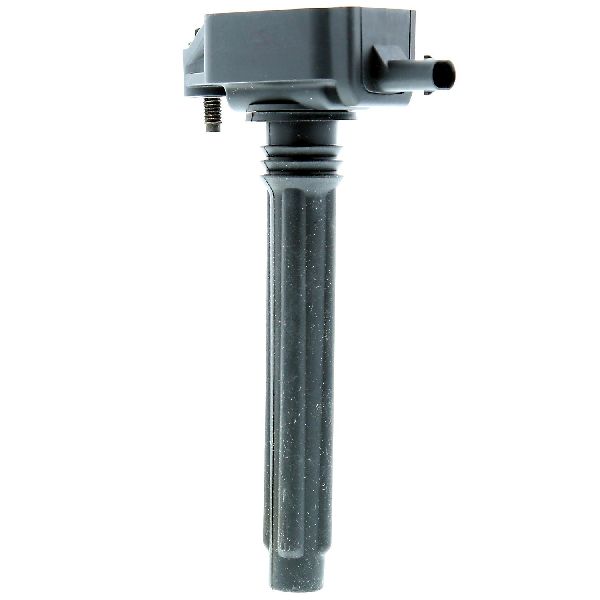
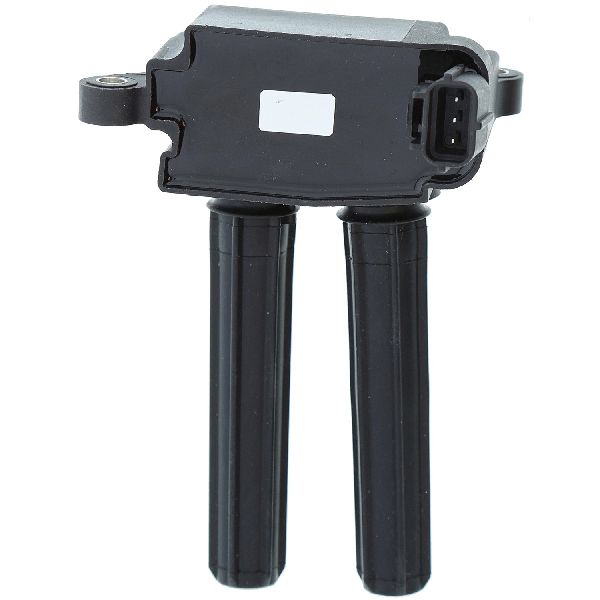
- Faulty Ignition Coil 🔴 High Probability The coil-on-plug design exposes the coils to significant heat and vibration, making them a common failure item on modern engines like the HEMI. They are a frequent first point of failure for a single-cylinder misfire.
How to confirm: Swap the ignition coil from cylinder 7 with another cylinder (e.g., cylinder 1). Clear the codes and drive the truck. If the code changes to P0301, the coil is faulty. This is the universally recommended first diagnostic step.
Typical fix: Replace the faulty ignition coil. While some owners replace them in sets, it is generally acceptable to replace only the failed one.
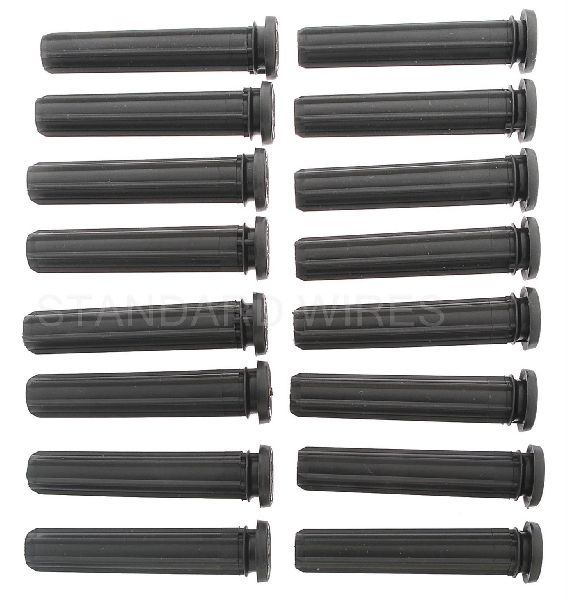
Est. part cost: $40-$100 - Worn or Fouled Spark Plug 🔴 High Probability HEMI V8 engines use two spark plugs per cylinder (16 total), increasing the chances of a single plug failing. They are a regular maintenance item and wear out over time, causing a weak or absent spark.
How to confirm: After confirming the coil is good, remove the two spark plugs from cylinder 7. Inspect for wear (worn electrode), carbon fouling, oil contamination, or physical damage to the ceramic insulator. Compare them to a plug from a working cylinder.
Typical fix: Replace the spark plugs. It is best practice to replace all 16 spark plugs at the same time for balanced engine performance and to reset the service interval.
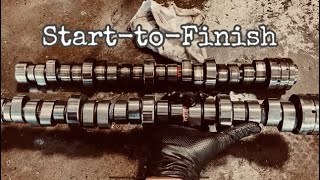
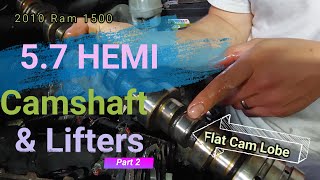
Est. part cost: $80-$200 for a full set of 16 - Failed Camshaft Lobe / Lifter 🟡 Medium Probability The 5.7L and 6.4L HEMI engines are known to have issues with lifter rollers failing, which then grinds down and flattens the corresponding camshaft lobe. This is often preceded by a 'Hemi tick' noise. While often associated with MDS (Multi-Displacement System) cylinders, this failure can occur on any cylinder, including the non-MDS cylinder 7, due to potential oiling issues or component defects.
How to confirm: If new plugs and coils do not resolve the misfire, a mechanical issue is likely. A definitive, though more involved, check is to remove the driver's side valve cover and visually inspect the rocker arms on cylinder 7 while the engine is manually cranked. Reduced movement compared to other cylinders indicates a flattened cam lobe. A compression test may also show low readings.
Typical fix: This is a major repair requiring the replacement of the camshaft, all 16 lifters (it is highly recommended to replace all of them, not just the failed one), head gaskets, and associated components like bolts and seals. Many owners opt for an MDS delete kit at this time.
Est. part cost: $800-$2000+ - Faulty Fuel Injector ⚪ Low Probability
How to confirm: After ruling out spark, the fuel injector is the next suspect. You can listen for a consistent clicking sound from the injector with a mechanic's stethoscope. A more definitive test is to swap the injector from cylinder 7 with another cylinder and see if the misfire code follows. This requires removing the fuel rail.
Typical fix: Replace the faulty fuel injector. It's often recommended to replace them as a set if the vehicle has high mileage, as others may fail soon.
Est. part cost: $70-$150 - Failed MDS Solenoid ⚪ Low Probability The Multi-Displacement System (MDS) uses electronic solenoids to deactivate cylinders. A failure of one of these solenoids can sometimes cause a misfire on a specific cylinder, as reported by some owners.
How to confirm: Diagnosing a faulty MDS solenoid is more complex and may require advanced scan tools that can actuate the solenoids. The solenoids are located under the intake manifold.
Typical fix: Replace the MDS solenoids. Since accessing them requires removing the intake manifold, it is common practice to replace all four at the same time.
Est. part cost: $100-$250 for a set of four
Rare But Worth Checking
- Intake Manifold Gasket Leak: A vacuum leak near the intake runner for cylinder 7 can lean out the air/fuel mixture and cause a misfire. This might be accompanied by a hissing sound at idle and could potentially throw a lean code as well.
- Low Cylinder Compression: Beyond a cam/lifter issue, low compression can be caused by a burnt exhaust valve, a broken valve spring, or worn piston rings. A compression test followed by a cylinder leak-down test will diagnose this. A broken valve spring was the cause of a misfire misdiagnosed as lifter failure in one forum thread.
- Wiring Harness Issue: Damage or corrosion to the wiring or connector for the ignition coil or fuel injector on cylinder 7 can interrupt the signal and cause a misfire. A visual inspection and testing for power/ground at the connector is necessary.
Diagnosis Steps
- Use an OBD-II scanner to confirm P0307 is the primary code. Note any other codes, but address the specific cylinder misfire first.
- Locate cylinder 7, which is the rear-most cylinder on the driver's side of the engine.
- Swap the ignition coil from cylinder 7 with the coil from cylinder 1 (front driver's side). Clear the codes, run the engine, and rescan. If the code changes to P0301, the coil is bad and needs replacement.
- If the misfire remains on cylinder 7, swap the two spark plugs from cylinder 7 with those from cylinder 1. If the code moves to P0301, you have faulty plugs. It's recommended to replace all 16 if they are due for service.
- If the misfire persists on cylinder 7, inspect the wiring and connector to the coil and fuel injector for any visible damage, looseness, or corrosion.
- Listen for a distinct 'Hemi tick' from the driver's side valve cover area. This is a strong indicator of a potential cam/lifter issue.
- If spark components are ruled out, suspect a fuel injector. Swap the injector from cylinder 7 with another cylinder. If the misfire code follows the injector, replace the injector.
- If all of the above steps fail to resolve the P0307 code, a mechanical issue is highly probable. Perform a compression test on cylinder 7 and compare it to a healthy cylinder. A significant drop in pressure points to an internal problem.
- For a suspected lifter/cam issue, the most reliable confirmation is to remove the driver's side valve cover and observe the rocker arm movement for cylinder 7 as the engine is manually rotated. Diminished movement compared to others confirms a wiped cam lobe.
- If compression is low, a cylinder leak-down test can further pinpoint the source (e.g., valves vs. piston rings).
Parts You'll Likely Need
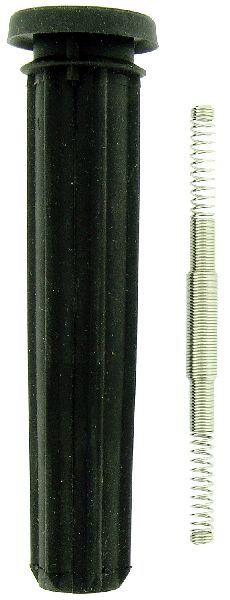
- Ignition Coil
(OEM #68238603AA)— This is one of the most common failure points for a single-cylinder misfire on the HEMI engine.
Trusted brands: Mopar, NGK, Delphi
OEM price range: $60-$100
Aftermarket price range: $40-$70 - Spark Plugs
(OEM #NGK LZFR5C-11 (for 5.7L), NGK ILZKR7B-11GS (for 6.4L))— As a routine maintenance item, worn spark plugs are a frequent cause of misfires. The HEMI engines require 16 plugs.
Trusted brands: NGK, Champion
OEM price range: $150-$250 (set of 16)
Aftermarket price range: $80-$160 (set of 16) - Camshaft and Lifter Kit
(OEM #53022263AF (Camshaft, example), 5038785AD/5038786AD (Lifters))— Required if the misfire is caused by the known HEMI lifter failure issue, which also damages the camshaft. Kits usually include the cam, all 16 lifters, gaskets, and bolts.
Trusted brands: Mopar
Related Codes That Often Appear With This One
- P0300 — If the misfire is intermittent or starting to affect other cylinders, a P0300 (Random/Multiple Cylinder Misfire) may appear alongside P0307.
Technical Service Bulletins (TSBs) & Recalls
- 1810722REVA - Lists P0307 as 'Cylinder 7 Misfire'.
- 18-062-16 - Lists P0307 as 'Cylinder 7 Misfire'.
- 18-055-15 - Lists P0307 as 'Cylinder 7 Misfire'.
- 18-031-17 REV. B - A PCM software update for 2017 models to address rough idle and other DTCs, showing that software can be a factor in engine performance diagnostics.
- 18-006-17 REV. A - A PCM flash for 2015 Ram 1500s with the 5.7L engine to address various DTCs and enhance diagnostics, indicating ongoing software refinements by the manufacturer.
Platform-Specific Known Issues
- Camshaft/Lifter Failure: A well-documented issue on 5.7L and 6.4L HEMI engines is the failure of the roller on a hydraulic lifter. The roller bearing can seize, causing the lifter to stop rotating and grind against the camshaft, flattening the lobe. This results in a loss of valve lift and a persistent misfire. This is often preceded by a metallic ticking sound from the top of the engine. While the MDS system is often discussed, the failure can happen on any cylinder. Chrysler documents advise checking the Oil Control Valve (OCV) screen for metal debris; if debris is present, a full engine replacement may be recommended over just a cam/lifter job due to contamination.
Mechanic-Grade Diagnostic Values
- Fuel Injector Resistance — expected: Approximately 14.5 ohms +/- 1.2 ohms at 68°F (20°C). The consistency between injectors is most important; they should all be within 0.5 ohms of each other.. Failure: A reading of infinite (OL) indicates an open coil. A reading significantly lower than others indicates a short. A reading more than 1-2 ohms different from the others indicates a failing injector.
- Ignition Coil Primary Resistance — expected: Approximately 0.4 to 2 ohms, depending on the specific coil manufacturer.. Failure: A reading outside the specified range for the part.
- Ignition Coil Secondary Resistance — expected: Approximately 6,000 to 11,000 ohms.. Failure: A reading outside the specified range for the part.
- Fuel Pressure (Key On, Engine Off/Cranking) — expected: 58 PSI +/- 2 PSI.. Failure: Significantly lower pressure (e.g., 30 PSI) indicates a failing fuel pump or regulator.
Hidden / Shadow Codes Worth Checking
- Mode $06 Misfire Counters: The PCM tracks misfire events for each cylinder, even before they are frequent enough to set a P030x code. Viewing these counters can confirm which cylinder is misfiring. On Chrysler vehicles, this data is often labeled 'Which cylinder is misfiring' in the OBD II monitors section of a scan tool. (see via Professional scan tool like wiTECH or other advanced scanners with Mode $06 capabilities.)
Scan Tool Commands That Help
- wiTECH or equivalent professional scan tool: Misfire Counters / 'Which cylinder is misfiring' — Use this live data screen to confirm that cylinder 7 is the only one misfiring, or to see if other cylinders are also misfiring intermittently, which might not have set a code yet.
- wiTECH or equivalent professional scan tool: Crankshaft Variation Relearn / Adaptive Numerator Learn — If the PCM memory has been cleared or the battery disconnected, the misfire monitor may be disabled until the PCM relearns the crankshaft position sensor's profile. If your scan tool shows 'waiting' for the misfire monitor status, you must perform a series of specific drive cycles (often coasting down from a high speed) to re-enable misfire detection.
- wiTECH or equivalent professional scan tool: Fuel Injector Kill / Cylinder Power Balance — This bidirectional test allows you to disable the fuel injector for cylinder 7 and observe the change in engine RPM. If there is little or no change when cylinder 7 is disabled, it confirms that cylinder is not contributing power, verifying the misfire.
Wiring & Ground Locations
- G905A — Rear of the left cylinder head.. This is a primary ground point for the ignition system, including the ignition coils. A loose or corroded ground at this location can cause erratic spark and lead to misfires on one or more cylinders on that bank.
- Cylinder 7 Ignition Coil Connector — Rear-most coil on the driver's side of the engine.. The wiring to this connector can become brittle from heat or damaged. The pins to test are the (K17) DG/TN wire for the coil control signal from the PCM and the (K900) BK/DG wire for the ground.
- Cylinder 7 Fuel Injector Connector — Under the fuel rail, at the rear-most position on the driver's side.. The wiring to the injector can be damaged during other repairs. The pins to test are the (K17) DG/GY wire for the injector control signal from the PCM and the shared power feed wire.
Real Owner Repair Stories
- Reddit user in r/ram_trucks (2019 Ram 1500 5.7L, 135k miles) — Flashing check engine light, codes P0307 and P0300. Live data showed high misfire counts on cylinder 7 and a high injector pulse width.
❌ Tried (didn't work) Swapped ignition coils, Swapped spark plugs, Installed new spark plugs
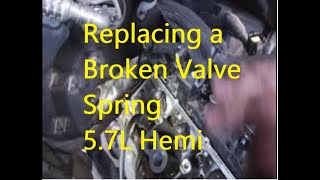
✅ What actually fixed it The fuel injectors for the misfiring cylinders were clogged. The user removed the fuel rail, flushed the injectors under pressure, and reinstalled them, which resolved the misfire. Black gunk and brown fluid came out of the injectors. - YouTube video by 'Reignited' (2005 Dodge Ram 5.7 Hemi) — No compression on cylinder 7, misfire code.
❌ Tried (didn't work) Initial diagnosis pointed towards common lifter/cam failure.
✅ What actually fixed it The cause was a broken exhaust valve spring on cylinder 7. The repair was done without removing the cylinder head by pressurizing the cylinder with compressed air to hold the valve up while replacing the spring.
OEM Part Supersession History
5038785AC, 53021726BC, 68060714AA (and others)→5038785AD— Mopar has updated the design of the hydraulic lifters for the HEMI engine multiple times to improve reliability and address failures.
Heads up: Part number 5038785AD is the latest revision and replaces numerous older part numbers. When replacing lifters, it is critical to use the most current part number available and replace all 16 at once.56029129AF→68238603AA— Ignition coil design was updated by Mopar.
Helpful Videos
Used OEM Parts in Stock

New Aftermarket Parts Available

The information in this article is provided for general reference and educational purposes only. Vehicle specifications, procedures, and part compatibility can vary by production date, trim level, and region. Always consult your vehicle's factory service manual and verify part numbers before purchasing or performing repairs. Safety-critical components such as airbags, seat belts, and braking systems should be installed by a qualified professional.
- Ram 3500:
- 🎬 Helpful Videos
- 🛍️ Shop This Part
- What's Unique About the 2015-2015 Ram 3500
- Diagnostic Flowchart
- Symptoms You May Notice
- Most Likely Causes
- Rare But Worth Checking
- Diagnosis Steps
- Parts You'll Likely Need
- Related Codes That Often Appear With This One
- Technical Service Bulletins (TSBs) & Recalls
- Platform-Specific Known Issues
- Mechanic-Grade Diagnostic Values
- Hidden / Shadow Codes Worth Checking
- Scan Tool Commands That Help
- Wiring & Ground Locations
- Real Owner Repair Stories
- OEM Part Supersession History
- 🎟️ Get 5% Off