

P0307 on 2020-2023 Ram 1500: Cylinder 7 Misfire Causes and Fixes
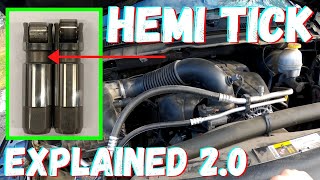
P0307 on a 2020-2023 Ram 1500 with the 5.7L HEMI engine indicates a misfire in cylinder #7. The most common causes are a bad ignition coil or a worn spark plug. A more serious, but well-documented, issue on this engine is a failed MDS lifter, which can destroy the camshaft and also trigger this code. This is often preceded by a distinct engine 'tick'.
- P0307 specifically points to a misfire in cylinder #7, which is the rearmost cylinder on the driver's side of the 5.7L HEMI engine.
- Always start your diagnosis with the simplest and most common fixes: swap the ignition coil, then inspect the spark plugs.
- A flashing Check Engine Light is a serious warning. Pull over when safe to prevent catastrophic damage to your catalytic converter.
- Be aware that on this specific engine, a persistent P0307 that isn't solved by ignition or fuel part swaps is a strong indicator of a failing MDS lifter, a more complex and expensive repair.
What's Unique About the 2020-2023 Ram 1500

On the 5.7L HEMI V8, a P0307 code isn't always a simple ignition problem. These engines are equipped with a Multi-Displacement System (MDS) that deactivates certain cylinders, including cylinder 7, to save fuel. This system relies on special hydraulic lifters that are a known weak point. A failing MDS lifter can get stuck or its roller bearings can fail, causing a loss of compression and a persistent misfire that won't be fixed by replacing ignition components. This failure often results in the lifter grinding against the camshaft, destroying the lobe and requiring replacement of both. Manufacturer service bulletins, like #18-002-25, group misfire codes like P0307 with cylinder deactivation system codes (P34xx), highlighting the known connection on these trucks.
Diagnostic Flowchart

Tap your situation to follow the diagnostic path that matches what you're seeing on this vehicle.
Symptoms You May Notice

- Rough idle or engine vibration
- Hesitation or stumbling during acceleration
- Noticeable loss of engine power
- Flashing or solid Check Engine Light
- Decreased fuel economy
- The Multi-Displacement System (MDS) may become disabled
- Audible 'ticking' or 'tapping' sound from the driver's side of the engine bay, which may be loudest at operating temperature.
- Replacing only spark plugs when the ignition coil was the actual cause.
- Replacing ignition and fuel components repeatedly when the underlying issue is a mechanical failure like a bad MDS lifter.
- Assuming a ticking noise is just a harmless 'Hemi tick' when it's actually a symptom of a failing lifter causing the misfire.
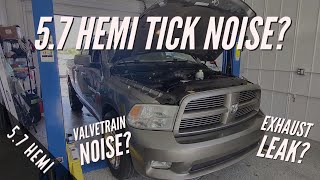
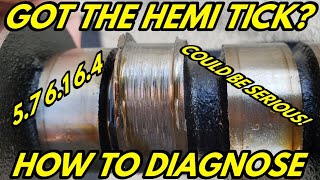
- Mistaking the sound of a cracked exhaust manifold for lifter tick. 🎬 Watch: How to tell if your tick is lifters or exhaust. Both can cause a ticking noise, but a cracked manifold is also a very common issue on these trucks and would not typically cause a persistent single-cylinder misfire code.
Most Likely Causes

- Faulty Ignition Coil 🔴 High Probability Coil-on-plug systems are common failure points due to constant exposure to engine heat and vibration. It's the most frequent and easiest-to-diagnose cause for a single-cylinder misfire.
How to confirm: Swap the ignition coil from cylinder 7 with another cylinder (e.g., cylinder 1). Clear the codes and drive the vehicle. If the code changes to P0301, the ignition coil is faulty.
Typical fix: Replace the faulty ignition coil. It is recommended to use a quality OEM (Mopar) or reputable aftermarket brand like NGK or Delphi.
Est. part cost: $50-$100 - Worn or Fouled Spark Plugs 🔴 High Probability The 5.7L HEMI uses two spark plugs per cylinder (16 total), increasing the chance of a single plug failing. They are a maintenance item and can become fouled by oil or carbon, leading to a weak or non-existent spark.
How to confirm: After confirming the coil is good, remove the two spark plugs from cylinder 7. Inspect for wear (worn electrode), damage (cracked porcelain), or heavy deposits. Compare them to plugs from a good cylinder.
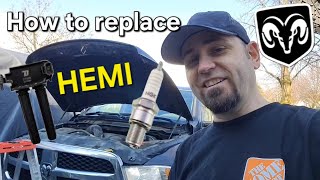
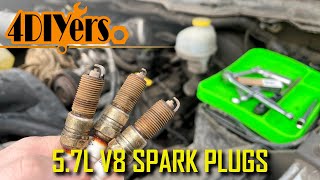
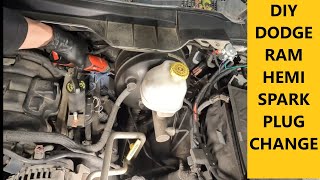
Typical fix: Replace the spark plugs. It is best practice to replace all 16 spark plugs at the same time for even performance and to maintain the service interval. 🎬 See the trick to replacing all 16 Hemi spark plugs.
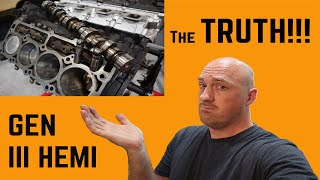
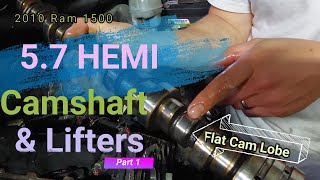
Est. part cost: $8-$25 per plug - Failed MDS Lifter / Camshaft Lobe Damage 🟡 Medium Probability The MDS lifters are a well-documented weak point on 5.7L HEMI engines across multiple vehicle platforms. The lifter's roller can seize or the internal mechanism can collapse, leading to a loss of valve motion and compression. The failed lifter then often destroys the corresponding camshaft lobe.
How to confirm: After ruling out ignition and fuel issues, a distinct 'tick' from the cylinder #7 area is a strong indicator. A compression test is necessary; a reading on cylinder 7 that is significantly lower than other cylinders (e.g., 50+ PSI lower) points to a mechanical problem. Visual inspection requires removing the valve cover and potentially the cylinder head.
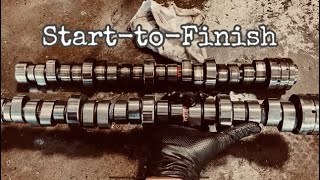
Typical fix: This is a major repair requiring the removal of the cylinder head to replace the faulty lifters and the camshaft, which is almost always damaged by the failed lifter. 🎬 Watch this step-by-step guide to replacing Hemi lifters and camshafts. All 16 lifters and the cam are typically replaced at the same time.
Est. part cost: $400-$800 for lifters and camshaft kit - Faulty Fuel Injector ⚪ Low Probability Injectors can become clogged with debris from fuel or fail electronically, preventing the correct amount of fuel from reaching the cylinder. While less common than ignition or lifter issues, it does happen.
How to confirm: Swap the fuel injector from cylinder 7 with another cylinder (e.g., cylinder 3). This is more involved than swapping a coil. If the misfire code moves to P0303, the injector is the culprit. Sometimes, cleaning the injectors can resolve the issue.
Typical fix: Replace the faulty fuel injector. It's often recommended to replace the set if the vehicle has high mileage.
Est. part cost: $70-$150
Rare But Worth Checking
- Broken Valve Spring: The HEMI engines can experience valve spring failure, especially at higher mileage. This will cause a complete loss of compression for that valve and a severe misfire. A compression test would confirm this. The repair involves replacing the spring, which can sometimes be done without removing the cylinder head.
- Intake Manifold Gasket Leak: A vacuum leak near the cylinder 7 intake runner can lean out the air/fuel mixture enough to cause a misfire. This might also be accompanied by a P0171 (Bank 1 Lean) code.
- Low Engine Compression: Beyond a failed lifter or broken valve spring, low compression can be caused by a damaged piston, worn piston rings, or a valve seat issue, though these are less common on this specific platform without a preceding lifter failure.
Diagnosis Steps
- Read the trouble codes with an OBD-II scanner and note if the Check Engine Light is flashing, which indicates a severe misfire.
- Identify cylinder #7. On the 5.7L HEMI, it is the rearmost cylinder on the driver's side (Bank 1).
- Listen for an audible 'Hemi tick' at idle, especially when the engine is warm. Use a mechanic's stethoscope to isolate the sound near the driver's side valve cover, over cylinder #7.
- Swap the ignition coil from cylinder #7 with the coil from cylinder #1 (front, driver's side). Clear the codes and test drive. If the code changes to P0301, the coil is bad.
- If the code remains P0307, inspect the two spark plugs in cylinder #7. Replace them if they are worn, fouled, or damaged. It's best to replace all 16.
- If the problem persists, check for a fuel delivery problem. A more advanced step is to swap the fuel injector from cylinder #7 with another cylinder and see if the misfire follows.
- If ignition and fuel are ruled out, perform an engine compression test on cylinder #7 and compare it to another cylinder (e.g., cylinder #1). A significant drop in pressure (over 20%) indicates a mechanical issue.
- If compression is low, remove the driver's side valve cover to inspect valve springs for breakage and pushrods for being unseated.
- If a mechanical issue is confirmed, professional diagnosis is recommended to inspect the valvetrain (lifters, camshaft, valve springs), as this likely indicates a lifter/camshaft failure.
Parts You'll Likely Need
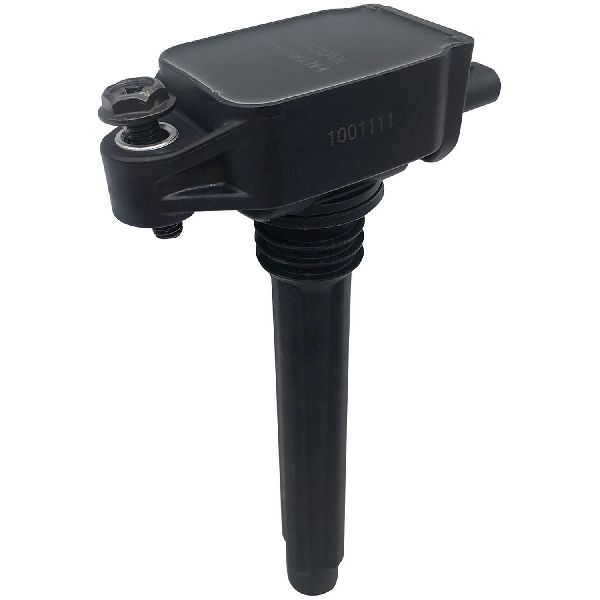
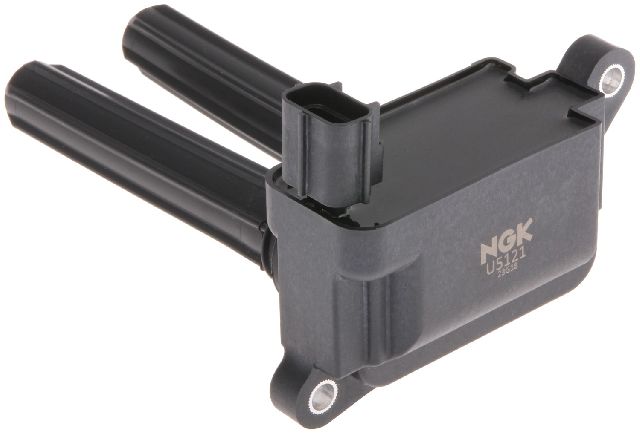
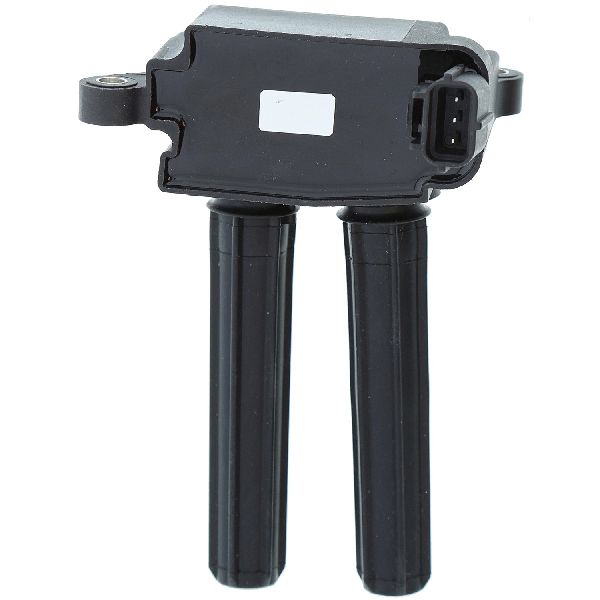
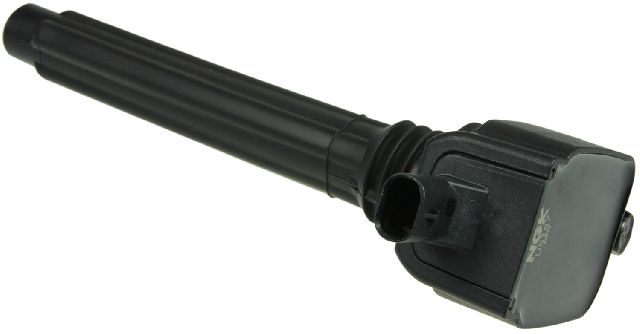
- Ignition Coil
(OEM #68238603AA)— This is the most common electrical component to fail and cause a single-cylinder misfire. It's the first part to check via the swap-and-see diagnostic method.
Trusted brands: Mopar, NGK, Delphi
OEM price range: $60-$100
Aftermarket price range: $40-$80 - Spark Plugs
(OEM #SP143877AA (Mopar), NGK LZFR5C-11)— Spark plugs are a routine maintenance item and are essential for proper combustion. The HEMI engine uses two per cylinder, and they must be in good condition.
Trusted brands: Mopar, NGK, Champion
OEM price range: $15-$25 per plug
Aftermarket price range: $8-$18 per plug - MDS Valve Lifter and Camshaft Kit
(OEM #Multiple, often sold as a kit (e.g., Mopar 5038784AD for cam, 53021720AF for lifters))— For persistent P0307 codes where ignition/fuel issues are ruled out and a mechanical ticking noise is present, a failed MDS lifter and damaged camshaft are the most likely culprits on the 5.7L HEMI.
Related Codes That Often Appear With This One
- P0300 — If the misfire is intermittent or other cylinders are also beginning to misfire (e.g., due to a widespread fuel delivery issue or multiple failing lifters), a P0300 (Random/Multiple Cylinder Misfire) code may be stored alongside P0307.
- P3400 / P3449 / P3497 — As noted in TSB #18-002-25, these codes relate to the Cylinder Deactivation System (P3449 is specific to cylinder 7). Their presence with a P0307 strongly points towards an issue with the MDS system (lifters, solenoids) as the root cause of the misfire.
- P0171 — If the misfire is caused by a vacuum leak affecting Bank 1 (where cylinder 7 is located) or a clogged fuel injector on cylinder 7, the engine may run lean, triggering a P0171 (System Too Lean Bank 1) code.
Technical Service Bulletins (TSBs) & Recalls
- TSB #18-002-25: Groups misfire DTCs including P0307 with Cylinder Deactivation System codes (P3400, P3497, etc.), indicating a known link between the systems.
- TSB #1814522: Lists P0307 as part of a series of misfire codes related to potential electrical system issues or calibration.
- TSB #1800624: Mentions P0307 in a list of misfire codes that may be resolved by a PCM reprogramming.
Platform-Specific Known Issues
- MDS Lifter Failure: The most significant issue tied to this code on the 5.7L HEMI is the failure of the Multi-Displacement System (MDS) lifters. This is a well-documented problem that can cause a misfire code before leading to more severe engine damage if ignored. Forum discussions frequently link a 'Hemi tick' that progresses to a P030X misfire code, ultimately requiring lifter and camshaft replacement.
- TSB #18-002-25: This technical service bulletin directly links P0307 with MDS system fault codes (P34xx), instructing technicians to check for these related codes when diagnosing a misfire, which confirms the manufacturer's awareness of the connection.
- Owner Experiences: Owners on forums like 5thGenRams and RamForum.com report chasing a P0307 code by replacing plugs and coils with no success, only to find the root cause was a failed lifter. One user on RamForum.com noted the 'Hemi Tick' was strongest over cylinder #7 before the P0307 code appeared, confirming the audible warning sign.
Mechanic-Grade Diagnostic Values
- Ignition Coil Primary Resistance — expected: 0.558 - 0.682 Ohms at 70-80°F. Failure: A reading outside of this range indicates a faulty coil.
- Fuel Injector Resistance — expected: ~11.5 - 12.5 Ohms. Failure: A significantly higher or lower reading, or an open circuit (O.L.), indicates a failed injector coil.
- MDS Solenoid Resistance — expected: 10.3 Ohms at 68°F, varying with temperature (e.g., 13.4 Ohms at 200°F).. Failure: Readings outside the specified temperature-to-resistance range suggest a failing solenoid.
- MDS Solenoid Control Circuit to Ground — expected: Greater than 100 ohms.. Failure: Resistance below 100 ohms indicates a short to ground in the control circuit wiring.
Scan Tool Commands That Help
- Professional Scan Tool (e.g., wiTECH, Snap-on, Autel): Cylinder Power Balance Test — This is a crucial step after basic checks. The tool deactivates each cylinder one by one (by cutting fuel) and measures the RPM drop. If deactivating cylinder #7 causes little or no RPM drop compared to other cylinders, it confirms that cylinder #7 is not contributing power, isolating the fault without swapping parts.
- wiTECH or equivalent dealer-level tool: MDS Solenoid Actuation Test — If an MDS-related code (like P3449 for cylinder 7) is present with P0307, this command allows the technician to manually activate the solenoid for cylinder 7. An audible click should be heard. If there's no click, it points to a failed solenoid or a wiring issue, helping to confirm the MDS system as the root cause.
Wiring & Ground Locations
- Cylinder 7 Coil/Injector Wiring — The wiring for the cylinder #7 ignition coil and fuel injector runs in the main engine harness on the driver's side of the engine, towards the firewall.. Damage to this specific part of the harness from heat or chafing could interrupt the signal or power to the coil or injector, causing a misfire isolated to cylinder 7. A visual inspection and continuity test of these wires back to the PCM is a key step if component swaps don't solve the issue.
- PCM Ground Circuits — The Powertrain Control Module (PCM) relies on several ground points on the engine block and chassis. Key engine grounds are often located on or near the cylinder heads.. A poor ground connection for the PCM or the ignition system can cause erratic behavior, including misfires. While not specific to only cylinder 7, checking that the main engine-to-chassis and PCM grounds are clean and tight is a fundamental diagnostic step.
Real Owner Repair Stories
- RamForum.com user 'KDL' (2011 Ram 1500 5.7L Hemi) — P0307 code, truck runs fine under normal load but misfires and sputters badly under heavy load (like passing or going up a hill). Also had a persistent 'Hemi Tick' loudest over cylinder #7.
❌ Tried (didn't work) Changed spark plugs, Replaced #7 ignition coil, Visually inspected valve springs (appeared okay), Swapped fuel injectors between cylinder #1 and #7 (code remained on #7), Used Seafoam in fuel and oil
✅ What actually fixed it The user concluded that after exhausting all common ignition and fuel-related fixes, the problem was likely mechanical (cam/lifter issue) and decided to take it to a dealer for the major repair. - DodgeForum.com user 'phopkins38' (2017 Ram 1500 5.7L with 22,000 miles) — Recurrent P0307 code, lower performance, and higher fuel consumption. The owner had previously had all lifters replaced 1,000 miles prior due to a ticking noise.
❌ Tried (didn't work) Dealer re-flashed the PCM software., Dealer had previously replaced all 16 lifters.
✅ What actually fixed it The resolution was not posted, but the story is a high-value example of P0307 occurring even shortly after a major lifter replacement, highlighting the complexity of the issue. Other forum members advised the owner to immediately begin diagnostics by swapping the coil and plugs to rule out simple causes before suspecting a repeat mechanical failure.
OEM Part Supersession History
53021720AB, 53021720AC, 53021720AD, 53021720AE→5038784AD— Mopar has updated the part number for the hydraulic valve lifters (tappets) used in the HEMI engine over the years. These updates often involve design or material improvements to increase durability.
Heads up: While multiple part numbers exist, 5038784AD is a common current replacement part number that supersedes many previous versions. It is critical to use a full set of matching lifters when performing a replacement.
Model Year Variations Within This Range
- 2020-2023: Most 5.7L HEMI engines in the 2020-2023 Ram 1500 are equipped with the eTorque mild-hybrid system. This system adds a belt-starter generator and a small battery pack to improve fuel efficiency and provide a torque boost. While the fundamental engine design and its weaknesses (like MDS lifters) remain the same, the eTorque system adds another layer of complexity to the powertrain electronics.
Helpful Videos

Used OEM Parts in Stock


New Aftermarket Parts Available


The information in this article is provided for general reference and educational purposes only. Vehicle specifications, procedures, and part compatibility can vary by production date, trim level, and region. Always consult your vehicle's factory service manual and verify part numbers before purchasing or performing repairs. Safety-critical components such as airbags, seat belts, and braking systems should be installed by a qualified professional.
- Ram 1500:
- 🎬 Helpful Videos
- 🛍️ Shop This Part
- What's Unique About the 2020-2023 Ram 1500
- Diagnostic Flowchart
- Symptoms You May Notice
- Most Likely Causes
- Rare But Worth Checking
- Diagnosis Steps
- Parts You'll Likely Need
- Related Codes That Often Appear With This One
- Technical Service Bulletins (TSBs) & Recalls
- Platform-Specific Known Issues
- Mechanic-Grade Diagnostic Values
- Scan Tool Commands That Help
- Wiring & Ground Locations
- Real Owner Repair Stories
- OEM Part Supersession History
- Model Year Variations Within This Range
- 🎟️ Get 5% Off