

P0307 on 2009-2014 Jaguar XF V8: Cylinder 7 Misfire Causes and Fixes
P0307 on a Jaguar XF V8 indicates a misfire in cylinder 7. The most common cause is a failed ignition coil or a worn spark plug. Swapping the coil from cylinder 7 with another is a quick way to diagnose the problem. Expect to pay $40-$100 for an aftermarket coil and $10-$25 for a spark plug. If these don't fix it, the fuel injector is the next likely culprit, which is a more complex repair.
- P0307 on a 2009-2014 Jaguar XF means there is a misfire in cylinder 7, which is only possible on V8 models.
- The most probable cause is a bad ignition coil, followed by a worn spark plug.
- A simple DIY diagnostic is to swap the cylinder 7 ignition coil with one from another cylinder and see if the fault code follows the coil.
- Do not ignore a flashing check engine light, as it signals a severe misfire that can destroy your catalytic converter.
- While less common, clogged fuel injectors are a known issue on these cars, as documented in a Jaguar TSB.
What's Unique About the 2009-2014 Jaguar XF
The 2009-2014 Jaguar XF V8 models (both the early 4.2L and later 5.0L AJ-V8 engines) use a coil-on-plug ignition system, making individual cylinder misfires common as components age. While ignition parts are frequent culprits, Jaguar issued a Technical Service Bulletin (SSM-63697) highlighting that restricted fuel injectors due to poor fuel quality can also cause misfires on these engines. Owners on forums frequently report success fixing P0307 by replacing the ignition coil and/or spark plug. The 5.0L V8, being a direct injection engine, is also susceptible to carbon buildup on intake valves, which can contribute to misfires as it disrupts airflow into the cylinder.
Diagnostic Flowchart
Tap your situation to follow the diagnostic path that matches what you're seeing on this vehicle.
Symptoms You May Notice
- Flashing or solid Check Engine Light
- Rough or vibrating engine idle
- Engine hesitation or stumbling during acceleration
- Reduced engine power and sluggish performance
- Noticeable smell of gasoline from the exhaust
- Hard starting condition
- Replacing the oxygen (O2) sensor, as a misfire can affect its readings, making it appear faulty.
- Replacing the catalytic converter, which can be damaged by a persistent misfire but is not the root cause.
Most Likely Causes
- Failed Ignition Coil 🔴 High Probability Ignition coils are a common wear item on modern engines, and heat from the V8 engine bay contributes to their eventual failure. This is the most frequently reported fix in owner forums for a single-cylinder misfire.
How to confirm: Swap the ignition coil from cylinder 7 with another cylinder (e.g., cylinder 5). Clear the codes and drive the car. If the code changes to P0305, the coil is faulty.
Typical fix: Replace the faulty ignition coil. It is often recommended to replace the spark plug at the same time. Some owners choose to replace all 8 coils as a preventative measure if they are original.
Est. part cost: $40 - $151 - Worn or Fouled Spark Plug 🔴 High Probability Spark plugs are a maintenance item with a finite lifespan. An old or oil-fouled plug can't produce a strong enough spark for complete combustion. Oil can sometimes leak into the spark plug wells from a failing valve cover gasket, causing the misfire, a common observation in forum threads. 🎬 Watch this DIY guide for replacing spark plugs on the 4.2L.
How to confirm: After confirming the coil is good, remove the spark plug from cylinder 7. Inspect it for wear, carbon buildup, or oil fouling. Compare it to a plug from a working cylinder.
Typical fix: Replace the spark plug in cylinder 7. It is best practice to replace all 8 spark plugs as a set if they are near the end of their service life (typically 60,000-100,000 miles).
Est. part cost: $10 - $25 - Clogged or Faulty Fuel Injector 🟡 Medium Probability Jaguar TSB #SSM-63697 specifically mentions that poor fuel quality can restrict fuel injectors, leading to misfires. The 5.0L direct-injection (GDI) V8 injectors are particularly known to fail or become seized in the cylinder head due to carbon buildup and corrosion, making removal extremely difficult.
How to confirm: If swapping the coil and plug doesn't work, the injector is the next suspect. A mechanic can perform a fuel injector balance test. You can also listen for the injector's 'clicking' sound with a mechanic's stethoscope. If P0207 (Injector Circuit Fault) is also present, it strongly points to the injector or its wiring.
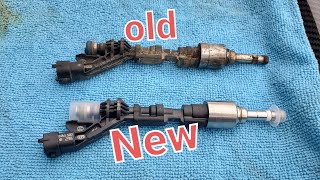
Typical fix: Replace the fuel injector for cylinder 7. This is a complex job on the 5.0L GDI engine, often requiring a special slide hammer puller (like tool 310-197) and new Teflon seals. Many DIYers attempt it, but forum posts show it can be challenging, with some resorting to professional help after struggling with a seized injector. 🎬 See how to remove a stuck fuel injector from the 5.0L.
Est. part cost: $40 - $300 - Vacuum Leak ⚪ Low Probability A leak in the intake manifold gasket near cylinder 7 can introduce unmetered air, disrupting the air-fuel ratio and causing a lean misfire. Aging plastic and rubber components in the engine bay, such as the PCV diaphragm or various vacuum hoses, can crack and cause leaks. The plastic intake manifolds on these engines are also known to develop cracks over time.
How to confirm: A mechanic can use a smoke machine to pressurize the intake system and visually identify the source of any leaks. A DIY method involves spraying brake cleaner near suspected leak points and listening for a change in engine idle.
Typical fix: Replace the leaking gasket, hose, or cracked intake manifold.
Est. part cost: $20 - $100
Rare But Worth Checking
- Low Engine Compression: This indicates a more serious internal engine problem, such as a worn piston ring, a failing valve, or a head gasket leak. A compression test is needed to confirm. A healthy cylinder should have compression within 15% of the others.
- Timing Chain Issues: The 5.0L V8 engines, particularly pre-2013 models, are known for issues with timing chain tensioners and guides. Wear can cause the chain to slacken or jump a tooth, leading to misfires and camshaft/crankshaft correlation codes (like P0016). A key symptom is a metallic rattle from the front of the engine on a cold start that lasts for a few seconds. This is a significant and expensive repair.
Diagnosis Steps
- Read the trouble codes with an OBD-II scanner and confirm P0307 is present. Note any other codes, like P0300, P0316, or P0207.
- Locate cylinder 7. On Jaguar V8s, cylinder 7 is the rear-most cylinder on the driver's side (left-hand bank, Bank 2).
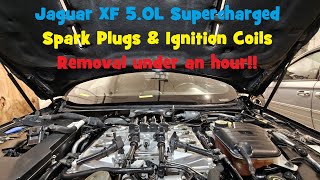
- Swap the ignition coil from cylinder 7 with an easily accessible cylinder (e.g., cylinder 5, the next one forward on the same bank). 🎬 Watch: Quick walkthrough for removing 5.0L spark plugs and coils.
- Clear the codes, start the engine, and let it run for a few minutes. Re-scan for codes.
- If the code has moved to P0305, the ignition coil is the culprit. Replace it.
- If the code remains P0307, swap the spark plug from cylinder 7 with the one from cylinder 5. Clear codes and re-test. If the code moves, the spark plug is bad.
- If the code still remains P0307, the issue is likely a fuel injector, wiring, or a compression problem. Inspect the wiring and connector for the cylinder 7 fuel injector for any visible damage.
- For further diagnosis, perform a compression test on cylinder 7 to rule out mechanical engine damage.
- If compression is good, the fuel injector is highly suspect. This may require professional diagnosis due to the difficulty of access and removal on the 5.0L engine.
Parts You'll Likely Need
- Ignition Coil
(OEM #C2D6338 (5.0L) / AJ87644 (4.2L))— This is the most common failure point for a single-cylinder misfire on the Jaguar XF V8.
Trusted brands: Bosch, NGK, Delphi, Denso, Standard Motor Products
OEM price range: $125-$151
Aftermarket price range: $40-$100 - Spark Plug
(OEM #C2Z28434 (5.0L) / AJ81236 (4.2L))— A worn or fouled spark plug is the second most likely cause. It is a standard maintenance item that should be replaced with the coil.
Trusted brands: NGK, Bosch, Denso
OEM price range: $20-$30
Aftermarket price range: $10-$25 - Fuel Injector
(OEM #C2D24386 / 0261500298 (for 5.0L))— Mentioned in a TSB as a potential cause due to fuel contamination and a known failure point on the 5.0L engine.
Trusted brands: Bosch (OEM supplier), Standard Motor Products
OEM price range: $200-$300
Aftermarket price range: $40-$150
Related Codes That Often Appear With This One
- P0300 — If the misfire is intermittent or starting to affect other cylinders, a P0300 (Random/Multiple Misfire) code may also be stored.
- P0316 — This code means 'Misfire Detected on Startup (First 1000 Revolutions)' and is often seen with specific cylinder misfire codes, as noted in Jaguar TSB #JTB00533NAS1. The TSB suggests this combination can be caused by a fuel injection calibration issue on cold starts.
- P0207 — This code indicates a fault in the 'Injector Circuit for Cylinder 7'. If you see P0207 alongside P0307, it strongly points to a problem with the fuel injector or its wiring, rather than spark or compression.
Technical Service Bulletins (TSBs) & Recalls
- JTB00533NAS1: Notes that P0307 can be stored with P0316 during a cold start and may be caused by a fuel injection calibration issue.
- SSM-63697: States that poor fuel quality or contaminants can restrict fuel injectors on 5.0L AJ133 engines, causing misfires like P0307.
Platform-Specific Known Issues
- TSB #SSM-63697 indicates that poor fuel quality or contaminants can restrict fuel injectors, causing misfire codes including P0307 on the 5.0L V8.
- TSB #JTB00533NAS1 lists P0307 as a potential trouble code that may appear alongside P0316 (Misfire on Startup), noting the cause may be a fuel injection calibration issue requiring a PCM software update.
- On the 5.0L V8, water ingress into the engine bay (particularly on the F-Type, but relevant to the engine design) can cause corrosion and seizure of fuel injectors, leading to difficult removal and failure.
- Forum discussions highlight the extreme difficulty in removing seized GDI fuel injectors on the 5.0L V8, often requiring specialized slide hammer tools (like JLR-310-197) and significant force. Some owners have resorted to using ratchet straps or even drilling out the old injector as a last resort.
Mechanic-Grade Diagnostic Values
- Low-Pressure Fuel System (4.2L V8 Port Injected) — expected: Approx. 3.0 bar (43.5 psi) at idle.. Failure: Significantly lower pressure indicates a failing in-tank fuel pump or clogged filter.
- High-Pressure Fuel System (5.0L V8 GDI) — expected: Varies widely from ~34 bar (500 psi) at idle up to ~145 bar (2100 psi) under full power.. Failure: A P0087 code (Fuel Rail/System Pressure - Too Low) along with misfire codes points to a failing high-pressure fuel pump (HPFP) or a leaking injector.
- Fuel Injector Resistance (5.0L V8) — expected: High-impedance injectors should have a specific resistance value, though exact OEM specs are not published. A technician would compare the resistance of the cylinder 7 injector to a known-good injector.. Failure: A reading of infinite resistance (open circuit) or very low resistance (short circuit) indicates a failed injector coil.
- Ignition Coil Resistance (General) — expected: A multimeter test across the primary and secondary windings should yield specific resistance values. A YouTube guide demonstrates measuring around 1.0-1.1 ohms on the primary side for a 5.0L coil.. Failure: Readings that are out of specification (e.g., open or shorted) indicate a faulty coil.
Scan Tool Commands That Help
- Jaguar SDD (Symptom Driven Diagnostics): Power Balance Test — After ruling out spark plugs and coils, this function allows a technician to individually shut down each cylinder to see the effect on engine RPM. If disabling cylinder 7 causes no change in engine smoothness, it confirms that cylinder is not contributing, pointing towards a fuel or compression issue.
- Jaguar SDD (Symptom Driven Diagnostics): Fuel System Pressure Release — This is a required safety procedure before working on the fuel system, especially the high-pressure GDI components on the 5.0L V8. It uses the software to run the engine after disabling the fuel pump to depressurize the lines.
Wiring & Ground Locations
- Cylinder 7 Injector/Coil Connector — Cylinder 7 is the rearmost cylinder on the driver's side (Bank 2) of the V8 engine. The connectors are located directly on top of the ignition coil and fuel injector for that cylinder.. A damaged connector, corrosion, or backed-out pin can interrupt the signal to the coil or injector, causing a misfire isolated to that cylinder. Misfires on an entire bank (e.g., P0301, P0303, P0305, P0307) can point to a shared harness connector issue.
Real Owner Repair Stories
- Jaguar Forums user 'Wat007' (2009 Jaguar XF 3.0D (Diesel, but manifold issue is relevant to V8 plastic manifolds)) — Restricted Performance warning, especially when the engine was warm and under load.
❌ Tried (didn't work) Multiple dealer visits, Replaced a split hose
✅ What actually fixed it A smoke test revealed a leak from the plastic intake manifold on the driver's side bank. The manifold had a hairline crack that only leaked under load. Replacing the cracked intake manifold resolved the issue. - Jaguar Forums user 'Adammarqq' (2011 Jaguar XJ 5.0L NA with 103,000 miles) — Sudden engine stall, plume of white/gray smoke, strong fuel smell, and rapid fuel level drop. Misfire codes on all of Bank 2 (P0302, P0304, P0306, P0308) plus P0087 (low fuel pressure).
❌ Tried (didn't work) Initial dealer diagnosis suggested all four injectors on the bank failed simultaneously.
✅ What actually fixed it The forum consensus pointed towards a known issue with the entire fuel rail on that bank failing, rather than four individual injectors. The user was advised to investigate the fuel rail as the root cause of the multiple misfires and low pressure code.
"I Checked Everything" — The Actual Cause
- In one documented case, a smoke test for vacuum leaks came back clean, but the vehicle still exhibited misfires and a 'Restricted Performance' warning. The actual cause was a hairline crack in the plastic intake manifold that only opened up and leaked air when the engine was warm and under load, a condition not replicated by a standard cold smoke test.
When the Usual Fixes Don't Work
- While a single cylinder misfire like P0307 is most often an ignition coil or spark plug, there are documented cases where an entire bank of cylinders begins to misfire simultaneously. In one instance involving a 2011 5.0L V8, codes P0302, P0304, P0306, and P0308 appeared along with a low fuel pressure code (P0087). This indicates the root cause was not four separate ignition failures, but a systemic problem on that cylinder bank, likely a failure of the high-pressure fuel rail itself, a known issue on this platform. This demonstrates that when multiple misfire codes appear on one bank, the diagnosis should shift from individual components to shared systems like the fuel rail or harness connectors.
OEM Part Supersession History
C2D24386 (Fuel Injector, 5.0L)→C2D45732, C2D55183, LR079542— Standard part revisions for improved performance or manufacturing.
Heads up: These part numbers are generally interchangeable for the specified 5.0L V8 engines.
Model Year Variations Within This Range
- 2009 (4.2L V8): The 4.2L engine uses a traditional port fuel injection system. Its fuel pressure is much lower (approx. 43.5 psi) and it is not prone to carbon buildup on intake valves. The injectors are also less complex and easier to replace than the GDI injectors on the 5.0L.
- 2010-2014 (5.0L V8): The 5.0L engine uses a high-pressure Gasoline Direct Injection (GDI) system (up to 2100+ psi). This makes it susceptible to high-pressure fuel pump failures, carbon buildup on intake valves, and seized fuel injectors that require special tools for removal.
Helpful Videos
Used OEM Parts in Stock

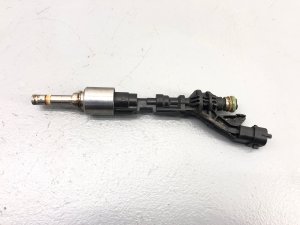

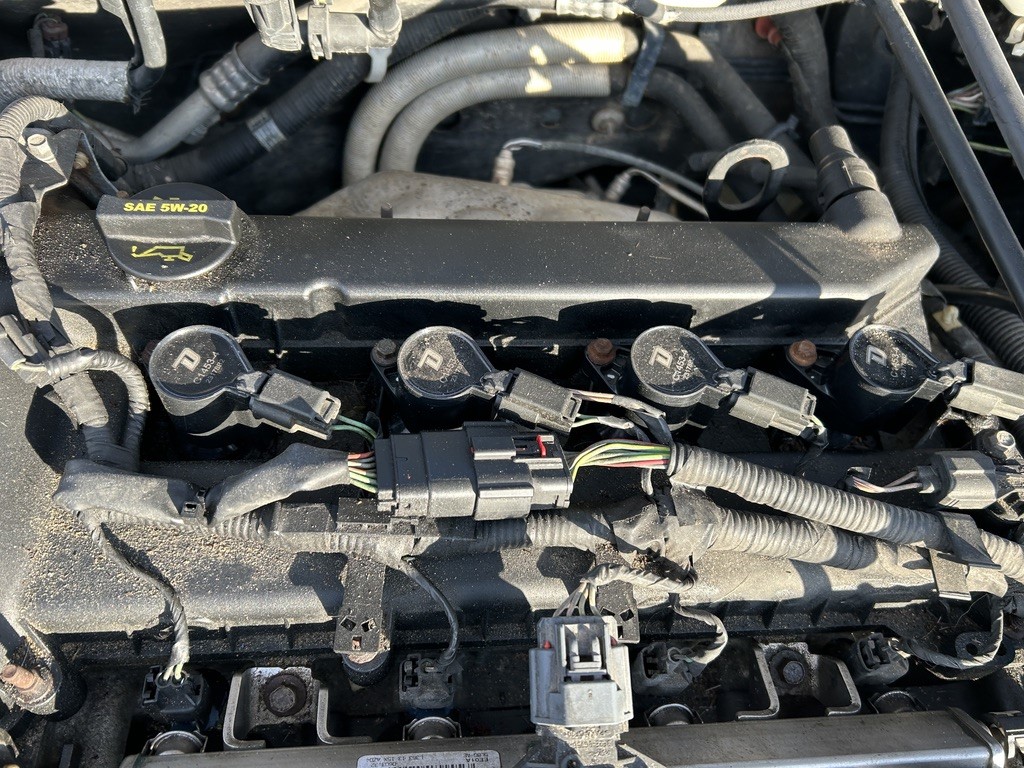
New Aftermarket Parts Available



The information in this article is provided for general reference and educational purposes only. Vehicle specifications, procedures, and part compatibility can vary by production date, trim level, and region. Always consult your vehicle's factory service manual and verify part numbers before purchasing or performing repairs. Safety-critical components such as airbags, seat belts, and braking systems should be installed by a qualified professional.
- Jaguar XF:
- 🎬 Helpful Videos
- 🛍️ Shop This Part
- What's Unique About the 2009-2014 Jaguar XF
- Diagnostic Flowchart
- Symptoms You May Notice
- Most Likely Causes
- Rare But Worth Checking
- Diagnosis Steps
- Parts You'll Likely Need
- Related Codes That Often Appear With This One
- Technical Service Bulletins (TSBs) & Recalls
- Platform-Specific Known Issues
- Mechanic-Grade Diagnostic Values
- Scan Tool Commands That Help
- Wiring & Ground Locations
- Real Owner Repair Stories
- "I Checked Everything" — The Actual Cause
- When the Usual Fixes Don't Work
- OEM Part Supersession History
- Model Year Variations Within This Range
- 🎟️ Get 5% Off