

P0307 on 2010-2017 GMC Yukon XL: Cylinder 7 Misfire Causes and Fixes
P0307 indicates a misfire on cylinder 7. The most common causes are a failed spark plug, ignition coil, or spark plug wire. However, on these GM V8 engines, a failed Active Fuel Management (AFM) lifter is a very probable and more serious cause, often identified by a distinct engine ticking noise.
- P0307 is a misfire on cylinder 7, the rearmost cylinder on the driver's side.
- While you should check basic ignition parts first (spark plug, coil, wire), be highly suspicious of a failed AFM lifter, especially if you hear an engine ticking noise.
- A flashing check engine light indicates a severe misfire that can quickly destroy your catalytic converter; stop driving immediately.
- Due to the common AFM lifter issue, a P0307 code on this specific vehicle can lead to a much more expensive repair than a typical tune-up.
- The 2015+ models have direct injection, adding potential causes like intake valve carbon buildup.
What's Unique About the 2010-2017 Gmc YUKON XL
The 2010-2017 GMC Yukon XL, with its 5.3L and 6.2L V8 engines, features an Active Fuel Management (AFM) system designed to improve fuel economy by deactivating certain cylinders, including cylinder 7. The specialized hydraulic lifters used for this system are a notorious weak point and have a high failure rate, often becoming stuck or collapsing. This makes a P0307 code a strong indicator of this specific, and more serious, mechanical failure, beyond typical ignition or fuel issues. Several GM Technical Service Bulletins (TSBs), including 19-NA-219 and 15-06-01-002E, address engine misfires and ticking noises resulting from collapsed AFM lifters on these exact cylinders (1, 4, 6, and 7).
Diagnostic Flowchart
Tap your situation to follow the diagnostic path that matches what you're seeing on this vehicle.
Generation note: This range covers the end of the third generation (2010-2014) and the start of the fourth generation (2015-2017). Both generations suffer from AFM lifter failures. However, the 2015+ models with EcoTec3 engines also feature direct injection, which can lead to additional causes like carbon buildup on intake valves and issues with the high-pressure fuel system. TSB 15-06-01-002E specifically covers these newer engines for lifter-related misfires.
Symptoms You May Notice
- Rough or shaky idle
- Hesitation or stumbling during acceleration
- Noticeable loss of engine power
- Solid or flashing Check Engine Light
- Engine ticking or tapping noise, which strongly suggests a lifter issue
- "Service StabiliTrak" message on the dashboard, as the engine instability can disable the system
- Replacing oxygen sensors. O2 sensor codes can sometimes appear with a misfire, but they are usually a symptom of the unburned fuel from the misfire, not the cause.
Most Likely Causes
- Failed Active Fuel Management (AFM) Lifter 🔴 High Probability The AFM system deactivates cylinders 1, 4, 6, and 7 to save fuel. The specialized lifters for these cylinders are a well-documented, high-failure part on GM V8s from this era, frequently causing a misfire on cylinder 7. TSBs 19-NA-219 and 15-06-01-002E directly address this failure mode.
How to confirm: After ruling out ignition and fuel issues, a distinct ticking/tapping noise from the driver's side of the engine is a strong indicator. A definitive diagnosis requires removing the valve cover to inspect the valvetrain (checking for rocker arms that are not moving) or performing a compression test. In a video from a 2016 Chevrolet pickup, a mechanic demonstrated that the rocker for cylinder 7 was not moving, confirming a collapsed lifter.
Typical fix: This is a labor-intensive repair that involves replacing the failed lifter(s). Most shops and TSBs recommend replacing all 16 lifters (both AFM and standard), the lifter guide trays, and the camshaft, as a failed lifter often damages the cam lobe. It is also recommended to replace the Valve Lifter Oil Manifold (VLOM). Many owners opt for an "AFM delete kit" which replaces the problematic components with standard, non-AFM parts and requires an ECU tune to disable the system.
Est. part cost: $400-$1000 for a full lifter and cam kit. - Failed Ignition Coil 🟡 Medium Probability Coil-on-plug ignition systems are common, and heat and vibration can cause individual coils to fail over time.
How to confirm: Swap the ignition coil from cylinder 7 with another cylinder (e.g., cylinder 5). Clear the codes and run the engine. If the misfire code changes to P0305, the ignition coil is faulty.
Typical fix: Replace the faulty ignition coil. It is a simple, single-bolt replacement.
Est. part cost: $40-$90 - Worn Spark Plug 🟡 Medium Probability Spark plugs are a routine maintenance item. Iridium plugs used in these engines have a long life but will eventually wear or become fouled, leading to a weak spark. Oil fouling on the cylinder 7 plug can be a symptom of other issues like stuck piston rings.
How to confirm: Remove the spark plug from cylinder 7 and inspect it for wear, fouling (black, oily, or white deposits), or damage to the electrode or ceramic insulator. A heavily oil-fouled plug on cylinder 7 is a common finding.
Typical fix: Replace the spark plug. It is best practice to replace all 8 spark plugs at the same time to ensure consistent performance.
Est. part cost: $8-$20 per plug - Loose or Failed Spark Plug Wire ⚪ Low Probability A GM Technical Service Bulletin (TSB #PIP4819A) specifically calls out inspecting and replacing loose spark plug wires as a fix for misfire codes on these models. The connection at the coil or plug can degrade over time.
How to confirm: Visually inspect the spark plug wire for cylinder 7 for any signs of damage, arcing (white marks), or a loose connection at the coil pack or spark plug. Ensure it 'clicks' firmly into place at both ends.
Typical fix: Reseat the wire firmly or replace it if damaged. It is recommended to replace the entire set of 8 wires for even resistance and performance.
Est. part cost: $50-$100 for a set - Faulty Fuel Injector ⚪ Low Probability Injectors can become clogged with deposits over time or fail electrically, preventing the correct amount of fuel from being delivered to cylinder 7. Some forum users note that cylinder 7 is the last in the fuel rail, making it a potential collection point for debris. A GM document also notes that rust can accumulate on the injector inlet filter screen on returnless fuel systems.
How to confirm: After ruling out ignition issues, a mechanic can perform a fuel injector balance test to measure the flow rate of each injector. You can also listen for a steady clicking sound from the injector with a mechanic's stethoscope. Swapping the injector with another cylinder is also a valid diagnostic step, similar to the coil swap. A resistance test should yield a reading between 11 and 14 ohms.
Typical fix: Replace the faulty fuel injector. On 2015+ models with direct injection, this is a more complex and expensive job.
Est. part cost: $50-$150
Rare But Worth Checking
- Intake Manifold Gasket Leak: A vacuum leak near the cylinder 7 intake runner can lean out the air/fuel mixture and cause a misfire. This can be diagnosed with a smoke test.
- Carbon Buildup on Intake Valves: This is more specific to the 2015-2017 models with direct injection (EcoTec3). Carbon deposits can restrict airflow into the cylinder, causing a misfire.
- Stuck/Broken Piston Rings: A user on TahoeYukonForum.com linked a P0307 with a severely oil-fouled spark plug to a known issue with oil control rings described in TSB 10-06-01-008M, which can cause excessive oil consumption and misfires.
Diagnosis Steps
- Use an OBD-II scanner to confirm the P0307 code and check for any other stored codes, such as P0300.
- Inspect the spark plug, spark plug wire, and ignition coil for cylinder 7 (rear-most on the driver's side). Look for visible damage, corrosion, or loose connections.
- To test the ignition coil, swap it with the coil from another cylinder (e.g., cylinder 5). Clear the codes and drive the vehicle. If the code changes to P0305, the coil is bad and needs replacement.
- If the misfire remains on cylinder 7, replace the spark plug. Inspect the old plug for signs of oil or fuel fouling, which can point to injector or internal engine problems.
- Listen carefully to the engine for a distinct ticking or tapping sound, especially from the driver's side valve cover area. This sound is a very strong indicator of a failed AFM lifter.
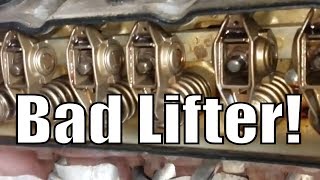
- If a ticking noise is present, remove the driver's side valve cover and start the engine briefly. Observe the rocker arms for cylinder 7. If one or both are not moving or moving erratically compared to other cylinders, a collapsed lifter is confirmed. 🎬 Watch: A mechanic's guide to diagnosing a bad hydraulic lifter
- If ignition components are good and there is no ticking noise, investigate the fuel system. Consider swapping the fuel injector from cylinder 7 with another cylinder to see if the misfire follows.
- If all else fails, perform a compression test to rule out mechanical issues like bad rings or valves.
Parts You'll Likely Need
- AFM Lifter Kit
(OEM #12740071 (Supersedes 12645725, 12680871))— Due to the high failure rate of the Active Fuel Management system, a collapsed lifter is a primary cause of a P0307 misfire on this vehicle. A full kit including all lifters, trays, gaskets, and a new camshaft is the recommended repair.
Trusted brands: ACDelco, General Motors, Michigan Motorsports
OEM price range: $300-$500
Aftermarket price range: $200-$400 - Ignition Coil
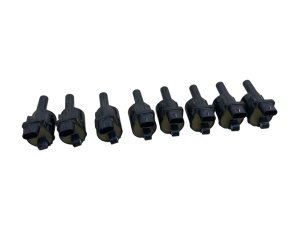
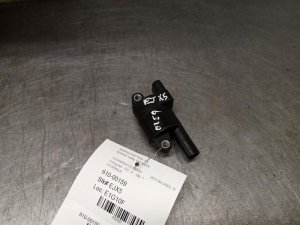
(OEM #12611424 (Also known as D510C))— A failed ignition coil is a common cause of a single-cylinder misfire.
Trusted brands: ACDelco, Duralast
OEM price range: $60-$90
Aftermarket price range: $40-$70 - Spark Plug
(OEM #ACDelco 41-110 (Iridium))— Spark plugs are a maintenance item and can become worn or fouled, leading to misfires. An oil-fouled plug on cylinder 7 is a common symptom.
Trusted brands: ACDelco, NGK
OEM price range: $10-$15
Aftermarket price range: $8-$12 - Fuel Injector
(OEM #12668390 (For 2015-2017 EcoTec3))— A clogged or failed fuel injector can cause a lean misfire in a single cylinder.
Trusted brands: ACDelco, Bosch
OEM price range: $80-$150
Aftermarket price range: $50-$100
Related Codes That Often Appear With This One
- P0300 — If the misfire condition is severe or intermittent, or if other cylinders are also misfiring (e.g., due to a widespread AFM lifter issue), a P0300 (Random Misfire) code may be stored as well.
Technical Service Bulletins (TSBs) & Recalls
- PIP4819A: Addresses misfire codes (P0300-P0308) and points to inspecting and replacing loose-fitting spark plug wires.
- 19-NA-219: Diagnostic information for engine misfires (including P0307) and noises, specifically mentioning collapsed AFM lifters on cylinders 1, 4, 6, or 7 as a cause.
- 15-06-01-002E: Addresses engine misfire/tick noise (P0300) for 2015-2017 models with L83 and L86 engines, providing procedures for removing lifters stuck in the bore.
- 10-06-01-008M: Though not directly for P0307, this TSB is relevant as it addresses excessive oil consumption from stuck piston rings, which can lead to oil-fouled plugs and misfires on affected cylinders.
Platform-Specific Known Issues
- Real-World Diagnosis: Collapsed Lifter on a 2013 Tahoe: In a YouTube video by GQ Auto Diagnostics, a 2013 Tahoe with a P0307 code, rough idle, and ticking noise was diagnosed. After confirming spark and compression were good, the mechanic removed the valve cover. With the engine running, it was clear that the intake rocker arm for cylinder 7 was not moving, while all others were. This visually confirmed a collapsed AFM lifter was the cause of the misfire.
- Forum Experience: P0307 and Oil-Fouled Plug: A user on TahoeYukonForum.com with a 2009 Tahoe at 185,000 miles experienced a P0307 code and found the #7 spark plug was severely fouled with oil. Other users in the thread immediately suspected a 'dead cylinder' due to a broken or stuck oil control piston ring, a known issue separate from, but sometimes related to, AFM problems.
- Dealership Repair Costs for AFM Lifter Failure: A Reddit user shared a dealership quote of nearly $8,000 to replace lifters on a 2010 Yukon XL. Another user shared a dealer invoice for a similar repair totaling over $7,500, with over $5,300 of that being labor. This highlights the extreme cost of this repair when performed at a dealership.
Mechanic-Grade Diagnostic Values
- Fuel Pressure (Key On, Engine Off) - Non-Flex Fuel — expected: 55-62 PSI. Failure: Pressure below 55 PSI indicates a weak fuel pump or clogged filter.
- Fuel Pressure (Key On, Engine Off) - Flex Fuel (E85) — expected: 48-54 PSI. Failure: Pressure outside this range points to a fuel pump or regulator issue.
- Fuel Injector Resistance (Gen IV, e.g., L94 6.2L) — expected: 11 - 14 ohms. Failure: A reading outside this range indicates a faulty injector.
- Ignition Coil Primary Resistance — expected: 0.4 - 2 ohms. Failure: A reading of 0 indicates a short; a significantly higher reading indicates an open coil.
- Ignition Coil Secondary Resistance — expected: 6,000 - 15,000 ohms. Failure: A reading outside the manufacturer's specific range indicates a faulty coil.
- Long Term Fuel Trim (LTFT) — expected: -10% to +10%. Failure: A value consistently over +10% on the affected bank can indicate a vacuum leak or fuel delivery issue causing the misfire.
Scan Tool Commands That Help
- GDS2 / Tech2: Cylinder Power Balance Test / Misfire Graphic — Use this to view live misfire counts for each cylinder. This helps confirm that cylinder 7 is the primary issue and verifies if a repair (like swapping a coil) has moved the misfire to a different cylinder.
- GDS2 / Tech2: AFM Solenoid Control — A technician can command specific AFM solenoids on and off to test the electrical side of the system. This can help differentiate between a failed solenoid in the VLOM and a mechanical lifter failure.
Wiring & Ground Locations
- G102 — Located at the left rear of the engine.. This ground point is responsible for all 8 ignition coils. A poor connection here could cause intermittent or weak spark on multiple cylinders, potentially including cylinder 7.
- G103 — Located at the left rear of the engine compartment on the cowl, above the brake booster.. This is a critical ground for the Body Control Module (BCM), Instrument Panel Cluster (IPC), and the Data Link Connector (DLC). A fault here can cause widespread communication issues and potentially incorrect readings related to engine management.
- Cylinder 7 Injector Wiring — At the fuel injector for cylinder 7 (driver's side, rearmost).. The control wire for the cylinder 7 injector is a Red/Black wire, leading to pin A6 on the PCM connector. The shared power wire for all injectors is typically Pink. Verifying the pulse signal on the Red/Black wire is a key diagnostic step.
Real Owner Repair Stories
- YouTube channel 'TheLateModelTech' (2016 Chevrolet Pickup 5.3L V8) — Persistent P0307 misfire that could not be fixed with common tune-up parts.
❌ Tried (didn't work) Replacing spark plugs, Replacing spark plug wires, Replacing ignition coil
✅ What actually fixed it The mechanic removed the driver's side valve cover and started the engine. He visually confirmed the rear-most rocker arm (cylinder 7) was not moving, indicating a collapsed AFM lifter. The lifter had physically come apart in two pieces. The final fix was replacing the failed lifter. - YouTube channel 'Repairs and Reviews' (2019 Chevrolet Tahoe 5.3L (63,000 miles)) — Check engine light with code P0307. No initial lifter tick or low oil pressure was noted.
❌ Tried (didn't work) Swapping coil packs, Replacing spark plugs and wires
✅ What actually fixed it After pulling the valve cover, it was observed that one of the rockers for cylinder 7 was not moving. This confirmed a failed AFM lifter. The repair involved replacing the lifters, lifter guides, and head studs. - TahoeYukonForum.com user (2009 Tahoe 5.3L (185,000 miles)) — Stabilitrak warning, rough running, and P0307 code. The spark plug for cylinder 7 was found to be completely black and oil-fouled.
❌ Tried (didn't work) Initial thought was a major mechanical failure like a bad lifter or piston rings.
✅ What actually fixed it The user replaced only the fouled spark plug for cylinder 7 and added a can of Berryman B12 fuel system cleaner to the tank. The engine then ran strong with no codes, suggesting the immediate cause was a fouled plug, possibly secondary to a dirty or sticking injector which the cleaner may have addressed.
OEM Part Supersession History
12645725→12740071— This is a common supersession for the AFM (Active Fuel Management) valve lifter. The change often reflects improvements in design or manufacturing to address the high failure rate of the original part.
Model Year Variations Within This Range
- 2010-2014 vs 2015-2017: The 2010-2014 models typically use Gen IV V8 engines (like the LC9 5.3L or L94 6.2L). The 2015 model year marked the introduction of the Gen V 'EcoTec3' V8 engines (like the L83 5.3L or L86 6.2L). While both generations have AFM and suffer from lifter failures, the Gen V engines also feature direct injection, a high-pressure mechanical fuel pump, and a different engine architecture, which introduces different potential causes for misfires, such as high-pressure fuel system faults or carbon buildup on intake valves.
- All years within range: Vehicles could be equipped with either a standard gasoline engine or a Flex Fuel (E85) capable engine. The fuel pressure specifications are different between the two. Non-Flex Fuel models require 55-62 PSI (KOEO), while Flex Fuel models require 48-54 PSI (KOEO). Using the incorrect spec can lead to a misdiagnosis of the fuel pump.
Helpful Videos
![How to Fix P0307 Engine Code in 3 Minutes [2 DIY Methods / Only $4.12]](https://img.youtube.com/vi/t7x0HN1YOxQ/mqdefault.jpg)
We Have This Part in Stock



The information in this article is provided for general reference and educational purposes only. Vehicle specifications, procedures, and part compatibility can vary by production date, trim level, and region. Always consult your vehicle's factory service manual and verify part numbers before purchasing or performing repairs. Safety-critical components such as airbags, seat belts, and braking systems should be installed by a qualified professional.
- Gmc YUKON XL:
- 🎬 Helpful Videos
- 🛍️ Shop This Part
- What's Unique About the 2010-2017 Gmc YUKON XL
- Diagnostic Flowchart
- Symptoms You May Notice
- Most Likely Causes
- Rare But Worth Checking
- Diagnosis Steps
- Parts You'll Likely Need
- Related Codes That Often Appear With This One
- Technical Service Bulletins (TSBs) & Recalls
- Platform-Specific Known Issues
- Mechanic-Grade Diagnostic Values
- Scan Tool Commands That Help
- Wiring & Ground Locations
- Real Owner Repair Stories
- OEM Part Supersession History
- Model Year Variations Within This Range
- 🎟️ Get 5% Off