

P0307 on 2013-2020 Dodge Charger: Cylinder 7 Misfire Causes and Fixes
P0307 on a V8 Dodge Charger indicates a misfire in cylinder 7, the rearmost cylinder on the passenger side. The most common causes are a bad ignition coil or a worn spark plug. Swapping the coil from cylinder 7 with another cylinder is a quick, effective way to diagnose the problem. In some cases, especially with other codes present, a PCM software update may be required.
- P0307 on a Dodge Charger means only cylinder 7 is misfiring, which is on the driver's side of the V8 engine.
- The easiest and most common fixes are replacing the ignition coil or spark plugs for cylinder 7.
- A simple diagnostic is to swap the coil from cylinder 7 with another cylinder to see if the misfire code follows it.
- Be aware that Chrysler has issued software updates to fix overly sensitive misfire detection; if parts replacement doesn't work, a dealer visit may be necessary.
- If the misfire is accompanied by a loud engine ticking sound, it could be a sign of a more serious internal engine problem known as 'Hemi lifter failure'.
What's Unique About the 2013-2020 Dodge CHARGER
On HEMI-powered Dodge Chargers, a P0307 code can be more than just a simple spark plug issue. Chrysler has released several Technical Service Bulletins (TSBs) indicating that the misfire detection system can be overly sensitive, sometimes requiring a software update to fix the problem, particularly when P0307 appears with fuel system codes like P219A/B or P2096/97. Furthermore, these HEMI engines are known for a specific mechanical failure where a valve lifter roller seizes, destroying the camshaft lobe ('Hemi Tick'), which results in a persistent misfire on the affected cylinder.
Diagnostic Flowchart
Tap your situation to follow the diagnostic path that matches what you're seeing on this vehicle.
Symptoms You May Notice
- Rough or shaking idle
- Engine hesitation or stumbling during acceleration
- Flashing or solid Check Engine Light
- Loss of engine power
- Reduced fuel economy
- Engine bucking or jerking
- Smell of raw fuel from the exhaust
- Replacing only the spark plugs when the ignition coil is the actual cause.
- Replacing ignition and fuel parts repeatedly when the root cause is an outdated PCM software calibration that needs to be updated by a dealer, especially if fuel trim codes are also present.
- Continuing to chase ignition/fuel faults when the underlying problem is a mechanical failure like a wiped camshaft lobe.
Most Likely Causes
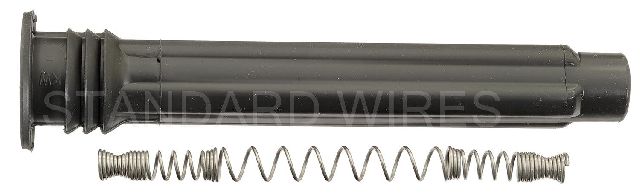
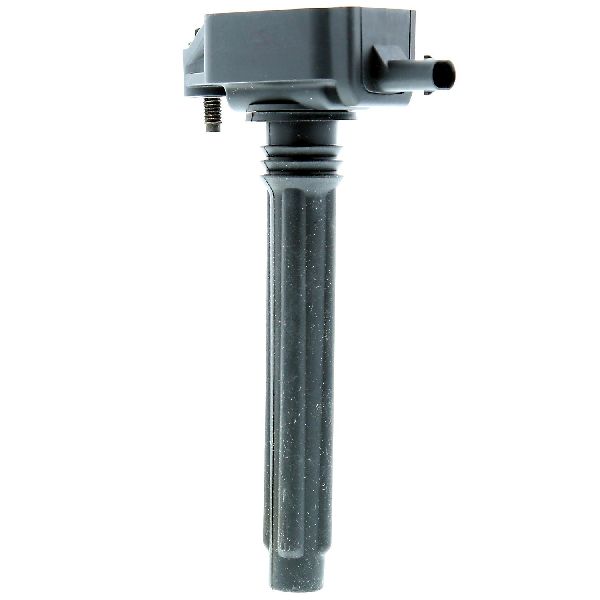
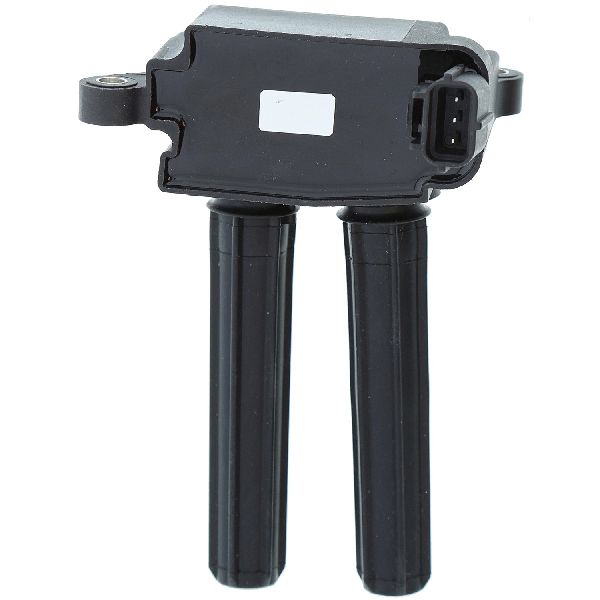
- Faulty Ignition Coil 🔴 High Probability Ignition coils are a common failure point on HEMI engines due to constant exposure to high heat and vibration. The internal windings eventually break down, leading to a weak or absent spark.
How to confirm: Swap the ignition coil from cylinder 7 with another cylinder (e.g., cylinder 1, the frontmost on the same passenger side bank). Clear the codes and drive the vehicle. If the code changes to P0301, the ignition coil is confirmed faulty. This is the most common and effective first diagnostic step.
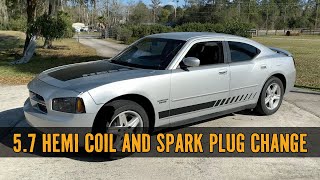
Typical fix: Replace the faulty ignition coil. It is held in place by a single 10mm bolt and is easily accessible once the engine cover is removed. 🎬 Watch: Step-by-step guide to replacing Hemi coils and spark plugs.
Est. part cost: $30-$70 - Worn or Fouled Spark Plug 🔴 High Probability HEMI V8 engines use 16 spark plugs (two per cylinder), and they are a routine maintenance item with a finite lifespan. Electrodes wear down, or they can become fouled with carbon or oil, leading to an inconsistent spark.
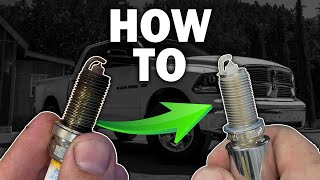
How to confirm: After ruling out the coil, remove the spark plugs from cylinder 7. Inspect them for wear (rounded electrode), damage (cracked porcelain), or heavy deposits. The spark plug gap should also be checked. 🎬 See why you shouldn't replace parts before watching this diagnostic tip.
Typical fix: Replace the spark plug(s). It is highly recommended to replace all 16 spark plugs at the same time to ensure balanced engine performance and avoid future misfires.
Est. part cost: $150-$200 for a full set of 16 OEM-quality plugs - Faulty Fuel Injector 🟡 Medium Probability Fuel injectors can become clogged with carbon deposits or fail electronically. A clogged injector will deliver insufficient fuel, causing a lean misfire.
How to confirm: After ruling out ignition components, swap the fuel injector from cylinder 7 with another cylinder. This is more labor-intensive as it requires depressurizing and unbolting the fuel rail. If the misfire code follows the injector, the injector is the problem. A 'noid' light can also be used to check if the injector is receiving an electrical pulse.
Typical fix: Replace the faulty fuel injector. It's often recommended to replace the O-rings on adjacent injectors when the fuel rail is removed.
Est. part cost: $40-$90 - Outdated PCM Software ⚪ Low Probability As documented in TSBs #18-073-20 and #18-084-16, the factory software can be too sensitive in detecting misfires, especially when accompanied by fuel trim or air-fuel imbalance codes (P219A, P219B, P2096, P2097).
How to confirm: This must be confirmed by a Dodge dealership or a qualified shop with access to FCA's wiTECH software. They can check the vehicle's current software calibration ID against the latest available versions cited in the TSBs.
Typical fix: Update or re-flash the Powertrain Control Module (PCM) to the latest software version. This is a software-only fix.
Est. part cost: $0 (parts), but shop labor/diagnostic fees of $100-$250 apply
Rare But Worth Checking
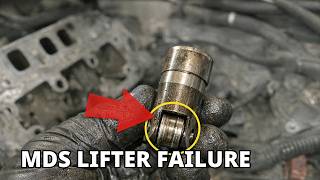
- Failed Camshaft Lobe / Lifter: The 'Hemi Tick' is a known and serious issue where a roller lifter's bearing fails, causing the lifter to seize and grind down the corresponding camshaft lobe. This prevents the valves for that cylinder from opening and closing correctly, causing a permanent, hard misfire that will not be resolved by replacing ignition or fuel parts. This is a major mechanical failure requiring significant engine disassembly to replace the camshaft and all lifters. 🎬 Learn more about Hemi lifter failure symptoms and prevention tips.
- Low Cylinder Compression: A burnt exhaust valve, damaged piston, or leaking head gasket can cause a loss of compression in cylinder 7, leading to a misfire. A mechanical compression test is required to diagnose this. If compression is low, a cylinder leak-down test can pinpoint the source of the leak.
- Vacuum Leak: A leak in the intake manifold gasket near the runner for cylinder 7 can lean out the air-fuel mixture for that cylinder only, causing a misfire. This can sometimes be detected by spraying brake cleaner near the gasket with the engine running and listening for a change in idle speed.
Diagnosis Steps
- Read all stored codes with an OBD-II scanner. Note if P0307 appears alone or with other codes like P0300, P219A, or P2096.
- Cylinder 7 Location: Identify cylinder 7. On a HEMI V8, odd cylinders are on the passenger side (Bank 1) and even cylinders are on the driver's side (Bank 2). Cylinder 7 is the rearmost cylinder on the passenger side, closest to the firewall.
- Coil Swap: Swap the ignition coil from cylinder 7 with cylinder 1 (front of passenger side). Clear codes and test drive. If the code changes to P0301, the coil is bad and needs replacement.
- Spark Plug Inspection: If the misfire remains on cylinder 7, remove and inspect both spark plugs for that cylinder. Replace if they appear worn, damaged, or fouled with oil or carbon. It's best practice to replace all 16.
- Wiring Inspection: Inspect the wiring and connector for the cylinder 7 ignition coil and fuel injector for any signs of melting, corrosion, or damage.
- Injector Swap: If the issue persists, consider swapping the fuel injector from cylinder 7 with another cylinder to see if the misfire follows. This is more involved and requires unbolting the fuel rail.
- Check for TSBs: If fuel trim or air-fuel imbalance codes are present with P0307, contact a dealership to check if your vehicle's VIN is eligible for a PCM software update per TSBs #18-073-20, #18-084-16, or #18-046-15.
- Mechanical Check: For a persistent misfire after checking fuel and spark, perform a cylinder compression test to rule out internal mechanical problems. A significant loss of compression points towards issues like a failed lifter/camshaft, burnt valve, or bad head gasket.
Parts You'll Likely Need
- Ignition Coil
(OEM #5149168AJ (supersedes 5149168AI, 5149168AH))— This is the most frequent point of failure for a single-cylinder misfire due to heat and vibration.
Trusted brands: Mopar, NGK, Delphi
OEM price range: $50-$90
Aftermarket price range: $30-$60 - Spark Plugs (Set of 16)
(OEM #SP143877AB (NGK LZFR5C-11) for 5.7L; SPLZFR5C11 for some 5.7L models)— Spark plugs are a routine maintenance item. The HEMI engines use two per cylinder, and they must be in good condition for a clean spark. It's critical to replace all 16.
Trusted brands: NGK, Champion
OEM price range: $8-$15 per plug
Aftermarket price range: $5-$10 per plug - Fuel Injector — A clogged or electronically failed injector will prevent the proper amount of fuel from reaching the cylinder, causing a lean misfire.
Trusted brands: Mopar, Bosch, Standard Motor Products
OEM price range: $70-$120
Aftermarket price range: $40-$90
Related Codes That Often Appear With This One
- P0300 — This code for 'Random/Multiple Cylinder Misfire' often appears with P0307 if the misfire is severe, intermittent, or beginning to affect other cylinders.
- P219A / P219B — These codes for 'Bank 1/2 Air-Fuel Ratio Imbalance' are specifically cited in TSBs alongside P0307, indicating the PCM is detecting both a misfire and a fuel mixture problem, which strongly points to a software update being the required fix.
- P2096 / P2097 — These 'Post Catalyst Fuel Trim System' codes also appear in TSBs with P0307, further suggesting a connection between misfire detection and the fuel management system's software logic that can be corrected with a PCM re-flash.
Technical Service Bulletins (TSBs) & Recalls
- Bulletin #18-073-20: Addresses MIL illumination for various DTCs including P0307, P0300, P219A, P219B, P2096, and P2097 on 2013-2015 models with the 5.7L engine, recommending a PCM software update.
- Bulletin #18-084-16: Supersedes earlier bulletins and involves a PCM re-flash for 2013-2015 models with the 5.7L engine to fix diagnostic and system issues causing codes like P0307 and P219A/B.
- Bulletin #18-046-15: Specifically links P0307 with air-fuel imbalance codes (P219A/B) and fuel trim codes (P2096/97), along with symptoms like engine bucking, pointing to a software fix. This TSB was superseded by #18-084-16.
Platform-Specific Known Issues
- PCM Software Sensitivity: Several TSBs (#18-073-20, #18-084-16, #18-046-15) have been issued by the manufacturer for P0307, especially when it appears with fuel system codes like P219A/B. The solution is often a PCM software update, not parts replacement.
- HEMI Lifter/Camshaft Failure: HEMI V8 engines are known for potential camshaft/lifter failure, often preceded by a ticking noise ('Hemi Tick'). A failed lifter for cylinder 7 will cause a persistent P0307 code that cannot be fixed with new plugs, coils, or injectors. This is a major mechanical repair.
Mechanic-Grade Diagnostic Values
- Fuel Pressure (Key On, Engine Off) — expected: 58 +/- 5 PSI. Failure: Pressure significantly below 53 PSI could indicate a weak fuel pump, causing lean conditions and misfires.
- Ignition Coil Connector Voltage (Pin 1 to Ground) — expected: 12V+ with Key On, Engine Off. Failure: No voltage indicates a problem with the ASD (Auto Shutdown) relay or wiring, preventing the coil from charging.
- Ignition Coil Driver Signal (Pin 2) — expected: Pulsing ground signal visible on an oscilloscope when engine is cranking/running.. Failure: A flat line or lack of a sharp square wave pattern suggests a broken wire to the PCM or a failed PCM driver.
- Injector Pulse Width at Idle — expected: ~2.0 - 4.0 milliseconds. Failure: Significantly higher or lower values on cylinder 7 could indicate the PCM is trying to compensate for a fuel delivery or air leak issue.
Hidden / Shadow Codes Worth Checking
- Mode 6, Test ID $53: This is not a hidden code, but an underutilized OBD-II function that displays raw misfire counts for each cylinder during the current and previous 10 driving cycles. A technician can view the counts for Component ID $07 (Cylinder 7) to see if misfires are occurring, even if they aren't frequent enough to set a P0307 code yet. High counts on other cylinders can also point towards a more systemic issue. (see via Most professional-grade OBD-II scan tools with Mode 6 capability.)
Scan Tool Commands That Help
- wiTECH (or advanced aftermarket scanners): Cylinder Cutout / Injector Kill Test — This bidirectional command allows the technician to manually disable the fuel injector for cylinder 7 while the engine is running. If the engine's RPM and smoothness do not change when cylinder 7 is deactivated, it confirms that the cylinder was not contributing power, definitively verifying an active misfire.
Wiring & Ground Locations
- G104 — On the right front of the engine block, typically near the alternator.. This is a primary engine ground point. A loose or corroded connection at G104 can cause a weak or inconsistent spark across all cylinders on the passenger side bank (Bank 1), including cylinder 7, leading to intermittent misfires that are difficult to diagnose.
- Cylinder 7 Ignition Coil Connector — Plugged into the ignition coil for the rearmost cylinder on the passenger side.. Pin 1 is the ASD Relay Output (12V+ power). Pin 2 is the Coil Driver signal from the PCM. Testing these two pins can quickly determine if the coil is receiving the power and signal needed to fire.
Real Owner Repair Stories
- ChargerForums user (2014 Dodge Charger R/T 5.7L) — Persistent P0307 misfire and rough running.
❌ Tried (didn't work) Replaced spark plugs, Replaced ignition coil, Replaced fuel injector
✅ What actually fixed it A compression test revealed low compression on cylinder 7. Teardown confirmed a failed lifter had destroyed the camshaft lobe. The final repair was replacing the camshaft and all lifters. - LXForums user (Dodge Charger with HEMI V8) — P0307 that would not resolve with standard ignition or fuel part swaps.
❌ Tried (didn't work) Spark plugs, Ignition coils
✅ What actually fixed it After a compression test showed a problem, the owner removed the valve cover and discovered a broken valve spring for cylinder 7. Replacing the valve spring resolved the misfire.
"I Checked Everything" — The Actual Cause
- A common scenario is a vacuum leak from a hardened or failed intake manifold gasket right at the port for cylinder 7. A general smoke test introduced through the brake booster or EVAP port may not have enough pressure or volume to reveal this localized leak. The actual cause is found by directing a smoke source (or unlit propane torch/brake cleaner) directly at the base of the intake manifold above cylinder 7 and observing a change in engine idle.
When the Usual Fixes Don't Work
- While the most common fixes for P0307 are ignition coils and spark plugs, numerous owner accounts on forums like chargerforums.com confirm that when these fixes fail, the root cause is often the much more serious 'Hemi Tick' lifter/camshaft failure. In these cases, owners spent significant time and money on ignition and fuel parts only to find the issue was mechanical, confirmed later by a compression test and engine teardown.
OEM Part Supersession History
5149168AH→5149168AI, then 5149168AJ— Standard component revision and improvement by the manufacturer.
Heads up: The newer part numbers are direct replacements and are fully compatible with vehicles that used the older versions. There are no known incompatibility issues.
Model Year Variations Within This Range
- 2015: TSB #18-073-20 specifically targets 2015 models for a PCM software update to correct false P0307 misfires when seen with codes like P219A/B. This indicates the software calibration for this model year was particularly sensitive.
- 2014: TSB #18-094-16 addresses a wide range of misfire codes, including P0307, for 2014 models, suggesting a separate software logic issue was present in that year's calibration that could also cause false positives.
Helpful Videos

Used OEM Parts in Stock




New Aftermarket Parts Available


The information in this article is provided for general reference and educational purposes only. Vehicle specifications, procedures, and part compatibility can vary by production date, trim level, and region. Always consult your vehicle's factory service manual and verify part numbers before purchasing or performing repairs. Safety-critical components such as airbags, seat belts, and braking systems should be installed by a qualified professional.
- Dodge CHARGER:
- 🎬 Helpful Videos
- 🛍️ Shop This Part
- What's Unique About the 2013-2020 Dodge CHARGER
- Diagnostic Flowchart
- Symptoms You May Notice
- Most Likely Causes
- Rare But Worth Checking
- Diagnosis Steps
- Parts You'll Likely Need
- Related Codes That Often Appear With This One
- Technical Service Bulletins (TSBs) & Recalls
- Platform-Specific Known Issues
- Mechanic-Grade Diagnostic Values
- Hidden / Shadow Codes Worth Checking
- Scan Tool Commands That Help
- Wiring & Ground Locations
- Real Owner Repair Stories
- "I Checked Everything" — The Actual Cause
- When the Usual Fixes Don't Work
- OEM Part Supersession History
- Model Year Variations Within This Range
- 🎟️ Get 5% Off