

P0307 on 2021-2023 Dodge Challenger: Cylinder 7 Misfire Causes and Fixes
P0307 indicates a misfire in cylinder 7 on your Challenger's V8 engine. The most common cause is a failed ignition coil or a worn-out spark plug. Swapping the ignition coil from cylinder 7 with another cylinder is a fast and effective way to confirm a bad coil. While simple fixes are common, be aware of the potential for more serious HEMI-specific lifter/camshaft issues, especially if a ticking noise is present.
- P0307 on a 2021-2023 Challenger means cylinder 7 (rear-most on the driver's side) is misfiring.
- The most likely cause is a bad ignition coil or a worn spark plug.
- A simple DIY diagnosis is to swap the ignition coil from cylinder 7 to another cylinder and see if the code follows.
- Do not ignore a flashing check engine light, as this can cause expensive damage to the catalytic converter.
- If basic ignition and fuel parts are ruled out, the problem could be a more serious mechanical issue like a failed lifter, which is a known possibility on HEMI engines.
What's Unique About the 2021-2023 Dodge CHALLENGER
On the Dodge Challenger's HEMI V8 engines, a P0307 code is a straightforward indicator of a problem with cylinder 7. 🎬 Watch: A simple explanation of the P0307 code and fixes. This cylinder is the rearmost one on the driver's side of the engine. While the most common causes are simple ignition system failures like a coil or spark plug, HEMI engines, particularly those with MDS (Multi-Displacement System), are also known for potential valvetrain issues, such as lifter failure, which can manifest as a persistent misfire on a single cylinder. A user on a Reddit forum confirmed a P0307 on their 2021 Scat Pack was diagnosed as a failed lifter that had damaged the camshaft, a repair requiring removal of the cylinder heads. It's important to address the common causes first before assuming a more serious mechanical problem.
Diagnostic Flowchart
Tap your situation to follow the diagnostic path that matches what you're seeing on this vehicle.
Symptoms You May Notice
- Check engine light is on or flashing
- Rough idle or engine shaking. [1400322REVA]
- Hesitation or stumbling during acceleration
- Noticeable loss of engine power
- Increased fuel consumption
- Sputtering or backfiring from the engine
- Strong smell of raw fuel from the exhaust
- Replacing the catalytic converter when it has only been damaged by an unaddressed misfire.
- Replacing oxygen sensors, which are unlikely to cause a single-cylinder misfire. An O2 sensor code may appear *with* P0307, but the misfire is typically the root cause.
Most Likely Causes
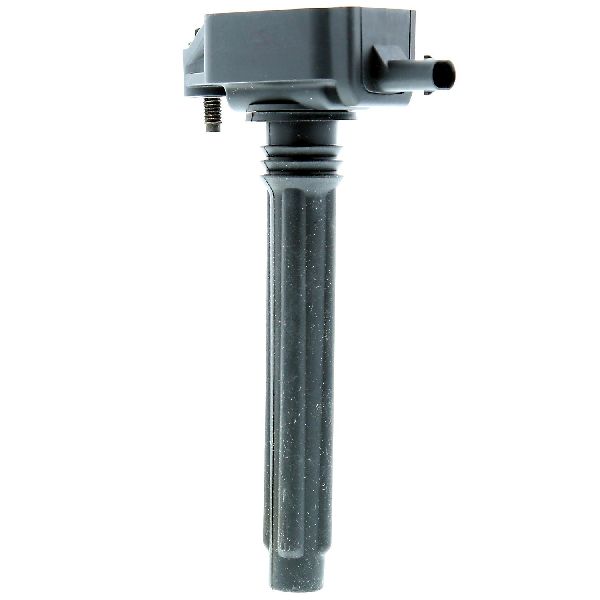
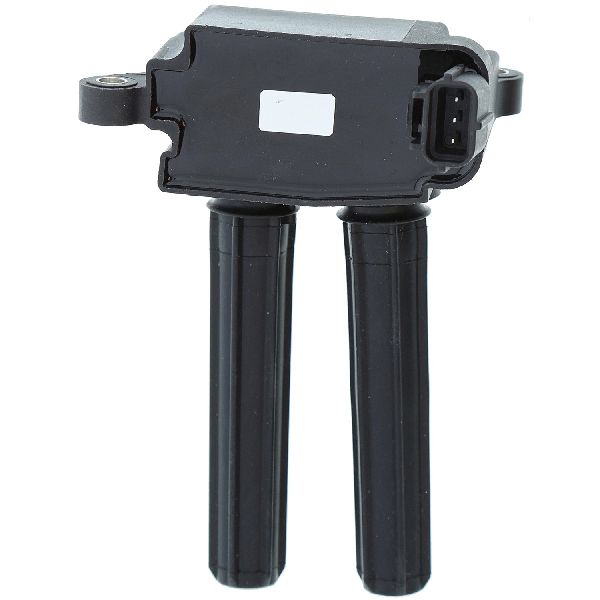
- Faulty Ignition Coil 🔴 High Probability Coil-on-plug systems are subjected to intense heat and vibration, leading to eventual failure. It's a common wear item on modern performance engines like the HEMI and is responsible for about 40% of P0307 cases.
How to confirm: Swap the ignition coil from cylinder 7 with another cylinder (e.g., cylinder 1). Clear the codes and drive. If the code changes to P0301, the ignition coil is faulty.
Typical fix: Replace the faulty ignition coil. It is often recommended to replace the corresponding spark plugs at the same time.
Est. part cost: $60-$100 - Worn or Fouled Spark Plug 🔴 High Probability HEMI engines use two spark plugs per cylinder, increasing the number of potential failure points. Spark plugs are a regular maintenance item and will wear out over time. A bad plug accounts for roughly 30% of misfire cases.
How to confirm: After ruling out the coil, inspect the spark plugs for cylinder 7. Look for wear on the electrode, carbon fouling, oil deposits, or cracks in the insulator. Compare it to a plug from a healthy cylinder.
Typical fix: Replace the spark plugs. It is recommended to replace all 16 spark plugs at the same time for even performance and to prevent future misfires.
Est. part cost: $10-$25 per plug - Faulty Fuel Injector 🟡 Medium Probability Injectors can become clogged with fuel deposits or fail electrically over time, preventing the correct amount of fuel from reaching the cylinder. This is a known issue on some models, with TSBs issued for high-flow injectors on certain 6.4L engines.
How to confirm: Listen to the injector with a mechanic's stethoscope; it should make a consistent clicking sound. You can also swap the injector with another cylinder, but this is more labor-intensive than swapping a coil. A professional can perform a balance test or resistance test. A healthy injector should measure approximately 11.5 - 12.5 ohms.
Typical fix: Replace the faulty fuel injector. A 2023 Challenger Redeye owner on Reddit with a P0307 at only 4,000km suspected a leaking injector was the cause.
Est. part cost: $70-$150
Rare But Worth Checking
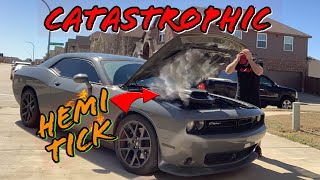
- Internal Engine Mechanical Failure (Lifter/Camshaft): Although less common on newer models, HEMI engines have a known history of camshaft/lifter failure, often preceded by a 'Hemi tick'. A seized lifter roller can grind down the camshaft lobe, leading to a loss of compression and a persistent P0307. A compression test and cylinder leak-down test are needed to diagnose this.
- Vacuum Leak: A leak in the intake manifold gasket near cylinder 7 could lean out the air/fuel mixture enough to cause a misfire. This can sometimes be found by spraying brake cleaner near the gasket with the engine running and listening for a change in idle.
- PCM Software Issue: Dodge has issued TSBs for software updates to improve misfire detection and prevent false codes. TSBs like 18-046-15 and 18-073-20 specifically mention P0307 being resolved by a PCM flash. Check with a dealer if your vehicle's software is up to date.
Diagnosis Steps
- Read the code from the OBD-II port using a scanner. Note the freeze frame data to see when the misfire occurred.
- Identify cylinder 7. On Gen 3 HEMI V8s, the cylinders on the driver's side (Bank 2) are 2, 4, 6, 8, from front to back. The passenger side (Bank 1) are 1, 3, 5, 7. Cylinder 7 is the rearmost cylinder on the passenger's side.
- Swap the ignition coil from cylinder 7 with the coil from cylinder 1. Clear the codes, drive the vehicle, and rescan. If the code is now P0301, the coil is bad.
- If the code remains P0307, swap the two spark plugs from cylinder 7 with the two from cylinder 1. Clear codes, drive, and rescan. If the code is now P0301, one or both spark plugs were the issue.
- If the code is still P0307, inspect the wiring and connector for the cylinder 7 ignition coil and fuel injector for damage, corrosion, or looseness.
- Listen to the fuel injector with a stethoscope to ensure it is clicking consistently. If it is silent or sounds different from others, it may be faulty.
- If ignition and fuel injector seem okay, perform a compression test on cylinder 7 to check for mechanical issues like a bad valve, piston ring, or lifter/camshaft problem. Low compression is a strong indicator of a mechanical fault.
Parts You'll Likely Need
- Ignition Coil
(OEM #68238603AA)— This is the most common failure point for a single-cylinder misfire due to constant exposure to heat and vibration. This part number fits a wide range of Chrysler/Dodge/Ram/Jeep vehicles with HEMI engines.
Trusted brands: Mopar, NGK, Denso
OEM price range: $98-$144
Aftermarket price range: $50-$90 - Spark Plug (6.4L HEMI)
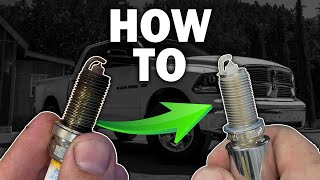
(OEM #SP149212AC)— Spark plugs are a routine maintenance item. A worn or fouled plug cannot create a strong enough spark to ignite the air/fuel mixture. This part number is specific to the 6.4L V8. 🎬 Watch: Easy DIY spark plug replacement for the 6.4L HEMI.
Trusted brands: Mopar (Champion), NGK, Autolite
OEM price range: $15-$25
Aftermarket price range: $8-$18 - Spark Plug (5.7L HEMI)
(OEM #SP143877AB)— Spark plugs are a routine maintenance item. A worn or fouled plug cannot create a strong enough spark to ignite the air/fuel mixture. This is an Iridium plug for the 5.7L HEMI.
Trusted brands: Mopar (NGK), Champion, Denso
OEM price range: $15-$25
Aftermarket price range: $8-$18 - Fuel Injector (5.7L HEMI)
(OEM #5281568AA)— Can become clogged or fail electrically, leading to improper fueling of the cylinder. This part fits 5.7L HEMI engines, including those with eTorque.
Trusted brands: Mopar, Bosch, Standard Motor Products
OEM price range: $75-$110
Aftermarket price range: $60-$120 - Fuel Injector (6.4L HEMI)
(OEM #05038337AC)— Can become clogged or fail electrically, leading to improper fueling of the cylinder. This part number is specified for the 6.4L SRT HEMI engine.
Related Codes That Often Appear With This One
- P0300 — If the misfire is intermittent or affects other cylinders, a P0300 (Random/Multiple Cylinder Misfire) may be stored alongside P0307.
- P0430 — A persistent misfire in cylinder 7 (part of Bank 2, the driver's side) can dump unburnt fuel into the exhaust, damaging the catalytic converter for Bank 2 and triggering a P0430 (Catalyst System Efficiency Below Threshold Bank 2) code. [18-035-26]
- P2097 — A Reddit user with a 2023 Challenger Redeye reported a P0307 code accompanied by P2097 (Post Catalyst Fuel Trim System Too Rich Bank 1). This can happen if a faulty injector is causing the misfire, leading to a rich condition detected by the downstream O2 sensor. Note: There is a discrepancy here as Cylinder 7 is on Bank 2, but the user reported a Bank 1 code.
Technical Service Bulletins (TSBs) & Recalls
- 18-035-26: Lists P0307 as a potential code related to engine and catalyst system issues.
- 1400322REVA: Mentions P0307 in relation to customer complaints of rough idle and misfires.
Platform-Specific Known Issues
- Technical Service Bulletin #1400322REVA notes that P0307 can be accompanied by customer complaints of a rough idle or misfire while driving. [1400322REVA]
- Technical Service Bulletin #18-035-26 lists P0307 along with other misfire and catalyst efficiency codes that may be addressed by a PCM software update. [18-035-26]
- Known Lifter/Camshaft Failure: Multiple owner forums and Reddit threads for Challengers, Chargers, and Rams with HEMI engines describe a 'Hemi tick' that can progress to a single-cylinder misfire code like P0307. This is often caused by a failed MDS lifter roller, which then damages the camshaft. This is a significant mechanical repair.
Mechanic-Grade Diagnostic Values
- Ignition Coil Primary Resistance — expected: 0.4 to 2 ohms (typically around 0.5 ohms on HEMI coils). Failure: A reading of 0.0 ohms (short) or an open circuit (infinite resistance).
- Ignition Coil Secondary Resistance — expected: 6,000 to 11,100 ohms (6kΩ to 11.1kΩ). Failure: A reading outside of the specified range indicates a faulty coil.
- Fuel Injector Resistance — expected: Approximately 11.5 - 12.5 ohms at room temperature.. Failure: A significantly lower reading (e.g., under 1 ohm) or a completely open circuit (infinite resistance).
- Ignition Coil Control Circuit Resistance — expected: Below 5.0 Ohms. Failure: Resistance above 5.0 Ohms indicates high resistance in the wiring between the PCM and the coil connector.
- ASD Relay Output Circuit Voltage at Coil — expected: Battery Voltage (approx. 12V) with Key On, Engine Off.. Failure: Low or no voltage indicates a problem with the Auto Shutdown (ASD) relay or the power feed circuit to the coil.
Hidden / Shadow Codes Worth Checking
- Mode $06 Misfire Counts: This is not a proprietary code, but a function within the standard OBD-II system. It allows viewing of raw misfire counts for each cylinder before they reach the threshold required to set a formal trouble code like P0307. This is useful for detecting intermittent misfires. (see via An advanced OBD-II scanner that supports Mode $06 data. The Chrysler/Dodge OEM tool, wiTECH, can also display this under the 'OBD II monitors' section.)
Scan Tool Commands That Help
- wiTECH (OEM Dodge/Chrysler): Which cylinder is misfiring — When a P0300 (random misfire) is present, this function displays a live count of misfires for each cylinder, helping to isolate the problematic one(s) without waiting for a specific P030x code to set.
- wiTECH (OEM Dodge/Chrysler): Clear Mis-fire TLC (Throttle Learn Compensation) — After performing repairs related to misfires or PCM flashing, this function may be required to reset adaptive learning values related to misfire detection.
- Advanced Scan Tool: Injector Kill Test / Cylinder Power Balance — This bidirectional test allows the user to disable one fuel injector at a time. When the injector for a healthy cylinder is disabled, the engine RPM will drop. If disabling the injector for cylinder 7 causes no change in engine idle, it confirms that cylinder was not contributing, pointing to a problem with that cylinder's fuel, spark, or compression.
Wiring & Ground Locations
- Cylinder 7 Location — The rearmost cylinder on the passenger's side of the engine (Bank 1).. Correctly identifying the cylinder is the first and most critical step to avoid diagnosing and replacing parts on the wrong cylinder.
- Engine Ground Strap — There are multiple grounds. One key ground jumper wire (Part # 68060322AG) is part of the powertrain wiring harness.. A poor engine ground can cause a weak spark or erratic sensor readings, leading to misfires that can be difficult to diagnose.
- Ignition Coil Connector — Plugged directly into the ignition coil for cylinder 7.. This is the primary point for testing voltage supply (from the ASD relay) and the control signal from the PCM. The pins must be clean and the connector fully seated.
Real Owner Repair Stories
- Reddit user in r/Challenger (2023 Challenger Redeye, 4,000 km) — Check engine light, shaky feeling under throttle, hiccups on warm start. Codes P0307 and P2097.
❌ Tried (didn't work) The user was in the process of diagnosis when they posted.
✅ What actually fixed it The user did not post a final resolution, but other users suggested the most likely cause on a very low-mileage engine was a leaking or malfunctioning fuel injector, followed by checking the O2 sensor connections.
OEM Part Supersession History
56029129AA, 56029129AB, 56029129AF, 68060346AA→68238603AA— Standard part evolution for improved reliability or manufacturing changes.
Model Year Variations Within This Range
- 2021-2023: While the base engines (5.7L, 6.2L, 6.4L) remained mechanically similar through this period, there can be minor variations in horsepower ratings and software calibrations between trims and model years. For example, the 5.7L HEMI produces up to 375 hp in the Challenger, while the 6.4L HEMI is rated at 485 hp. These minor differences are unlikely to change the root cause of a P0307 but may affect PCM software update applicability.
Helpful Videos
Used OEM Parts in Stock


New Aftermarket Parts Available


The information in this article is provided for general reference and educational purposes only. Vehicle specifications, procedures, and part compatibility can vary by production date, trim level, and region. Always consult your vehicle's factory service manual and verify part numbers before purchasing or performing repairs. Safety-critical components such as airbags, seat belts, and braking systems should be installed by a qualified professional.
- Dodge CHALLENGER:
- 🎬 Helpful Videos
- 🛍️ Shop This Part
- What's Unique About the 2021-2023 Dodge CHALLENGER
- Diagnostic Flowchart
- Symptoms You May Notice
- Most Likely Causes
- Rare But Worth Checking
- Diagnosis Steps
- Parts You'll Likely Need
- Related Codes That Often Appear With This One
- Technical Service Bulletins (TSBs) & Recalls
- Platform-Specific Known Issues
- Mechanic-Grade Diagnostic Values
- Hidden / Shadow Codes Worth Checking
- Scan Tool Commands That Help
- Wiring & Ground Locations
- Real Owner Repair Stories
- OEM Part Supersession History
- Model Year Variations Within This Range
- 🎟️ Get 5% Off