

P0306 on 2013-2020 Ram 1500: Cylinder 6 Misfire Causes and Fixes
P0306 on a Ram 1500 means cylinder 6 is misfiring. The most common fixes are replacing the spark plug and ignition coil for that cylinder. However, on the 5.7L Hemi, this code can be an early sign of lifter and camshaft failure, a much more serious and expensive repair. On early 3.6L Pentastar engines, it can point to a known cylinder head issue.
- P0306 indicates a misfire in cylinder #6, located on the passenger side of the engine.
- Always start diagnosis with the cheapest and easiest fixes: swap the ignition coil, then the spark plug, from cylinder 6 to another cylinder to see if the misfire follows.
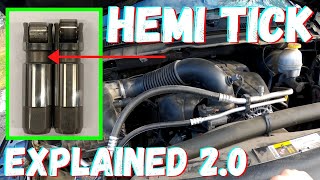
- On a 5.7L Hemi, be alert for any ticking or tapping noises. A P0306 code combined with a tick is a strong warning sign of potential lifter and camshaft failure, a common and expensive problem.
- On early-year (2013) 3.6L V6 models, a persistent P0306 after checking ignition/fuel could point to a known cylinder head issue covered by a warranty extension.
- Driving with a flashing check engine light can quickly destroy your catalytic converter, turning a moderate repair into a very expensive one.
What's Unique About the 2013-2020 Ram 1500

For the 2013-2020 Ram 1500, the cause of a P0306 misfire often depends on the engine. The 5.7L Hemi V8 is known for a specific type of valvetrain failure where the roller on a lifter seizes, which then damages the camshaft lobe. This serious mechanical issue frequently starts as a single-cylinder misfire code like P0306. Early 3.6L Pentastar V6 engines (specifically those built on or before July 25, 2012) were subject to a warranty extension (X56) for cylinder head issues that could cause misfires on the left bank (cylinders 2, 4, 6).
Diagnostic Flowchart

Tap your situation to follow the diagnostic path that matches what you're seeing on this vehicle.
Generation note: This range covers the end of the fourth generation (2013-2018) and the beginning of the fifth generation (2019-2020) Ram 1500. While engine options carried over, the fifth-generation trucks feature more complex electronics. However, the root causes for a P0306 code remain largely the same across these years, primarily tied to the specific engine (3.6L V6 or 5.7L V8).
Symptoms You May Notice

- Rough idle or shaking, especially when stopped.
- Hesitation or stumbling during acceleration.
- Noticeable loss of engine power.
- Flashing or solid Check Engine Light.
- Valvetrain noise, such as a rhythmic ticking or tapping, particularly on 5.7L Hemi engines, which is a strong indicator of potential lifter/camshaft failure. [15, 25, ⭐ MANUFACTURER TSB — highest authority] Bulletin #09-011-25
- For the 3.6L Pentastar, a misfire at idle that may smooth out at higher RPMs can be a symptom of the cylinder head issue.
- Replacing the O2 sensor. While a bad O2 sensor can cause performance issues, it will typically set its own specific codes and is unlikely to cause a single-cylinder misfire.
- Assuming any ticking noise is a simple 'Hemi tick'. While some light valvetrain noise can be normal, a distinct, rhythmic tick accompanying a misfire code is a serious warning sign of lifter/cam failure that should not be ignored and requires immediate investigation.
Most Likely Causes

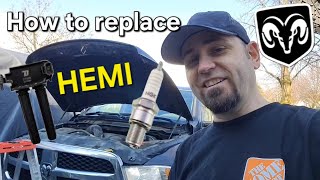
- Worn Spark Plug(s) 🔴 High Probability The 5.7L Hemi uses two spark plugs per cylinder (16 total), increasing the chance 🎬 Watch: Step-by-step guide to replacing Hemi spark plugs and coils. of a single plug failing. Standard maintenance intervals may be overlooked, leading to wear. Cylinder 6 is located near the back of the engine bay and can be more difficult to access, sometimes leading to it being skipped during maintenance.
How to confirm: Remove the spark plugs from cylinder 6. Inspect for wear (worn electrode), fouling (black, sooty, or oily deposits), or damage. A heavily worn or fouled plug is a clear indicator.
Typical fix: Replace the spark plugs. It is highly recommended to replace all plugs on the affected bank or all 8 (or 16 for the Hemi) at the same time for consistent performance.
Est. part cost: $20-$150 - Failed Ignition Coil 🔴 High Probability
How to confirm: Swap the ignition coil from cylinder 6 with another cylinder (e.g., cylinder 4 on the same bank). Clear the codes and drive the vehicle. If the code changes to P0304, the coil is bad. This is a definitive and common DIY diagnostic step.
Typical fix: Replace the faulty ignition coil. It is a simple repair involving one bolt and one electrical connector.
Est. part cost: $30-$75 - Faulty Fuel Injector 🟡 Medium Probability
How to confirm: After ruling out the coil and plug, you can swap the fuel injector from cylinder 6 with another cylinder. If the misfire code follows the injector, it is faulty. This is more labor-intensive than a coil swap. In some cases, a dealership may misdiagnose a larger issue when it is just a simple injector replacement.
Typical fix: Replace the faulty fuel injector. It's also wise to check the injector wiring harness for damage.
Est. part cost: $50-$120 - Failed Lifter and/or Worn Camshaft Lobe (5.7L Hemi) 🟡 Medium Probability The Hemi engine's Multi-Displacement System (MDS) lifters are a known failure point. The roller bearing on the lifter can seize or develop excessive play, causing it to damage the corresponding camshaft lobe. This often manifests as a persistent misfire on one cylinder that does not resolve after changing the plug and coil.
How to confirm: A distinct, rhythmic ticking noise is a strong indicator. After ruling out ignition and fuel, a mechanic will remove the valve cover to inspect valve movement and may use a boroscope to look at the cam lobe. Pulling the VVT solenoid to check for metal shavings is another diagnostic step. A compression test may also show lower-than-normal results for cylinder 6.
Typical fix: Requires extensive engine work. Replace all lifters (both MDS and standard), the camshaft, and related gaskets and seals. Many owners opt to install a non-MDS camshaft and lifters during this repair. This is a very costly repair, with shop quotes ranging from $4,500 to over $7,000.
Est. part cost: $800-$2500 - Cylinder Head Issue (3.6L Pentastar) ⚪ Low Probability Early 3.6L engines (built on or before July 25, 2012) had issues with excessive valve guide wear on the left cylinder head, leading to a loss of compression and misfires on cylinders 2, 4, or 6. Chrysler issued TSB 09-002-14 and a 10-year/150,000-mile warranty extension (X56) to address this.
How to confirm: A cylinder leak-down test is the definitive diagnostic procedure. If leakage is over 25%, the cylinder head is the likely cause as per the TSB.
Typical fix: Replace the left cylinder head assembly with the updated part. This was covered under an extended warranty for affected vehicles.
Est. part cost: $500-$1500
Rare But Worth Checking
- Intake Manifold Gasket Leak: A vacuum leak near the intake runner for cylinder 6 can lean out the mixture and cause a misfire. A smoke test can help identify the leak.
- Low Compression (due to piston rings or valves): Beyond the specific Hemi/Pentastar issues, general mechanical wear on piston rings or valves can cause a loss of compression, leading to a misfire. A compression test is the definitive diagnostic step.
- Carbon Buildup on Intake Valves: While more common on direct-injection engines, carbon buildup on the intake valves can restrict airflow to a specific cylinder, disrupt the air-fuel mixture, and cause a misfire. This is less common on the port-injected Hemi and Pentastar but can still occur at high mileage.
Diagnosis Steps
- Read the code with an OBD-II scanner and confirm P0306 is present. Note any other codes and check freeze frame data to see when the misfire occurred (e.g., cold start, under load).
- Start with the easiest and most common causes: ignition. Swap the ignition coil from cylinder 6 to another cylinder on the same bank (like #4 or #2). Clear the codes and drive. If the code changes to P0304 or P0302, you have a bad coil.
- If the misfire remains on cylinder 6, inspect and/or swap the spark plug(s) from cylinder 6 to the same cylinder you moved the coil to. If the code then follows the plug, the spark plug is the issue.
- If the misfire still stays on cylinder 6, the next step is to check the fuel injector. This is more involved but can be done by swapping injectors between cylinders.
- If ignition and fuel components are ruled out, listen carefully for any engine ticking noises, especially on a 5.7L Hemi. A rhythmic tick from the top of the engine on the passenger side (where cylinder 6 is located) points towards a potential lifter/camshaft issue.
- For a suspected Hemi lifter/cam issue, pull the VVT solenoid and inspect the screen for metal shavings. Metal here is a strong indicator of internal engine damage.
- Perform a compression test on cylinder 6 and compare it to a healthy cylinder. A significant drop in pressure indicates a mechanical problem.
- For 3.6L engines, especially 2013 models or those built before mid-2012, perform a cylinder leak-down test to check for head/valve issues as described in TSB 09-002-14. Leakage over 25% points to a bad cylinder head.
Parts You'll Likely Need
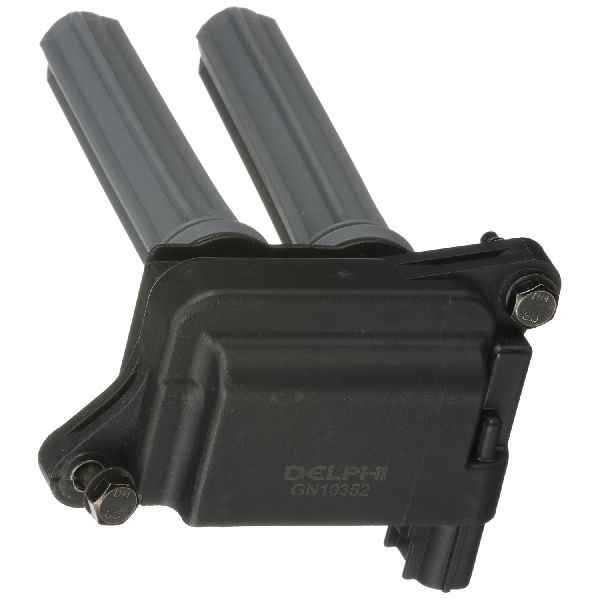
- Ignition Coil
(OEM #56029129AF (superseded by 68238603AA))— Ignition coils are a common failure item that directly causes misfires. It's one of the first parts to check. Part number 56029129AF was superseded by 68238603AA.
Trusted brands: Mopar, NGK, Delphi
OEM price range: $40-$100
Aftermarket price range: $25-$45 - Spark Plug
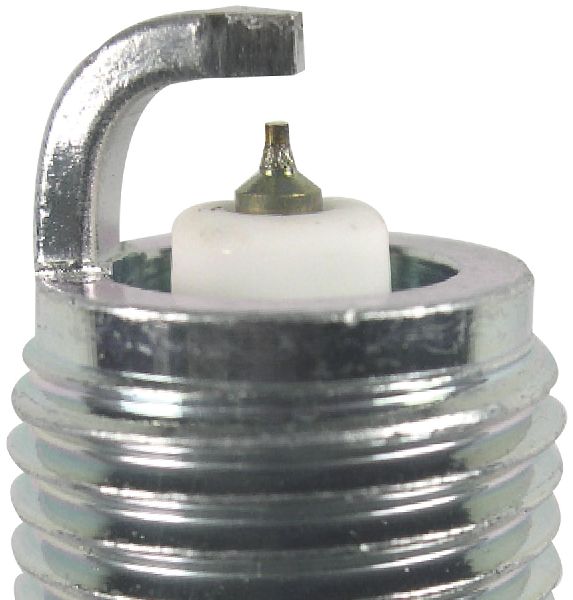
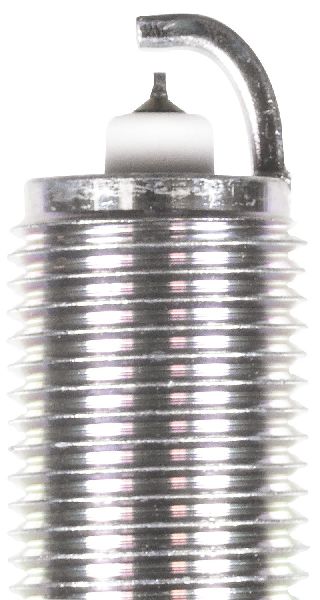
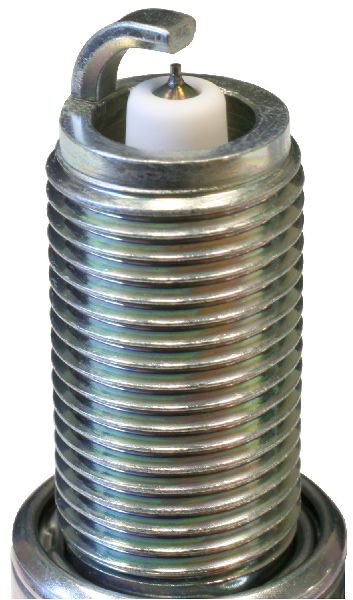
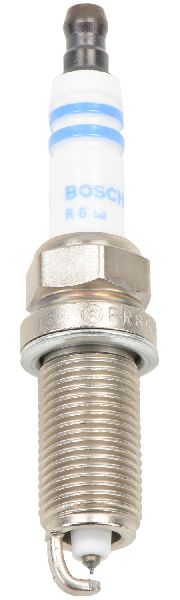
(OEM #SP143877AA (Hemi), SP148183AB (Pentastar))— As a routine maintenance item, spark plugs wear out and are a primary cause of weak spark and misfires.
Trusted brands: Mopar, NGK
Related Codes That Often Appear With This One
- P0300 — If the misfire is intermittent or begins to affect other cylinders, a P0300 (Random/Multiple Cylinder Misfire) code may appear alongside P0306.
- P3441 — On 5.7L Hemi engines, this code for 'Cylinder 6 Deactivation Control Circuit' can appear with a P0306 if the problem is related to the MDS solenoid or the MDS lifter for that cylinder.
Technical Service Bulletins (TSBs) & Recalls
- 09-002-14: Addresses MIL illumination for P0300, P0302, P0304, or P0306 on 2013 models with the 3.6L engine, involving checking for cylinder leakage and potentially replacing the cylinder head.
- 09-011-25: Mentions P0306 in a list of misfire codes that may be accompanied by rough idle or valvetrain noise.
- 18-022-21: Lists P0306 as a potential misfire code that can cause a rough idle.
- 18-008-21: Notes P0306-00 - Cylinder 6 Misfire specifically occurring in cold ambient temperatures.
Platform-Specific Known Issues
- 5.7L Hemi Camshaft/Lifter Failure: The most significant issue for Hemi-equipped trucks. A persistent P0306, often accompanied by a ticking sound, is a strong indicator that the lifter for cylinder 6 has failed and is damaging the camshaft. This is a major and expensive repair.
- 3.6L Pentastar Cylinder Head Failure: TSB 09-002-14 was issued for 2013 Ram 1500s (and other Chrysler vehicles) with the 3.6L engine for excessive cylinder leakage causing misfires on cylinders 2, 4, or 6. The fix is a replacement of the left cylinder head.
- Cold Start Misfire: Some owners report the P0306 code appearing only on cold starts, which can sometimes be an early symptom of a failing lifter or a sticky fuel injector. TSB 18-008-21 also notes misfires in cold ambient temperatures. [⭐ MANUFACTURER TSB — highest authority] Bulletin #18-008-21
Mechanic-Grade Diagnostic Values
- Fuel Pressure (5.7L Hemi & 3.6L Pentastar) — expected: 58 ± 2 PSI.. Failure: Pressure that is significantly lower than 56 PSI can cause lean conditions and misfires. Note: 2009 and newer models do not have a Schrader valve on the fuel rail; a special adapter is required to test pressure mechanically at the fuel line.
- Ignition Coil Resistance (Coil-on-Plug) — expected: Primary Winding: 0.49–0.57 Ohms. Secondary Winding: 9.5–11.1 kOhms.. Failure: A reading outside of these specific ranges indicates a faulty coil. Generic specs are often wider, between 0.4-2 Ohms for primary and 6-10 kOhms for secondary.
- Fuel Injector Resistance (High Impedance) — expected: Approximately 12.5 Ohms. A healthy set of injectors should all read within 0.5 Ohms of each other.. Failure: A reading of 'OL' (Over Limit) indicates an open circuit (dead injector). A reading significantly lower than others indicates a short.
- Compression Test (Example Values) — expected: Healthy cylinders often read between 165-180 PSI. The key is consistency between cylinders.. Failure: A reading on cylinder 6 that is significantly lower (e.g., 145 PSI) indicates a mechanical issue. A 'wet test' where oil is added to the cylinder can help differentiate between ring and valve/head issues; if pressure rises significantly (e.g., to 180 PSI), the piston rings are likely worn.
Hidden / Shadow Codes Worth Checking
- Mode $06, TID $A2-$AD: While not a 'shadow code,' Mode $06 data contains the raw misfire counts for each cylinder monitored by the PCM during the current and last 10 driving cycles. Cylinder 1 is Test ID $A2, Cylinder 2 is $A3, and so on. Cylinder 6 corresponds to Test ID $A7. This allows a technician to see small numbers of misfires that haven't yet reached the threshold to set a P0306 code. (see via Most advanced OBD-II scanners can access Mode $06 data. The OEM tool, wiTECH, presents this information in a more user-friendly menu called 'Which cylinder is misfiring'.)
Scan Tool Commands That Help
- wiTECH (OEM Chrysler/Ram Tool): Misfire Monitor ('Which cylinder is misfiring') — Used to view live and historical misfire counts for each individual cylinder. This is the primary screen to confirm that cylinder 6 is the only one misfiring and to see if the misfire count increases under specific conditions (idle, load, etc.).
- wiTECH (OEM Chrysler/Ram Tool): Clear Mis-fire TLC (Throttle Learned Closed) — This function is used after reprogramming a PCM. It clears the learned crankshaft tone wheel variations so the PCM can re-learn the profile, which is essential for accurate misfire detection.
- Generic (Noid Light Set): Injector Harness Test — If a fuel injector is suspected, a noid light is plugged into the injector's electrical connector. While cranking the engine, the light should flash, indicating the PCM is sending a signal (the injector driver is working). If it doesn't flash, it points to a wiring or PCM driver issue, not the injector itself.
Wiring & Ground Locations
- Engine Ground Strap (Head to PCM) — On 2014 models, a braided ground strap connects from a bolt on the back of the passenger-side cylinder head to the bracket for the Powertrain Control Module (PCM).. This is a critical ground path for the engine management system. Forum users have reported this strap rotting or breaking, leading to erratic electrical behavior and unexplained misfires. A poor ground can affect ignition coil and fuel injector operation.
- ECM Ground Strap (2019+) — On 5th generation (DT) Ram 1500s, there is a specific 'ECM Ground' strap.. This ground is critical for the proper function of the Engine Control Module (ECM/PCM). It has a long history of part number supersessions, indicating design updates to improve its reliability. A failure here could cause numerous issues, including misfires.
Real Owner Repair Stories
- Reddit user SkyCommon3650 (2019 Ram 1500 Hemi, 35,000 miles) — P0306 Misfire Cylinder 6.
❌ Tried (didn't work) One dealership performed a $210 diagnostic, couldn't find the cause, and quoted an $1800+ engine teardown.
✅ What actually fixed it A second dealership provided a second opinion and correctly diagnosed a bad fuel injector. Replacing only the fuel injector resolved the P0306 code. - Reddit user [deleted] (2016 Ram 1500 Express, 3.6L V6) — P0306, rough idle, dimming lights, and fluctuating voltage at idle.
❌ Tried (didn't work) Replacing spark plugs, Replacing ignition coils, Replacing the fuel injector
✅ What actually fixed it The dealership found that the rocker arms had failed, which in turn damaged the exhaust camshaft. The final repair involved replacing the rockers, lifters, and the exhaust cam, at a cost of just under $2,000. - RamForum.com user (2012 Ram 1500 5.7L Hemi, 210,000 miles) — Initial P0306 code with no noticeable misfire, which later became a dead miss on cylinder 6 after a hard acceleration.
❌ Tried (didn't work) Spark plug and coil were confirmed to be good.
✅ What actually fixed it The initial diagnosis was a leaking exhaust valve. The forum consensus, based on the symptoms and high mileage, was that a weak valve spring likely failed completely under load. A broken valve spring is a known, though less frequent than lifter failure, cause of misfires on high-mileage Hemi engines. - RamForum.com user (2010 Ram 1500 5.7L Hemi) — After replacing a failed camshaft and lifters (originally from a #1 cylinder misfire), a new P0306 misfire appeared at idle only.
❌ Tried (didn't work) Changing all common ignition and fuel components.
✅ What actually fixed it The owner discovered the issue was a failed rocker arm shaft bolt on cylinder #6. This is an unusual failure that is easily overlooked after a major repair like a cam swap.
"I Checked Everything" — The Actual Cause
- In many documented cases for the 5.7L Hemi, a P0306 code will persist even after ignition and fuel parts are replaced and a smoke test for vacuum leaks comes back clean. This scenario should immediately pivot the diagnosis toward internal mechanical failure. The most likely causes are a seized MDS lifter roller destroying the camshaft lobe, or a broken valve spring. A technician should then perform a compression test and, if necessary, remove the valve cover to visually inspect valve lift and the condition of the springs and rocker arms.
When the Usual Fixes Don't Work
- While the most common advice is to swap the coil and then the spark plug, several owner-documented repairs show this is often not the fix. In one case on a 2019 Hemi, a dealership wanted to tear down the engine, but the actual cause was simply a bad fuel injector. In another case on a 2016 3.6L V6, after replacing the coil, plug, AND injector, the problem was ultimately traced to failed rocker arms and a damaged camshaft. These stories prove that if the initial ignition parts swap doesn't move the misfire, one should not continue replacing parts at random but should pivot to more methodical testing of the fuel system and internal engine mechanics.
OEM Part Supersession History
56029129AF→68238603AA— Design revision for improved reliability or change in supplier.68366240AA, AB, AC, AD→68603896AA— Multiple revisions to the ECM ground strap for 2019+ models suggest an effort to improve the grounding connection and prevent electrical issues.
Heads up: Using an older, failure-prone version of the ground strap could lead to recurring issues. It is critical to use the latest part number.
Model Year Variations Within This Range
- 2009+: Unlike many older vehicles, Ram trucks from this era do not have a Schrader valve test port on the fuel rail. Mechanical fuel pressure testing requires a special 'T-adapter' to be spliced in-line with the fuel supply hose, making it more difficult for DIY diagnosis.
- 2019-2020: The introduction of the eTorque mild-hybrid system on some 3.6L and 5.7L engines adds a 48-volt battery and a belt-starter generator. This increases electrical complexity and introduces new ground straps and wiring harnesses specific to eTorque models, which must be considered during diagnosis.
- 2014+: Chrysler/FCA has issued multiple software updates for the PCM to address false misfire codes (P030x). TSB 18-004-14, for example, notes that summer-blend fuel in cold climates could cause false misfires, which a software update corrects. This means the cause could be software logic, not a physical part.
Helpful Videos

Used OEM Parts in Stock


New Aftermarket Parts Available


The information in this article is provided for general reference and educational purposes only. Vehicle specifications, procedures, and part compatibility can vary by production date, trim level, and region. Always consult your vehicle's factory service manual and verify part numbers before purchasing or performing repairs. Safety-critical components such as airbags, seat belts, and braking systems should be installed by a qualified professional.
- Ram 1500:
- 🎬 Helpful Videos
- 🛍️ Shop This Part
- What's Unique About the 2013-2020 Ram 1500
- Diagnostic Flowchart
- Symptoms You May Notice
- Most Likely Causes
- Rare But Worth Checking
- Diagnosis Steps
- Parts You'll Likely Need
- Related Codes That Often Appear With This One
- Technical Service Bulletins (TSBs) & Recalls
- Platform-Specific Known Issues
- Mechanic-Grade Diagnostic Values
- Hidden / Shadow Codes Worth Checking
- Scan Tool Commands That Help
- Wiring & Ground Locations
- Real Owner Repair Stories
- "I Checked Everything" — The Actual Cause
- When the Usual Fixes Don't Work
- OEM Part Supersession History
- Model Year Variations Within This Range
- 🎟️ Get 5% Off