

P0306 on 2016-2017 Lincoln MKX: Cylinder 6 Misfire Causes and Fixes
P0306 indicates a misfire in cylinder #6. On both the 3.7L and 2.7L V6 engines, this is most often caused by a failed ignition coil or a worn spark plug. However, on the 2.7L EcoBoost engine, this code can be a symptom of a serious internal engine problem related to oil consumption and faulty cylinder heads, as documented in manufacturer TSBs. A flashing check engine light indicates a severe misfire that can damage the catalytic converter.
- P0306 on a 2016-2017 Lincoln MKX means cylinder #6 is misfiring.
- The most likely cause is a bad ignition coil or spark plug.
- If your MKX has the 2.7L EcoBoost engine, immediately check your oil level. This code can be a symptom of a known, serious engine problem requiring cylinder head replacement.
- Accessing the rear bank of spark plugs and coils is labor-intensive, so it's wise to replace all components on that bank at once.
- The presence of oil pressure codes (P0524, P06DD) along with P0306 on a 2.7L model dramatically increases the likelihood of a major engine issue.
What's Unique About the 2016-2017 Lincoln MKX
The 2016-2017 Lincoln MKX was available with two different V6 engines: a standard 3.7L and an optional 2.7L twin-turbo EcoBoost. While the common causes like coils and plugs apply to both, the 2.7L EcoBoost has a documented history of serious internal engine issues. Manufacturer Technical Service Bulletins (TSBs) link misfire codes, including P0306, to excessive oil consumption caused by faulty cylinder head valve guides in engines built between April 2016 and January 2017. Therefore, on a 2.7L model, a P0306 code requires an immediate check of the engine oil level and monitoring for consumption, as it could signify a much more expensive repair than a simple ignition component.
Diagnostic Flowchart
Tap your situation to follow the diagnostic path that matches what you're seeing on this vehicle.
Symptoms You May Notice
- Rough or vibrating idle
- Hesitation or stumbling during acceleration
- Noticeable loss of engine power
- Flashing or solid Check Engine Light
- Reduced fuel economy
- For 2.7L EcoBoost models, possible white or blue smoke from the exhaust after a hot restart.
- Smell of raw gasoline from the exhaust
- Replacing only the spark plug when the ignition coil was the actual cause.
- Replacing ignition and fuel parts on a 2.7L EcoBoost without first checking for oil consumption, thereby missing the larger cylinder head issue.
- On the 3.7L engine, misidentifying the location of cylinder #6. It is on the front bank (radiator side), on the driver's side.
Most Likely Causes
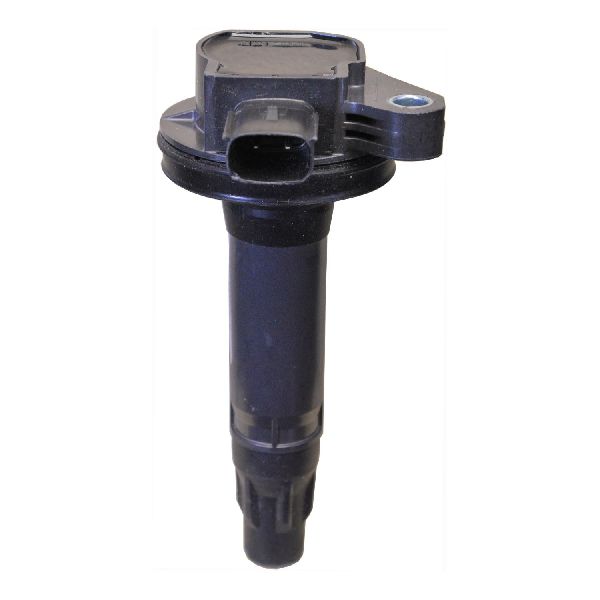
- Ignition Coil Failure 🔴 High Probability Coil-on-plug ignition systems are common failure points on many modern engines due to constant exposure to heat and vibration. Cylinder #6 is on the rear bank (firewall side) for both engines, which can trap more heat.
How to confirm: The easiest way to confirm a bad coil is to swap the ignition coil from cylinder #6 with another cylinder (e.g., cylinder #5). Clear the codes and drive the vehicle. If the code changes to P0305, the coil is faulty. Cylinder #6 is on the front bank, driver's side on the 3.7L, and on the rear bank, passenger side on the 2.7L.
Typical fix: Replace the failed ignition coil. It is often recommended to replace all coils on the same bank, especially the rear bank, due to the labor involved in accessing them.
Est. part cost: $40-$90 per coil - Worn or Fouled Spark Plug 🔴 High Probability The 2.7L EcoBoost engine, being turbocharged and direct-injected, puts more stress on spark plugs, leading to a shorter service life compared to the 3.7L. Oil fouling from the cylinder head issue can also ruin the plug on the 2.7L model.
How to confirm: After confirming the coil is good, remove the spark plug from cylinder #6. Inspect it for wear (worn electrode), carbon fouling, or oil contamination. Compare it to a plug from a healthy cylinder.
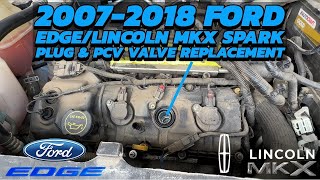
Typical fix: Replace the spark plug. Given the labor to remove the intake manifold for the rear bank (where cylinder #6 is located on the 2.7L), it is highly recommended to replace all six spark plugs at the same time. 🎬 See this step-by-step walkthrough for replacing your spark plugs.
Est. part cost: $10-$25 per plug - Cylinder Head Valve Guide Failure (2.7L EcoBoost Only) 🟡 Medium Probability A specific batch of 2.7L EcoBoost engines manufactured between April 1, 2016 and January 1, 2017 are prone to this issue, as documented in TSBs like SSM 46363 and others. This issue is widely discussed on forums for platform-mate vehicles like the Ford Edge Sport and F-150.
How to confirm: Confirm the vehicle has the 2.7L engine and check for excessive oil consumption (e.g., 1 quart in less than 3,000 miles). The presence of codes P0524 or P06DD alongside the misfire is a strong indicator. A definitive diagnosis requires a dealership inspection and likely a cylinder leak-down test.
Typical fix: This is a major repair. Per the TSB, if oil pressure codes (P0524/P06DD) are present, the entire long block engine assembly should be replaced. If only misfire codes are present, replacing both cylinder heads may suffice. This is a multi-thousand dollar repair.
Est. part cost: $2000-$7000+ - Faulty Fuel Injector ⚪ Low Probability
How to confirm: If the ignition system is confirmed to be good, the fuel injector is the next suspect. A mechanic can perform a fuel injector balance test or check the injector's resistance with a multimeter.
Typical fix: Replace the faulty fuel injector. It's often wise to replace the O-rings and seals on adjacent injectors at the same time. On high mileage vehicles, replacing all six injectors is recommended to ensure balanced performance.
Est. part cost: $70-$150 per injector
Rare But Worth Checking
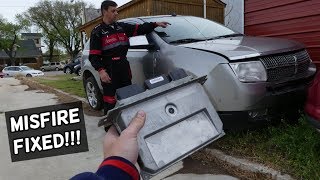
- Failing Powertrain Control Module (PCM): In some cases, particularly on the related Ford Edge platform, a persistent misfire that does not resolve with new plugs and coils can be caused by a failed ignition coil driver inside the PCM. This was a more prominent issue on earlier 2007-2008 models but can still occur. This requires sending the PCM 🎬 Watch what to check if new plugs and coils don't fix it. out for repair or replacement and programming.
- Vacuum Leak: A leak in the intake manifold gasket near cylinder #6 can lean out the air/fuel mixture and cause a misfire. This can be diagnosed with a smoke test.
Diagnosis Steps
- Scan the PCM for any other stored trouble codes. Pay close attention to P0300, P0316, P0524, or P06DD.
- Identify the correct location of Cylinder #6. For the 3.7L V6, it is the cylinder on the front bank (radiator side) closest to the driver's side. For the 2.7L EcoBoost V6, it is the cylinder on the rear bank (firewall side) closest to the passenger side.
- Check the engine oil level. If it is low, top it off and monitor for excessive consumption, especially on 2.7L EcoBoost models.
- Swap the ignition coil from cylinder #6 with an adjacent cylinder (e.g., #5). Clear the codes and run the engine to see if the misfire code moves to the new cylinder (P0305). If it does, the coil is bad.
- If the misfire remains on cylinder #6, swap the spark plug from cylinder #6 with another cylinder. If the code moves, the spark plug is the issue.
- If the misfire still persists on cylinder #6, inspect the wiring and connector for the ignition coil and fuel injector for any damage or corrosion. Broken connector tabs are a known issue.
- If no ignition issue is found, the problem may be with the fuel injector. A professional diagnosis may be needed to confirm.
- If basic ignition and fuel checks do not resolve the issue, or if significant oil consumption is noted on a 2.7L model, a mechanical compression test is warranted to check for internal engine problems like the TSB-related cylinder head issue.
Parts You'll Likely Need
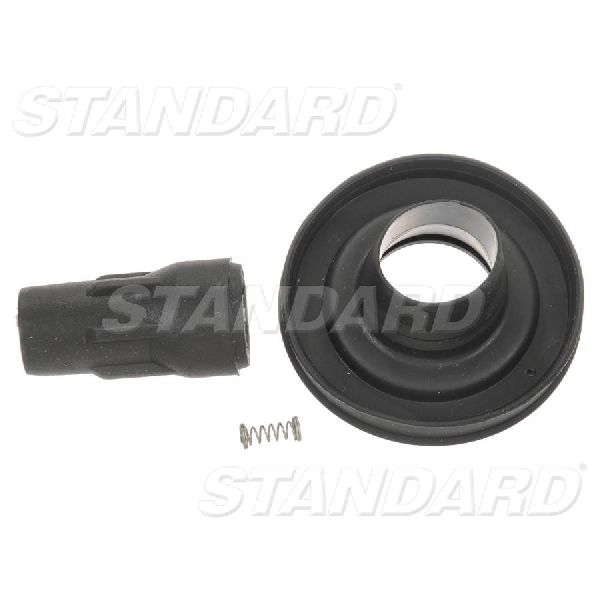
- Ignition Coil
(OEM #Motorcraft DG549 (for 3.7L V6))— This is the most common cause of a single-cylinder misfire on this vehicle.
Trusted brands: Motorcraft, NGK, Denso
OEM price range: $70-$110
Aftermarket price range: $40-$90 - Iridium Spark Plug
(OEM #Motorcraft SP-578 (for 2.7L EcoBoost))— A worn or fouled spark plug is the second most likely cause. Iridium plugs are recommended for longevity, which is important given the labor to access the rear bank.
Trusted brands: Motorcraft, NGK, Bosch
OEM price range: $15-$25
Aftermarket price range: $10-$20 - Upper Intake Manifold Gasket Set — To access the rear bank of cylinders (where #6 is located on the 2.7L), the upper intake manifold must be removed. The gaskets are single-use and must be replaced.
Trusted brands: Motorcraft, Fel-Pro
OEM price range: $40-$70
Aftermarket price range: $25-$50
Related Codes That Often Appear With This One
- P0300 — If the misfire becomes more widespread, a P0300 (Random/Multiple Misfire) code may appear alongside P0306.
- P0316 — Indicates a misfire was detected within the first 1,000 engine revolutions on startup. This code is specifically mentioned in the TSBs related to the 2.7L EcoBoost engine issue.
- P0524 / P06DD — These codes indicate low engine oil pressure. On the 2.7L EcoBoost, their presence with a P0306 is a very strong sign of the severe oil consumption and internal engine problems described in TSBs, potentially pointing to a needed long block engine replacement.
Technical Service Bulletins (TSBs) & Recalls
- SSM 54504: Links misfire DTCs P0300-P0306 with excessive oil consumption and other codes like P0524/P06DD.
- SSM 46363: Links misfire DTCs P0300-P0306 with excessive oil consumption and points to cylinder heads or the long block as the cause.
Platform-Specific Known Issues
- On 2016-2017 models equipped with the 2.7L EcoBoost V6, a P0306 code must be treated with high suspicion. It is a known symptom of a serious engine defect affecting engines built from April 2016 to January 2017, leading to excessive oil consumption and eventual engine failure. Owners on forums for the MKX and its platform-mate, the Ford Edge Sport, have reported needing complete engine replacements under warranty for this issue, often preceded by misfire codes.
Mechanic-Grade Diagnostic Values
- Direct Fuel Injector Resistance (2.7L EcoBoost) — expected: 1 to 2 Ohms. Failure: A reading significantly outside this range indicates a faulty injector winding.
- Mode $06 Misfire Count per Cylinder — expected: A count of zero or a very low number during a drive cycle.. Failure: A high number of misfire counts logged for Component ID $06 (Cylinder 6) confirms the misfire, even if the check engine light is not flashing. This data is accessible with most advanced scan tools.
- High-Pressure Fuel Rail Pressure (2.7L EcoBoost) — expected: Ranges from 65 to 2150 PSI depending on engine load.. Failure: Pressure that is significantly below specification under load can cause lean misfires across multiple cylinders.
Hidden / Shadow Codes Worth Checking
- Mode $06, Test ID $A2-$AD, Component ID $06: This is not a typical DTC, but raw data from the PCM's misfire monitor. The Test ID (e.g., $A2 for Ford) corresponds to the misfire monitor, and the Component ID ($06) corresponds to cylinder 6. The data value shows the number of misfire events counted in the current or last driving cycle. (see via Requires a scan tool capable of reading Mode $06 data, such as FORScan, Snap-on scanners, or the dealer's IDS system.)
Scan Tool Commands That Help
- Ford IDS, FORScan, high-end Snap-on/Autel scanners: Power Balance Test — This is a critical diagnostic step when a misfire is felt but the specific cylinder is uncertain, or to confirm the misfire is on cylinder 6. The test graphically displays the RPM contribution of each cylinder. A cylinder that shows a significant drop compared to others is the source of the misfire. It works by sequentially disabling the fuel injector for each cylinder and measuring the resulting drop in engine speed.
Wiring & Ground Locations
- Ignition Coil Connector — Directly on top of the ignition coil for cylinder #6.. The plastic locking tabs on these connectors can become brittle and break, leading to a poor connection and intermittent misfires. The connector has three wires: a power feed, a ground, and a trigger signal from the PCM.
- G104 / G105 (example ground points) — These are common engine block ground points on Ford platforms, typically located on the cylinder head or engine block and connected via a strap to the chassis/firewall.. A corroded or loose engine ground strap can cause numerous electrical issues, including weak spark and erratic sensor readings that can lead to misfire codes. Verifying a clean, tight connection from the engine block to the chassis is a key step in diagnosing persistent electronic issues.
Real Owner Repair Stories
- Ford Edge Forum (2015 Ford Edge Sport with 2.7L EcoBoost) — Poor engine performance and white smoke from the exhaust.
❌ Tried (didn't work) Shop initially suggested replacing the PCV or Purge valve.
✅ What actually fixed it The issue was diagnosed as the known TSB-related problem with the cylinder head/block. The owner mentioned having a warranty, implying a major engine repair (cylinder head or long block replacement) was the ultimate fix, consistent with the TSB for oil consumption leading to misfires and smoke.
OEM Part Supersession History
Motorcraft SP-542 (CYFS-092Y-PT)→Motorcraft SP-578 (CYFS-12Y-PT)— Ford updated the recommended spark plug for the 2.7L EcoBoost engine. The new plug (SP-578) is reportedly a hotter plug.
Heads up: While the original SP-542 may still be available, using the latest superseded part number (SP-578 or newer) is recommended to ensure compatibility with any potential PCM software updates and to benefit from design improvements.
Model Year Variations Within This Range
- 2016-2017 (specifically engines built April 2016 - Jan 2017): The 2.7L EcoBoost engines built within this timeframe are subject to TSBs (SSM 46363, SSM 54504) for excessive oil consumption due to faulty cylinder head valve guides. A P0306 code on a vehicle from this period is a strong indicator of this specific mechanical failure, whereas on other model years it is more likely a standard ignition component failure.
- 2018 and later (for context): The second generation of the 2.7L EcoBoost engine, introduced in 2018 on platforms like the F-150, added a port fuel injection system alongside the direct injection. This dual-injection system helps clean the intake valves, making carbon buildup less of an issue compared to the 2016-2017 direct-injection-only engines.
Helpful Videos
Used OEM Parts in Stock

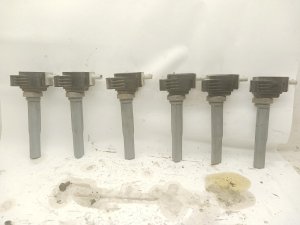


New Aftermarket Parts Available



The information in this article is provided for general reference and educational purposes only. Vehicle specifications, procedures, and part compatibility can vary by production date, trim level, and region. Always consult your vehicle's factory service manual and verify part numbers before purchasing or performing repairs. Safety-critical components such as airbags, seat belts, and braking systems should be installed by a qualified professional.
- Lincoln MKX:
- 🎬 Helpful Videos
- 🛍️ Shop This Part
- What's Unique About the 2016-2017 Lincoln MKX
- Diagnostic Flowchart
- Symptoms You May Notice
- Most Likely Causes
- Rare But Worth Checking
- Diagnosis Steps
- Parts You'll Likely Need
- Related Codes That Often Appear With This One
- Technical Service Bulletins (TSBs) & Recalls
- Platform-Specific Known Issues
- Mechanic-Grade Diagnostic Values
- Hidden / Shadow Codes Worth Checking
- Scan Tool Commands That Help
- Wiring & Ground Locations
- Real Owner Repair Stories
- OEM Part Supersession History
- Model Year Variations Within This Range
- 🎟️ Get 5% Off