

P0306 on 2012-2019 Jeep Wrangler: Cylinder 6 Misfire Causes and Fixes
P0306 means cylinder 6 is misfiring. On the 3.6L Pentastar engine, this is often a simple fix like a bad ignition coil or spark plug. However, it can also indicate a more serious, known issue with the cylinder head or valvetrain, especially on 2012-2013 models which had a specific cylinder head defect covered by an extended warranty.
- P0306 on a 3.6L Wrangler is a cylinder 6 misfire. Start your diagnosis with the simple things first.
- Use the 'swap test': swap the ignition coil, then the spark plug, with a neighboring cylinder to quickly identify the faulty part.
- Listen carefully for a ticking or tapping sound from the engine. This is a strong indicator of the known rocker arm/camshaft issue and means the problem is more serious than a plug or coil.
- If you have a 2012-2013 model, be aware of the potential for the infamous left cylinder head failure, which requires a major repair.
- Do not ignore a flashing check engine light, as it signals a severe misfire that can quickly damage your expensive catalytic converter.
What's Unique About the 2012-2019 Jeep WRANGLER

The 3.6L Pentastar V6 engine used in this generation of Wranglers has two well-documented issues that can cause a P0306 code. Early models (2012-2013) were prone to a left-side cylinder head failure due to defective valve guides, which was so common that Chrysler extended the warranty to 10 years or 150,000 miles under warranty extension X56. [8, ⭐ TSB #0900214, ⭐ TSB #0900214a] Additionally, these engines can suffer from premature wear of the valvetrain components, specifically the needle bearings in the rocker arms, which seize and damage the camshaft lobes, leading to a ticking noise and misfires. [31, OWNER COMPLAINT #11688993] While a simple spark plug or coil is still a likely culprit, these more serious mechanical possibilities must be considered.
Diagnostic Flowchart

Tap your situation to follow the diagnostic path that matches what you're seeing on this vehicle.
Generation note: This range covers the Jeep Wrangler JK (2012-2018) and the first year of the JL (2018-2019), both of which used the 3.6L Pentastar V6. The notorious cylinder head issue primarily affected early JK models (2012-2013). [8, ⭐ TSB #0900214, ⭐ TSB #0900214a] The valvetrain (cam/rocker arm) wear can occur across the entire year range but is a known failure point on all 3.6L Pentastar engines.
Symptoms You May Notice

- Check Engine Light is on (solid or flashing)
- Rough or shaky idle. [⭐ TSB #09-011-25]
- Engine stumbling or hesitating on acceleration
- Noticeable loss of engine power
- Audible ticking or tapping noise from the engine, often more pronounced on a cold start (valvetrain noise). [⭐ TSB #09-011-25]
- Reduced fuel economy. [ OWNER COMPLAINT #10490131]
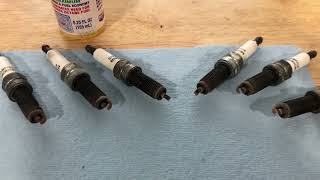
- Replacing only the spark plugs when the ignition coil is the actual problem. Always perform the 'swap test' first to save time and money, as accessing cylinder 6 is difficult. 🎬 Watch: Professional misfire troubleshooting steps for the 3.6 Pentastar.
- Assuming a simple ignition problem when a distinct engine tick is present. A ticking noise strongly points towards a more serious valvetrain issue (rocker arms/camshaft) that requires removing the valve cover to inspect.
Most Likely Causes

- Failed Ignition Coil 🔴 High Probability Coil-on-plug systems are common failure points due to constant exposure to high heat and vibration. It's a frequent cause for any specific cylinder misfire and a logical first part to check.
How to confirm: Swap the ignition coil from cylinder 6 with another cylinder (e.g., cylinder 4 on the same bank, or cylinder 1 on the passenger bank which is easier to access). Clear the codes and drive. If the misfire code changes to P0304 or P0301, the coil is faulty.
Typical fix: Replace the failed ignition coil. It's often recommended to replace the spark plug at the same time, especially since accessing cylinder 6 is labor-intensive.
Est. part cost: $25-$60 - Worn or Fouled Spark Plug 🔴 High Probability Spark plugs are a regular maintenance item. The manufacturer recommends replacement at 100,000 miles, but they can fail sooner, causing a weak or inconsistent spark. A worn plug with a large gap can also overwork the ignition coil, leading to its premature failure.
How to confirm: After trying the coil swap, swap the spark plug from cylinder 6 with another cylinder. If the misfire code follows the plug, the plug is bad. Visually inspect the plug for wear, oil, or coolant fouling, which can indicate other problems like a bad valve seal or head gasket.
Typical fix: Replace the spark plug. It is best practice to replace all six spark plugs at the same time to maintain consistent performance.
Est. part cost: $5-$20 per plug - Failed Rocker Arm / Worn Camshaft 🟡 Medium Probability The 3.6L Pentastar engine is known for valvetrain issues where the needle bearings in the rocker arms fail and fall out. This causes the rocker to scrape directly on the camshaft lobe, quickly wearing it down and leading to a ticking noise and misfire. [31, OWNER COMPLAINT #11688993]
How to confirm: Listen for a distinct ticking/tapping sound from the top of the engine, which may be louder on startup. A definitive diagnosis requires removing the driver's side valve cover to visually inspect the rocker arms for excessive play and the camshaft lobes for scoring or wear.
Typical fix: Replace all rocker arms and lifters on the affected bank (Bank 2, driver's side). If the camshaft is scored, it must also be replaced. This is a labor-intensive job.
Est. part cost: $200-$600 for parts, including a new camshaft if needed. 🎬 See this walkthrough on replacing rocker arms and camshafts.
- Failed Left Cylinder Head ⚪ Low Probability Primarily affects 2012-2013 models. A manufacturing defect with soft valve guides and seats on the left cylinder head (cylinders 2, 4, 6) caused premature wear, leading to compression loss and misfires. This was addressed by TSB #0900214 and a 10-year/150,000-mile warranty extension (X56). [ OWNER COMPLAINT #11152421, ⭐ TSB #0900214, ⭐ TSB #0900214a]
How to confirm: A cylinder leak-down test is the definitive diagnostic step. A leakage of 25% or more on cylinders 2, 4, or 6 confirms the issue as per TSB #0900214. [⭐ TSB #0900214, ⭐ TSB #0900214a, 18]
Typical fix: Replacement of the entire left cylinder head assembly with an updated part (part numbers ending in 'AC' or later are considered revised). This is a major repair.
Est. part cost: $800-$1500 for a new head assembly. - Clogged or Faulty Fuel Injector ⚪ Low Probability
How to confirm: After ruling out ignition issues, you can swap the fuel injector from cylinder 6 with another cylinder (e.g., cylinder 4). This is more involved than swapping a coil as it requires removing the intake manifold. Alternatively, a mechanic can perform a fuel injector balance test.
Typical fix: Replace the faulty fuel injector. It's often recommended to have all injectors professionally cleaned and tested at the same time.
Est. part cost: $40-$100
Rare But Worth Checking
- PCM Software Update Needed: Manufacturer TSBs #18-021-16 REV. B and #18-041-16 REV. A indicate that in some cases, a software update for the Powertrain Control Module can resolve false misfire detection, particularly for P0306 on vehicles with automatic transmissions. [⭐ TSB #18-021-16 REV. B, ⭐ TSB #18-041-16 REV. A]
- Vacuum Leak: A leak in the lower intake manifold gasket near cylinder 6 could lean out the air/fuel mixture and cause a misfire. A smoke test is the most effective way to identify such leaks.
- Wiring Harness Issue: Damage to the wiring or a loose pin in the connector for the cylinder 6 ignition coil or fuel injector can cause an intermittent misfire. Owners have reported finding pushed-back pins or corroded connectors as the root cause.
Diagnosis Steps
- Read the code with an OBD-II scanner to confirm P0306 and check for any other codes. Note if the check engine light is solid or flashing.
- Listen for an engine ticking noise, especially on a cold start. A clear tick points towards a likely valvetrain problem (rocker arms/camshaft).
- Swap the ignition coil from cylinder 6 (rear, driver's side) with cylinder 1 (front, passenger's side). Cylinder 1 is easy to access. Clear codes and drive. If the misfire moves to P0301, replace the bad coil.
- If the misfire stays on cylinder 6, the upper intake manifold must be removed. Once removed, swap the spark plugs between cylinders 6 and 4. Reassemble, clear codes, and drive. If the code moves to P0304, replace the spark plug(s).
- While the intake is off, inspect the wiring and connector for the cylinder 6 coil and fuel injector for any damage, corrosion, or pushed-back pins.
- If ignition components are good, check for mechanical failure. Perform a compression test on cylinder 6.
- Perform a cylinder leak-down test on cylinders 2, 4, and 6. This is the key test for the known cylinder head issue. Per TSB #0900214, leakage of 25% or more confirms a bad cylinder head requiring replacement. [⭐ TSB #0900214, ⭐ TSB #0900214a, 18]
- If compression and leak-down tests are good but a tick is present, remove the driver's side valve cover and inspect the camshaft lobes for scoring and rocker arms for excessive play or failed bearings.
Parts You'll Likely Need
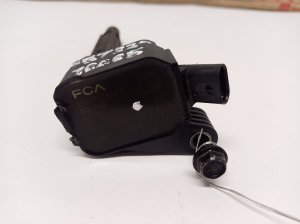
- Ignition Coil
(OEM #5149168AJ (supersedes 5149168AH, 5149168AI))— This is the most common and easiest-to-diagnose cause of a single-cylinder misfire.
Trusted brands: Mopar, NGK, Delphi
OEM price range: $40-$60
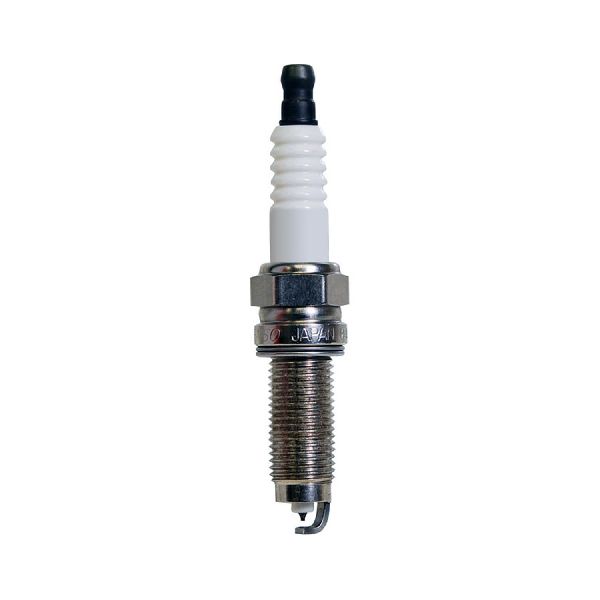
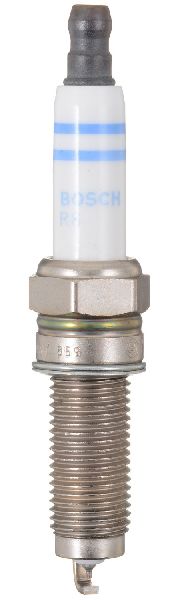
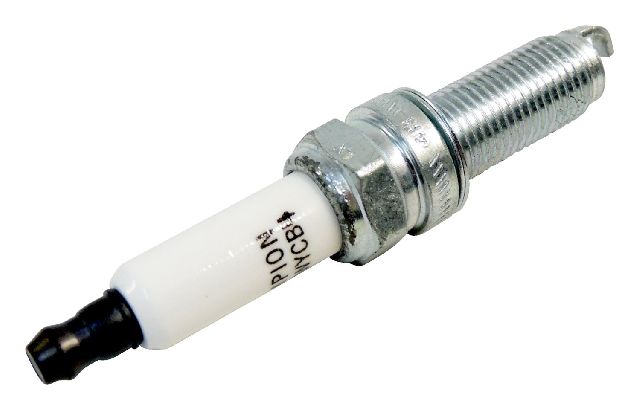
Aftermarket price range: $25-$45 - Spark Plug
(OEM #SP142582AC)— A standard wear-and-tear item that is a frequent cause of misfires. Accessing them on the driver's side is difficult, so it's wise to replace them all at once.
Trusted brands: Champion (OEM), NGK
OEM price range: $10-$15
Aftermarket price range: $5-$10
Related Codes That Often Appear With This One
- P0300 — If the underlying issue (like a vacuum leak, fuel pressure problem, or major mechanical failure like multiple failed rocker arms) affects more than one cylinder, a P0300 (Random/Multiple Cylinder Misfire) may accompany P0306. [2, ⭐ TSB #18-021-16 REV. B, ⭐ TSB #18-041-16 REV. A]
- P0302, P0304 — If you see misfire codes for other cylinders on the same bank (2, 4, 6), it strongly suggests a systemic problem for that bank, such as the known cylinder head issue on 2012-2013 models or a clogged catalytic converter for that bank. [3, ⭐ TSB #0900214, ⭐ TSB #0900214a]
Technical Service Bulletins (TSBs) & Recalls
- 09-002-14 (also cited as 0900214a): Details diagnosis (cylinder leakage test) and replacement of the left cylinder head for misfire codes P0302, P0304, P0306, and P0300.
- 09-011-25: Notes that rough idle and valvetrain noise can be symptoms of P030x misfire codes.
- 18-021-16 REV. B & 18-041-16 REV. A: Mention software updates that can resolve certain misfire DTCs, including P0306.
- MC-11018482-0001 (mentioned in ODI #11688993): Relates intake camshaft/rocker wear to P0301-P0306 misfires.
Platform-Specific Known Issues
- Extended Warranty (X56) for Left Cylinder Head: On some 2012-2013 models, Chrysler extended the warranty on the left cylinder head to 10 years or 150,000 miles due to defects causing misfires on cylinders 2, 4, and 6. This was detailed in TSB #0900214a.
- Rocker Arm / Camshaft Failure: The 3.6L Pentastar is known for a valvetrain tick that develops from failed rocker arm bearings. If ignored, this can destroy the camshaft lobe, leading to a persistent misfire. This was noted in owner complaints. [ ODI #11688993]
Mechanic-Grade Diagnostic Values
- Ignition Coil Primary Resistance — expected: 0.5 - 2.0 ohms. Failure: A reading of infinity (OL) indicates an open circuit, while a reading outside the specified range suggests a faulty coil.
- Ignition Coil Secondary Resistance — expected: 6,000 - 10,000 ohms. Failure: A reading outside this range indicates the coil is likely faulty.
- Fuel System Pressure — expected: 58 psi (400 kPa). Failure: Significantly lower pressure can cause lean conditions and misfires.
- Cylinder Leakage — expected: Under 25%. Failure: Leakage of 25% or more on cylinders 2, 4, or 6 points to the known cylinder head issue per TSB #0900214.
Hidden / Shadow Codes Worth Checking
- Mode $06, Test ID $A2-$A7: This is not a trouble code, but a function within OBD-II diagnostics that shows misfire counts for each cylinder (Cylinder 1 is $A2, Cylinder 2 is $A3, etc., up to Cylinder 6 being $A7). Even if the misfire count isn't high enough to set a P0306 code, you can use a capable scan tool to monitor the live count for cylinder 6 to see if it's intermittently misfiring. (see via An advanced OBD-II scan tool or an app like JScan that can display Mode $06 data.)
Scan Tool Commands That Help
- wiTECH: All DTCs — After performing a software flash or reprogramming, the wiTECH application will automatically present all DTCs and allow them to be cleared. This is a required step after any PCM update.
- wiTECH: ASD Relay Actuation — To test the Auto Shutdown (ASD) relay output circuit, which provides power to the ignition coils and fuel injectors. The scan tool can command the relay on and off to verify its function and check for voltage at the coil connector.
- wiTECH: Live Data Monitoring — To view real-time data streams from various sensors. For a P0306, a technician would monitor short-term and long-term fuel trims for Bank 2, O2 sensor readings, and misfire counters to help diagnose the root cause.
Wiring & Ground Locations
- Ignition Coil/Fuel Injector Harness (Cyl. 6) — The ignition coils and fuel injectors for cylinder 6 are located on the driver's side (left bank) of the engine, underneath the upper intake manifold.. This harness is a common point of failure. The connector tabs become brittle and break, leading to poor connections. Also, heat from the engine can damage the wiring over time, causing intermittent open or short circuits to the coil or injector for cylinder 6.
- G102 — Located on the left rear of the engine block.. This is a primary engine ground. A loose or corroded G102 ground can cause a host of electrical issues, including erratic sensor readings and weak spark, which can lead to misfire codes.
- G905A — Located on the right side of the engine compartment.. This is a major chassis ground point. While not directly on the engine, poor grounding here can affect the PCM and other modules, potentially causing false codes or other electrical gremlins.
- PCM Connector C2, Pin 13 — This is the pin for the Cylinder 6 ignition coil control signal on the Powertrain Control Module (PCM).. A technician would test for a signal at this pin to determine if the PCM is commanding the coil to fire. A lack of signal points to a faulty PCM driver, while a good signal with no spark at the plug points to a wiring or coil issue.
Real Owner Repair Stories
- jk-forum.com user (2015 JKU Rubicon) — Intermittent P0306 code, occasional pulsing when letting off the brake.
❌ Tried (didn't work) Replacing all ignition coils and spark plugs., Replacing PCV valve., PCM software update., Replacing the cylinder head (twice, by the dealer).
✅ What actually fixed it The user's story was ongoing, but after two cylinder head replacements failed to fix the issue, the next step suggested by other forum members was to replace the camshafts, lifters, and rocker arms, suspecting a mechanical valvetrain issue that was missed during the head replacements. - YouTube user Gearmo Auto (2017 Jeep Wrangler, 35,000 miles) — P0306, rough running.
❌ Tried (didn't work) Planned to swap ignition coil and spark plug to the opposite bank for easier diagnosis.
✅ What actually fixed it Upon removing the upper intake manifold to access cylinder 6, a visual inspection of the intake port revealed a chipped valve. The repair (cylinder head replacement) was covered under the powertrain warranty. - jk-forum.com user (2015 JKU) — P0306, missing and running rough.
❌ Tried (didn't work) Replaced coil packs and spark plugs for cylinders #2 and #6.
✅ What actually fixed it The mechanic replaced the left cylinder head assembly. The owner also proactively had the oil cooler and serpentine belt replaced while the engine was disassembled. The vehicle ran great afterward.
When the Usual Fixes Don't Work
- In one owner's account of a 2015 JKU, the dealership replaced the cylinder head twice in an attempt to fix a persistent P0306, but the code returned each time. The owner had already replaced plugs and coils. This suggests that even on later models outside the 2012-2013 problem window, a cylinder head replacement may be performed but might not be the root cause. In this case, the underlying issue was suspected to be a worn camshaft or rocker arms, which were not replaced with the new heads.
OEM Part Supersession History
68093423AB (and earlier revisions)→68322342AA, 77072442AB (Mopar Performance)— The original 'AA' and 'AB' cylinder heads for 2012-2013 models were prone to premature valve guide wear. Later revisions ('AC' and onward) and the Mopar remanufactured part (R8259595AB) use hardened valve guides and seats to correct the defect.68236867AB→68236867AD— Supersession of the engine wiring harness for the 3.6L engine. Revisions often involve improvements to connector materials or wire shielding to increase durability.
Heads up: Always verify the correct harness part number by VIN, as there are variations.
Model Year Variations Within This Range
- 2012-2013: These model years were subject to the left cylinder head defect (TSB #0900214) and covered by an extended warranty (X56). While a head can fail on any year, it is a very high probability cause for P0306 on these specific years. [8, ⭐ TSB #0900214, ⭐ TSB #0900214a]
- 2016+: The 3.6L Pentastar was updated with a two-stage variable valve lift (VVL) system, a cooled EGR, and new intake manifold, fuel injectors, and ignition coils. While the fundamental causes of P0306 remain the same, some specific part numbers may differ from earlier models.
- 2012-2018 (JK) vs 2018-2019 (JL): The 2018 model year was a transition. While both the JK and JL were sold with the 3.6L Pentastar, the surrounding electronics and modules (like the PCM) are different. The JL uses an unlocked GPEC2A PCM for 2018-2019 models, which may have different software logic for misfire detection compared to the JK's PCM.
Helpful Videos
Used OEM Parts in Stock


New Aftermarket Parts Available


The information in this article is provided for general reference and educational purposes only. Vehicle specifications, procedures, and part compatibility can vary by production date, trim level, and region. Always consult your vehicle's factory service manual and verify part numbers before purchasing or performing repairs. Safety-critical components such as airbags, seat belts, and braking systems should be installed by a qualified professional.
- Jeep WRANGLER:
- 🎬 Helpful Videos
- 🛍️ Shop This Part
- What's Unique About the 2012-2019 Jeep WRANGLER
- Diagnostic Flowchart
- Symptoms You May Notice
- Most Likely Causes
- Rare But Worth Checking
- Diagnosis Steps
- Parts You'll Likely Need
- Related Codes That Often Appear With This One
- Technical Service Bulletins (TSBs) & Recalls
- Platform-Specific Known Issues
- Mechanic-Grade Diagnostic Values
- Hidden / Shadow Codes Worth Checking
- Scan Tool Commands That Help
- Wiring & Ground Locations
- Real Owner Repair Stories
- When the Usual Fixes Don't Work
- OEM Part Supersession History
- Model Year Variations Within This Range
- 🎟️ Get 5% Off