

P0306 on 2011-2018 Jeep Grand Cherokee: Cylinder 6 Misfire Causes and Fixes
P0306 on a Jeep Grand Cherokee means cylinder 6 is misfiring. While this can be a simple fix like a spark plug or ignition coil, on 2011-2013 models with the 3.6L V6, it is a very strong indicator of a failed left cylinder head, which is a major and costly repair. On later models, a ticking noise accompanying the code often points to a failed rocker arm.
- P0306 is a misfire on cylinder 6, which is on the driver's side, closest to the cabin.
- On 2011-2013 Grand Cherokees with the 3.6L V6, this code is a major red flag for a failed cylinder head, a known factory defect.
- Always start diagnosis by swapping the ignition coil and inspecting the spark plug, but be prepared for a mechanical issue.
- A cylinder leak-down test is the critical diagnostic step to confirm or rule out the common cylinder head failure before attempting expensive repairs.
- Do not ignore a flashing check engine light, as it signals a severe misfire that can quickly damage the catalytic converter.
What's Unique About the 2011-2018 Jeep GRAND CHEROKEE

For the 2011-2018 Grand Cherokee (WK2 generation), the story of P0306 is dominated by the 3.6L Pentastar V6 engine. Early versions of this engine, particularly from 2011-2013, are notorious for a defect in the left-side cylinder head that leads to excessive wear on valve guides and seats, believed to be due to incompatible materials. This specific issue frequently causes misfires on the left bank of cylinders—2, 4, and 6. The problem was so widespread that Chrysler issued warranty extension X56 (related to TSB 09-002-14), covering the left cylinder head for 10 years or 150,000 miles. Therefore, on an early 3.6L model, P0306 is not just a routine misfire code; it's a significant warning sign of a potentially serious, well-documented engine problem. For all model years, the 3.6L is also prone to valvetrain ticking from failed rocker arms, which can also cause a P0306 misfire.
Diagnostic Flowchart

Tap your situation to follow the diagnostic path that matches what you're seeing on this vehicle.
Symptoms You May Notice

- Check Engine Light is on (may be solid or flashing)
- Rough or vibrating idle. [Bulletin #09-011-25]
- Noticeable loss of power and sluggish acceleration.
- Engine hesitation or stumbling, especially under load.
- Reduced fuel economy.
- Audible ticking or chattering noise from the top of the engine, which may increase with RPM (indicative of rocker arm failure).
- In rare cases with a stuck-open injector, excess gasoline can hydro-lock the cylinder, preventing the engine from cranking and potentially damaging the starter motor.
- Replacing only spark plugs and ignition coils on an early 3.6L V6 without performing a leak-down test. Many owners spend money on basic tune-up parts only to find the root cause was the cylinder head.
- Ignoring a persistent ticking noise. The 'Pentastar tick' is a well-known precursor to rocker arm failure and should be investigated before it leads to a misfire and potential camshaft damage.
Most Likely Causes

- Failed Left Cylinder Head (3.6L V6, primarily 2011-2013) 🔴 High Probability Early 3.6L Pentastar engines had a manufacturing defect with the valve seat material on the left cylinder head, which houses cylinders 2, 4, and 6. This caused premature wear and a loss of seal. This was the subject of Technical Service Bulletin #09-002-14 and warranty extension X56.
How to confirm: After ruling out ignition and fuel issues, a cylinder leak-down test is the definitive diagnostic step. A leakage of 25% or more, with air heard escaping through the intake or exhaust, confirms 🎬 See how to perform a fast and easy leak-down test. the issue as per the TSB.
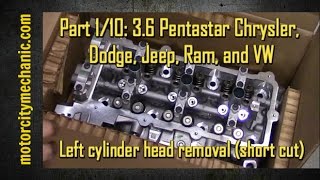
Typical fix: Replacement of the left cylinder head with an updated part (Part number ending in 'AB' or later, like RL141353AC). The warranty extension covered 🎬 Watch: A shortcut for removing the left cylinder head. this for 10 years/150,000 miles, but most vehicles are now outside that window.
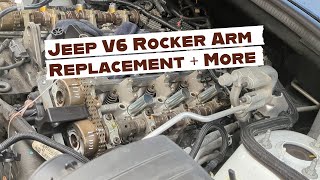
Est. part cost: $800-$1500 - Failed Rocker Arm/Lifter (3.6L V6, all years) 🔴 High Probability The Pentastar engine is known for failure of the needle bearings inside the rocker arms. This causes the rocker to become loose, creating a ticking noise and improper valve lift, which leads to a misfire. The failure can eventually damage the camshaft if not addressed.
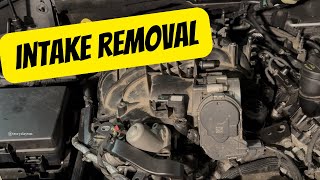
How to confirm: A distinct ticking or chattering noise from the upper engine is the primary symptom. Diagnosis requires removing the valve cover on the left bank (which involves removing the upper intake manifold) and physically 🎬 Watch: Step-by-step guide to removing the upper intake manifold. inspecting the rocker arms for play on the camshaft lobes.
Typical fix: Replace all rocker arms and lifters on the affected cylinder head. If the camshaft is scored, it must also be replaced. Many owners choose to replace all 24 rocker arms and lifters as a preventative measure.
Est. part cost: $200-$700 for a full set of Mopar rocker arms and lifters. - Faulty Ignition Coil 🟡 Medium Probability Coil-on-plug systems are a common failure point on most modern engines due to constant heat cycles and vibration.
How to confirm: Swap the ignition coil from cylinder 6 with another cylinder (e.g., cylinder 4 on the same bank). Clear the codes and drive. If the code changes to P0304, the coil is bad.
Typical fix: Replace the faulty ignition coil. It's often wise to replace the spark plug at the same time.
Est. part cost: $30-$70 - Worn Spark Plug 🟡 Medium Probability Spark plugs are a standard maintenance item with a finite lifespan. Misfires can occur as the electrode wears, increasing the gap beyond specification (spec is typically 0.043 inches).
How to confirm: Remove the spark plug from cylinder 6 and inspect it for wear, fouling, or damage. Access requires removing the upper intake manifold on the 3.6L V6. Check the spark plug gap with a gapper tool.
Typical fix: Replace the spark plug. It is recommended to replace all six spark plugs at the same time, especially if their age is unknown.
Est. part cost: $10-$25 per plug - Clogged or Faulty Fuel Injector ⚪ Low Probability Fuel injectors can become clogged with deposits or fail electrically, disrupting the spray pattern and fuel volume. A misfire under load can sometimes point to a lean condition from a weak injector.
How to confirm: This is more difficult to diagnose. A professional can perform a fuel injector balance test. A DIY method is to swap the injector from cylinder 6 with another cylinder, but this is labor-intensive. Listening to the injector with a mechanic's stethoscope for a consistent clicking sound can also help.
Typical fix: Replace the faulty fuel injector. It's often recommended to replace them as a set.
Est. part cost: $50-$120
Rare But Worth Checking
- Blown Head Gasket: A failure in the head gasket can allow coolant to leak into cylinder 6, fouling the spark plug and causing a misfire, especially on startup. This may be accompanied by low coolant levels and white smoke from the exhaust. A YouTube user documented this exact failure on a 2014 Ram 1500 with the 3.6L engine after other shops failed to diagnose it.
- Intake Manifold Gasket Leak: A vacuum leak near the intake port for cylinder 6 can lean out the air/fuel mixture and cause a misfire. This is more likely after the intake has been removed for other service. Diagnosis is done with a smoke test.
- Low Engine Compression: Beyond the cylinder head issue, a misfire can be caused by worn piston rings or other internal engine problems leading to low compression. A dry and wet compression test will help verify the health of the piston rings.
Diagnosis Steps
- Read the codes with an OBD-II scanner and note any other codes present (e.g., P0300, P0302, P0304, P0206). Freeze frame data can show the conditions under which the misfire occurred.
- For the 3.6L V6, listen carefully for an audible ticking from the engine bay. A rhythmic tick that increases with engine speed is a strong sign of a rocker arm issue.
- Identify cylinder 6. It is on the driver's side (left bank), closest to the firewall.
- Accessing cylinder 6 requires removing the upper intake manifold. This is a multi-hour job for a DIYer.
- Once accessed, swap the ignition coil from cylinder 6 with the coil from cylinder 4 (middle cylinder, same bank).
- Clear the codes, start the engine, and drive until the Check Engine Light returns. A scan tool may be needed to perform a crank relearn procedure. If the code is now P0304, the ignition coil is the culprit.
- If the code remains P0306, inspect the spark plug for wear, damage, or fouling (e.g., wet with fuel or coolant). Check the spark plug tube for oil, which indicates a failed valve cover tube seal.
- If ignition parts are good, and especially if the vehicle is a 2011-2013 model, the next step is a mechanical test. Perform a cylinder leak-down test on cylinder 6. A reading over 25% strongly suggests the known cylinder head issue.
- If the leak-down test is good, but a ticking noise was present, inspect the valvetrain. With the valve cover off, check for any rocker arms that are loose or have play on the camshaft.
- If all of the above are good, the issue may be a faulty fuel injector, wiring harness problem, or a vacuum leak. Consider swapping the fuel injector with another cylinder or performing a balance test.
Parts You'll Likely Need
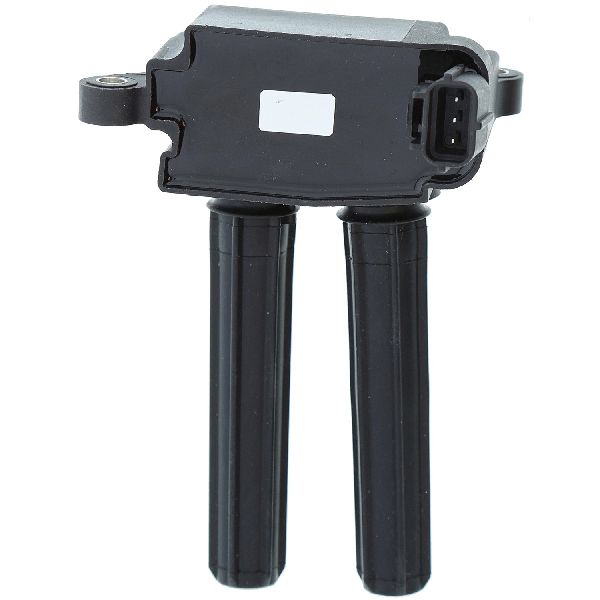
- Ignition Coil
(OEM #5149168AI)— A very common cause for a single-cylinder misfire. Easy to diagnose by swapping.
Trusted brands: Mopar, NGK, Delphi
OEM price range: $50-$80
Aftermarket price range: $30-$60 - Spark Plug
(OEM #SP149125AE)— A standard wear item that is a frequent cause of misfires. Should be replaced at regular intervals.
Trusted brands: Mopar, NGK, Champion
OEM price range: $15-$25
Aftermarket price range: $8-$15 - Left Cylinder Head (3.6L V6)
(OEM #RL141353AC (or newer 'AB' revision))— The primary cause of P0306 on 2011-2013 models due to a well-documented factory defect. The replacement part has revised valve seat materials.
Trusted brands: Mopar
OEM price range: $1000-$1500
Aftermarket price range: $800-$1200 - Rocker Arm & Lifter Kit (3.6L V6)
(OEM #5184296AH (Rocker Arm))— A common failure point on the 3.6L Pentastar causing a ticking noise and misfires. Often replaced as a full set for one or both banks.
Trusted brands: Mopar, Melling
OEM price range: $15-$20 per rocker arm
Aftermarket price range: $5-$15 per rocker arm - Upper Intake Manifold Gaskets
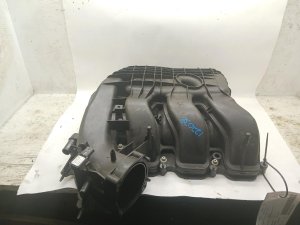
(OEM #5184331AC)— These are single-use gaskets that must be replaced whenever the upper intake manifold is removed to access the driver's side cylinders on the 3.6L V6.
Trusted brands: Mopar, Fel-Pro
OEM price range: $20-$30
Aftermarket price range: $10-$20
Related Codes That Often Appear With This One
- P0300 — If the misfire is severe or intermittent enough to affect multiple cylinders, a P0300 (Random/Multiple Cylinder Misfire) code may be stored alongside P0306. [Bulletin #0900214a]
- P0302, P0304 — On 3.6L V6 models, seeing these codes together with P0306 is a strong indication of the common left cylinder head failure, as all three cylinders are on the same bank. [Bulletin #0900214a, 15]
- P0206 — This code indicates a fault in the fuel injector circuit for cylinder 6. If seen with P0306, it strongly points to either a bad fuel injector or a wiring/connector issue to that injector.
Technical Service Bulletins (TSBs) & Recalls
- source — This is the key technical service bulletin for the P0306 code on early 3.6L Pentastar engines. It outlines the diagnosis for MIL illumination with codes P0300, P0302, P0304, or P0306. The procedure is to perform a cylinder leak-down test on the left bank (cylinders 2, 4, 6). If leakage is 25% or greater, the bulletin instructs technicians to replace the left cylinder head. This TSB is associated with the X56 warranty extension.
Platform-Specific Known Issues
- 2011-2013 3.6L V6 Left Cylinder Head Failure: The most significant issue related to this code. A factory defect caused premature wear, leading to misfires on cylinders 2, 4, and 6. Chrysler issued TSB 09-002-14 and warranty extension X56 (10 years/150,000 miles) to address this. Diagnosis requires a leak-down test.
Mechanic-Grade Diagnostic Values
- Fuel Injector Resistance (3.6L V6) — expected: 12 to 16 Ohms. Failure: Readings outside of the 12-16 Ohm range, such as 11.4 or 11.8 Ohms, can indicate a failing injector even if it still clicks.
- Fuel Injector Resistance (3.6L V6, Bosch OEM) — expected: Approximately 12.0 - 12.5 Ohms. Failure: A significant deviation from this value suggests an internal coil issue within the injector.
- Ignition Coil Primary Resistance (3.6L V6, Gen 2 - 2016+) — expected: 0.46 Ohms. Failure: A reading significantly higher or lower than this specification points to a faulty coil winding.
- Ignition Coil Secondary Resistance (3.6L V6, Gen 2 - 2016+) — expected: 15.70 kOhms. Failure: An open circuit (infinite resistance) or a value far from spec indicates a failed secondary winding.
- Fuel Pressure (Low Pressure System) — expected: Approximately 59 +/- 2 PSI. Failure: Low fuel pressure can cause lean misfires across multiple cylinders, but a failing pump can sometimes manifest on one cylinder first under certain loads.
Scan Tool Commands That Help
- wiTECH: OBD II Monitors -> 'Which cylinder is misfiring' — Used to view live misfire counts for each individual cylinder. This is crucial for confirming the misfire is isolated to cylinder 6 and not a random misfire (P0300) that is just starting to manifest.
- wiTECH: PCM -> Misc. Functions Tab -> 'Clear Mis-fire TLC' — This function is used to reset the 'Tooth Learn Correction' values after a repair or as part of a diagnostic procedure outlined in some TSBs. It forces the PCM to relearn crankshaft variations.
- wiTECH: PCM Reprogramming / Flash — Used to apply software updates that can fix issues with false misfire detection. TSBs #18-070-15 and #18-021-16 Rev. A specifically address MIL illumination for P0301-P0306 on 2015-2016 models by improving the misfire calibration.
Wiring & Ground Locations
- Cylinder 6 Injector/Coil Harness — The harness runs over the top of the left cylinder bank (driver's side). Cylinder 6 is the rearmost cylinder, closest to the firewall.. This harness is subjected to significant heat and vibration. A common failure point is the connector itself or chafing of the wires where they are secured, leading to an intermittent open or short in the coil or injector circuit for cylinder 6.
- G906A — A wiring diagram for a 2014 Grand Cherokee shows a ground point G906A located at the right rear corner of the engine compartment.. Engine control grounds are critical for proper sensor and actuator function. A loose or corroded ground at this location could potentially cause erratic behavior in the ignition or fuel systems, leading to misfires.
- Powertrain Control Module (PCM) — Located at the right front of the engine compartment.. All signals for the ignition coil and fuel injector originate from the PCM. Knowing its location is essential for tracing wires and performing pin-out testing on the circuits for cylinder 6 if a wiring fault is suspected.
Real Owner Repair Stories
- jeep-forums.com user (2021 Grand Cherokee Trailhawk, ~1,000 miles) — P0306 misfire code.
❌ Tried (didn't work) Not specified, but the issue was diagnosed at the dealership.
✅ What actually fixed it The dealership determined it was a bad spark plug from the factory and replaced it. The issue did not return after 9,000 more miles of driving. - YouTube video by user 'Fix It All' (2013 Jeep Grand Cherokee (WK2) 3.6L V6) — Audible ticking sound from the engine, consistent with the 'Pentastar tick'.
❌ Tried (didn't work) The user went straight for the suspected cause based on the noise.
✅ What actually fixed it The user removed the left valve cover, identified a rocker arm with a failed bearing (it was loose and wobbly), and replaced only the single failed rocker arm. After reassembly, the ticking noise was gone.
OEM Part Supersession History
Various early 3.6L Left Cylinder Head PNs (e.g., 05184349AD)→Updated PNs ending in 'AE', 'AF', and later revisions (e.g., RL141353AC for a remanufactured assembly)— To correct the premature valve guide and seat wear issue on 2011-2013 models. The new heads use a different, more durable valve seat material.
Model Year Variations Within This Range
- 2016-2018: Starting in 2016, the 3.6L Pentastar was updated (sometimes called PUG for Pentastar Upgrade). It added a cooled EGR system and Variable Valve Lift (VVL) on the intake side. This makes accessing the valve covers more difficult due to the EGR cooler. The timing components, chains, and phasers are also different and not interchangeable with pre-2016 parts.
- 2011-2015 vs 2016+: The ignition coils are different. Pre-2016 models use a 2-wire coil, while 2016 and later models with the engine update use a 3-wire coil. They are not interchangeable.
Helpful Videos


Used OEM Parts in Stock

New Aftermarket Parts Available




The information in this article is provided for general reference and educational purposes only. Vehicle specifications, procedures, and part compatibility can vary by production date, trim level, and region. Always consult your vehicle's factory service manual and verify part numbers before purchasing or performing repairs. Safety-critical components such as airbags, seat belts, and braking systems should be installed by a qualified professional.
- Jeep GRAND CHEROKEE:
- 🎬 Helpful Videos
- 🛍️ Shop This Part
- What's Unique About the 2011-2018 Jeep GRAND CHEROKEE
- Diagnostic Flowchart
- Symptoms You May Notice
- Most Likely Causes
- Rare But Worth Checking
- Diagnosis Steps
- Parts You'll Likely Need
- Related Codes That Often Appear With This One
- Technical Service Bulletins (TSBs) & Recalls
- Platform-Specific Known Issues
- Mechanic-Grade Diagnostic Values
- Scan Tool Commands That Help
- Wiring & Ground Locations
- Real Owner Repair Stories
- OEM Part Supersession History
- Model Year Variations Within This Range
- 🎟️ Get 5% Off