

P0306 on 2020-2025 Jeep Gladiator: Cylinder 6 Misfire Causes and Fixes
P0306 on a Jeep Gladiator most often points to a bad ignition coil or a worn spark plug on cylinder 6. However, a known valvetrain issue with the 3.6L Pentastar engine involving rocker arms and lifters is also a significant possibility, especially if you hear a ticking noise. Because cylinder 6 is on the driver's side, accessing it requires removing the upper intake manifold, making diagnosis more labor-intensive.
- P0306 indicates a misfire in the rear-most cylinder on the driver's side.
- The most common fixes are a new ignition coil or spark plug, but accessing them requires removing the upper intake manifold.
- Listen carefully for a ticking noise. If present, the cause is likely a more serious (and known) valvetrain issue with the rocker arms and camshaft.
- Due to the labor involved, it's wise to replace all three driver's side coils, all six spark plugs, and the intake gaskets at the same time to prevent future issues.
- Driving with a flashing check engine light can cause expensive damage to your catalytic converter.
What's Unique About the 2020-2025 Jeep GLADIATOR
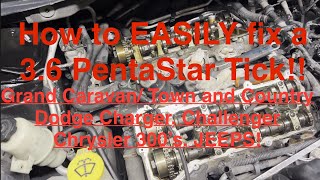
The Jeep Gladiator uses the ubiquitous 3.6L Pentastar V6 engine. While generally reliable, this engine family has a well-documented history of valvetrain issues, specifically with rocker arm bearings that can fail, leading to a distinctive 'Pentastar Tick'. This failure can cause the rocker arm to damage the camshaft lobe, resulting in a misfire code like P0306. This scenario is directly supported by manufacturer Technical Service Bulletins (TSBs) that link misfire codes to valvetrain noise. [Bulletin #09-011-25] Therefore, while standard ignition problems are common, a mechanical engine issue is a more probable cause on this platform compared to many other vehicles, a fact corroborated in numerous owner forums.
Diagnostic Flowchart
Tap your situation to follow the diagnostic path that matches what you're seeing on this vehicle.
Symptoms You May Notice
- Rough running engine or rough idle. [Bulletin #09-013-20 REV. A, Bulletin #09-011-25]
- Flashing Check Engine Light
- Noticeable loss of power and sluggish acceleration
- Engine hesitation or stumbling
- Audible ticking or tapping noise from the engine, especially on a cold start, that may or may not change with RPM. [Bulletin #09-011-25]
- Reduced fuel economy
- Engine shaking, noticeable at idle
- Replacing only the spark plug when the underlying cause is a failing rocker arm. The new plug will soon foul, and the misfire will return.
- Replacing ignition coils and plugs when the actual issue is a damaged camshaft. Forum users advise inspecting the valvetrain on Bank 2 while the intake manifold is off to avoid duplicate labor.
- Confusing the sound of normal fuel injector operation for the 'Pentastar tick' of a failing rocker arm. A mechanic's stethoscope can help isolate the source of the noise.
Most Likely Causes
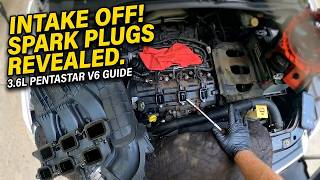
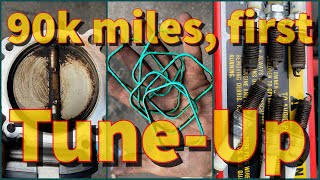
- Failed Ignition Coil 🔴 High Probability Ignition coils are a common wear item. On the 3.6L Pentastar, cylinder 6 is on the driver's side, which requires removing the upper intake manifold for access, making the job more involved and costly in terms of labor. 🎬 Watch: Step-by-step guide to replacing coils and plugs on the 3.6L.
How to confirm: Swap the ignition coil from cylinder 6 with another cylinder on the same bank (e.g., cylinder 4). Clear the codes and drive. If the code changes to P0304, the coil is bad.
Typical fix: Replace the failed ignition coil. It is often recommended to replace all three coils on that bank (driver's side) and the intake manifold gaskets at the same time to avoid repeat labor.
Est. part cost: $30-$75 per coil - Worn or Fouled Spark Plug 🔴 High Probability Spark plugs have a finite service life (typically 60,000-100,000 miles). A worn electrode or fouling from oil or coolant can cause a misfire. Some owners report misfires returning after replacing plugs, only to find a different underlying issue.
How to confirm: After ruling out the coil, remove the spark plug from cylinder 6. Inspect it for wear (worn electrode), carbon fouling, oil, or coolant contamination. A plug that is wet, has orange/green discoloration (coolant), or is shiny black (oil) points to a larger problem.
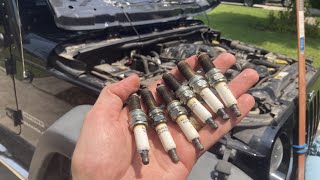
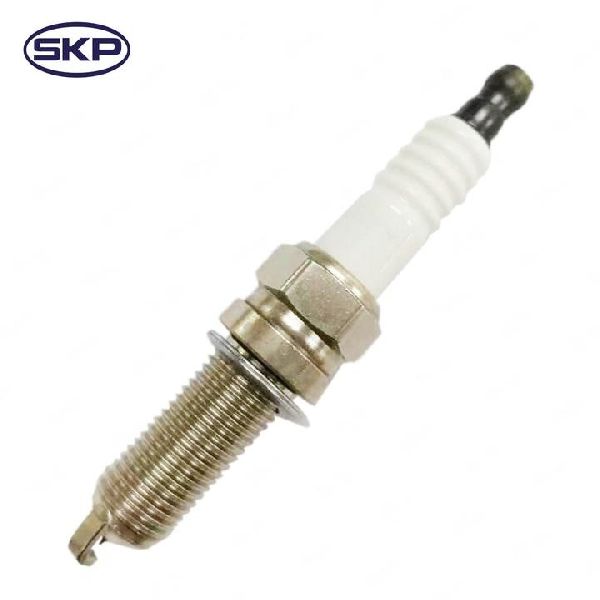
Typical fix: Replace the spark plug. It is best practice to replace all six spark plugs at the same time to ensure even performance. Using the correct OEM-spec plugs is recommended, as some owners have reported issues with certain aftermarket types.
Est. part cost: $10-$25 per plug - Failed Rocker Arm / Lifter / Camshaft Lobe 🟡 Medium Probability This is a widely known issue on the 3.6L Pentastar. Needle bearings in the rocker arms fail, causing the roller to stop spinning, which then grinds against and damages the camshaft lobe. This results in improper valve lift and a misfire. TSB #09-011-25 specifically links misfire codes with this valvetrain noise.
How to confirm: Listen for a distinct ticking sound from the top of the engine, often louder on one side. A mechanic can confirm by removing the valve cover on the driver's side (Bank 2) to visually inspect the camshaft lobes and rocker arms for scoring, wear, or excessive play.
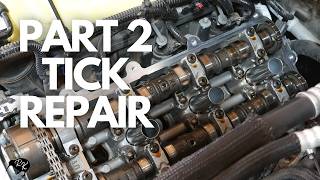
Typical fix: Requires replacing all failed rocker arms and lifters on the affected bank. If the camshaft is scored, it must also be replaced. 🎬 Watch: Complete walkthrough for replacing rocker arms, lifters, and camshafts. This is a labor-intensive repair, often costing between $2,000 and $4,000 at a dealership.
Est. part cost: $200-$800 for parts (rockers, lifters, camshaft, gaskets) - Faulty Fuel Injector ⚪ Low Probability
How to confirm: Listen to the injector with a mechanic's stethoscope; it should have a consistent, rapid clicking sound. You can also swap the injector with another cylinder to see if the misfire code follows, though this is more labor-intensive than swapping a coil.
Typical fix: Replace the faulty fuel injector.
Est. part cost: $50-$150
Rare But Worth Checking
- Intake Manifold Gasket Leak: A vacuum leak near cylinder 6 can lean out the air/fuel mixture and cause a misfire. Since the intake manifold must be removed to access cylinder 6, it's crucial to replace the gaskets during any service on that bank. A bright white appearance on the spark plug can indicate a lean condition from a vacuum leak.
- Leaking Head Gasket: Though less common, a head gasket can leak coolant into the cylinder, fouling the spark plug and causing a misfire. Pulling the spark plug and checking for a sweet smell or orange/green discoloration is a key diagnostic step. A very clean, steam-cleaned appearance on the piston head compared to others is also a strong indicator.
- Low Engine Compression: Internal engine damage such as a burnt valve, damaged piston rings, or severe camshaft/lifter failure can cause a loss of compression, leading to a persistent misfire. A compression test or cylinder leak-down test is needed to diagnose this.
Diagnosis Steps
- Confirm the code with an OBD-II scanner. Note if the Check Engine Light is steady or flashing, which indicates a severe misfire.
- Identify Cylinder 6. On the 3.6L Pentastar in the Gladiator, the cylinders are numbered with odds (1, 3, 5) on the passenger side (Bank 1) and evens (2, 4, 6) on the driver's side (Bank 2), from front to back. Cylinder 6 is the rear-most cylinder on the driver's side.
- Listen for engine noises. A distinct ticking or tapping sound from the driver's side valve cover area is a strong indicator of a potential valvetrain issue (rocker arms/lifters).
- Perform an ignition coil swap. Accessing cylinder 6 requires removing the upper intake manifold. While the manifold is off, swap the coil from cylinder 6 with the coil from cylinder 4. Reassemble, clear the codes, and run the engine. If the code changes to P0304, the ignition coil is faulty.
- Inspect the spark plug. If the coil swap doesn't isolate the problem, remove the spark plug from cylinder 6. Check for excessive wear, fouling, or contamination. A clean plug can point to a fuel injector issue, while a fouled plug can point to oil or coolant leaks.
- Check the fuel injector. With the engine running, use a mechanic's stethoscope to listen for a steady clicking from the injector. An inconsistent sound or silence indicates a problem.
- Inspect the valvetrain. This is a crucial step for the Pentastar engine, especially if a ticking noise is present. With the intake manifold already removed for coil/plug access, it is highly recommended to also remove the driver's side valve cover to visually inspect the camshaft lobes and rocker arms for scoring, wear, or damage.
- Perform a compression test. If all else fails, a compression test on cylinder 6 will determine if there is a mechanical sealing issue like a bad valve, piston ring, or head gasket.
Parts You'll Likely Need
- Ignition Coil
(OEM #68223569AD)— A primary cause of single-cylinder misfires. It's responsible for creating the high voltage needed to fire the spark plug.
Trusted brands: Mopar, Bosch, Delphi, NGK
OEM price range: $50-$80
Aftermarket price range: $30-$60 - Spark Plug
(OEM #SP225755AB)— A standard maintenance item that wears out over time, leading to a weak or inconsistent spark.
Trusted brands: Mopar, Champion, NGK
OEM price range: $15-$25
Related Codes That Often Appear With This One
- P0300 — If the underlying issue, like a failing valvetrain or low fuel pressure, begins to affect multiple cylinders, a P0300 (Random/Multiple Cylinder Misfire) may accompany P0306.
- P0302, P0304 — Misfires on other cylinders on the same bank (Bank 2, driver's side) can indicate a problem common to that bank, such as a damaged camshaft, a vacuum leak from the intake manifold gasket on that side, or a clogged catalytic converter for that bank.
Technical Service Bulletins (TSBs) & Recalls
- 09-013-20 REV. A
- 09-011-25
Platform-Specific Known Issues
- Rocker Arm / Valvetrain Failure: The 3.6L Pentastar engine is known for premature wear of the rocker arm needle bearings, which can cause them to seize or fail. This damages the camshaft lobe, leading to a ticking noise and eventually a misfire code like P0306. This issue is acknowledged in TSB #09-011-25 which mentions valvetrain noise in conjunction with misfire codes.
- Driver's Side Serviceability: Unlike the passenger side cylinders, accessing cylinder 6 (and 2, 4) requires the complete removal of the upper intake manifold, adding significant time and complexity to what would otherwise be a simple coil or plug replacement.
Mechanic-Grade Diagnostic Values
- Fuel Injector Resistance — expected: 12.0 - 12.5 Ohms. Failure: Significantly higher resistance (e.g., double the expected value) or an open circuit (infinite resistance) indicates a failed injector. Readings slightly out of spec (e.g., 11.4 Ohms) can also indicate a failing injector.
- Ignition Coil Primary Resistance — expected: ~0.46 Ohms. Failure: A reading that is significantly different from the specification can indicate a faulty coil.
- Ignition Coil Secondary Resistance — expected: ~15.70 kOhms. Failure: A reading that is significantly different from the specification can indicate a faulty coil.
Scan Tool Commands That Help
- wiTECH or equivalent professional scan tool: Cylinder Power Balance Test — This is a crucial diagnostic step when a misfire is felt but the cause isn't obvious. The tool deactivates one cylinder at a time (by cutting fuel) and measures the drop in RPMs. If disabling cylinder 6 causes little or no RPM drop compared to other cylinders, it confirms that cylinder 6 is not contributing power, isolating the problem without guesswork.
Wiring & Ground Locations
- Cylinder 6 Ignition Coil Connector — On the rear-most ignition coil on the driver's side (Bank 2). The harness for the Bank 2 coils is secured by orange push connectors to the intake manifold.. This connector and its wiring are the final link for the ignition command from the PCM. Check for a secure connection, corrosion, or wire damage. The PCM supplies a ground to fire the coil; a bad connection here will cause a P0306.
- Engine Bay Ground Stud (Driver's Side) — There is a dedicated grounding stud on the driver's side of the engine bay, often used as a grounding point for added accessories.. While not the primary engine ground, ensuring all body and chassis grounds are clean and tight is essential for proper electrical system function. A poor ground here could potentially create electrical noise or intermittent issues for components on the driver's side of the engine.
- Main Chassis Ground Points — Several key grounding points exist: in the engine bay near the battery, on the frame behind the front passenger wheel, and in the passenger kick panel area.. The entire ignition system relies on a solid ground path back to the battery. A corroded or loose main ground can cause a weak spark, leading to misfires that can be difficult to diagnose.
OEM Part Supersession History
5184296AD, 5184296AE, 5184296AF, 5184296AG→5184296AH— These are the valve rocker arms, which are a notorious failure point on the 3.6L Pentastar engine, leading to ticking noises and misfire codes. The part has been revised multiple times to improve durability.
Model Year Variations Within This Range
- 2024: The 2024 model year brought a mid-cycle refresh including a new grille, a larger 12.3-inch infotainment screen as standard, and the addition of side-curtain airbags. The 3.0L EcoDiesel engine option was dropped, leaving the 3.6L V6 as the sole engine.
- 2025: For the 2025 model year, Jeep discontinued the six-speed manual transmission option. The eight-speed automatic is now standard and the only choice. The 3.6L V6 engine remains unchanged.
Helpful Videos
Used OEM Parts in Stock

New Aftermarket Parts Available

The information in this article is provided for general reference and educational purposes only. Vehicle specifications, procedures, and part compatibility can vary by production date, trim level, and region. Always consult your vehicle's factory service manual and verify part numbers before purchasing or performing repairs. Safety-critical components such as airbags, seat belts, and braking systems should be installed by a qualified professional.
- Jeep GLADIATOR:
- 🎬 Helpful Videos
- 🛍️ Shop This Part
- What's Unique About the 2020-2025 Jeep GLADIATOR
- Diagnostic Flowchart
- Symptoms You May Notice
- Most Likely Causes
- Rare But Worth Checking
- Diagnosis Steps
- Parts You'll Likely Need
- Related Codes That Often Appear With This One
- Technical Service Bulletins (TSBs) & Recalls
- Platform-Specific Known Issues
- Mechanic-Grade Diagnostic Values
- Scan Tool Commands That Help
- Wiring & Ground Locations
- OEM Part Supersession History
- Model Year Variations Within This Range
- 🎟️ Get 5% Off