

P0306 on 2009-2015 Jaguar XF: Cylinder 6 Misfire Causes and Fixes
P0306 means cylinder 6 is misfiring. On the Jaguar XF V6 and V8 engines, this is most often caused by a faulty ignition coil or a worn-out spark plug. Swapping the coil from cylinder 6 with another is the fastest way to confirm a bad coil. A less common but notable cause on these engines is a clogged or failed fuel injector, an issue acknowledged by Jaguar in service bulletins.
- P0306 is a misfire on cylinder 6, which is the rearmost cylinder on the driver's side.
- The most likely cause is a bad ignition coil. Diagnose this first by swapping the coil with another cylinder's to see if the code follows.
- If the coil and spark plug are good, a clogged fuel injector is a strong possibility on the 3.0L and 5.0L direct injection engines.
- Do not drive the vehicle if the check engine light is flashing, as this can cause rapid and expensive damage to the catalytic converters.
What's Unique About the 2009-2015 Jaguar XF
For the 2009-2015 Jaguar XF (X250 generation), particularly with the direct-injected 3.0L V6 and 5.0L V8 engines, a P0306 code warrants a closer look at the fuel injectors if ignition components are ruled out. Jaguar has issued a Special Service Message (SSM-63697) that links misfire codes directly to poor fuel quality or contaminants restricting fuel injector flow rate on the 5.0L engine. Additionally, for cold start misfires (below 75°C / 167°F) accompanied by P0316, TSB JTB00533NAS1 identifies a 'fuel injection calibration issue' that requires a PCM software update from a dealer.
Generation note: This range covers the entire first generation of the Jaguar XF (X250), including the 2012 facelift. The P0306 code applies to all V6 and V8 engine options. The cylinder numbering is consistent across these engines: Cylinder 6 is the rearmost cylinder on the driver's side (left bank, Bank 2).
Symptoms You May Notice
- Rough or vibrating idle
- Noticeable loss of power during acceleration
- Engine hesitation or stumbling
- Flashing or solid Check Engine Light
- Reduced fuel efficiency
- Smell of unburnt fuel from the exhaust
- Engine may sound like it's popping or backfiring.
- Replacing oxygen sensors when a lean condition is caused by a vacuum leak or injector issue.
- Assuming a major engine problem before thoroughly diagnosing the ignition and fuel systems.
- Replacing only one ignition coil on a high-mileage vehicle, only to have another one fail shortly after.
Most Likely Causes
- Faulty Ignition Coil 🔴 High Probability Ignition coils are common wear items on modern high-performance engines due to constant exposure to high heat and electrical stress. They are the most frequent cause of a single-cylinder misfire.
How to confirm: Swap the ignition coil from cylinder 6 with another cylinder (e.g., cylinder 4 on the same bank). Clear the codes. If the misfire code changes to P0304, the coil is faulty.
Typical fix: Replace the failed ignition coil. It is often recommended by forum members to replace all coils on the bank, or all 6/8 coils if the vehicle has high mileage, as they have been exposed to the same conditions and others may fail soon.
Est. part cost: $40-$120 - Worn or Fouled Spark Plug 🔴 High Probability Spark plugs have a finite service life (typically 80,000-96,000 miles) and can become worn or fouled with carbon or oil, leading to a weak spark. Oil leaking from a faulty cam cover gasket can also pool in the spark plug well and short out the plug.
How to confirm: After ruling out the coil, remove the spark plug from cylinder 6. Inspect it for wear on the electrode, cracks in the porcelain, or heavy deposits of carbon or oil. Compare it to a plug from a known good cylinder.
Typical fix: Replace the spark plug. It is best practice to replace all spark plugs as a set to ensure even performance, especially if their age is unknown.
Est. part cost: $15-$30 per plug - Clogged or Faulty Fuel Injector 🟡 Medium Probability Jaguar TSB SSM-63697 specifically notes that poor fuel quality can restrict fuel injectors on the 5.0L and 3.0L direct injection engines, causing misfires. Forum discussions frequently cite failing injectors as the cause after coils/plugs are replaced, sometimes accompanied by a strong fuel smell or white smoke from the exhaust.
How to confirm: After confirming spark is good, this becomes a likely cause. A professional can perform a fuel injector balance test. A DIY method is to listen to the injector with a mechanic's stethoscope for a consistent clicking sound. Swapping injectors is a much more involved job than swapping coils.
Typical fix: Replace the faulty fuel injector. This is a more involved job due to the high-pressure fuel system and often requires replacement of seals.
Est. part cost: $70-$250 - Vacuum Leak ⚪ Low Probability Vacuum hoses (like PCV hoses) and intake manifold gaskets can deteriorate over time from heat and age, causing unmetered air to enter the engine and create a lean condition. A leak near cylinder 6's intake runner is a potential cause.
How to confirm: Listen for a hissing sound near the engine at idle. A smoke test is the most effective way to find the source of a vacuum leak. High positive fuel trims on Bank 2 (the side with cylinder 6) can also point to a vacuum leak.
Typical fix: Replace the cracked hose or failed gasket.
Est. part cost: $20-$150
Rare But Worth Checking
- Low Engine Compression: This indicates a serious mechanical issue within the engine, such as a bad valve, worn piston rings, or a failing head gasket. On the 5.0L V8, this can be a consequence of timing chain guide failure, a known but less common issue that can lead to jumped timing and loss of compression.
- PCM Software Issue: If the misfire (P0306) occurs only on a cold start (coolant temp below 75°C / 167°F) and is accompanied by code P0316, TSB JTB00533NAS1 suggests the PCM needs a software update from a Jaguar dealer to fix a fuel injection calibration issue.
- Carbon Buildup on Intake Valves: As with many direct-injection (GDI) engines, the 3.0L and 5.0L can be susceptible to carbon buildup on the back of the intake valves. This can disrupt airflow into the cylinder and cause misfires, especially at idle or during cold starts. This is less common than ignition/fuel issues but is a known GDI engine characteristic.
- Water Intrusion in Spark Plug Well: Washing the engine bay with a pressure washer or driving in heavy rain can sometimes force water past the ignition coil seal. This water can pool in the spark plug well, shorting the spark and causing a misfire. The fix is to remove the coil and use compressed air to thoroughly dry the well.
Diagnosis Steps
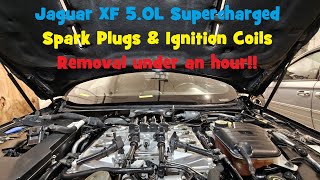
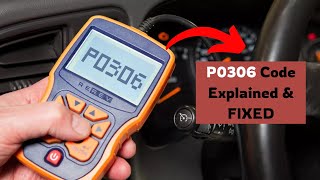
- Read the code with an OBD-II scanner and note any other codes present. 🎬 See this helpful video for a breakdown of the P0306 code. Check freeze frame data to see the conditions (engine temp, RPM) when the code was set.
- Confirm cylinder location: For Jaguar V6 and V8 engines, cylinder 6 is the rearmost cylinder on the driver's side (left-hand bank).
- Swap the ignition coil from cylinder 6 with another cylinder (e.g., cylinder 4 on the same bank). Clear the codes and run the engine. If the code moves to the new cylinder (P0304), the ignition coil is bad.
- If the code remains P0306, inspect the spark plug well for oil or water. If present, address the source (e.g., cam cover gasket) and clean the well.
- If the well is dry, swap the spark plug from cylinder 6 with another cylinder. If the code moves, the spark plug is bad.
- If the code still remains P0306, inspect the wiring and connector for the ignition coil and fuel injector on cylinder 6 for damage or corrosion.
- Listen to the fuel injector on cylinder 6 with a stethoscope. It should have a regular, audible clicking sound. If it's silent or sounds different from other injectors, it may be faulty.
- If ignition and fuel injector seem okay, check for vacuum leaks using a smoke machine, paying attention to the intake manifold area near cylinder 6.
- If all else fails, perform a compression test on cylinder 6 to check for mechanical engine problems. A significant loss of compression compared to other cylinders indicates an internal engine issue.
Parts You'll Likely Need
- Ignition Coil
(OEM #AJ811378)— This is the most common cause of a single-cylinder misfire on the Jaguar XF. They are a primary wear-and-tear component in the ignition system.
Trusted brands: Bosch (OEM), Delphi, NGK
OEM price range: $80-$120
Aftermarket price range: $40-$75 - Iridium Spark Plug
(OEM #AJ813092)— As a routine maintenance item, a worn or fouled spark plug is the second most likely cause of a misfire.
Trusted brands: NGK, Denso, Bosch
OEM price range: $20-$30
Aftermarket price range: $15-$25 - Fuel Injector
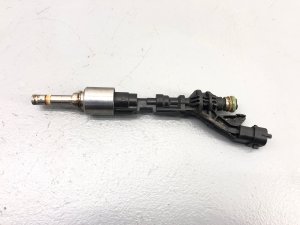
(OEM #C2D24386)— A known issue on the direct-injected 3.0L and 5.0L engines, often cited in TSBs as a cause for misfires if ignition components are good.
Trusted brands: Bosch (OEM supplier), Genuine Jaguar
OEM price range: $100-$250
Aftermarket price range: $70-$150
Related Codes That Often Appear With This One
- P0300 — If the misfire is intermittent or begins to affect other cylinders, a P0300 (Random/Multiple Cylinder Misfire) code may appear with P0306.
- P1314 / P1316 — These are Jaguar-specific codes indicating a misfire severe enough to cause catalyst damage. P1314 is for Bank B (which includes cylinder 6), adding urgency to the repair.
- P0316 — Indicates a misfire was detected within the first 1,000 engine revolutions. It often appears with specific cylinder codes and is a key condition mentioned in TSB JTB00533NAS1 for a potential software update fix.
Technical Service Bulletins (TSBs) & Recalls
- SSM-63697: Links misfire codes to restricted fuel components due to poor fuel quality on 5.0L engines.
- JTB00533NAS1: Addresses cold-start misfires on 3.0L and 5.0L engines, recommending a PCM software update.
Platform-Specific Known Issues
- TSB SSM-63697: Notes that poor fuel quality can cause restricted fuel injectors, leading to misfire codes on 5.0L engines. Instructs technicians to raise a quality report and return the faulty injector for analysis. According to Bulletin #SSM-63697, an illuminated check engine lamp may be accompanied by engine vibration at idle and misfire codes stored in the PCM.
- TSB JTB00533NAS1: Addresses misfire codes (including P0306) that occur only on cold starts (below 75°C / 167°F), which may be resolved by a PCM software update from a dealer to correct a fuel injection calibration issue. Bulletin #JTB00533NAS1 specifically lists P0306 as one of the codes that may be stored in the Powertrain Control Module.
- Leaking Cam Cover Gaskets: A recurring theme in owner forums is oil leaking from the cam/valve cover gaskets into the spark plug wells, which directly causes the plug and coil to fail and trigger a misfire code.
Mechanic-Grade Diagnostic Values
- Direct Fuel Injector Resistance (5.0L/3.0L GDI) — expected: 12.5 Ohms is a known good value. Some documentation suggests a range of 2.0-3.0 Ohms for low impedance injectors, while general purpose injectors are 10-15 Ohms. Consistency across all injectors is key.. Failure: A reading of infinite resistance (open circuit) or near zero (short circuit), or a value that deviates significantly from the other injectors.
- Low-Pressure Fuel System — expected: 55-62 PSI with engine running. Some sources indicate a prime pressure of up to 106 PSI upon door open or key-on.. Failure: Pressure below 55 PSI while running can indicate a weak in-tank pump. Rapid pressure drop after engine-off indicates a bad check valve in the pump assembly.
- High-Pressure Fuel System (Direct Injection models) — expected: 500-600 PSI at idle, rising to over 2,000 PSI under load. Can reach up to 2,900 PSI.. Failure: A P0087 code is triggered by low pressure. One owner reported sputtering above 5,500 RPM when pressure dropped to ~550 PSI at wide-open throttle, indicating failing high-pressure fuel pumps.
- Engine Ground Voltage Drop — expected: Well under 0.5V (500mV).. Failure: A reading higher than 0.5V while cranking the engine indicates a poor ground connection, which can cause erratic sensor readings and misfires.
- VVT Solenoid Resistance — expected: Approximately 6.9 to 7.9 ohms (value from a similar JLR engine, but a good baseline).. Failure: A reading outside this range, or that differs significantly from the other solenoids, points to a faulty solenoid.
Scan Tool Commands That Help
- Jaguar SDD (Symptom Driven Diagnostics): Fuel Injector Flow Test / Balance Test — Use after ruling out ignition problems to electronically test for a clogged or failing injector without physical removal.
- Jaguar SDD (Symptom Driven Diagnostics): Reset Fuel Adaptations / Clear Learned Fuel Trims — Should be performed after replacing any major fuel system component (injector, fuel pump) to force the ECU to relearn fuel trims from a baseline.
- Jaguar SDD (Symptom Driven Diagnostics): Fuel Prime Procedure — Manually activates the low-pressure in-tank fuel pump. Useful for diagnostics to confirm the pump is working (it should be audible) and to prime the system before checking pressures.
Wiring & Ground Locations
- Main Engine Ground Strap — Located on the right (US passenger) side of the engine bay, connecting the transmission bell housing area to the chassis frame rail. Often found near the starter motor.. A corroded or loose main ground can cause a multitude of erratic electrical issues, including weak spark or incorrect sensor readings that can lead to misfires.
- ECM Ground Studs — The Engine Control Module (ECM) uses multiple grounds. Key locations are on the left and right side of the firewall/bulkhead and a specific 'EMS LH Ground Stud' on the left front inner fender.. A poor ground specifically for the ECM can disrupt the injector driver or coil firing signal for cylinder 6, causing a persistent misfire that appears to be a component failure.
- Bulkhead Power Pass-Through Stud — Inside a box located behind the right-side (US passenger side) front wheel arch liner. This is where the main power cable from the alternator passes through the bulkhead.. This box can fill with road debris and salt-laden water, causing the main power stud to corrode and arc to ground. This can create system-wide voltage drops and electrical chaos, manifesting as misfires or other issues.
- High-Pressure Fuel Pump Plumbing — The two high-pressure pumps on the 3.0L/5.0L engines feed into a central four-way junction. From this junction, two lines emerge, one feeding Bank 1 and the other feeding Bank 2.. This debunks the myth that each pump serves a single bank. A problem with either high-pressure pump or the shared plumbing can affect any cylinder, including cylinder 6.
Real Owner Repair Stories
- Jaguar Club Poland forum user (Jaguar X-Type (with similar V6 engine architecture)) — Persistent misfires on Bank 2 (P0302, P0306) along with catalyst efficiency codes (P0430) and severe misfire codes (P1316).
❌ Tried (didn't work) Initial diagnosis focused on ignition and fuel systems.
✅ What actually fixed it The root cause was a physically melted and clogged catalytic converter for Bank 2. The extreme backpressure prevented exhaust gases from escaping, which choked the cylinders and caused the misfires. The pressure was so high it was even forcing its way past the piston rings into the crankcase. - JaguarForums user 'Mufc' (2010 Jaguar XKR (5.0L V8 Supercharged)) — Misfire and loss of power, but only at high engine speeds (above 4000 RPM). No check engine light or stored P030x codes were present.
❌ Tried (didn't work) Owner suspected ignition coils.
✅ What actually fixed it A Jaguar dealer used advanced diagnostics and found that the two high-pressure mechanical fuel pumps were failing under load. Replacing both pumps resolved the high-RPM misfire. - JaguarForums user (Jaguar XJ12 (V12, but diagnostic principle is relevant)) — Horrible running with a consistent P0306 and P1313 after replacing numerous parts.
❌ Tried (didn't work) New spark plugs, wires, coils, MAP sensors, cleaned fuel injectors, new vacuum lines.
✅ What actually fixed it The suggested final diagnostic step, after all external components were exhausted, was to inspect the Engine Control Unit (ECU) itself for internal damage, such as leaking electrolytic capacitors or cracked solder joints on the circuit board, which could disable the driver for a single cylinder.
"I Checked Everything" — The Actual Cause
- A case on a Jaguar forum demonstrated that multiple misfire codes on one bank (including P0306) were ultimately caused by a clogged catalytic converter. A smoke test for vacuum leaks would have come back clean, as the problem was an exhaust restriction, not an unmetered air leak on the intake side. The backpressure from the clogged exhaust prevented proper cylinder function, leading to the misfires.
When the Usual Fixes Don't Work
- While the vast majority of P0306 codes are fixed by replacing an ignition coil or spark plug, there are numerous documented cases on Jaguar forums for the 5.0L V8 where the misfire persisted. In several of these instances, the final resolution was replacing a faulty fuel injector. In rarer cases, particularly with high-RPM misfires that didn't always set a code, the cause was traced to failing high-pressure fuel pumps. An even more unusual but confirmed cause was a clogged catalytic converter creating excessive backpressure, which demonstrates that the problem is not always related to fuel or spark delivery.
OEM Part Supersession History
C2D24386 (Fuel Injector)→Bosch 0 261 500 298. Also associated with Land Rover part numbers LR011964, LR079542, and other Jaguar numbers like C2D45732, C2D55183.— Part evolution and consolidation by the OEM supplier (Bosch).AJ811378 (Ignition Coil)→AJ813593 (This number is cited for the XJ with the same engine, indicating likely supersession for the XF as well).— Updated design or supplier change to improve reliability.
Model Year Variations Within This Range
- 2010-2015 (5.0L V8 / 3.0L V6): These models use Gasoline Direct Injection (GDI), making them susceptible to issues like carbon buildup on intake valves, and failures of the two high-pressure fuel pumps (HPFPs), which are not present on the earlier, port-injected 4.2L V8. TSBs regarding injector issues and software updates for cold start misfires primarily apply to these GDI engines.
Diagnostic Flowchart
Real Owner Stories
Aggregated from forums and TSBs cited above. Mileages and costs reflect what owners reported in those sources.
Jaguar XJ/XF V8
Symptoms: Persistent P0306 misfire code that remained after standard fixes were applied.
What fixed it: Replaced multiple parts and performed advanced diagnostics, including checking ECU connections.
Source hint: JaguarForums.com - 'P0306 & P0131 Cylinder 6 Misfire'
Jaguar F-TYPE (AJ126/AJ133 Engine)
Symptoms: Rough running engine accompanied by fuel-smelling white smoke from the exhaust.
What fixed it: Identified and replaced a failed fuel injector, which is a classic failure point on these direct-injection engines.
Source hint: JaguarForums.com - 'Possible Injector failure?'
Jaguar 3.0L / 5.0L Engine
Symptoms: Misfire codes (including P0306) occurring exclusively on cold starts when the engine temperature was below 75°C (167°F).
What fixed it: Performed a PCM software update at the dealer to correct a fuel injection calibration issue.
Source hint: TSB JTB00533NAS1
Jaguar 5.0L Engine
Symptoms: Engine misfires caused by restricted fuel components.
What fixed it: Replaced restricted fuel injectors that had been damaged by poor fuel quality.
Source hint: TSB SSM-63697
Related OBD-II Codes
Frequently Asked Questions
Where is cylinder 6 located on my Jaguar XF 3.0L V6 or 5.0L V8?
My Jaguar XF only misfires on cold starts. Does TSB JTB00533NAS1 apply to my car?
I found oil in the spark plug well for cylinder 6. What causes this on the 5.0L engine?
Can poor fuel quality cause a P0306 code on my Jaguar XF?
I replaced the ignition coil and spark plug on cylinder 6, but I still have a P0306 and smell unburnt fuel. What should I check next?
Does this misfire issue affect other Jaguars besides the XF?
Helpful Videos
Used OEM Parts in Stock


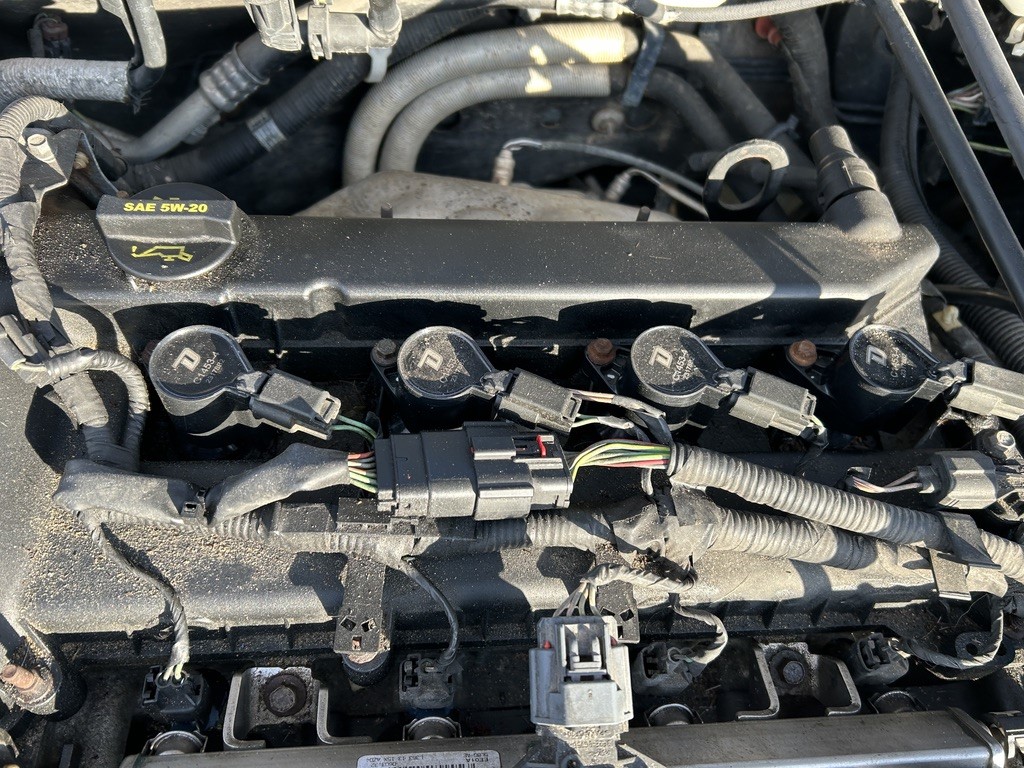
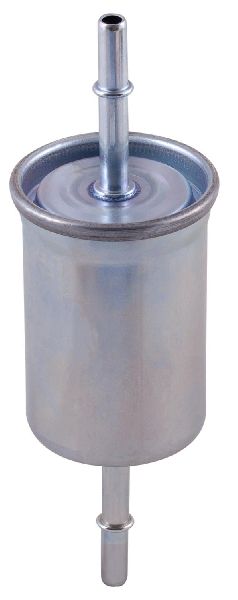
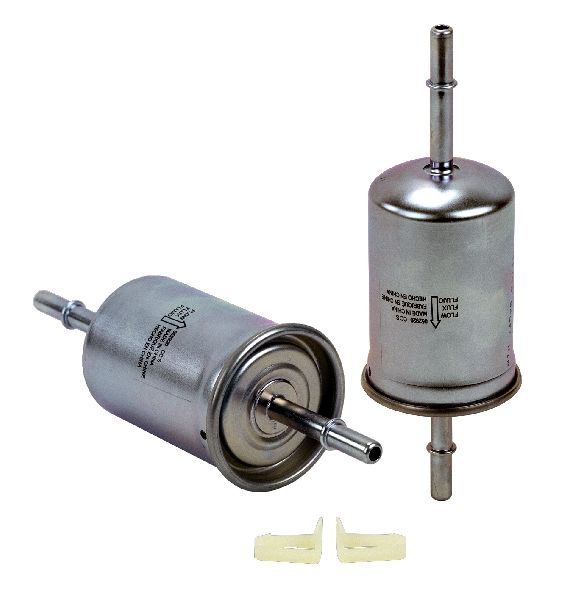
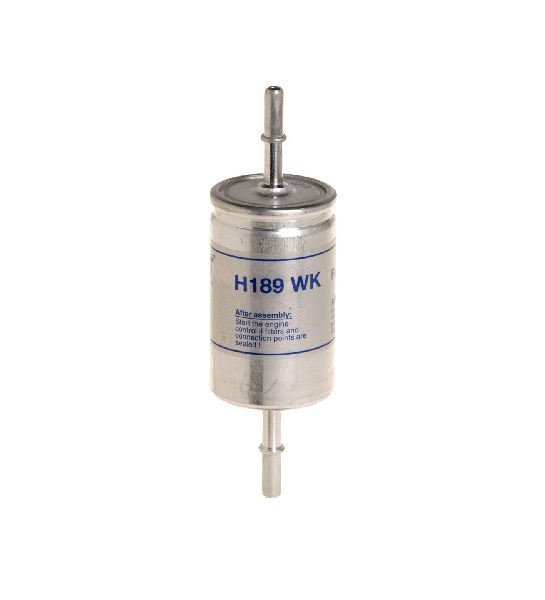
New Aftermarket Parts Available



The information in this article is provided for general reference and educational purposes only. Vehicle specifications, procedures, and part compatibility can vary by production date, trim level, and region. Always consult your vehicle's factory service manual and verify part numbers before purchasing or performing repairs. Safety-critical components such as airbags, seat belts, and braking systems should be installed by a qualified professional.
- Jaguar XF:
- 🎬 Helpful Videos
- 🛍️ Shop This Part
- What's Unique About the 2009-2015 Jaguar XF
- Symptoms You May Notice
- Most Likely Causes
- Rare But Worth Checking
- Diagnosis Steps
- Parts You'll Likely Need
- Related Codes That Often Appear With This One
- Technical Service Bulletins (TSBs) & Recalls
- Platform-Specific Known Issues
- Mechanic-Grade Diagnostic Values
- Scan Tool Commands That Help
- Wiring & Ground Locations
- Real Owner Repair Stories
- "I Checked Everything" — The Actual Cause
- When the Usual Fixes Don't Work
- OEM Part Supersession History
- Model Year Variations Within This Range
- Diagnostic Flowchart
- Real Owner Stories
- Jaguar XJ/XF V8
- Jaguar F-TYPE (AJ126/AJ133 Engine)
- Jaguar 3.0L / 5.0L Engine
- Jaguar 5.0L Engine
- Related OBD-II Codes
- Frequently Asked Questions
- 🎟️ Get 5% Off