

P0306 on 2010-2013 GMC Yukon Denali: Cylinder 6 Misfire Causes and Fixes
P0306 on a 2010-2013 Yukon Denali is a cylinder 6 misfire. The most likely causes are a bad spark plug, ignition coil, or spark plug wire. However, a failed Active Fuel Management (AFM) lifter is a common and much more serious possibility for these engines, often accompanied by a ticking noise.
- P0306 indicates a misfire on cylinder 6.
- Start your diagnosis with the simple and cheap fixes: check the spark plug, ignition coil, and spark plug wire for cylinder 6.
- A simple test is to swap the cylinder 6 ignition coil with another cylinder to see if the misfire code moves.
- Be aware that a persistent P0306, especially with an engine ticking noise, is a very common symptom of a failed AFM lifter on the 6.2L V8 engine.
- Do not ignore a flashing check engine light, as continued driving can cause expensive damage to the catalytic converter.
What's Unique About the 2010-2013 Gmc YUKON DENALI
The 2010-2013 GMC Yukon Denali is equipped with a 6.2L V8 engine (RPO code L94) featuring Active Fuel Management (AFM). This system deactivates certain cylinders, including cylinder 6, to save fuel under light loads. While standard ignition issues are common, these specific engines are known for AFM lifter failures, where the special lifter for cylinder 6 can become stuck or collapse, leading to a persistent P0306 code and requiring significant mechanical repair.
Diagnostic Flowchart
Tap your situation to follow the diagnostic path that matches what you're seeing on this vehicle.
Symptoms You May Notice
- Engine shaking, vibrating, or running rough, especially at idle.
- Flashing or solid Check Engine Light.
- Noticeable loss of engine power and sluggish acceleration.
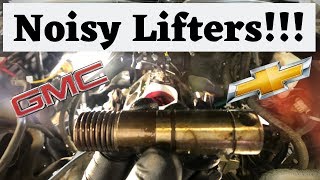
- A distinct ticking or tapping sound from the engine bay, which could indicate a lifter problem.
- A "Service StabiliTrak" message may appear on the dash.
- Reduced fuel economy.
- Replacing only the spark plug when the ignition coil or wire was the actual problem.
- Replacing ignition and fuel parts when the root cause is a mechanical AFM lifter failure, leading to wasted time and money.
Most Likely Causes
- Worn Spark Plug 🔴 High Probability
How to confirm: Remove the spark plug from cylinder 6 and inspect it for wear, oil fouling, or damage to the electrode. Compare it to a new plug. The recommended service interval for iridium plugs is typically around 100,000 miles.
Typical fix: Replace the spark plug for cylinder 6. It is best practice to replace all 8 spark plugs at the same time.
Est. part cost: $10-$25 per plug - Faulty Ignition Coil 🔴 High Probability
How to confirm: Swap the ignition coil from cylinder 6 with another cylinder (e.g., cylinder 4). Clear the codes and drive the vehicle. If the code changes to P0304, the ignition coil is faulty.
Typical fix: Replace the failed ignition coil.
Est. part cost: $50-$110 - Bad Spark Plug Wire 🟡 Medium Probability A manufacturer TSB specifically identifies loose spark plug wires as a cause for misfires on this platform. [Bulletin #PIP4819A]
How to confirm: Visually inspect the spark plug wire for cylinder 6 for any signs of damage, arcing (white marks), or looseness at the coil or spark plug. Ensure it is securely connected.
Typical fix: Replace the spark plug wire. It is often recommended to replace them as a set.
Est. part cost: $50-$90 for a set - Failed Active Fuel Management (AFM) Lifter 🟡 Medium Probability The AFM system on the 6.2L V8 uses special lifters that are a known failure point. Cylinder 6 is one of the AFM-controlled cylinders.
How to confirm: This is a more advanced diagnosis. A persistent ticking noise is a strong clue. A mechanic will confirm by removing the valve cover to observe rocker arm movement and may perform a compression test. A bent pushrod is often found along with a collapsed lifter.
Typical fix: This is a major repair requiring the removal of the cylinder head to replace the failed lifters. Many owners also opt to replace the camshaft and disable the AFM system at the same time to prevent future failures. This job is best left to a professional. 🎬 Watch: Full walkthrough of the AFM lifter replacement process
Est. part cost: $400-$1000+ for lifters, gaskets, and potentially a camshaft - Clogged or Failed Fuel Injector ⚪ Low Probability
How to confirm: Listen to the injector with a mechanic's stethoscope to hear if it's clicking. A more advanced method is to measure its resistance, which should be between 11-14 ohms. It can also be swapped with another cylinder, though this is more labor-intensive than swapping a coil.
Typical fix: Replace the fuel injector for cylinder 6.
Est. part cost: $50-$150
Rare But Worth Checking
- Low Engine Compression: If all ignition and fuel components check out, a compression test is needed to rule out internal engine damage such as a bad valve or worn piston rings, which could be a consequence of a long-term lifter failure.
Diagnosis Steps
- Read the trouble codes with an OBD-II scanner to confirm P0306 and check for any other codes.
- Perform a simple ignition coil swap. Move the coil from cylinder 6 to an adjacent even-numbered cylinder (e.g., cylinder 4 or 8). Clear the codes and see if the misfire code follows the coil.
- If the misfire stays on cylinder 6, inspect the spark plug. Remove it and check for wear, fouling, or incorrect gap. Replace if it's old or looks questionable.
- Inspect the spark plug wire for cylinder 6. Ensure it is securely attached at both ends and shows no signs of damage, as noted in TSB #PIP4819A.
- Listen for a consistent ticking noise from the top of the engine, which strongly suggests a lifter issue.
- If basic ignition components are good, check the fuel injector on cylinder 6. Listen for its clicking sound with a stethoscope or test its resistance (spec is 11-14 ohms).
- If the problem persists, perform an engine compression test on cylinder 6 to check for mechanical issues. Low compression points towards a problem like a failed lifter, bent pushrod, or bad valve.
- For suspected lifter failure, professional diagnosis is recommended, which involves removing the valve cover for inspection.
Parts You'll Likely Need
- Iridium Spark Plug
(OEM #41-162)— Spark plugs are a routine maintenance item and the most common cause of a single-cylinder misfire.
Trusted brands: ACDelco, NGK, Denso
OEM price range: $15-$25
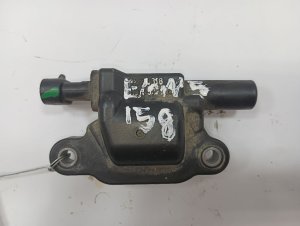
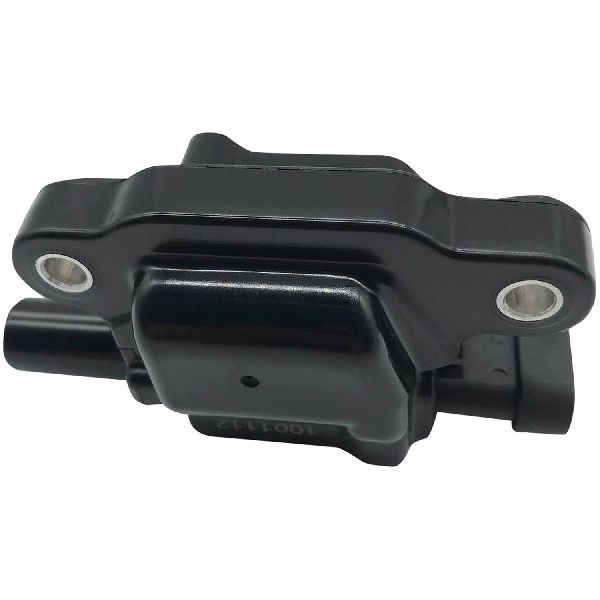
Aftermarket price range: $10-$20 - Ignition Coil
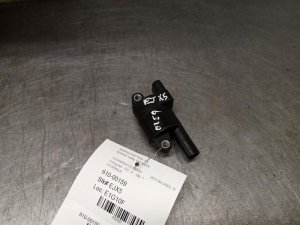
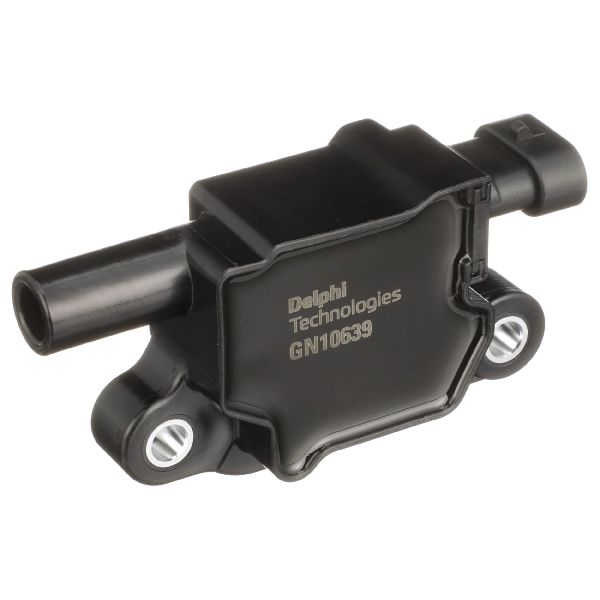
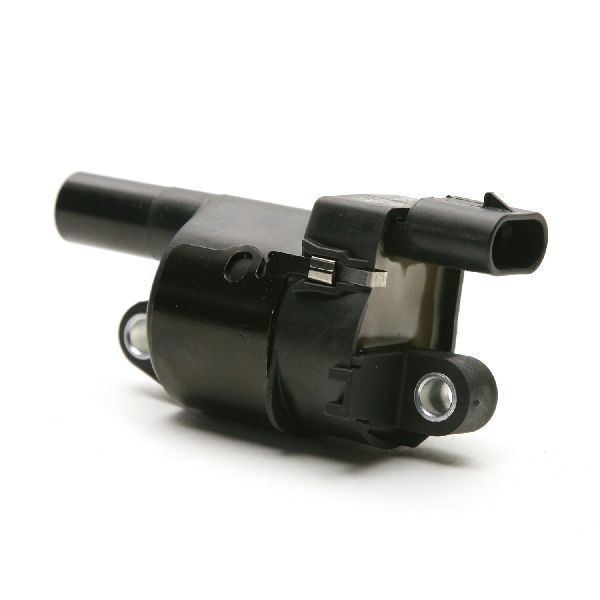
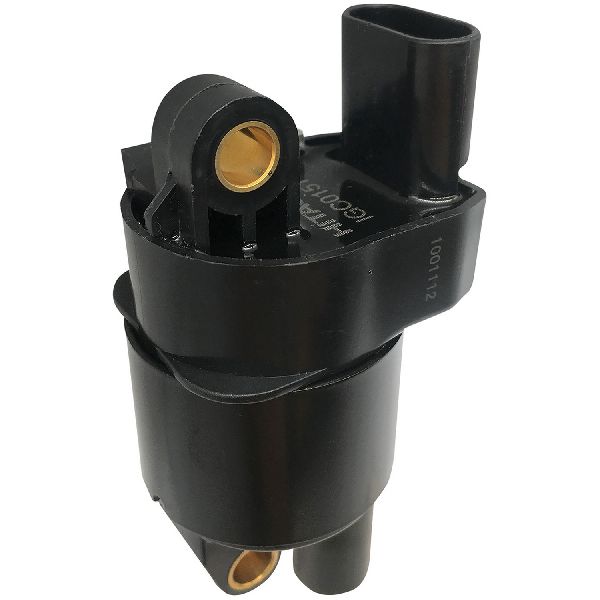
(OEM #12573190)— Ignition coils are a frequent failure point that directly causes a lack of spark and a misfire on a specific cylinder.
Trusted brands: ACDelco, Delphi, Denso
OEM price range: $70-$110
Aftermarket price range: $45-$80 - AFM Lifter Set — A known major failure point on this specific engine that causes a P0306 misfire. Replacement is a complex but common repair.
Trusted brands: ACDelco, General Motors
OEM price range: $200-$400 for a set of 8
Aftermarket price range: $150-$300
Related Codes That Often Appear With This One
- P0300 — If the misfire is intermittent or affects multiple cylinders, a P0300 (Random/Multiple Cylinder Misfire) code may be stored alongside P0306.
Technical Service Bulletins (TSBs) & Recalls
- Bulletin #PIP4819A: Notes that a misfire code (P0300-P0308) can be caused by loose spark plug wires and advises inspection and replacement.
Platform-Specific Known Issues
- Active Fuel Management (AFM) Lifter Failure: This is the most significant vehicle-specific issue. The lifters used to deactivate cylinders (1, 4, 6, and 7) are prone to failure. A failed lifter on cylinder 6 will cause a P0306 code, often with a ticking noise. The repair is labor-intensive and costly, as it requires removing the cylinder head.
Mechanic-Grade Diagnostic Values
- Fuel Injector Resistance — expected: 11 - 14 ohms. Failure: A reading outside this range, or a significant deviation from the other injectors, indicates a faulty injector coil.
- Ignition Coil Primary Resistance — expected: 0.4 - 2.0 ohms. Failure: A reading of zero or infinity (OL) suggests a shorted or open primary winding.
- Ignition Coil Secondary Resistance — expected: 6,000 - 10,000 ohms. Failure: A reading significantly outside this range indicates a failure in the secondary windings.
- Fuel Pressure (Key On, Engine Off) — expected: 345-414 kPa (50-60 psi). Failure: Pressure below this range can cause lean conditions and misfires across multiple cylinders, though it can sometimes manifest on a single cylinder.
- AFM System Oil Pressure — expected: 27 - 66 psi (operating range). Failure: Insufficient oil pressure (below 22 psi) can prevent AFM lifter pins from releasing, causing the lifter to remain in a collapsed state and inducing a misfire.
Hidden / Shadow Codes Worth Checking
- Mode $06, Test ID $A2-$A9: This is not a trouble code, but a diagnostic monitoring function. 🎬 See a mechanic diagnose P0306 codes and lifter noise Test IDs $A2 through $A9 correspond to misfire counts for cylinders 1 through 8. A technician can view these raw counts to see if cylinder 6 (Test ID $A7) is misfiring, even if the count isn't high enough to trigger a P0306 trouble code. (see via A professional scan tool with Mode $06 capability is required.)
Scan Tool Commands That Help
- GDS2 / Tech2 / High-End Scan Tool: Injector Balance / Active Fuel Injector Test (AFIT) — This bidirectional test allows a technician to command each fuel injector to fire and measures the corresponding drop in fuel pressure. If cylinder 6 shows a minimal or no pressure drop compared to others, it confirms the injector is clogged or has failed electrically.
- GDS2 / Tech2: Cylinder Deactivation / AFM Solenoid Test — For suspected AFM issues, a technician can use the scan tool to command the Valve Lifter Oil Manifold (VLOM) solenoids on and off to test their electrical function, helping to isolate a problem between the solenoid, wiring, or the lifter itself.
Wiring & Ground Locations
- ECM (Engine Control Module) — Located in the engine compartment, on the left (driver's) side.. The ECM provides the ground signal to fire the ignition coil and fuel injector for cylinder 6. All related wiring terminates here.
- Engine Block Grounds (e.g., G103, G105) — Typically found on the engine block, cylinder heads, or front of the engine, connecting to the chassis/frame.. A poor engine ground can cause erratic behavior in sensors and actuators, including the ignition coils and injectors, leading to intermittent and hard-to-diagnose misfires. While not specific to cylinder 6, checking that main engine grounds are clean and tight is a crucial step.
Real Owner Repair Stories
- Tahoe Yukon Forum (2008 Tahoe 5.3L (Similar AFM V8 architecture)) — Stalled, flashing CEL, Service StabiliTrak message, P0306 code, audible knock/tick from cylinder 6 area.
❌ Tried (didn't work) Replaced spark plugs and wires., Swapped ignition coil to another cylinder., Replaced the fuel injector for cylinder 6., Observed no valve movement on cylinder 6, so replaced the entire cylinder head assembly.
✅ What actually fixed it The P0306 code and rough running persisted even after replacing the cylinder head. The root cause was the failed/collapsed AFM lifter itself, which had not been replaced. The fix required removing the head again to replace the lifters.
"I Checked Everything" — The Actual Cause
- In many cases involving a P0306 on this engine, standard diagnostics like checking for spark, injector pulse, and fuel pressure will all pass. A compression test may even be acceptable. The root cause is often a mechanically failed AFM lifter that is stuck or collapsed. This fault is internal to the valvetrain and will not be found by a smoke test for vacuum leaks or by simple electrical tests.
OEM Part Supersession History
12569256→12645725, 12680871— GM has updated the design of the AFM lifters over the years to improve reliability and address common failure modes.
Heads up: While physically interchangeable, it is highly recommended to use the latest part number available and replace all AFM lifters (or all 16 lifters) at the same time.
Model Year Variations Within This Range
- 2010-2013: The 6.2L V8 in the Yukon Denali for these years is the L94, which was introduced in 2010. A key feature added to this engine over its L9H predecessor was Active Fuel Management (AFM). This AFM system is the primary vehicle-specific reason for P0306 codes that are not caused by standard ignition or fuel faults.
Helpful Videos
Used OEM Parts in Stock
New Aftermarket Parts Available


The information in this article is provided for general reference and educational purposes only. Vehicle specifications, procedures, and part compatibility can vary by production date, trim level, and region. Always consult your vehicle's factory service manual and verify part numbers before purchasing or performing repairs. Safety-critical components such as airbags, seat belts, and braking systems should be installed by a qualified professional.
- Gmc YUKON DENALI:
- 🎬 Helpful Videos
- 🛍️ Shop This Part
- What's Unique About the 2010-2013 Gmc YUKON DENALI
- Diagnostic Flowchart
- Symptoms You May Notice
- Most Likely Causes
- Rare But Worth Checking
- Diagnosis Steps
- Parts You'll Likely Need
- Related Codes That Often Appear With This One
- Technical Service Bulletins (TSBs) & Recalls
- Platform-Specific Known Issues
- Mechanic-Grade Diagnostic Values
- Hidden / Shadow Codes Worth Checking
- Scan Tool Commands That Help
- Wiring & Ground Locations
- Real Owner Repair Stories
- "I Checked Everything" — The Actual Cause
- OEM Part Supersession History
- Model Year Variations Within This Range
- 🎟️ Get 5% Off