

P0306 on 2011-2018 Dodge Durango: Cylinder 6 Misfire Causes and Fixes for Pentastar V6 and Hemi V8
P0306 indicates a misfire in cylinder 6. On 2011-2013 Durango models with the 3.6L V6, this is frequently caused by a faulty left cylinder head due to premature valve guide wear, an issue covered by an extended warranty (X56). For later 3.6L models, a failing rocker arm is also a common cause. For the 5.7L Hemi, the cause is more likely a bad ignition coil, spark plug, or a failed MDS lifter that has damaged the camshaft.
- For 2011-2013 Durango V6 models, P0306 is a strong indicator of the well-documented left cylinder head failure. Check for warranty coverage before paying for repairs.
- For all other models, the most likely causes are a bad ignition coil or spark plug.
- A simple 'coil swap' is the fastest way to diagnose a bad ignition coil.
- Do not ignore a flashing check engine light, as it signals a severe misfire that can quickly damage your catalytic converter.
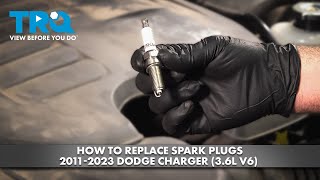
- On 3.6L V6 engines, replacing the spark plugs for the left bank (including cylinder 6) is labor-intensive as it requires removing the upper intake manifold.
What's Unique About the 2011-2018 Dodge DURANGO

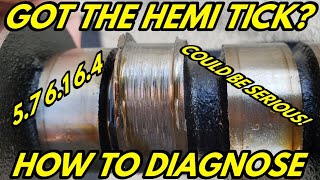
For the 2011-2013 Dodge Durango with the 3.6L Pentastar V6, code P0306 is strongly associated with a known manufacturing defect in the left-side cylinder head. This issue was so prevalent that Chrysler issued a 10-year/150,000-mile warranty extension (X56) 🎬 Watch: How to get a free cylinder head replacement. to cover its replacement. The failure stems from excessive valve guide and seat wear, leading to compression loss and misfires specifically on the left bank cylinders (2, 4, and 6). Later 3.6L engines can suffer from rocker arm bearing failure, which creates a ticking noise and can eventually wipe out a camshaft lobe, also causing a misfire. For the 5.7L Hemi engine, while standard ignition issues are common, it is also prone to lifter failures, particularly on cylinders controlled by the Multi-Displacement System (MDS). The lifter's roller can seize and grind down the camshaft lobe, causing a persistent misfire and a characteristic "Hemi t 🎬 See this guide on replacing Hemi camshafts and lifters.ick".
Diagnostic Flowchart

Tap your situation to follow the diagnostic path that matches what you're seeing on this vehicle.
Symptoms You May Notice
- Check engine light is on or flashing
- Rough or shaky idle
- Hesitation or stumbling during acceleration
- Reduced engine power
- Poor fuel economy
- Abnormal engine noise, such as a distinct ticking or tapping sound from the valvetrain (may indicate rocker arm or lifter failure). [19, 36, TSB #09-011-25]
- Smell of unburnt fuel from the exhaust
- Replacing only the spark plug when the ignition coil is the actual cause.
- Replacing ignition components on a 2011-2013 3.6L V6 when the root cause is the faulty cylinder head.
- Assuming a ticking noise is normal 'Hemi tick' when it is actually a failing lifter that is actively damaging the camshaft.
Most Likely Causes


- Faulty Left Cylinder Head (2011-2013 3.6L Pentastar V6) 🔴 High Probability Early 3.6L Pentastar engines built before July 25, 2012, were manufactured with valve guides and seats that could wear prematurely, causing compression loss. This was addressed by TSB #09-002-14 and warranty extension X56, which covers the left cylinder head for 10 years or 150,000 miles.
How to confirm: A cylinder leak-down test is the definitive diagnostic step. If cylinder 6 shows leakage of 25% or more, the head is likely faulty, per Chrysler's service bulletin. A compression test will also show lower-than-normal pressure in the affected cylinder.
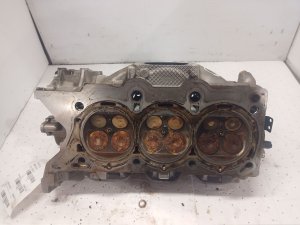
Typical fix: Replacement of the left cylinder head assembly with the revised part (Mopar Part #RL141353AC or newer). This is a major repair covered under the extended warranty if the vehicle qualifies.
Est. part cost: $800-$1500 - Failed Ignition Coil 🔴 High Probability Coil-on-plug systems are common failure points due to constant exposure to engine heat and vibration. Over time, the internal windings can break down, leading to a weak or non-existent spark.
How to confirm: Swap the cylinder 6 ignition coil with another cylinder's coil (e.g., cylinder 4). Clear the codes and drive the vehicle. If the misfire code changes to the cylinder you moved the coil to (e.g., P0304), the coil is bad.
Typical fix: Replace the faulty ignition coil. It is often recommended to replace the corresponding spark plug at the same time.
Est. part cost: $30-$75 - Worn or Fouled Spark Plug 🟡 Medium Probability Spark plugs are a routine maintenance item. The 5.7L Hemi engine uses 16 spark plugs (two per cylinder), increasing the chance of a single plug failing. On the 3.6L V6, accessing the plugs on the driver's side (including cylinder 6) requires removing the upper intake manifold, making replacement a more involved job.
How to confirm: Remove the spark plug from cylinder 6 and inspect it. Look for a worn electrode, carbon fouling, oil contamination, or cracks in the porcelain insulator.
Typical fix: Replace the spark plug. It is best practice to replace all spark plugs on the engine at the same time to ensure even performance.
Est. part cost: $10-$25 per plug - Failed Rocker Arm (3.6L Pentastar V6) 🟡 Medium Probability The needle bearings in the rocker arms can fail, often due to extended oil change intervals. This failure causes a ticking noise, and if left unaddressed, the rocker arm can seize and destroy the corresponding camshaft lobe, leading to a persistent misfire.
How to confirm: A distinct ticking noise from the upper engine is the primary symptom. Diagnosis requires removing the valve cover for the driver's side bank and visually inspecting the rocker arms and camshaft lobes for wear, scoring, or damage.
Typical fix: Replace all rocker arms on the affected bank with the updated Mopar part. If the camshaft is damaged, it must also be replaced. This is a labor-intensive job.
Est. part cost: $150-$500 (plus camshaft if needed) - Faulty Fuel Injector 🟡 Medium Probability
How to confirm: Listen for a consistent clicking sound from the injector with a mechanic's stethoscope. You can also swap the cylinder 6 injector with another cylinder's injector to see if the misfire follows, though this is more labor-intensive, especially on the 3.6L. A resistance test across the injector's two pins should read between 11-14 ohms.
Typical fix: Replace the faulty fuel injector. A user on DodgeForum.com fixed their P0306 and P0206 codes by replacing the #6 injector.
Est. part cost: $50-$120 - Failed Camshaft Lifter/Lobe (5.7L Hemi) ⚪ Low Probability The Hemi engine, particularly those with Multi-Displacement System (MDS), can experience lifter roller failure. The failed roller then grinds down the camshaft lobe, preventing the valve from opening and closing correctly, resulting in a persistent misfire and a loud ticking sound.
How to confirm: This requires removing the valve cover and intake manifold to inspect the valvetrain movement and lifters. A failed lifter will often be collapsed, and the corresponding camshaft lobe will show visible damage.
Typical fix: Replacement of the camshaft, all lifters (often with a non-MDS conversion kit), and associated gaskets. This is a very intensive and expensive repair.
Est. part cost: $800-$2000+
Rare But Worth Checking
- Water Intrusion from Cowl: On some Durango models, a warped or poorly sealed windshield cowl panel can allow rainwater to drip directly onto the engine. This water can pool in the spark plug well for cylinder 6, shorting out the ignition coil and causing a misfire. Owners have reported fixing this by replacing the cowl or sealing it with silicone.
- Intake Manifold Gasket Leak: A vacuum leak from a failed intake manifold gasket near cylinder 6 can lean out the air-fuel mixture enough to cause a misfire. This is more common when re-installing the manifold after other service.
Diagnosis Steps
- Retrieve the freeze-frame data with an OBD-II scanner to understand the engine conditions when the misfire occurred.
- Check for any Technical Service Bulletins (TSBs) related to your vehicle's VIN, especially the X56 warranty extension for 2011-2013 3.6L models.
- For the 3.6L V6, listen for a distinct ticking sound from the driver's side valve cover, which could indicate rocker arm failure.
- For the 5.7L Hemi, listen for a loud ticking or knocking sound, which could indicate lifter/camshaft failure.
- Perform the 'coil swap' test: move the cylinder 6 ignition coil to another cylinder and see if the misfire code follows.
- If the coil is good, inspect the spark plug for cylinder 6. Look for visible damage, wear, or contamination. Replace if it appears worn or fouled.
- Check for water intrusion. Inspect the spark plug well for cylinder 6 for any signs of water or corrosion, which points to a leaking cowl.
- If ignition parts are good, check the fuel injector. Listen for its operation and check its wiring.
- For 3.6L V6 models (especially 2011-2013), if the above steps don't resolve the issue, perform a cylinder compression and leak-down test to check for the known cylinder head fault. A leak of 25% or more confirms the issue per TSB 09-002-14.
- For 5.7L Hemi models, if ignition and fuel are ruled out, the next step is to inspect the valvetrain for a possible failed lifter/camshaft lobe.
Parts You'll Likely Need
- Ignition Coil (3.6L V6)
(OEM #5149168AJ)— This is one of the most common failure points for a single-cylinder misfire. The current part number supersedes 5149168AH and 5149168AI.
Trusted brands: Mopar, NGK, Denso
OEM price range: $80-$100
Aftermarket price range: $30-$75 - Ignition Coil (5.7L V8)
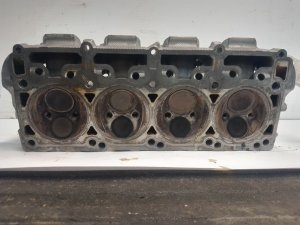
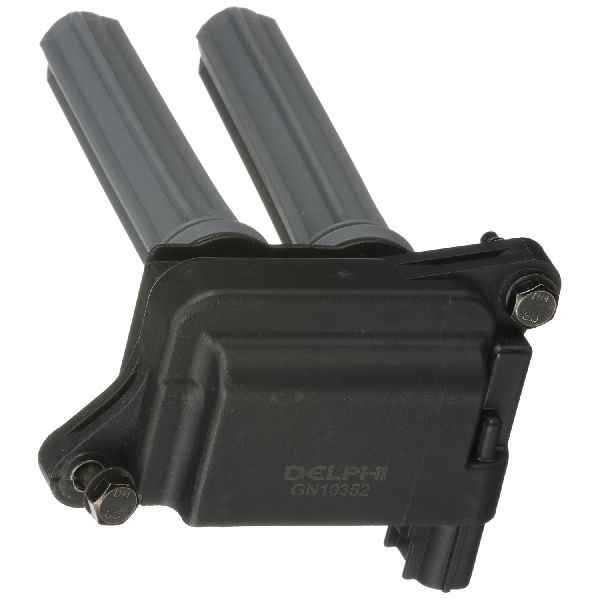
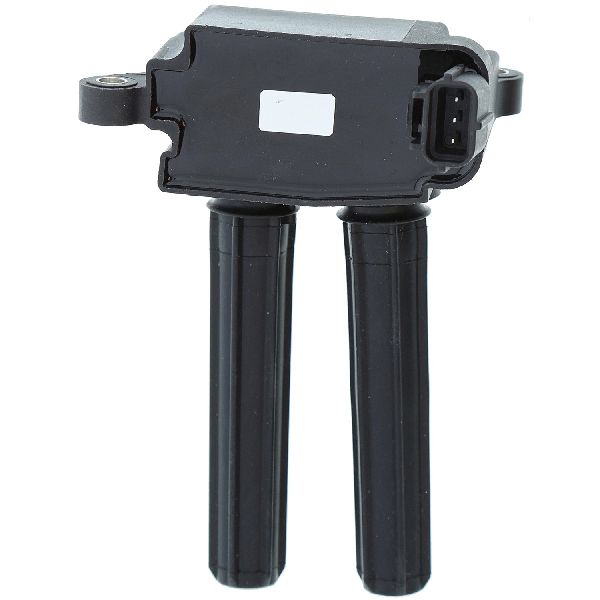
(OEM #68079533AB)— A common failure point for a single-cylinder misfire on the Hemi engine.
Trusted brands: Mopar, Standard Motor Products, Delphi
OEM price range: $40-$60
Aftermarket price range: $25-$50 - Spark Plug — A routine maintenance item that can cause misfires when worn. The 3.6L V6 uses long-life iridium plugs, while the 5.7L Hemi uses 16 copper plugs in total.
Trusted brands: NGK, Champion
OEM price range: $15-$30
Aftermarket price range: $10-$25 - Left Cylinder Head Assembly (3.6L V6)
(OEM #RL141353AC)— The definitive fix for the known issue on 2011-2013 Pentastar engines that causes P0302, P0304, and P0306. This is a remanufactured part number specified in TSBs.
Trusted brands: Mopar
OEM price range: $1000-$1500
Related Codes That Often Appear With This One
- P0300 — This code for 'Random/Multiple Cylinder Misfire' often appears with P0306 if the underlying issue, like a vacuum leak, fuel pressure problem, or failing cylinder head, is affecting more than just cylinder 6. [TSB #18-055-16 REV. A]
- P0302, P0304 — If you see these codes alongside P0306 on a 3.6L V6, it strongly points to the known left cylinder head issue, as all three cylinders (2, 4, 6) are on the affected bank. [TSB #0900214REVB]
- P0206 — This code for 'Injector Circuit Malfunction - Cylinder 6' can appear if the misfire is caused by an electrical problem with the fuel injector or its wiring, rather than a simple clog. A forum user reported this combination was fixed with a new injector.
Technical Service Bulletins (TSBs) & Recalls
- 09-002-14 REV B: Details the diagnosis (25% leak-down) and repair for the 3.6L left cylinder head issue, related to warranty extension X56.
- D-14-12 (X56 Warranty Extension): Announces the 10-year/150,000-mile extended warranty for the left cylinder head on 2011-2013 3.6L engines.
- 09-011-25: Mentions P0306 in a list of misfire codes that can be accompanied by valvetrain noise.
- 18-055-16 REV. A: Lists P0306 as part of a group of misfire codes that may be resolved with a PCM software update on some models.
Platform-Specific Known Issues
- Owner Experience: 3.6L Cylinder Head Failure: Many owners of 2011-2013 Durangos have experienced the P0306 code (along with P0302/P0304) and, after replacing plugs and coils with no success, discovered the cause was the left cylinder head. The repair is covered under Chrysler's extended warranty X56 (10 years/150,000 miles), but owners must often specifically request the dealer to perform the cylinder leak-down test outlined in TSB 09-002-14 to confirm the diagnosis.
- Owner Experience: 5.7L Hemi Lifter/Cam Failure: A common story for Hemi owners begins with a light ticking noise that grows progressively louder. Eventually, a persistent misfire code like P0306 will set. In a Reddit thread, an owner of a 2013 Durango experienced their second lifter failure, resulting in a $5,000 repair bill for the first incident. The repair involves replacing the camshaft and all lifters, as metal from the failed lifter roller contaminates the engine and destroys the cam lobe.
Mechanic-Grade Diagnostic Values
- Fuel Injector Resistance (3.6L & 5.7L) — expected: 11 - 14 Ohms at room temperature. Failure: A reading that is significantly higher (e.g., double the value), an open circuit (infinite resistance), or a short (near zero ohms).
- Ignition Coil Primary Resistance — expected: ~0.5 - 0.7 Ohms. Failure: A reading outside of the specified range.
- Ignition Coil Secondary Resistance — expected: 5,000 - 8,000 Ohms (5-8 kOhms). Failure: A reading significantly outside this range indicates a faulty coil winding.
- Fuel Pressure (Both Engines) — expected: Approximately 58 +/- 5 PSI. Failure: Low fuel pressure can cause lean misfires across multiple cylinders, but a failing regulator could affect them intermittently.
Hidden / Shadow Codes Worth Checking
- Mode $06, TID $53, CID $06: Advanced scan tools can access Mode $06 data, which contains non-continuous monitor test results. TID $53 tracks misfire counts for individual cylinders. A non-zero value for CID $06 (Cylinder 6) can indicate misfires are occurring even if they aren't frequent enough to set a P0306 code and turn on the check engine light. (see via An advanced OBD-II scan tool with Mode $06 capabilities.)
Scan Tool Commands That Help
- wiTECH (Chrysler/Dodge/Jeep Dealer Tool): View Misfire Counters — When diagnosing an intermittent P0306 or a general P0300, the dealer tool can display live and historical misfire counts for each specific cylinder. This allows a technician to confirm that cylinder 6 is the primary or only source of the misfire.
- wiTECH (or advanced aftermarket scan tool): Cylinder Kill / Power Balance Test — This function allows the user to disable the fuel injector for cylinder 6 and observe the change in engine RPM. If there is little or no change in RPM when cylinder 6 is deactivated, it confirms that cylinder is not contributing power, solidifying the misfire diagnosis.
Wiring & Ground Locations
- Cylinder 6 Ignition Coil Driver Wire — On 3.6L engines, this wire runs from the ignition coil on cylinder 6 (driver's side, rear) in the main engine harness to a specific pin on the Powertrain Control Module (PCM).. Damage or corrosion to this specific wire can prevent the PCM's signal from firing the coil, causing a misfire isolated to cylinder 6. A wiring diagram is needed to trace the specific wire color (e.g., Dark Blue/Orange) and PCM pin for continuity testing.
- G903 Ground — Located on the left rear of the engine compartment.. This is a common ground point for several engine components on the left bank. A loose or corroded G903 ground can cause erratic behavior, including misfires, for cylinders on that side of the engine, including cylinder 6.
- Cylinder 6 Fuel Injector Driver Wire — Runs from the fuel injector on cylinder 6 to its corresponding pin at the PCM.. If a P0206 code (Injector Circuit Malfunction) is present with P0306, testing the continuity of this wire is critical to rule out a wiring fault versus a failed injector.
Real Owner Repair Stories
- Dodge Durango Forum user (2014 Dodge Durango 3.6L) — Check engine light with code P0306 and a distinct ticking noise from the engine.
❌ Tried (didn't work) Initial diagnosis pointed towards common ignition issues.
✅ What actually fixed it The dealership diagnosed a failed rocker arm and a damaged camshaft lobe for cylinder 6. Replacing the affected rocker arms and the camshaft resolved both the ticking noise and the P0306 misfire code. - Dodge Journey Forum user (same 3.6L engine) (Dodge Journey with 3.6L Pentastar V6) — Persistent P0306 code.
❌ Tried (didn't work) Replaced ignition coil for cylinder 6., Replaced spark plug for cylinder 6.
✅ What actually fixed it The root cause was found to be leaking upper and lower intake manifold gaskets, creating a vacuum leak near cylinder 6. Replacing the intake gaskets fixed the lean condition and eliminated the misfire.
OEM Part Supersession History
5184296AD, 5184296AE, 5184296AF, 5184296AG→5184296AH— The original rocker arms for the 3.6L Pentastar were prone to premature needle bearing failure. The updated 'AH' part features an improved bearing design to increase durability and prevent the ticking and subsequent camshaft damage.Various original part numbers for 2011-2012 left cylinder heads.→RL141353AC / 7B014135AA— The original left cylinder heads on early Pentastar engines had defective valve guides that would wear prematurely. The revised part numbers are for the updated head assembly that resolves this issue.
Model Year Variations Within This Range
- 2011-2013: These model years with the 3.6L V6 are highly susceptible to the left cylinder head failure. P0306 on these vehicles should prompt an immediate investigation into the extended warranty (X56) and a potential leak-down test.
- 2014-2016: These 3.6L V6 models are less likely to have the cylinder head defect but are in the primary window for the original, failure-prone rocker arm design. A ticking noise accompanying P0306 strongly points to a rocker arm failure.
- 2014+: The 2014 model year introduced a major refresh for the Durango, including a new 8-speed automatic transmission and updated interior electronics. While the core engine architecture and P0306 causes are similar, wiring and module locations may differ slightly from 2011-2013 models.
Helpful Videos
Used OEM Parts in Stock


New Aftermarket Parts Available




The information in this article is provided for general reference and educational purposes only. Vehicle specifications, procedures, and part compatibility can vary by production date, trim level, and region. Always consult your vehicle's factory service manual and verify part numbers before purchasing or performing repairs. Safety-critical components such as airbags, seat belts, and braking systems should be installed by a qualified professional.
- Dodge DURANGO:
- 🎬 Helpful Videos
- 🛍️ Shop This Part
- What's Unique About the 2011-2018 Dodge DURANGO
- Diagnostic Flowchart
- Symptoms You May Notice
- Most Likely Causes
- Rare But Worth Checking
- Diagnosis Steps
- Parts You'll Likely Need
- Related Codes That Often Appear With This One
- Technical Service Bulletins (TSBs) & Recalls
- Platform-Specific Known Issues
- Mechanic-Grade Diagnostic Values
- Hidden / Shadow Codes Worth Checking
- Scan Tool Commands That Help
- Wiring & Ground Locations
- Real Owner Repair Stories
- OEM Part Supersession History
- Model Year Variations Within This Range
- 🎟️ Get 5% Off