

P0306 on 2010-2017 Chevrolet Tahoe: Cylinder 6 Misfire Causes & Fixes (AFM Lifter Failure)
P0306 on a Tahoe indicates a cylinder 6 misfire. While common causes include inexpensive ignition parts like a spark plug, ignition coil, or spark plug wire, this code is a notorious symptom of a failed Active Fuel Management (AFM) lifter on the 5.3L V8. A ticking noise from the engine is a strong indicator of this more serious mechanical failure, which requires cylinder head removal to repair.
- P0306 is a misfire on cylinder 6. Start your diagnosis with the simple, common culprits: spark plug, ignition coil, and spark plug wire.
- Use the 'swap test': move the coil and then the spark plug from cylinder 6 to another cylinder to see if the misfire code follows the part.
- If ignition parts don't fix the problem on your 5.3L V8, a failed Active Fuel Management (AFM) lifter is a very strong possibility.
- Symptoms of a failed AFM lifter include a persistent P0306 code and a distinct ticking noise from the engine.
- Do not ignore a flashing check engine light. Driving with a misfire can destroy your catalytic converter, turning a manageable repair into a multi-thousand dollar one.
What's Unique About the 2010-2017 Chevrolet TAHOE

The most significant issue for the 2010-2017 Tahoe, particularly models with the 5.3L V8, is the Active Fuel Management (AFM) system. This system deactivates cylinders (including cylinder 6) to save fuel, but the specialized lifters are a known major failure point. A failed AFM lifter can become stuck or collapse, preventing the valve from opening and causing a persistent P0306 code. This is often misdiagnosed as an ignition or fuel issue, leading to unnecessary replacement of plugs, coils, and injectors before the true mechanical fault is found.
Diagnostic Flowchart

Tap your situation to follow the diagnostic path that matches what you're seeing on this vehicle.
Generation note: This range covers two Tahoe generations: the GMT900 (2010-2014) and the K2XX (2015-2017). Both primarily used 5.3L V8 engines with Active Fuel Management (AFM), making the lifter issue a concern for the entire year range. The K2XX generation introduced the updated EcoTec3 engine family with direct injection, but the risk of AFM-related misfires remains a well-documented problem.
Symptoms You May Notice

- Flashing or solid Check Engine Light
- Rough or shaky idle
- Engine hesitation or stumbling during acceleration
- Noticeable loss of power
- Poor fuel economy
- Service StabiliTrak and/or Service Traction Control warning light may also appear
- Audible ticking or knocking sound from the engine, particularly on the passenger side
- Replacing only ignition components when the underlying cause is a mechanical AFM lifter failure. Owners may replace plugs, wires, and coils multiple times, only for the P0306 code to return because the mechanical fault was not addressed.
- Replacing the cylinder head without replacing the collapsed lifter that caused the initial problem. One owner on a forum replaced the head only to have the P0306 code remain, realizing afterward the lifter was the root cause.
Most Likely Causes

- Worn Spark Plug 🔴 High Probability Spark plugs are a normal wear item and a primary cause of misfires on any gasoline engine. They are often the first and cheapest part to replace.
How to confirm: Inspect the spark plug for cylinder 6. Look for wear, fouling (black, oily, or white deposits), or a cracked insulator. A simple diagnostic step is to swap the cylinder 6 spark plug with another cylinder (e.g., cylinder 4). If the misfire code changes to P0304, the spark plug is the culprit.
Typical fix: Replace the spark plug. It is recommended to replace all 8 plugs at the same time for even performance. Use the correct OEM-spec plug (e.g., ACDelco Iridium).
Est. part cost: $5 - $20 per plug - Faulty Ignition Coil 🔴 High Probability
How to confirm: Swap the ignition coil from cylinder 6 with another cylinder (e.g., cylinder 4). Clear the codes and run the engine. If the code changes to P0304, the ignition coil is faulty. This is a very common and effective diagnostic step.
Typical fix: Replace the failed ignition coil. It is often recommended to replace the corresponding spark plug at the same time.
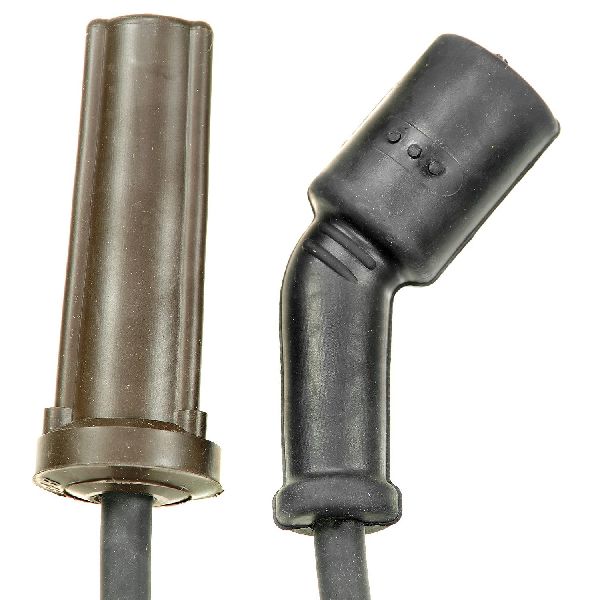
Est. part cost: $40 - $100 - Bad Spark Plug Wire 🟡 Medium Probability TSB #PIP4819A specifically calls out inspecting and replacing loose spark plug wires for misfire codes on 2010 models. Wires can also degrade from heat and age.
How to confirm: Visually inspect the wire for cracks, burns, or corrosion. Check that it is securely connected at both the coil and the spark plug. A loose connection is a surprisingly common fix, as noted by owners. You can also test its resistance with a multimeter.
Typical fix: Replace the spark plug wire. It's often best to replace the full set.
Est. part cost: $50 - $120 for a set - Failed AFM/DFM Lifter 🟡 Medium Probability The 5.3L V8's Active Fuel Management (AFM) system uses special lifters that are a well-documented failure point. Cylinders 1, 4, 6, and 7 are the AFM cylinders, making them susceptible to this issue. The lifter can collapse or become stuck in the bore, leading to a loss of valve actuation.
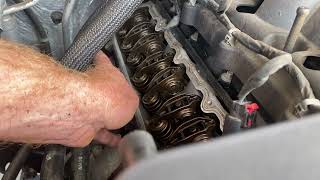
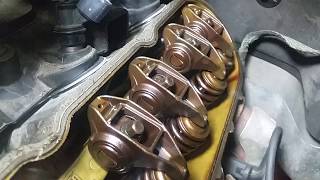
How to confirm: This is diagnosed after ruling out ignition and fuel issues. A key symptom is a ticking or knocking noise from the engine. A mechanic will remove the passenger-side valve cover to observe the rocker arms for cylinder 6. A collapsed lifter will result in a loose rocker arm with excessive play, as it is no longer being pushed 🎬 See how to diagnose a bad engine lifter firsthand. up by the pushrod. A compression test may also show low compression on cylinder 6.
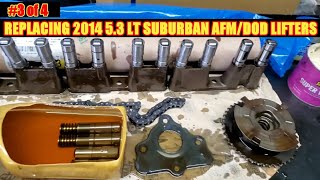
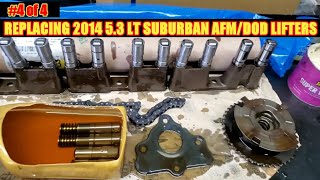
Typical fix: This is a major repair. It involves removing the cylinder head to replace the failed lifter(s). Most shops recommend replacing all AFM lifters, the lifter guides, and the Valve Lifter Oil Manifold (VLOM). The camshaft must also be inspected for damage from the failed lifter roller and replaced if any scoring is found. Some owners opt for an 'AFM delete kit' to permanently remove the system and prevent future issues.
Est. part cost: $300 - $1200+ for parts alone, depending on camshaft replacement. - Clogged or Faulty Fuel Injector ⚪ Low Probability
How to confirm: After ruling out ignition problems, you can swap the fuel injector from cylinder 6 with another cylinder. If the misfire code moves, the injector is the problem. You can also listen for the injector's clicking sound with a mechanic's stethoscope to ensure it's actuating.
Typical fix: Replace the faulty fuel injector. It's recommended to also replace the seals.
Est. part cost: $50 - $150
Rare But Worth Checking
- Intake Manifold Gasket Leak: A vacuum leak near the intake runner for cylinder 6 can lean out the air/fuel mixture and cause a misfire. A smoke test is the best way to confirm this.
- Low Engine Compression: Beyond a failed lifter, low compression can be caused by a worn piston ring, a leaky head gasket, or a poor-sealing valve (e.g., from a broken valve spring or carbon buildup), requiring significant internal engine work.
- Faulty Valve Lifter Oil Manifold (VLOM): The VLOM directs pressurized oil to the AFM lifters. A failure in the manifold or its gasket can lead to improper lifter operation. It is almost always replaced during an AFM lifter job.
Diagnosis Steps
- Read the codes with an OBD-II scanner to confirm P0306 and check for any other codes 🎬 Watch: A step-by-step troubleshooting process for the P0306 code., such as P0300 or P0356. Note if the Check Engine Light is solid or flashing.
- Check for the simplest fix first: Inspect the spark plug wire for cylinder 6 (third from the front on the passenger side). Ensure it is securely clicked onto both the spark plug and the ignition coil. A loose wire is a known issue.
- Perform a parts swap for diagnosis. Start with the ignition coil. Swap the coil from cylinder 6 to a different cylinder (e.g., cylinder 4). Clear the codes and drive. If the code changes to P0304, you have a bad ignition coil.
- If the code remains P0306, swap the spark plug from cylinder 6 to a different cylinder. Clear codes and drive. If the code moves, the spark plug is bad.
- If ignition components are good, listen carefully to the engine, especially the passenger side valve cover area. A distinct ticking or light knocking sound is a strong indicator 🎬 Watch: How to identify and potentially release a collapsed lifter. of a lifter issue.
- If a tick is present and ignition swaps failed, the next step is to remove the passenger side valve cover to visually inspect the valvetrain for cylinder 6. With the cover off, check for a loose rocker arm, which indicates a collapsed lifter.
- If there is no ticking and ignition parts are good, consider a fuel system issue. You can swap the fuel injector with another cylinder, though this is more labor-intensive.
- If the cause is still unknown, perform a compression test on cylinder 6 and compare it to a healthy cylinder. Low compression points to a mechanical problem like a lifter, piston ring, or valve sealing issue.
Parts You'll Likely Need
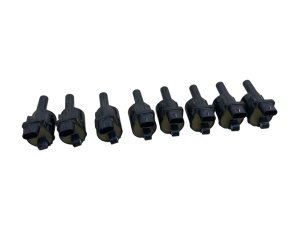
- Ignition Coil
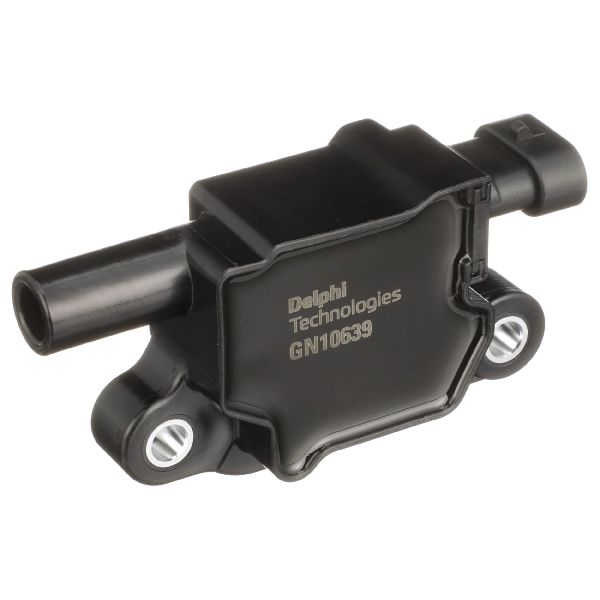
(OEM #12632479 (ACDelco D521C))— A common failure point for isolated cylinder misfires. Easy to diagnose via swapping.
Trusted brands: ACDelco, Delphi
OEM price range: $60-$90
Aftermarket price range: $40-$70 - Spark Plug
(OEM #41-110 (ACDelco Iridium))— Standard maintenance item and the most common cause of misfires. A hairline crack in the porcelain can be hard to spot but will cause a persistent misfire.
Trusted brands: ACDelco, NGK
OEM price range: $15-$25
Aftermarket price range: $8-$15 - AFM Lifter Set
(OEM #12680871 (Supersedes older versions))— A very common mechanical failure point on these engines. When one fails, it is recommended to replace all AFM lifters (and often the camshaft) to prevent a repeat failure.
Trusted brands: General Motors, ACDelco, Elgin
OEM price range: $200-$400 (for a set of 8 AFM lifters)
Aftermarket price range: $150-$300
Related Codes That Often Appear With This One
- P0300 — If the misfire is intermittent or affects multiple cylinders, a P0300 (Random/Multiple Cylinder Misfire Detected) may be stored alongside P0306. This is common with AFM lifter issues that can start on one cylinder and progress.
- P050D — This code for 'Cold Start Rough Idle' can sometimes accompany misfire codes, especially on the K2XX (2015+) platform, pointing towards fuel system or carbon buildup issues.
- P0356 — This code indicates an 'Ignition Coil F Primary/Secondary Circuit Malfunction' for cylinder 6. If seen with P0306, it strongly points to a problem with the ignition coil itself or its wiring/connector, rather than a mechanical issue.
Technical Service Bulletins (TSBs) & Recalls
- Bulletin #PIP4819A: Notes that engine misfires (P0300-P0308) can be caused by loose spark plug wires and advises technicians to inspect and replace any loose wires.
- Bulletin #19-NA-219: A comprehensive bulletin for engine noise and misfires, which lists a collapsed AFM lifter, worn camshaft lobe, sticking valve, or broken valve spring as potential causes after initial diagnosis fails.
- Bulletin #15-06-01-002F: Specifically addresses engine misfire (P0300) and/or a tick noise caused by a mechanically collapsed or stuck AFM lifter, potentially due to internal damage from oil aeration.
Platform-Specific Known Issues
- AFM Lifter Failure: The Active Fuel Management system on 5.3L V8 engines is a notorious point of failure. The lifters for cylinders 1, 4, 6, and 7 can collapse or get stuck, causing a persistent misfire that standard tune-up parts will not fix. This is documented extensively in owner forums and multiple TSBs like 19-NA-219 (which supersedes earlier versions) point to collapsed AFM lifters as a cause for misfires and engine noises.
- Loose Spark Plug Wires: TSB #PIP4819A, issued for 2010 models, specifically points to loose spark plug wires as a potential cause for misfire codes including P0306. An owner on a forum with a 2015 Tahoe found their P0306 was caused by a plug wire that had completely disconnected from the coil.
- StabiliTrak Warning: A persistent engine misfire will almost always trigger the 'Service StabiliTrak' and 'Service Traction Control' warnings on the dashboard. The stability control system relies on consistent engine performance, so it disables itself as a safety precaution when a misfire is detected. Resolving the P0306 code will clear these warnings as well.
Mechanic-Grade Diagnostic Values
- Ignition Coil Primary Resistance — expected: 0.4 - 2.0 ohms. Failure: A reading of zero (short) or infinity/OL (open) indicates a faulty coil winding.
- Ignition Coil Secondary Resistance — expected: 5,000 - 15,000 ohms (5k-15k Ω). Failure: A reading significantly outside this range points to a failure in the secondary windings.
- Fuel Pressure (2010-2014 GMT900) — expected: 55-65 PSI (Key On, Engine Off). Failure: Pressure significantly below 50 PSI at KOEO indicates a weak fuel pump or leak, which could contribute to a lean misfire.
- Fuel Pressure (2015-2017 K2XX, Low-Pressure Side) — expected: ~60-75 PSI (Key On, Engine Off). Failure: Low pressure on the low-pressure side can indicate a failing in-tank pump, preventing the high-pressure pump from functioning correctly.
- Misfire Counter (Live Data) — expected: Should be zero or very close to zero at all times on a healthy cylinder.. Failure: A rapidly increasing number on the 'Current Misfire' counter for cylinder 6 confirms an active misfire that the ECM is detecting in real-time.
Scan Tool Commands That Help
- GDS2 (GM Global Diagnostic System 2): Misfire Data / Misfire Graphic — To monitor current and historical misfire counts for each specific cylinder. This is the primary tool for confirming which cylinder is at fault and seeing if the misfire moves after swapping components.
- GDS2: Fuel Injector Balance Test — This bidirectional command allows a technician to fire each injector individually and measure the corresponding pressure drop in the fuel rail. A smaller-than-specified pressure drop for cylinder 6 would indicate a clogged or failing injector.
- GDS2: Cylinder Deactivation (AFM Control) — Allows a technician to manually command the AFM system on and off to test the functionality of the VLOM solenoids and observe the effect on the engine. This can help diagnose issues within the AFM system itself.
Wiring & Ground Locations
- G102 / G104 — Typically located on the rear of the driver's side cylinder head.. This is a primary ground point for all eight ignition coils. A loose or corroded connection here can cause a weak or intermittent spark on any cylinder, including cylinder 6, leading to a misfire that is difficult to diagnose.
- G103 — Located on the front of the driver's side cylinder head or nearby on the engine block.. This is a critical ground for the Engine Control Module (ECM). A poor connection at G103 can cause a wide range of erratic engine behavior, including phantom misfire codes and incorrect sensor readings.
- Engine Harness (Passenger Side) — The wiring harness that runs along the passenger side valve cover and back towards the firewall.. This harness contains the wiring for the cylinder 6 ignition coil and fuel injector. It is susceptible to heat damage from the exhaust manifold, which can cause wires to become brittle, cracked, or melted, leading to a short or open circuit for cylinder 6 components.
Real Owner Repair Stories
- Tahoe Yukon Forum (2008 Chevrolet Tahoe 5.3L) — Flashing CEL, Service StabiliTrak light, P0306 code, audible tick/knock from cylinder 6 area.
❌ Tried (didn't work) Replacing spark plugs and wires., Swapping ignition coil to another cylinder., Replacing the fuel injector., Replacing the cylinder head (but not the lifters).
✅ What actually fixed it The user had a collapsed AFM lifter. They replaced the cylinder head first, but the problem remained because the root cause, the lifter in the engine block, was not replaced. The final fix required replacing the collapsed lifter. - 2CarPros Forum (2004 Chevrolet Tahoe 5.3L with 277,000 miles) — P0300 and P0306, audible and felt misfire at idle, high negative fuel trims on Bank 2.
❌ Tried (didn't work) Replacing spark plugs (ACDelco Iridium)., Swapping ignition coils., Swapping spark plug wires., Swapping fuel injectors., Cleaning the MAF sensor.
✅ What actually fixed it The misfire on cylinder 6 remained after all component swaps. A compression test showed good compression (155 PSI). The high negative fuel trim (-17% to -20%) on the same bank as the misfire, combined with the failure of all other diagnostics, strongly pointed towards an internal mechanical issue, likely a failing camshaft lobe or a valvetrain problem causing poor combustion and forcing the ECM to pull fuel. The final resolution was not posted, but the diagnosis path moved from common parts to internal engine mechanics. - YouTube - '2015 Tahoe PPV Code P0306' (2015 Chevrolet Tahoe PPV with 190,000 miles) — P0306 misfire code.
❌ Tried (didn't work) Swapping spark plug., Swapping spark plug wire., Swapping ignition coil.
✅ What actually fixed it After component swaps didn't resolve the issue, the mechanic removed the passenger side valve cover. Visual inspection revealed the intake valve rocker arm for cylinder 6 was completely loose, indicating a fully collapsed AFM lifter. The lifter was no longer pushing the pushrod up to actuate the valve, causing a complete lack of combustion in that cylinder.
OEM Part Supersession History
Various older AFM lifter part numbers (e.g., associated with Elgin HL-7011)→GM 12680871 (or DFM-style lifters like Elgin HL-7025)— The original AFM lifters had a high failure rate. Newer designs, including those for the newer Dynamic Fuel Management (DFM) systems, are more robust.
Heads up: Newer DFM lifters are generally backward-compatible with older AFM systems, but original AFM-only lifters cannot be used in newer DFM engines. It is critical to use the latest available part revision when performing a repair to prevent future failure.
Model Year Variations Within This Range
- 2010-2014 (GMT900): These models use the Gen IV Vortec 5.3L V8 engine with a traditional port fuel injection system. Fuel pressure should be around 55-65 PSI.
- 2015-2017 (K2XX): These models use the Gen V EcoTec3 5.3L V8 engine, which introduced Direct Injection (DI) and Variable Valve Timing (VVT) alongside AFM. This adds complexity to fuel system diagnosis, as there is both a low-pressure in-tank pump and a high-pressure mechanical pump on the engine. The engine control system is also more advanced, requiring the GDS2 scan tool for full diagnostics.
Helpful Videos

Used OEM Parts in Stock

New Aftermarket Parts Available


The information in this article is provided for general reference and educational purposes only. Vehicle specifications, procedures, and part compatibility can vary by production date, trim level, and region. Always consult your vehicle's factory service manual and verify part numbers before purchasing or performing repairs. Safety-critical components such as airbags, seat belts, and braking systems should be installed by a qualified professional.
- Chevrolet TAHOE:
- 🎬 Helpful Videos
- 🛍️ Shop This Part
- What's Unique About the 2010-2017 Chevrolet TAHOE
- Diagnostic Flowchart
- Symptoms You May Notice
- Most Likely Causes
- Rare But Worth Checking
- Diagnosis Steps
- Parts You'll Likely Need
- Related Codes That Often Appear With This One
- Technical Service Bulletins (TSBs) & Recalls
- Platform-Specific Known Issues
- Mechanic-Grade Diagnostic Values
- Scan Tool Commands That Help
- Wiring & Ground Locations
- Real Owner Repair Stories
- OEM Part Supersession History
- Model Year Variations Within This Range
- 🎟️ Get 5% Off