

P0306 on 2010-2017 Chevrolet Silverado 1500: Cylinder 6 Misfire Causes and Fixes
P0306 indicates a misfire on cylinder 6. For 2010-2017 Silverados, this is most often caused by a bad spark plug, ignition coil, or plug wire. On models with Active Fuel Management (AFM), a failed lifter is also a very common and more serious cause, especially if basic ignition parts don't solve the problem. A persistent P0306 after replacing ignition components is a strong indicator of a collapsed AFM lifter.
- P0306 on a Silverado is a misfire on cylinder 6, located on the passenger side of the engine, second from the front.
- Always start diagnosis with the simplest and most common causes: the spark plug, ignition coil, and spark plug wire for cylinder 6.
- A simple and effective diagnostic step is to swap the ignition coil from cylinder 6 with another cylinder to see if the misfire code follows it.
- If basic ignition parts don't fix the issue, especially on a 2014 or newer model, a failed AFM lifter is a very strong possibility and likely requires professional repair.
- Do not ignore a flashing check engine light, as it indicates a severe misfire that can quickly destroy your catalytic converter.
What's Unique About the 2010-2017 Chevrolet SILVERADO 1500

This year range covers two Silverado generations with different engine technologies. The 2010-2013 models (GMT900) primarily used Vortec engines, while the 2014-2017 models (K2XX) introduced the EcoTec3 direct-injection engines with a more advanced Active Fuel Management (AFM) system. While standard ignition faults are common across all years, both generations are known for AFM lifter failures, which can cause persistent misfires on specific cylinders. Cylinder 6 is one of the AFM-controlled cylinders. An owner experiencing a P0306 after replacing basic ignition parts should strongly consider a failed AFM lifter as the root cause, often accompanied by a distinct ticking noise.
Diagnostic Flowchart

Tap your situation to follow the diagnostic path that matches what you're seeing on this vehicle.
Generation note: The 2010-2017 range includes the end of the 2nd generation (GMT900, 2010-2013) and the start of the 3rd generation (K2XX, 2014-2017). The primary difference is the shift from Vortec to EcoTec3 engines in 2014. The EcoTec3 engines have a more complex Active Fuel Management (AFM) system, making them more susceptible to lifter-related misfires than the earlier models. However, AFM lifter failure is a known issue on the 2007+ 5.3L engines as well.
Symptoms You May Notice
- Rough or shaking idle
- Flashing or solid Check Engine Light
- Noticeable loss of power during acceleration
- Engine hesitation or stumbling
- Reduced fuel economy
- Traction control and/or Stabilitrak light may illuminate
- Engine ticking or knocking sound
- Replacing only the spark plug when the ignition coil or plug wire is the actual cause.
- Replacing fuel injectors when the problem is a much more common ignition system fault.
- Overlooking a failed AFM lifter after replacing all ignition components without success. Many owners in forums replace plugs, wires, coils, and even injectors before discovering the mechanical lifter failure.
Most Likely Causes


- Worn or Fouled Spark Plug 🔴 High Probability Spark plugs are a standard wear item. The service interval can be up to 100,000 miles, but oil consumption or other issues can cause them to fail sooner. Cracked porcelain insulators are also a possible, though less common, failure mode.
How to confirm: Remove the spark plug from cylinder 6 and inspect it for wear, carbon buildup, oil fouling, or cracks in the ceramic insulator. Compare it to a plug from another cylinder.
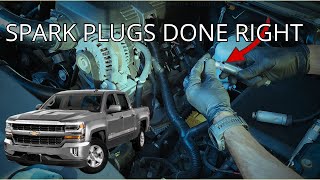
Typical fix: Replace the spark plug. 🎬 Watch: Step-by-step guide to replacing spark plugs on this engine. It is recommended to replace all 8 spark plugs at the same time for even performance.
Est. part cost: $5-$20 per plug - Failed Ignition Coil 🔴 High Probability
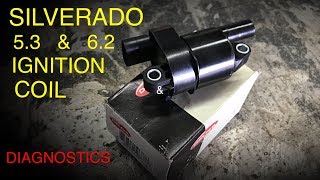
How to confirm: Swap the ignition coil from cylinder 6 with another cylinder (e.g., cylinder 4). Clear the codes and drive the vehicle. If the code changes to P0304, the coil is bad. This is a very common and effective diagnostic step cited by many owners.
Typical fix: Replace the faulty ignition coil.
Est. part cost: $35-$95 - Bad Spark Plug Wire 🟡 Medium Probability A Technical Service Bulletin (TSB #PIP4819A) specifically mentions that loose-fitting spark plug wires can cause misfires on 2010 models. Wires can also degrade from heat and age, or break during removal.
How to confirm: Inspect the spark plug wire for cylinder 6 for any visible damage, corrosion, or a loose connection at the coil or spark plug. Wiggle the wire to check for a secure fit. A resistance check can also be performed with a multimeter.
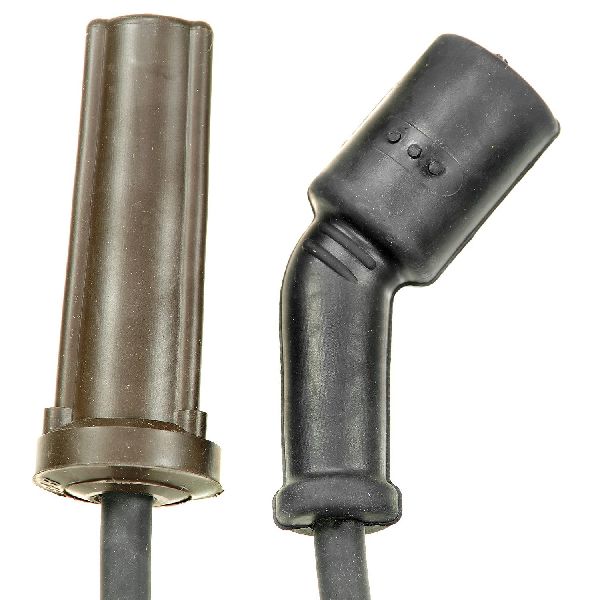
Typical fix: Replace the spark plug wire. It's good practice to replace the full set.
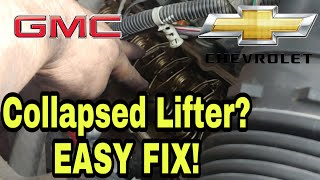
Est. part cost: $50-$100 for a set - Failed Active Fuel Management (AFM) Lifter 🟡 Medium Probability The AFM system deactivates cylinders (1, 4, 6, and 7) to save fuel. The specialized lifters used for this system are a notorious failure point, especially on the 2014+ EcoTec3 engines but also on earlier 5.3L engines. They can get stuck or collapse, causing the valve not to open, resulting in a persistent misfire. TSB 15-06-01-002D directly addresses this issue.
How to confirm: This is an advanced diagnosis. After ruling out ignition and fuel issues, a key indicator is a persistent ticking/knocking noise from the engine. A mechanic may remove the valve cover to visually confirm if the rocker arms for cylinder 6 are moving. A running compression test may also show very low compression on the affected cylinder.
Typical fix: Requires replacing the failed lifter(s), lifter guides, and often the camshaft if it has been damaged by the failed lifter. Many owners opt for an 'AFM delete' kit to prevent future failures, which involves replacing the AFM lifters with standard lifters and reprogramming the ECM. This is a labor-intensive job.
Est. part cost: $300-$1200+ for parts, depending on whether a delete kit and new camshaft are included. - Clogged or Faulty Fuel Injector ⚪ Low Probability
How to confirm: Listen to the injector with a mechanic's stethoscope to ensure it's clicking. For a more definitive test, you can swap the injector with another cylinder, similar to the coil swap test, though this is more labor-intensive. Check for power and ground signals at the injector connector.
Typical fix: Replace the faulty fuel injector.
Est. part cost: $50-$150
Rare But Worth Checking
- Low Engine Compression: If all ignition and fuel components check out, a mechanical issue could be the cause. This can be due to a worn piston ring, a leaking head gasket, or a damaged valve or camshaft lobe (often related to lifter failure). A compression test is needed to diagnose this.
- Intake Manifold Gasket Leak: A vacuum leak near cylinder 6 can lean out the air/fuel mixture and cause a misfire, particularly at idle. A smoke test is the best way to identify a leak.
Diagnosis Steps
- Read the code with an OBD-II scanner to confirm P0306 and check for any other codes, like P0300.
- Note the freeze frame data to see the engine conditions when the misfire occurred.
- Inspect the spark plug, spark plug wire, and ignition coil for cylinder 6 (passenger side, third from front). Look for obvious damage, wear, or loose connections.
- Swap the ignition coil from cylinder 6 to a different cylinder (e.g., cylinder 4). Clear the codes and see if the misfire code moves to P0304. If it does, the coil is bad. This is a highly recommended first diagnostic step.
- If the misfire remains on cylinder 6, inspect the spark plug for fouling, wear, or damage. A cracked insulator can cause a persistent misfire. Consider swapping the plug with another cylinder.
- Inspect the spark plug wire for a secure connection and any signs of damage. TSB #PIP4819A notes loose wires can be a cause.
- If ignition components are good, listen to the fuel injector for cylinder 6 with a stethoscope to ensure it's clicking. Compare the sound to an adjacent injector.
- If the above steps do not resolve the issue, listen for a distinct ticking or tapping sound from the passenger side of the engine. This is a strong indicator of a failed AFM lifter.
- For suspected lifter failure, a more advanced diagnosis is needed. This can involve removing the valve cover to check for lack of movement in the rocker arms for cylinder 6, or performing a compression test. Low compression points to a mechanical problem.
- If a vacuum leak is suspected, perform a smoke test to check the intake manifold gasket and related hoses.
Parts You'll Likely Need
- Spark Plug
(OEM #ACDelco 41-114 (Original for many 5.3L), ACDelco 41-168 (Supersedes 41-114 for 2014+ 5.3L/6.2L))— This is the most common and simplest fix for a single-cylinder misfire. They are a routine maintenance item. Note that GM has updated part numbers; 41-168 is a hotter plug that supersedes 41-114 for many applications.
Trusted brands: ACDelco, NGK, Denso
OEM price range: $10-$15
Aftermarket price range: $5-$12 - Ignition Coil
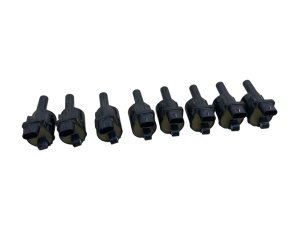
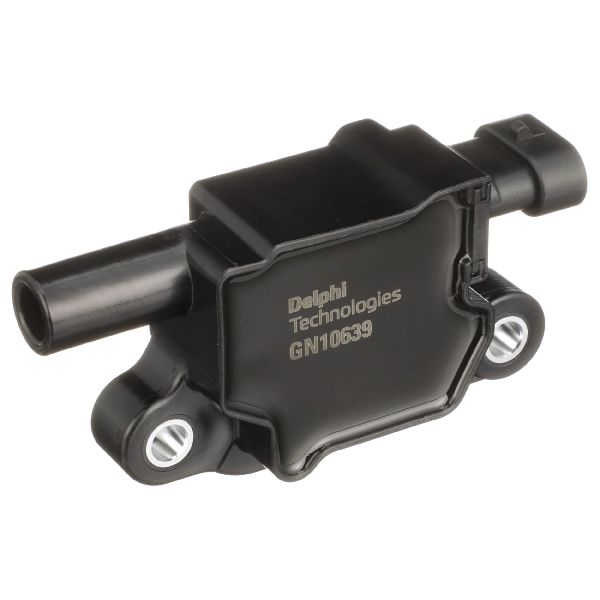
(OEM #12699383 (Common for 2014+, superseded by 12726023))— Ignition coils are a frequent failure point and a primary cause of misfires. Swapping them is an easy diagnostic step.
Trusted brands: ACDelco, Delphi
OEM price range: $50-$95
Aftermarket price range: $30-$60 - AFM/DFM Lifter Kit
(OEM #12571595 (Common AFM lifter part number))— A known major issue on these engines, especially 2014 and newer models with Active Fuel Management. A failed lifter will cause a persistent misfire that ignition part swaps won't fix.
Related Codes That Often Appear With This One
- P0300 — If the misfire is intermittent or affects multiple cylinders, a P0300 (Random/Multiple Cylinder Misfire) may be stored alongside P0306. This is very common with failing AFM lifters.
- P050D — Cold Start Rough Idle may be present, sometimes related to carbon buildup on valves which can contribute to misfire conditions.
- P0206 — This code for 'Cylinder 6 Injector Circuit Malfunction' may appear alongside P0306, pointing more directly towards an issue with the fuel injector or its wiring for cylinder 6.
Technical Service Bulletins (TSBs) & Recalls
- TSB 15-06-01-002D: Addresses engine misfire/tick noise (including P0300) caused by a mechanically collapsed or stuck AFM lifter on 2014-2016 models with 5.3L L83 and 6.2L L86 engines.
- TSB PIP4819A: Notes that loose-fitting spark plug wires can cause misfire codes (P0300-P0308) on 2010 models.
- TSB 19-NA-219: A later bulletin that references TSB 15-06-01-002 for AFM lifter concerns on L83, L86, LT1, and LT4 engines.
Platform-Specific Known Issues
- TSB #PIP4819A notes that for 2010 models, misfire codes including P0306 can be caused by spark plug wires that are not fully seated or have a loose fit.
- TSB #19-NA-219 discusses various causes for misfires on V8 engines up to 2018, including worn cam lobes and lifter rollers, which aligns with the common AFM lifter failure issue.
- Active Fuel Management (AFM) lifter failure is a widely documented problem for the EcoTec3 V8 engines (2014-2017). The lifters for cylinders 1, 4, 6, and 7 are the ones that deactivate and are prone to failure. A user on Reddit confirmed a bad lifter was the cause of their P0306 code on a 2014 Silverado after replacing all other common parts.
Mechanic-Grade Diagnostic Values
- Ignition Coil Primary Resistance — expected: 0.660 ohms. Failure: Significant deviation from this value.
- Ignition Coil Secondary Resistance — expected: 7.10k Ohms. Failure: Significant deviation from this value.
- Low-Side Fuel Pressure (Key On, Engine Off) — expected: >= 500 kPa (73 psi). Failure: Pressure below 500 kPa (73 psi) may indicate a weak in-tank fuel pump.
- High-Side Fuel Pressure (Direct Injection, at idle) — expected: ~700-1000 psi. Failure: Values significantly lower than this range at idle could indicate a failing high-pressure fuel pump (HPFP).
Hidden / Shadow Codes Worth Checking
- Mode 6 Misfire Counts: Most advanced OBD-II scanners can access Mode $06 data, which includes raw misfire counts for each cylinder before they are high enough to trigger a P030x code. A technician can watch the counter for cylinder 6 increment to confirm the misfire in real-time, even if it's intermittent. (see via An advanced OBD-II scan tool with Mode $06 capability.)
Scan Tool Commands That Help
- GDS2/Tech2: Cylinder Power Balance Test — This function allows a technician to disable individual cylinders one by one to see the effect on engine RPM. When a healthy cylinder is disabled, RPMs drop. When the misfiring cylinder (6) is disabled, there will be little to no change in RPM, confirming it wasn't contributing.
- GDS2/Tech2: Fuel Injector Balance Test — This test fires each injector for a set period and measures the corresponding drop in fuel pressure. A smaller pressure drop for cylinder 6 would indicate a clogged or failing injector.
- GDS2/Tech2: AFM Cylinder Deactivation Solenoid Control — For diagnosing a suspected AFM lifter issue, a technician can command the solenoids on and off to check for proper response. This can help determine if the issue is with the control solenoid or the mechanical lifter itself.
Wiring & Ground Locations
- G103 — On the front corner of the passenger side cylinder head, just below the valve cover (2014+ models).. This is a primary engine control ground. A poor connection here can cause erratic behavior in sensors and actuators, including the ignition coils and fuel injectors on the passenger side bank (which includes cylinder 6).
- G102 — Located at the left rear of the engine, grounds the 8 ignition coils (on some GMT900 models).. A corroded or loose G102 ground can directly cause weak or intermittent spark across all cylinders, potentially leading to misfire codes.
- ECM Connector X3, Pin 67 — On the Engine Control Module (ECM) for 2015 L83 engines. The wire is typically Violet.. This is the high voltage supply pin for the Direct Fuel Injector on cylinder 6. Testing for proper voltage and signal at this pin can diagnose a wiring or ECM driver issue for the injector.
Real Owner Repair Stories
- Craig's Car Care YouTube Channel (Chevy 5.3L (year not specified, but has AFM)) — Check engine light with only a P0306 code.
❌ Tried (didn't work) Tested ignition coil - passed, Tested spark plug - passed, Tested coil wire - passed, Tested fuel injector - passed, Checked for vacuum leaks - none found
✅ What actually fixed it A compression test showed low cranking and running compression. Upon removing the valve cover, a rocker arm for cylinder 6 would only move intermittently. The cylinder head was removed, revealing that the plastic lifter retainer had failed, allowing the AFM lifter to rotate and damage both the lifter and the camshaft. The final fix was replacing the camshaft and the failed lifter. - DIY YouTube video (Chevrolet Silverado (year not specified)) — P0306 misfire on cylinder 6.
❌ Tried (didn't work) Initial diagnosis pointed to common ignition or fuel issues.
✅ What actually fixed it During the repair of the P0306 code, the owner discovered a stripped cylinder head bolt hole. The misfire was caused by a stuck lifter, but the repair was complicated by the stripped bolt. The final fix involved repairing the stripped threads using a Helicoil kit before reassembling the cylinder head.
OEM Part Supersession History
ACDelco 41-114→ACDelco 41-168— The 41-168 is reportedly a hotter plug, which can help reduce carbon fouling, a known issue on direct injection engines. GM often updates part numbers to address field issues.
Heads up: While the 41-114 was original equipment for 2014+ models, many dealers and parts suppliers now provide the 41-168 as the correct replacement. Using the older 41-114 is not incorrect, but the 41-168 may offer better long-term performance against fouling.ACDelco 41-110→ACDelco 41-162— Part number change for Gen 4 Vortec engines (pre-2014). The change may have been due to a change in OEM supplier (e.g., from Denso to NGK).
Model Year Variations Within This Range
- 2014-2017: The introduction of the EcoTec3 (L83 5.3L) engine brought direct injection. This makes the engine more susceptible to carbon buildup on intake valves, which can cause misfires. It also features a high-pressure fuel pump (HPFP) located in the engine valley, adding another potential failure point not present on 2010-2013 models.
- 2010-2013: These GMT900 models use Vortec engines with port injection. While they also have Active Fuel Management (AFM) and can suffer from lifter failure, they are not prone to intake valve carbon buildup or HPFP failures like the 2014+ models.
Helpful Videos
Used OEM Parts in Stock


New Aftermarket Parts Available


The information in this article is provided for general reference and educational purposes only. Vehicle specifications, procedures, and part compatibility can vary by production date, trim level, and region. Always consult your vehicle's factory service manual and verify part numbers before purchasing or performing repairs. Safety-critical components such as airbags, seat belts, and braking systems should be installed by a qualified professional.
- Chevrolet SILVERADO 1500:
- 🎬 Helpful Videos
- 🛍️ Shop This Part
- What's Unique About the 2010-2017 Chevrolet SILVERADO 1500
- Diagnostic Flowchart
- Symptoms You May Notice
- Most Likely Causes
- Rare But Worth Checking
- Diagnosis Steps
- Parts You'll Likely Need
- Related Codes That Often Appear With This One
- Technical Service Bulletins (TSBs) & Recalls
- Platform-Specific Known Issues
- Mechanic-Grade Diagnostic Values
- Hidden / Shadow Codes Worth Checking
- Scan Tool Commands That Help
- Wiring & Ground Locations
- Real Owner Repair Stories
- OEM Part Supersession History
- Model Year Variations Within This Range
- 🎟️ Get 5% Off