

P0306 on 2010-2013 Chevrolet Express: Cylinder 6 Misfire Causes and Fixes
P0306 on a 2010-2013 Chevy Express means cylinder 6 is misfiring. The most likely causes are a worn spark plug, a bad ignition coil, or a loose spark plug wire, which is noted in a manufacturer TSB. On 5.3L V8s, a failed Active Fuel Management (AFM) lifter is also a known, more serious possibility. A basic ignition system tune-up is often the fix.
- P0306 means cylinder 6 is misfiring.
- Start your diagnosis by checking the spark plug wire connection at both ends, as per TSB #PIP4819A.
- Cylinder 6 is the third cylinder from the front on the passenger side of V8 engines.
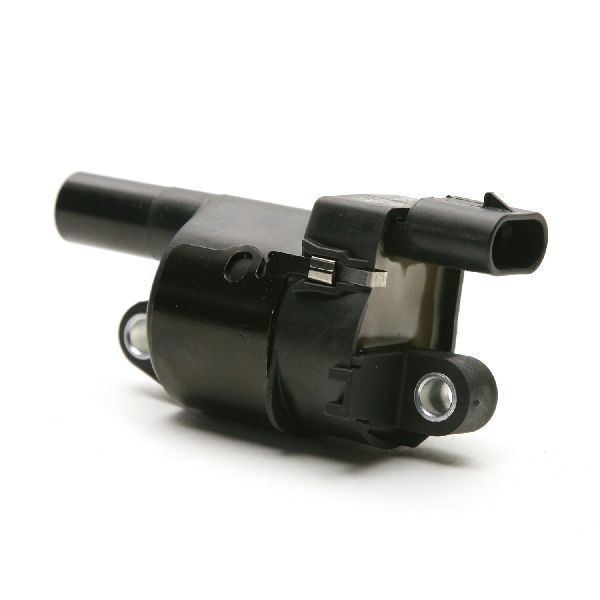
- The most common fixes are replacing the spark plug (ACDelco 41-162), ignition coil (ACDelco D521C), or spark plug wires for cylinder 6.
- On 5.3L V8s, be aware of potential AFM lifter failure as a more serious cause.
- A flashing check engine light indicates a severe misfire that can damage your catalytic converter; avoid driving if you see this.
- A simple 'coil swap' is a fast and free way to diagnose a bad ignition coil.
What's Unique About the 2010-2013 Chevrolet EXPRESS
For the 2010-2013 Express vans, particularly the 2010 model year, GM issued a Technical Service Bulletin (TSB #PIP4819A) that specifically points to loose spark plug wires as a potential cause for misfire codes, including P0306. While spark plugs and coils are common culprits on any vehicle, this bulletin highlights a known issue with the wire connections on these specific vans that should be checked early in the diagnosis. Additionally, the 5.3L V8 engine option features Active Fuel Management (AFM), and cylinder 6 is one of the cylinders that can be deactivated. This makes it susceptible to AFM lifter failure, a more serious mechanical issue that can also cause a P0306 code.
Diagnostic Flowchart
Tap your situation to follow the diagnostic path that matches what you're seeing on this vehicle.
Symptoms You May Notice
- Rough or shaky idle
- Hesitation or stumbling during acceleration
- Noticeable loss of engine power
- Solid or flashing Check Engine Light
- Reduced fuel economy
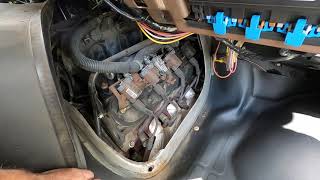
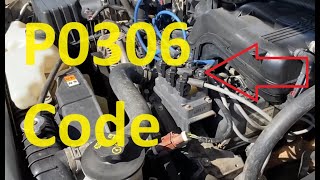
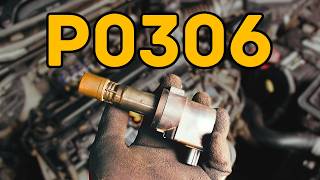
- Smell of gasoline from the exhaust 🎬 Watch: A breakdown of P0306 causes and common fixes.
- Engine may sound like it's ticking or popping
- Replacing the catalytic converter when its failure is a symptom of the misfire, not the cause.
- Replacing oxygen sensors when the readings are erratic due to the unburned fuel from the misfire.
Most Likely Causes
- Loose or Faulty Spark Plug Wires 🔴 High Probability A specific TSB (#PIP4819A) was issued for 2010 models for this exact issue, suggesting a higher-than-normal probability. The heat and tight confines of the engine bay can also degrade wires over time.
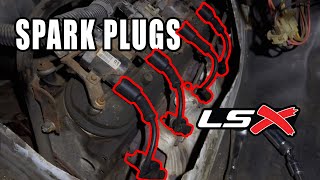
How to confirm: Visually inspect the spark plug wire for cylinder 6. Ensure it is securely connected at both the ignition coil and the spark plug. Check for any signs of damage, arcing (white marks or burns), or corrosion. A good practice is to swap the wire with another cylinder (e.g., cylinder 4) and see if the misfire code changes to P0304.
Typical fix: Securely reconnect the wire or replace the entire set of spark plug wires if they are old or damaged. The ACDelco Professional set is a common OEM-quality replacement.
Est. part cost: $40-$100 - Worn or Fouled Spark Plug 🔴 High Probability
How to confirm: Remove the spark plug from cylinder 6 and inspect it. Look for a worn electrode, heavy carbon buildup, or oil/fuel fouling. The gap should also be checked against specifications, which is typically 0.040 inches for the recommended Iridium plugs.
Typical fix: Replace the spark plug. It is best practice to replace all spark plugs at the same time. ACDelco Iridium plugs are the OEM recommendation and come pre-gapped.
Est. part cost: $8-$20 per plug - Failed Ignition Coil 🔴 High Probability
How to confirm: Swap the ignition coil from cylinder 6 with a coil from another cylinder on the same bank (e.g., cylinder 4). Clear the codes and drive the vehicle. If the code changes to P0304, the ignition coil is faulty.
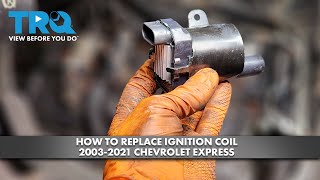
Typical fix: Replace the failed ignition coil. This is a simple unbolt-and-unplug job. 🎬 See this walkthrough for replacing an ignition coil.
Est. part cost: $30-$75 - Clogged or Faulty Fuel Injector 🟡 Medium Probability
How to confirm: After ruling out ignition issues, you can listen to the injector with a mechanic's stethoscope to ensure it's clicking. For a definitive test, swap the fuel injector from cylinder 6 with another cylinder. If the misfire code follows the injector, the injector is the problem. This is a more involved diagnostic step.
Typical fix: Replace the faulty fuel injector. Sometimes running a quality fuel injector cleaner can resolve minor clogs.
Est. part cost: $50-$120
Rare But Worth Checking
- Active Fuel Management (AFM) Lifter Failure (5.3L V8): On the 5.3L V8, cylinder 6 is one of the four cylinders deactivated by AFM. The special lifters for these cylinders are a known failure point. A collapsed or stuck lifter will cause a persistent misfire and often a ticking noise. This is a serious mechanical issue requiring significant labor to repair.
- Intake Manifold Gasket Leak: The Vortec engines in these vans can be prone to intake gasket leaks over time. A vacuum leak near cylinder 6 can lean out the air/fuel mixture and cause a misfire. A smoke test is the most effective way to diagnose this.
- Low Engine Compression: Internal engine issues like a worn piston ring, a bad valve, a broken valve spring, or a head gasket failure can cause a loss of compression in cylinder 6. This is the least likely and most expensive cause. A mechanical compression test is required to diagnose this. GM TSB 19-NA-219 also points to worn camshaft lobes as a possible cause for persistent misfires not solved by other means.
Diagnosis Steps
- Use an OBD-II scanner to confirm the P0306 code and check for any other stored codes.
- Identify Cylinder 6. On V8 engines (4.8L, 5.3L, 6.0L), the passenger side bank is numbered 2-4-6-8 from front to back. Cylinder 6 is the third cylinder back on the passenger side. On the 4.3L V6, the passenger side is 2-4-6, making cylinder 6 the rearmost cylinder on the passenger side.
- Check TSB #PIP4819A. Inspect the spark plug wire for cylinder 6 to ensure it is fully seated on the coil and plug.
- Swap the ignition coil from cylinder 6 with another cylinder (e.g., cylinder 4). Clear the codes and see if the misfire moves to the new cylinder (P0304). If it does, the coil is bad.
- If the misfire remains, inspect the spark plug for cylinder 6 for wear, damage, or fouling. Replace if necessary. The recommended gap is 0.040".
- If the coil and plug are good, swap the spark plug wire from cylinder 6 with another cylinder and see if the code follows.
- If ignition components are ruled out, inspect the fuel injector. Listen for a clicking sound or perform a swap with another cylinder's injector.
- Check for vacuum leaks around the intake manifold, especially near the runner for cylinder 6, using a smoke machine or carburetor cleaner.
- If all else fails, perform a mechanical compression test on cylinder 6 to check for internal engine problems like bad valves, rings, or a failed AFM lifter.
Parts You'll Likely Need
- Spark Plug
(OEM #ACDelco 41-162)— Spark plugs are a routine maintenance item and the most common failure point for a single-cylinder misfire. The OEM Iridium plugs are recommended for longevity.
Trusted brands: ACDelco, NGK
OEM price range: $12-$20
Aftermarket price range: $8-$15 - Ignition Coil
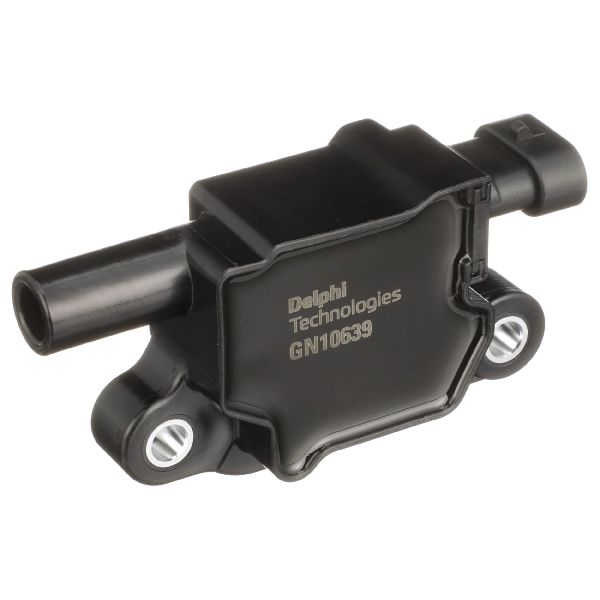
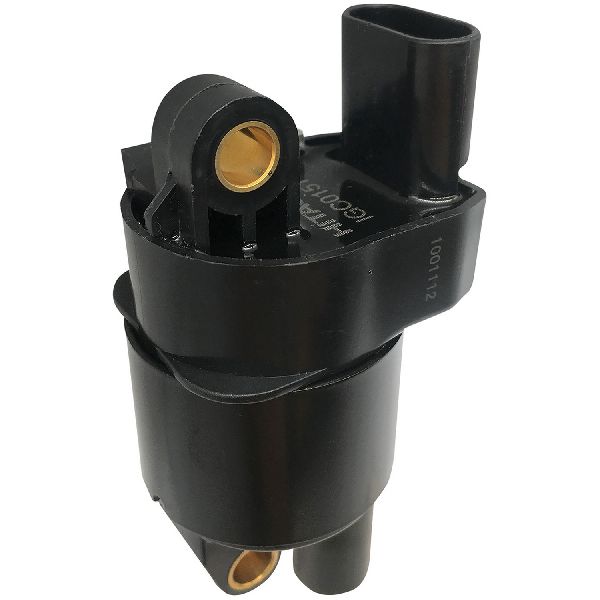
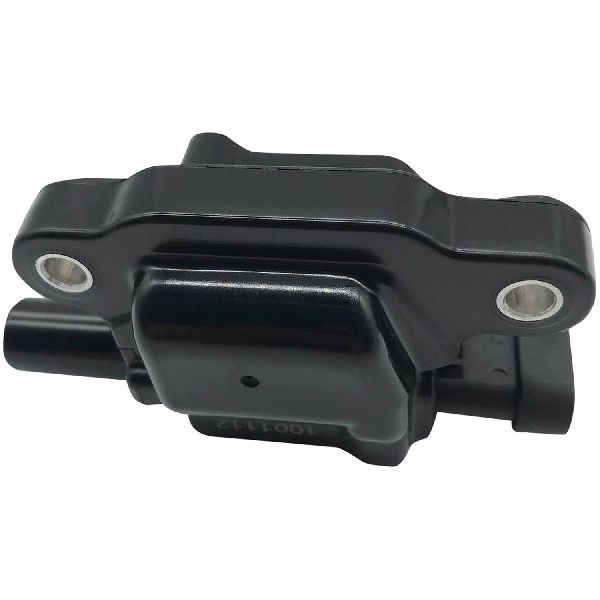
(OEM #ACDelco D521C (replaces 25198623))— The individual ignition coils on these engines can fail from heat and vibration, leading to a lack of spark in the corresponding cylinder.
Trusted brands: ACDelco, Delphi
OEM price range: $50-$90
Aftermarket price range: $30-$75 - Spark Plug Wire Set
(OEM #ACDelco 9748RR)— A GM Technical Service Bulletin specifically mentions loose wires as a cause for misfires on these vans. Wires can also degrade over time, causing arcing.
Trusted brands: ACDelco, NGK
OEM price range: $60-$120
Aftermarket price range: $40-$100
Related Codes That Often Appear With This One
- P0300 — If the misfire is intermittent or starting to affect other cylinders, a P0300 (Random/Multiple Cylinder Misfire) code may appear alongside P0306. This can also occur with AFM lifter issues.
- P0171 or P0174 — If the misfire is caused by a vacuum leak, such as a bad intake manifold gasket, a lean condition code for one or both engine banks may also be present.
Technical Service Bulletins (TSBs) & Recalls
- PIP4819A: Engine Misfire with DTCs P0300-P0308 due to loose spark plug wires.
- 19-NA-219: Information on Engine Misfire, Tick Noise, or Chirp, Squeak, Squeal which may be caused by worn camshaft lobe, lifter roller, sticking valve, or broken valve spring if ignition/fuel issues are ruled out.
Platform-Specific Known Issues
- Cylinder 6 Location: For V8 engines (4.8L, 5.3L, 6.0L), cylinders are numbered 1-3-5-7 on the driver's side (front to back) and 2-4-6-8 on the passenger's side (front to back). Cylinder 6 is the third cylinder from the front on the passenger side. For the 4.3L V6, it is the rearmost cylinder on the passenger side.
- TSB for Loose Spark Plug Wires: TSB #PIP4819A notes that the engine may misfire and set codes P0300 through P0308. The cause may be loose spark plug wires, and the fix is to inspect and replace any that are not secure. [Bulletin #PIP4819A]
- AFM Lifter Failure (5.3L V8): The 5.3L V8 uses Active Fuel Management (AFM), which deactivates cylinders 1, 4, 6, and 7 under light loads. The lifters for these cylinders are a common failure point, leading to a P0306 code, often accompanied by a distinct ticking noise. This is a more involved and expensive repair than standard ignition issues.
Mechanic-Grade Diagnostic Values
- Ignition Coil Primary Resistance — expected: 0.4 to 2.0 ohms, with some aftermarket coils specified around 0.6-0.8 ohms.. Failure: A reading outside the specified range, or an open circuit (OL) or short (near zero ohms).
- Ignition Coil Secondary Resistance — expected: 6,000 to 10,000 ohms (6k-10k Ω), with some aftermarket coils specified around 6.1k-7.1k ohms.. Failure: A reading significantly outside this range indicates a faulty coil winding.
- Fuel Injector Resistance — expected: 11 to 14 ohms when the engine is between 50-90°F (10-32°C).. Failure: A reading outside this range, or a difference of more than 3 ohms between the highest and lowest reading injectors on the engine.
- Fuel Pressure (Key On, Engine Off) — expected: 55-62 PSI. Failure: Pressure below this range could indicate a weak fuel pump or clogged filter, potentially causing a lean misfire.
- Mode $06 Misfire Count (Cylinder 6) — expected: 0 counts during a drive cycle.. Failure: Any count above zero indicates a misfire event was detected by the PCM, even if it wasn't enough to set a CEL.
Hidden / Shadow Codes Worth Checking
- Mode $06, Test ID $A2-$AB: These Test IDs correspond to cylinder misfire counts for cylinders 1 through 10 (depending on application). For a V8, Test ID $A7 would typically correspond to Cylinder 6 misfire data for the current and last 10 driving cycles. (see via A professional scan tool capable of displaying Mode $06 (non-continuous monitor test results).)
Scan Tool Commands That Help
- GDS2 (GM Global Diagnostic System 2): Cylinder Power Balance — To graphically view the RPM contribution of each cylinder in real-time. A weak cylinder 6 will show a lower contribution compared to others, helping to confirm the misfire without disassembly.
- GDS2 / Tech2: Fuel Injector Balance Test — This function allows the technician to individually fire each injector and measure the corresponding fuel pressure drop. A smaller pressure drop for cylinder 6 indicates a clogged or failing injector.
- GDS2 / Tech2: AFM Solenoid Control (for 5.3L V8) — Allows a technician to command the Active Fuel Management solenoids on and off to test their electrical function and observe changes in engine behavior, which can help diagnose a stuck AFM lifter or faulty VLOM (Valve Lifter Oil Manifold).
Wiring & Ground Locations
- G102 — On the right rear of the engine for V8s (4.8L, 5.3L, 6.0L) and 4.3L V6.. This is a primary engine ground. A poor connection here can cause erratic behavior in sensors and actuators, including the ignition system.
- G103 — On the left rear of the engine head.. This ground is critical for the Engine Control Module (ECM) and Body Control Module (BCM). A loose or corroded G103 is a known cause of various phantom electrical issues, including misfires and transmission shifting problems.
- Cylinder 6 Injector Power Wire — A pink wire provides 12V+ power to all injectors on a bank.. While a fault here would typically affect all four cylinders on the bank (2, 4, 6, 8), an intermittent connection at a splice or at the underhood fuse block could potentially affect a single cylinder.
- Cylinder 6 Injector Control Wire — A Black/Red wire runs from the ECM to the fuel injector for cylinder 6 on some 6-cylinder applications. V8 wire colors may vary by year and specific engine.. This is the ground-side pulse wire controlled by the ECM. A break or short in this specific wire will cause only cylinder 6 to fail.
Real Owner Repair Stories
- EFILive Forum user '5557nut' (2010 Camaro SS with LS3 V8 (similar E38 ECM and wiring architecture)) — Persistent intermittent misfire codes P0300, P0204 (Injector 4), and P0358 (Coil 8). Bank 2 running extremely lean.
❌ Tried (didn't work) Replaced coil on cylinder 8, Replaced multiple sensors (MAP, cam, crank), Ohm tested wiring from connectors to ECM, Swapped parts
✅ What actually fixed it The problem was a brand new aftermarket wiring harness. The pins for the injector and coil control wires (pins 39 and 71) in the ECM connector (J2) were not fully seated, causing an intermittent open circuit. Pushing the pins fully into the connector resolved all issues. - YouTube video by ElliotExplores (GM 5.3L V8 with AFM/DOD (e.g., 2005-2010 models)) — Misfire on an AFM cylinder (1, 4, 6, or 7).
❌ Tried (didn't work) Standard ignition and fuel system checks.
✅ What actually fixed it A temporary 'hack' was performed by unplugging the brake booster vacuum sensor. This action disables the AFM/DOD system, preventing it from deactivating cylinders and stopping the misfire caused by a stuck or collapsed lifter. This confirms the mechanical AFM lifter is the root cause, but the permanent fix is lifter replacement.
OEM Part Supersession History
Elgin HL-7011 (or equivalent GM AFM lifter)→Elgin HL-7025 (or equivalent GM DFM lifter)— GM introduced a new lifter design for Dynamic Fuel Management (DFM) engines starting around 2019. This newer DFM lifter is backward compatible with older AFM engines.
Heads up: The new DFM lifter (HL-7025) can be used in older AFM applications. However, the original AFM lifter (HL-7011) CANNOT be used in the newer DFM engines.
Helpful Videos

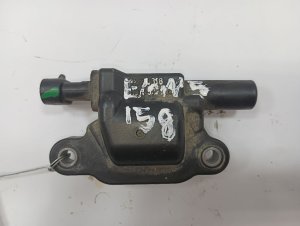
Used OEM Parts in Stock

New Aftermarket Parts Available


The information in this article is provided for general reference and educational purposes only. Vehicle specifications, procedures, and part compatibility can vary by production date, trim level, and region. Always consult your vehicle's factory service manual and verify part numbers before purchasing or performing repairs. Safety-critical components such as airbags, seat belts, and braking systems should be installed by a qualified professional.
- Chevrolet EXPRESS:
- 🎬 Helpful Videos
- 🛍️ Shop This Part
- What's Unique About the 2010-2013 Chevrolet EXPRESS
- Diagnostic Flowchart
- Symptoms You May Notice
- Most Likely Causes
- Rare But Worth Checking
- Diagnosis Steps
- Parts You'll Likely Need
- Related Codes That Often Appear With This One
- Technical Service Bulletins (TSBs) & Recalls
- Platform-Specific Known Issues
- Mechanic-Grade Diagnostic Values
- Hidden / Shadow Codes Worth Checking
- Scan Tool Commands That Help
- Wiring & Ground Locations
- Real Owner Repair Stories
- OEM Part Supersession History
- 🎟️ Get 5% Off