

P0306 on 2011-2013 Chevrolet Camaro: Cylinder 6 Misfire Causes and Fixes
P0306 indicates a misfire in cylinder 6. On a 2011-2013 Camaro, this is most often caused by a bad ignition coil or a worn spark plug. A simple 'swap test' can diagnose the coil, and parts are affordable, typically costing $20-$110 for a DIY fix. For V8 models, a loose spark plug wire is also a very common culprit.
- P0306 on a 2011-2013 Camaro is a misfire on cylinder 6, the rearmost cylinder on the driver's side.
- The most likely culprits are a bad ignition coil or a worn spark plug.
- For V8 models, check for a loose or damaged spark plug wire, as this is a known issue cited in a GM service bulletin. [⭐ MANUFACTURER TSB — highest authority]
- Do not drive extensively with a flashing check engine light, as you risk damaging the expensive catalytic converter.
- A simple 'swap test' of the ignition coils is the fastest way to confirm a bad coil at home.
What's Unique About the 2011-2013 Chevrolet CAMARO
The 2011-2013 Camaro (5th Generation) was offered with both V6 and V8 engines, and the ignition setup differs. V8 models (6.2L LS3/L99) use spark plug wires, which can become loose and cause this code, a problem noted in GM Technical Service Bulletin #PIP4819A. [⭐ MANUFACTURER TSB — highest authority] V6 models (3.6L LLT/LFX) use a more modern coil-on-plug system without traditional wires. For V8 models with the L99 engine, issues with the Active Fuel Management (AFM) system's lifters have also been known to cause misfires on specific cylinders. Furthermore, the direct-injection V6 engines (LLT/LFX) are known to be susceptible to carbon buildup on intake valves, which can restrict airflow and cause misfires, a condition detailed in TSB #PIP5029E.
Diagnostic Flowchart
Tap your situation to follow the diagnostic path that matches what you're seeing on this vehicle.
Symptoms You May Notice
- Check Engine Light is on solid or flashing
- Rough or shaking idle
- Engine hesitation or stumbling during acceleration
- Noticeable loss of engine power
- "Service StabiliTrak" message may appear on the driver information center
- Smell of raw fuel from the exhaust
- Engine may make popping or backfiring sounds
- Replacing the oxygen sensor. An O2 sensor will not cause a misfire on a single, specific cylinder. It would typically cause a bank-wide code (e.g., P0171, P0174).
- Replacing the catalytic converter. A misfire can damage a catalytic converter, but a bad converter will not cause the P0306 code. A bad converter would typically set a P0420 or P0430 code.
Most Likely Causes
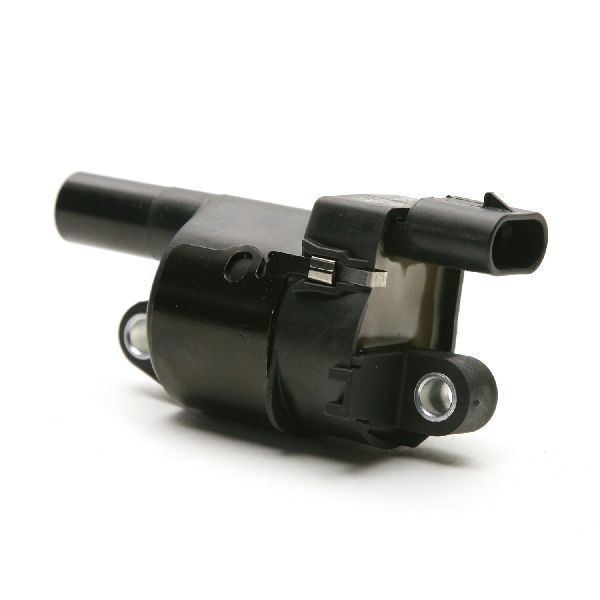
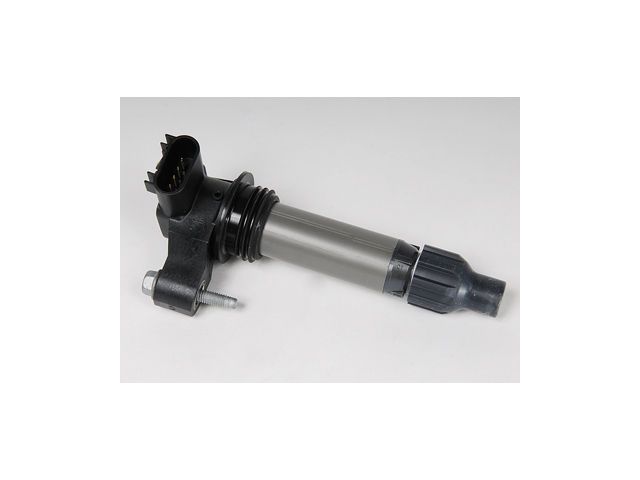
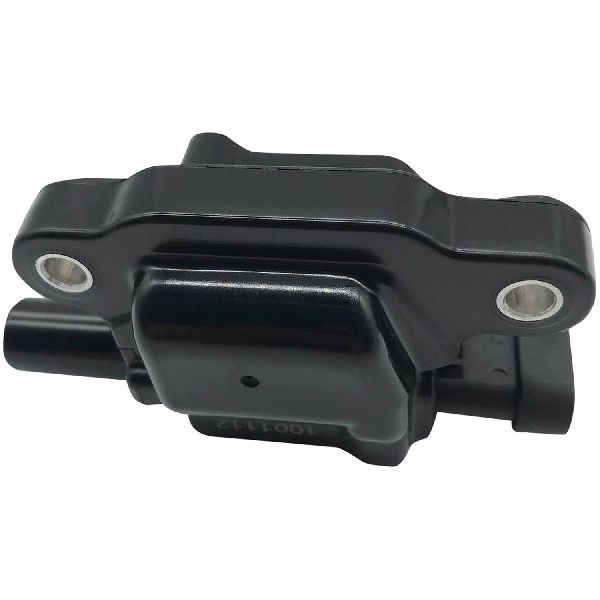
- Failing Ignition Coil 🔴 High Probability Coil-on-plug systems (V6) and individual coils (V8) are common failure points on many modern engines as they age from constant exposure to high engine temperatures.
How to confirm: Swap the ignition coil from cylinder 6 with an adjacent cylinder (e.g., cylinder 4). Clear the codes and drive. If the misfire code changes to P0304, the ignition coil is faulty. This is the most common DIY diagnostic step. 🎬 Watch: Two simple DIY methods to diagnose a cylinder misfire.
Typical fix: Replace the single faulty ignition coil. Many owners choose to replace all coils on that bank (or all 6/8) at the same time as preventative maintenance, especially on higher mileage vehicles.
Est. part cost: $40 - $110 - Worn or Fouled Spark Plug 🔴 High Probability Spark plugs are a regular maintenance item. The factory-installed ACDelco iridium plugs have a long service life (up to 100,000 miles), but they will eventually wear out, leading to a weak spark and misfires.
How to confirm: Remove the spark plug from cylinder 6 and inspect it. Look for a worn/rounded center electrode, heavy carbon fouling, oil, or a cracked porcelain insulator. Compare it to a new plug.
Typical fix: Replace the spark plug in cylinder 6. It is highly recommended to replace all spark plugs at the same time for even performance and to avoid future misfires. The OEM-specified gap for the ACDelco 41-109 is 0.040 inches, and they typically come pre-gapped.
Est. part cost: $10 - $20 per plug - Loose or Damaged Spark Plug Wire (V8 Only) 🟡 Medium Probability A GM Technical Service Bulletin (PIP4819A) specifically calls out loose spark plug wires as a cause for misfires on 2011 models. [⭐ MANUFACTURER TSB — highest authority] Wires can also degrade over time from extreme engine heat, causing the spark to arc to the block instead of reaching the plug. Forum users often report a loose wire being the simple fix after installing headers or performing other maintenance.
How to confirm: Inspect the spark plug wire for cylinder 6. Ensure it is securely 'clicked' onto both the ignition coil and the spark plug. A loose connection is a very common oversight. Look for any signs of burns, cracking, or physical damage along the wire's insulation.
Typical fix: Securely re-seat the wire. If damaged, replace the faulty spark plug wire. It is best practice to replace the entire set of wires at once.
Est. part cost: $50 - $80 for a set - Clogged or Failing Fuel Injector ⚪ Low Probability
How to confirm: Use a mechanic's stethoscope or a long screwdriver to listen for a consistent, rhythmic clicking sound from the cylinder 6 injector. If it's silent or has an irregular tick, it may be faulty. An injector 'swap test' can be performed, but it is more labor-intensive than a coil swap as it involves depressurizing and removing the fuel rail.
Typical fix: Replace the faulty fuel injector. It's often recommended to replace all injectors on the same fuel rail at the same time.
Est. part cost: $70 - $150
Rare But Worth Checking
- Collapsed AFM Lifter (L99 V8 Only): The L99 V8 engine features Active Fuel Management (AFM), which can sometimes experience lifter failure. A lifter can become mechanically collapsed or stuck, causing a persistent misfire on one cylinder. This is a significant mechanical repair often accompanied by a distinct ticking or tapping noise that increases with RPM. GM has issued TSBs like #15-06-01-002F for this issue on related engines.
- Low Engine Compression: Internal engine issues like a worn piston ring, a bad valve, or a leaking head gasket can cause a loss of compression in cylinder 6, leading to a misfire. A compression test is required to diagnose this. This is an uncommon but serious mechanical failure.
- Intake Valve Carbon Buildup (V6 LLT/LFX): The 3.6L direct injection engines are known for carbon deposits accumulating on the back of the intake valves. Since fuel is injected directly into the cylinder, it doesn't wash over the valves to keep them clean. This buildup can disrupt airflow into cylinder 6, causing cold-start misfires that may clear up as the engine warms. GM released TSB #PIP5029E addressing this exact issue. A physical cleaning (walnut blasting) is often required.
Diagnosis Steps
- Use an OBD-II scanner to confirm the P0306 code and check for any other pending or stored codes.
- Determine your engine type (V6 or V8). Correction: Cylinder 6 is the rear-most cylinder on the passenger's side (right bank) for both the V6 and V8 engines.
- V8 Models: Start by inspecting the spark plug wire for cylinder 6. Ensure it is fully seated and 'clicked' on at both the coil pack and the spark plug. Check for any visible damage or burns, per TSB #PIP4819A. [⭐ MANUFACTURER TSB — highest authority]
- Perform an ignition coil 'swap test'. Switch the ignition coil from cylinder 6 with the coil from cylinder 4 (the middle cylinder on the passenger's side). Clear the codes, run the engine, and re-scan. If the code is now P0304, the coil is bad.
- If the code remains P0306, inspect the spark plug. Remove it and check for wear, damage, or fouling (carbon or oil). Replace if necessary. It is best practice to replace all plugs at once. 🎬 See this step-by-step walkthrough for changing Camaro V6 spark plugs.
- If ignition components are good, check the fuel injector. Listen for a steady clicking with a stethoscope. Check the electrical connector for a secure fit.
- If the misfire persists, consider less common causes. For V6 engines, investigate potential carbon buildup on the intake valves, especially with higher mileage. For L99 V8s, listen carefully for any valvetrain ticking that could indicate an AFM lifter issue.
- As a final step for persistent issues, perform a compression test on cylinder 6 to rule out internal mechanical engine problems like bad rings or valves.
Parts You'll Likely Need
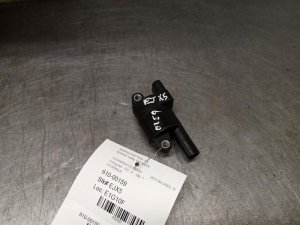
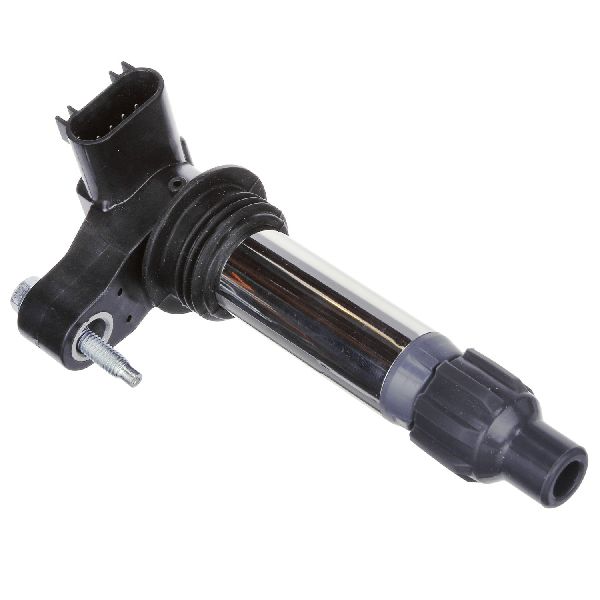
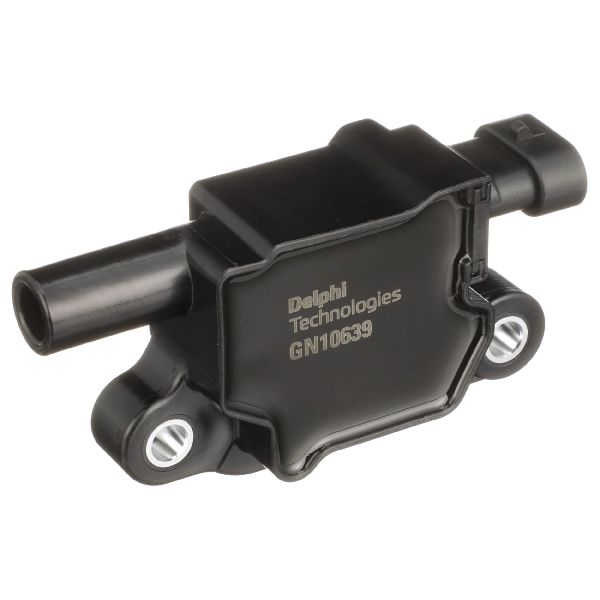
- Ignition Coil
(OEM #12632479 (ACDelco D515C for V8) / 12632477 (ACDelco D510C for V6))— This is the most common failure point for a single-cylinder misfire on this platform.
Trusted brands: ACDelco, Delphi, NGK
OEM price range: $70 - $110
Aftermarket price range: $40 - $80 - Iridium Spark Plug
(OEM #41-109 (ACDelco) / also known as 12681660)— Spark plugs are a maintenance item and a frequent cause of misfires as they wear out. The 41-109 is the correct plug for both V6 and V8 models.
Trusted brands: ACDelco, NGK
OEM price range: $12 - $15
Aftermarket price range: $8 - $12 - Spark Plug Wire Set (V8 Only)
(OEM #92242410 (ACDelco 748UU))— A GM TSB points to loose wires as a known issue, and heat can cause them to fail over time. [⭐ MANUFACTURER TSB — highest authority] Many owners replace them as a set during a spark plug change.
Trusted brands: ACDelco, NGK, MSD
OEM price range: $60 - $90
Aftermarket price range: $45 - $70
Related Codes That Often Appear With This One
- P0300 — If the misfire is intermittent or begins to affect other cylinders, a P0300 (Random/Multiple Cylinder Misfire) code may appear alongside P0306.
- P0430 — If the misfire in cylinder 6 (which is in Bank 2) persists long enough to dump significant unburnt fuel into the exhaust, it can damage the catalytic converter for that bank, triggering a 'Catalyst System Efficiency Below Threshold (Bank 2)' code.
Technical Service Bulletins (TSBs) & Recalls
- Bulletin #PIP4819A: Mentions that engine misfire codes, including P0306, can be caused by loose spark plug wires and instructs technicians to inspect and replace them as needed.
- Bulletin #PIP5029E: Addresses engine misfires on direct-injected engines, including the 3.6L LLT and LFX, caused by heavy carbon deposits on the intake valves.
- Bulletin #15-06-01-002 (and its revisions): While often citing P0300, this TSB details diagnosis and repair for collapsed or stuck AFM lifters, a known cause for single-cylinder misfires on L99 V8 engines.
Platform-Specific Known Issues
- A Technical Service Bulletin (TSB #PIP4819A) was issued for 2011 models regarding engine misfires (P0300-P0308) caused by loose spark plug wires. Technicians are advised to inspect and replace any loose wires. [⭐ MANUFACTURER TSB — highest authority]
- On L99 V8 engines with Active Fuel Management (AFM), a failed AFM lifter can become stuck, causing a persistent misfire on one cylinder. This is a more serious mechanical issue that may also present with a ticking engine noise and is covered in related TSBs like 15-06-01-002F.
- For V6 engines (LLT/LFX), TSB #PIP5029E notes that significant carbon buildup on intake valves can cause misfires, especially on cold starts. This is a known issue with many early direct-injection engines.
Mechanic-Grade Diagnostic Values
- Ignition Coil Primary Resistance — expected: 0.4 - 2.0 Ohms. Failure: A reading outside this range, or a significant deviation from the other coils, suggests a faulty coil. Note: GM service literature for this specific model does not provide an official resistance spec, so this is a general guide.
- Ignition Coil Secondary Resistance — expected: 6,000 - 10,000 Ohms (6kΩ - 10kΩ). Failure: A reading outside this range indicates a problem with the secondary windings.
- Fuel Injector Resistance (V8 Port Injection & V6 Direct Injection) — expected: Approx. 12 - 17 Ohms. More importantly, all injectors should have readings within 0.5 Ohms of each other.. Failure: An injector with a resistance reading that is significantly different from the others is likely faulty.
- Fuel Pressure at Rail (V8 LS3/L99) — expected: 58 - 60 PSI, constant.. Failure: Significant pressure drop below 58 PSI, especially under wide-open throttle (WOT), can indicate a weak fuel pump.
Hidden / Shadow Codes Worth Checking
- Mode $06 Misfire Counts: This is not a specific code but a function within a generic OBD-II scanner. It allows viewing of the raw misfire count for each cylinder before the count is high enough to trigger a P030x trouble code. This can help identify an intermittent misfire on cylinder 6. (see via An OBD-II scan tool with Mode $06 diagnostic capabilities.)
Scan Tool Commands That Help
- GM GDS2 / Tech2Win: Cylinder Power Balance Test — This function is used to identify a weak cylinder when the cause of the misfire is not obvious. The tool disables one cylinder at a time and measures the drop in engine RPM. If disabling cylinder 6 results in little or no RPM drop compared to other cylinders, it confirms cylinder 6 is not contributing power correctly.
- GM GDS2: Fuel Injector Balance Test (V6 LFX GDI Engine) — For the direct-injection V6, this automated test helps diagnose fuel injector issues by disabling injectors and monitoring the high-pressure fuel system's response. It can pinpoint a clogged or faulty injector without requiring physical removal.
Wiring & Ground Locations
- G102 — Typically located on the rear of the left (driver's side) cylinder head.. This is a common GM ground point for the ignition coil harness. A loose or corroded connection here can cause erratic behavior or misfires on one or more cylinders.
- Engine-to-Chassis Ground (Passenger Side) — A ground strap located underneath the passenger side exhaust manifold, near the starter.. This ground is reportedly not tightened well from the factory on some vehicles and can cause a variety of electrical issues, including misfires. It is difficult to access.
- Cylinder Head Grounds (Rear) — There are small, single-wire grounds attached to the rear of both the driver's and passenger's side cylinder heads.. These ground various engine sensors and systems. The ground on the passenger side head (Bank 2) is particularly relevant for the cylinder 6 ignition and fuel circuits.
Real Owner Repair Stories
- Camaro5 Forums user 'jski73' (2011 Camaro 1LT V6 (LLT)) — Shuttering at highway speeds, no power, cruise control out. Initially P0305, then P0303, then P0301 after part swaps.
❌ Tried (didn't work) Swapping spark plugs and ignition coils did not fix the issue, but did cause the misfire code to stay on the same cylinder, ruling them out.
✅ What actually fixed it The misfire code moved from cylinder 3 to cylinder 1 only after the fuel injectors were physically swapped between cylinders. This proved the problem was a fuel injector. The user had initially replaced all 6 injectors, but one of the *new* injectors was faulty out of the box. Replacing the bad new injector with another new one finally resolved the issue. - Camaro5 Forums user 'L99CAMA2011' (2011 Camaro L99 V8) — P0306 code and 'Service Stabilitrac' message.
❌ Tried (didn't work) User had already installed new MSD wires and NGK plugs. Clearing the code provided a temporary fix before it returned.
✅ What actually fixed it The thread concluded with the user reporting a 'Knocking sound now like spun rod bearing.' While not a simple fix, this represents a real-world outcome where a persistent P0306 misfire was a symptom of a catastrophic internal engine failure, a possibility after ignition and fuel causes are ruled out.
OEM Part Supersession History
12590990, 12610626, 12618542→12632479— Standard part evolution for improved durability, materials, or manufacturing process. The new part offers better resistance to internal shorts and corrosion.41-109 / 12622561→12681660 (current service number for 41-109)— Part number consolidation and updates by GM.
Heads up: These part numbers all refer to the same ACDelco Iridium spark plug and are interchangeable.
Model Year Variations Within This Range
- 2011 vs 2012-2013: The V6 engine changed from the 3.6L LLT in 2011 to the 3.6L LFX in 2012. The LFX features integrated exhaust manifolds cast into the cylinder heads (cannot use aftermarket headers), a lighter composite intake manifold, and a different engine control module (Delphi instead of Bosch). While causes for P0306 are similar, parts like the intake manifold and ECM are not interchangeable.
Helpful Videos
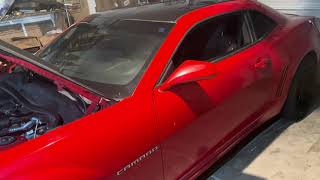
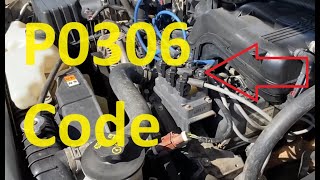
![How to Fix P0306 Engine Code in 3 Minutes [2 DIY Methods / Only $4.76]](https://img.youtube.com/vi/5HTrtkSEHH4/mqdefault.jpg)
Used OEM Parts in Stock
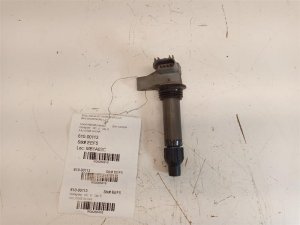

New Aftermarket Parts Available

The information in this article is provided for general reference and educational purposes only. Vehicle specifications, procedures, and part compatibility can vary by production date, trim level, and region. Always consult your vehicle's factory service manual and verify part numbers before purchasing or performing repairs. Safety-critical components such as airbags, seat belts, and braking systems should be installed by a qualified professional.
- Chevrolet CAMARO:
- 🎬 Helpful Videos
- 🛍️ Shop This Part
- What's Unique About the 2011-2013 Chevrolet CAMARO
- Diagnostic Flowchart
- Symptoms You May Notice
- Most Likely Causes
- Rare But Worth Checking
- Diagnosis Steps
- Parts You'll Likely Need
- Related Codes That Often Appear With This One
- Technical Service Bulletins (TSBs) & Recalls
- Platform-Specific Known Issues
- Mechanic-Grade Diagnostic Values
- Hidden / Shadow Codes Worth Checking
- Scan Tool Commands That Help
- Wiring & Ground Locations
- Real Owner Repair Stories
- OEM Part Supersession History
- Model Year Variations Within This Range
- 🎟️ Get 5% Off