

P0306 on 2010-2017 Cadillac Escalade ESV: Cylinder 6 Misfire Causes and Fixes
P0306 on a 2010-2017 Escalade ESV indicates a misfire in cylinder 6. The most common causes are a bad spark plug, ignition coil, or a loose spark plug wire as noted in TSB PIP4819A. However, a failed Active Fuel Management (AFM) lifter is a significant and well-documented possibility, especially if you hear a ticking or tapping noise from the engine, which is a classic symptom of this specific platform's most notorious weak point.
- P0306 is a misfire on cylinder 6, the third cylinder from the front on the passenger side.
- Always start with the simple fixes: check the spark plug wire, swap the ignition coil with another cylinder, and inspect the spark plug.
- Be aware of the common Active Fuel Management (AFM) lifter failures on the 6.2L V8. A ticking noise accompanying the misfire is a strong sign of this more serious mechanical issue.
- A flashing Check Engine Light signals a severe misfire that can quickly destroy your catalytic converter. Do not continue to drive if this occurs.
What's Unique About the 2010-2017 Cadillac ESCALADE ESV
The 6.2L V8 engines (L94 and L86) in this generation of Escalade use an Active Fuel Management (AFM) system, also known as Displacement on Demand (DOD). This system deactivates cylinders—including cylinder 6—to improve fuel economy under light loads. The hydraulic lifters associated with this system are a notorious weak point and are prone to collapsing or getting stuck, which is a very common cause of a P0306 misfire on these specific vehicles. This issue is far more prevalent than on engines without AFM and is a widely discussed failure in owner forums.
Diagnostic Flowchart
Tap your situation to follow the diagnostic path that matches what you're seeing on this vehicle.
Generation note: This range covers two Escalade generations. The 2010-2014 models (third generation, GMT900 platform) use the 6.2L L94 V8. The 2015-2017 models (fourth generation, K2XX platform) use the updated 6.2L L86 EcoTec3 V8. Both engines feature Active Fuel Management and are susceptible to lifter failure, though ignition components and other details may differ slightly.
Symptoms You May Notice
- Rough or vibrating idle
- Hesitation or stumbling during acceleration
- Noticeable loss of engine power
- Flashing or solid Check Engine Light
- Engine ticking or tapping noise, especially on a cold start (often indicates lifter failure)
- Service Stabilitrak / Traction Control warning lights may appear with the misfire
- Replacing only spark plugs when an ignition coil or wire is the true cause.
- Replacing all ignition and fuel parts on cylinder 6 when the underlying issue is a mechanical failure of an AFM lifter. A key indicator is a persistent misfire on the same cylinder after swapping ignition components.
Most Likely Causes
- Worn or Fouled Spark Plug 🔴 High Probability Spark plugs are regular wear items. Oil consumption, sometimes associated with AFM systems, can also foul plugs prematurely, leading to a misfire.
How to confirm: Remove the spark plug from cylinder 6 and inspect it for wear (worn electrode), damage (cracked insulator), or deposits (oil, carbon). Compare it to a new plug.
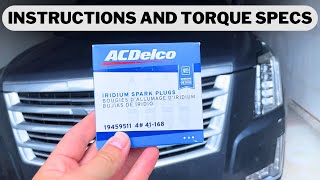
Typical fix: Replace the spark plug for cylinder 6. It is best practice to replace all 8 spark plugs at the same time with the correct OEM Iridium plugs.
Est. part cost: $10-$20 per plug - Failed Ignition Coil 🔴 High Probability Heat and vibration in the engine bay cause ignition coils to fail over time. They are a common failure item for single-cylinder misfires.
How to confirm: Swap the ignition coil from cylinder 6 with another cylinder (e.g., cylinder 4 or 8). Clear the codes and drive the vehicle. If the code changes to P0304 or P0308, the coil is bad.
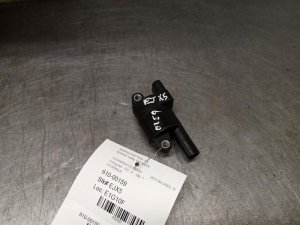
Typical fix: Replace the faulty ignition coil. It is held on by a single bolt and is easily accessible.
Est. part cost: $35-$90 - Loose or Damaged Spark Plug Wire 🟡 Medium Probability GM Technical Service Bulletin PIP4819A specifically identifies loose spark plug wires as a cause for misfires on these engines. The boot may not be fully seated, allowing the connection to back off.
How to confirm: Visually inspect the spark plug wire for cylinder 6 for any signs of damage, arcing (white dust), or a loose connection. Ensure it 'clicks' firmly onto both the coil and the spark plug.
Typical fix: Reseat or replace the spark plug wire. It is recommended to replace them as a set if they are original or high-mileage.
Est. part cost: $50-$100 for a quality set - Failed Active Fuel Management (AFM) Lifter 🟡 Medium Probability The AFM lifters used to deactivate cylinders (1, 4, 6, and 7) are a well-documented failure point on these GM V8 engines. They can become mechanically stuck or collapse, preventing the valve from opening and causing a dead miss on that cylinder.
How to confirm: A distinct ticking/tapping noise from the passenger side of the engine is a strong indicator. A mechanic will confirm by removing the valve cover to observe a lack of movement in the rocker arm for cylinder 6. A compression test will show low or zero compression on cylinder 6 if the lifter has failed and is holding a valve open or closed.
Typical fix: This is a major repair requiring removal of the cylinder head to replace all AFM lifters (and often the non-AFM lifters as well). The camshaft must be inspected for damage and is often replaced. Many owners opt to install an 'AFM Delete Kit' to permanently remove the system and prevent future failures.
Est. part cost: $400-$1200 for parts (lifters, gaskets, camshaft). A full repair at a shop can range from $4,000 to $7,500+. - Clogged or Faulty Fuel Injector ⚪ Low Probability
How to confirm: After ruling out ignition issues, you can swap the fuel injector from cylinder 6 with another cylinder. If the misfire code follows the injector (e.g., moves to P030x on the cylinder you swapped with), the injector is faulty.
Typical fix: Replace the faulty fuel injector. It's also good practice to check the injector wiring harness for damage.
Est. part cost: $50-$150
Rare But Worth Checking
- Intake Manifold Gasket Leak: A vacuum leak from a failed intake manifold gasket near the cylinder 6 intake runner can lean out the air/fuel mixture for just that cylinder, causing a misfire. This is a known issue on higher-mileage GM V8s.
- Low Engine Compression (Other): Beyond a failed lifter, issues like a bent valve, worn piston rings, a broken valve spring, or a damaged cylinder head can cause a loss of compression and a persistent misfire. A compression test and cylinder leak-down test will confirm this.
Diagnosis Steps
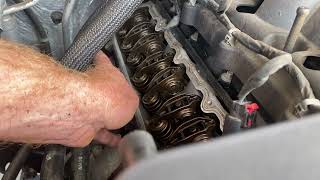
- Read the trouble codes with an OBD-II scanner. Note if the Check Engine Light is solid or flashing, and record any other codes like P0300 or P3441. 🎬 Watch: A step-by-step troubleshooting process for a P0306 misfire.
- Check the freeze frame data to see the engine conditions (speed, load, temperature) when the misfire occurred.
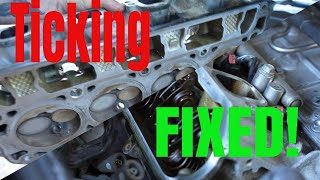
- Listen for a ticking or tapping noise from the engine, especially on a cold start. A tick from the passenger side valve cover area strongly points to a lifter issue.
- Inspect the spark plug wire for cylinder 6 (third from front, passenger side). Ensure it is securely 'clicked' on at both the coil and the plug, per TSB PIP4819A.
- Swap the ignition coil from cylinder 6 with an adjacent, easily accessible cylinder (like cylinder 4 or 8). Clear codes and drive. If the misfire moves (e.g., to P0304), the coil is faulty.
- If the misfire remains on cylinder 6, remove and inspect the spark plug. Look for heavy carbon/oil fouling, a cracked insulator, or a worn electrode. Replace if in any doubt.
- If ignition parts are confirmed good, the probability of an internal mechanical issue increases significantly. Perform an engine compression test. A reading on cylinder 6 that is significantly lower (more than 15-20% variance) than the others indicates a mechanical problem.
- If compression is low, remove the passenger side valve cover and run the engine (or have a helper crank it) to visually inspect the rocker arms for cylinder 6. If a rocker arm is not moving or has excessive play, a collapsed/stuck lifter is the confirmed cause.
Parts You'll Likely Need
- Spark Plug
(OEM #ACDelco 41-162 (for 2010-2014 L94) or ACDelco 41-114 (for 2015-2017 L86))— Spark plugs are a primary ignition component and a common failure point. The L94 and L86 use different plugs.
Trusted brands: ACDelco, NGK
OEM price range: $12-$15
Aftermarket price range: $8-$12 - Ignition Coil
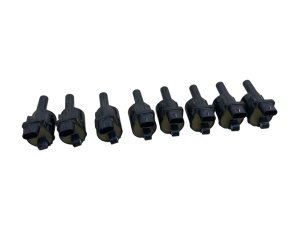
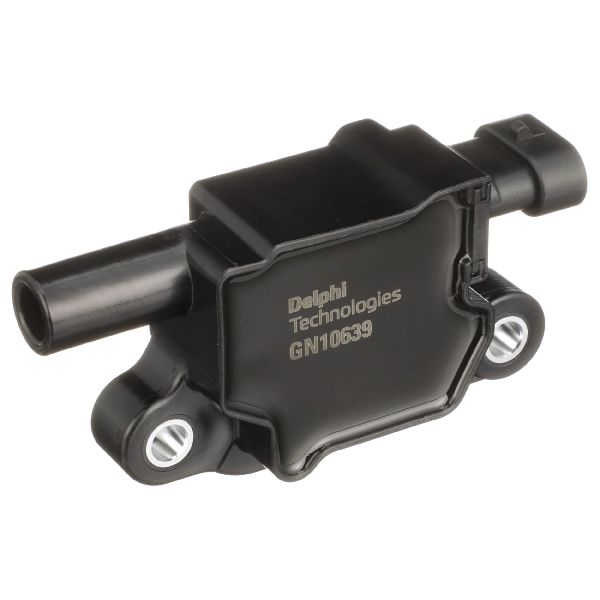
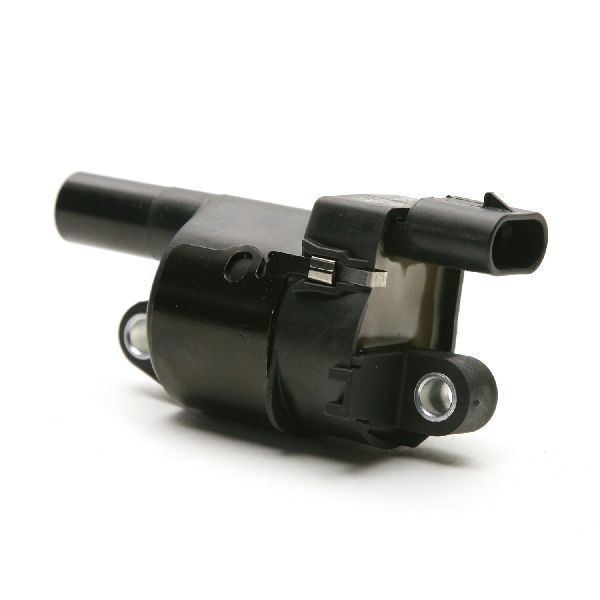
(OEM #ACDelco D514A / UF414 (for 2010-2014 L94) or ACDelco 12708496 / UF744 (for 2015-2017 L86))— Ignition coils provide the high voltage needed for spark and are a frequent cause of single-cylinder misfires. The two generations use different coil designs.
Trusted brands: ACDelco, Standard Motor Products, Delphi
OEM price range: $70-$90
Aftermarket price range: $30-$60 - Active Fuel Management (AFM) Lifter Kit — A failed AFM lifter is a very common mechanical cause for P0306 on this specific engine platform. Replacement always involves all AFM lifters (8) and often all 16 lifters, plus gaskets and head bolts.
Trusted brands: ACDelco, Sealed Power, Melling, Brian Tooley Racing (for delete kits)
OEM price range: $400
Aftermarket price range: $250-$600
Related Codes That Often Appear With This One
- P0300 — If the misfire is severe, intermittent, or starting to affect other cylinders, a P0300 (Random/Multiple Cylinder Misfire) code may be stored alongside P0306.
- P3441 — This code corresponds to 'Cylinder 6 Deactivation Solenoid Control Circuit'. It can appear if there's an electrical issue with the AFM system related to cylinder 6, pointing more directly at a problem with the VLOM (Valve Lifter Oil Manifold) or its solenoid rather than just a mechanical lifter failure.
Technical Service Bulletins (TSBs) & Recalls
- PIP4819A: Notes that loose spark plug wires can cause P0300-P0308 misfire codes. Technicians are advised to inspect and replace any loose wires.
- 19-NA-219 (Supersedes PIP4138R): Addresses engine misfires (P0300-P0308) and various engine noises (chirp, squeak, tick) that may be caused by internal issues like a worn camshaft lobe, lifter roller, or a collapsed AFM lifter after basic checks fail.
- 19-NA-218 (Supersedes PIP5606E): Addresses a ticking noise from the engine, particularly on a cold start, which may be caused by a lifter not receiving sufficient oil.
- PIP5163: Often cited in forums in relation to AFM lifter issues, this TSB addresses engine misfires and ticking noises, pointing towards potential valvetrain instability or lifter problems.
Platform-Specific Known Issues
- Failure of the Active Fuel Management (AFM) system is the most significant vehicle-specific issue. The lifters for the deactivating cylinders (1, 4, 6, and 7) can fail, causing them to collapse or become stuck. This results in a persistent misfire on cylinder 6, often accompanied by a distinct ticking sound. This failure is so common that numerous aftermarket 'AFM delete' kits are available, and remanufactured engine suppliers like Jasper offer AFM-delete engine options.
Mechanic-Grade Diagnostic Values
- Ignition Coil Primary Resistance (L94 & L86) — expected: 0.3 - 1.0 Ohms. Failure: A reading outside this range suggests a faulty primary winding in the coil.
- Ignition Coil Secondary Resistance (L94) — expected: ~5.3k Ohms. Failure: A reading significantly different from the specification points to a bad secondary winding.
- Ignition Coil Secondary Resistance (L86) — expected: 8.22k Ohms. Failure: Readings outside the 6k-10k Ohm range generally indicate a faulty coil.
- Fuel Injector Resistance (2010-2014 L94 Flex Fuel) — expected: 11 - 14 Ohms. Failure: A reading outside this range, or an open/shorted circuit, indicates a failed injector coil.
- Fuel Injector Resistance (2015-2017 L86 Direct Injection) — expected: ~2.2 Ohms. Failure: An open loop (infinite resistance) reading indicates a failed injector coil.
- Fuel Pressure (2010-2014 L94, Key On Engine Off) — expected: 50-60 PSI (345-414 kPa). Failure: Pressure below 50 PSI can indicate a weak fuel pump or clogged filter.
- High-Pressure Fuel System (2015-2017 L86, at idle) — expected: 300-750 PSI. Failure: Low readings from the high-pressure system, diagnosed with a capable scan tool, point to issues with the high-pressure fuel pump.
Hidden / Shadow Codes Worth Checking
- Misfire Counter (Live Data): Not a formal code, but a critical live data PID available on professional scan tools (like GM's GDS2) and some consumer models. It shows a real-time count of misfire events for each specific cylinder. (see via Use an OBD-II scanner with live data capability. Navigate to the engine control module data and look for PIDs like 'Misfire Cyl 6' or similar. A rapidly increasing count on cylinder 6 while other cylinders are at or near zero confirms the location of the misfire.)
Scan Tool Commands That Help
- GDS2 / Tech2 or equivalent professional scanner: Injector Balance Test — This function allows the technician to individually disable each fuel injector. When cylinder 6's injector is disabled, if there is no change in engine RPM or smoothness, it confirms that the injector was not contributing, pointing to a problem with that injector or cylinder. This is used after ruling out spark issues.
- GDS2 / Tech2 or equivalent professional scanner: AFM Cylinder Deactivation Solenoid Test — This bidirectional control allows a technician to command the AFM solenoids on and off. If commanding the solenoid for cylinder 6 results in no change or erratic engine behavior, it can help diagnose an electrical fault in the VLOM or its wiring, especially if code P3441 is also present.
Wiring & Ground Locations
- G104 — Located on the rear of the left (driver's side) cylinder head, often connecting via a strap to the firewall.. This is a primary engine-to-chassis ground. A loose or corroded connection at G104 can cause a host of electrical issues, including insufficient voltage for the ignition coils, leading to weak spark and misfires.
- Cylinder 6 Injector/Coil Harness — The wiring for cylinder 6 runs from the main engine harness to the passenger side of the engine, third component from the front.. The control wire from the ECM to the fuel injector and ignition coil for cylinder 6 is essential. A break, short-to-ground, or high resistance in this specific wire will prevent the injector or coil from firing correctly, directly causing a P0306 code. A wiring diagram is needed to trace the specific pin at the ECM for continuity testing.
Real Owner Repair Stories
- GM Forum user 'sseidriver97' (Cadillac Escalade (year not specified, but symptoms align with GMT900/K2XX platform)) — Intermittent P0306 code. Misfire is most noticeable at idle, worse when cold, and during acceleration. It smooths out at cruising speed.
❌ Tried (didn't work) Replaced spark plugs (new), Replaced spark plug wires (new), Replaced intake gaskets (upper and lower), Cleaned fuel injectors, Swapped ignition coil from cylinder 6 to another cylinder (misfire did not follow the coil)
✅ What actually fixed it The user's detailed diagnostic process pointed away from common ignition parts. While the final post was inconclusive, the symptoms and failed fixes strongly align with a mechanical issue like a failing AFM lifter or a valve train problem, a common misdiagnosis pattern for this code. Another user in a similar situation found a weak coil pack on a different cylinder (#5) and a faulty injector on cylinder #4, highlighting the need to check components beyond just the cylinder with the code. - YouTube video by 'Best Car Fixes' (2011-2013 Cadillac Escalade 6.2L) — Persistent P0306 cylinder 6 misfire.
❌ Tried (didn't work) Replaced fuel injector, Replaced ignition coil, Replaced spark plug wire
✅ What actually fixed it The video states that after all common parts were replaced, the root cause was identified as a mechanical engine valve issue (such as a broken valve spring) in the cylinder head. The presenter emphasizes that this is a very common (95% of the time) final cause on these engines when the simple ignition and fuel parts don't solve the P0306.
OEM Part Supersession History
ACDelco D514A (also GM 12573190)→GM 12699382, 12739916— Standard part evolution for improved reliability and performance.
Heads up: This is the round-style coil for the 2010-2014 L94 engine. It is not compatible with the square-style coils used on the 2015-2017 L86 engine. Ensure you are purchasing the correct shape for your model year.ACDelco 41-114→GM 12622441— This is an interchange/equivalent part number.
Heads up: This Iridium plug is for the 2015-2017 L86 engine. It is pre-gapped to 0.040 inches and should not be re-gapped. It is not the correct plug for the earlier L94 engine.
Model Year Variations Within This Range
- 2015-2017 (L86 Engine): These models use a direct injection fuel system. This introduces a high-pressure fuel pump (up to 2,175 PSI) and makes the engine susceptible to carbon buildup on intake valves, which is not an issue on the port-injected 2010-2014 L94 engines. A misfire could potentially be caused by this carbon buildup, though it's less common than ignition or lifter issues.
- 2010-2014 (L94 Engine) vs 2015-2017 (L86 Engine): The ignition coils are a different shape and part number between generations. The L94 uses a round-style coil (D514A), while the L86 uses a square-style coil. They are not interchangeable.
Helpful Videos
Used OEM Parts in Stock

New Aftermarket Parts Available


The information in this article is provided for general reference and educational purposes only. Vehicle specifications, procedures, and part compatibility can vary by production date, trim level, and region. Always consult your vehicle's factory service manual and verify part numbers before purchasing or performing repairs. Safety-critical components such as airbags, seat belts, and braking systems should be installed by a qualified professional.
- Cadillac ESCALADE ESV:
- 🎬 Helpful Videos
- 🛍️ Shop This Part
- What's Unique About the 2010-2017 Cadillac ESCALADE ESV
- Diagnostic Flowchart
- Symptoms You May Notice
- Most Likely Causes
- Rare But Worth Checking
- Diagnosis Steps
- Parts You'll Likely Need
- Related Codes That Often Appear With This One
- Technical Service Bulletins (TSBs) & Recalls
- Platform-Specific Known Issues
- Mechanic-Grade Diagnostic Values
- Hidden / Shadow Codes Worth Checking
- Scan Tool Commands That Help
- Wiring & Ground Locations
- Real Owner Repair Stories
- OEM Part Supersession History
- Model Year Variations Within This Range
- 🎟️ Get 5% Off