

P0305 on 2018-2021 GMC Yukon: Cylinder 5 Misfire Causes and Fixes
P0305 on a 2018-2021 GMC Yukon indicates a misfire in cylinder #5. The most common causes are a bad spark plug, ignition coil, or fuel injector. However, a known and more serious issue on these EcoTec3 engines is a failed Active/Dynamic Fuel Management (AFM/DFM) lifter. This is a prevalent, well-documented problem that often requires extensive and costly engine repair, sometimes including camshaft replacement.
- P0305 specifically points to a misfire in cylinder #5.
- Always start diagnosis with the simple and cheap fixes: swap the ignition coil and spark plug from cylinder #5 to another cylinder to see if the problem moves.
- Listen carefully for any engine ticking noises. A tick combined with a P0305 is a strong indicator of the common but serious AFM/DFM lifter failure.
- Do not ignore a flashing check engine light. Driving with a severe misfire can cause permanent damage to your catalytic converter, turning a moderate repair into a very expensive one.
What's Unique About the 2018-2021 Gmc YUKON

The 5.3L and 6.2L V8 engines in this generation of GMC Yukon use Active Fuel Management (AFM) or Dynamic Fuel Management (DFM) to save fuel by deactivating cylinders. This technology, while good for efficiency, puts extra stress on specific valvetrain components. The specialized collapsible lifters used for this system are a well-documented failure point and a primary cause of misfire codes, including P0305, on these trucks and SUVs. The failure often involves an internal locking pin shearing, causing the lifter to get stuck or collapse, which can lead to a bent pushrod and even camshaft damage. This issue is so prevalent that GM has issued multiple technical service bulletins (TSBs) like 15-06-01-002N and 19-NA-219 regarding engine misfires and related valvetrain noises.
Diagnostic Flowchart

Tap your situation to follow the diagnostic path that matches what you're seeing on this vehicle.
Generation note: The 2018-2021 year range covers two generations of the GMC Yukon. The 2018-2020 models belong to the fourth generation (K2UG), while the 2021 model is the first year of the fifth generation (T1UG). Both generations use versions of the 5.3L and 6.2L V8 engines with fuel management systems (AFM on 2018-2020 5.3L L83, DFM on 2019+ 5.3L L84 and 6.2L L87) that are prone to lifter issues. Failures have been reported at very low mileage on the newer DFM engines.
Symptoms You May Notice
- Rough or shaky idle
- Hesitation or stumbling during acceleration, sometimes feeling like the transmission is slipping.
- Noticeable loss of engine power
- Flashing or solid Check Engine Light
- Service ESC or Service ABS messages may appear on the dash along with the check engine light.
- Reduced fuel economy
- A distinct ticking, chirping, or squeaking noise from the engine that increases with RPM, 🎬 See this video to help diagnose AFM lifter noise. which is a strong indicator of a lifter problem.
- Replacing only the spark plug when the ignition coil was the actual point of failure. Always use the 'swap test' to confirm which part is bad before purchasing replacements.
- Repeatedly replacing ignition components when the root cause is a mechanical failure, such as a bad AFM lifter. If new plugs, wires, and coils don't fix the P0305 and a ticking noise is present, a deeper mechanical inspection is necessary.
Most Likely Causes

- Failed Spark Plug 🔴 High Probability Spark plugs are a regular wear item. The high temperatures and pressures in modern direct-injection engines can shorten their lifespan. Even a new plug can be faulty out of the box.
How to confirm: Swap the spark plug from cylinder #5 with another cylinder (e.g., cylinder #1). If the code changes to P0301, the spark plug is bad. Visually inspect the plug for wear, oil fouling, or damage.
Typical fix: Replace the spark plug. It is recommended to replace all 8 spark plugs 🎬 Watch: How to fix a P0305 misfire on your GMC. at the same time for even performance.
Est. part cost: $10-$25 per plug for OEM Iridium - Bad Ignition Coil 🔴 High Probability
How to confirm: Swap the ignition coil from cylinder #5 with another cylinder (e.g., cylinder #3). Clear the codes and run the engine. If the misfire code moves to P0303, the ignition coil is faulty.
Typical fix: Replace the failed ignition coil. It's a simple part to access and replace on top of the valve cover.
Est. part cost: $40-$90 - Failed AFM/DFM Lifter 🔴 High Probability The Active/Dynamic Fuel Management systems are a notorious weak point. The complex, spring-loaded lifters can become stuck, collapse, or have their internal locking pins fail, leading to a misfire. This is the most common serious failure on these engines. TSBs 15-06-01-002G and 23-NA-043 directly address this issue.
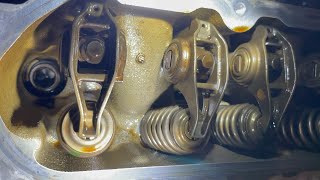
How to confirm: This is a complex diagnosis. It often starts with a persistent ticking noise. A mechanic will confirm no issues with spark or fuel, then perform a compression test. The definitive diagnosis requires removing the valve cover to inspect the valvetrain (rocker arms, pushrods) for lack of movement or damage. A bent pushrod is a common finding. The cylinder head must be removed to access the lifters. 🎬 Watch: How to remove the cylinder head and replace lifters.
Typical fix: Requires replacing the failed lifter(s). GM's procedure often calls for replacing all lifters on the affected bank or even both banks depending on mileage. If the camshaft lobe is damaged from the failed lifter, the camshaft must also be replaced, which is a much larger job. Many owners and independent shops opt for a full AFM/DFM delete kit, which replaces the specialized lifters with standard, more robust LS7-style lifters and reprograms the ECU to prevent future failure. This is considered a permanent solution.
Est. part cost: $500-$2000 for parts, depending on the extent of damage and whether an AFM delete is performed. - Clogged or Faulty Fuel Injector 🟡 Medium Probability
How to confirm: After ruling out spark issues, you can swap the fuel injector from cylinder #5 with another cylinder. If the misfire code follows the injector, it needs to be replaced. This is more involved than swapping a coil or plug and requires releasing fuel pressure.
Typical fix: Replace the faulty fuel injector. It's also a good practice to clean or replace the other injectors at the same time.
Est. part cost: $50-$120 - Damaged Spark Plug Wire ⚪ Low Probability The spark plug wire for cylinder #5 can sometimes rub against the steering shaft, eventually wearing through the insulation and causing the spark to arc to ground. This is worth checking, especially if aftermarket wires have been installed which may be slightly longer than OEM.
How to confirm: Visually inspect the entire length of the spark plug wire for cylinder #5, paying close attention to any areas where it comes close to other components like the steering shaft. Check for loose connections at both the coil and the plug.
Typical fix: Replace the damaged spark plug wire. Ensure the new wire is properly routed and secured away from moving parts, using zip ties if necessary.
Est. part cost: $10-$20 for a single wire, or $50-$80 for a set.
Rare But Worth Checking
- Low Engine Compression: If ignition and fuel system checks don't reveal the problem, a compression test is the next step. This can point to more serious internal engine issues like a bad valve, worn piston rings, or a damaged cylinder head, which could be a consequence of a failed lifter destroying the camshaft lobe.
- Intake Manifold Gasket Leak: A vacuum leak near the intake runner for cylinder #5 can lean out the air/fuel mixture and cause a misfire. This can sometimes be diagnosed with a smoke test. One owner on a forum fixed their P0305 by replacing the intake gaskets.
- Bent Pushrod: A bent pushrod is not usually a cause but a symptom of a collapsed or stuck AFM/DFM lifter. When the lifter fails, it can create excessive clearance or a mechanical bind in the valvetrain, causing the pushrod to bend under pressure.
Diagnosis Steps
- Confirm the P0305 code using an OBD-II scanner and check for any other stored codes like P0300 or P050D.
- Listen for an engine ticking or chirping noise. A valvetrain noise that increases with RPM points strongly towards a lifter issue.
- Perform a visual inspection of the engine bay around cylinder #5 (driver's side, third from front). Look for loose connections, damaged wires, or signs of leaks.
- To test the ignition system, swap the ignition coil from cylinder #5 with another cylinder (e.g., #1). Clear the codes and drive the vehicle. If the code changes to P0301, the coil is bad.
- If the code does not move, perform the same swap test with the spark plug. If the code moves, the spark plug is the culprit.
- Inspect the spark plug wire for cylinder #5 for any signs of damage, especially rubbing against the steering shaft.
- If ignition components are good, the next step is to check the fuel injector. This is more complex and may require a professional.
- If basic checks fail, a compression test is necessary to check for internal mechanical problems. Low compression in cylinder #5 confirms a mechanical fault.
- If compression is low and/or a ticking noise is present, the final step is to remove the driver's side valve cover to inspect the rocker arms and pushrods for cylinder #5. If a rocker arm is loose or a pushrod is bent, a failed lifter is the confirmed cause.
Parts You'll Likely Need

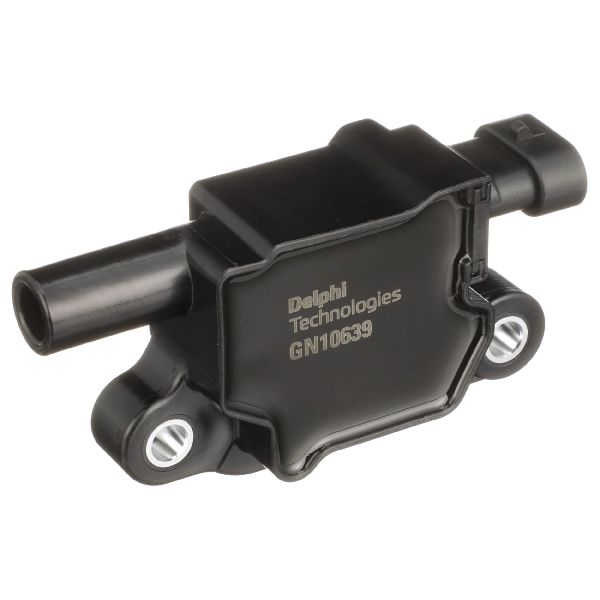
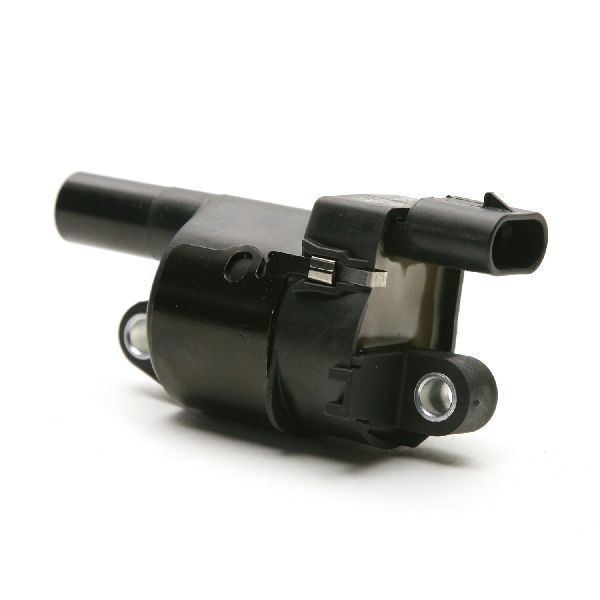
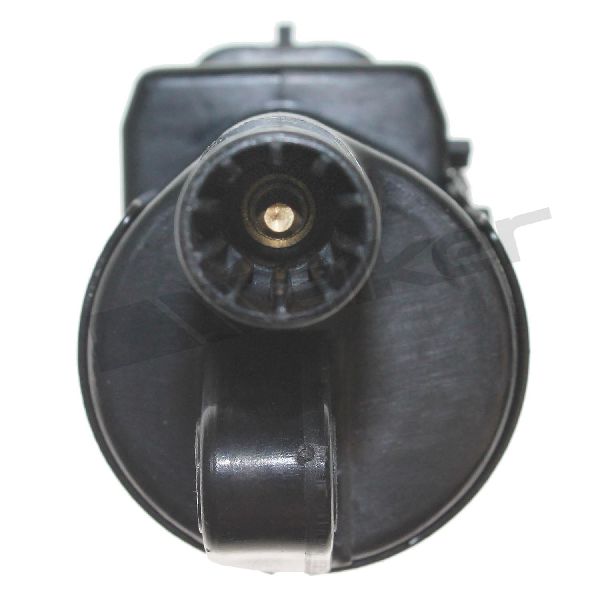
- Ignition Coil
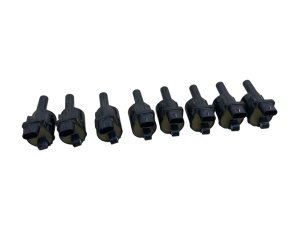
(OEM #12619161)— The coil-on-plug ignition coils are a common failure point leading to a single-cylinder misfire.
Trusted brands: ACDelco, Delphi
OEM price range: $60-$90
Aftermarket price range: $40-$70 - Iridium Spark Plug
(OEM #ACDelco 41-168 (or 41-123 for some models))— Spark plugs are a routine maintenance item and the most frequent cause of misfires.
Trusted brands: ACDelco, NGK
OEM price range: $10-$25
Aftermarket price range: $8-$18 - Valve Lifter Kit (AFM/DFM) — For persistent misfires accompanied by a ticking noise, a failed lifter due to the AFM/DFM system is a very common cause on these GM V8 engines. Kits often include lifters, guides, and gaskets.
Trusted brands: GM Genuine, Delphi, Michigan Motorsports (for delete kits), Texas Speed (for delete kits)
OEM price range: $400-$800 for one bank
Aftermarket price range: $300-$600 for a full delete kit (lifters, trays, gaskets, plugs). - Camshaft
(OEM #12672469 (Commonly used L8T non-AFM cam for delete))— If a lifter fails, its roller can be damaged and destroy the corresponding lobe on the camshaft, requiring replacement of both. When performing an AFM delete, a non-AFM camshaft is required.
Trusted brands: GM Genuine, Brian Tooley Racing, Texas Speed
OEM price range: $150-$250
Aftermarket price range: $400-$600 for performance options
Related Codes That Often Appear With This One
- P0300 — If the misfire is intermittent or affects multiple cylinders, a P0300 (Random/Multiple Cylinder Misfire Detected) may be stored alongside P0305. This is very common with a failing AFM/DFM lifter, as the problem can start on one cylinder and sometimes affect the entire bank.
- P050D — This code stands for 'Cold Start Rough Idle' and is often seen in conjunction with lifter-related misfires on these GM V8 engines.
Technical Service Bulletins (TSBs) & Recalls
- A frequently updated TSB covering engine misfire/tick noise caused by a collapsed/stuck AFM lifter. It provides diagnostic steps and repair procedures, including inspecting the camshaft for damage.
- An informational bulletin for various engine noises (chirp, squeak, tick) and misfire DTCs (P0300-P0308). It lists potential causes including worn cam lobes, sticking valves, and collapsed AFM lifters.
- Addresses customer concerns of poor engine performance and misfire codes (P0300-P0308) on 2021 models, pointing towards the valvetrain issues.
- An older TSB, but relevant for context, that advised technicians to inspect for loose spark plug wires as a cause for misfires on GM V8s.
Platform-Specific Known Issues
- AFM/DFM Lifter Failure: The single most significant issue for this platform. The cylinder deactivation lifters are prone to mechanical failure, causing a P030X misfire code for the corresponding cylinder. The failure often starts with a ticking noise and can escalate to a bent pushrod and a damaged camshaft lobe, requiring extensive engine disassembly to repair. It affects both the 5.3L and 6.2L engines across the entire 2018-2021 model year range and beyond.
Mechanic-Grade Diagnostic Values
- Ignition Coil Primary Resistance — expected: 0.45 ohms. Failure: Significant deviation from the expected value.
- Ignition Coil Secondary Resistance — expected: 8.22k ohms. Failure: Significant deviation from the expected value.
- Direct Fuel Injector Resistance — expected: 1.5-2.0 ohms. Failure: A reading of 0 ohms (short) or infinite/O.L. (open).
- Low-Pressure Fuel System (Key On, Engine Off) — expected: 320-580 kPa (46-84 PSI). Failure: Pressure below this range indicates a weak low-pressure fuel pump.
- High-Pressure Fuel Rail (Engine Idling) — expected: 1.9-5.0 MPa (276-725 PSI). Failure: Pressure significantly outside this range suggests a high-pressure pump or sensor issue.
- AFM/DOD Solenoid (in VLOM) — expected: 0.7 to 0.9 Ω (for DFM, 2019+). Failure: Resistance outside this range indicates a faulty solenoid.
Scan Tool Commands That Help
- GDS2 / Tech2 or advanced scanner: Misfire History / Misfire Counter — To view live and historical misfire counts for each cylinder. This helps confirm that cylinder #5 is the primary offender and can reveal if other cylinders are misfiring at a rate below the threshold for setting a code.
- GDS2 / Tech2 or advanced scanner: Cylinder Deactivation (AFM/DFM) Solenoid Test — To command the solenoids in the Valve Lifter Oil Manifold (VLOM) on and off to check for proper electrical response and mechanical function, helping to diagnose a suspected lifter or VLOM issue.
Wiring & Ground Locations
- G102 — Located at the left (driver's side) rear of the engine, on the cylinder head.. This is the primary ground for all 8 ignition coils. A loose or corroded connection here can cause weak or intermittent spark on any cylinder, including #5, leading to a misfire.
- G103 / G108 — Located on the back side of the cylinder heads.. These are critical grounds for the Engine Control Module (ECM). A poor connection can cause a wide range of erratic engine behavior and fault codes, including misfire detection problems.
- Cylinder 5 Injector Control at ECM — On the K20 ECM, the control circuit for the cylinder 5 injector is typically on connector J2 (or X2), pin 49. The wire is often Light Green/White.. If an injector swap doesn't resolve the issue, testing for a consistent signal at this pin on the ECM connector can determine if the fault lies in the wiring harness or the ECM itself.
Real Owner Repair Stories
- Tahoe Yukon Forum user (2010 Tahoe 5.3L with 120,000+ miles) — Rough idle, recurring P0305 code.
❌ Tried (didn't work) Replaced spark plugs and wires., Replaced throttle body and position sensor., Swapped coil packs from side-to-side., Replaced all fuel injectors.
✅ What actually fixed it The user replaced the intake manifold gaskets, which resolved the low long-term fuel trim values and, subsequently, the P0305 misfire. This indicated a vacuum leak near the cylinder #5 intake runner was the root cause. - Tahoe Yukon Forum user (2021 Yukon Denali with 12,995 miles) — Check Engine Light, misfire, ticking noise.
❌ Tried (didn't work) Initial dealer repair only replaced one bank of lifters.
✅ What actually fixed it The issue was a failed AFM lifter. The user noted that many dealers were moving to a policy of replacing all 16 lifters, as replacing only one bank often resulted in a repeat failure on the other side shortly after.
OEM Part Supersession History
12571595, 12619820, 12639516 (AFM Lifters)→12680871, and more recently 12698946 (DFM Lifter)— Redesigned to improve reliability and address common failure modes of the internal locking pins.
Heads up: The newer DFM lifter (GM 12698946) is generally considered backward compatible for use in older AFM engines (2018), but the original AFM-only lifters cannot be used in a newer DFM engine (2019+).
Model Year Variations Within This Range
- 2018 (and some early 2019): These models primarily use the 5.3L L83 and 6.2L L86 engines with Active Fuel Management (AFM). This system deactivates 4 of the 8 cylinders (1, 7, 6, 4) and uses 8 specialized AFM lifters and 8 standard lifters.
- 2019-2021: These models use the 5.3L L84 and 6.2L L87 engines with Dynamic Fuel Management (DFM). This is a more advanced system that can operate in 17 different cylinder patterns. All 16 lifters are the deactivating DFM type, which are known to have a high failure rate, particularly from a bad batch in 2021 models.
Helpful Videos
Used OEM Parts in Stock

New Aftermarket Parts Available


The information in this article is provided for general reference and educational purposes only. Vehicle specifications, procedures, and part compatibility can vary by production date, trim level, and region. Always consult your vehicle's factory service manual and verify part numbers before purchasing or performing repairs. Safety-critical components such as airbags, seat belts, and braking systems should be installed by a qualified professional.
- Gmc YUKON:
- 🎬 Helpful Videos
- 🛍️ Shop This Part
- What's Unique About the 2018-2021 Gmc YUKON
- Diagnostic Flowchart
- Symptoms You May Notice
- Most Likely Causes
- Rare But Worth Checking
- Diagnosis Steps
- Parts You'll Likely Need
- Related Codes That Often Appear With This One
- Technical Service Bulletins (TSBs) & Recalls
- Platform-Specific Known Issues
- Mechanic-Grade Diagnostic Values
- Scan Tool Commands That Help
- Wiring & Ground Locations
- Real Owner Repair Stories
- OEM Part Supersession History
- Model Year Variations Within This Range
- 🎟️ Get 5% Off