

P0305 on 2010-2017 GMC Yukon: Cylinder 5 Misfire Causes and Fixes
P0305 indicates a misfire in cylinder #5. On a 2010-2017 GMC Yukon, the most common causes are a bad spark plug, a faulty ignition coil, or (on 2010-2014 models) a loose or damaged spark plug wire. Start by swapping the coil and plug from cylinder 5 with another cylinder to see if the code follows. If ignition parts don't solve it, suspect a fuel injector or a mechanical issue like a non-AFM lifter.
- P0305 is a misfire on cylinder #5, located third from the front on the driver's side.
- Always start diagnosis with the cheapest and easiest parts: spark plugs, ignition coils, and (for 2010-2014 models) spark plug wires.
- Use the 'swap test' to confirm a bad coil or plug before spending money on new parts.
- On 2010-2014 Yukons, pay special attention to the spark plug wire for cylinder #5, as it can come loose or be damaged by the steering shaft.
- Do not immediately assume the issue is a failed AFM lifter, as cylinder #5 is not an AFM-controlled cylinder on these engines.
What's Unique About the 2010-2017 Gmc YUKON

The 2010-2017 Yukon spans two generations with different ignition and fuel systems. The 2010-2014 models (GMT900) use a traditional ignition system with spark plug wires, which are a known failure point mentioned in GM Technical Service Bulletin #PIP4819A. The 2015-2017 models (K2UG) have a more modern coil-on-plug design without separate wires and feature direct injection, which can be prone to carbon buildup on intake valves. While Active Fuel Management (AFM) lifter failure is a notorious issue on these V8s, it deactivates cylinders 1, 4, 6, and 7. Cylinder 5 is a non-AFM cylinder, making a collapsed AFM lifter an unlikely direct cause for a P0305 code, though a standard (non-AFM) lifter on cylinder 5 can still fail.
Diagnostic Flowchart

Tap your situation to follow the diagnostic path that matches what you're seeing on this vehicle.
Generation note: This guide covers the third generation (2010-2014, GMT900 platform) and the fourth generation (2015-2017, K2UG platform) of the GMC Yukon. The primary differences affecting this code are the ignition system (spark plug wires on 2010-2014 models vs. coil-on-plug on 2015-2017) and the fuel system (port injection vs. direct injection, respectively).
Symptoms You May Notice
- Rough or shaking idle.
- Flashing or solid Check Engine Light.
- Hesitation or stumbling during acceleration.
- Noticeable loss of engine power.
- Sensation of driving over a bump strip, especially during acceleration.
- Poor fuel economy.
- Possible fuel odor from the exhaust.
- Ticking or tapping noise from the engine, which could indicate a mechanical valvetrain issue.
- Replacing Active Fuel Management (AFM) lifters for a P0305 code. While AFM lifter failure is a common problem on these GM V8s, it deactivates cylinders 1, 4, 6, and 7. Cylinder 5 is not an AFM cylinder, so a collapsed AFM lifter is not a direct cause of a P0305.
Most Likely Causes

- Worn or Fouled Spark Plug 🔴 High Probability Spark plugs are a routine maintenance item and the most common cause of a single-cylinder misfire. Even a brand new plug can be faulty out of the box.
How to confirm: Swap the spark plug from cylinder #5 with one from another cylinder (e.g., cylinder #1). Clear the codes and drive. If the code changes to P0301, the spark plug is the culprit.
Typical fix: Replace the spark plug in cylinder #5. It is highly recommended to replace all 8 spark plugs at the same time using quality ACDelco Iridium plugs (e.g., 41-110 or the superseding 41-162) for even performance.
Est. part cost: $10-$25 per plug - Faulty Ignition Coil 🔴 High Probability Heat and vibration can cause ignition coils to fail over time. An owner complaint to the NHTSA for a 2011 Yukon with a P0305 code involved a dealership replacing the coil pack.
How to confirm: Swap the ignition coil from cylinder #5 with another cylinder (e.g., cylinder #3). Clear the codes and drive. If the misfire code moves to P0303, the ignition coil is faulty.
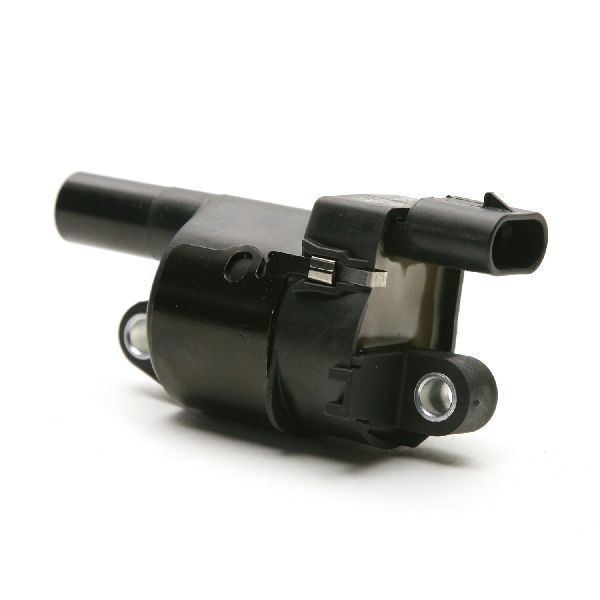
Typical fix: Replace the failed ignition coil. Using a quality OEM brand like ACDelco is recommended for reliability.
Est. part cost: $40-$90 - Loose or Damaged Spark Plug Wire (2010-2014 Models) 🟡 Medium Probability A GM Technical Service Bulletin (#PIP4819A) explicitly identifies loose spark plug wires as a cause for misfire codes on these engines. Wires can also be damaged by rubbing against the steering shaft, a specific issue noted by owners where the wire abrades and arcs to ground.
How to confirm: Visually inspect the spark plug wire for cylinder #5. Ensure it is securely clicked onto both the ignition coil and the spark plug. Check for any burns, chafing, or physical damage, paying close attention to the area near the steering shaft.
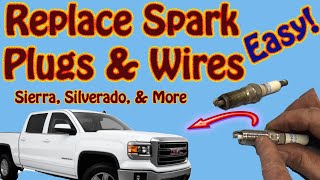
Typical fix: Securely reseat the wire. If damaged, replace the set of 8 spark plug wires. 🎬 See this pro trick for changing plugs and wires Some owners use zip ties to keep aftermarket wires from contacting the steering shaft.
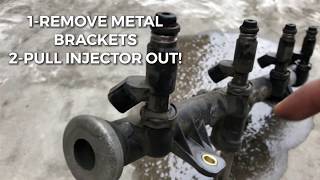
Est. part cost: $50-$100 for a set - Clogged or Failed Fuel Injector 🟡 Medium Probability Fuel injectors can become clogged with deposits over time, or fail electrically, preventing the correct amount of fuel from reaching cylinder #5.
How to confirm: After ruling out ignition components, a mechanic can perform a fuel injector balance test. A DIY method is to swap the fuel injector from cylinder #5 with another cylinder to see if the misfire follows, though this is labor-intensive. You can also use a mechanic's stethoscope to listen for a steady clicking sound from the injector, indicating it is operating.
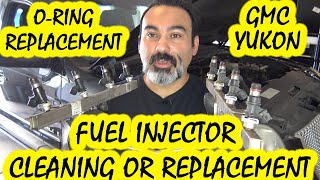
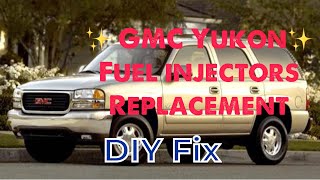
Typical fix: Replace the faulty fuel injector. 🎬 Watch: Fast and easy fuel injector replacement walkthrough In a documented case on the Tahoe Yukon Forum, a user resolved a persistent P0305 by replacing all injectors and the intake manifold gaskets.
Est. part cost: $50-$150 per injector
Rare But Worth Checking
- Intake Manifold Gasket Leak: A vacuum leak from a failed intake manifold gasket near the cylinder #5 intake runner can lean out the air/fuel mixture, causing a misfire. This can sometimes be found by carefully spraying brake cleaner or using a smoke machine near the intake runner for cylinder #5 and listening for a change in engine RPM or seeing smoke.
- Failed Non-AFM Lifter / Worn Camshaft Lobe: While cylinder #5 is not an AFM cylinder, the standard hydraulic roller lifter for that cylinder can still collapse or its roller can fail, leading to a loss of valve lift and compression. This often produces a distinct ticking or tapping noise that increases with engine RPM. A compression test showing low readings on cylinder #5 would point to this type of mechanical failure.
- Low Engine Compression: If ignition and fuel systems are confirmed to be good, a mechanical issue could be the cause. This includes a worn camshaft lobe, a bad valve, a broken valve spring, or worn piston rings. A compression test followed by a leak-down test is required to diagnose this.
Diagnosis Steps
- Use an OBD-II scanner to confirm P0305 🎬 Watch: Step-by-step guide to fixing a P0305 misfire is the active code and check for any other stored codes. Pro-Tip: Use a scanner with Mode $06 capability to watch the live misfire counter for cylinder 5 to see when the misfire occurs (e.g., at idle, under load).
- Inspect the ignition system for cylinder #5. On 2010-2014 models, check that the spark plug wire is securely connected and not damaged, per TSB #PIP4819A, paying special attention to the area near the steering shaft.
- Swap the ignition coil from cylinder #5 with an adjacent cylinder (e.g., #3). Clear the codes and run the engine. If the code changes to P0303, the coil is bad.
- If the code remains P0305, swap the spark plug from cylinder #5 with another cylinder. If the code moves, the spark plug is bad.
- If ignition components are good, inspect the fuel injector wiring for cylinder #5. Listen to the injector with a mechanic's stethoscope to confirm it is clicking steadily.
- If the injector is suspected, and you have the tools, swap it with another cylinder's injector to see if the misfire code follows. This is more involved than an ignition swap.
- If all else fails, perform an engine compression test on cylinder #5. A significant loss of compression compared to other cylinders points to a mechanical problem like a bad lifter, worn camshaft, or valve issue.
Parts You'll Likely Need
- Iridium Spark Plug
(OEM #41-162 (supersedes 41-110))— Spark plugs are a primary wear item and the most frequent cause of a single-cylinder misfire. The 41-110 was the original plug, but was superseded by the 41-162, which has a slightly different length but is the current recommended part.
Trusted brands: ACDelco, NGK
OEM price range: $15-$25
Aftermarket price range: $10-$20 - Ignition Coil
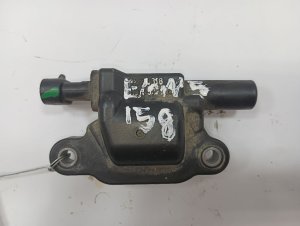
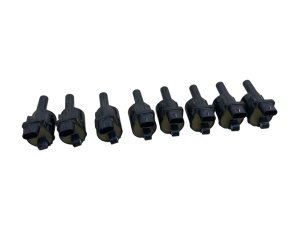
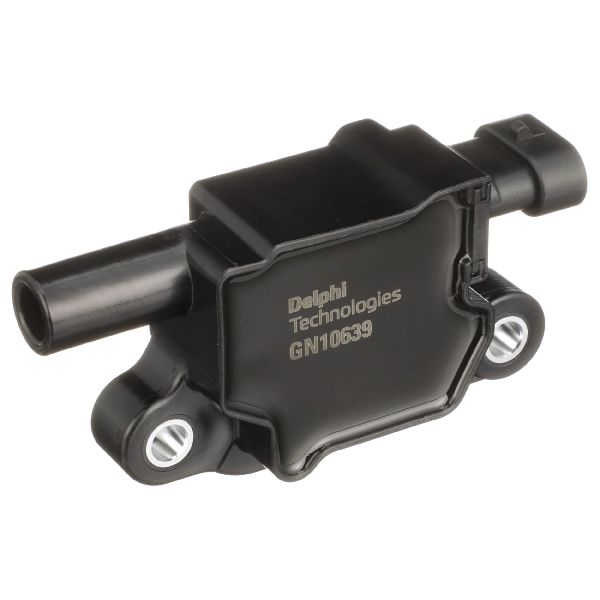
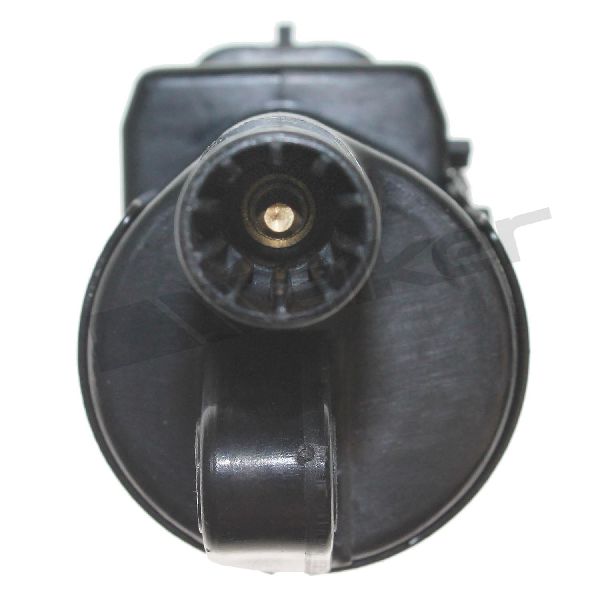
(OEM #12699382 (D510C))— Ignition coils provide the high voltage for the spark plug and are a common failure point causing misfires. An owner complaint to the NHTSA confirms this was a repair performed by a dealer for this code.
Trusted brands: ACDelco, Delphi
OEM price range: $60-$90
Aftermarket price range: $40-$70 - Spark Plug Wire Set (2010-2014 Models)
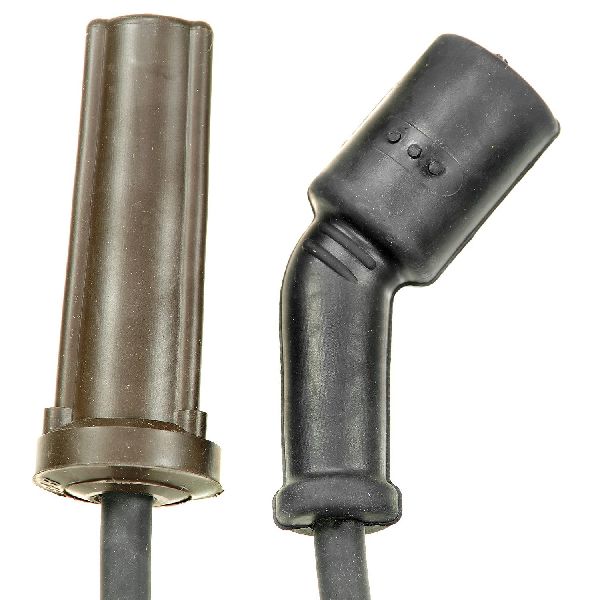
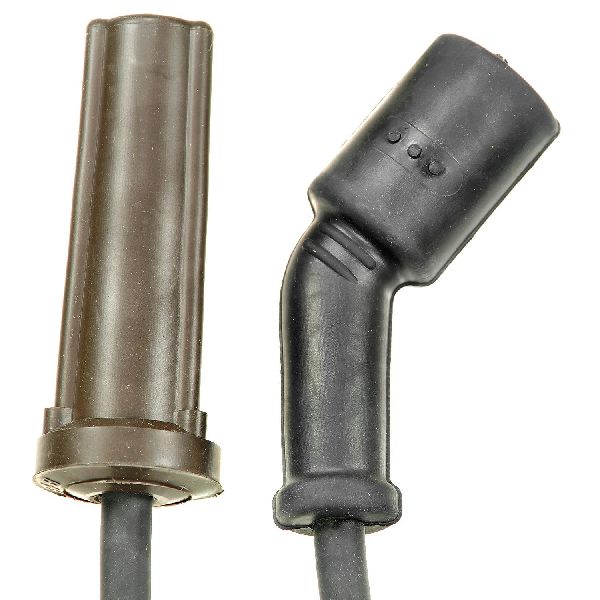
(OEM #9748UU)— A GM Technical Service Bulletin (#PIP4819A) specifically points to loose spark plug wires as a cause for misfires on this platform. They can also be damaged by heat or abrasion, especially from the steering shaft.
Trusted brands: ACDelco
Related Codes That Often Appear With This One
- P0300 — If the condition causing the P0305 is intermittent or begins to affect other cylinders (e.g., from a failing ground, vacuum leak, or widespread fuel issue), a P0300 (Random/Multiple Cylinder Misfire) code may also be stored.
- P0420 / P0430 — If a misfire is ignored for too long, unburned fuel will enter the exhaust and can overheat and destroy the catalytic converter, leading to a P0420 (Bank 1) or P0430 (Bank 2) catalyst inefficiency code. Since cylinder 5 is on Bank 1 (driver's side), a P0420 might accompany a long-term P0305.
Technical Service Bulletins (TSBs) & Recalls

- Bulletin #PIP4819A: Addresses engine misfires (P0300-P0308) on 2010-2013 models due to loose spark plug wires, recommending inspection of the wire's connection at the coil and plug, and replacement if the connection is not secure.
Platform-Specific Known Issues
- For 2010-2013 models, TSB #PIP4819A notes that misfire codes (P0300-P0308) can be caused by loose spark plug wires and instructs technicians to inspect and replace them as needed.
- On 2010-2014 models, the spark plug wire for cylinder #5 can rub against the intermediate steering shaft, causing the wire's insulation to wear through and the spark to arc to the shaft instead of firing the plug. This is a well-documented issue in owner forums and videos.
Mechanic-Grade Diagnostic Values
- Ignition Coil Primary Resistance (2010-2017) — expected: 0.4 - 2.0 ohms. Failure: A reading outside this range suggests a faulty primary winding in the coil.
- Ignition Coil Secondary Resistance (2010-2017) — expected: 6,000 - 10,000 ohms (6k-10k Ω). Failure: A reading outside this range points to a failure in the secondary winding.
- Fuel Pressure (Low-Side, 2010-2014 Port Injection) — expected: 50-60 PSI. Failure: Pressure that is low, fluctuating, or drops significantly under load indicates a weak in-tank fuel pump or a failing Fuel Pump Control Module (FPCM).
- Mode $06 Misfire Count (Cylinder 5) — expected: Value should be at or near 0.. Failure: A high or rapidly increasing count on Test ID for cylinder 5 confirms an active misfire before it's frequent enough to set a CEL.
Scan Tool Commands That Help
- GDS2 / Tech2: Cylinder Power Balance Test — This bidirectional command allows a technician to disable individual fuel injectors one at a time. When disabling cylinder 5, if there is no change in engine RPM or smoothness, it confirms that cylinder 5 was not contributing, pinpointing the misfire without swapping parts.
- Professional Scan Tool: Mode $06, Test ID $A5 (Misfire Cylinder 5 Data) — To view raw, non-continuous misfire counts for cylinder 5. This is extremely useful for diagnosing intermittent misfires that haven't yet met the threshold to set a P0305 code. It helps confirm if a repair was successful by showing if low-level misfires are still occurring.
Wiring & Ground Locations

- G102 — Located at the left rear of the engine (driver's side).. This is the primary ground for all 8 ignition coils. A loose or corroded connection at G102 can cause intermittent or weak spark, leading to misfires on one or more cylinders, including P0305.
- G103 — Located on the cowl in the left rear of the engine compartment, often above the brake booster.. This ground serves the Engine Control Module (ECM) and the Data Link Connector (DLC). A poor connection here can cause a variety of erratic engine management and communication issues, potentially leading to misdiagnosed misfire codes.
- Cylinder 5 Ignition Coil Connector — The third coil pack from the front on the driver's side valve cover.. The wiring harness for the bank of four coils contains factory splices for power and ground. A failure within this short harness can isolate a problem to a single coil, even if the main harness and grounds (like G102) are good.
Real Owner Repair Stories
- Tahoe Yukon Forum (2008 GMC Yukon with over 120,000 miles) — Rough idle, noticeable loss of power, poor gas mileage (~12 MPG), and a recurring P0305 code.
❌ Tried (didn't work) Replaced throttle body and accelerator pedal., Replaced all spark plugs and wires., Replaced all four O2 sensors., Replaced intake manifold gaskets., Replaced all fuel injectors., Verified steady spark and injector pulses with test lights., Confirmed good compression (180+ PSI) and vacuum (19 in.)., Inspected valvetrain (rockers, pushrods) with valve cover off.
✅ What actually fixed it The user discovered a hairline crack in the valve cover near the PCV orifice. This created a vacuum leak that was leaning out the mixture enough to cause a misfire specifically on cylinder 5, but was not detectable through conventional smoke or spray tests. Replacing the valve cover resolved the P0305 code.
OEM Part Supersession History
ACDelco 41-110→ACDelco 41-162— GM changed spark plug suppliers for this part, reportedly from NGK (41-110) to Denso (41-162).
Heads up: The 41-162 plug is physically shorter and has a slightly longer threaded portion, intended to place the electrode more centrally in the combustion chamber. While it is the officially recommended replacement, some owners report resolving idle misfires by sourcing and installing the original 41-110 plugs, citing better manufacturing quality and performance in their specific application.
Model Year Variations Within This Range
- 2015-2017: The Gen V engines (L83, L86) introduced in 2015 use direct injection and a different spark plug design (e.g., ACDelco 41-114) with more threads and a different reach compared to the Gen IV engines. This makes carbon buildup on the back of intake valves a more likely cause for misfires, as they are no longer cleaned by fuel spray.
- 2010-2014: These GMT900 platform trucks use spark plug wires, which are a specific failure point mentioned in TSB #PIP4819A. A common issue is the #5 or #7 wire rubbing on the steering shaft, causing an arc to ground. This is not a concern on 2015+ models with their coil-on-plug design.
Helpful Videos
Used OEM Parts in Stock
New Aftermarket Parts Available


The information in this article is provided for general reference and educational purposes only. Vehicle specifications, procedures, and part compatibility can vary by production date, trim level, and region. Always consult your vehicle's factory service manual and verify part numbers before purchasing or performing repairs. Safety-critical components such as airbags, seat belts, and braking systems should be installed by a qualified professional.
- Gmc YUKON:
- 🎬 Helpful Videos
- 🛍️ Shop This Part
- What's Unique About the 2010-2017 Gmc YUKON
- Diagnostic Flowchart
- Symptoms You May Notice
- Most Likely Causes
- Rare But Worth Checking
- Diagnosis Steps
- Parts You'll Likely Need
- Related Codes That Often Appear With This One
- Technical Service Bulletins (TSBs) & Recalls
- Platform-Specific Known Issues
- Mechanic-Grade Diagnostic Values
- Scan Tool Commands That Help
- Wiring & Ground Locations
- Real Owner Repair Stories
- OEM Part Supersession History
- Model Year Variations Within This Range
- 🎟️ Get 5% Off