

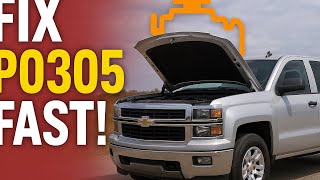
P0305 on 2010-2013 GMC Sierra Denali: Cylinder 5 Misfire Causes and Fixes
P0305 indicates a misfire on cylinder #5. On the 6.2L V8, this is most often caused by a bad spark plug, a faulty ignition coil, or a loose spark plug wire. A simple ignition component swap is the first diagnostic step. However, on this specific engine, a persistent P0305 accompanied by a ticking noise is a strong indicator of a more serious internal engine issue, such as a failed lifter.
- P0305 is a misfire on cylinder #5, the third cylinder from the front on the driver's side.
- Always start with the simplest fixes: check the spark plug wire connection, then swap the ignition coil and spark plug to diagnose the issue without buying unnecessary parts.
- A GM Technical Service Bulletin (PIP4819A) specifically points to loose spark plug wires as a common cause for this code.
- Be aware that a persistent P0305 code, especially if accompanied by a ticking engine noise, could indicate a more serious internal engine problem with a failed Active Fuel Management (AFM) lifter.
What's Unique About the 2010-2013 Gmc SIERRA DENALI
The 2010-2013 Sierra Denali is equipped with the 6.2L V8 engine (RPO L94), which includes Active Fuel Management (AFM). While ignition system faults are common causes for P0305, this engine family has a well-documented history of issues with its valvetrain, particularly the specialized AFM lifters which can collapse or become stuck. Although cylinder #5 is a non-AFM cylinder, the entire valvetrain can be stressed by the system, and standard lifters can also fail, leading to camshaft damage. A persistent misfire that isn't resolved by ignition or fuel system repairs often points to this more severe mechanical failure.
Diagnostic Flowchart
Tap your situation to follow the diagnostic path that matches what you're seeing on this vehicle.
Symptoms You May Notice
- Flashing or solid Check Engine Light
- Rough or shaky idle
- Engine hesitation or stumbling during acceleration
- Reduced engine power
- Poor fuel economy
- A sensation like driving over a rumble strip, sometimes mistaken for a transmission issue
- A rhythmic ticking, chirping, or tapping noise from the engine that increases with RPM (a strong indicator of a lifter/camshaft issue)
- Replacing only the spark plug when the spark plug wire is loose or damaged from rubbing on the steering shaft.
- Replacing fuel system components before thoroughly testing the ignition system (spark plugs, wires, coil), which is the more likely cause.
- Continuing to replace ignition and fuel parts when a persistent ticking noise and misfire indicate a mechanical valvetrain failure (e.g., lifter/camshaft).
Most Likely Causes
- Loose or Damaged Spark Plug Wire 🔴 High Probability A General Motors Technical Service Bulletin (TSB #PIP4819A) specifically calls out inspecting and replacing loose spark plug wires to resolve misfire codes on this platform. Forum users also report that the cylinder #5 wire can rub against the steering shaft, causing damage or pulling the boot loose.
How to confirm: Visually inspect the spark plug wire for cylinder #5. Ensure it is securely clicked onto both 🎬 Watch: How to diagnose and fix a cylinder 5 misfire the ignition coil and the spark plug. Check for any signs of damage, arcing (white marks), corrosion, or rubbing against the steering shaft.
Typical fix: Reseat or replace the spark plug wire set. It's best practice to replace all wires as a set. Use zip ties to secure the new wire away from the steering shaft if clearance is an issue.
Est. part cost: $50-$100 - Worn or Fouled Spark Plug 🔴 High Probability Spark plugs are a standard wear item and the most common cause of a single-cylinder misfire on any gasoline engine. Oil consumption, a related issue on some AFM engines, can also foul plugs prematurely.
How to confirm: Remove the spark plug from cylinder #5. Inspect it for wear on the electrode, carbon fouling, oil, or physical damage. The easiest test is to swap the plug from cylinder #5 with another cylinder (e.g., #1). If the code changes to P0301, the spark plug is bad.
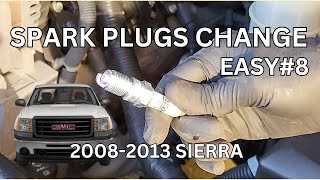
Typical fix: Replace the faulty spark plug. It is highly recommended to replace all 8 plugs at the same time using high-quality Iridium plugs (like ACDelco 🎬 See this DIY walkthrough for replacing all 8 spark plugs or NGK) for longevity and performance.
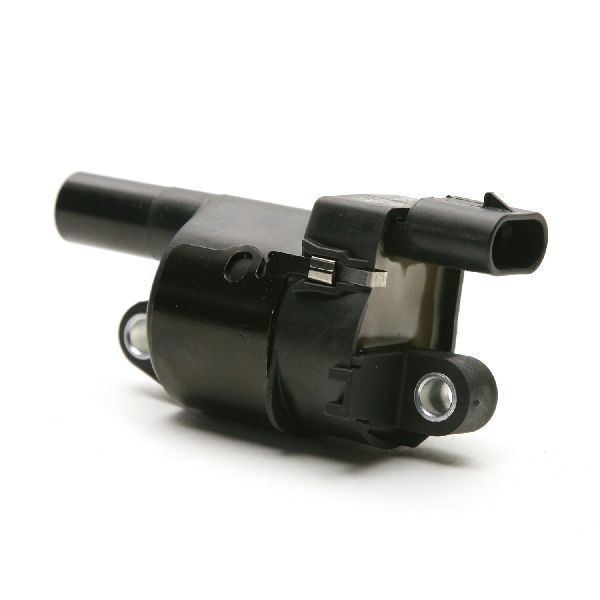
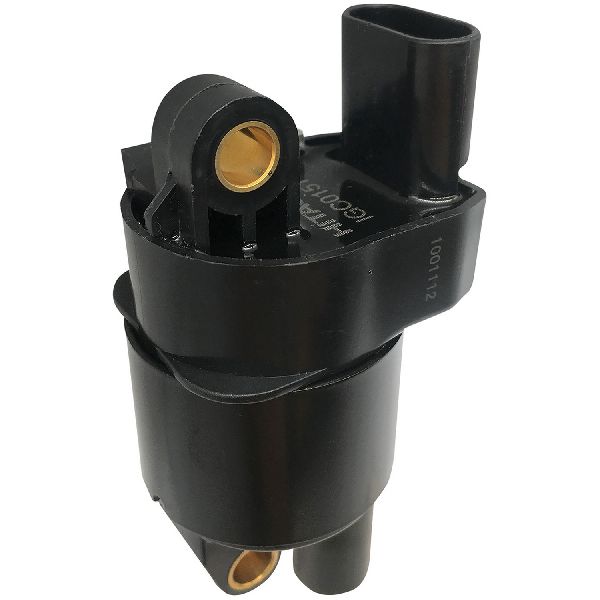
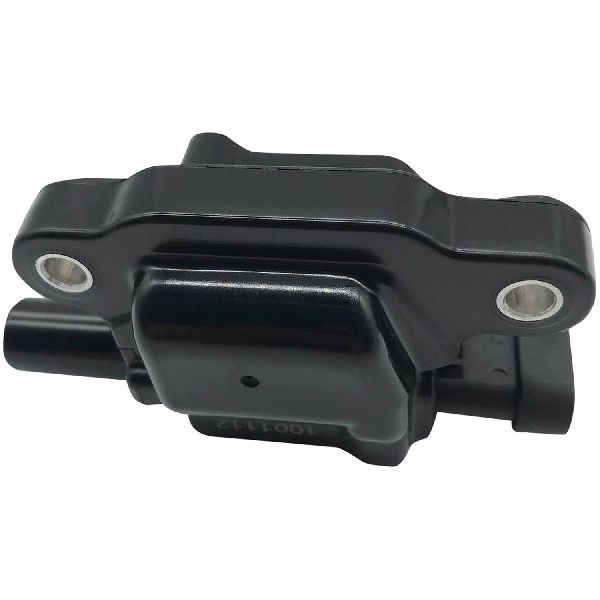
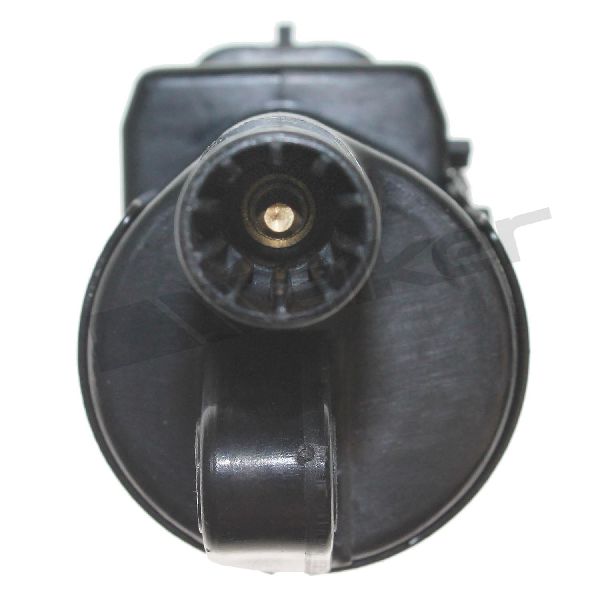
Est. part cost: $60-$150 for a set of 8 - Faulty Ignition Coil 🟡 Medium Probability Heat and vibration can cause ignition coils to fail over time, leading to a single-cylinder misfire.
How to confirm: Swap the ignition coil from cylinder #5 with another cylinder (e.g., #1). Clear the codes and drive the vehicle. If the misfire code changes to P0301, the ignition coil is the faulty component. You can also test for spark at the wire using an inline tester.
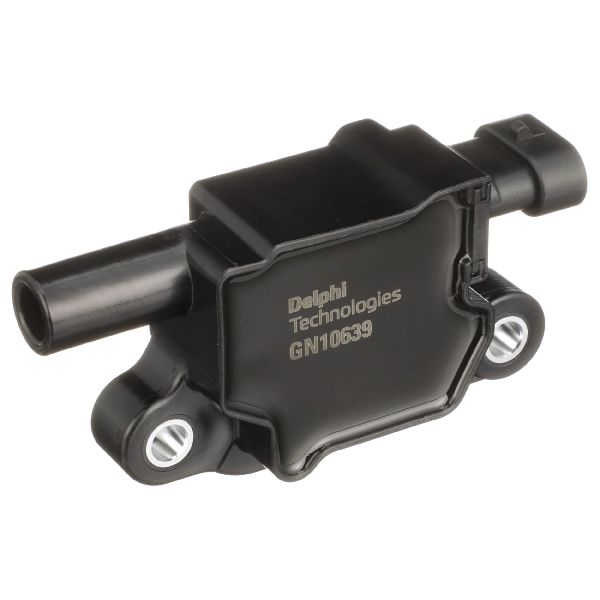
Typical fix: Replace the failed ignition coil. It is not necessary to replace all coils at once, but using a quality brand like ACDelco or Delphi is recommended.
Est. part cost: $40-$80 - Clogged or Failed Fuel Injector ⚪ Low Probability
How to confirm: Listen to the injector with a mechanic's stethoscope; it should have a consistent, audible clicking sound. You can also swap the injector with another cylinder, but this is a more involved job. A 'noid light' can be used to confirm the injector is receiving an electrical pulse from the ECM.
Typical fix: Replace the faulty fuel injector. It's also a good idea to replace the injector seals.
Est. part cost: $70-$150
Rare But Worth Checking
- Failed Active Fuel Management (AFM) or Standard Lifter: This is a known, serious issue on these GM V8 engines. A collapsed or stuck AFM lifter (on cylinders 1, 4, 6, 7) or a failed standard lifter (on 2, 3, 5, 8) will cause a persistent misfire and low compression. This issue is often preceded by a distinct ticking noise. 🎬 Listen: What a 6.2L engine tapping noise sounds like Diagnosis requires a compression test and may involve removing the valve cover to observe valve movement. This is a major repair that often includes replacing the camshaft as the failed lifter can damage the lobe.
- Intake Manifold Gasket Leak: A vacuum leak from a deteriorated intake manifold gasket near the port for cylinder #5 can lean out the air/fuel mixture enough to cause a misfire. One owner on a forum fixed their P0305 by replacing the intake manifold gaskets. This can be diagnosed with a smoke test.
- Broken Valve Spring: As outlined in GM bulletin 19-NA-219, a broken valve spring can cause a consistent or intermittent misfire and ticking noise. This points to a mechanical failure that requires removing the valve cover for inspection.
Diagnosis Steps
- Confirm the P0305 code using an OBD-II scanner and check for any other stored codes.
- Check the spark plug wire for cylinder #5. Ensure it is fully seated on the coil and the spark plug. Per TSB #PIP4819A, loose wires are a known issue. Specifically check for rubbing against the steering shaft.
- Swap the ignition coil from cylinder #5 with an adjacent cylinder (like #3). Clear the codes and run the engine. If the code moves to the other cylinder (e.g., P0303), the coil is bad.
- If the code remains P0305, swap the spark plug from cylinder #5 with another cylinder. If the code moves, the spark plug is bad.
- Listen carefully for a rhythmic ticking or chirping noise from the driver's side of the engine. If a noise is present, this strongly suggests a mechanical valvetrain issue.
- If ignition components are good, inspect the fuel injector. Listen for a steady clicking sound with a stethoscope. Check the injector's wiring for damage.
- If the misfire is still on cylinder #5 and especially if a ticking noise is present, perform a compression test on cylinder #5. Low or zero compression points to a mechanical issue, likely a failed lifter, broken valve spring, or worn camshaft lobe.
Parts You'll Likely Need
- Spark Plugs
(OEM #ACDelco 41-168)— Worn spark plugs are a primary cause of misfires. It's recommended to replace all 8 for consistent performance.
Trusted brands: ACDelco, NGK
OEM price range: $80-$120
Aftermarket price range: $60-$100 - Spark Plug Wires
(OEM #ACDelco 9748UU)— A GM TSB specifically mentions loose wires as a cause for misfires on these trucks. Wires can also degrade or be damaged by rubbing on the steering shaft.
Trusted brands: ACDelco, NGK, Delphi
OEM price range: $80-$120
Aftermarket price range: $50-$90 - Ignition Coil
(OEM #ACDelco D521C (Superseded by D510C))— Coils can fail, leading to a lack of spark. Swapping coils is the definitive way to diagnose a bad one.
Trusted brands: ACDelco, Delphi
OEM price range: $60-$90
Aftermarket price range: $40-$70
Related Codes That Often Appear With This One
- P0300 — If the cause of the misfire (like a vacuum leak, low fuel pressure, or a major mechanical issue like a failing camshaft) affects multiple cylinders, a P0300 (Random/Multiple Cylinder Misfire) may appear alongside P0305.
Technical Service Bulletins (TSBs) & Recalls
- PIP4819A - Service Engine Soon Malfunction Indicator Lamp and the engine misfires...Technician will need to inspect the spark plug wires. Technician will need to replace any loose spark plug wires.
- 19-NA-219 - Diagnostic tip for misfire, chirp, squeak, or tick noise with DTCs P0300-P0308
Platform-Specific Known Issues
- TSB #PIP4819A: This Technical Service Bulletin directly addresses misfire codes (P0300-P0308) on 2010 models. It instructs technicians to inspect for and replace loose spark plug wires as a primary fix.
- Active Fuel Management (AFM) Lifter Failure: The 6.2L V8 (L94) is equipped with AFM, which deactivates cylinders 1, 4, 6, and 7 to save fuel. The special lifters used for this system are a known failure point across the GM V8 lineup. A collapsed lifter leads to a constant misfire and requires significant engine work to replace, often including the camshaft and Valve Lifter Oil Manifold (VLOM).
- Spark Plug Wire Rubbing: A commonly reported issue in forums is the spark plug wire for cylinder #5 being routed too close to the steering shaft. Over time, the shaft can rub through the wire's insulation or pull the boot loose, causing an arc and a P0305 misfire.
Mechanic-Grade Diagnostic Values
- Ignition Coil Primary Resistance — expected: 0.4 - 2.0 ohms. Failure: A reading outside this range suggests a faulty coil.
- Ignition Coil Secondary Resistance — expected: 6,000 - 10,000 ohms. Failure: A reading outside this range suggests a faulty coil.
- Fuel Injector Resistance — expected: 11 - 14 ohms. Failure: A reading outside this range, or a significant deviation from the other injectors, indicates a fault.
- Low-Pressure Fuel System Pressure (In-tank pump) — expected: 40 - 60 PSI. Failure: Pressure significantly below this range can cause lean misfires.
Hidden / Shadow Codes Worth Checking
- Misfire Counter Data (Current & History): Professional scan tools like the GM Tech2 or GDS2 can display 'Current Misfire' and 'Misfire History' counts for each individual cylinder. These are not DTCs but live data PIDs. A high or rapidly increasing count on cylinder 5 confirms the misfire in real-time, even if the issue is intermittent and not severe enough to keep the MIL on. (see via GM Tech2 or GDS2 scan tool under Engine Data / Misfire Data.)
Scan Tool Commands That Help
- Tech2 / GDS2: Crankshaft Position (CKP) Variation Learn Procedure — After replacing a crankshaft sensor, camshaft sensor, or reprogramming the PCM. Performing this relearn procedure can greatly improve the accuracy of misfire detection and reduce false misfire counts that can be caused by road vibrations or minor timing chain wear.
- Tech2 / GDS2: Injector Balance Test — To diagnose a potentially faulty fuel injector. This test allows the technician to individually disable injectors and measure the corresponding drop in fuel pressure or RPM for each cylinder, identifying an injector that is not contributing equally.
Wiring & Ground Locations
- G104 — On the front of the left (driver's side) cylinder head.. This is a primary engine-to-chassis ground. The ground wires for the bank of ignition coils on the driver's side (including cylinder 5) often terminate here. A loose or corroded G104 can cause a weak or intermittent spark for all four cylinders on that bank, leading to misfires.
- G103 — On the front of the right (passenger's side) cylinder head.. This is a primary ground for the Engine Control Module (ECM). While not directly for the cylinder 5 ignition coil, a poor connection here can cause all manner of erratic engine behavior, including phantom codes and misfire detection issues.
- Ignition Coil Connector (Cylinder 5) — The 4-pin connector on the ignition coil for cylinder 5.. The pins provide the 12V supply, ground, and trigger signal from the ECM. Check for a pink wire (12V+ with key on), a black wire (ground), and the signal wire (color varies) for a pulsing signal with a noid light or scope during cranking. A damaged connector or wiring here will prevent the coil from firing.
Real Owner Repair Stories
- Reddit user in r/gmcsierra (2017 GMC Sierra Denali 6.2L with 98k miles) — Engine misfire, check engine light.
❌ Tried (didn't work) The user's vehicle was already tuned to have AFM disabled, which did not prevent the failure.
✅ What actually fixed it The user reported having a failed lifter on each cylinder bank go bad within a short period. The final fix was replacing all 8 sets of lifters and pushrods under warranty. - YouTube video by 'Total Upgrade Automotive Training' (GM 6.2L (year not specified, but common issue for this platform)) — Upper end engine noise and misfire.
❌ Tried (didn't work) Initial replacement of lifters and camshaft on the passenger side fixed the original noise.
✅ What actually fixed it After the initial repair, a new misfire appeared on cylinder 7 (driver's side). The ultimate diagnosis pointed to a failure in the new parts or another related component in the valvetrain, highlighting that even after a major lifter job, problems can persist or re-emerge on other cylinders, requiring further diagnosis of the entire valvetrain system.
OEM Part Supersession History
ACDelco D521C→ACDelco D510C— The D510C is the updated GM Original Equipment replacement for the earlier D521C ignition coil.GM 12611424→ACDelco D510C— 12611424 is the GM part number that is serviced by the ACDelco D510C ignition coil.
Model Year Variations Within This Range
- 2010 Only: According to GM TSB 19-NA-219, if a worn camshaft lobe or lifter roller is found, it is recommended to replace all plastic lifter guides for the 2010 model year. For later models, only the guide for the specific failed lifter needs replacement.
Helpful Videos
We Have This Part in Stock


The information in this article is provided for general reference and educational purposes only. Vehicle specifications, procedures, and part compatibility can vary by production date, trim level, and region. Always consult your vehicle's factory service manual and verify part numbers before purchasing or performing repairs. Safety-critical components such as airbags, seat belts, and braking systems should be installed by a qualified professional.
- Gmc SIERRA DENALI:
- 🎬 Helpful Videos
- 🛍️ Shop This Part
- What's Unique About the 2010-2013 Gmc SIERRA DENALI
- Diagnostic Flowchart
- Symptoms You May Notice
- Most Likely Causes
- Rare But Worth Checking
- Diagnosis Steps
- Parts You'll Likely Need
- Related Codes That Often Appear With This One
- Technical Service Bulletins (TSBs) & Recalls
- Platform-Specific Known Issues
- Mechanic-Grade Diagnostic Values
- Hidden / Shadow Codes Worth Checking
- Scan Tool Commands That Help
- Wiring & Ground Locations
- Real Owner Repair Stories
- OEM Part Supersession History
- Model Year Variations Within This Range
- 🎟️ Get 5% Off