

P0305 on 2015-2022 GMC Canyon 3.6L V6: Cylinder 5 Misfire Causes and Fixes
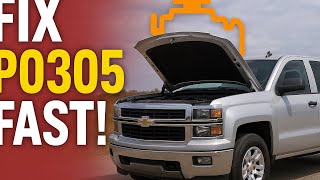
P0305 indicates a misfire in cylinder #5 on your GMC Canyon's 3.6L V6 engine. The most common culprits are a failed ignition coil or a worn-out spark plug. A simple diagnostic is to swap the ignition coil from cylinder 5 with another cylinder (like #3) and see if the code changes to P0303. However, be aware of a specific GM issue where a faulty Active Fuel Management (AFM) solenoid can cause this exact code.
- P0305 on a 2015-2022 GMC Canyon points to a misfire on cylinder #5, which is only present on the 3.6L V6 engine.
- The most probable cause is a bad ignition coil or a worn spark plug, which are relatively easy and inexpensive to replace.
- A simple and effective diagnostic step is to swap the ignition coil from cylinder 5 with another cylinder to see if the fault code follows the coil.
- Be aware of the specific TSB (#21-NA-036) for this engine, which identifies a faulty AFM oil control solenoid as a potential cause for this exact code.
- Driving with a flashing check engine light is not advised, as it indicates a severe misfire that can quickly damage your catalytic converter.
What's Unique About the 2015-2022 Gmc CANYON

On the GMC Canyon with the 3.6L V6 (engine codes LGZ or LFX), a P0305 code is most often a standard ignition issue like a coil or plug. However, two notable vehicle-specific issues exist. First, GM issued Technical Service Bulletin #21-NA-036 which points to a faulty Active Fuel Management (AFM) Oil Control Valve (OCV) solenoid that can leak oil, causing inadequate oil pressure and leading to misfires specifically on cylinders 2 and 5, which are the AFM-managed cylinders. Second, as these are direct-injection engines, they are prone to carbon buildup on the intake valves, which can restrict airflow to a specific cylinder and cause a misfire. This is a common issue that is not caused by a failing part but rather is a byproduct of the engine design.
Diagnostic Flowchart
Tap your situation to follow the diagnostic path that matches what you're seeing on this vehicle.
Symptoms You May Notice
- Flashing or solid Check Engine Light
- Rough or shaky idle
- Engine hesitation or stumbling during acceleration
- Noticeable loss of engine power
- Poor fuel economy
- Smell of raw fuel from the exhaust
- Engine running rougher after it warms up
- Replacing oxygen (O2) sensors. While a faulty O2 sensor can cause performance issues, it will typically set its own specific trouble codes and is unlikely to cause a single-cylinder misfire.
- Replacing the catalytic converter. A misfire can damage a catalytic converter, but the converter itself is not the cause of the misfire code.
Most Likely Causes


- Failed Ignition Coil 🔴 High Probability Coil-on-plug systems are common failure points on many modern engines as they age due to heat and vibration.
How to confirm: Swap the ignition coil from cylinder 5 with another cylinder (e.g., cylinder 3). Clear the codes and drive the vehicle. If the code changes to P0303, the ignition coil is faulty.
Typical fix: Replace the failed ignition coil. It is often recommended to replace the corresponding spark plug at the same time.
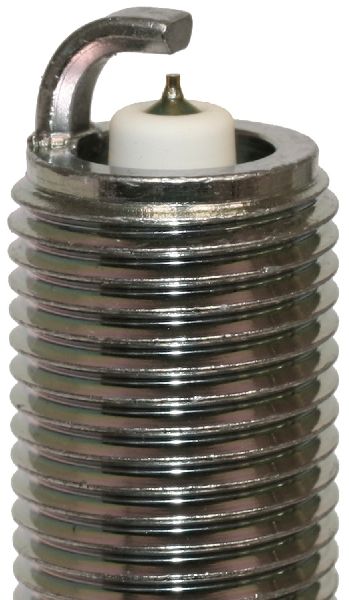
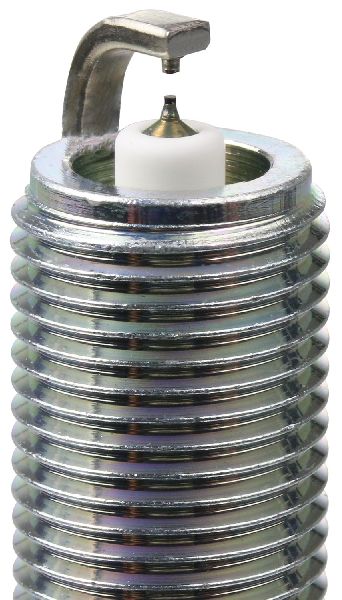
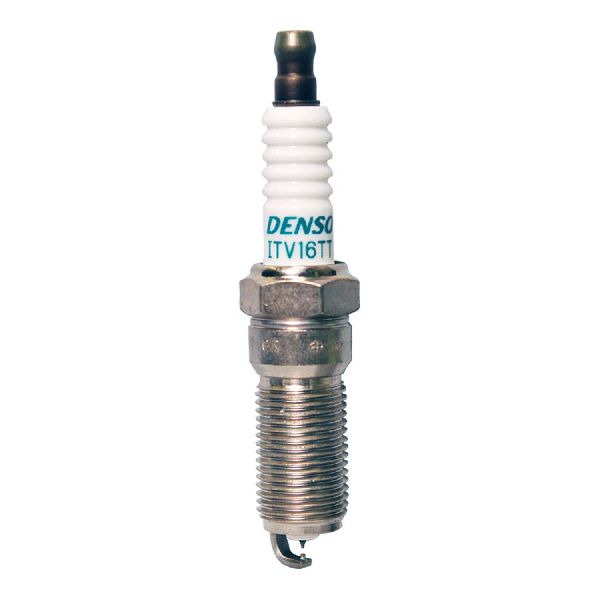
Est. part cost: $40-$70 - Worn or Fouled Spark Plug 🔴 High Probability Spark plugs are a regular maintenance item. If they are past their service life (GM recommends replacement at 60,000-100,000 miles depending on model year), they can cause misfires. Oil or carbon fouling can also occur due to other engine issues.
How to confirm: Remove the spark plug from cylinder 5 and inspect it for wear (worn electrode), carbon buildup, or oil/fuel fouling. Compare it to a new plug.
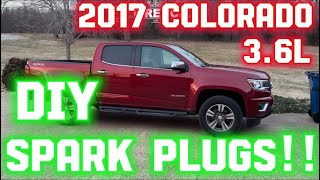
Typical fix: Replace the spark plug in cylinder 5. It is best practice to replace all six spark plugs at the same time for even performance.
Est. part cost: $10-$20 per plug - Clogged or Faulty Fuel Injector 🟡 Medium Probability Fuel injectors on direct injection engines can become clogged with deposits over time, preventing the correct amount of fuel from reaching the cylinder.
How to confirm: This is more difficult for a DIYer. A professional can perform a fuel injector balance test. You can also try swapping the injector with another cylinder, but this is more labor-intensive than swapping a coil.
Typical fix: Replace the faulty fuel injector. Sometimes running a high-quality fuel system cleaner can help.
Est. part cost: $65-$125
Rare But Worth Checking
- Damaged Active Fuel Management (AFM) Oil Control Valve (OCV) Solenoid: Per TSB #21-NA-036, this solenoid can be damaged or its O-rings can fail, causing it to leak oil. This leads to inadequate oil pressure for the AFM system, specifically causing misfires on cylinders 2 and/or 5. The bulletin notes the end of the solenoid can break off and remain in the camshaft cover bore.
- Carbon Buildup on Intake Valves: The 3.6L is a direct-injection (DI) engine. Unlike port-injected engines, fuel is not sprayed over the intake valves, so they don't get cleaned. Over time, oil vapor from the PCV system can bake onto the valves, restricting airflow and causing misfires. This requires manual cleaning (e.g., walnut blasting or chemical soaking). 🎬 Watch: How to clean carbon buildup from GM 3.6L intake valves
- Failed AFM Lifter: A more severe issue related to the Active Fuel Management system is a collapsed or stuck lifter (also called a Switching Roller Finger Follower or SRFF) on an AFM cylinder like #5. This will cause a persistent misfire and often a ticking noise. TSB #21-NA-036 suggests that if the OCV solenoid is not the cause, the lifters and rockers for the affected cylinder should be inspected and likely replaced.
- Intake Manifold Gasket Leak: A vacuum leak near the intake runner for cylinder 5 can lean out the air/fuel mixture and cause a misfire. This can be diagnosed with a smoke test.
- Low Engine Compression: Internal engine problems like a worn piston ring, leaking valve, or a bad head gasket can cause a loss of compression in cylinder 5. This requires a mechanical compression test to confirm.
Diagnosis Steps
- Read the code with an OBD-II scanner to confirm P0305 and check for any other codes.
- Inspect the wiring and connector for the cylinder 5 ignition coil and fuel injector for any visible damage or loose connections.
- Swap the ignition coil from cylinder 5 to a different cylinder (e.g., cylinder 3). Clear the codes, run the engine, and see if the misfire code moves to P0303. If it does, the coil is bad.
- If the misfire stays on cylinder 5, inspect the spark plug for wear or fouling. Replace if necessary.
- If the coil and plug are good, consider the AFM system. Inspect the AFM Oil Control Valve (OCV) solenoid for cylinder 5 for oil leaks or damage as per TSB #21-NA-036. The solenoid is located in the camshaft cover.
- If the injector is suspected, you can try swapping it with another cylinder, though this is more involved. A professional can perform a balance test to confirm flow.
- For high-mileage vehicles, consider carbon buildup. Use a borescope to inspect the intake valves for cylinder 5. If heavy deposits are present, manual cleaning is required.
- Perform a compression test on cylinder 5 to rule out mechanical engine problems like bad rings, valves, or a failed lifter.
- Perform a smoke test to check for vacuum leaks, particularly around the intake manifold gasket for cylinder 5.
Parts You'll Likely Need
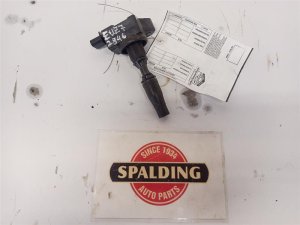
- Ignition Coil
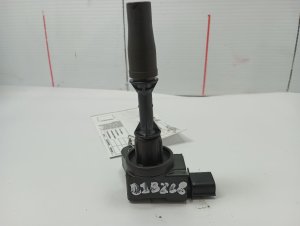
(OEM #12666339)— This is one of the most common failure items causing a single-cylinder misfire.
Trusted brands: ACDelco, Delphi, NGK
OEM price range: $50-$80
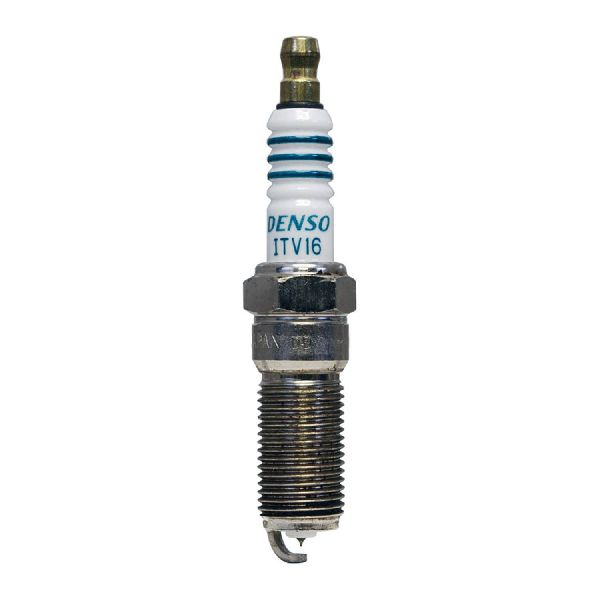
Aftermarket price range: $35-$60 - Spark Plug
(OEM #19417055)— Spark plugs are a maintenance part that wears out over time, leading to a weak or inconsistent spark.
Trusted brands: ACDelco, NGK, Bosch
OEM price range: $15-$25
Aftermarket price range: $8-$15 - AFM Oil Control Valve (OCV) Solenoid
(OEM #12679099)— A known issue documented in TSB #21-NA-036 for causing misfires on cylinder 5 due to oil pressure loss.
Trusted brands: ACDelco
OEM price range: $40-$70
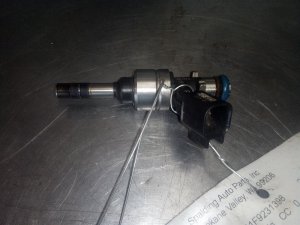
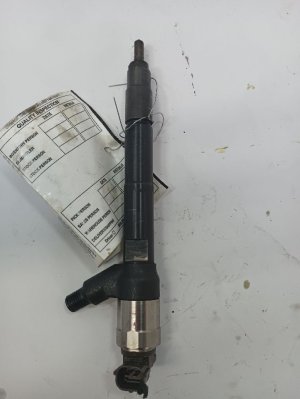
Aftermarket price range: $25-$50 - Fuel Injector
(OEM #12634126)— A clogged or failed fuel injector will prevent the proper amount of fuel from being delivered to cylinder 5.
Trusted brands: ACDelco, Standard Motor Products, Hitachi
OEM price range: $90-$130
Aftermarket price range: $60-$100
Related Codes That Often Appear With This One
- P0300 — This code means 'Random/Multiple Cylinder Misfire Detected.' A persistent misfire on cylinder 5 can sometimes be accompanied by the more general P0300 code, especially if the underlying issue starts to affect other cylinders.
Technical Service Bulletins (TSBs) & Recalls

- 21-NA-036: Information on Malfunction Indicator Lamp (MIL) Illumi
Platform-Specific Known Issues

- TSB #21-NA-036: A damaged Active Fuel Management (AFM) Oil Control Valve (OCV) solenoid may cause an oil leak and illuminate the MIL, setting DTCs P0300, P0302 and/or P0305. The bulletin notes this is a cause for misfires on cylinders 2 and 5, which are the AFM cylinders. The fix involves inspecting and replacing the solenoid if it's damaged or broken. If the solenoid is fine, the bulletin points towards inspecting the AFM lifters (SRFF's) and valve rockers.
- Carbon Buildup on Intake Valves: As a direct-injection engine, the 3.6L V6 does not spray fuel on the back of the intake valves. This leads to a gradual buildup of carbon deposits from the PCV system, which can restrict airflow and cause misfires. Owners on forums like coloradofans.com report needing to manually clean the valves, often using solvents and brushes or walnut blasting, to resolve persistent misfire codes.
Mechanic-Grade Diagnostic Values
- Fuel Injector Resistance — expected: Approximately 1.5 - 1.6 Ohms. Failure: A reading of 0 Ohms (short) or infinite/O.L. (open circuit) indicates a failed injector coil.
- High-Pressure Fuel Pump (HPFP) Pressure — expected: Over 2,000 PSI under load. Failure: Significantly lower pressure, especially under acceleration, often accompanied by code P0087. This would typically cause a random misfire (P0300) rather than a single cylinder misfire, but is a key value for the 3.6L DI engine.
- Fuel Injector Circuit Voltage (Key On, Engine Off) — expected: Approximately 12 Volts on the power feed wire to the injector.. Failure: Low or no voltage indicates a wiring issue, blown fuse, or problem with the power distribution, not the injector itself.
Hidden / Shadow Codes Worth Checking
- Misfire History / Misfire Current Counters: This is not a DTC but a live data parameter available on professional scan tools like the GM GDS2. It shows the number of misfire events per cylinder in real-time and over a history period. It is invaluable for identifying the specific cylinder causing a P0300 or confirming an intermittent misfire on a specific cylinder like P0305. (see via Use a professional-grade scan tool (e.g., GM GDS2) and navigate to the engine control module's live data list. This data is erased when DTCs are cleared.)
Scan Tool Commands That Help
- GDS2 (GM Global Diagnostic System 2): Cylinder Power Balance Test — This function sequentially disables each fuel injector and measures the corresponding drop in engine RPM. If disabling cylinder 5's injector causes little or no change in RPM, it confirms that cylinder 5 was not contributing power, pinpointing the misfire location without having to swap parts.
- GDS2 (GM Global Diagnostic System 2): Crankshaft Position Variation Learn — This procedure should be performed after any major engine work, such as replacing a timing chain or crankshaft position sensor. It recalibrates the ECM's ability to accurately detect misfires. Failure to do this can lead to false misfire codes.
Wiring & Ground Locations
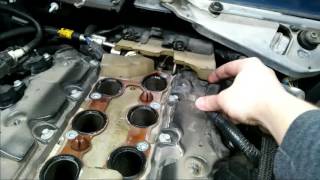
- Cylinder #5 Physical Location — On the 3.6L V6, the cylinders are numbered with 1-3-5 on the passenger side (right bank) from front to back, and 2-4-6 on the driver's side (left bank) from front to back. Cylinder #5 is the rearmost cylinder on the passenger side, near the firewall.. Correctly identifying cylinder #5 is the first step to diagnosing the coil, plug, or injector for that specific cylinder.
- SP105 / SP106 — SP105 is a major ground splice pack located on the driver's side of the engine bay, near the battery.. A poor ground connection at this point can cause a variety of electrical issues, including weak spark or erratic injector performance that could lead to a misfire. While less common than a component failure, it should be checked if multiple electrical issues are present.
- ECM Connector X1 — The Engine Control Module (ECM) is in the engine bay. The fuel injector circuits run through the X1 connector.. Technicians can test the injector circuit wiring for resistance and continuity directly from the ECM connector pins without having to access the injector itself, which is buried under the intake manifold. The wires for each injector are a twisted pair.
Real Owner Repair Stories
- Reddit user on r/chevycolorado (2017 Chevrolet Colorado 3.6L V6 LGZ, 153,000 miles) — Shudder through the gas pedal, flashing CEL, Stabilitrak warning, engine power reduced, and sounds of metal rattling in the engine.
❌ Tried (didn't work) The failure was catastrophic and immediate, leading directly to an engine teardown.
✅ What actually fixed it The root cause was a severe Active Fuel Management (AFM) system malfunction on cylinder #2 (the other AFM cylinder besides #5). The lifters failed to deactivate, causing the valves to remain closed while the camshaft tried to open them. This resulted in smashed rocker arms, broken camshaft bearing caps, and a damaged crankshaft. The only fix was a complete engine replacement. This story highlights the most severe failure mode of the AFM system that can cause misfires on cylinders 2 and 5.
OEM Part Supersession History
12655420, 12646783, 12628347, 12578517→12679099— This is the AFM Oil Control Valve (OCV) solenoid, also referred to as the Camshaft Position Actuator Solenoid. The part has been updated multiple times by GM to improve reliability and address failure issues.
Model Year Variations Within This Range
- 2015-2016: These years use the 3.6L LFX V6 engine, which does NOT have the Active Fuel Management (AFM) system. Therefore, AFM-related causes like a failed lifter or OCV solenoid are not applicable. Diagnosis should focus on traditional causes: plugs, coils, injectors, and carbon buildup.
- 2017-2022: These years use the updated 3.6L LGZ V6 engine, which features Active Fuel Management (AFM) that deactivates cylinders #2 and #5 under light loads. This makes these two cylinders uniquely susceptible to misfires caused by AFM system faults, such as the faulty OCV solenoid (TSB #21-NA-036) or a failed AFM lifter.
Helpful Videos
Used OEM Parts in Stock


New Aftermarket Parts Available


The information in this article is provided for general reference and educational purposes only. Vehicle specifications, procedures, and part compatibility can vary by production date, trim level, and region. Always consult your vehicle's factory service manual and verify part numbers before purchasing or performing repairs. Safety-critical components such as airbags, seat belts, and braking systems should be installed by a qualified professional.
- Gmc CANYON:
- 🎬 Helpful Videos
- 🛍️ Shop This Part
- What's Unique About the 2015-2022 Gmc CANYON
- Diagnostic Flowchart
- Symptoms You May Notice
- Most Likely Causes
- Rare But Worth Checking
- Diagnosis Steps
- Parts You'll Likely Need
- Related Codes That Often Appear With This One
- Technical Service Bulletins (TSBs) & Recalls
- Platform-Specific Known Issues
- Mechanic-Grade Diagnostic Values
- Hidden / Shadow Codes Worth Checking
- Scan Tool Commands That Help
- Wiring & Ground Locations
- Real Owner Repair Stories
- OEM Part Supersession History
- Model Year Variations Within This Range
- 🎟️ Get 5% Off