

P0305 on 2011-2018 Ford F-150: Cylinder 5 Misfire Causes and Fixes
P0305 indicates a misfire in cylinder 5. On a 2011-2018 F-150, this is most often caused by a bad ignition coil or a worn spark plug. For EcoBoost engines, incorrect spark plug gap is a very common culprit. A DIY fix for these parts costs between $50 and $150.
- P0305 is a misfire on cylinder 5, most commonly caused by a bad ignition coil or spark plug.
- A flashing check engine light signals a severe misfire that can damage your catalytic converter; avoid driving if possible.
- The easiest way to diagnose the issue is to swap the ignition coil from cylinder 5 with another cylinder and see if the trouble code follows the coil.
- Be aware of engine-specific issues: EcoBoost engines are tough on spark plugs, and some 5.0L V8s can have oil consumption problems that lead to misfires.
- Always check for cracked porcelain on the old spark plug, as this is a common failure mode.
What's Unique About the 2011-2018 Ford F-150

The 2011-2018 F-150 spans two generations (12th and 13th) and multiple engines, including the 3.5L EcoBoost V6 and 5.0L V8. While standard ignition issues are common across all engines, some have unique weaknesses. The 3.5L EcoBoost engines are known for spark plug issues related to wear and incorrect gapping, and are also susceptible to misfires from condensation buildup in the intercooler, especially in humid weather. Some 2018-2020 5.0L V8s experienced excessive oil consumption which could foul plugs, a problem addressed by TSB 19-2384 that could ultimately require a long block replacement. Ford has also issued Technical Service Bulletins (TSBs) like TSB 18-2058 for 2018 5.0L trucks, which notes that a misfire code can be stored without any actual drivability concerns, fixed by a simple PCM software update.
Diagnostic Flowchart

Tap your situation to follow the diagnostic path that matches what you're seeing on this vehicle.
Generation note: This range covers the end of the 12th generation (2011-2014) and the start of the 13th generation (2015-2018). While the fundamental causes of a P0305 misfire are the same, specific engine issues and part numbers may vary. For example, 2018+ 5.0L V8s added a direct injection system alongside port injection and used a new spray-in cylinder liner design that was linked to oil consumption issues. The 3.5L EcoBoost was significantly updated in 2017, receiving a new fuel system and other changes.
Symptoms You May Notice
- Flashing or solid Check Engine Light
- Rough or shaking engine idle
- Reduced engine power and poor acceleration.
- Hesitation or stumbling when accelerating, sometimes described as 'bucking'.
- Decreased fuel economy.
- A smell of raw fuel from the exhaust.
- Hissing or sucking sounds from the engine bay, which could indicate a vacuum leak.
- Replacing only the spark plug when the ignition coil boot is also bad. The boot can degrade or get contaminated with oil, allowing the spark to arc to the cylinder head instead of the plug.
- Assuming the issue is a major mechanical failure before performing simple diagnostic swaps of the ignition coil and spark plug.
- On EcoBoost engines, replacing parts without first checking for the intercooler condensation issue, 🎬 See how drilling a relief hole fixes EcoBoost condensation especially if the misfire only happens under heavy load in damp weather.
Most Likely Causes

- Faulty Ignition Coil 🔴 High Probability Coil-on-plug systems are a common failure point on modern engines due to high heat and vibration. This is a very frequent cause for misfires on all F-150 engines, often cited in owner forums.
How to confirm: Swap the ignition coil from cylinder 5 with another cylinder (e.g., cylinder 4 on a V8 or cylinder 6 on a V6). Clear the codes and drive the truck. If the code changes to P0304 or P0306, the coil is bad. This is the most definitive DIY diagnostic step.
Typical fix: Replace the faulty ignition coil. 🎬 Watch: Step-by-step guide to fixing a P0305 misfire It is often recommended to replace the spark plug and the rubber coil boot/spring at the same time.
Est. part cost: $40-$80 - Worn or Fouled Spark Plug 🔴 High Probability EcoBoost engines, in particular, are known to be hard on spark plugs due to the high cylinder pressures from turbocharging. Plugs can become worn, fouled by oil or carbon, or the porcelain insulator can crack. An incorrect spark plug gap is a major cause of misfires on EcoBoost engines, with many owners and techs recommending a smaller gap (e.g., 0.030") than factory spec to resolve misfires under load.
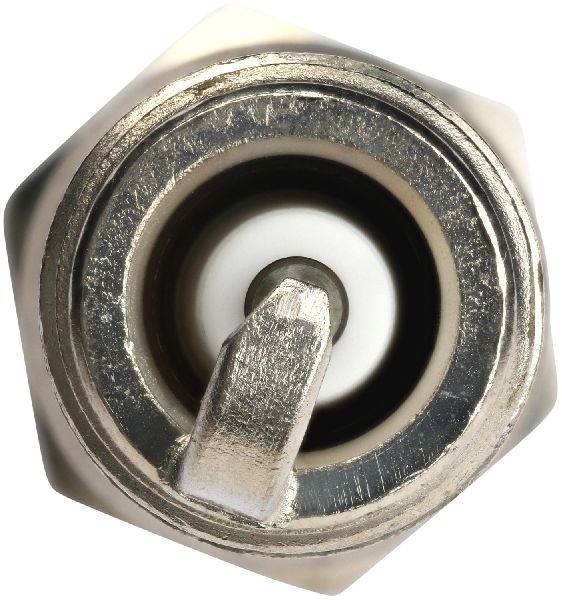
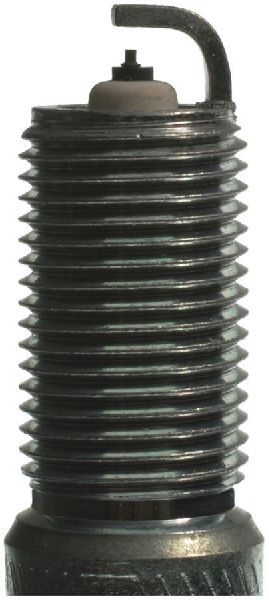
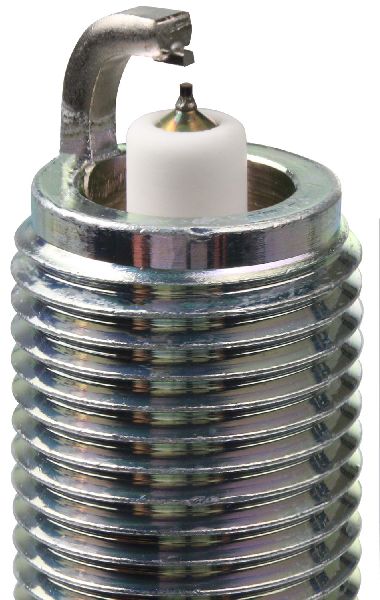
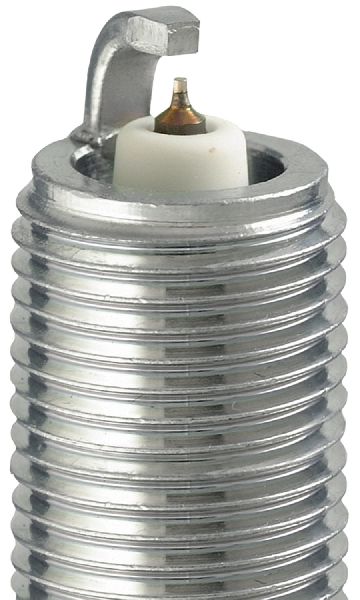
How to confirm: After confirming the coil is good, remove the spark plug from cylinder 5. Inspect it for wear (rounded electrode), oil/carbon fouling, or cracks in the white porcelain insulator. Check the gap with a feeler gauge.
Typical fix: Replace the spark plug. It's best practice to replace all spark plugs at the same time to ensure consistent performance. For EcoBoost engines, gapping the new plugs correctly is critical.
Est. part cost: $8-$20 per plug - Faulty Fuel Injector 🟡 Medium Probability Injectors can become clogged with deposits or fail electronically, preventing the correct amount of fuel from reaching cylinder 5. This is a known issue, particularly on higher-mileage trucks.
How to confirm: Listen to the injector with a mechanic's stethoscope; it should have a consistent clicking sound. A more advanced test involves checking the injector's resistance with a multimeter (a bad reading confirms failure, but a good reading doesn't guarantee it works). Swapping injectors between cylinders is possible but is much more labor-intensive than a coil swap.
Typical fix: Replace the faulty fuel injector. 🎬 Watch: How to replace fuel injectors on a 5.0L engine On 2018+ 5.0L and all EcoBoost engines, there are both port and direct injectors to consider, which complicates diagnosis.
Est. part cost: $70-$200 - Intake Manifold Gasket Leak ⚪ Low Probability The plastic intake manifolds and their gaskets can degrade over time from heat cycles, causing a vacuum leak near cylinder 5. This introduces unmetered air, disrupts the air-fuel ratio, and can cause a lean misfire.
How to confirm: With the engine running, spray brake cleaner or a propane torch (unlit) around the intake manifold runner for cylinder 5. If the engine RPM changes, a leak is present. Often accompanied by lean codes like P0171 or P0174.
Typical fix: Replace the intake manifold gaskets. On some 5.0L engines, the Intake Manifold Runner Control (IMRC) linkage can also fail, sometimes requiring manifold replacement.
Est. part cost: $50-$100
Rare But Worth Checking
- Internal Engine Mechanical Failure: While rare, this is a possibility, especially if basic ignition and fuel system checks don't solve the problem. This could include a bad valve, worn piston rings, or other issues causing a loss of compression. TSB 19-2384 for the 2018+ 5.0L V8 links P0305 to excessive oil consumption, which points to internal issues like cylinder bore scoring, potentially requiring a new engine block. A compression test is required to diagnose this.
- Powertrain Control Module (PCM) Software Issue: TSB 18-2058 indicates that on some 2018 F-150s with the 5.0L engine (built on or before Jan 3, 2018), a misfire code like P0305 can be stored without any actual drivability concerns. The fix in this case is not a part replacement but a PCM re-flash performed by a dealer.
- Damaged Wiring Harness: Rodents can chew through the wiring for the ignition coil or fuel injector. One owner of a Ford with a 5.0L engine found chewed wires going to the injectors was the cause of their P0305 code. A visual inspection of the harness leading to cylinder 5 components is a worthwhile check.
Diagnosis Steps
- Read the trouble codes with an OBD-II scanner to confirm P0305 and check for any other codes. Note the freeze-frame data, which shows engine conditions when the code was set.
- Locate cylinder 5. On the 5.0L V8, it is the first cylinder on the driver's side (front of the engine). On the 3.5L/3.7L V6, it is the middle cylinder on the driver's side.
- Swap the ignition coil from cylinder 5 with an adjacent, easily accessible cylinder (e.g., cylinder 4 on the V8, cylinder 6 on the V6).
- Clear the codes, start the engine, and go for a short drive, trying to replicate the conditions from the freeze-frame data (e.g., heavy acceleration).
- Re-scan for codes. If the code has moved to the other cylinder (e.g., P0304 or P0306), the ignition coil is the culprit.
- If the code remains P0305, move the spark plug from cylinder 5 to the cylinder you just used for the coil swap.
- Clear codes and test again. If the code moves, the spark plug was the issue. Inspect the old plug for fouling, wear, or cracks.
- If the misfire is still on cylinder 5, the problem is likely a fuel injector, wiring, or a mechanical issue.
- Visually inspect the wiring and connector for the cylinder 5 ignition coil and fuel injector for any damage, corrosion, or signs of rodent activity.
- Listen to the fuel injector on cylinder 5 with a mechanic's stethoscope. It should have a steady, rhythmic clicking. Compare its sound to an adjacent injector.
- Perform a compression test on cylinder 5 to rule out mechanical engine damage (e.g., bad valves, piston rings). Compare the reading to the other cylinders; they should be within 15% of each other.
- If compression is good and all else has failed, the fuel injector is the most likely remaining cause.
Parts You'll Likely Need
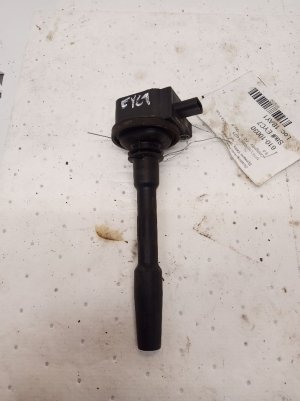
- Ignition Coil (Coil-on-Plug)
(OEM #BL3Z-12029-C (also known as DG549, supersedes BL3Z-12029-B). Note: 5.0L may use BR3Z-12029-A (DG542). Verify by VIN.)— This is the most common cause of a single-cylinder misfire. Heat and vibration cause the internal windings to fail over time.
Trusted brands: Motorcraft, NGK, Denso
OEM price range: $50-$80
Aftermarket price range: $30-$60 - Spark Plug
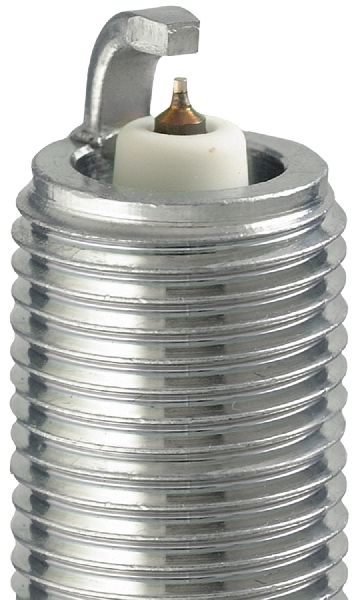
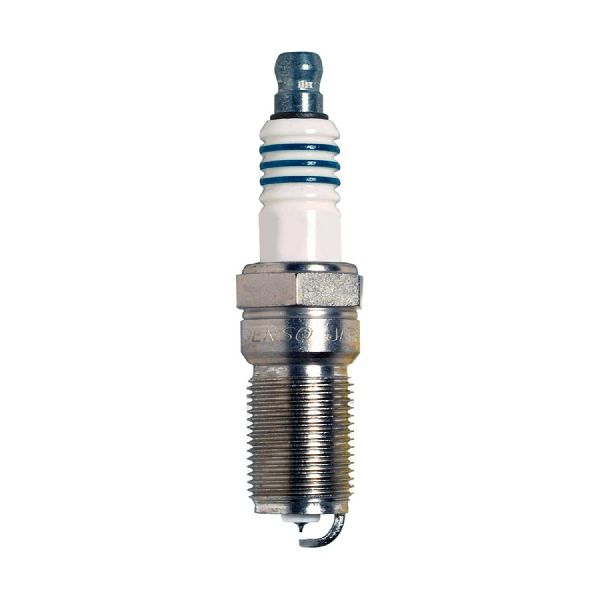
(OEM #SP-589 (for 2nd Gen 3.5L EcoBoost), SP-534 (for 1st Gen 3.5L EcoBoost), SP-548 (for 5.0L V8). Always verify by engine and model year.)— Spark plugs are a regular maintenance item and can cause misfires when worn, fouled, or cracked. EcoBoost engines are particularly sensitive to spark plug condition and gap.
Trusted brands: Motorcraft, NGK Ruthenium HX, Bosch
OEM price range: $10-$25 per plug
Aftermarket price range: $8-$20 per plug - Ignition Coil Boot and Spring
(OEM #Often included with a new coil but can be sold separately.)— The rubber boot can become oil-fouled, brittle, or torn, allowing the spark to arc to the cylinder head instead of the spark plug. It's a cheap part to replace and a common point of failure often overlooked.
Trusted brands: Motorcraft, NGK, Delphi
OEM price range: $10-$15
Aftermarket price range: $5-$10
Related Codes That Often Appear With This One
- P0300 — This is a 'Random/Multiple Cylinder Misfire' code. It often appears with P0305 if the misfire is intermittent or if other cylinders are also misfiring, which could point to a systemic issue like a vacuum leak or fuel delivery problem.
- P0316 — This code means 'Misfire Detected on Startup (First 1000 Revolutions)'. It frequently accompanies a specific cylinder misfire code like P0305, as seen in TSB 18-2058 for the 5.0L V8.
- P0171/P0174 — These are 'System Too Lean' codes for Bank 1 and Bank 2. If you see these with P0305, it strongly suggests a vacuum leak, such as a bad intake manifold gasket, is introducing unmetered air into the engine.
- P0301, P0302, P0303, P0304, P0306, P0307, P0308 — These are misfire codes for other cylinders. Seeing them alongside P0305 points to a more systemic problem like a vacuum leak, fuel delivery issue, or a problem affecting an entire cylinder bank.
Technical Service Bulletins (TSBs) & Recalls
- TSB18-2058: Notes that various misfire DTCs, including P0305, can be stored in the PCM without drivability concerns, recommending a service procedure (likely a reflash).
- TSB 19-2384: Links misfire DTCs P0300-P0306 with excessive oil consumption and blue exhaust smoke on some models.
- TSB-14-0160: Addresses misfire DTCs P0300-P0306 on 2011 models equipped with GTDI (EcoBoost) engines.
Platform-Specific Known Issues
- EcoBoost Intercooler Condensation Misfire: On 3.5L EcoBoost engines, especially earlier 2011-2014 models, moisture can accumulate in the Charge Air Cooler (CAC), also known as the intercooler. During hard acceleration, especially in humid weather, this water can be ingested by the engine, causing a violent misfire and triggering codes like P0305. Ford released several TSBs (e.g., 12-6-4, 13-8-1, 14-0017) over the years with fixes ranging from adding deflector shields to PCM reflashes and redesigned CACs. Some owners drill a small 1/16" weep hole in the bottom of the intercooler to allow moisture to drain, a popular unofficial fix.
- 2018 5.0L V8 Excessive Oil Consumption: TSB 19-2384 specifically addresses excessive oil consumption in 2018-2020 F-150s with the 5.0L engine, which can lead to spark plug fouling and misfire codes, including P0305. The issue is related to changes in the engine design for 2018, including the use of spray-in cylinder liners instead of steel inserts. The official Ford procedure can involve replacing the PCV valve and, in persistent cases, replacing the entire engine long block assembly.
Mechanic-Grade Diagnostic Values
- Fuel Injector Resistance (High Impedance/Port Injection) — expected: 11.0 to 16.0 Ohms, typically around 12.0 Ohms for 2011-2017 5.0L engines.. Failure: A reading of open circuit (infinite resistance) or a value significantly outside the expected range (e.g., 40+ Ohms) indicates a failed injector coil.
- 3.5L EcoBoost Low-Side Fuel Pressure (at idle) — expected: 40-60 PSI.. Failure: Pressure significantly below this range could indicate a weak in-tank fuel pump, causing misfires under load.
- 3.5L EcoBoost High-Side Fuel Pressure (cranking) — expected: Should reach ~500 PSI.. Failure: Failure to build high pressure during cranking can point to a faulty high-pressure fuel pump (HPFP).
- 3.5L EcoBoost High-Side Fuel Pressure (under load/WOT) — expected: 1,500 to 2,150 PSI.. Failure: If the actual pressure lags the requested pressure by more than 200 PSI, it can indicate a failing HPFP or a leaking injector.
Hidden / Shadow Codes Worth Checking
- Mode $06, Test ID $A2-$AD (or TID $53): This is not a DTC, but a diagnostic monitor within the PCM that tracks misfire counts per cylinder, even for misfires not frequent enough to trigger a Check Engine Light. For Ford, Test IDs $A2 through $AD typically correspond to misfire counters for cylinders 1 through 12. (see via Requires a scan tool capable of reading Mode $06 data, such as FORScan or professional-grade scanners. The tool will display a value for each cylinder's misfire count over the last 10 drive cycles and the current drive cycle. A non-zero value on cylinder 5 (e.g., Test ID $A6 for cylinder 5) confirms it is the source of an intermittent misfire.)
Scan Tool Commands That Help
- Ford IDS (Integrated Diagnostic System) or FORScan: Power Balance Test — This bidirectional test allows a technician to disable one cylinder at a time while the engine is running. When cylinder 5 is disabled, if there is no change in engine RPM or sound, it confirms that cylinder 5 was not contributing in the first place, pinpointing the misfire.
- Ford IDS or FORScan: Misfire Monitor Neutral Profile Correction — The PCM must learn the minor variations of the crankshaft reluctor wheel to accurately detect misfires. If the crank sensor, flywheel, or PCM has been replaced, this procedure may need to be performed to allow the misfire monitor to run correctly.
Wiring & Ground Locations
- PCM Connector C1551E (3.5L EcoBoost) — This is one of the main connectors on the Powertrain Control Module (PCM).. For a 2012 3.5L, the control wire for the cylinder 5 ignition coil is a White with Brown stripe wire located at Pin 58 of this connector. Testing for continuity and shorts on this wire between the PCM and the coil can rule out a wiring issue.
- PCM Connector (2000-2001 5.4L - Example) — On the main PCM connector.. For older V8s, the fuel injector for cylinder #5 is controlled by a Tan/Black wire at Pin 73. This demonstrates how specific pin locations are critical for diagnosis. A wiring diagram for the specific year/engine is essential.
- Main Battery Ground — On the chassis frame, just in front of the washer fluid reservoir on the passenger side of the engine bay.. A poor main ground can cause a host of electrical issues, including weak spark or erratic sensor readings that could lead to misfires. Ensuring this connection is clean and tight is a fundamental step.
- Body to Chassis Ground — Under the truck, below the passenger front door area.. This is another critical ground point. On 13th gen (2015+) F-150s with aluminum bodies, Ford specifically warns against grounding accessories directly to the steel frame to prevent galvanic corrosion, making proper use of designated ground points crucial.
Real Owner Repair Stories
- YouTube channel 'EUrbanAutoTech' (2007 F-150 5.4L V8) — Running rough, P0305 code stored. Misfire data showed only cylinder 5 was misfiring.
❌ Tried (didn't work) Swapped ignition coil with another cylinder; misfire stayed on cylinder 5., Inspected spark plug, which had already been changed.
✅ What actually fixed it The fuel injector on cylinder 5 was faulty. A simple resistance check with a multimeter showed it had a reading of ~40-70 Ohms, far higher than the ~12 Ohms of a good injector. This confirmed the injector's internal coil was bad without needing a lab scope or pressure drop test. - YouTube channel 'Ford F150 V8' (2013 F-150 with 200,000 miles) — P0305 code present, check engine light started flashing during a test drive.
✅ What actually fixed it The ignition coil on cylinder 5 was faulty. The mechanic confirmed this by swapping the coil from cylinder 5 to cylinder 4, which caused the fault to move to cylinder 4. A new ignition coil on cylinder 5 resolved the issue.
OEM Part Supersession History
BR3Z-9F593-A (Ford)→CM5187 (Motorcraft)— Standard part number update from Ford to its Motorcraft line.
Heads up: This injector (Bosch 0280158227) is for 2011-2017 5.0L V8s ONLY. It is physically different and will not work with 2018+ 5.0L engines that use a dual-injection (port and direct) system.
Model Year Variations Within This Range
- 2011-2012 (3.5L EcoBoost): These early EcoBoost models were particularly prone to the intercooler condensation issue. Ford released TSB 12-6-4 which involved a PCM reflash and installing a deflector plate on the intercooler to try and mitigate the issue. Later, TSB 12-10-19 involved a redesigned intercooler.
- 2017-2018 (3.5L EcoBoost): The 3.5L EcoBoost was significantly updated for 2017 (Gen 2), featuring a new dual-injection system (port and direct) and a new high-pressure fuel pump capable of 3625 PSI. This adds complexity to diagnosing fuel-related misfires compared to the Gen 1 (2011-2016) engine.
- 2018 (5.0L V8): The 5.0L V8 was updated with a dual-injection system (port and direct) and spray-in cylinder liners. These engines became known for oil consumption issues which could lead to P0305 by fouling the spark plug, as addressed in TSB 19-2384. The injectors are not compatible with 2011-2017 models.
Helpful Videos

Used OEM Parts in Stock



New Aftermarket Parts Available

The information in this article is provided for general reference and educational purposes only. Vehicle specifications, procedures, and part compatibility can vary by production date, trim level, and region. Always consult your vehicle's factory service manual and verify part numbers before purchasing or performing repairs. Safety-critical components such as airbags, seat belts, and braking systems should be installed by a qualified professional.
- Ford F-150:
- 🎬 Helpful Videos
- 🛍️ Shop This Part
- What's Unique About the 2011-2018 Ford F-150
- Diagnostic Flowchart
- Symptoms You May Notice
- Most Likely Causes
- Rare But Worth Checking
- Diagnosis Steps
- Parts You'll Likely Need
- Related Codes That Often Appear With This One
- Technical Service Bulletins (TSBs) & Recalls
- Platform-Specific Known Issues
- Mechanic-Grade Diagnostic Values
- Hidden / Shadow Codes Worth Checking
- Scan Tool Commands That Help
- Wiring & Ground Locations
- Real Owner Repair Stories
- OEM Part Supersession History
- Model Year Variations Within This Range
- 🎟️ Get 5% Off